The Future of Search with AI Powered Keyword Research


Why AI Powered Keyword Research Changes Everything for SEO
AI powered keyword research is transforming how marketers find, prioritize, and act on keyword opportunities. Instead of manually sifting through spreadsheets and guessing which terms might rank, AI analyzes billions of search queries in real-time, identifies search intent patterns, and delivers personalized insights tailored to your domain’s strengths.
Quick Answer: What is AI Powered Keyword Research?
AI powered keyword research uses machine learning and large language models to:
- Analyze search intent automatically across millions of keywords
- Calculate personalized difficulty scores based on your domain’s topical authority
- Identify low-competition, high-opportunity terms faster than manual methods
- Cluster keywords by semantic meaning and content structure
- Generate content strategies with pillar pages and subtopics
- Track brand mentions in AI chatbots and generative search results
The difference from traditional methods? Tools like Semrush, Ahrefs, and Moz Pro now combine their massive keyword databases (1.25+ billion suggestions) with AI that understands context, relevance, and your specific competitive position. Tasks that used to take days now take minutes.
Why This Matters Now
The SEO landscape shifted dramatically with AI integration. Generic keyword difficulty scores don’t tell you if your site can rank. AI changes that by measuring thematic relevance between your domain and target keywords using vector maps and LLMs.
Three major capabilities stand out:
- Personal Keyword Difficulty (PKD) – Shows which keywords you can realistically rank for, not just industry averages
- Search Intent Analysis – AI decodes the “why” behind searches to guide content creation
- Automated Strategy Building – Tools now construct entire content hierarchies from seed keywords
The research backs this up. Semrush reports their AI can analyze your domain’s topical authority and recommend keywords within striking distance. Ahrefs powers their infrastructure with the world’s 34th fastest supercomputer. Moz’s Keyword Explorer, launched in 2016 and now featuring Moz AI, offers 1.25 billion keyword suggestions across 170 Google search engines.
Free tools exist, but they hit limits fast. Google Keyword Planner works for paid search but strips out crucial SEO metrics. ChatGPT and Gemini deliver inconsistent results without real-time search data. Dedicated AI tools provide the precision needed for competitive markets.
Real-World Impact
Testing shows beginners should target medium search volume (1,000-5,000 monthly searches) with low difficulty scores for quick wins. Established sites can pursue higher-volume terms by leveraging their topical authority. The key shift? AI identifies which keywords match your current position, not generic recommendations everyone else sees.
I’m Clayton Johnson, and I’ve built SEO systems using AI powered keyword research to turn fragmented marketing efforts into structured growth engines across multiple industries. My approach combines technical SEO depth with AI-assisted workflows that prioritize measurable outcomes over vanity metrics.
Simple guide to AI powered keyword research terms:
Understanding AI Powered Keyword Research vs. Traditional Methods
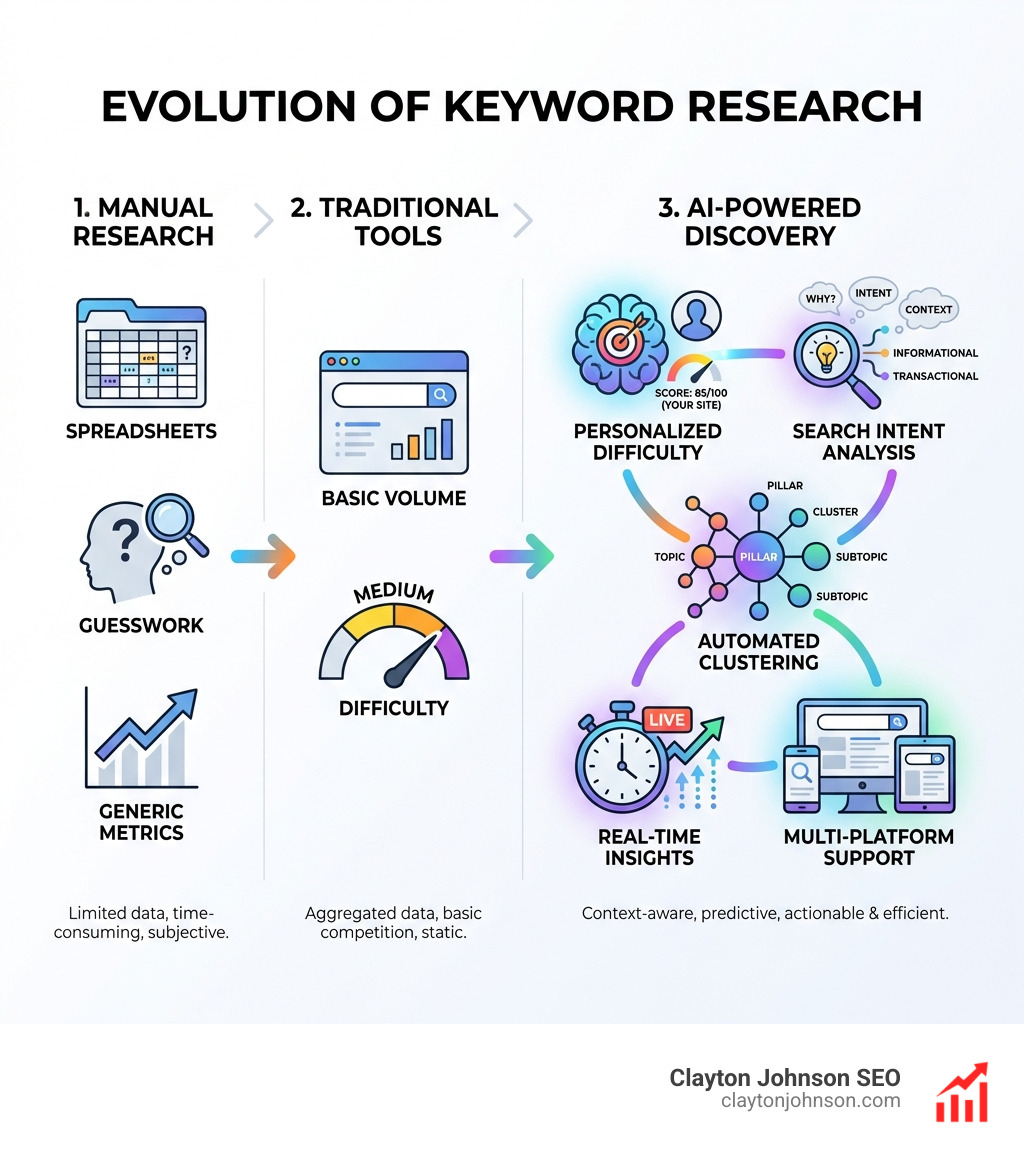
In the “old days” of SEO (which was until recently), keyword research was a manual slog. We would start with a few seed keywords, dump them into a tool, and export a massive CSV file. Then came the hours of pivot tables and guesswork. We were essentially trying to predict the future with a blurry rearview mirror.
Traditional methods rely on static databases and generic metrics. If a tool said a keyword had a “Difficulty” of 70, everyone saw that 70. But a 70 for a brand-new blog in Minneapolis is very different from a 70 for an established site like Virtru, which uses Moz’s Keyword Explorer to spend less time in spreadsheets and more time generating qualified traffic.
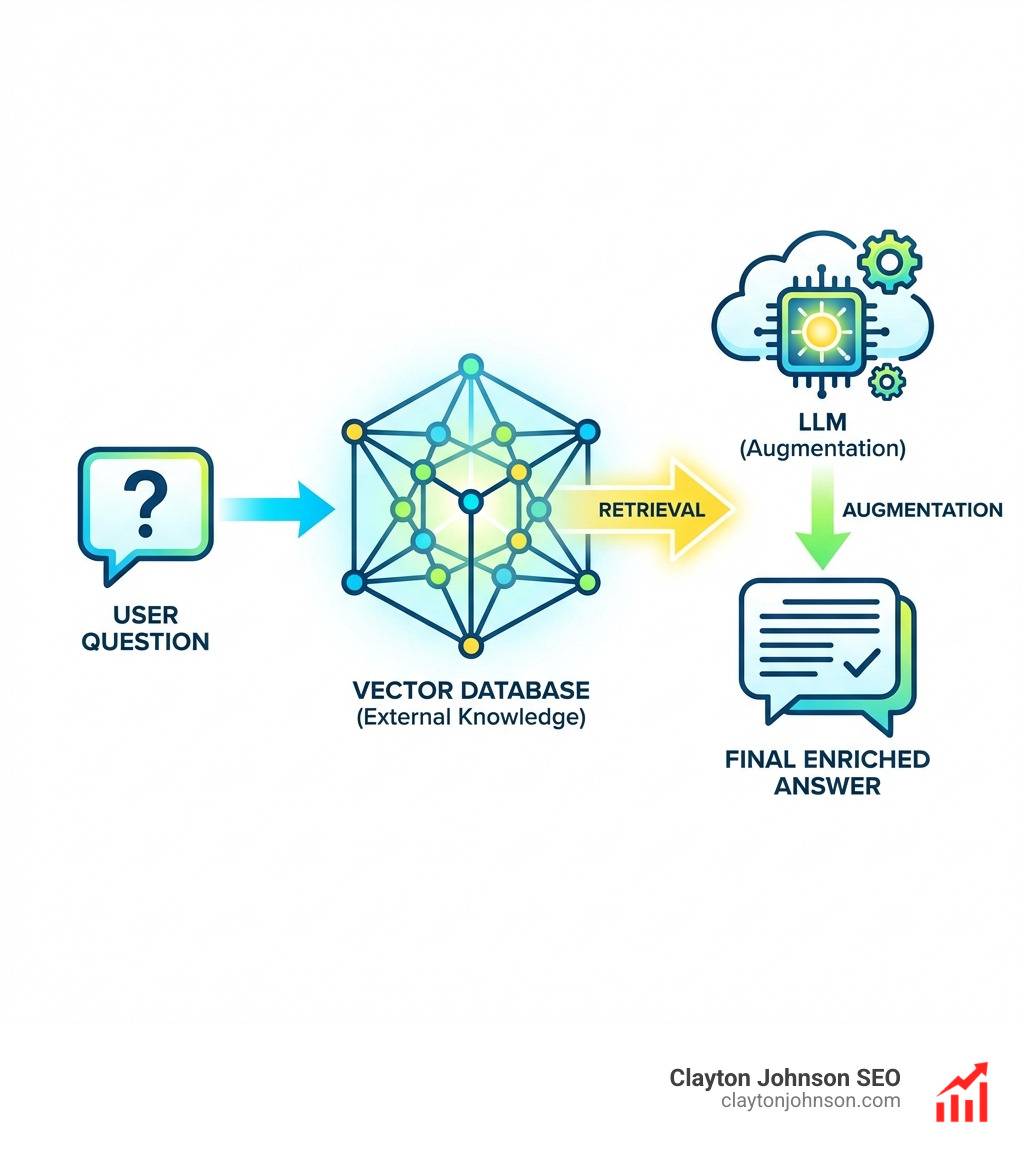
AI powered keyword research changes the game by using Large Language Models (LLMs) and machine learning to make data-driven decisions. Instead of just looking at how many people type a phrase, AI looks at the context. It uses AI competitive insights to see how your rivals are positioning themselves and where the gaps are. The result? Pure efficiency. Automation handles the clustering and intent categorization, leaving us to focus on high-level strategy.
The Evolution of AI Powered Keyword Research
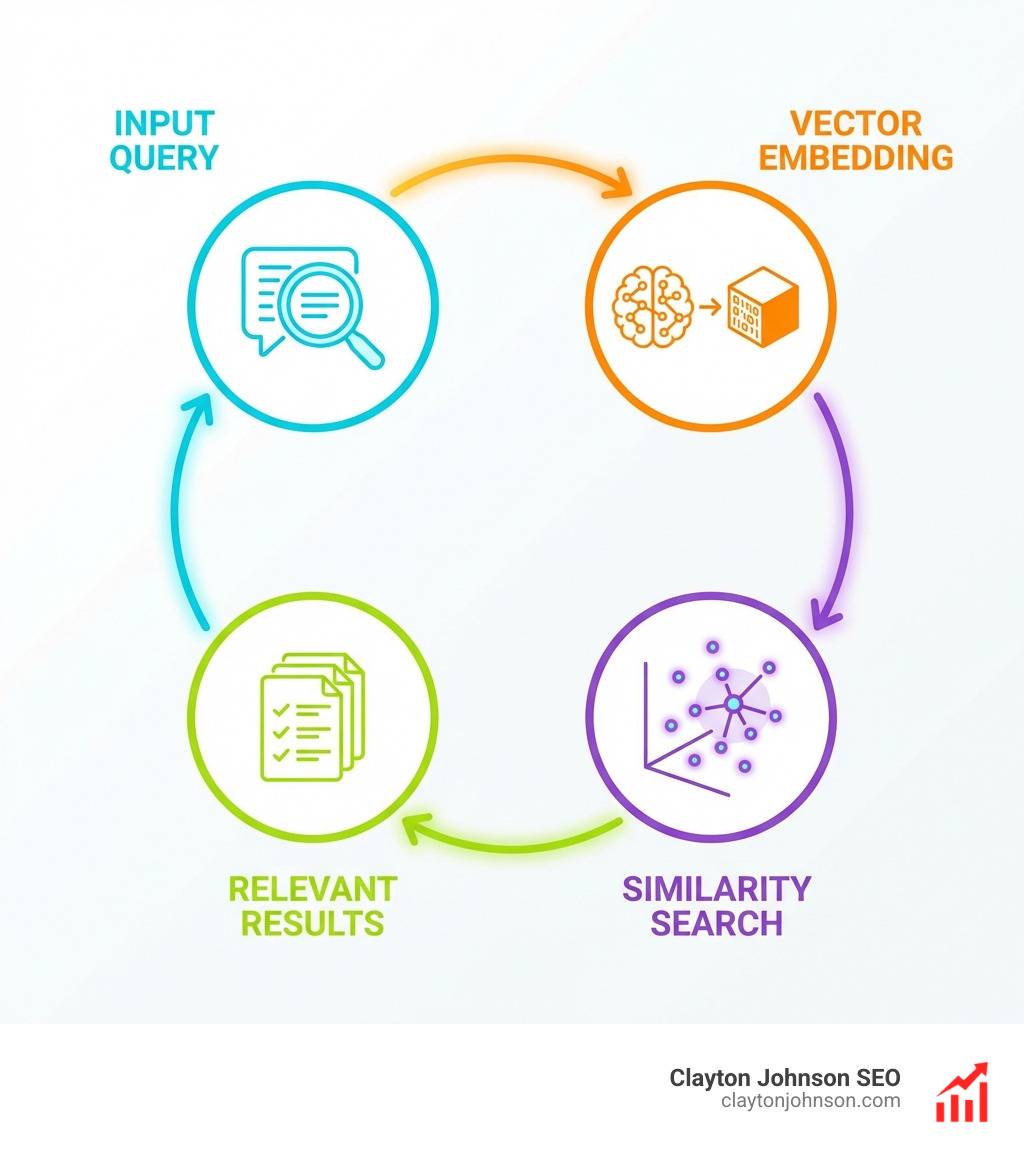
The evolution of this technology has moved us from “lexical match” (finding words that look the same) to “thematic relevance” (finding words that mean the same thing). Modern tools use thematic vector maps to measure the “distance” between different topics.
This is the core of semantic search. By using Natural Language Processing (NLP), AI understands that someone searching for “best running shoes” might also be interested in “marathon training tips” or “arch support inserts.” Tools like Google Trends provide a glimpse into these shifts, but AI-powered platforms take it further by providing real-time insights into how these themes are evolving across the web.
Benefits of AI for Modern SEO Strategy
Why should you care about this shift? Because it allows for massive scalability. If you are building a brand growth strategy, you can’t afford to manually map out 500 content clusters. AI does this for you by identifying your “competitive power”—how likely you are to win in a specific niche.
Predictive analytics also play a huge role. AI can flag when your rankings are likely to drop before they actually do, or suggest “striking distance” keywords that just need a small nudge to hit page one. This improves the overall user experience because you’re creating content that actually answers the specific questions your audience is asking.
Top AI-Powered Tools and Their Unique Features
Choosing the right tool is like choosing a car; they’ll all get you where you’re going, but some have much better autopilot. Here is how the big players stack up today:
| Feature | Semrush | Ahrefs | Moz Pro | Surfer SEO |
|---|---|---|---|---|
| AI Focus | Personal Difficulty & Strategy Builder | Supercomputer-powered LLMs & Translations | Intent Analysis & Domain Snapshots | Real-time Scoring & Topical Mapping |
| Unique Metric | PKD% (Personal Keyword Difficulty) | AI Search Visibility Tracking | Primary Search Intent | Content Score & NLP Terms |
| Database Size | Largest on market | 173+ languages supported | 1.25B+ suggestions | Focused on SERP real-time data |
| Best For | Advanced Strategy & Personalization | Technical SEO & Global Research | Competitor Insights & Ease of Use | Content Creators & Writers |
Advanced Metrics in AI Powered Keyword Research
The most exciting development in AI powered keyword research is the move toward personalized metrics. We are no longer looking at “Keyword Difficulty” (KD) in a vacuum. Semrush recently introduced Personal Keyword Difficulty (PKD%). This metric uses LLMs to analyze your specific domain’s relevance to a keyword. If you’ve written 50 articles about Minneapolis real estate, your PKD for “homes for sale in MN” will be much lower than a site that writes about cat food.
Other critical AI metrics include:
- Topical Authority: A measure of your domain’s expertise on a subject based on thematic vector maps.
- Potential SERP Positions: AI-driven predictions of where you could realistically rank.
- Search Intent Analysis: Automatically classifying keywords into Informational, Navigational, Commercial, or Transactional.
- Domain Competitive Power: An assessment of how your site stacks up against the current top 10 results for a specific term.
Multi-Platform Insights Beyond Google
Search doesn’t just happen on Google anymore. AI tools are expanding to help you dominate YouTube, Amazon, and even social media. For example, RightBlogger offers a suite of AI tools that help bloggers find ideas specifically for their niche, while Ahrefs provides localized keyword research in 173+ languages.
Whether you’re looking for Amazon product keywords or YouTube video tags, AI can analyze the specific algorithms of those platforms to find “hidden gems” that traditional tools might miss. This localized, multi-platform approach is essential for businesses in specific hubs like Minneapolis, where local intent matters just as much as global volume.
How to Master AI Keyword Discovery: A Step-by-Step Strategy
Now that we know what the tools can do, lets talk about how to actually use them. The goal is to move from a list of words to a comprehensive content marketing system.
Identifying High-Opportunity Keywords with AI
Start by using a tool like the Keyword Magic Tool in Semrush. Instead of just looking for the highest volume, use the Questions filter. This is an AI-powered goldmine. It identifies exactly what people are asking, which is perfect for improving your Google rankings via Featured Snippets and FAQ sections.
Look for “striking distance” keywordsterms where you already rank on pages 2 3. AI can identify these “hidden gems” and suggest exactly what content gaps you need to fill to push them onto page one. For WordPress users, integrating these findings with the Yoast plugin for WordPress ensures your on-page SEO is as sharp as your keyword strategy.
Automating Content Strategy and SERP Analysis
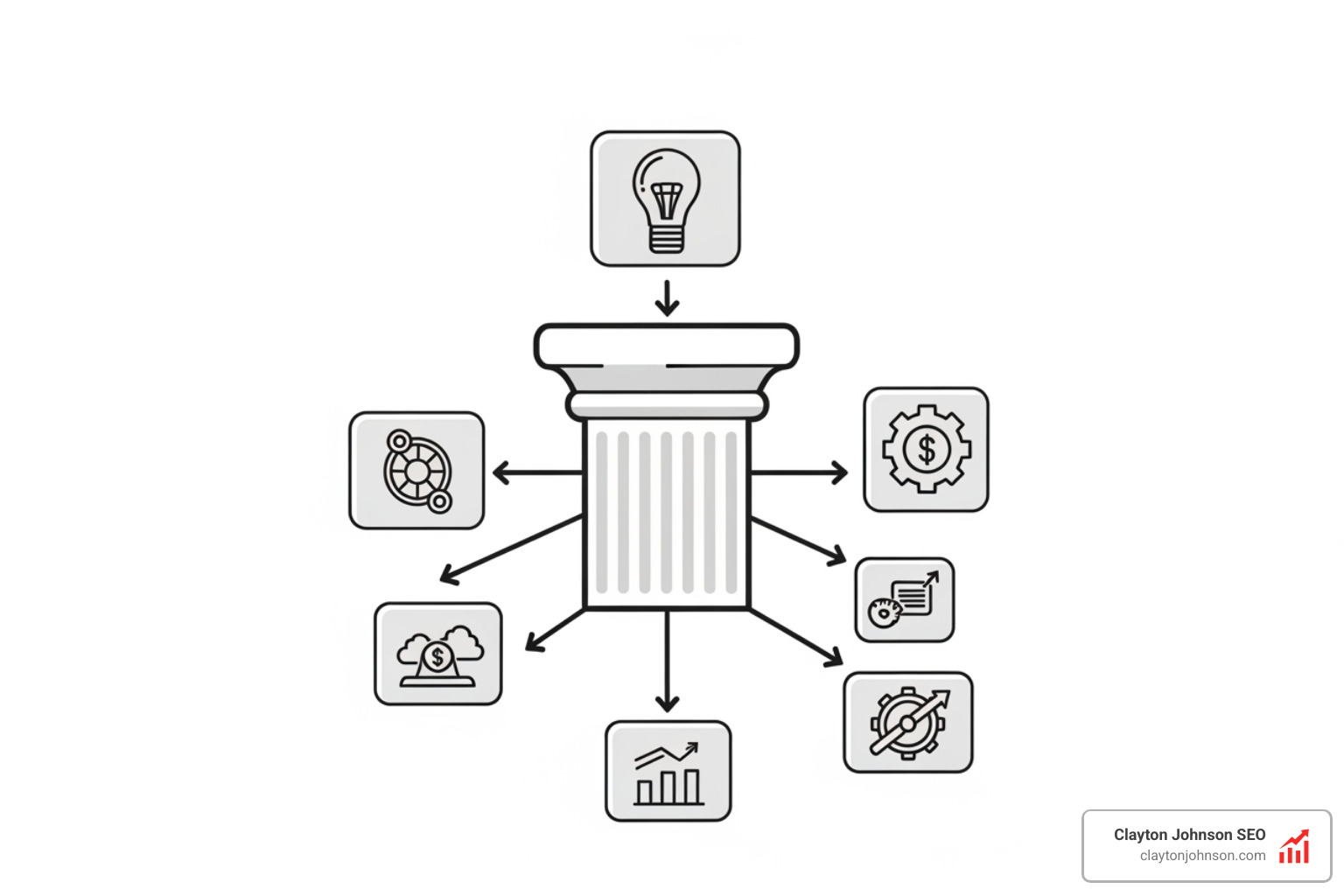
Once you have your keywords, dont just start writing. Use an AI Keyword Strategy Builder to automate your pillar and subpage hierarchy. This tool clusters keywords by search intent, so you don’t end up writing three different articles that all compete for the same “informational” intent.
AI also simplifies SERP analysis. Instead of manually clicking on every top result, AI tools like Surfer SEO or Ahrefs’ Content Helper can “grade” the top pages. They tell you exactly how many words, images, and specific NLP terms you need to include to be competitive. This is the ultimate way to master digital marketing AI.
Evaluating Accuracy and Limitations of AI SEO Tools
While we love our AI overlords, they aren’t perfect. It’s important to understand the limitations of free vs. paid tools.
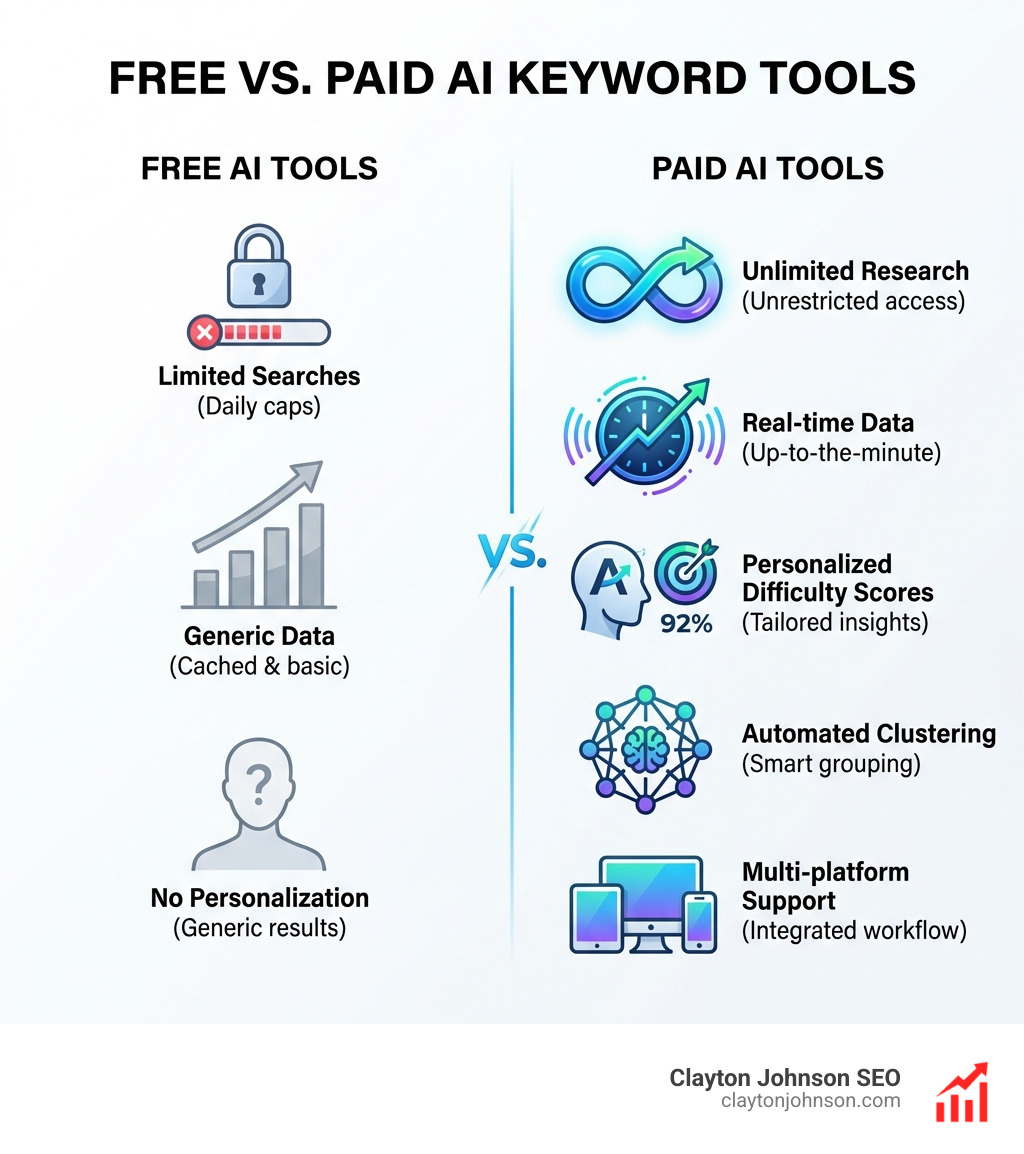
Free Tool Limitations:
- Search Limits: Most free tools (like the free version of Ubersuggest or KWFinder) limit you to 3-5 searches per day.
- Data Freshness: Free tools often use cached data that might be weeks or months old.
- Lack of Personalization: You won’t get PKD% or deep competitive insights on a free plan.
- API Costs: High-quality search data is expensive; that’s why the best tools cost money.
Google Keyword Planner is a great free resource, but remember: it’s built for advertisers. It focuses on “Competition” for ads (CPC), not how hard it is to rank organically. Always use human oversight. AI might suggest a keyword that is semantically related but totally off-brand for your Minneapolis business.
Future Trends in AI-Driven Search
The future of AI powered keyword research isn’t just about what people type into a search bar; it’s about where your brand appears in AI-generated answers. We are entering the era of AI Search Visibility.
Tools like Ahrefs are already building features to track brand mentions in LLM chatbots like ChatGPT, Perplexity, and Google’s AI Overviews. Marketers will soon need to optimize not just for “Blue Links” but for the “Contextual Citations” that AI models provide. This means your AI marketing skills will need to evolve to include “Generative Engine Optimization” (GEO).
Frequently Asked Questions about AI Keyword Research
Can AI keyword tools be used for platforms like YouTube or Amazon?
Yes! Many top-tier AI tools now offer multi-platform support. Ahrefs, for instance, allows you to toggle between Google, YouTube, Amazon, Bing, and more. AI is particularly good at analyzing the specific search patterns of these platforms, such as identifying “buyer intent” on Amazon or “tutorial intent” on YouTube.
How accurate are free AI keyword research tools compared to paid ones?
Free tools are usually accurate for basic volume estimates because they often pull from the same Google APIs. However, they lack the “analytical layer” that paid tools provide. A free tool might tell you 1,000 people search for a term, but a paid AI tool will tell you that you specifically shouldn’t target it because your competitors have 10x more topical authority than you do.
What is Personal Keyword Difficulty (PKD) and why does it matter?
PKD is a game-changer. While standard Keyword Difficulty (KD) tells you how hard it is for anyone to rank, PKD tells you how hard it is for you. It looks at your site’s existing content, backlinks, and thematic relevance. This prevents you from wasting time on “impossible” keywords and helps you find “striking distance” opportunities you might have ignored.
Conclusion
The transition to AI powered keyword research is not just a trend—it’s a fundamental shift in how we approach growth. By leveraging machine learning to handle the heavy lifting of data analysis, we can spend more time on what matters: creating incredible content and building a brand that resonates.
Whether you’re looking for a Minneapolis SEO expert to overhaul your strategy or you’re a founder looking to implement these digital marketing pillars yourself, the tools are now available to make your SEO smarter, faster, and more effective.
Ready to see how AI can transform your rankings? Explore our SEO services and start building your future-proof search strategy today.