Everything You Need to Know About AI-Powered Search Summaries

Why AI Overviews Are Reshaping How We Search
What are AI Overviews is one of the most-searched questions among marketers and SEO professionals right now—and for good reason. Google’s AI-powered search summaries are fundamentally changing how information appears in search results.
Here’s what you need to know:
- AI Overviews are AI-generated summaries that appear at the top of Google search results
- They use large language models (like Google’s Gemini) to synthesize information from multiple sources
- They appear for informational and commercial queries where Google believes a summary adds value
- They include clickable source links embedded within the generated answer
- They’re designed to give users quick, comprehensive answers without clicking through to websites
Key impact: AI Overviews reduce click-through rates to traditional organic results while increasing zero-click searches—meaning users get their answers directly in the SERP.
This shift represents the biggest change to search visibility since featured snippets. Traditional ranking strategies focused on position one no longer guarantee traffic. Instead, entity authority, structured content, and answer-oriented optimization now determine whether your brand appears inside these AI-generated summaries.
As Clayton Johnson, I’ve spent years building SEO strategies focused on discoverability infrastructure rather than just rankings—and what are AI Overviews represent is exactly the kind of search evolution that requires architectural thinking, not tactical adjustments. My work centers on helping businesses adapt to AI-influenced search through structured frameworks, entity reinforcement, and measurable visibility beyond traditional metrics.
Basic what are ai overviews vocab:
- AI content optimization guide
- AI content SEO strategy
- AI driven SEO checklists
Understanding What Are AI Overviews
To truly grasp the magnitude of this shift, we have to look at how the search engine results page (SERP) has been physically restructured. In the past, Google acted as a librarian, pointing you toward the right book. Now, with AI Overviews, Google is acting more like a research assistant who reads the books for you and hands you a summarized report.

When we ask what are ai overviews, we are looking at a feature that occupies “Position Zero” on steroids. These are search snapshots generated by Google Gemini, Google’s most capable family of AI models. Unlike a standard list of blue links, these overviews synthesize information from across the web to provide a cohesive answer to complex questions.
According to the Official Google guide to AI Overviews, these snapshots are particularly prevalent for queries that have informational intent or commercial “research” intent. For example, if you search “how to choose the best CRM for a mid-sized marketing agency,” Google might generate an AI Overview that lists key features to look for, compares popular options, and provides links to the articles it used to build that summary.
Defining What Are AI Overviews for Modern Users
For the average user, the experience is all about speed. Instead of clicking on three different blogs to piece together an answer, they get a multi-perspective summary in seconds. As noted in the TechRepublic overview of AI features, this is about streamlining the user experience.
The overview typically includes:
- A multi-paragraph summary of the topic.
- A “carousel” or list of links to the websites used as sources.
- Suggested follow-up questions to dive deeper into the topic.
This creates a “one-stop shop” for information retrieval, keeping users within the Google ecosystem longer while providing immediate utility.
The Evolution from Featured Snippets
It is easy to confuse AI Overviews with the featured snippets we have seen for years. However, there is a fundamental difference. Traditional featured snippets are “extractive”—Google finds a specific block of text on a single webpage and mirrors it.
Generative snapshots, on the other hand, are “abstractive.” They don’t just copy and paste; they rewrite and combine information from multiple sources. This technology evolved from the Search Generative Experience (SGE) experiments, moving from a voluntary “opt-in” test in Google Labs to a core part of the standard search experience for millions of users.
The Technology Behind Generative Search
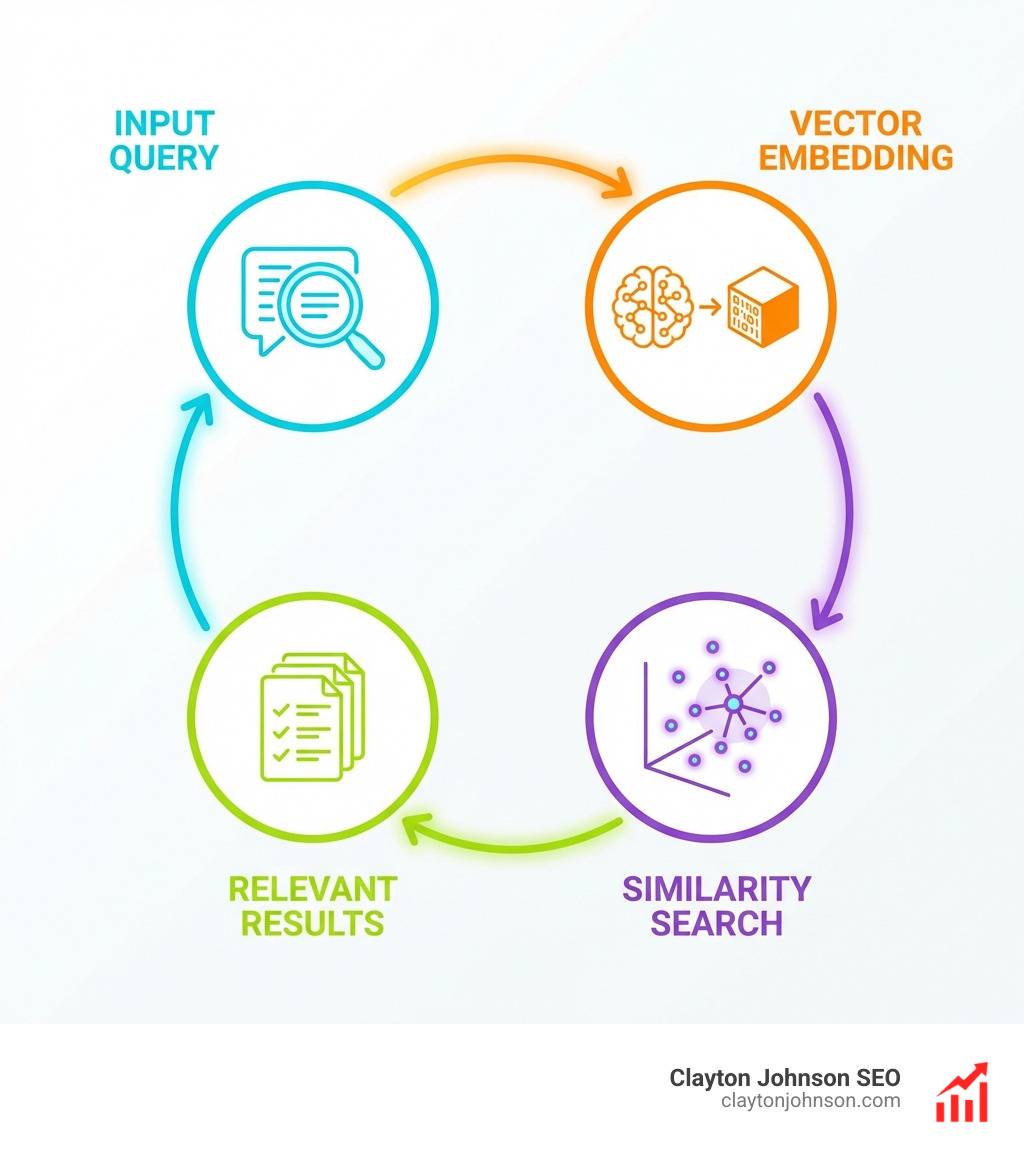
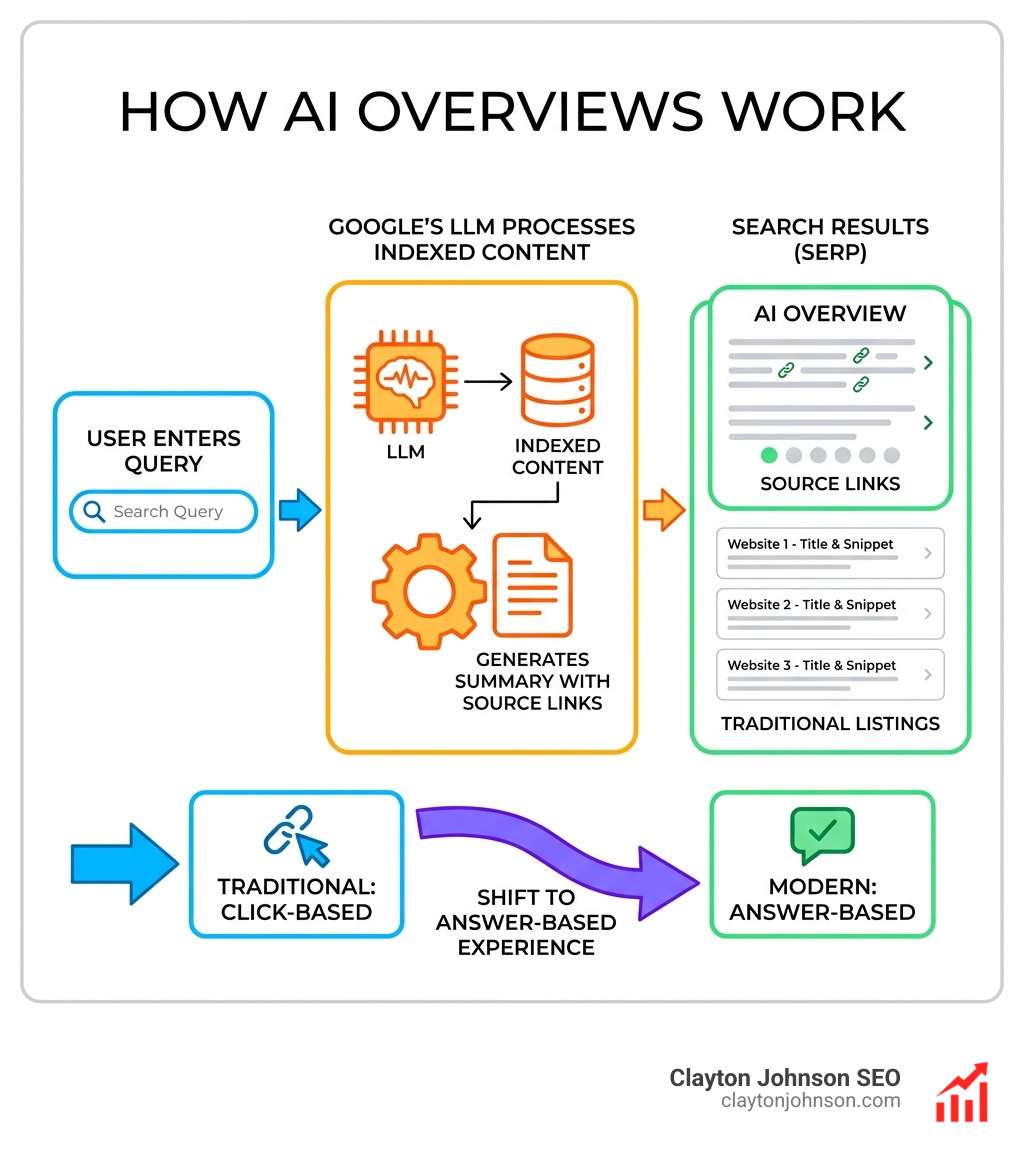
The “magic” behind these summaries is a combination of Large Language Models (LLMs) and a process called Retrieval-Augmented Generation (RAG).
When you enter a query, Google doesn’t just rely on the AI’s “internal memory.” Instead, it performs a real-time search of its index, identifies the most relevant and authoritative pages, and then feeds that information into Gemini. The AI then “grounds” its response in that real-world data to ensure accuracy. For a deeper dive into the mechanics, you can Watch the technical breakdown of AI Overviews.
This use of Natural Language Processing (NLP) allows Google to understand the nuances of human speech. It can handle long-tail, conversational queries that would have previously confused a keyword-based system.
Where and When Overviews Appear
While AI Overviews are now a standard part of search, they don’t appear for every single query. Google typically avoids generating them for “Your Money or Your Life” (YMYL) topics where accuracy is life-critical (like specific medical dosages) or for simple navigational queries (like “Facebook login”).
Currently, the rollout has expanded globally, supporting multiple languages across both mobile and desktop platforms. Users who want to see the “bleeding edge” of these features can still Manage AI features in Google Labs to test experimental search capabilities before they hit the general public.
Impact on Website Traffic and Visibility
This is the part that keeps marketing leaders up at night. If Google is providing the answer, why would anyone click on a website?
The reality is a bit more nuanced. While “zero-click” searches are certainly on the rise, being cited as a source within an AI Overview can actually drive high-intent traffic. However, the overall click-through rate (CTR) for the links below the AI Overview is seeing a significant shift.
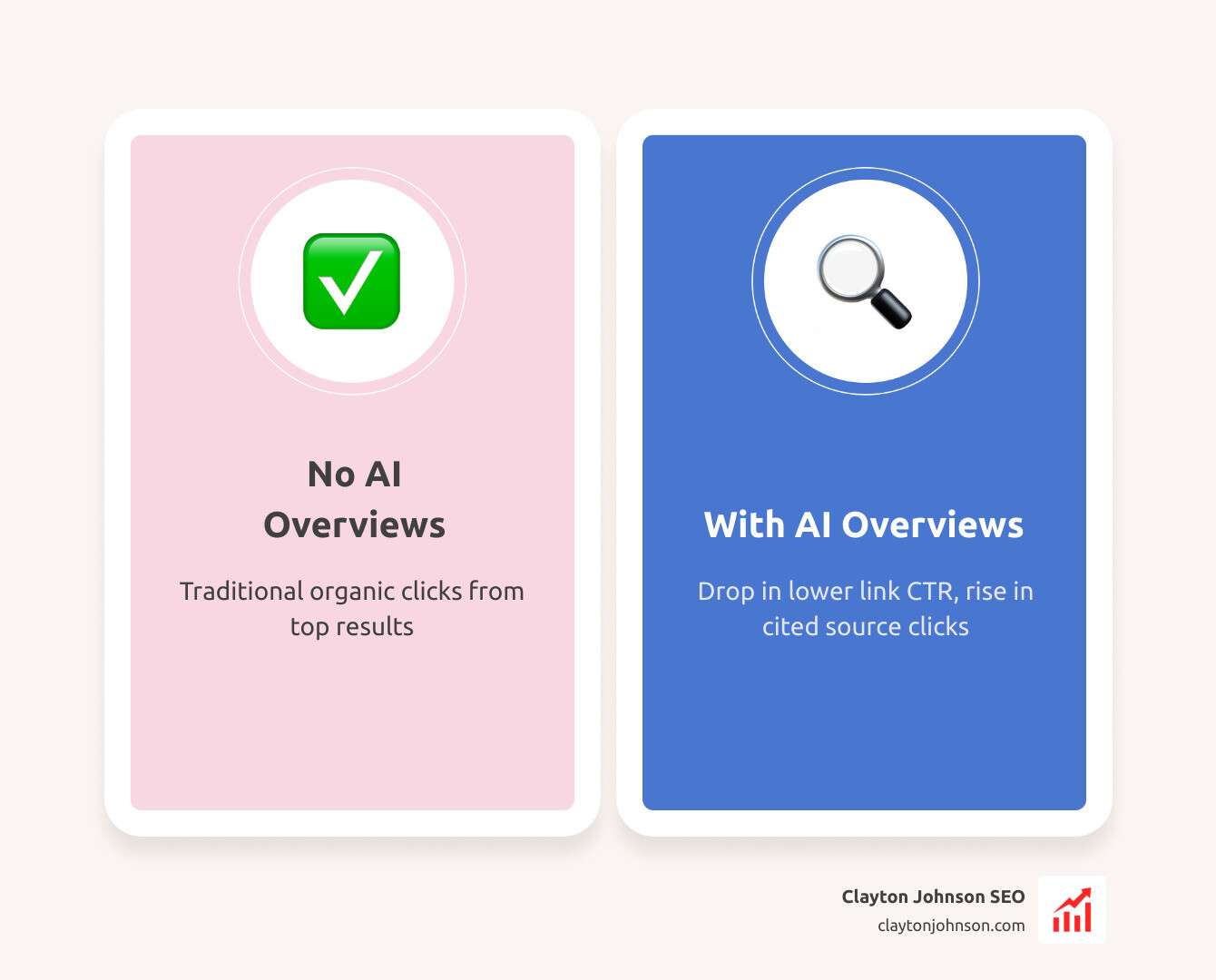
A Pew Research report on user click behavior suggests that users are increasingly satisfied with the summary alone. This means that for basic “what is” or “how to” questions, top-of-funnel traffic may decrease.
Shifting Search Intent Trends
According to a Botify study on search reality, we are seeing a shift in how commercial and transactional queries are handled. If a user searches for “best running shoes for flat feet,” the AI Overview might summarize the top-rated shoes from various review sites.
For brands, this means visibility is no longer just about being #1 in blue links; it’s about being the “data source” that the AI trusts. This requires a shift from keyword density to entity authority.
Strategic Optimization for AI Search
So, how do we adapt? At Clayton Johnson SEO and Demandflow, we believe the answer lies in structured growth architecture. You cannot “trick” an LLM. You have to provide such high-quality, well-structured data that the AI views your content as the definitive source.
Optimization now requires a heavy focus on E-E-A-T (Experience, Expertise, Authoritativeness, and Trustworthiness). Google’s official optimization recommendations emphasize that there are no special “tags” for AI Overviews. The same principles that help you rank in traditional search apply here, but with a greater emphasis on clarity and structured data.
How to Optimize for What Are AI Overviews
To increase your chances of appearing in a generative summary, we recommend the following tactics:
- Direct Answer Blocks: Start your articles with a clear, concise definition or answer to the primary query.
- Original Research: AI models value “new” information. If you provide unique data or statistics, the AI is more likely to cite you as the source.
- Expert Citations: Use platforms like HARO, Qwoted, or Featured to gather quotes from real experts. This reinforces the “Expertise” part of E-E-A-T.
- Topic Authority: Don’t just write one-off articles. Build a comprehensive “knowledge base” around a topic so Google views your entire domain as an authority.
Measuring Your AI Presence
Traditional rank tracking is becoming less effective. We now need to measure “Pixel Height”—how far down the page your organic result is pushed by the AI Overview.
Google Search Console is beginning to integrate more data regarding these views, but third-party tracking tools are also evolving to show whether your site is being cited within the AI snapshot itself. This is a new metric of success: AI Citations.
Limitations, Criticisms, and Publisher Controls
It hasn’t been a perfectly smooth ride for Google. The rollout of AI Overviews has faced significant criticism regarding accuracy. Because LLMs are predictive, they can sometimes “hallucinate” or present satire as fact.
A Wired report on AI search failures highlighted several instances where the AI gave flat-out wrong advice. Perhaps most famously, a Forbes report on nonsensical answers detailed how the AI suggested people use non-toxic glue to keep cheese on pizza or even eat rocks for minerals.
These “hallucinations” have led Google to implement stricter safety filters and restrict AI Overviews for certain sensitive topics.
How to Opt Out of AI Summaries
For publishers who are concerned about their content being used to train or fuel these summaries without driving traffic, there are technical controls available. While you cannot “opt out” of being indexed by the AI specifically without opting out of Google Search entirely, you can use preview controls:
nosnippet: Prevents any text snippet from appearing.data-nosnippet: Allows you to shield specific parts of a page from being used in a snippet.max-snippet: Limits the number of characters Google can use.
However, we generally advise against aggressive blocking, as it can significantly hurt your overall visibility in traditional search results as well.
Frequently Asked Questions about AI Search
Can I turn off AI Overviews as a user?
Currently, there is no single “off” switch for AI Overviews in standard Google Search. However, users can click the “Web” tab at the top of the search results to see only traditional blue links, bypassing the AI-generated content entirely.
Do AI Overviews affect my SEO ranking?
They don’t necessarily change your “rank” in the traditional list of 10 blue links, but they change your visibility. If an AI Overview occupies the top 800 pixels of a mobile screen, your #1 organic ranking is effectively pushed “below the fold.” This is why optimizing to be within the overview is the new priority.
Are AI Overviews available in all countries?
Google has rolled out AI Overviews to over 100 countries, but availability varies based on local regulations and language support. The US, UK, and several other major markets have full access, while others are being added in phases.
Conclusion
The search landscape is shifting from a library of links to an engine of answers. Understanding what are ai overviews is the first step in future-proofing your digital presence. This isn’t just a trend; it’s a fundamental evolution in information retrieval.
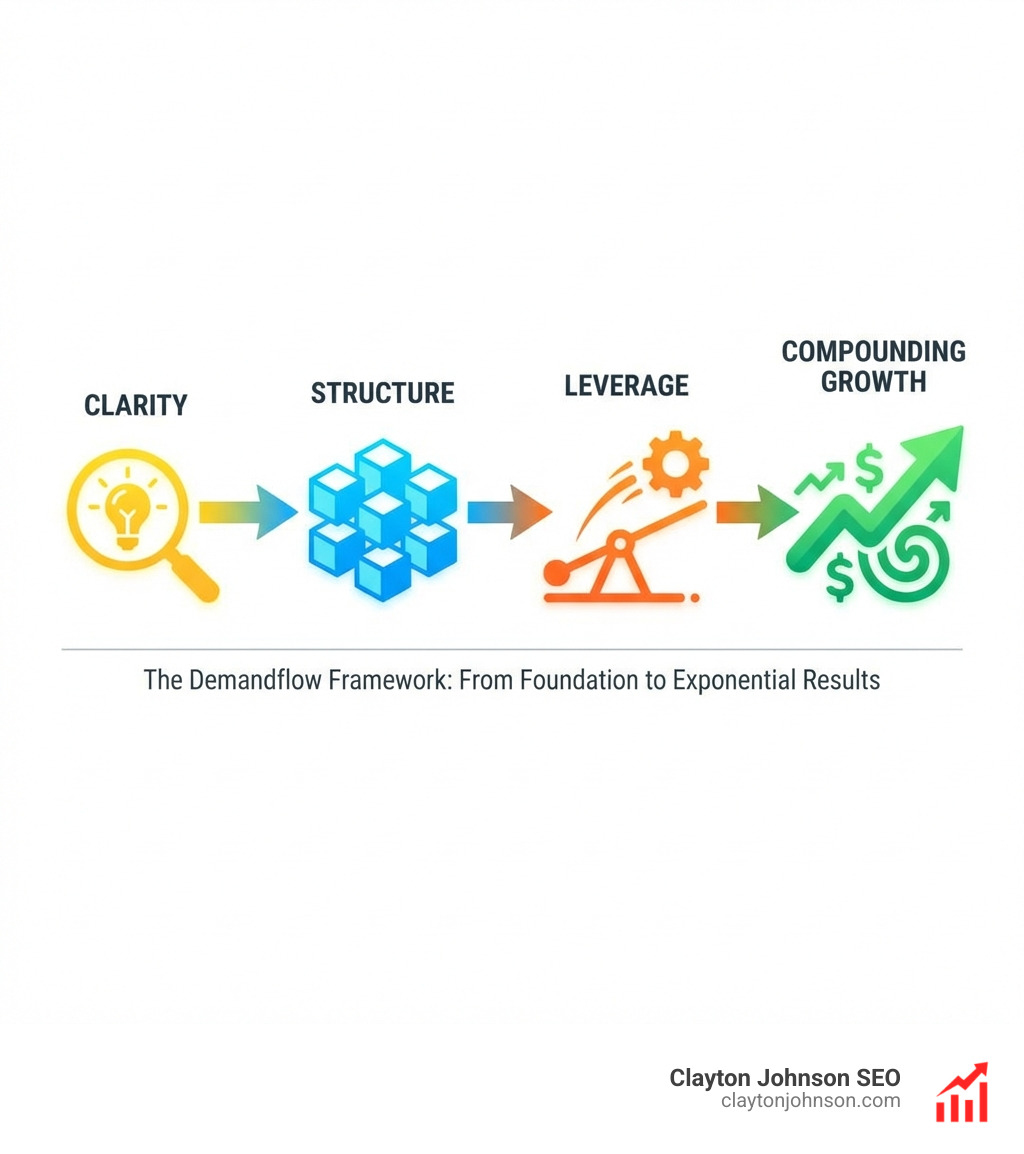
At Clayton Johnson SEO and through our work with Demandflow, we help founders and marketing leaders move beyond simple tactics. We build structured growth architecture that thrives in an AI-augmented world. By focusing on clarity, structure, and compounding leverage, we ensure that your brand isn’t just a result on a page—it’s the authority that the AI relies on.
If you’re ready to stop chasing the algorithm and start building a search-intent aligned knowledge base that dominates both traditional and AI search, let’s talk about building your growth infrastructure.
Ready to build your growth architecture?
Explore Demandflow Strategies | Get a Growth Diagnostic