11 AI-Driven SEO Strategies to Transform Your Rankings


The Search Landscape Has Shifted — Here’s What It Means for Your Rankings
AI driven seo strategies are the new playbook for getting found online — and if you’re still relying on traditional SEO alone, you’re already falling behind.
Here’s what you need to know, fast:
- AI search is mainstream. Google processes 8.5 billion searches per day, and over 60% of online queries are now answered directly by AI-powered engines.
- Visibility has moved. It’s no longer just about ranking on page one — it’s about being cited by ChatGPT, Perplexity, Google AI Overviews, and Gemini.
- The stakes are real. One SaaS company saw a 40% drop in organic traffic simply because they didn’t appear in AI-generated results — despite strong traditional SEO.
- The fundamentals still matter. Strong content, technical SEO, and authority signals are the foundation. But how you build on them has changed.
- Brand signals now drive AI citations. Reviews, mentions, and off-site credibility directly influence whether AI systems recommend your business.
The shift is simple to understand but easy to miss: search engines used to match keywords to pages. AI systems now match intent to answers — and they pull those answers from sources they trust most.
If your content isn’t structured for AI extraction, your brand isn’t building the right authority signals, and your technical foundation isn’t speaking the language of large language models, you’re invisible to a growing share of your potential customers.
That’s exactly what this guide is here to fix.
I’m Clayton Johnson, an SEO strategist with nearly two decades of experience building scalable search frameworks — and developing AI driven SEO is now at the core of everything I do for growth-focused businesses. Let’s walk through the full system, step by step.

Core Principles of AI Driven SEO Strategies
The era of “blue links” is evolving into an era of “direct answers.” To stay relevant, we have to understand that AI systems don’t just “crawl” the web; they “ingest” it. Traditional SEO was about helping a bot find your page. AI driven SEO strategies are about helping an LLM (Large Language Model) understand your value.
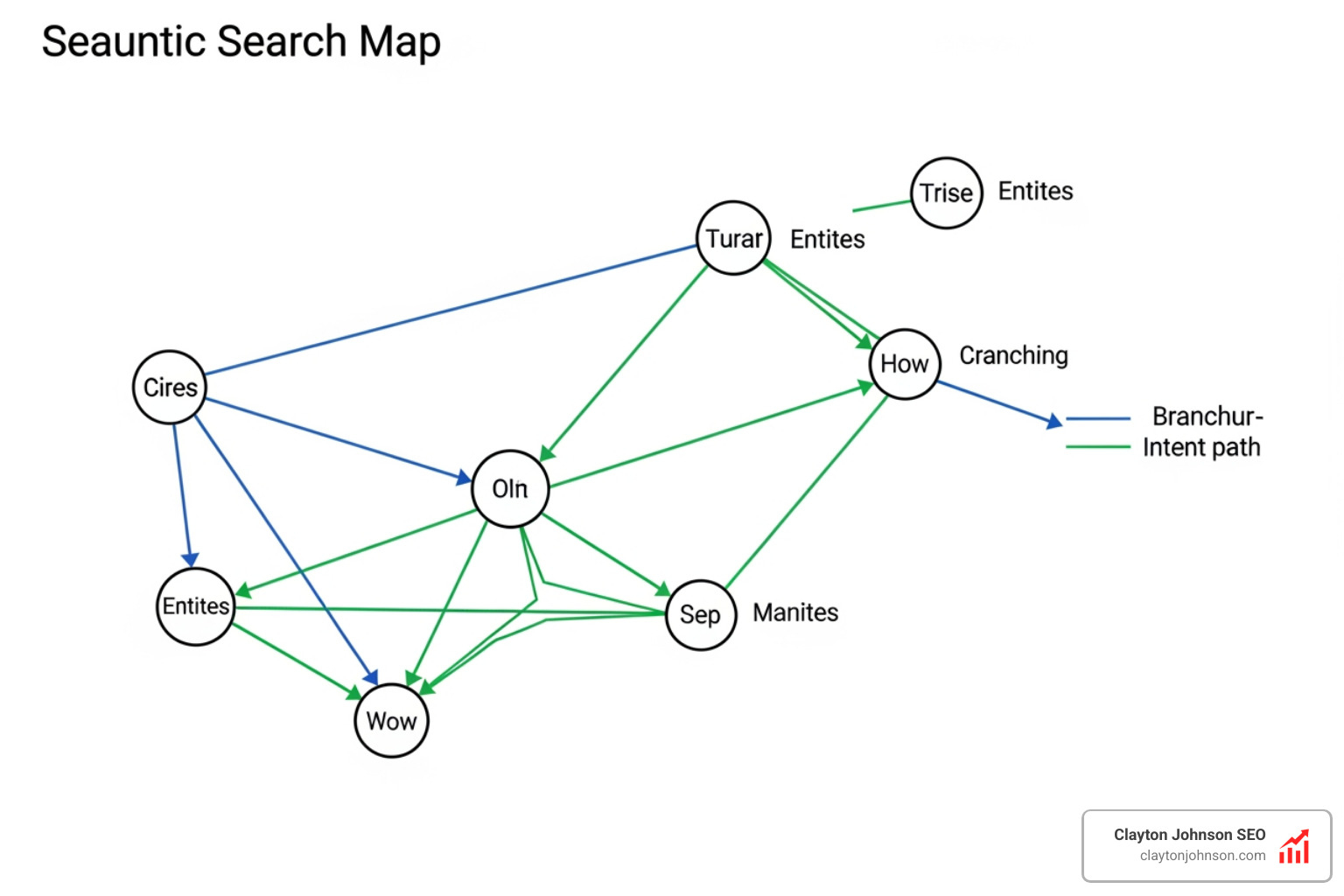
At the heart of this shift is the transition from keywords to entities. An entity is a well-defined object or concept—a person, place, or thing. AI search engines like Perplexity or Google’s AI Overviews use a “Knowledge Graph” to understand the relationships between these entities. If we want our brands to be recommended, we need to become a recognized entity within that graph.
This brings us to two critical concepts: Generative Engine Optimization (GEO) and Large Language Model Optimization (LLMO).
- GEO focuses on making your content “citable.” When an AI generates an answer, it selects the most credible, structured, and relevant snippets to summarize.
- LLMO is the broader practice of ensuring your entire site architecture and data are readable by models like GPT-4 or Gemini.
The statistics are staggering: every minute, 5.9 million searches are processed on Google, adding up to 354 million searches per hour. However, Gartner predicts that traditional search engine volume could drop by as much as 25% as users flock to AI chatbots for instant answers. This isn’t just a trend; it’s a fundamental change in how humans interact with information.
Mastering AI Driven SEO Strategies for Generative Visibility
To win in the generative era, we must prioritize technical “readability” for machines. This goes beyond simple meta tags. We are now talking about guiding the AI crawlers directly.
One of the most effective emerging standards is the llms.txt file. Much like a robots.txt file tells a search engine what not to crawl, an llms.txt file provides a roadmap for AI models, offering a clean, text-based overview of your site’s most important content and credentials.
Furthermore, Schema markup and structured data (JSON-LD) have become the “language” of AI SEO. By using specific schema types—like Organization, FAQPage, HowTo, and Product—we provide unambiguous signals that help AI systems categorize our information. This prevents “hallucinations” and ensures that when an AI mentions our brand, the facts are accurate.
If you are wondering where to start with your technical foundation, we recommend a technical SEO audit with AI to identify gaps in your current structure. Mastering these technical nuances is the first step in a comprehensive guide to AI search optimization.
Building Topical Authority with AI Driven SEO Strategies
AI systems reward depth over breadth. They prefer to cite sources that demonstrate “Topical Authority.” This is achieved through the hub-and-spoke model or content clusters.
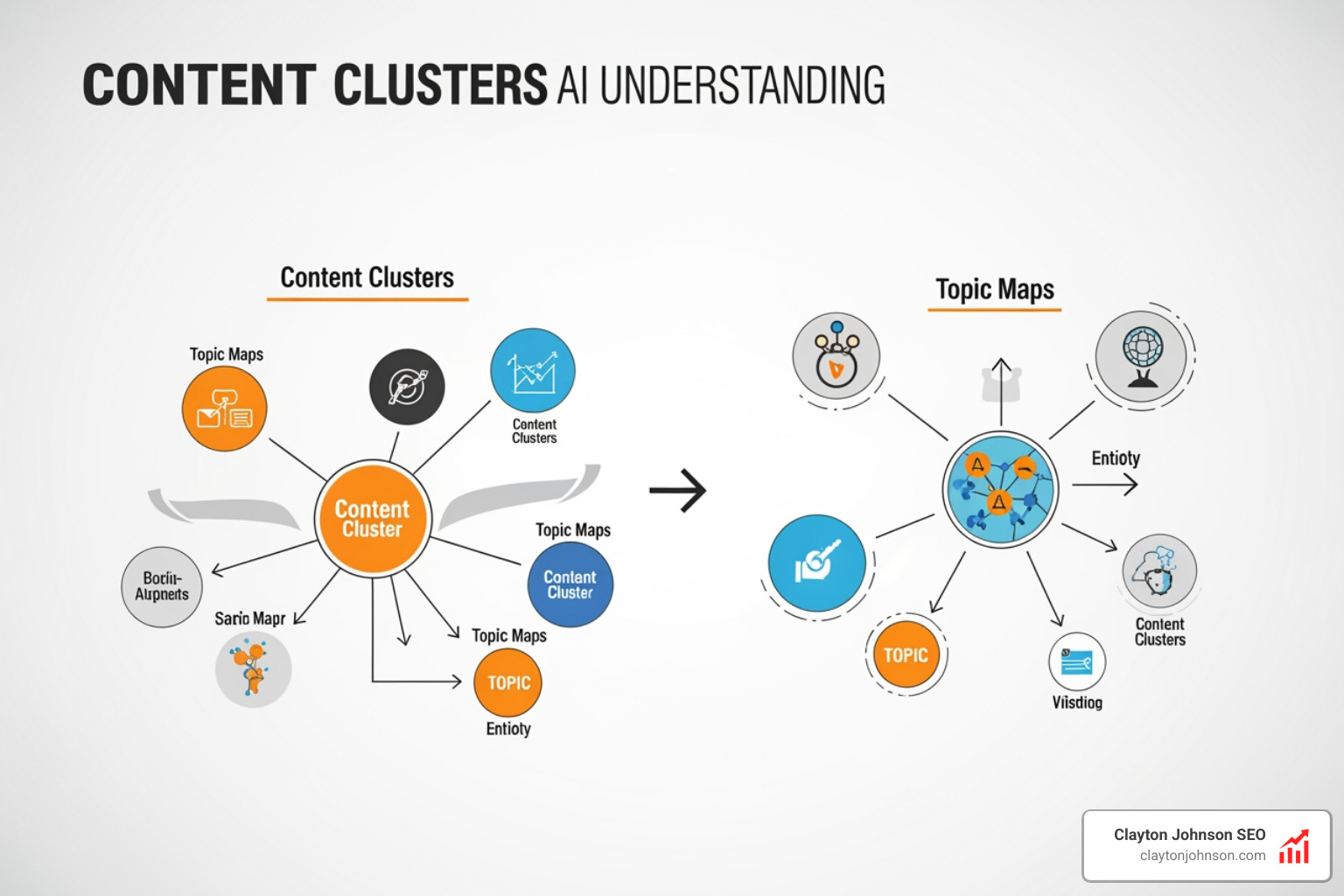
Instead of writing 50 random blog posts, we build a “pillar page” (the hub) that covers a broad topic in depth, supported by multiple “cluster pages” (the spokes) that answer specific, long-tail questions. These pages are strategically interlinked to create a “digital knowledge graph” that tells the AI: “We are the definitive experts on this subject.”
For example, if we are optimizing a B2B site, we don’t just target the keyword “accounting software.” We build a cluster around “automated tax compliance,” “API integrations for ERPs,” and “cloud security for financial data.” This level of semantic depth is what gets you cited in an AI Overview.
For a deeper dive into this process, check out our AI content optimization guide and learn the secrets to winning the no-click game by becoming the answer itself.
Leveraging E-E-A-T and Brand Signals in AI Search
If AI search is about trust, then E-E-A-T (Experience, Expertise, Authoritativeness, and Trustworthiness) is the currency. AI models are trained to prioritize content that feels “human” and verified.
“Experience” is the hardest factor for AI to fake. This means we must inject narratives, original data, and unique case studies into our content. AI systems like Perplexity often match Google’s top 10 domains in over 91% of cases, but they also heavily favor community-driven platforms. In fact, Reddit appears in over 40% of results across AI Mode and ChatGPT. This tells us that off-site citations and real-world reviews on forums are massive signals for AI recommendations.
Google has provided clear guidance on AI-generated content, stating that they reward high-quality content regardless of how it’s produced—as long as it’s helpful and people-first. We use AI to scale, but we use human expertise to verify. This synergy is the “new gold rush” in AI authority building.
Implementing and Measuring Your AI Search Framework
You can’t manage what you don’t measure. In traditional SEO, we tracked rankings for specific keywords. In the AI era, we track “Visibility Share” and “Citation Rate.”

Measuring success requires a shift in our KPIs. We need to know:
- Citation Rate: How often is our brand cited as a source in an AI answer?
- Sentiment Score: Is the AI recommending us positively or just mentioning us as an alternative?
- Engine Coverage: Are we appearing across ChatGPT, Gemini, Perplexity, and Meta AI?

| Metric | Traditional SEO | AI-Driven SEO |
|---|---|---|
| Primary Goal | Rank #1 for a keyword | Become the cited answer |
| Success Indicator | High CTR (Click-Through Rate) | High Citation Frequency |
| Content Focus | Keyword density and backlinks | Entity relationships and E-E-A-T |
| Crawl Signal | Sitemap.xml and Robots.txt | llms.txt and Structured Data |
| User Intent | Navigation/Transactional | Conversational/Problem-Solving |
Essential Tools for AI-Powered Search Dominance
To execute ai driven seo strategies, we need a specialized toolkit. While the “big three” still play a role, new players are emerging to help us track generative visibility.
- Ahrefs & SEMrush: Still essential for backlink analysis and traditional keyword gaps. Ahrefs’ study of 600,000 pages recently confirmed that AI-generated content doesn’t hurt rankings if it’s genuinely helpful.
- Surfer SEO: Excellent for real-time content optimization based on NLP (Natural Processing) signals.
- Ubersuggest: A fantastic, affordable option for small businesses to track AI search visibility and generate intent-mapped content ideas.
- AthenaHQ: A specialized tool for GEO that provides step-by-step recommendations to improve your brand’s presence in AI answers.
For a full breakdown of the landscape, see our ultimate AI SEO tools guide or explore the top automated SEO audit tools for faster results.
Technical Optimization: From Schema to llms.txt
Technical SEO is about extraction optimization. We need to make it as easy as possible for an AI to pull a summary from our pages.
This starts with a clean heading hierarchy (H1, H2, H3). We should lead with the answer—literally. Starting a section with a 150-word summary or a “Key Takeaways” box makes your content a prime candidate for AI Overviews.
We also need to consider RAG (Retrieval-Augmented Generation) systems. These are the systems AI models use to “look up” facts in real-time. By providing a structured “Brand Knowledge Base” on our site—including detailed FAQs, product specifications, and white papers—we give these systems the “source of truth” they need to cite us accurately.
Learning how to automate SEO tasks can save your team hundreds of hours, while specialized strategies, like our AI search strategy for Claude, ensure you are visible across every major platform.
Future-Proofing Your Strategy with Clayton Johnson
At the end of the day, the goal of any AI driven seo strategies isn’t just to “rank”—it’s to build a durable growth engine. My philosophy is built on a simple progression: Clarity → Structure → Leverage → Compounding Growth.
We don’t just chase the latest AI “hack.” We build scalable systems that align your business goals with the way machines and humans actually search. This involves:
- Intent Modeling: Predicting the questions your buyers ask AI before they even visit your site.
- Taxonomy-Driven Ecosystems: Organizing your content so it’s logically grouped for both users and crawlers.
- Measurable Outcomes: Focusing on pipeline and revenue, not just vanity metrics like “impressions.”
If you are ready to stop guessing and start building a system that wins in the age of AI, I invite you to explore our AI driven SEO implementation guide. It’s time to master AI search systems and ensure your brand isn’t just a part of the conversation—it’s the source.
The robots aren’t just coming; they’re already here. The question is: will they be recommending you?