How to Use Traffic Generation AI to Boost Your Visibility

Why Traffic Generation Strategies Matter for Digital Success
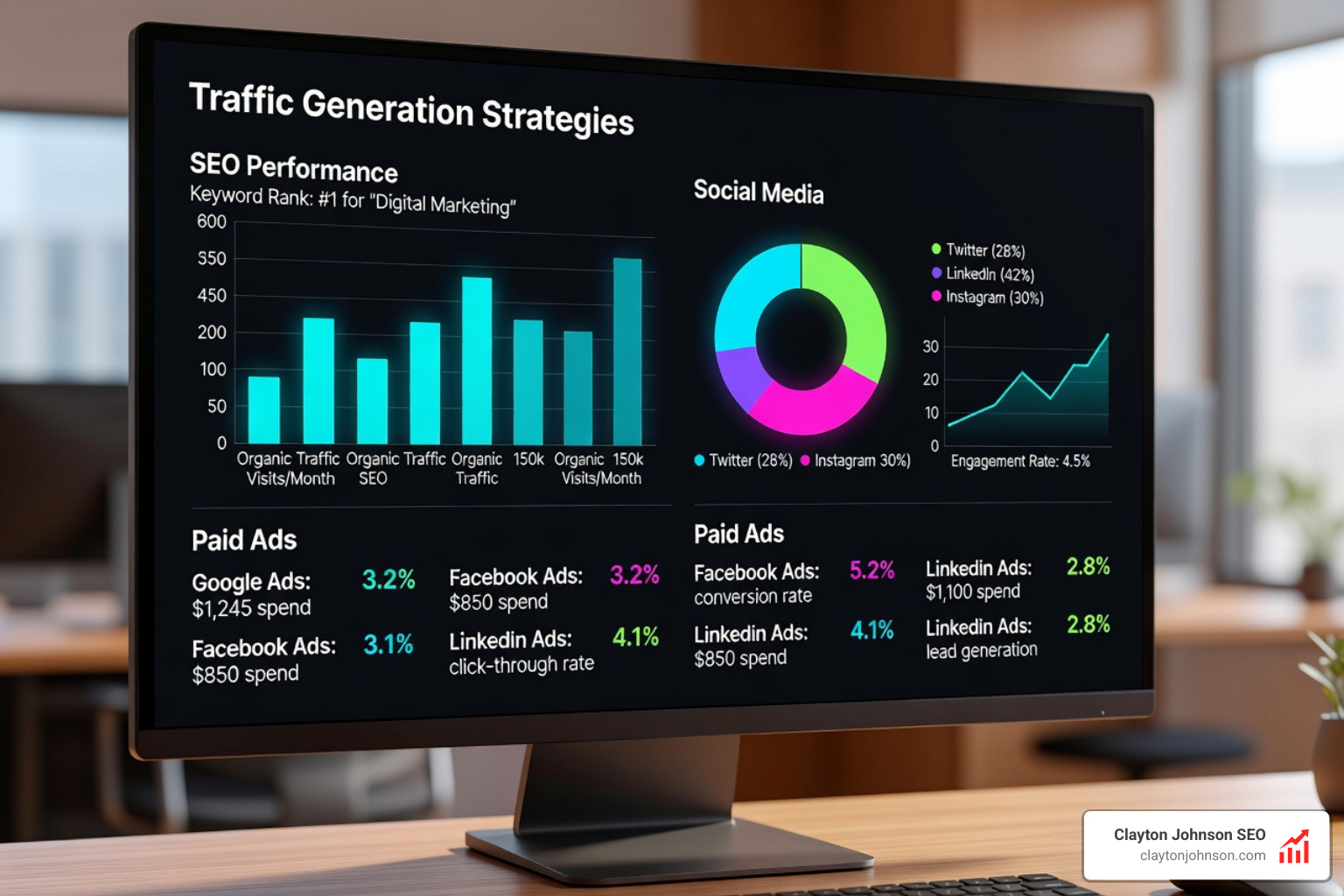
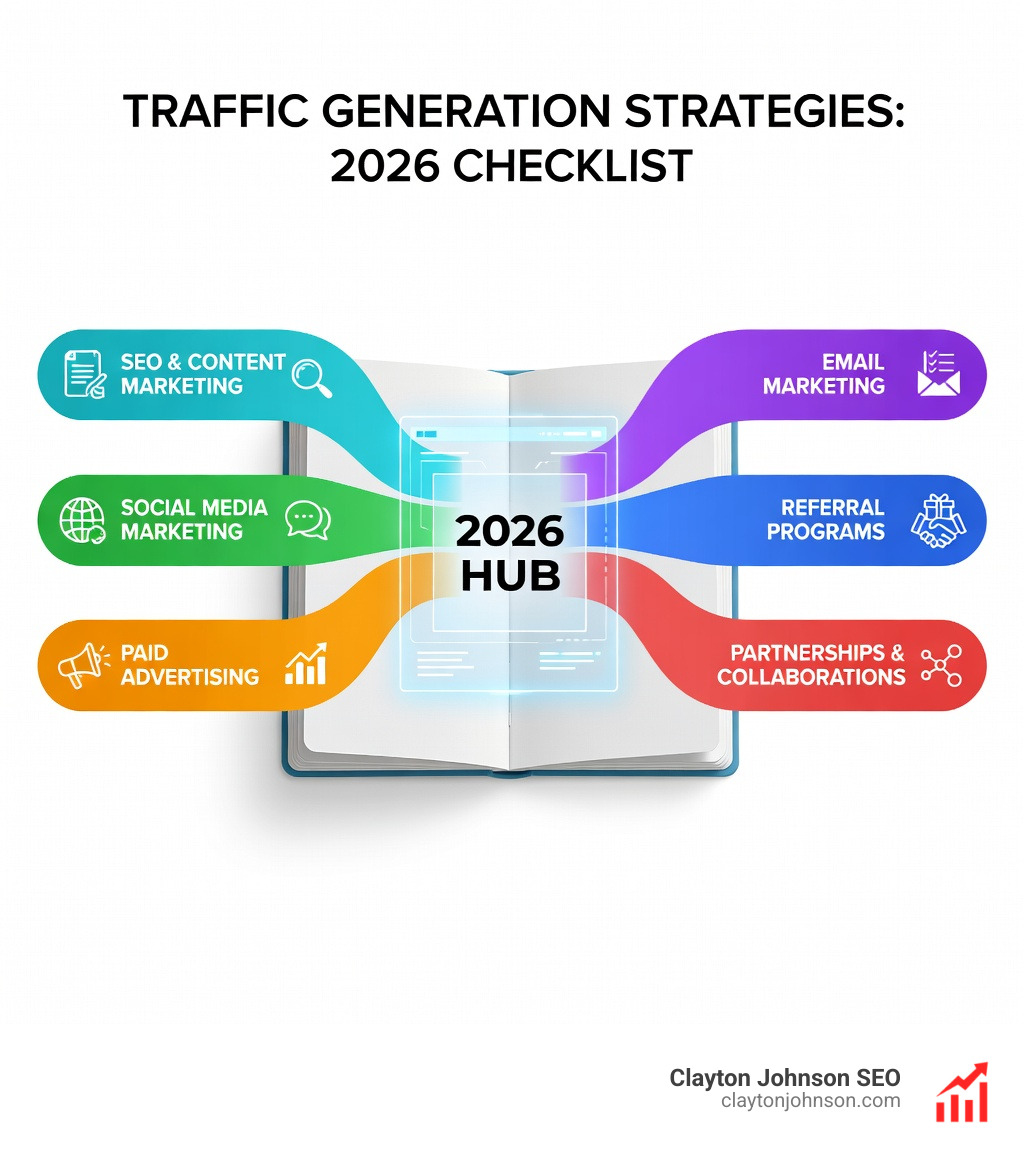
Traffic generation strategies are the systematic approaches businesses use to attract visitors to their digital properties. They combine organic methods (SEO, content marketing, social media), paid tactics (PPC, display ads), and emerging technologies (AI optimization, gamification) to create sustainable visitor growth.
Core Traffic Generation Methods:
- Organic Search (SEO) – 90% of online experiences start with a search, making this the highest-ROI long-term strategy
- Social Media Marketing – Leverage platforms like Facebook (2.9 billion users) and TikTok for brand visibility
- Content Marketing – High-quality content attracts backlinks and ranks for multiple keywords over time
- Paid Advertising – Google Ads averages 3.17% CTR for immediate, scalable traffic
- Email Marketing – Influences 59% of consumer purchasing decisions with proper segmentation
- Video Content – 69% of consumers prefer learning through video versus 18% who prefer text
- AI-Driven Optimization – Predictive analytics and real-time adjustments maximize efficiency
The average person aged 16-34 spends seven hours daily online. This massive digital presence creates unprecedented opportunity—but also fierce competition for attention. Without a systematic approach, businesses waste resources on tactics that don’t align with their audience or goals.
The most successful traffic strategies aren’t built on single tactics. They combine multiple channels into a cohesive system where content feeds SEO, social amplifies reach, email nurtures relationships, and paid ads fill immediate gaps. This ecosystem approach creates compounding growth rather than temporary spikes.
Modern traffic generation has evolved beyond “post and pray” methods. AI-powered tools now enable real-time optimization, predictive audience targeting, and automated content adjustments that were impossible just years ago. Brands like HubSpot, Airbnb, and BuzzFeed have built empires by mastering these integrated systems.
Yet many businesses still struggle with common pitfalls: budget misallocation across ineffective channels, inconsistent content schedules, neglecting mobile optimization (despite 55.5% of traffic coming from mobile), and ignoring analytics that reveal what’s actually working.
I’m Clayton Johnson, and I’ve built scalable traffic systems across multiple industries by focusing on structured frameworks, search intent modeling, and AI-assisted workflows. Throughout this guide, I’ll show you proven traffic generation strategies that create measurable, sustainable growth rather than temporary vanity metrics.
Systematic Traffic Generation: The Foundation of Sustainable Growth
To move beyond erratic spikes in visitor numbers, we must accept System Exclusive Traffic. This isn’t just a buzzword; it’s a streamlined approach that replaces “random acts of marketing” with a planned, organized framework. By implementing a systematic approach, businesses can rely on a consistent flow of visitors, significantly reducing the uncertainty associated with fluctuating algorithms or seasonal slumps.
A systematic strategy is the bedrock of Sustainable Growth. It improves ROI because you aren’t guessing where your next lead comes from; you are investing in assets that build equity over time. This process is essential for brand building, as it ensures your message reaches the right people consistently rather than sporadically.
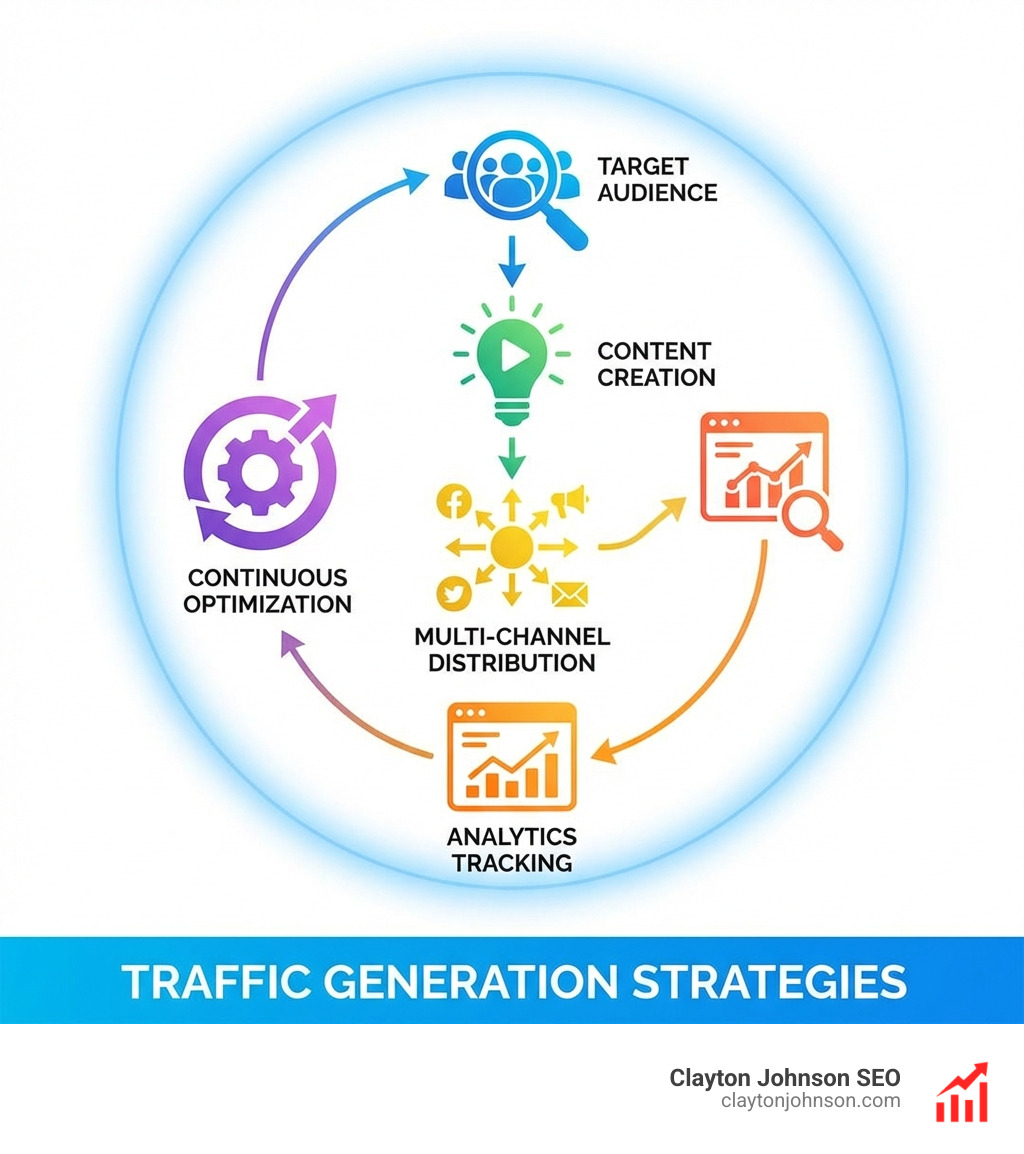
Successful traffic systems follow five strategic steps:
- Choose Your Audience: You can’t be everything to everyone. We start by identifying exactly who we want to attract.
- Craft a Value-Infused Offer: Whether it’s a free tool, an e-book, or a product, the “cheese” in your mousetrap must be irresistible.
- Get Exposure: This is where we use our Traffic generation strategies to put that offer in front of the chosen audience.
- Evaluate Results: We use data to see what’s working and what isn’t.
- Optimize and Improve: We make incremental changes to boost conversions and lower costs.
For those looking to tie these traffic wins directly to revenue, understanding a broader sales strategy is vital to ensure that the traffic you generate actually converts into customers.
Core Components of Modern Traffic generation strategies
In the modern digital landscape, 90% of online experiences begin with a search. This makes organic search the heavyweight champion of traffic sources. However, relying on a single channel is risky. A healthy traffic profile is diversified across several key areas:
- Direct Traffic: Visitors who type your URL directly into their browser. This is a sign of a strong, memorable brand identity.
- Referral Traffic: Traffic coming from other websites. This is often driven by a robust backlink ecosystem where authoritative sites link to your high-value content.
- Social Media: With over 2.9 billion monthly active users on Facebook, social platforms remain a massive reservoir of potential visitors.
- Paid Advertising: For immediate results, paid advertising allows you to “buy” your way to the top of search results or into social feeds.
- Email Marketing: Often overlooked, email marketing is a powerhouse for retention, influencing nearly 60% of purchasing decisions.
We also have to consider the technical side. As of late 2023, 55.5% of all web traffic comes from mobile devices. If your site isn’t mobile-optimized, you are effectively turning away half of your potential customers. Furthermore, 69% of consumers prefer learning via short video. Integrating video into your Traffic generation strategies is no longer optional—it’s a requirement for high engagement.
Short-term vs. Long-term Tactics Comparison
| Strategy Type | Tactic | Effort | Cost | Time to ROI | Potential Traffic |
|---|---|---|---|---|---|
| Short-term | PPC / Paid Social | Medium | High | Days | Immediate/Scalable |
| Short-term | Influencer Shoutouts | Low | Medium | Days | High Spike |
| Long-term | SEO / Blogging | High | Low/Med | 6-12 Months | Compounding/Stable |
| Long-term | Email List Building | Medium | Low | Ongoing | Very High (Owned) |
| Long-term | Brand Building | Very High | Variable | Years | Infinite |
Identifying Your Ideal Audience for Traffic generation strategies
Before we spend a dime on ads or a minute on content, we must define our audience demographics and pain points. Who are they? What keeps them awake at night? Using this data allows for conversion optimization, ensuring that the traffic we get is actually interested in what we have to say.
One of the most effective ways to reach your audience is through retargeting. By using Google Ads and social pixels, we can serve ads specifically to people who have already visited our site but didn’t convert. This segmentation ensures our marketing spend is focused on the “warmest” leads possible.
Building a Content Strategy for Sustainable Traffic generation strategies
High-quality content marketing is the engine of sustainable traffic. We don’t just write for the sake of writing; we build a content calendar that addresses the specific needs of our target market.
Effective SEO optimization involves more than just keywords. We focus on SEO content marketing by creating “linkable assets”—pieces of content so good that others naturally want to reference them. We also use internal linking to guide visitors (and search engines) to our most important pages and target featured snippets to capture the “Position Zero” on Google. The first position on Google gets an average CTR of 31.7%; every percentage point matters.
Leveraging AI and Automation to Scale Visibility
AI has fundamentally changed how we approach Traffic generation strategies. We are no longer limited to manual trial and error. Predictive analytics allow us to forecast which topics will trend, while real-time adjustments enable ad platforms to shift budget automatically to the highest-performing creatives.
One of our favorite “quick wins” is using an AI Content Helper to identify content gaps. By comparing our pages to the top three competitors, AI can tell us exactly which subtopics we missed. We also use ChatGPT to write better, high-CTR titles for our popular pages, as a simple title tweak can often double organic clicks without changing a single word of the article.
Beyond content, AI powers engagement through gamification. Look at the Visana Sprint Game; they used a branded game to attract over 1,000 visitors at a single event, resulting in a staggering 38% lead conversion rate. By offering engagement rewards and interactive experiences, you transform a passive browser into an active participant. This type of analytics data allows us to see exactly where users are engaging and where they are dropping off, making our “mousetrap” better every day.
Proven Free Tactics and Real-World Brand Success
You don’t always need a massive budget to drive results. Some of the best Traffic generation strategies are completely free. Article marketing, when done with high-quality standards, still builds authority. Guest blogging on reputable niche sites can provide massive exposure to a pre-built audience.
For video, we recommend using a video traffic generator approach—creating value-first videos and posting them as responses to high-view videos in your niche. Forum marketing on platforms like Reddit can also be a goldmine. The secret to Reddit marketing is to provide “barebones” value: share the entire strategy in the post and only leave a link at the very end.
Social media giants like TikTok offer explosive organic reach. A well-executed TikTok growth strategy can garner millions of views in weeks, even for “boring” B2B industries, by focusing on educational storytelling rather than just trends.
Learning from the Giants
- HubSpot: Built an empire on inbound marketing by becoming the “Wikipedia” of digital marketing.
- Airbnb: Mastered local SEO by creating city-specific guides and leveraging user-generated content.
- GoPro: Turned customers into ambassadors by encouraging them to share their own extreme sports footage, creating a self-sustaining social loop.
- SEAT: Used influencer collaborations to reach younger audiences. Today, 63% of consumers trust influencers more than brands.
- National Geographic: Has amassed over 100 million Instagram followers through world-class visual storytelling.
Avoiding Common Pitfalls in Traffic Generation
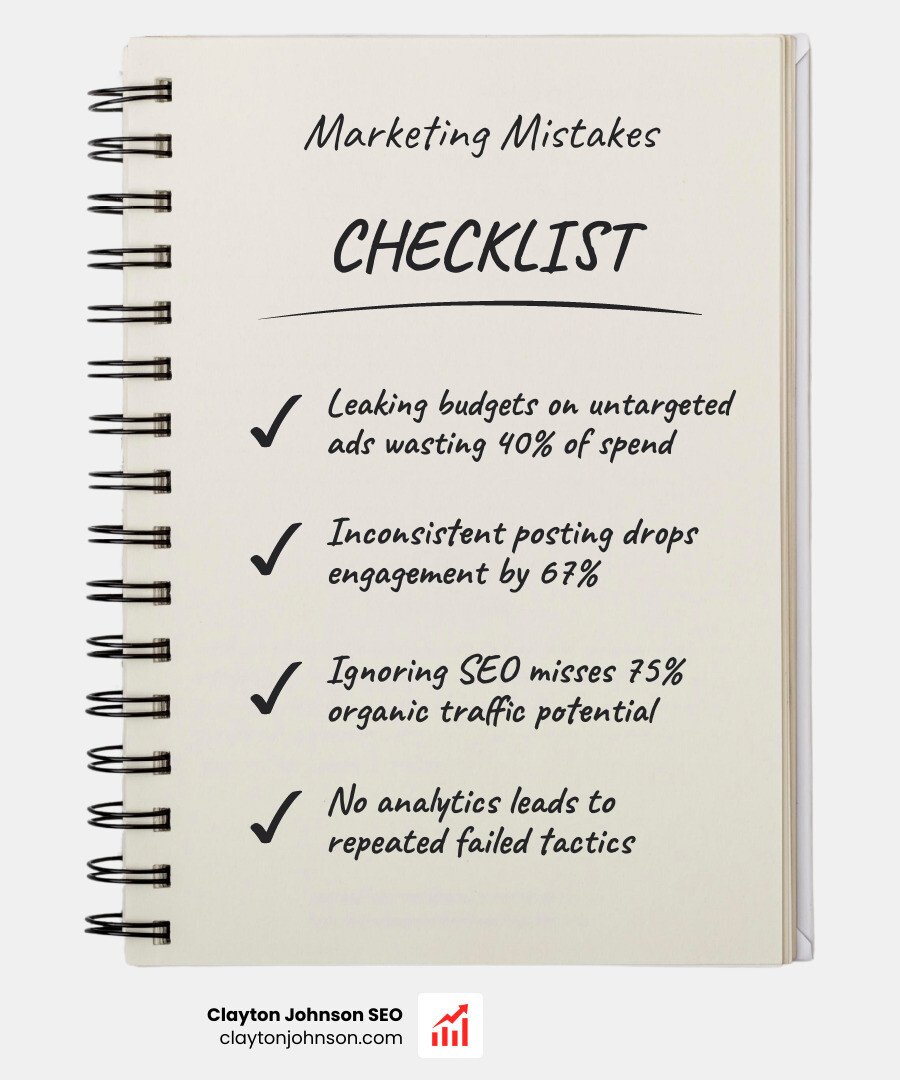
Even the best strategies fail if they fall into common traps. Budget misallocation is the biggest offender—spending heavily on a channel your audience doesn’t use. Inconsistency is another “silent killer”; if you post five blogs one month and none the next, search engines will lose trust in your site.
User experience (UX) is also a traffic factor. Statistics show that 88% of consumers are unlikely to return to a site after a bad experience. Speed matters too: 53% of mobile visits are abandoned if a page takes longer than 3 seconds to load. If you’re unsure where your leaks are, hiring an SEO consultant can help diagnose technical issues that are sabotaging your growth.
Frequently Asked Questions about Traffic Generation
What is the difference between short-term and long-term traffic tactics?
Short-term tactics, like PPC or paid social ads, provide immediate results. They are great for product launches or seasonal promotions, but the traffic stops the moment you stop paying. Long-term tactics, like SEO and content marketing, take months to show results but create compounding value. Once an article ranks, it can drive “free” traffic for years.
How does AI improve traffic generation efficiency?
AI removes the guesswork. It can analyze thousands of data points to tell you which keywords are easy to rank for, how to optimize your content for “topical authority,” and which ad headlines are likely to get the most clicks. It allows small teams to execute at the scale of large agencies.
Is article marketing still effective for SEO?
Yes, but the “old” way of spamming low-quality directories is dead. Modern article marketing is about guest posting on high-authority sites and publishing “power pages” on your own blog that provide genuine, unique value. Google rewards expertise, authoritativeness, and trustworthiness (E-A-T).
Conclusion
At Clayton Johnson, we believe that traffic is the lifeblood of any digital business, but it must be the right traffic. By moving away from erratic tactics and toward a systematic, AI-improved framework, you can build a digital presence that grows more powerful every year.
Whether you are looking for an SEO Expert to overhaul your strategy or you’re just starting to explore the pillars of digital marketing, consistency is your greatest ally. For businesses in our local area, our Minneapolis SEO services are designed to help you dominate local search and scale your visibility globally. Focus on the system, and the traffic will follow.