The Ultimate Guide to Conversion Optimization

Why Conversion Optimization Is the Highest-Leverage Growth Move You’re Not Prioritizing
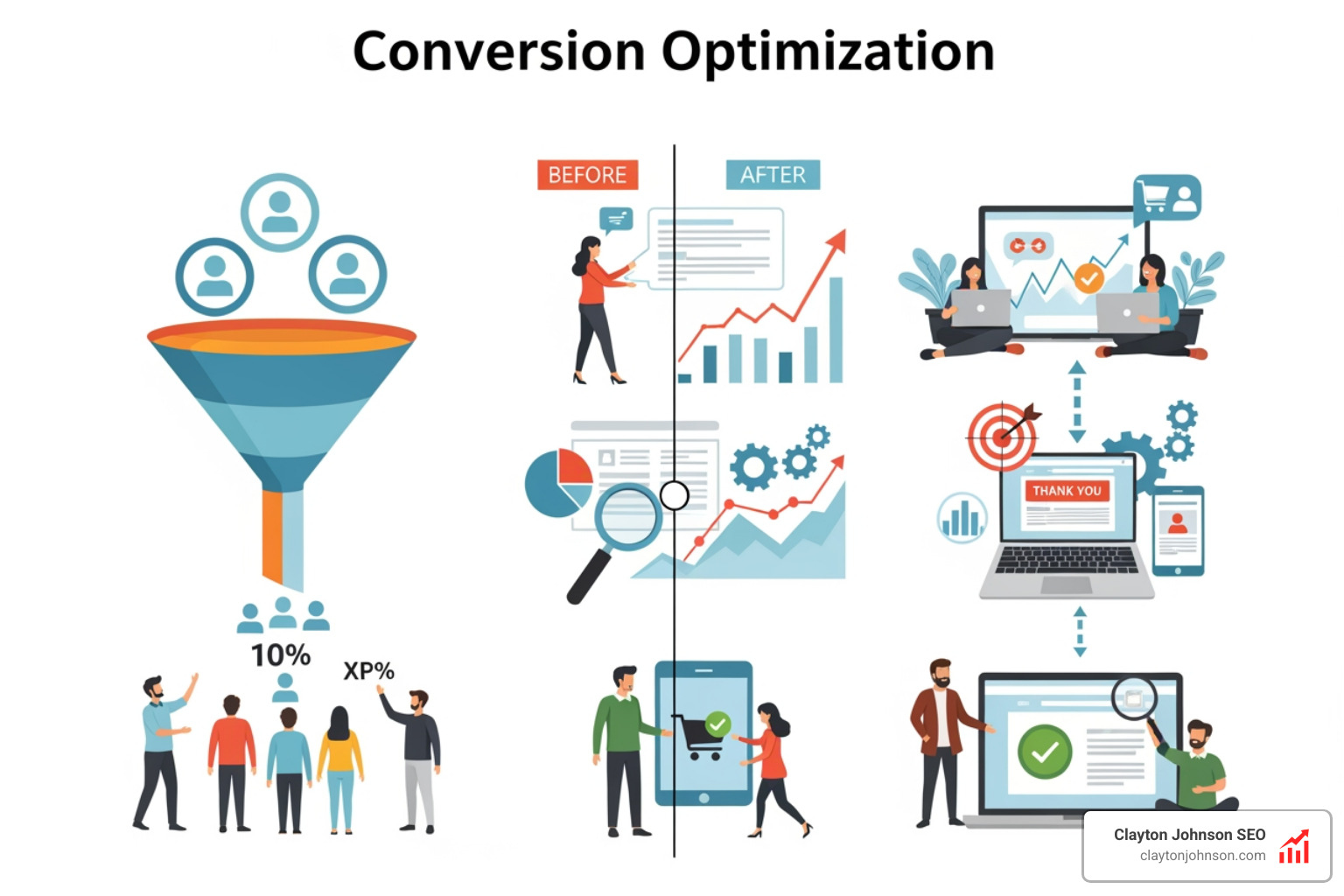
Conversion Optimization is the process of increasing the percentage of website visitors who take a desired action — like buying, signing up, or booking a demo — without spending more on traffic.
Here’s the quick version:
| What It Is | What It Does | How It Works |
|---|---|---|
| A structured testing and research process | Turns existing traffic into more revenue | A/B testing, user research, UX improvements |
| Data-driven, not gut-feel | Lowers customer acquisition costs | Identify friction → form hypothesis → test → iterate |
| Continuous, not one-time | Compounds over time | Small wins stack into major revenue gains |
Most founders and marketing leaders chase more traffic. But here’s the problem: traffic without conversion is just noise.
Think about it this way. If your landing page converts at 10% with 2,000 monthly visitors, you’re getting 200 conversions. Push that to 15% — same traffic — and you’re at 300. That’s 50% more revenue without spending an extra dollar on ads.
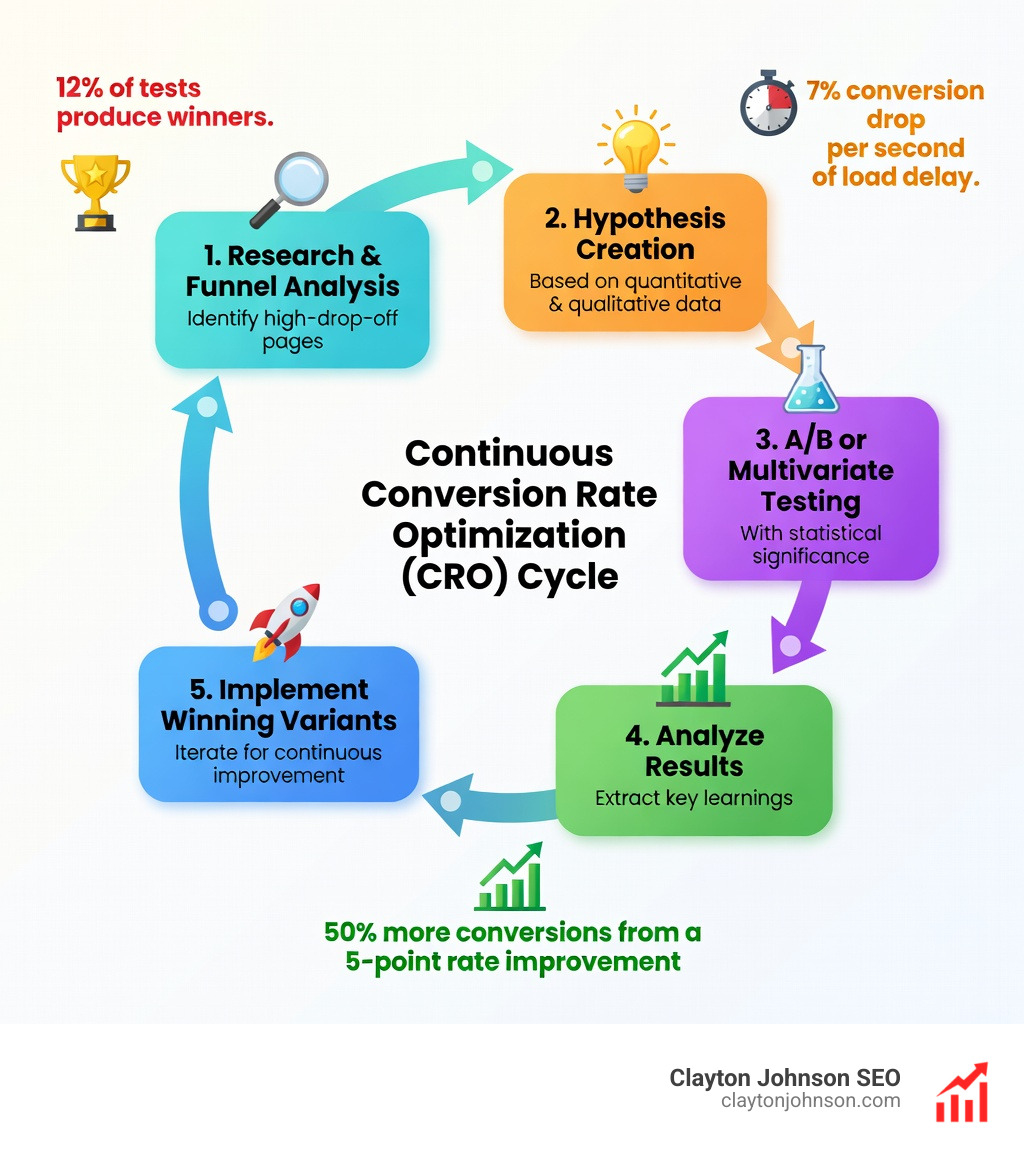
Yet only 12% of CRO experiments produce a winning result. 🧪
That stat isn’t discouraging — it’s clarifying. It means CRO isn’t about lucky guesses. It’s about building a system for learning what works, eliminating what doesn’t, and compounding small wins into durable growth.
And the cost of ignoring it? A one-second delay in page load time alone can reduce conversions by 7%. Multiply that across your entire funnel and you’re leaving serious money on the table every single day.
I’m Clayton Johnson, an SEO and growth strategist who has built Conversion Optimization systems across SaaS, B2B, and founder-led businesses — including campaigns that increased enterprise-qualified leads by over 40% by combining intent-focused SEO with structured CRO frameworks. This guide gives you the architecture, not just the tactics.
Understanding Conversion Optimization Fundamentals
To master Conversion Optimization, we have to look at it as both an art and a science. As noted in the seminal work Conversion Optimization: The Art and Science of Converting Prospects to Customers, this discipline is about methodically increasing the percentage of visitors who take a specific action.
At its core, CRO is the engine of business growth. It directly impacts your Return on Investment (ROI) by maximizing the value of the traffic you already have. When we improve the user experience, we aren’t just making a site “look better”-we are lowering customer acquisition costs and increasing the revenue generated per visitor.
Many businesses focus entirely on the “top of the funnel” (getting people to the site). However, if your “bucket” has leaks, pouring more water in won’t help. We use conversion optimization services to plug those leaks, ensuring that every marketing dollar spent works harder for the bottom line.
How to Calculate Your Conversion Optimization Success
You can’t optimize what you don’t measure. The basic conversion rate formula is simple:
Conversion Rate = (Total Conversions / Total Visitors) x 100
For example, if your site has 200 visitors and 30 people sign up for a newsletter, your conversion rate is 15%.
However, professional Conversion Optimization goes deeper than just the final sale. We track two types of actions:
- Macro-conversions: The primary goal (e.g., a completed purchase or a signed contract).
- Micro-conversions: Small steps that lead to the goal (e.g., adding an item to a cart, watching a demo video, or clicking a “Pricing” link).
When running tests, we look for statistical significance. This is a mathematical way of ensuring that a lift in conversions was actually caused by our changes and wasn’t just a result of random chance. Most experts aim for a 95% confidence level before declaring a winner.
The Evolution of Digital Experimentation
The history of CRO is longer than you might think. It traces its roots back to early direct response marketing, where advertisers used different coupon codes in newspapers to see which ads pulled the best.
The discipline accelerated as the web became more competitive. As companies matured online, they realized they couldn’t rely on “cool” designs alone; they needed analytics, experimentation, and a testing culture. Today, we’ve moved from simple “button color” tests to deeper audience research, UX diagnostics, and experimentation informed by behavioral psychology.
The Data-Driven Process of CRO
Effective Conversion Optimization follows a repeatable process. We don’t guess; we investigate. This starts with balancing quantitative data (the “what”) with qualitative data (the “why”).
| Research Type | Methods | Questions Answered |
|---|---|---|
| Quantitative | Google Analytics 4, Funnel Tracking, Heatmaps | Where are people dropping off? Which pages have high bounce rates? |
| Qualitative | User Surveys, Session Recordings, Usability Testing | Why are users confused? What objections do they have? What do they love? |
By performing a funnel analysis, we can identify “friction points”—the specific moments where a user gets frustrated or bored and leaves.
Prioritizing with the P.I.E. Framework
Once we have a list of potential improvements, we use the P.I.E. Framework to decide what to test first:
- Potential: How much improvement can be made on this page?
- Importance: How valuable is the traffic to this page?
- Ease: How complicated is it to implement this test?
This leads to the creation of a strong hypothesis: “Because we observed [Data Point], we believe that changing [Element] for [Audience] will result in [Outcome].”
Integrating SEO with Conversion Optimization
SEO and CRO are two sides of the same coin. While SEO services drive high-quality traffic to your site, CRO ensures that traffic actually does something.
A major key to success is Message Matching. If a user clicks an ad or a search result promising a “15-minute business plan,” but your landing page doesn’t mention the 15-minute timeframe in the hero section, the user will bounce. They feel they are in the wrong place. We align the landing page relevance with the user’s search intent to create a seamless journey.
For complex sales cycles, learning how to build SEO-driven B2B funnels is essential to ensure search visibility translates into qualified leads.
Industry-Specific Optimization Strategies
Conversion Optimization isn’t one-size-fits-all. Every industry has its own hurdles:
- eCommerce: Focuses on reducing cart abandonment (which averages 69%) and simplifying the checkout flow.
- SaaS: Prioritizes the onboarding flow. If a user can’t find the “Aha!” moment in your software quickly, they won’t subscribe.
- B2B Lead Gen: Uses multi-step forms to qualify leads without overwhelming them.
- Mobile Apps: Focuses on swifter onboarding and prominent CTA buttons that are easy to tap with a thumb.
High-Impact Tactics and Psychological Triggers
To truly tune a website for conversions, we look at the definitive guide for Landing Page Optimization. Success usually comes down to a few core pillars:
- Clear Value Proposition: Within seconds, a visitor must know what you offer and why it matters to them.
- Compelling Headlines: Use questions, numbers, and benefit-driven language.
- Trust Signals: Testimonials, awards, and partner logos build immediate credibility.
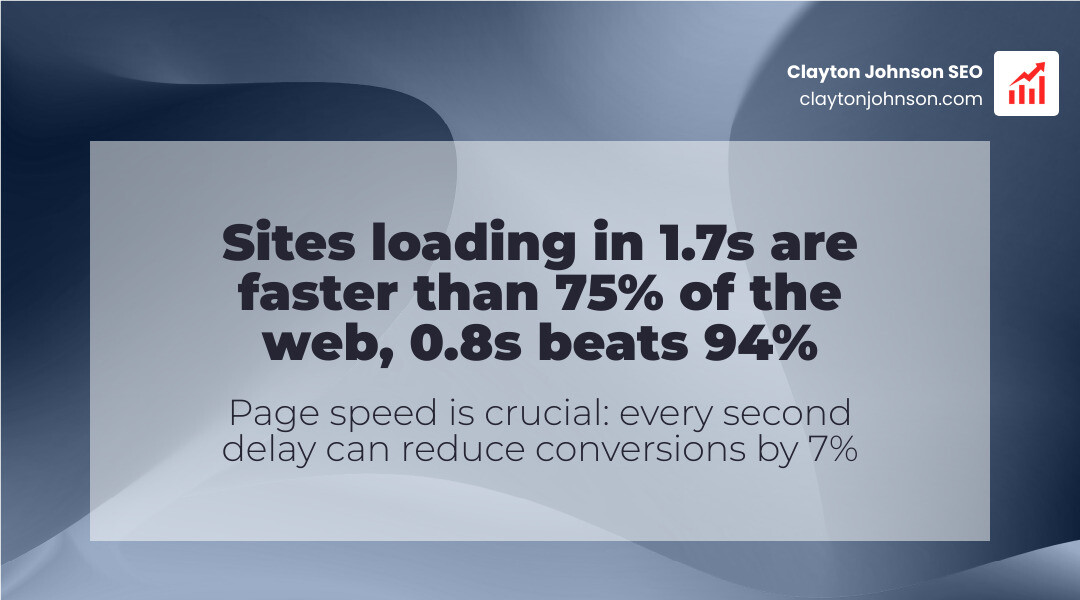
- Page Speed: This is non-negotiable. A one-second delay can reduce conversions by 7%.
- Non-Distracting Design: Remove “leaks” like navigation menus on landing pages that lead users away from the goal.
Applying Cialdini’s Principles of Persuasion
We use behavioral economics to nudge users toward action. Robert Cialdini’s principles are the gold standard here:
- Social Proof: “Join 10,000+ others.” People follow the lead of others.
- Scarcity: “Only 2 spots left!” or “Sale ends in 4 hours.”
- Authority: Showing certifications or expert endorsements.
- Reciprocity: Giving away a free guide or tool before asking for a sale.
- Liking: Using relatable imagery and a warm tone of voice.
- Unity: Creating a sense of shared identity (e.g., “For founders, by founders”).
Essential Tools for the Optimization Stack
You don’t need a massive budget to start, but you do need the right tools to see what’s happening “under the hood.”
- Analytics: Google Analytics 4 (GA4) for tracking the “what.”
- Heatmaps & Recordings: Tools like heatmaps and session recording software let you see where people click (and where they don’t).
- A/B Testing: Experimentation platforms allow you to show different versions of a page to different users.
- Usability Testing: User research platforms allow you to watch real people try to use your site while they think out loud.
- Form Analytics: To see exactly which field in your contact form is causing people to quit.
Frequently Asked Questions about Conversion Optimization
What is a good conversion rate for my industry?
While it varies, most websites see average rates between 2% and 5%. eCommerce usually sits around 2-3%, while high-performing lead gen pages can hit 10% or higher. However, the best benchmark is your own past performance. If you’re at 2%, aim for 2.5%.
What are the most common CRO mistakes to avoid?
The biggest mistake is changing things based on “gut feeling” or because a competitor did it. Other common errors include running tests for too short a time (you need at least a week to account for weekend/weekday behavior) and ignoring mobile users.
How do I start optimizing if I have low website traffic?
If you don’t have enough traffic for A/B testing to reach statistical significance quickly, focus on qualitative research. Run 5-7 usability tests, install heatmaps, and talk to your sales team. You can often find massive “low-hanging fruit” just by watching someone try to buy from you.
Conclusion
At the end of the day, Conversion Optimization isn’t about “tricking” people into clicking buttons. It’s about providing a clearer, faster, and more persuasive path to the solution they are already looking for.
At Clayton Johnson, we believe that most companies don’t lack tactics — they lack structured growth architecture. Through Demandflow.ai, we provide the frameworks and AI-augmented workflows needed to turn marketing activity into compounding growth. By combining strategic SEO with a rigorous CRO system, you stop guessing and start growing.
Ready to stop leaving money on the table? Start your Conversion Optimization journey today and build the infrastructure your business deserves.