Why Your Social Media Growth Goals Are Probably Wrong

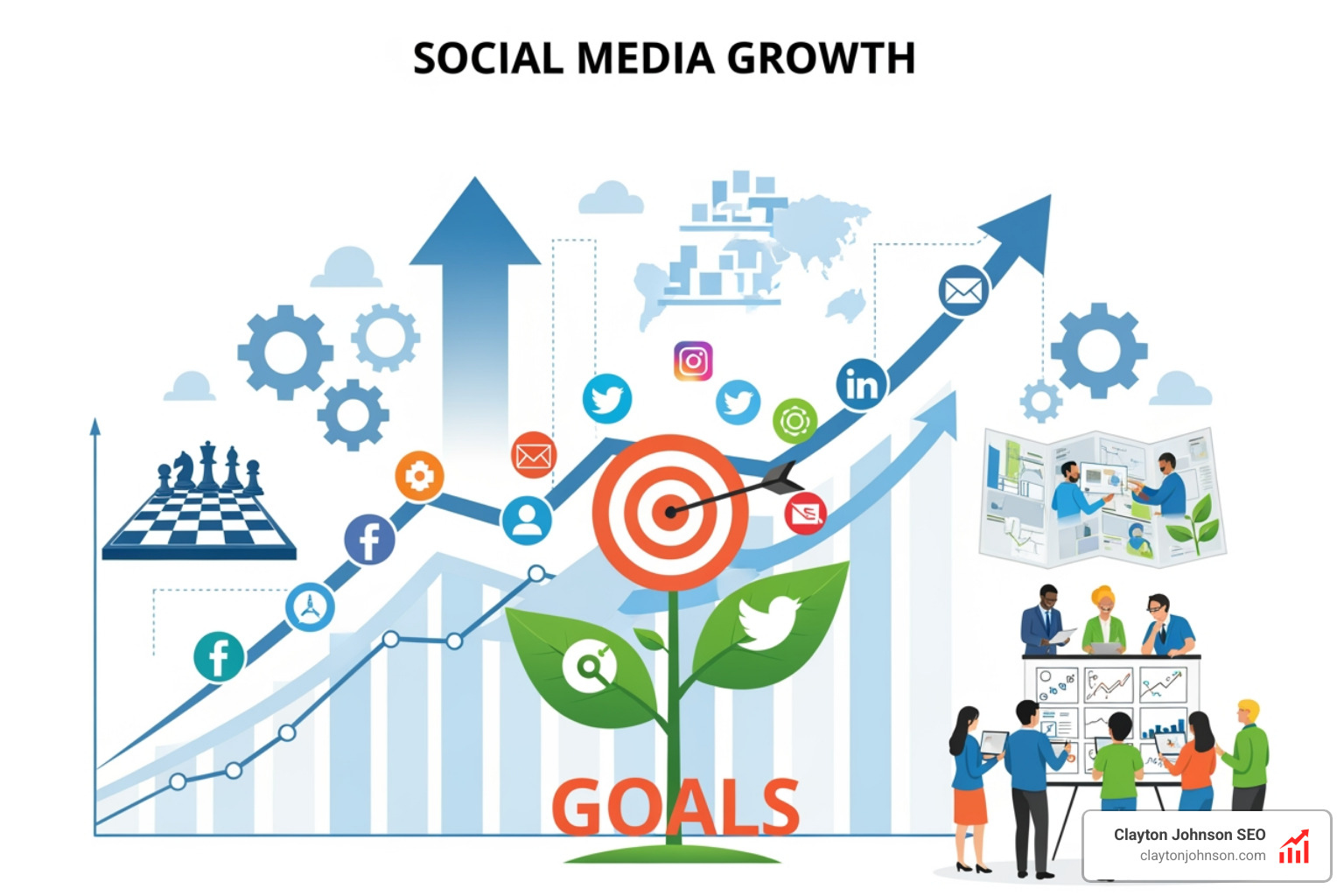
Why Most Social Media Growth Goals Are Setting You Up to Fail
Social media growth goals are the specific, measurable objectives you set to guide your brand’s performance across social platforms — and most businesses are getting them completely wrong.
Here is a quick answer if you need it fast:
What are social media growth goals?
| Goal Type | Example | Key Metric |
|---|---|---|
| Brand Awareness | Reach 100K impressions/month | Reach, impressions |
| Audience Growth | Gain 1,000 followers in 90 days | Follower growth rate |
| Engagement | Increase engagement rate to 4% | Likes, comments, shares |
| Lead Generation | Generate 200 leads/month via social | Form fills, downloads |
| Revenue | Drive $50K in sales from social | Conversions, revenue |
| Customer Service | Respond to all DMs within 2 hours | Response time, CSAT |
Setting vague goals like “grow our following” or “post more content” is the norm. But vague goals produce vague results.
The research is clear on this. A study on goal-setting found that students who went through an intensive goal-setting program achieved significantly better results after just four months — compared to those without structured goals. The same principle applies directly to social media strategy.
And yet, most brands still set goals that are impossible to measure, disconnected from revenue, or just plain wrong for their stage of growth.
The gap between brands that compound their social growth and those that spin their wheels comes down to one thing: structure.
I’m Clayton Johnson, an SEO and growth strategist who builds scalable content systems and strategic frameworks that translate social media growth goals into measurable business outcomes. In the sections below, I’ll walk you through exactly how to fix your goals, align them to revenue, and build a system that compounds over time.
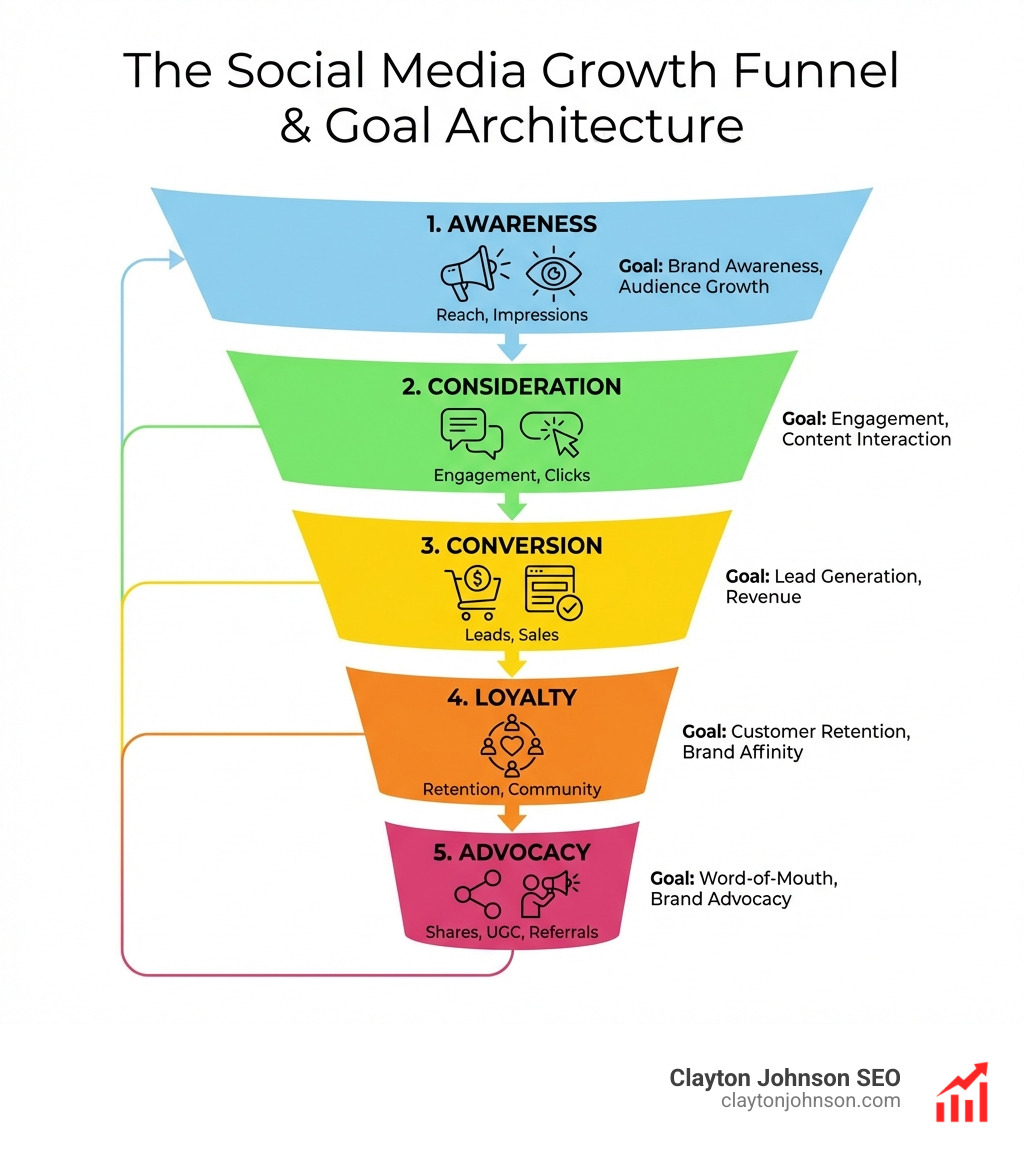
Social media growth goals word guide:
The Architecture of Effective Social Media Growth Goals
When we talk about social media growth goals, we aren’t just talking about getting more “likes.” We are talking about building a structured growth architecture. At Demandflow.ai, we believe that most companies don’t lack tactics; they lack a system that connects those tactics to a bottom line.
If your goals feel “fuzzy,” it’s likely because they lack the psychological and structural foundation needed to succeed. According to Scientific research on the impact of goal-setting, setting clear, challenging goals can significantly boost performance and even happiness within a team.
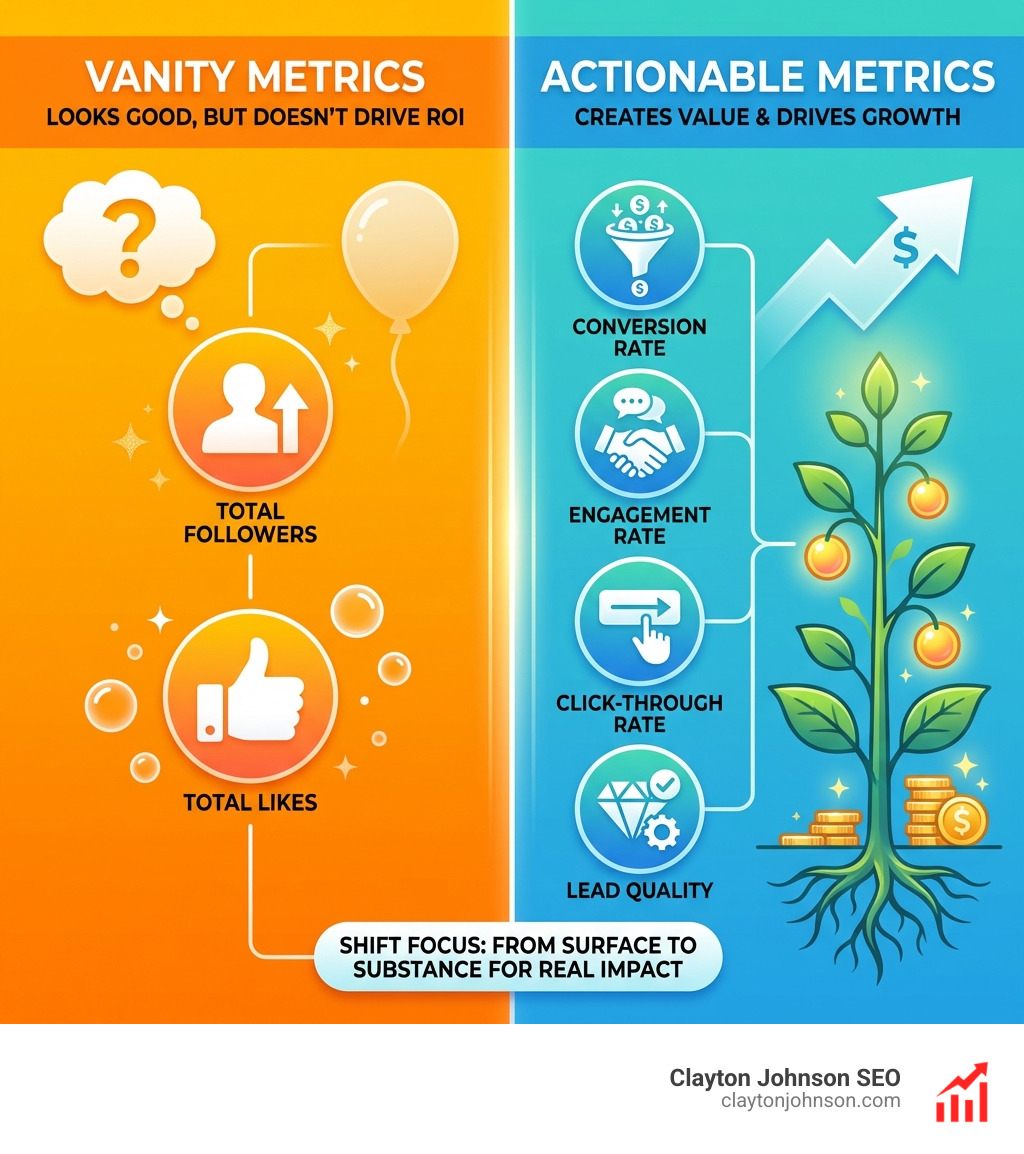
Without this structure, social media becomes a “vanity project” rather than a lead-generation machine. We need to move away from “posting into the void” and toward brand growth systems that leverage every post for compounding returns.
Applying the SMART Framework to Social Strategy
The most effective way to fix “wrong” goals is to decode them using the SMART framework. If a goal isn’t SMART, it isn’t actionable.
- Specific: Instead of “increase followers,” try “gain 1,000 new followers on LinkedIn.”
- Measurable: You must have a number attached. Use KPIs like reach, engagement rate, or click-through rate (CTR).
- Achievable: Is this realistic? If you currently gain 10 followers a month, jumping to 10,000 next month might be a stretch without a massive ad budget.
- Relevant: Does this goal actually matter to your business? If you’re a B2B firm in Minneapolis, 1 million views on a viral dance video might not be as relevant as 500 views from local CEOs.
- Time-bound: Set a deadline. “By the end of Q3” provides the urgency needed to execute.
For a deeper dive, check out this Guide to setting SMART objectives to ensure your team stays focused on what moves the needle.
Auditing Past Performance for Future Planning
We cannot plan where we are going if we don’t know where we’ve been. An audit is the first step in our strategic frameworks for traffic generation.
Look at your top five performing posts from the last six months. What do they have in common? Was it the format (video vs. image)? The tone? The time of day? Conversely, look at your “flops.” These aren’t failures; they are data points.
By identifying your historical benchmarks—your average engagement rate, your typical cost-per-lead, and your follower growth velocity—you create a baseline. Only then can you set social media growth goals that are both ambitious and grounded in reality.
5 Common social media growth goals That Actually Drive ROI
Many marketers focus on brand awareness because it’s the top reason they use social media. In fact, research shows that the average person spends nearly two hours on social media every day. That is a massive window of opportunity, but awareness alone doesn’t pay the bills.
Here is how we categorize goals that actually drive Return on Investment (ROI):
| Goal Category | Business Impact | Key Metric |
|---|---|---|
| Lead Generation | Fills the sales funnel | Email sign-ups, form fills |
| Customer Service | Increases retention | Response time, CSAT score |
| Brand Reputation | Builds trust/authority | Sentiment analysis, mentions |
| Community Building | Fosters loyalty | Group growth, active members |
| Direct Sales | Increases revenue | Conversion rate, social sales |
Aligning social media growth goals with Revenue
If your social media efforts aren’t tied to revenue, they are eventually going to lose their budget. Demonstrating how social campaigns tie to business goals is the #1 way social teams secure more investment from leadership.
We use tools like Google Analytics to track the “path” from a social post to a checkout page. By assigning a dollar value to specific actions—like a newsletter sign-up or a white paper download—you can calculate the actual ROI of your social presence.
For e-commerce brands, this is even more direct. Using Google Analytics’ Ecommerce Tracking allows you to see exactly which Instagram Story or Pinterest pin resulted in a sale. This turns social media from a “cost center” into a “revenue driver.”
Measuring social media growth goals for Brand Authority
In the age of AI, authority is everything. Google and other AI-driven search engines prioritize content that shows Expertise, Authoritativeness, and Trustworthiness (E-A-T).
We build authority-building ecosystems where social media serves as the “shout” for your high-quality content. Goals here shouldn’t just be about follower counts; they should be about “Share of Voice” and “Thought Leadership.”
Are industry influencers mentioning your brand? Is your content being picked up by the press? Tools like Mention help you track these high-level wins. When a HubSpot team experimented with their content strategy, they grew their monthly blog traffic by 241% over eight months. That didn’t happen by accident; it happened through structured authority building.
Mapping Strategy to Audience and Platform Dynamics
One of the biggest mistakes we see is brands trying to be everywhere at once. This dilutes your impact and ignores the unique “vibe” of each platform. To succeed, you need to map your social media growth goals to the right audience and the right digital “neighborhood.”
Choosing the Right Platforms for Your Objectives
Not all platforms are created equal. You must identify where your audience engages online.
- LinkedIn: The powerhouse for B2B. Ideal for thought leadership and lead generation among professionals.
- Instagram/TikTok: Visual-first platforms. Great for brand awareness, influencer partnerships, and reaching younger demographics (90% of whom value authenticity).
- Facebook: Still king for broad reach and hyper-local targeting, especially for businesses in Minneapolis looking to reach specific age groups.
Before you start posting, you need to adapt your content strategy per platform. A long-form white paper works on LinkedIn; a 15-second “behind-the-scenes” video works on TikTok.
Understanding Your Target Audience Through Data
We don’t guess who our audience is; we use data. By creating 2-3 detailed buyer personas, you can tailor your tone and content to solve their specific pain points.
Social listening is a critical part of our strategic frameworks for high performance. Tools like TweetDeck allow us to “listen” to what customers are saying about us—and our competitors—in real-time. This allows you to “surprise and delight” your audience by jumping into relevant conversations, even when they haven’t tagged you directly.

Content Infrastructure: The Engine of Sustained Growth
Tactics are what you do today; infrastructure is what allows you to scale tomorrow. To hit your social media growth goals, you need a content engine that doesn’t rely on daily inspiration.
Leveraging Management Tools and Analytics
Efficiency is the name of the game. We use tools like Hootsuite Analytics and Buffer to schedule content, manage inboxes, and—most importantly—analyze performance in one place.
Automation allows your team to focus on engagement (the second top reason marketers use social) rather than just distribution. If you’re manually posting every day, you’re missing the chance to actually talk to your customers.
The Role of Content Strategy in Scaling Reach
A solid strategy uses “Content Pillars” to keep messaging consistent. These are 3-5 core themes your brand always talks about. For example, a Minneapolis-based SEO agency might have pillars like “Local Search Trends,” “AI in Marketing,” and “Client Success Stories.”
This structured approach is part of our smart traffic generation strategies. By batch-creating content around these pillars, you save time and ensure your feed looks professional and cohesive. Remember: 67% of companies share content organically on Facebook, but only the ones with a clear visual identity and educational value stand out.
Beyond Tactics: Competitive Analysis and Optimization
Social media is not a “set it and forget it” channel. It is a living ecosystem that requires constant tuning. If you aren’t optimizing, you’re falling behind.
Why Continuous Optimization is Non-Negotiable
Algorithms change. Platforms like Facebook and Instagram have been suppressing organic reach in favor of paid content for years. To survive, you must be adaptable.
Continuous optimization involves:
- A/B Testing: Testing two different headlines or images to see which performs better.
- Performance Audits: Monthly deep dives into your data to see if you’re still on track for your quarterly social media growth goals.
- Real-time Adjustments: If a certain type of post is crushing it, make more of it immediately.
Benchmarking Against Industry Competitors
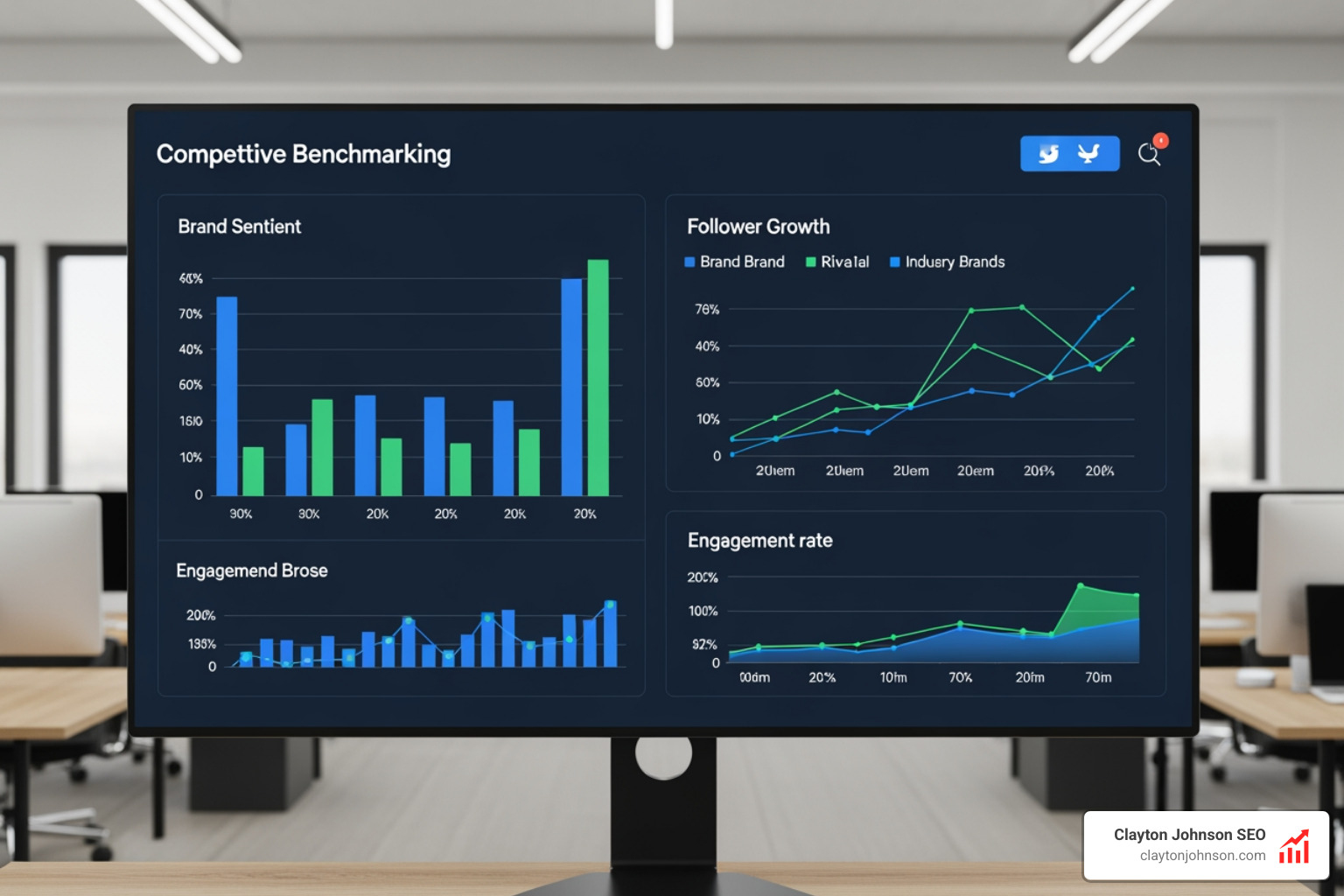
You don’t operate in a vacuum. You need to know how you stack up against the competition. Our competitive analysis frameworks help businesses identify “gaps” in the market.
Are your competitors ignoring customer questions on Twitter? That’s your opportunity to win on customer service. Are they only posting promotional content? That’s your opportunity to win on educational value. Tools like Hashtracking can help you see who is winning the conversation in your niche.
Frequently Asked Questions about Social Media Goals
How do I set clear social media marketing goals?
Use the SMART framework. Ensure every goal is Specific, Measurable, Achievable, Relevant, and Time-bound. Instead of saying “I want more engagement,” say “I want to increase our average comments per post by 20% by the end of next month.”
Why is understanding my target audience important?
Because if you’re talking to everyone, you’re talking to no one. Understanding your audience’s demographics, pain points, and platform preferences allows you to create content that resonates, leading to higher conversion rates and better ROI.
How do I choose the right social media platforms?
Identify where your target audience spends their time. If you are a B2B company, LinkedIn is non-negotiable. If you are a visual lifestyle brand, Instagram and Pinterest are your best bets. Don’t try to be everywhere; be where it counts.
Conclusion: Turning Structure into Compounding Growth
The reason most social media growth goals fail is that they are built on a shaky foundation of vanity metrics and “gut feelings.”
At Clayton Johnson SEO, we move beyond the noise. We focus on structured growth architecture. By aligning your social strategy with measurable business objectives, auditing your performance, and building a content infrastructure that scales, you move from “doing social media” to “growing a business.”
Our thesis is simple: Clarity → Structure → Leverage → Compounding Growth.
Whether you are looking to dominate local search in Minneapolis or scale a national brand, the principles remain the same. Stop guessing and start building.
If you’re ready to stop spinning your wheels and start seeing measurable impact, we can help. Our Social Media Marketing Services are designed to integrate your social presence into a broader, high-performance growth engine.
SEO & AI Visibility: The Clayton Johnson Framework
In today’s landscape, social growth is just one piece of the puzzle. To be truly visible, you must rank across traditional search and new AI-generated ecosystems (like ChatGPT and Google AI Overviews).
Our Scalable Authority Retainers:
- Foundation Authority ($1,997/mo): Perfect for initial AI eligibility and baseline ranking.
- Growth Authority ($2,997/mo): Momentum through increased link velocity and cluster depth.
- Competitive Authority ($3,997/mo): For brands looking to displace competitors in crowded clusters.
- Market Leader Authority ($9,997/mo): Durable market dominance and high-consistency authority acquisition.
Search visibility compounds over time. Rankings, AI references, and social trust signals reinforce each other to create a moat around your brand. Let’s build that architecture together.