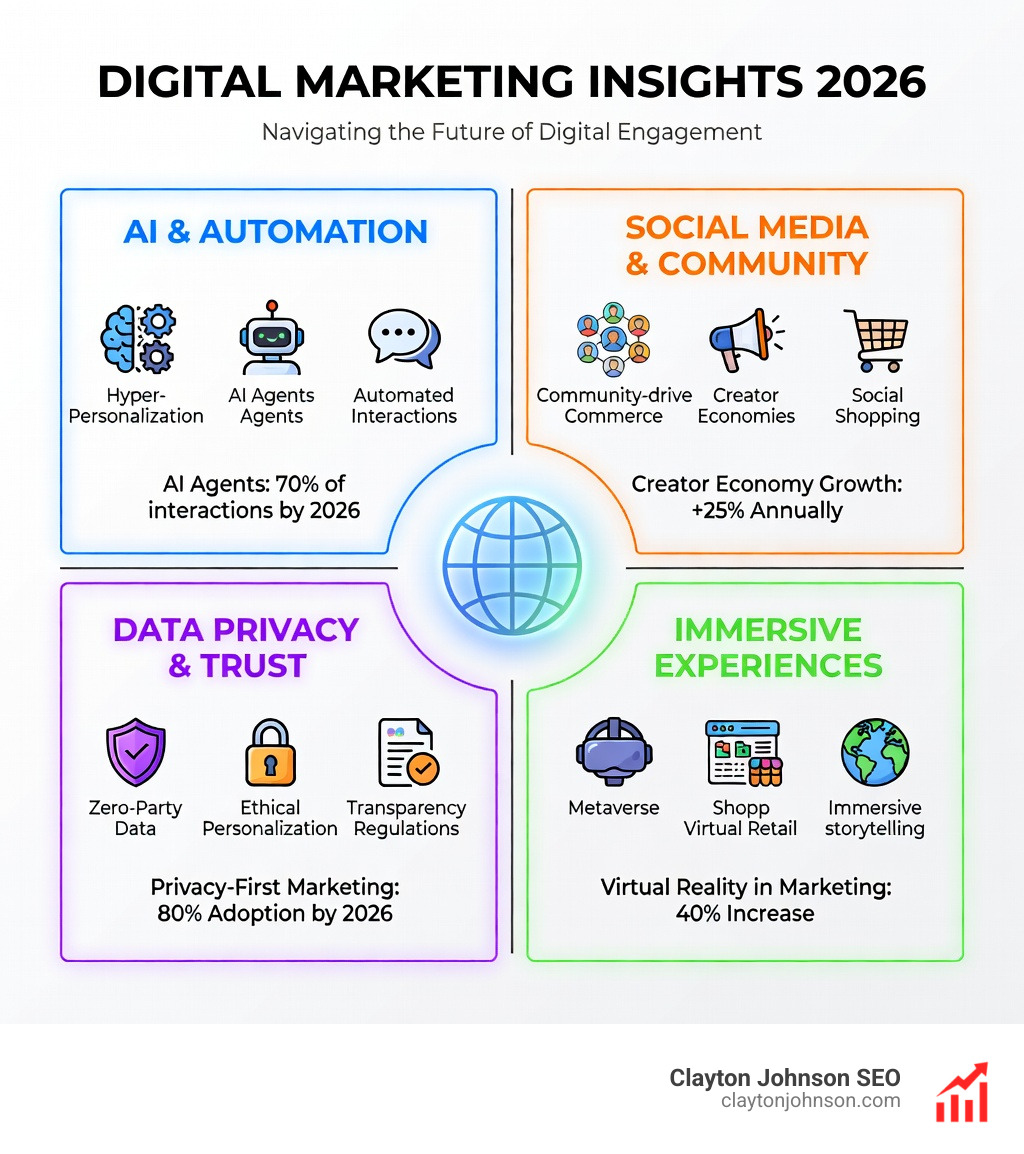
Why Digital Marketing Insights Matter More Than Ever
Digital marketing insights are the difference between guessing and growing. They transform raw data into actionable intelligence that drives strategy, improves ROI, and helps you understand what customers actually want.
Key Digital Marketing Insights You Need:
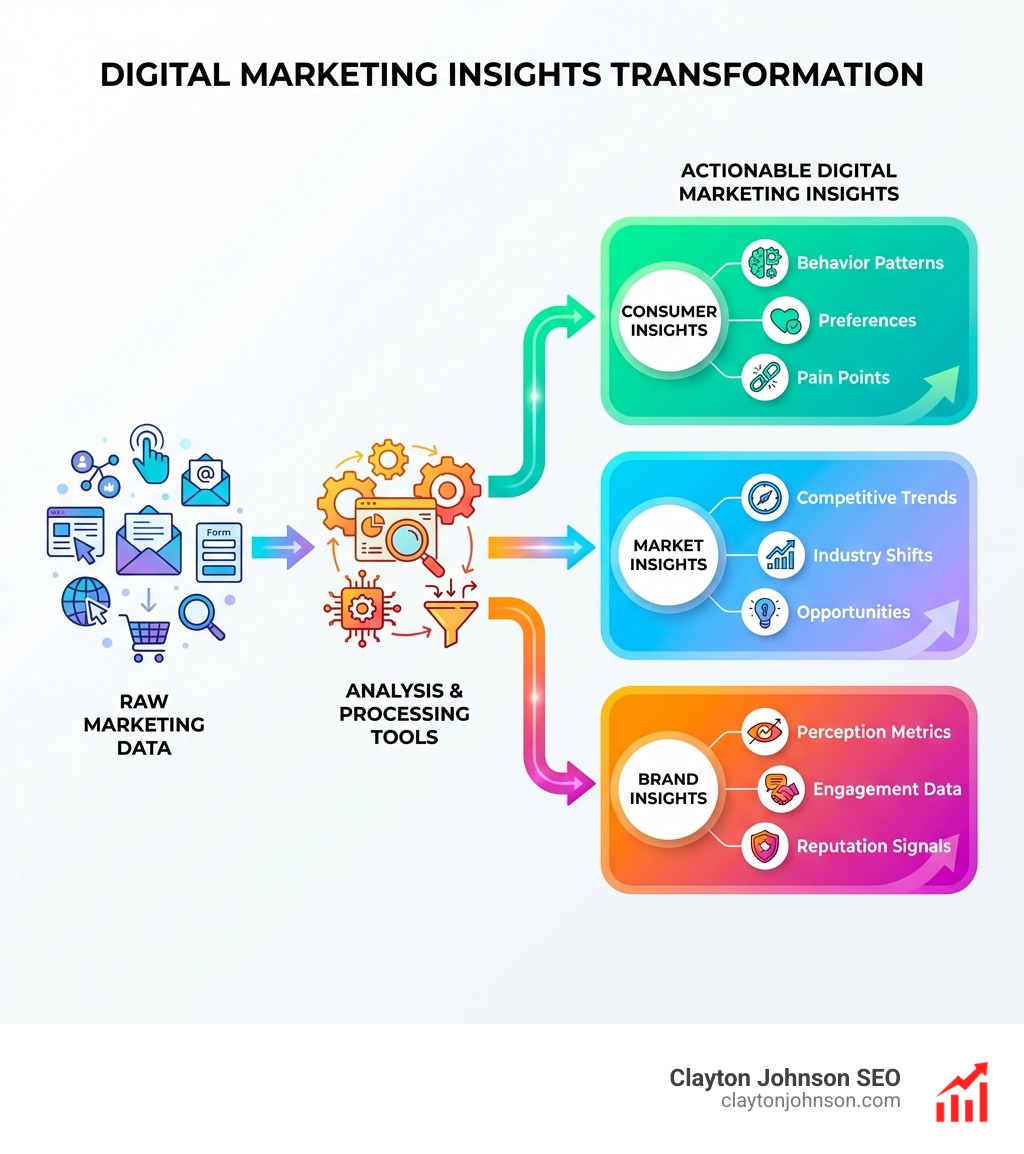
- Consumer Insights – Understanding customer behavior, preferences, and pain points through data analysis
- Market Insights – Identifying industry trends, competitive positioning, and emerging opportunities
- Brand Insights – Measuring brand perception, engagement metrics, and reputation signals
- Channel Insights – Tracking which platforms and tactics deliver measurable business outcomes
- AI-Driven Insights – Leveraging predictive analytics and personalization at scale
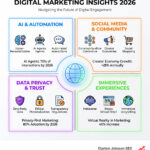
The marketing landscape has changed more in the past few years than in the previous 50. 86.4% of marketing teams now use AI in at least some areas, while 93.2% report that personalized experiences lead to more leads and purchases. Yet only one in four marketers feels satisfied with how they use data to power those personalized moments.
This gap between aspiration and execution is expensive. 33% of marketers cite measuring ROI as their top challenge, and 81% of consumers need to trust a brand before they’ll consider buying. Without clear insights, you’re spending money on campaigns you can’t measure, targeting audiences you don’t understand, and missing opportunities your competitors are already capturing.
The good news? The same AI tools creating uncertainty are also creating unprecedented opportunities. 70.2% of marketers believe they can adapt to changes like AI overviews in search results. Short-form video now delivers the highest ROI at 48.6% among all media formats. And lead generation is actually getting easier – 55.7% of marketers say it’s simpler now than a decade ago.
But success requires moving beyond vanity metrics and surface-level reporting. Real digital marketing insights connect customer behavior to business outcomes. They answer questions like: Why did this campaign work? What changed when performance dropped? Where should we invest next quarter?
The marketers winning right now aren’t just collecting more data – they’re asking better questions and building systems to act on what they learn.
I’m Clayton Johnson, and I’ve spent my career building SEO and growth systems that turn fragmented marketing efforts into coherent engines driven by digital marketing insights, structured content, and measurable outcomes. This article breaks down the most important insights shaping modern marketing – from AI transformation to consumer psychology shifts – and shows you exactly how to apply them.
Defining Digital Marketing Insights for Strategic Growth
Before we dive into the trends, we need to define what makes an “insight” different from just a “statistic.” A statistic tells you what happened; an insight tells you why it happened and what you should do next. To build a digital marketing pillars strategy that actually scales, you need to categorize your findings into three buckets.
- Consumer Insights: These focus on the individual. What drives your customers? Use audience research tools like SparkToro to uncover where your target audience hangs out online and what they care about.
- Market Insights: This is the bird’s-eye view. It involves tracking industry-wide changes, such as the technological breakthroughs in AI that are currently shifting how people interact with both digital and physical worlds.
- Brand Insights: This is the “mirror” view. How is your brand perceived? Are your messages cutting through the noise?
To get the full picture, you must combine qualitative observations (subjective feedback from customer feedback questions) with hard evidence (quantitative data from your analytics). If you want to see how this looks in practice, check out these marketing insight examples that move beyond simple spreadsheets.

Why Digital Marketing Insights are Essential for ROI
If you aren’t using insights, you’re essentially gambling with your marketing budget. 33% of marketers cite measuring ROI as their top challenge, yet the data shows that high-quality insights lead directly to better financial outcomes.
Consider this: 81% of consumers need to trust a brand before they will even consider a purchase. Trust isn’t built on generic ads; it’s built on understanding. Furthermore, 86% of consumers are willing to pay more for a superior customer experience. You cannot deliver that experience if you don’t have the digital marketing insights to know what “superior” means to your specific audience.
How to Collect and Act on Data-Driven Digital Marketing Insights
Data collection often feels like drinking from a firehose. To make it manageable, we recommend starting with marketing attribution. This technique helps you track customer journeys and understand which touchpoints actually lead to a sale.
Currently, 21% of marketers face attribution challenges, which prevents them from executing successful multi-channel strategies. To overcome this, use tools like Hotjar for qualitative heatmaps and Google Search Console for search intent data. When you combine these with traffic strategy frameworks, you stop guessing and start seeing the road to high performance.
The AI Revolution: From Search Bars to Creative Canvases
The way people find information is undergoing its biggest shift since the invention of the search engine. We are moving away from simple fact-finding toward dynamic exploration. People are now using conversational experiences like AI Mode to combine text, images, and audio in their queries.
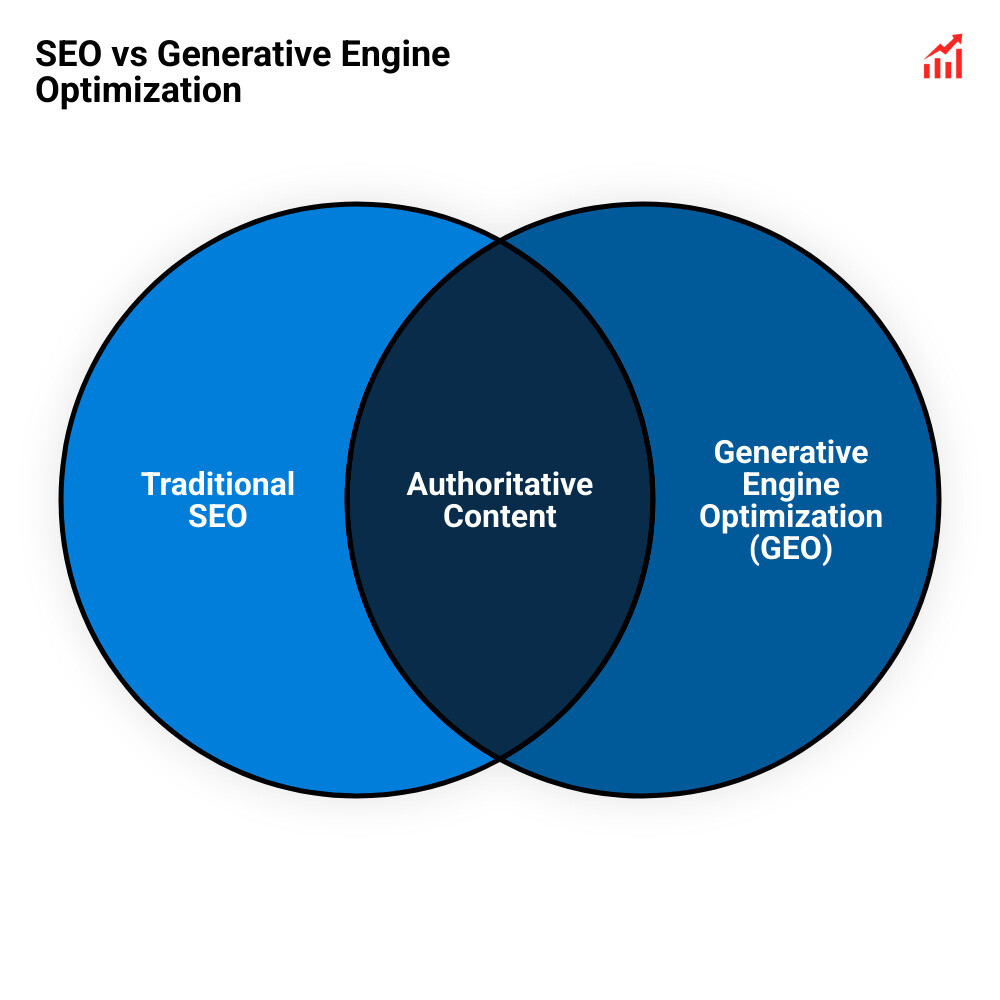
For marketers, this means traditional SEO is evolving into Generative Engine Optimization (GEO) or Answer Engine Optimization (AEO). The goal is no longer just to rank for a keyword, but to create a rich ecosystem of authoritative, people-first content that an AI can use to answer a complex query.
Consumers now expect the search bar to be a creative canvas. Tools like Gemini’s Nano Banana allow users to bring their queries to life visually. Brands like IKEA are already leaning into this with their Kreativ AI tool, which lets users scan rooms and visualize product swaps in real-time. If you’re feeling overwhelmed, our ultimate guide to digital marketing AI can help you navigate these conversational waters.
Leveraging AI for Hyper-Personalized Digital Marketing Insights
Personalization is one of the top trends shaping the future of marketing. 93.2% of marketers say that personalized experiences lead to more leads, yet 70% of brands fail to use personalized emails effectively.
The secret to scaling this isn’t just “automation”—it’s “intelligence.” While marketing automation follows a set of “if/then” rules, AI learns and adapts.
| Feature | Marketing Automation | Artificial Intelligence |
|---|---|---|
| Logic | Predefined Workflows | Predictive Modeling & Learning |
| Adaptability | Rigid | Dynamic |
| Content | Segmented Templates | Hyper-Personalized Generation |
| Goal | Efficiency | Effectiveness & Relevance |
By using AI for predictive modeling, you can identify which customers are likely to churn or which are ready for an upsell. This is a core part of building scalable marketing frameworks that don’t require an army of manual workers to maintain.
Consumer Psychology: Prioritizing Present Wellbeing
One of the most surprising digital marketing insights is the shift in consumer timeframes. In an era of sustained uncertainty, long-term goals are losing their grip. Consumers are increasingly feeling anxious, worried, and tired.
To combat this emotional fatigue, people are prioritizing new experiences and immediate rewards that enhance their present wellbeing. For many younger consumers, a house deposit feels less realistic than spending on a trip that creates immediate joy.
How brands should respond:
- Deconstruct Value: Break big rewards into smaller, frequent milestones.
- Immediate Gratification: British Airways did this by revamping its Avios loyalty programme to offer smaller, regular rewards rather than distant, hard-to-reach goals.
- Focus on Joy: Market the immediate emotional benefit of your product, not just its long-term utility.
Content Evolution: Short-Form Video and the Nostalgic Remix
If you have $1 to spend on content, the data says to put it into video. Short-form video delivers the highest ROI at 48.6% among all media formats. But it’s not just about watching anymore; it’s about participating.
Today’s young audiences are digitally-native creators. They don’t want to just consume stories; they want to remix them. Look at EPIC: The Musical, where the creator gave the community agency to cast and create. This led to over 50,000 uploads of videos related to ‘EPIC: The Musical’ on YouTube alone.
The Power of the ‘Nostalgic Remix’
Nostalgia is no longer just a feeling; it’s an economic engine. Nostalgic ad campaigns can increase brand likability by up to 20%. The key is the “remix”—taking something old and making it new.
- Airbnb used the Backstreet Boys to power their ads.
- Louis Vuitton celebrated its 20th anniversary by re-releasing an iconic collaboration.
- Nintendo featured Paul Rudd reprising his role from a 1991 commercial.
By providing co-creation assets and generative AI tools like Veo 3, brands can allow their fans to produce visually complex assets at scale. If you need help launching these types of campaigns, our social media marketing services are designed to foster this kind of community engagement.
Communicating Sustainability Without Greenwashing
The era of vague corporate pledges is over. Marketers are now facing regulatory demands and a skeptical public. To avoid accusations of “greenwashing,” brands must shift their focus to tangible value.
Instead of selling “sustainability” as an abstract concept, sell the smart consumer benefits it provides, like durability or cost savings. A great example of this is this collaboration between a popular YouTuber and the marketplace Vinted. The content focuses on saving money and finding great style, making the sustainable choice the “smart” choice rather than just the “virtuous” one.
Frequently Asked Questions about Digital Marketing Insights
We know that navigating these shifts can feel like trying to run on a slip ‘n’ slide. Here are some of the most common questions we hear from marketing leaders.

What skills will marketing teams need most in the future?
The marketing role is shifting from “doing” to “coaching.” Marketers need to be the “human in the loop” who guides the AI to get the best results. The most critical skills include:
- AI Prompting: Knowing how to talk to machines to get high-quality output.
- Data Analytics: Interpreting data into actionable business advice.
- Communication: Cross-departmental alignment is more important than ever.
- Human Storytelling: Creating unique, human-centered content that AI can’t replicate.
Check out our breakdown of the essential AI skills for marketers to see where you should be upskilling.
Which social media platforms offer the best ROI for B2B vs B2C?
According to recent survey data, the landscape is shifting:
- For B2C: Instagram and Facebook remain the leaders, but TikTok is rapidly gaining ground in ROI perception.
- For B2B: Instagram has surprisingly surpassed Facebook as the #1 platform for brands. LinkedIn remains essential for professional networking and paid advertising services.
- The Winner: Regardless of your sector, short-form video is the media format with the highest reported ROI (48.6%).
How can brands use AI for personalization without replacing human creativity?
AI should be your assistant, not your replacement. We advocate for a “human-in-the-loop” strategy where AI handles the heavy lifting of data analysis and initial drafting, but humans provide the creative strategy and unique brand voice.
For instance, in email marketing services, AI can predict the best time to send a message and personalize the subject line based on past behavior, but the core narrative and emotional hook should come from a human. This ensures your content doesn’t become the “boring, generic content” that is currently flooding the internet.
Conclusion
The future of marketing belongs to those who can turn digital marketing insights into a competitive advantage. Whether it’s adapting to the AI search revolution, understanding the “present-focused” consumer, or leveraging the power of the nostalgic remix, the key is to stay agile and data-informed.
At Clayton Johnson SEO, we help founders and marketing leaders cut through the clutter. We provide the SEO content marketing services and growth frameworks you need to diagnose problems, choose a strategy, and execute with measurable results.
Don’t leave your growth to chance. Use these insights to build a smarter, more responsive marketing engine today. Ready to see how these frameworks apply to your business? Let’s build your demand generation roadmap together.