Why AI-Powered SEO Efficiency Matters Right Now

How SEOs use AI: boosting efficiency and productivity in 2024 has become the defining question for marketing teams navigating a transformed search landscape. Here’s what you need to know:
- 67% of SEOs report AI’s greatest benefit lies in automating repetitive tasks
- 86% of SEO professionals are already using AI in their strategies
- AI can boost marketing productivity by up to 15%, saving roughly $463 billion annually
- Companies using AI-powered SEO report 47% faster implementation times and 63% greater ROI
- AI tools identify high-performing keywords 85% faster than manual methods
- Over 70% of businesses see revenue increases within six months of AI implementation
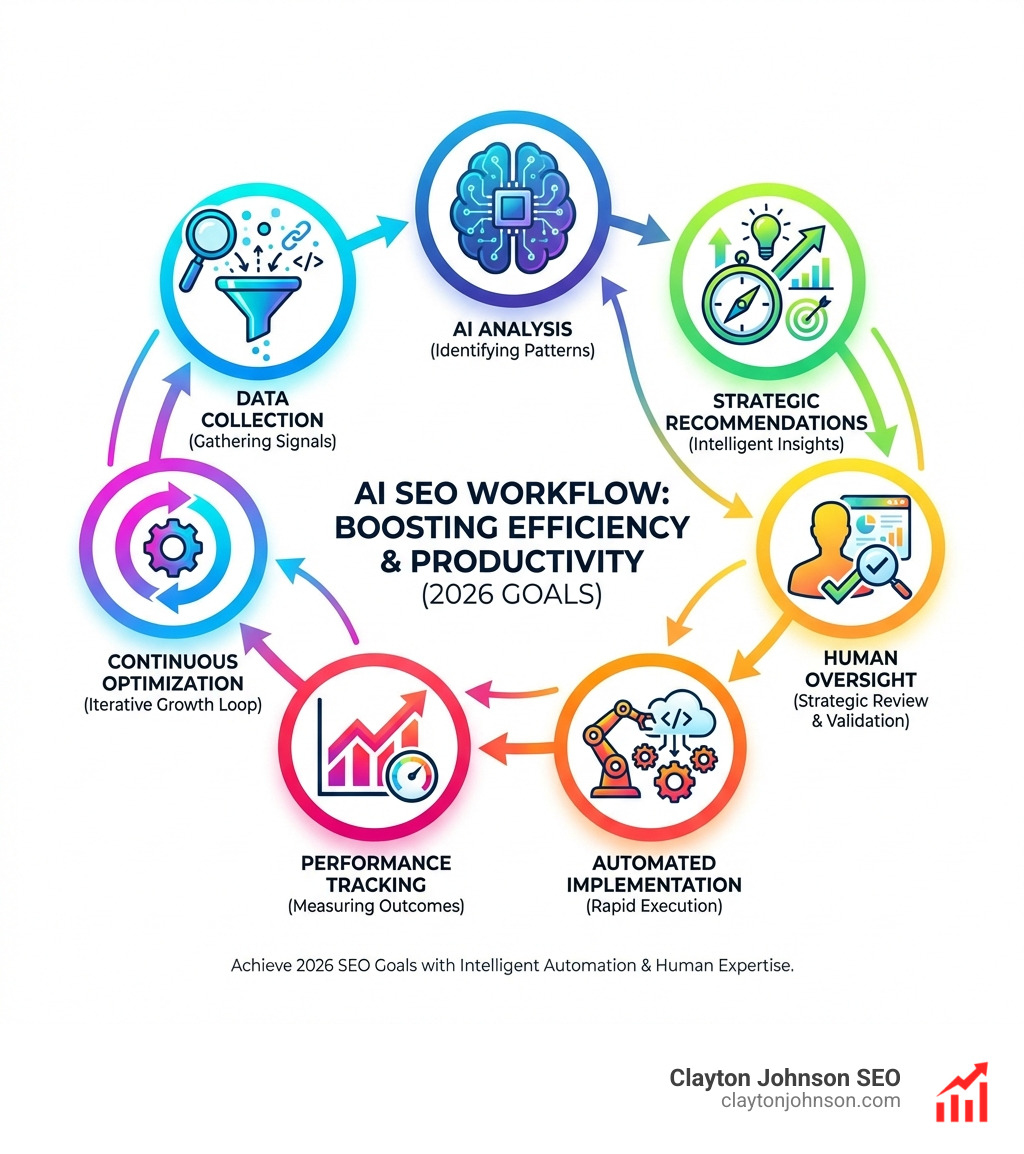
The data tells a clear story: AI isn’t just changing how SEO work gets done—it’s redefining what’s possible when human strategy meets machine efficiency. From keyword clustering that once took days to content audits that now run in minutes, the gap between AI-adopting teams and those still working manually grows wider each quarter.
I’m Clayton Johnson, and I’ve spent years building AI-augmented SEO systems that transform fragmented marketing efforts into scalable growth engines, specifically helping teams understand how SEOs use AI: boosting efficiency and productivity in 2024 through structured frameworks and measurable outcomes. This guide breaks down exactly where AI creates leverage, which tasks to automate first, and how to maintain strategic control while scaling execution.
How seos use ai: boosting efficiency and productivity in 2024 terms to learn:
- AI assisted SEO workflows
- AI SEO workflow automation
- AI driven SEO tactics
How SEOs Use AI: Boosting Efficiency and Productivity
We are living through a fundamental shift in digital marketing. When we look at how SEOs use AI: boosting efficiency and productivity in 2024, it’s not just about “writing faster.” It’s about a complete overhaul of the marketing supply chain. McKinsey estimates that AI could boost marketing productivity by up to 15%, which translates to a staggering $463 billion in annual global value.
For most of us, the “old way” involved spreadsheets, manual data scraping, and hours of staring at search results to find patterns. Today, we use generative AI as a strategic ally. It handles the “prework”—the ideation, the initial research, and the heavy data lifting—so we can focus on high-level strategy and brand authority.

At Clayton Johnson SEO, we believe that The Truth About AI SEO and Why It Matters is found in the balance between automation and human insight. AI is excellent at predicting what an audience wants to see based on billions of data points, but it still requires a human “pilot” to ensure the content aligns with business goals and maintains a unique brand voice.
By automating repetitive SEO tasks, 67% of professionals are reclaiming their time for more creative and impactful work. This isn’t about replacing the SEO; it’s about giving them a bionic suit.
Transforming Core SEO Disciplines with Machine Learning
The evolution of search engines—from simple keyword matching to complex semantic search—has necessitated a change in our tools. Google’s integration of technologies like BERT and MUM means that search engines now understand context and user intent better than ever before. To keep up, we must use AI to analyze our own content through that same lens.
Machine learning allows us to personalize content experiences at scale. Instead of a “one-size-fits-all” blog post, we can use AI to identify exactly what a specific segment of our audience is looking for and tailor our messaging to meet their needs. This deep alignment with user intent is the cornerstone of AI-powered SEO strategy, ensuring that every piece of content we produce serves a measurable purpose.
How SEOs Use AI: Boosting Efficiency and Productivity in Keyword Research
Keyword research used to be a game of volume. Now, it’s a game of intent. One of the most powerful ways how SEOs use AI: boosting efficiency and productivity in 2024 is through automated keyword clustering and intent prediction.
Instead of looking at a flat list of 500 keywords, we use AI to group them into “topic clusters.” This identifies the “parent” topics and the “child” sub-topics, allowing us to build out comprehensive authority in a specific niche.
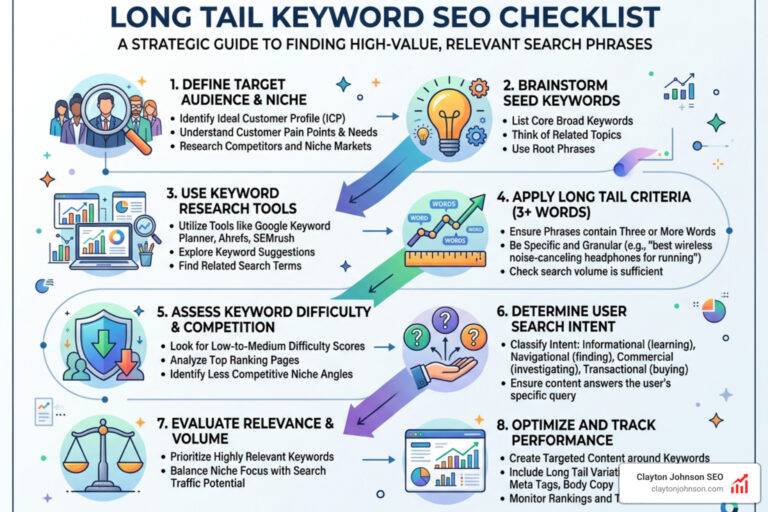
- Seed Keyword Generation: AI can brainstorm hundreds of niche-specific seed keywords in seconds.
- SERP Intent Analysis: AI models can analyze the top 10 results for a keyword and tell us if the user wants a “how-to” guide, a product page, or a comparison.
- Pattern Recognition: AI identifies emerging search patterns 85% faster than a human analyst could.
By understanding The Future of Search with AI Powered Keyword Research, we move away from guessing and toward a data-backed roadmap for content creation.
How SEOs Use AI: Boosting Efficiency and Productivity in Content Optimization
Creating content is one thing; making sure it ranks is another. AI writing assistants and optimization tools have revolutionized this process. We no longer have to guess if our content is “comprehensive enough.”
AI tools analyze top-ranking competitors in real-time to generate detailed content briefs. These briefs tell us exactly which sub-topics to cover, which questions to answer, and what the ideal reading level should be. We use this data to ensure our content has high semantic relevance—meaning it covers the topic so thoroughly that search engines have no choice but to see us as an authority.
Our AI Content Optimization Guide from Zero to Hero highlights that the goal isn’t just to rank—it’s to provide value. AI helps us identify “content gaps”—areas our competitors missed—giving us the opportunity to provide the “helpful, people-first content” that Google rewards.
Technical SEO and Strategic Automation
Technical SEO is often the most time-consuming part of the job. It involves auditing thousands of pages for broken links, slow load times, and missing schema markup. This is where how SEOs use AI: boosting efficiency and productivity in 2024 truly shines.
We use AI to automate the “boring but important” stuff. For example, generating schema markup (structured data) used to require coding skills or clunky plugins. Now, we can ask an AI to “generate FAQ schema for this article,” and it’s done in seconds.
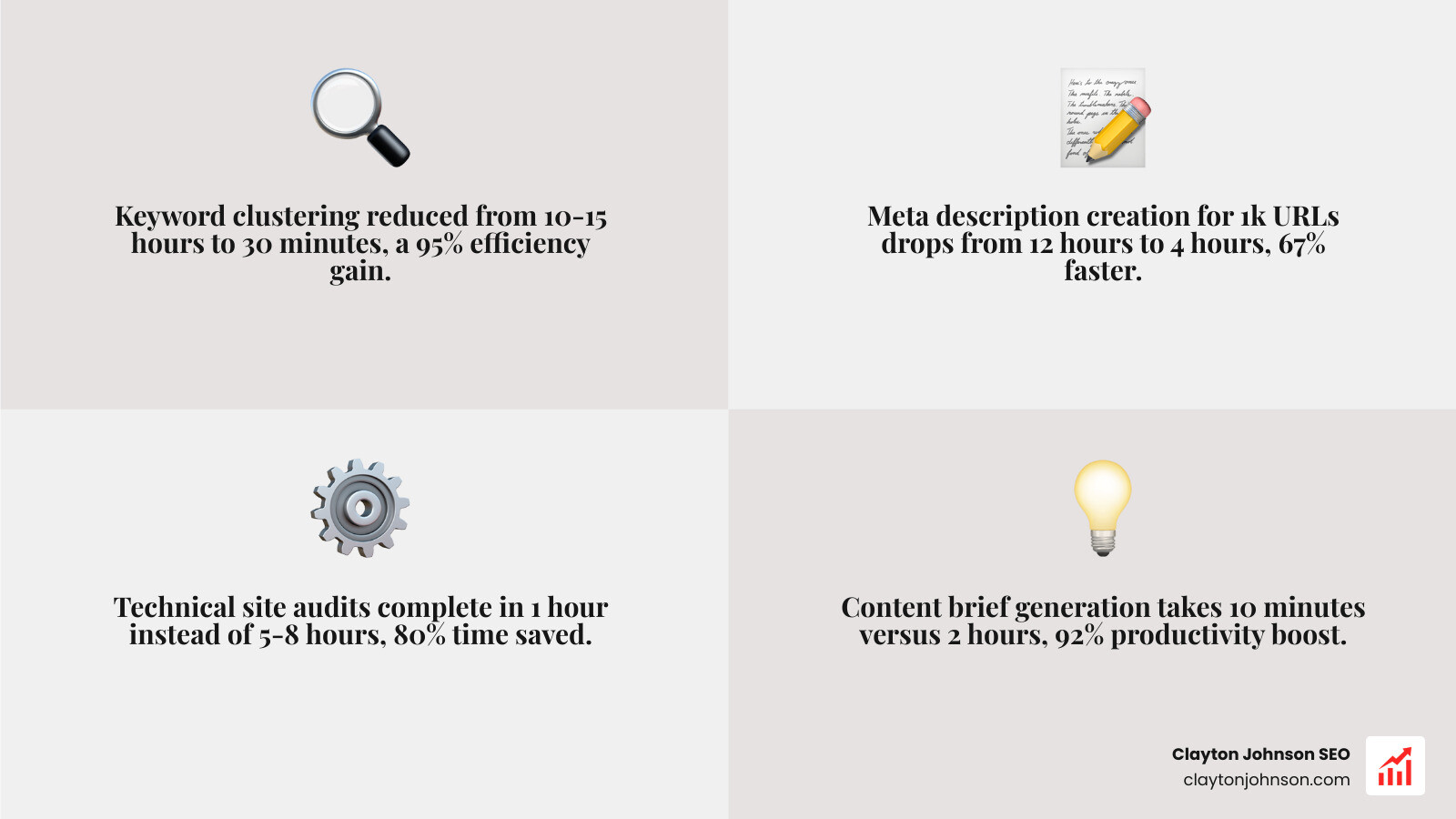
| Task | Manual Workflow | AI-Augmented Workflow | Efficiency Gain |
|---|---|---|---|
| Keyword Clustering | 10-15 Hours | 30 Minutes | 95% |
| Meta Description Creation | 12 Hours (per 1k URLs) | 4 Hours | 67% |
| Technical Site Audit | 5-8 Hours | 1 Hour | 80% |
| Content Brief Generation | 2 Hours | 10 Minutes | 92% |
| Schema Markup Coding | 30 Minutes | 1 Minute | 96% |
Automated site audits can now identify issues like invalid hreflang tags or page speed bottlenecks with 64% higher accuracy than manual spot-checks. By utilizing The Top Automated SEO Audit Tools for Faster Rankings, we ensure our technical foundation is rock-solid without spending weeks in the weeds.
Frequently Asked Questions
How is AI changing SEO roles and team structures?
The rise of AI is leading to a period of significant reskilling. McKinsey research suggests that while some roles may see shifts, the primary impact is role restructuring rather than job loss.
In enterprise teams, roughly 30% of SEOs report that their roles are being redefined to focus more on strategy, data analysis, and quality assurance. Instead of “content writers,” we now have “content editors” who oversee AI-generated drafts. The SEO of the future is a “prompt engineer” and a “strategic architect” who knows how to pull the right levers on various AI models to get the best results.
What are the best practices for integrating AI into an SEO strategy?
We recommend a “crawl, walk, run” approach. Don’t try to automate your entire department overnight.
- Identify Bottlenecks: Start with the tasks that take your team the longest (usually keyword research or meta-tagging).
- Small-Scale Testing: Use AI for a single category or a small batch of pages. Monitor the rankings and quality closely.
- Balance with Human Oversight: Never publish AI-generated content without a human review. Accuracy and brand voice are non-negotiable.
- Prioritize E-E-A-T: Ensure your content includes unique insights, personal experience, and first-party data that an AI cannot replicate.
For a deeper dive, check out The Ultimate Guide to AI Driven SEO Strategy and Systems.
What are the main ethical considerations for AI in SEO?
Ethics and security are top of mind for 58% of SEO professionals. When using AI, we must be careful with data privacy—never feed non-public client data into a public AI model.
There is also the challenge of content authenticity. Google’s helpful content guidelines prioritize original material. If you use AI to simply rehash what’s already on the web, you risk being filtered out of the search results. To stay safe, you must survive the search results by adding a layer of human expertise that provides “insights not available on other websites.”
Conclusion
The era of manual, fragmented SEO is over. Understanding how SEOs use AI: boosting efficiency and productivity in 2024 is no longer a competitive advantage—it is a requirement for survival. By leveraging AI for data analysis and repetitive execution, we free ourselves to do what humans do best: think strategically and build authentic connections with our audience.
At Clayton Johnson SEO, we are building Demandflow.ai to provide the structured growth architecture that companies need to scale. We don’t just give you tactics; we provide a taxonomy-driven system that uses AI SEO to drive compounding growth.
If you’re ready to stop guessing and start ranking with a structured growth engine, we’re here to help you build the infrastructure for the future. Clarity leads to structure, and structure leads to leverage. Let’s build your leverage together.