Why Your Clicks Are Ghosting You: A Guide to Zero-Click Traffic

The Current State of Zero-Click Search Traffic Impact
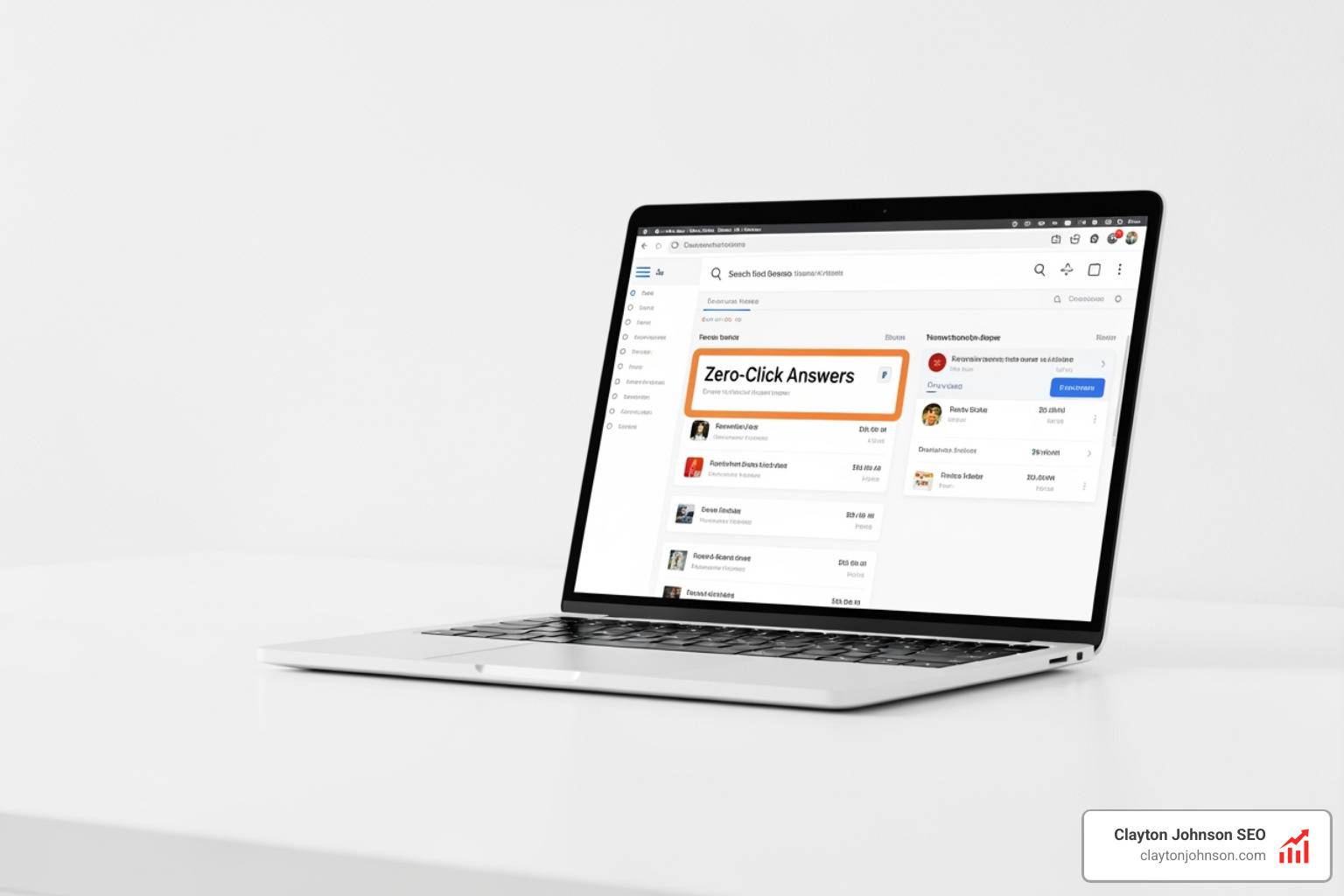
The zero-click search traffic impact is no longer a fringe theory; it is the baseline reality of the modern web. Data from SparkToro shows that the divide between mobile and desktop behavior reveals a massive shift in how users consume information.
Mobile Dominance and Desktop Trends
Mobile users are the primary drivers of the zero-click trend. With a staggering 77.2% zero-click rate on mobile, it’s clear that users on the go want immediate gratification. The smaller screen real estate makes scrolling past a massive AI Overview or a featured snippet more tedious, leading users to take the answer provided and move on.
Desktop users still click more frequently, but even there, the zero-click rate has climbed to 46.5%. This suggests that even in a research-heavy environment, Google’s ability to synthesize information is satisfying nearly half of all queries without a single referral.
Geographic Variations
While the trend is global, we see slight variations in how users interact with search features. In the U.S., approximately 58.5% of searches result in zero clicks, while in the EU, that number sits slightly higher at 59.7%. This suggests that regardless of regulatory environments, the user demand for speed is universal.
Informational vs. Navigational Intent
The zero-click search traffic impact hits different types of queries with varying intensity:
- Informational Queries: These are under siege. With 88.1% of informational queries now triggering AI Overviews, the traditional “how-to” or “what is” article is seeing its click-through rate decimated.
- Navigational Intent: Searches like “Target hours” or “login for [Service]” are almost entirely zero-click now, as Google provides the business data or direct links within the SERP.
- Transactional Queries: These remain the most resilient. When someone wants to buy a specific product, they still need to click through to a store to complete the purchase.
Despite these declines, total search volume continues to grow. Google is processing more queries than ever before, which means that while the percentage of clicks is down, the total pool of available clicks is still massive for those who know how to capture them.
For additional context on how search results are increasingly designed to resolve intent directly on the results page, see Zero-click search.
More info about zero-click search strategies
How AI Overviews and SERP Features Accelerate Traffic Declines
If featured snippets were the spark, AI Overviews are the wildfire. These generative summaries synthesize information from multiple sources and place them at the very top of the page, often pushing traditional organic results “below the fold.”
The Devastating CTR Drop
When an AI Overview appears, the click-through rate (CTR) for the #1 organic result can drop by as much as 47%. In many cases, the top-ranked site sees its CTR plummet from a healthy 15% to a meager 8%. This is because the AI provides a “good enough” answer that removes the incentive to dig deeper.
Recursive Linking and the Google Loop
Our research shows a concerning trend: recursive linking. Nearly 43% of AI Overviews point back to other Google properties or internal search results. This creates a closed loop where the user stays within the Google ecosystem, further intensifying the zero-click search traffic impact on independent publishers.
The Search Console Reporting Anomaly
Many of us noticed a sharp drop in “impressions” during the late stages of the year. This wasn’t necessarily a loss of human interest. Google updated Search Console to remove bot-inflated impressions and changed how the num=100 parameter works. While this makes our data “cleaner,” it also revealed the true, stark reality of how much human traffic has actually declined.
More info about AI SEO strategy
Measuring the Zero-Click Search Traffic Impact on News and SaaS
The impact is not distributed equally across industries.
News Publishers:
News outlets have been hit hardest. Zero-click searches for news-related queries rose from 56% to 69% in a single year. Major publishers like CNN and Forbes have reported traffic declines ranging from 27% to 50%. When Google summarizes a breaking news story in the SERP, the need to click the article vanishes for the average reader.
SaaS and B2B Benchmarks:
The SaaS world is also feeling the burn. A prominent marketing platform recently experienced a 70-80% decline in organic traffic for top-of-funnel content. This serves as a warning: if your content is generic or purely informational, AI will summarize it, and your traffic will vanish. We are seeing a 73% traffic loss across B2B websites that rely on “educational” keywords.
Optimizing for the Zero-Click Search Traffic Impact via Featured Snippets
To survive, we must stop fighting the SERP and start occupying it. If Google is going to show an answer, it should be your answer.
- Concise Paragraph Snippets: Write 40-60 word blocks that directly answer a query in the first sentence.
- Structured Data: Use FAQ and HowTo schema to give Google’s crawlers the exact data they need to build snippets.
- Comparison Tables: AI Overviews love data. Using
Voice search is another critical frontier. Since 40.7% of voice search answers are pulled directly from featured snippets, winning “Position Zero” means you become the literal voice of authority for users using smart speakers.
More info about keyword strategy
Proven Strategies to Thrive in a Clickless Landscape
We cannot rely on a “website-only” strategy anymore. We must adopt what we call “Search Everywhere Optimization.”
Content Diversification and AI Citations
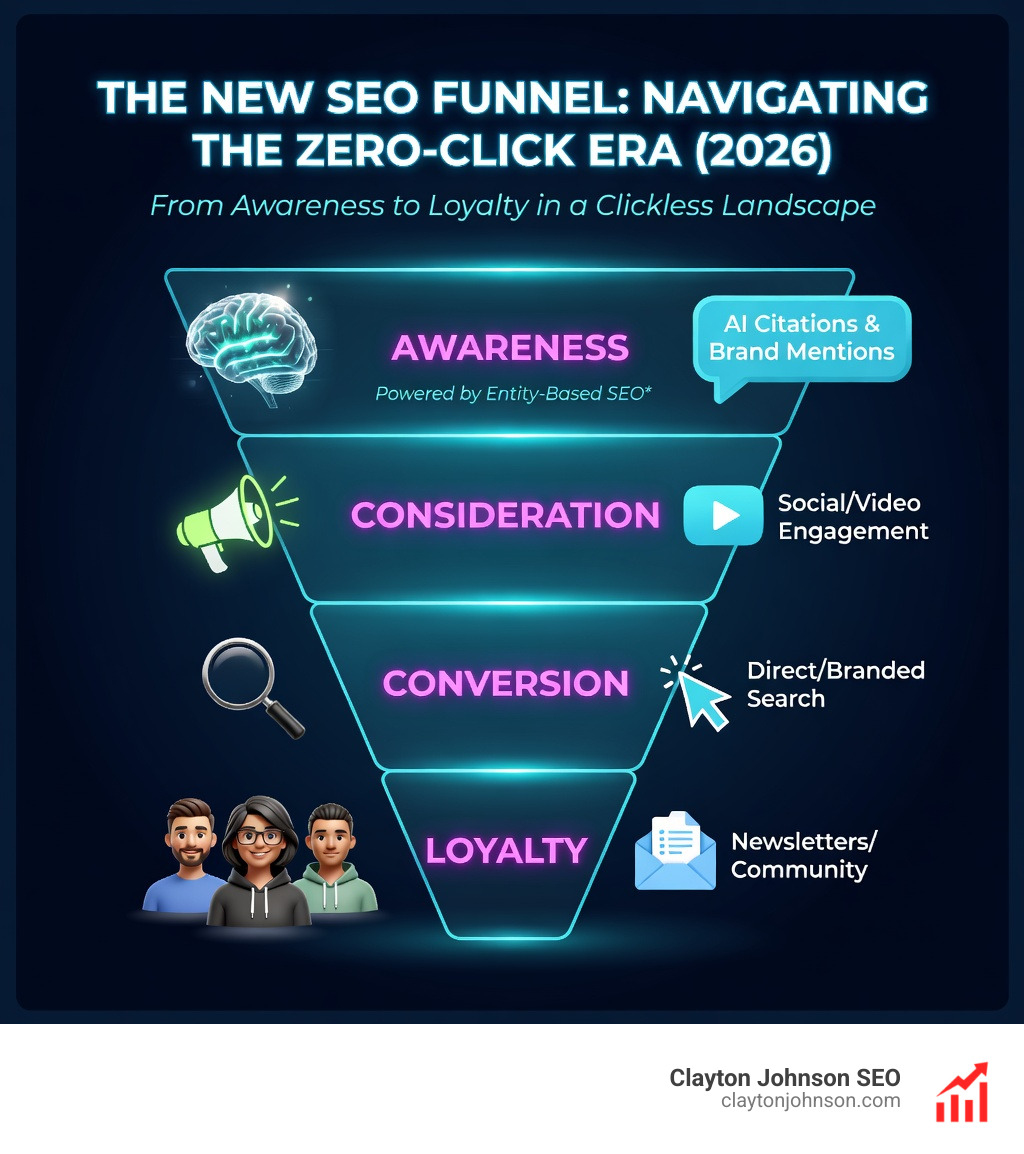
Instead of just chasing clicks, we now chase citations. Being the cited source in an AI Overview provides brand authority that compounds over time. Even if the user doesn’t click today, they see your brand associated with the expert answer.
Entity-Based SEO and Brand Authority
Google is moving away from simple keywords and toward “entities” (people, places, and things). By building a deep ecosystem of content—using proprietary research, case studies, and first-hand expertise—you establish your brand as an inescapable authority that AI models must reference.
Video and Social Discovery
Video content is remarkably resistant to AI summarization. Users still want to see a process or hear a human voice. Platforms like YouTube (the world’s second-largest search engine) and TikTok are becoming primary discovery channels for Gen Z, where 54% of users prefer algorithmic feeds over active searching.
The Newsletter Pivot
Owning your audience is the only way to be 100% safe from the zero-click search traffic impact. We are seeing a massive surge in newsletter growth as publishers realize that an email list is the only traffic source Google can’t take away.
How to Increase Organic Traffic
More info about core SEO systems
Beyond the Click: New Metrics for Modern SEO
If we only track clicks, we are looking at an incomplete map. We need new KPIs to measure success in an “answer engine” world.
1. AI Citation Share
How often is your brand cited in AI Overviews for your target keywords? This is the new “Share of Voice.”
2. Branded Search Volume
If your zero-click visibility is working, more people should be searching for your brand by name. This is a high-intent signal that converts at a much higher rate than generic search.
3. Conversion Rate by Source
AI-referred traffic is often higher quality. Research shows that users who click through from an AI summary or a platform like Perplexity stay on-site for over 9 minutes on average. They are “pre-sold” by the AI’s recommendation.
4. Impression Share in SERP Features
Are you appearing in the Local Pack, the Image Pack, or the People Also Ask boxes? Even without a click, this is “billboard advertising” that builds mental availability.
10 Key Website Traffic Metrics
More info about conversion optimization
Frequently Asked Questions about Zero-Click Search
What industries are most affected by zero-click searches?
Informational niches are the primary targets. This includes news outlets, weather services, encyclopedia-style sites, and simple SaaS tools (like unit converters or calculators). Any business that provides a “quick answer” is at risk of being replaced by a Google SERP feature.
Is SEO still worth it if clicks are declining?
Absolutely. While the way we get value is changing, the total search volume is still rising. SEO is transitioning from a “traffic faucet” to an “authority engine.” High-intent traffic from search still converts 8.5x better than outbound leads. The goal is now to capture the right clicks, not just any clicks.
How do I track visibility if users don’t click?
You should focus on Search Console impressions for specific SERP features, monitor branded search volume in tools like Ahrefs, and track brand mentions within AI Overviews. Additionally, look at your “Direct” traffic; a rise in direct visits often indicates that your brand awareness in the SERP is driving people to go to your site directly later.
Conclusion: Navigating the New Reality
The zero-click search traffic impact is a structural shift in the internet’s architecture. The “Great Decoupling” means we can no longer measure SEO success by raw traffic alone.
At Clayton Johnson SEO, we believe that the winners in this new era will be those who build structured growth architecture. This means moving beyond simple tactics and building a brand that exists everywhere your customers are—whether that’s in an AI summary, a YouTube video, or a niche community.
The future of search isn’t about fighting for the click; it’s about becoming the answer. By focusing on authority-building ecosystems and AI-augmented workflows, you can turn the zero-click challenge into a competitive advantage.