Anthropic Claude SEO Strategy: Ranking in the Age of AI

Why Optimizing for AI Search Matters Now
Optimize Claude for SEO is no longer a niche concern—it’s a strategic imperative for anyone building visibility in 2025 and beyond. Search behavior is shifting from traditional link-based results to AI-generated answers. Users now ask Claude, ChatGPT, and Google AI Overviews for direct recommendations, and these tools surface brands based on patterns they’ve learned from the web, not just page-one rankings.
Quick Answer: How to Optimize Claude for SEO
- Build topical authority through interconnected content clusters and internal linking
- Get cited in high-ranking listicles and comparison pages where AI tools look for consensus
- Structure content clearly with semantic headings, schema markup, and plain language
- Strengthen trust signals with E-E-A-T factors: expertise, authoritativeness, and transparency
- Maintain technical foundations including mobile optimization, fast load times, and crawlability
- Leverage brand mentions across third-party sites to signal relevance to AI systems
The challenge is simple: if your brand doesn’t appear consistently in authoritative sources across the web, AI models won’t recommend you. Unlike traditional SEO where you optimize individual pages for rankings, Optimize Claude for SEO requires a web-wide presence strategy. You need to be cited, mentioned, and linked in the places Claude already trusts.
This matters because over 73% of consumers globally say they trust content created by generative AI. When Claude answers a question about your industry, you want your brand in that response. And the tactics that get you there—content depth, link building, structured data, and authority signals—are the same fundamentals that drive sustainable organic growth.
I’m Clayton Johnson, and I’ve spent years building SEO systems that combine technical depth with strategic positioning. My work focuses on helping brands Optimize Claude for SEO through structured content frameworks, authority-building campaigns, and AI-assisted workflows that scale visibility across both traditional search and generative platforms.
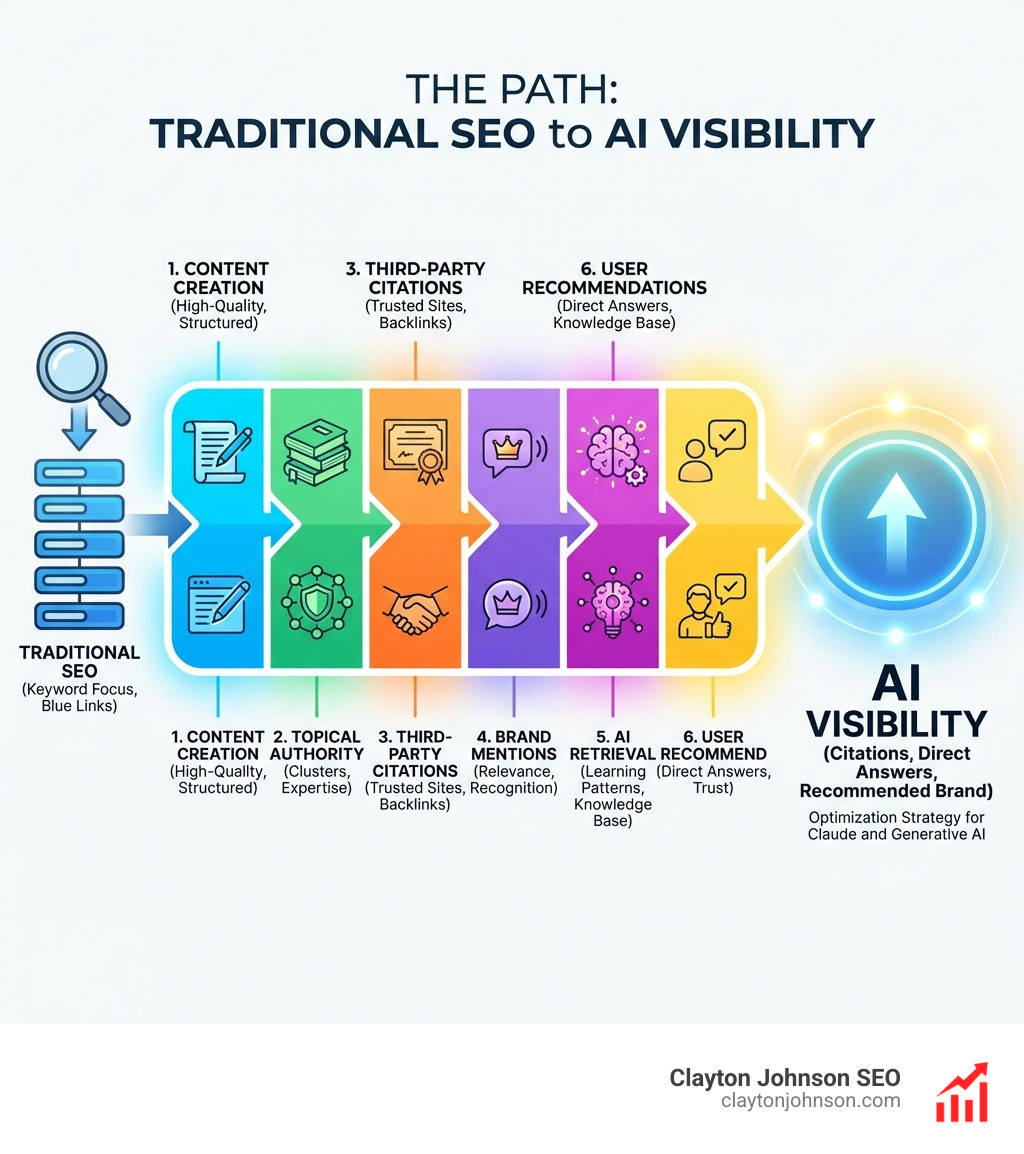
What is Claude SEO and Why It Matters for Visibility
When we talk about “Claude SEO,” we aren’t talking about a secret back door into Anthropic’s servers. Instead, we are describing the practice of shaping your digital footprint so that Anthropic Claude recognizes, cites, and recommends your brand.
Traditional SEO is about “blue links.” You want to be result number one for a specific keyword. Claude SEO is about citations. When a user asks Claude, “What is the best SEO strategy for a Minneapolis startup?” you want Claude to mention your brand name specifically.
Claude generates answers based on three things: its training data, its reasoning capabilities, and—increasingly—its ability to retrieve information from the web. Unlike a search engine that looks for the most “relevant” page, Claude looks for web-wide consensus. If ten different authoritative sites all say your product is the best for a specific use case, Claude is highly likely to repeat that as a fact.
This is why brand mentions on third-party sites are more valuable than ever. According to recent reports, Claude’s user base is growing by more than 30% year-on-year. As more people move away from clicking through pages and toward receiving synthesized answers, your “share of model” (how often an AI mentions you) becomes just as important as your “share of voice.”
At Clayton Johnson SEO, our SEO Services are designed to bridge this gap. We don’t just look at where you rank; we look at how you are perceived by the algorithms that power the modern web. With 73% trust in AI content, failing to appear in these AI-generated summaries means you are invisible to a massive segment of your audience.
How to Optimize Claude for SEO Through Content and Authority
To Optimize Claude for SEO, your content needs to do more than just exist; it needs to lead. Claude is designed to be helpful and honest. It prioritizes content that is well-structured, factually accurate, and easy to parse.
We approach this through a lens of “Semantic SEO.” This means we aren’t just stuffing keywords into a page. We are building a map of meaning. Claude understands the relationship between concepts. If you write about “SEO strategy,” Claude expects to see related terms like “search intent,” “backlink profile,” and “technical audit.” If those are missing, Claude may view your content as “thin” or lacking authority.
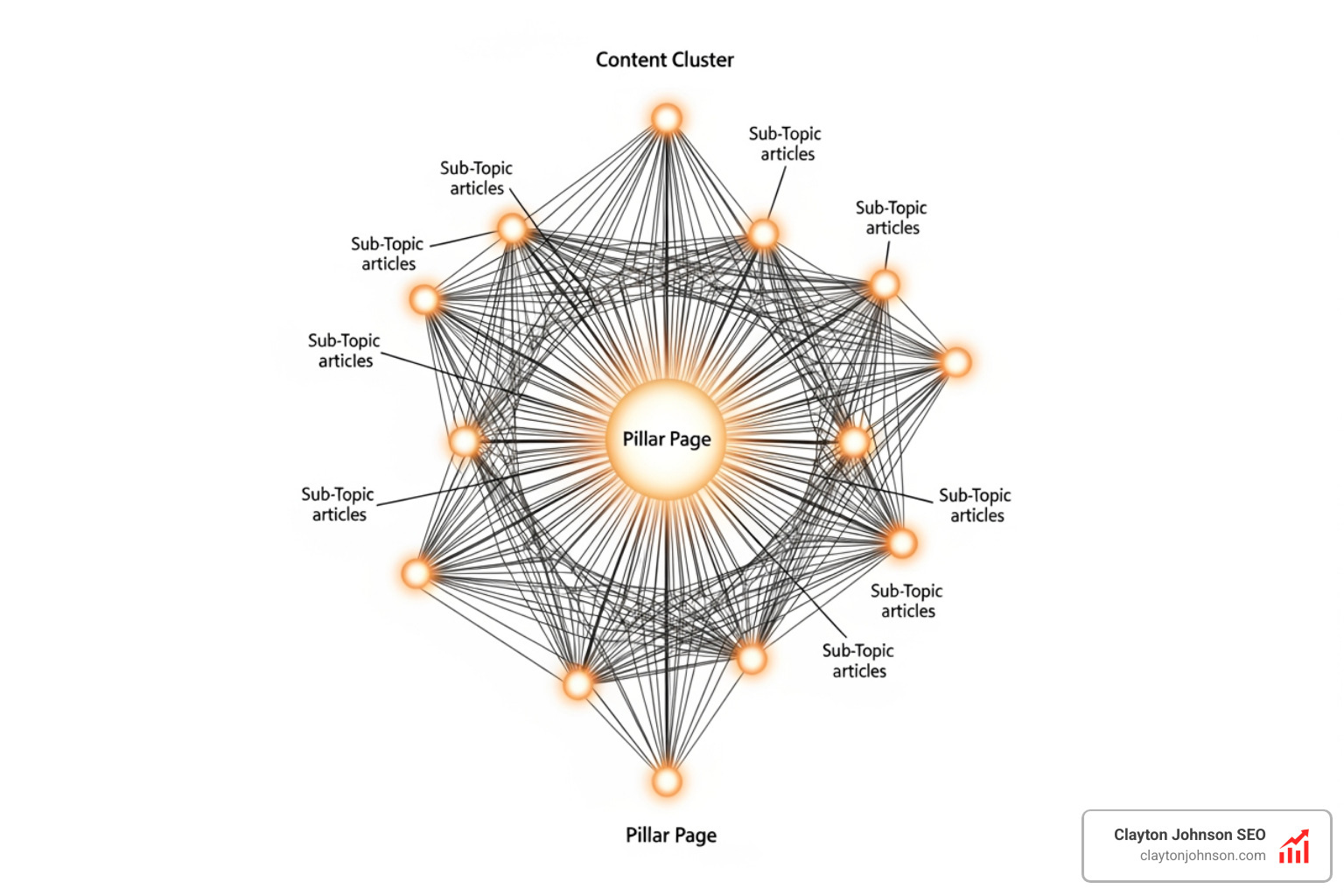
Our SEO Content Marketing strategy focuses on creating these deep connections. When your site is the definitive source for a topic, Claude is more likely to use your data points as the foundation for its answers.
Building Topical Authority to Optimize Claude for SEO
Topical authority is the “holy grail” to Optimize Claude for SEO. It signals to both Google and AI models that you aren’t just a “one-hit-wonder” but a reliable expert in your niche.
- Pillar Pages: Create comprehensive guides that cover a broad topic in-depth. For example, a pillar page on Google Rankings should touch on everything from speed to backlinks.
- Content Clusters: Surround that pillar with smaller, highly specific articles that link back to the main page. This creates a “web” of relevance.
- Internal Linking: Use descriptive anchor text. Instead of “click here,” use “internal linking best practices.” This tells Claude exactly what the destination page is about.
- E-E-A-T Signals: Experience, Expertise, Authoritativeness, and Trustworthiness. Include author bios, cite your sources, and keep your data fresh. Claude is trained to avoid “hallucinations” and prefers content that provides verifiable evidence.
Content Structure Strategies to Optimize Claude for SEO
Claude doesn’t “read” like a human; it processes tokens. To make your content machine-readable, you need to use clear, logical structures.
- Plain Language: Avoid unnecessary jargon. If a concept is complex, explain it simply. Claude’s goal is to be a helpful assistant; it will favor content that helps it explain things clearly to the user.
- XML Tags and Semantic Headings: Use H1, H2, and H3 tags correctly. This creates a hierarchy that AI models use to summarize your content.
- Structured Data: Use Schema.org: Article markup to explicitly tell the AI what your page is about, who wrote it, and when it was updated.
- Listicle Placements: This is a secret weapon for AI visibility. Claude often pulls recommendations from “Best [Product] of [Year]” lists. Getting your brand featured in these third-party listicles is one of the fastest ways to get cited by Claude. Our Link Building Services focus on securing these high-impact placements.
Technical Foundations and AI Readability
While content is king, technical SEO is the castle it lives in. If Claude’s retrieval tools can’t crawl your site efficiently, your content won’t be cited.
| Feature | Anthropic Claude | ChatGPT (OpenAI) | Google AI Overviews |
|---|---|---|---|
| Information Source | Training data + Web Retrieval | Training data + Web Browsing | Google Search Index |
| Primary Goal | Helpful, honest, harmless | Conversational versatility | Direct answer with links |
| Citation Style | Detailed, context-heavy | Inline links / Footnotes | Carousel / Snippet links |
| Key Ranking Factor | Consensus & Structure | Freshness & Authority | Traditional SERP Ranking |
To ensure your site is ready for AI retrieval, you must follow the fundamentals laid out in Google Search Central: How Search Works. This includes:
- Mobile-First Design: Over 60% of searches are mobile. If your site isn’t responsive, it’s penalized by both Google and the AI agents that simulate user behavior.
- Crawlability: Ensure your robots.txt isn’t blocking the wrong things. AI models need to see your CSS and Javascript to understand the layout and context of your page.
- Page Speed: Fast sites are easier for AI bots to “read” without timing out.
- Structured Metadata: Use Google Structured Data to provide a “summary” for the machine.
For businesses in our local area, Minneapolis SEO requires an even tighter focus on these technical markers to ensure you show up in “near me” AI queries.
Leveraging Claude Skills and Agentic Workflows for SEO
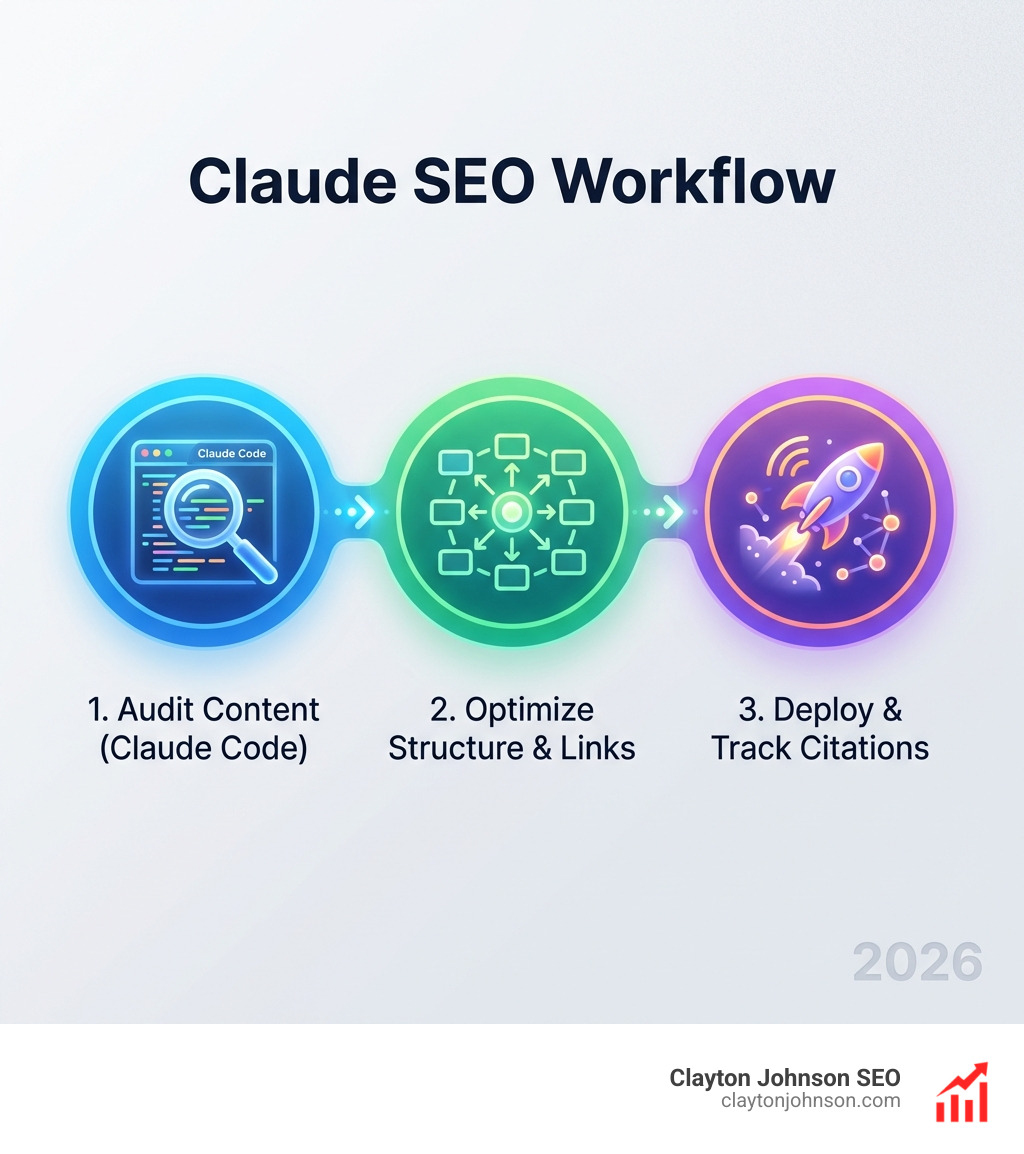
One of the most exciting developments in the Anthropic ecosystem is the launch of “Claude Skills” and the “Claude Code” interface. This allows developers and SEOs to build automated agents that can perform SEO tasks for them.
When you Optimize Claude for SEO, you can actually use Claude to help you. By Mastering the Claude AI Code Generator, we can build tools that:
- Audit Meta Tags: Automatically check if your titles and descriptions are the optimal length (50-60 chars for titles, 150-160 for metas).
- Identify Content Gaps: Compare your site to a competitor and tell you exactly what topics you’re missing.
- Automate Internal Linking: Scan your blog and suggest 2-4 related posts to link to for every new article.
You can even learn How to Extend Claude with Custom Agent Skills to create a dedicated “SEO Specialist” agent that lives in your workflow. This isn’t just about saving time; it’s about achieving a level of consistency that is impossible to maintain manually.
Frequently Asked Questions about Claude AI Optimization
Can I optimize specifically for Claude AI?
Not in the way you’d optimize for a single keyword on Google. Because Claude doesn’t have its own public search index (it relies on patterns and web-browsing tools), you optimize for it by building web-wide consensus.
This means your brand needs to be mentioned across multiple trusted sources. If you follow the Moz: Beginner’s Guide to SEO, you’re already halfway there. The “Claude-specific” part is ensuring your content is extremely easy for an AI to summarize—using clear definitions, summary boxes, and logical header hierarchies.
Do backlinks still matter for AI visibility?
Absolutely. In fact, they might matter more now. Backlinks are “votes of confidence.” When Claude sees high-authority sites linking to you, it views you as a credible source.
Specifically, listicle placements (like “Top 10 SEO Tools”) are gold. AI models love lists because they are easy to parse and represent a curated selection of “best” options. Our Link Building Services prioritize these types of mentions because they drive both traditional rankings and AI citations.
How does local SEO factor into AI citations?
When a user asks Claude for a local service—like “SEO expert in Minneapolis”—the AI looks for local signals.
- NAP Consistency: Your Name, Address, and Phone number must be identical across the web (GMB, Yelp, local directories).
- Geo-Targeted Content: Mentioning local landmarks, neighborhoods, and community events helps Claude associate your brand with a specific location.
- Local Citations: Links from local news outlets or community blogs signal to Claude that you are a relevant local authority.
For more on how Google (and by extension, AI) views local relevance, see Google Search Central.
Conclusion
Ranking in the age of AI isn’t about gaming a single algorithm; it’s about becoming the most trusted, most cited, and most helpful source in your industry. When you Optimize Claude for SEO, you are essentially future-proofing your business. You are moving from a world of “hope they click my link” to a world of “I am the answer the AI gives.”
At Clayton Johnson SEO, we specialize in this transition. Whether you’re looking for an SEO Consultant to audit your current strategy or you want to build advanced, AI-assisted workflows through Demandflow, we can help you navigate this new landscape.
The web is changing, but the fundamentals of authority and clarity remain the same. Start building your topical authority today, and ensure that when the world asks Claude a question, your brand is the one it recommends.