Audit Your Website Like a Search Engine Pro

The Multi-Phase Advanced SEO Audit Checklist
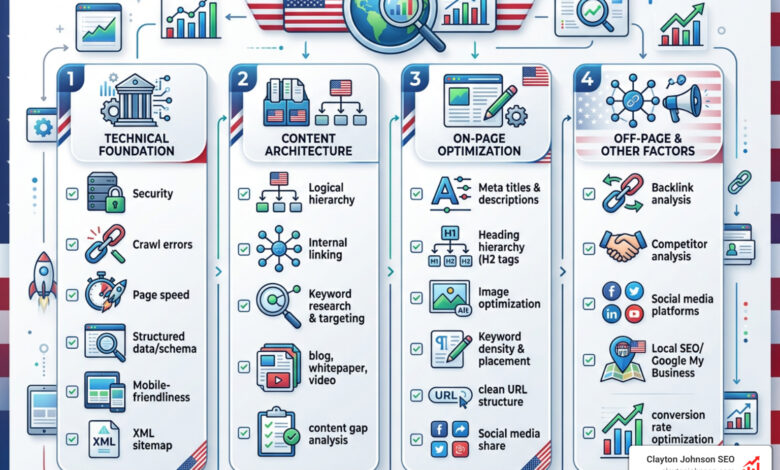
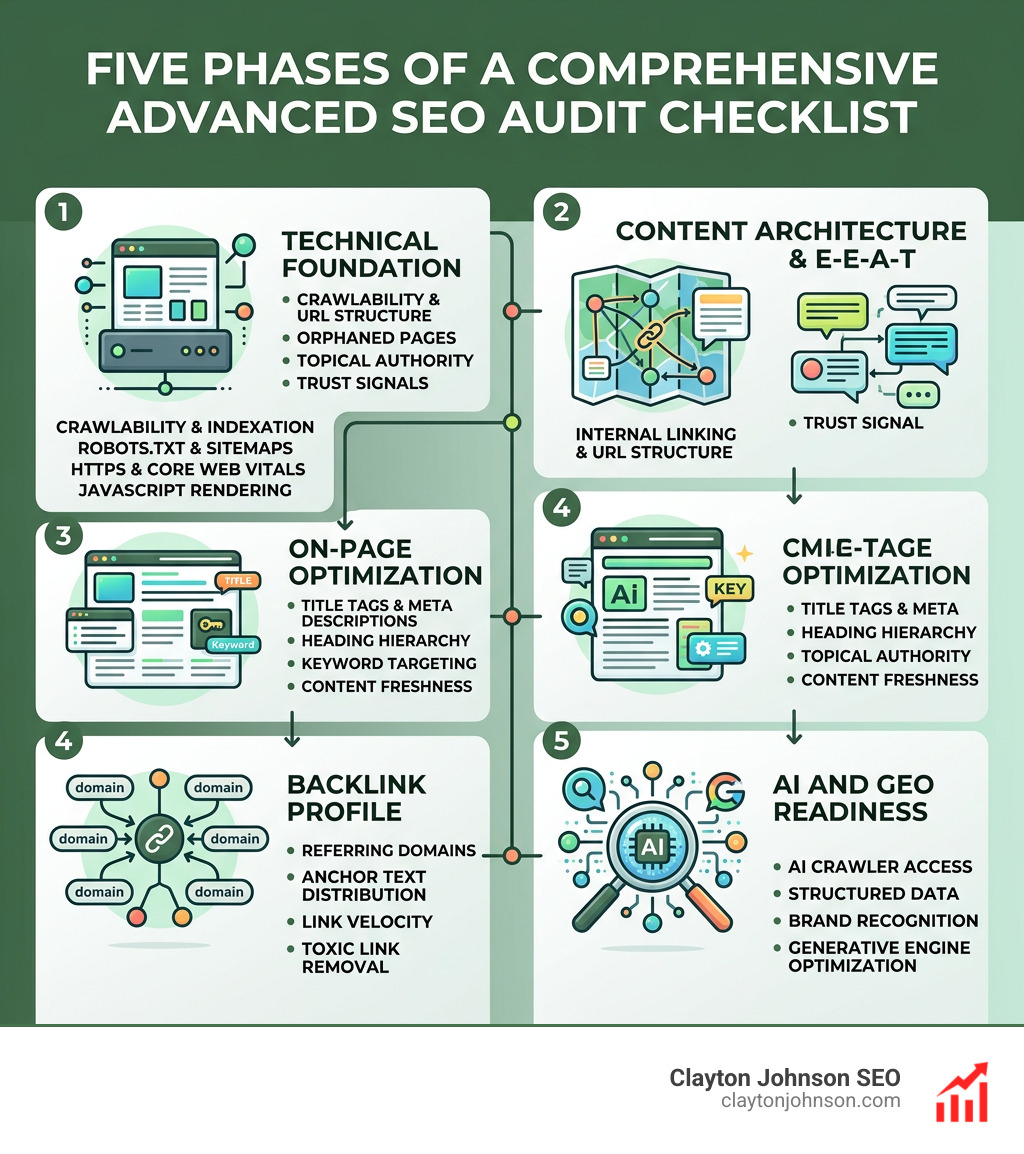
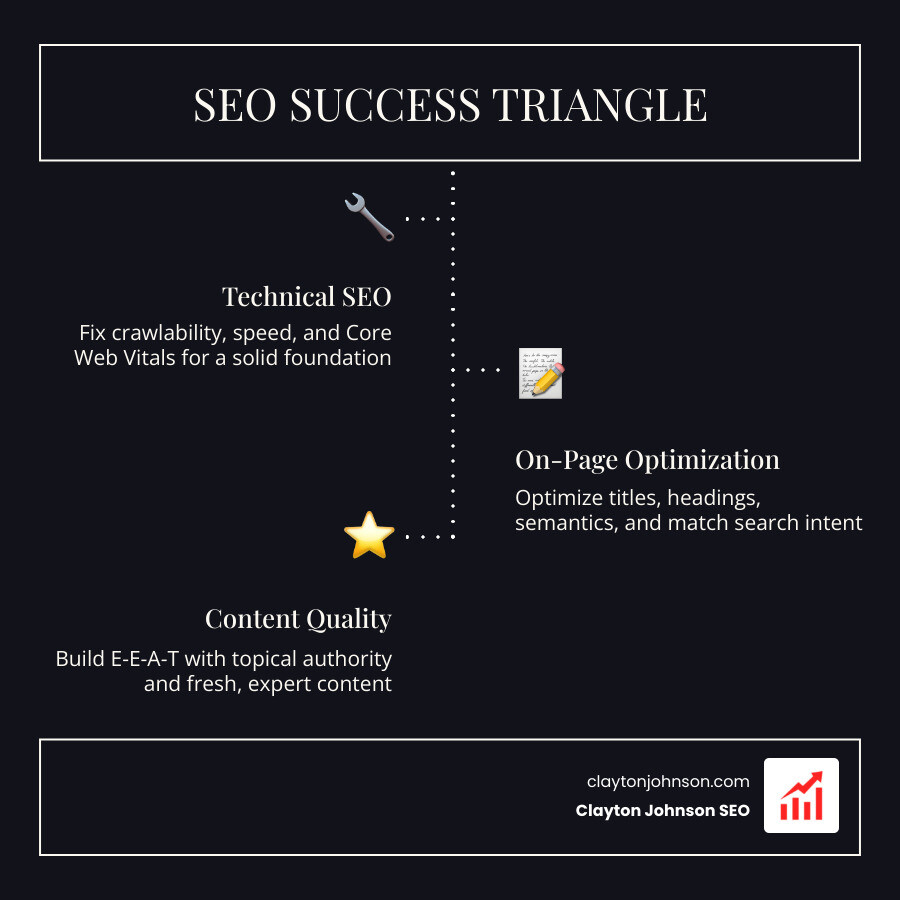
An advanced SEO audit checklist is a structured, multi-phase process for diagnosing every technical, content, and authority issue that prevents your website from ranking where it should. Here is what a complete audit covers:
- Technical Foundation – Crawlability, indexation, robots.txt, sitemaps, HTTPS, Core Web Vitals, and JavaScript rendering
- Content Architecture and E-E-A-T – Internal linking, URL structure, orphaned pages, topical authority, and trust signals
- On-Page Optimization – Title tags, meta descriptions, heading hierarchy, keyword targeting, and content freshness
- Backlink Profile – Referring domains, anchor text distribution, link velocity, and toxic link removal
- AI and GEO Readiness – AI crawler access, structured data, brand recognition, and generative engine optimization
Most websites are losing organic traffic right now due to problems they do not know exist. Slow pages, broken internal links, thin content, and crawl errors quietly drain rankings over time — often for months before anyone notices.
The goal of a thorough SEO audit is simple: find what is broken, fix what matters most, and build a clear path to sustained organic growth.
I’m Clayton Johnson, an SEO strategist with nearly two decades of experience building scalable search frameworks, and I have used advanced SEO audit checklists to help companies recover lost rankings, close content gaps, and systematically outperform competitors in search. The sections below walk you through the exact process I use — phase by phase — so you can do the same for your site.
An audit is like a medical checkup for your digital presence. If you only look at the surface, you might miss the underlying issues that are actually causing your traffic to stall. We believe a truly advanced seo audit checklist must be systematic. You cannot build a high-ranking content strategy on a broken technical foundation.
The first step is always benchmarking. We need to know where we stand before we start moving the furniture. By analyzing the last 6 to 12 months of organic performance in Google Analytics and Google Search Console, we can identify traffic anomalies—sudden drops or slow decays that signal algorithm penalties or technical failures.
Technical Foundation and Performance
The technical foundation is the “infrastructure” of your SEO. If search engines can’t find, read, or understand your pages, your content is essentially invisible.
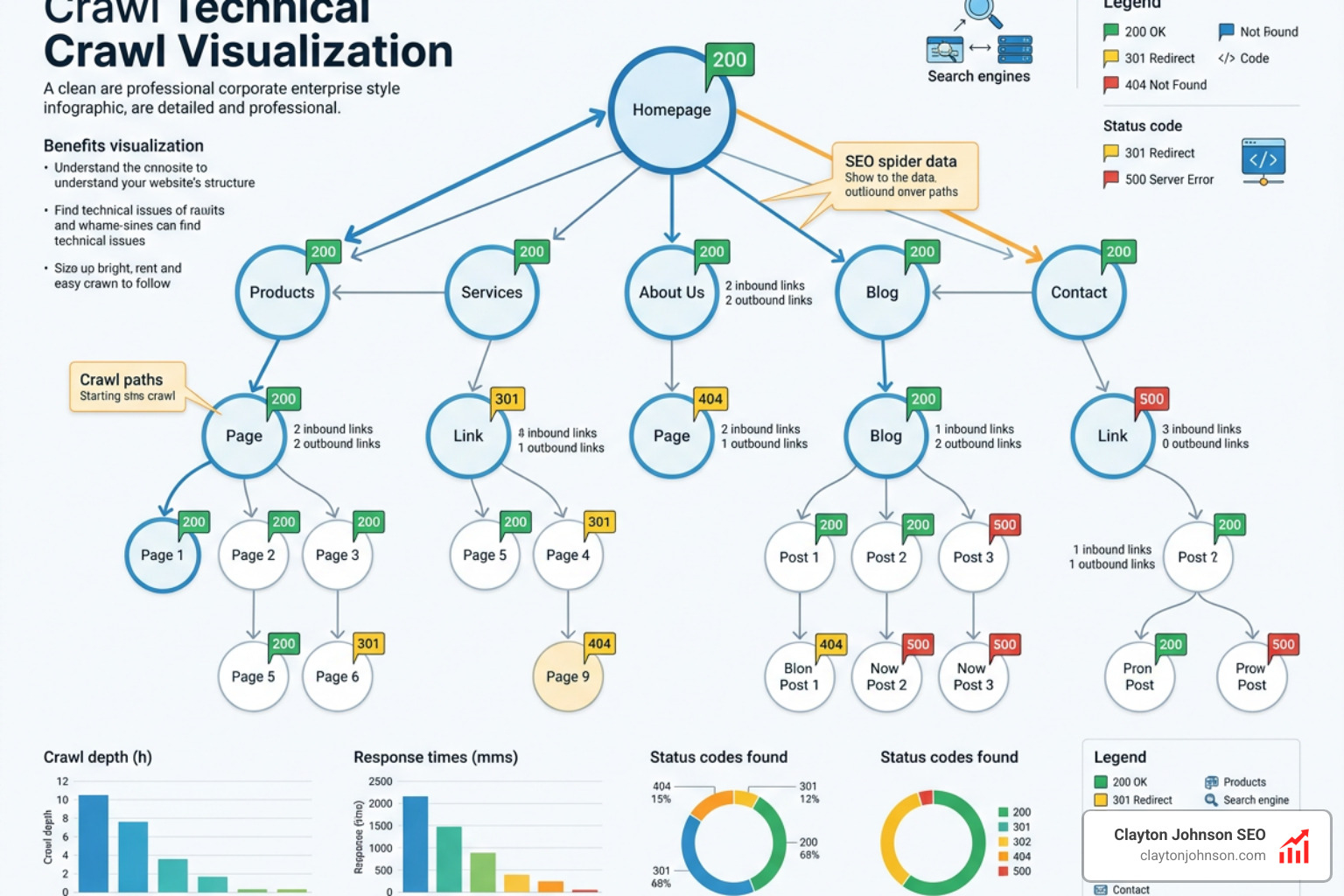
Crawlability and Indexing Crawling is how bots discover your pages, while indexing is how they store them in their “library.” We use tools like Screaming Frog SEO Spider or Netpeak Spider to simulate how a search engine sees your site.
Key checks in this phase include:
- Robots.txt: Ensure you aren’t accidentally blocking critical CSS, JS, or high-value sections.
- XML Sitemaps: Your sitemap should only contain “clean” 200-status URLs. If it’s cluttered with redirects or 404s, you’re wasting your crawl budget.
- HTTPS Encryption: Security is a baseline ranking factor. We check for “mixed content” errors where secure pages try to load insecure assets.
- JavaScript Rendering: Modern sites rely heavily on JS. We often use a Chrome extension to disable JavaScript to see if the core content still loads. If it doesn’t, search engines might struggle to index your text.
Core Web Vitals and Site Speed Google uses Core Web Vitals (CWV) to measure user experience. Research shows that pages meeting these targets can see significantly higher click-through rates. We use PageSpeed Insights and GTmetrix to audit these metrics.
| Metric | Target | Description |
|---|---|---|
| LCP (Largest Contentful Paint) | Under 2.5s | How fast the main content loads. |
| INP (Interaction to Next Paint) | Under 200ms | How quickly the page responds to user input. |
| CLS (Cumulative Layout Shift) | Under 0.1 | Visual stability (do things jump around?). |
To optimize these, we focus on image compression, minifying code, and leveraging CDNs like Cloudflare. For more tailored help, you can explore our SEO services to see how we handle deep technical remediation.
Content Architecture and E-E-A-T
Once the technical “pipes” are working, we look at how the house is built. Site architecture is about how your pages are organized and linked together.
Internal Linking and URL Structure A common mistake we see is “orphan pages”—pages with zero internal links. These are nearly impossible for bots to find. We aim for a “shallow” crawl depth, meaning any page on your site should be accessible within 3 to 4 clicks from the homepage.
Your URL structure should be human-readable and reflect your site hierarchy. For example, a clear path like /category/subcategory/product helps both users and search engines understand the context of the page.
Topical Authority and E-E-A-T In the modern search landscape, Google looks for E-E-A-T: Experience, Expertise, Authoritativeness, and Trustworthiness. Our advanced seo audit checklist involves reviewing key pages like “About Us” and “Services” to ensure they include:
- Detailed author bios with credentials.
- Links to reputable sources and citations.
- Clear contact information and physical business details.
We also use AI tools to help map out content clusters. By grouping related topics together, you signal to search engines that you are a comprehensive authority on a specific subject, rather than just a collection of random blog posts.
On-Page Optimization and Keyword Strategy
On-page SEO is where we fine-tune individual pages to match search intent. This isn’t just about “keyword stuffing” (which we never do); it’s about clarity and structure.
The Essentials of On-Page Auditing:
- Title Tags and Meta Descriptions: Titles should be under 60 characters to avoid being cut off. Meta descriptions, while not a direct ranking factor, are your “sales pitch” in the SERPs and should be optimized for clicks.
- Heading Hierarchy: Every page needs exactly one H1 tag. Subsequent sections should use H2 and H3 tags in a logical, nested order.
- Semantic Keywords: We look for “entities” and related terms. If you’re writing about “coffee beans,” your content should naturally mention “roasting,” “caffeine,” and “brewing methods.”
- Content Freshness: Google loves up-to-date information. We audit for “content decay”—older posts that have lost traffic and need a refresh.
For those just starting, Google’s SEO starter guide provides a solid foundation for these on-page basics.
Leveraging AI and Authority for Compounding Growth
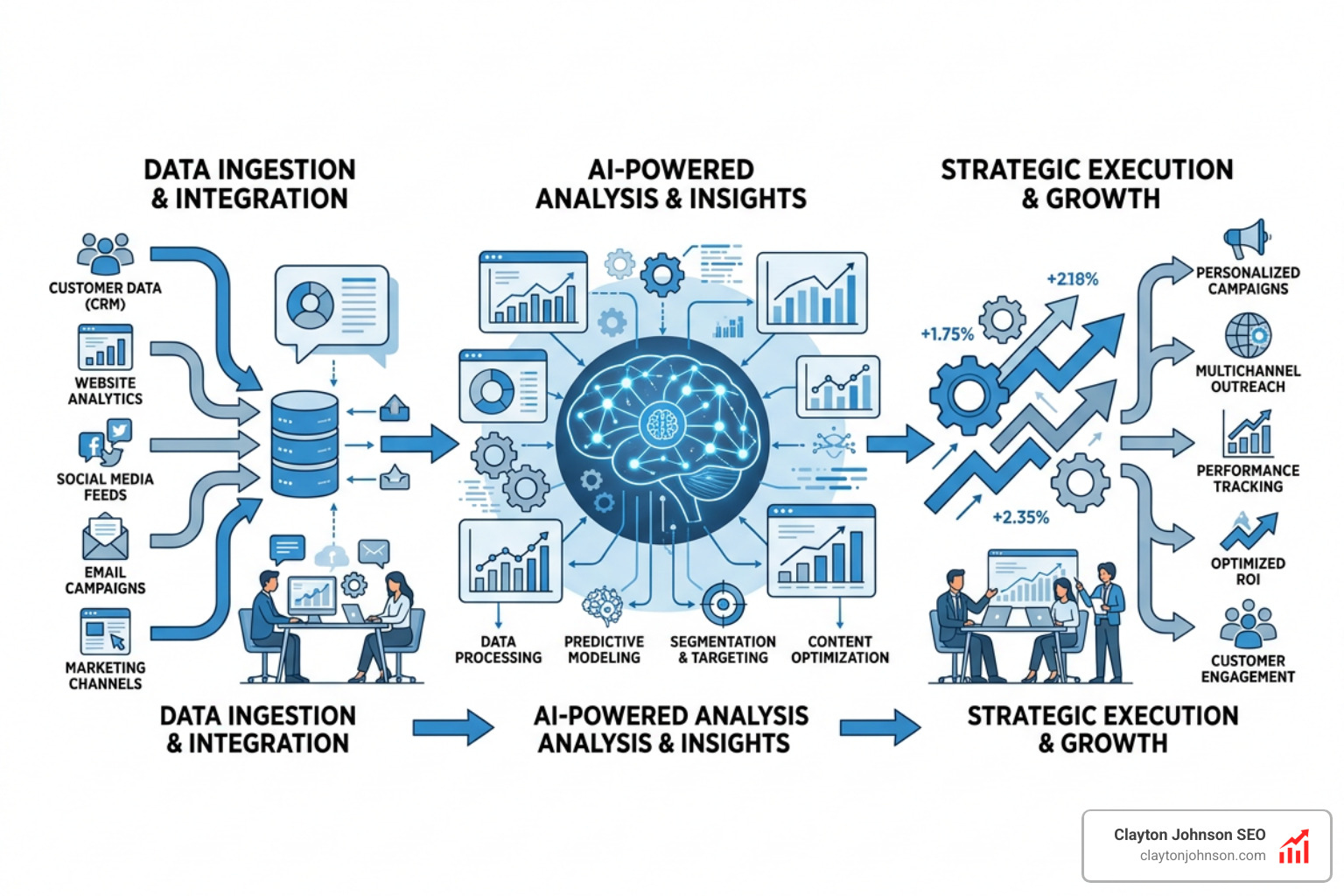
The final phases of our advanced seo audit checklist move beyond your own website and into the broader digital ecosystem. This is where we analyze your authority and your readiness for the future of search.
Advanced SEO Audit Checklist for Backlink Profiles
Backlinks remain one of the most powerful ranking signals. However, not all links are created equal. A single link from a high-authority, relevant site like the New York Times is worth more than a thousand links from low-quality “link farms.”
When auditing your backlink profile with tools like Ahrefs or Majestic, we look for:
- Anchor Text Distribution: A natural profile usually has a mix of branded anchors (your name), “naked” URLs, and some keyword-rich anchors. We generally aim for a ratio of roughly 20% exact anchor, 65% non-anchor, and 15% mixed.
- Referring Domain Growth: Is your link profile growing steadily, or are you losing links faster than you gain them?
- Toxic Link Identification: We identify spammy or “unnatural” links that could trigger a manual action.
Ahrefs Site Audit is an excellent tool for visualizing these authority signals and comparing them against your top competitors.
AI Readiness and GEO Optimization
Search is changing. With the rise of AI-driven search results, we now have to optimize for “Generative Engine Optimization” (GEO). This means making your content easily digestible for AI crawlers like GPTBot and ClaudeBot.
AI Audit Steps:
- AI Crawler Access: Check your robots.txt to ensure you aren’t blocking the bots that feed AI search summaries (unless you have a strategic reason to do so).
- Direct Answer Formatting: We structure content to answer common questions immediately. Starting a section with a concise 40-60 word answer increases your chances of being cited in an AI Overview.
- Structured Data: Using schema.org markup is no longer optional. It provides a roadmap for search engines to understand your data types—whether they are products, reviews, or FAQs. You can validate your implementation using the Google Rich Results Test.
For more detailed technical implementation, we always refer to Google’s structured data documentation.
Executing the Advanced SEO Audit Checklist with Clayton Johnson
The biggest pitfall of any SEO audit is the “analysis paralysis” that follows. You end up with a 100-page document of errors and no idea where to start.
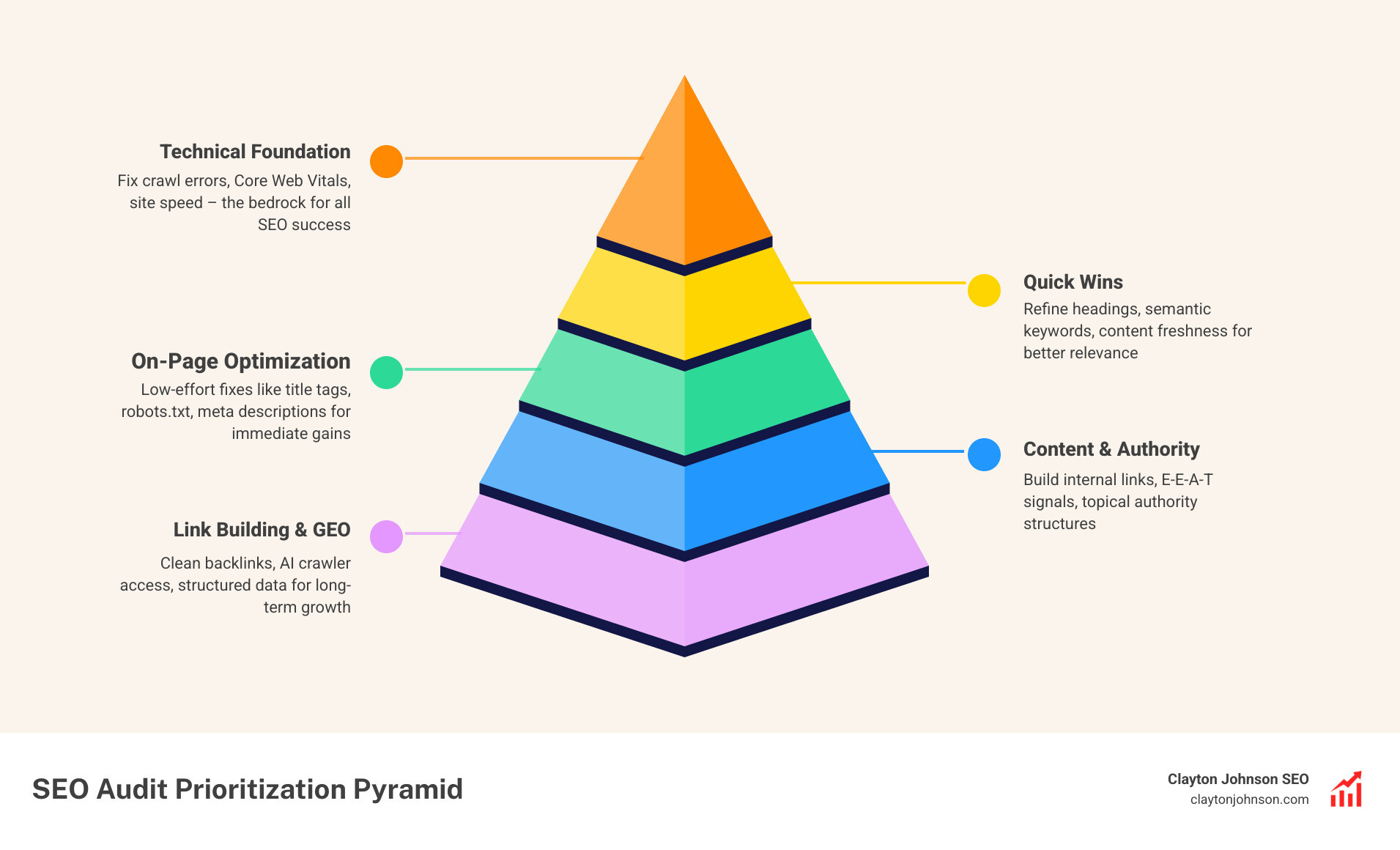
At Clayton Johnson SEO, we don’t just hand you a list of problems. We build systems. Our approach uses a prioritization matrix to categorize findings into:
- Quick Wins: Low effort, high impact (e.g., fixing a blocked robots.txt or updating title tags).
- High-Impact Fixes: Requires more resources but moves the needle significantly (e.g., Core Web Vitals optimization).
- Strategic Growth: Long-term plays like building topical clusters or digital PR.
We believe in compounding growth. By fixing the technical foundation first, every piece of content you publish afterward works harder for you. We align our growth systems with your specific business goals, ensuring that every SEO action translates into measurable ROI.
Common Pitfalls to Avoid During an SEO Audit
Even with a comprehensive advanced seo audit checklist, it’s easy to get sidetracked. Here are the most common mistakes we see:
- Treating the Audit as a One-Time Event: SEO is not a “set it and forget it” task. We recommend a full audit every 6 months for smaller sites and quarterly for larger, more competitive ones.
- Ignoring Mobile Usability: With mobile-first indexing, if your site doesn’t work perfectly on a smartphone, it won’t rank on a desktop either. Use the Mobile-Friendly Test to stay ahead.
- Focusing on Vanity Metrics: Ranking #1 for a keyword that nobody searches for is useless. We focus on search intent and conversion-driven traffic.
- Neglecting Internal Links: You can have the best content in the world, but if it’s buried 10 clicks deep, search engines will treat it as unimportant.
Final Thoughts: Clarity and Structure
Auditing your website like a pro requires a shift in mindset. It’s about moving away from chasing individual tactics and moving toward building durable systems.
Whether you are a founder looking for a clear roadmap or an operator trying to scale a marketing engine, a structured advanced seo audit checklist is your most valuable tool. It provides the clarity you need to stop guessing and start growing.
If you’re ready to turn your fragmented marketing efforts into a coherent growth engine, let’s build those systems together. The path to compounding organic growth starts with knowing exactly where you are today—and exactly how to get where you want to be.