Why SEO AI Workflow Automation is Essential for Modern SEO Teams
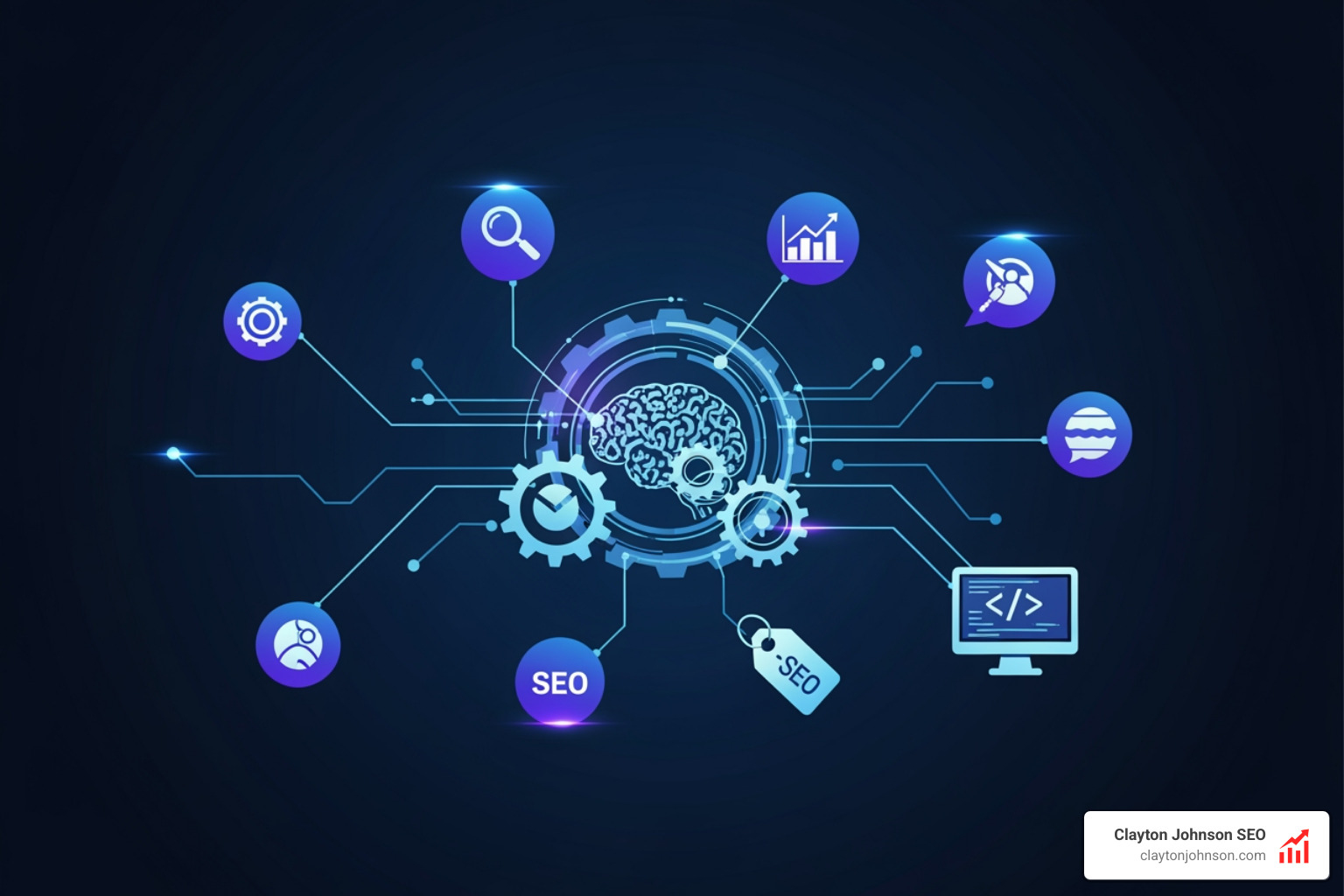
SEO AI workflow automation is the process of using artificial intelligence to handle repetitive SEO tasks automatically—from keyword research and content optimization to technical audits and performance tracking. Instead of manually checking pages, updating meta tags, or analyzing competitors, you build systems that run continuously and flag issues before they impact rankings.
Quick answer for SEO AI workflow automation:
- What it automates: Keyword clustering, content briefs, schema generation, broken link detection, meta tag optimization, internal linking, SERP analysis, and performance reporting
- Core benefits: Reduces manual tasks by up to 85%, enables 24/7 monitoring, cuts production time from hours to minutes, and frees your team for strategic work
- Essential tools: No-code platforms (n8n, Zapier, Gumloop), AI models (GPT-4, Claude, Gemini), and SEO platforms (Semrush, Moz API, Surfer)
- Best practices: Keep humans in the loop for quality control, start with one high-impact workflow, and measure results against revenue—not vanity metrics
The shift is urgent. Search engines now prioritize entity relationships, structured data, and real-time relevance. Google AI Overviews appear on 21% of queries, and 70% of users search in natural language. Manual workflows can’t keep pace.
Yet most teams still spend hours each week on tasks AI can handle in minutes. They export CSVs, copy-paste between tools, and wait days for audits that should be instant. The bottleneck isn’t knowledge—it’s execution.
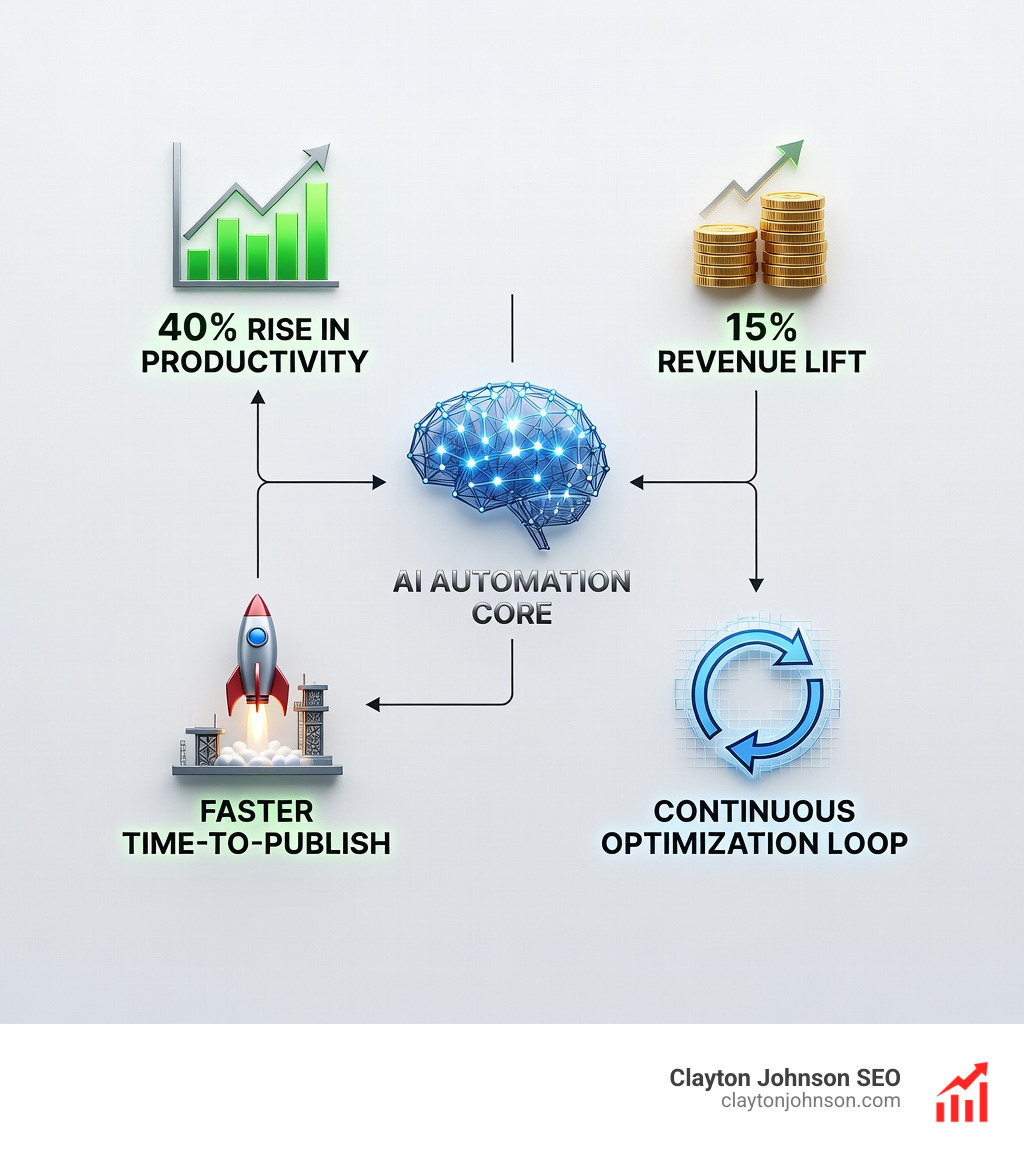
Teams that automate report a 40% rise in productivity within the first year. Content briefs that once took 45 minutes now take 45 seconds. Pages get indexed in under 30 minutes instead of days. And 73% of executives adopting AI in marketing see positive ROI in under 12 months.
But automation isn’t about replacing judgment. It’s about removing friction so your expertise compounds. AI handles pattern detection, summarization, and rapid iteration. You handle strategy, narrative, and accountability.
I’m Clayton Johnson, and I’ve spent years building scalable SEO AI workflow automation systems that turn fragmented efforts into continuous growth engines. My approach combines technical SEO depth, strategic frameworks, and AI-augmented workflows to help marketing leaders execute with measurable results.
Related content about SEO AI workflow automation:
Understanding SEO AI Workflow Automation vs. Traditional Audits
In the “old days” of SEO (which was basically three years ago), an audit was a static event. We would fire up a crawler, export a massive spreadsheet, and spend days manually categorizing errors. By the time the developer fixed the first batch of broken links, the report was already outdated.
SEO AI workflow automation changes the game from reactive to proactive. Instead of periodic checks, we implement continuous optimization. While traditional audits rely on static checklists, AI-driven systems use Machine Learning (ML) and Natural Language Processing (NLP) to understand context.
According to McKinsey research on AI in marketing, over 60% of organizations are already deploying generative AI into their marketing workflows. These early adopters aren’t just looking for “more content”; they are looking for pattern detection. An AI agent can monitor real-time data from Google Search Console and identify a “crawl anomaly” before it leads to a de-indexing event.
When we move to AI-driven SEO audits, we are looking for decision-ready alerts. Traditional tools tell you a page is missing a meta description. An automated AI workflow identifies the missing tag, generates a unique, keyword-optimized description based on the page content, and queues it for approval in your CMS.
Key Benefits of an Automated SEO AI Workflow
If you’re still manually clustering keywords or writing alt text for a 500-page e-commerce site, you’re essentially trying to win a Formula 1 race on a bicycle. The benefits of automation go far beyond just “saving time.”
- 85% Task Reduction: By automating “busy work”—like checking for broken links or extracting entities—your team can focus on high-level strategy and creative positioning.
- 24/7 Monitoring: AI doesn’t sleep. It monitors your site’s health and competitor movements around the clock.
- Scalability: Whether you have 10 pages or 10,000, the workflow remains the same. This is crucial for businesses in Minneapolis looking to scale their digital footprint without exponentially increasing headcount.
- Cost-Effectiveness: When you evaluate The Truth About AI SEO and Why It Matters, you realize that the cost of an automation tool is often lower than the hourly rate of a junior SEO specialist performing the same repetitive tasks.
- Faster Time-to-Publish: A Harvard Business Review on automation growth study found that companies implementing AI-powered automation halved their time-to-publish. In SEO, speed is a competitive advantage.
How to Build Your SEO AI Workflow Automation Stack
Building your stack is like choosing the engine for your car. You need tools that communicate with each other seamlessly. We don’t want “tool sprawl”; we want an integrated ecosystem.
| Feature | n8n | Zapier | Gumloop |
|---|---|---|---|
| Best For | Technical/Enterprise | Beginners/Non-technical | Niche SEO Workflows |
| Integrations | 4,000+ Templates | 8,000+ Apps | Built-in Semrush/Google |
| Pricing | Execution-based | Task-based | Credit-based |
| Coding | JS/Python Fallback | No-code | No-code Visual |
When deciding Which AI SEO Platform is Your Perfect Match, consider your technical resources. Platforms like n8n offer incredible flexibility for developers with self-hosted options, while Gumloop is fantastic for building custom agents without writing a single line of code.
Selecting Tools for SEO AI Workflow Automation
Not all tools are created equal. When vetting your stack, keep these factors in mind:
- Data Accuracy: Does the tool pull real-time SERP data or rely on “hallucinated” info?
- Integration Requirements: Can it connect to your specific CMS (WordPress, Shopify, etc.)?
- Security: Look for SOC2 compliance. If you’re connecting your Google Search Console, you need to know your data is secure.
- Scalability: Check The Top Automated SEO Audit Tools for Faster Rankings to see which tools handle large-scale site crawls without crashing.
Step-by-Step Guide to Automating Technical SEO Tasks
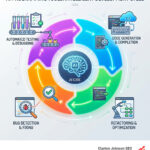
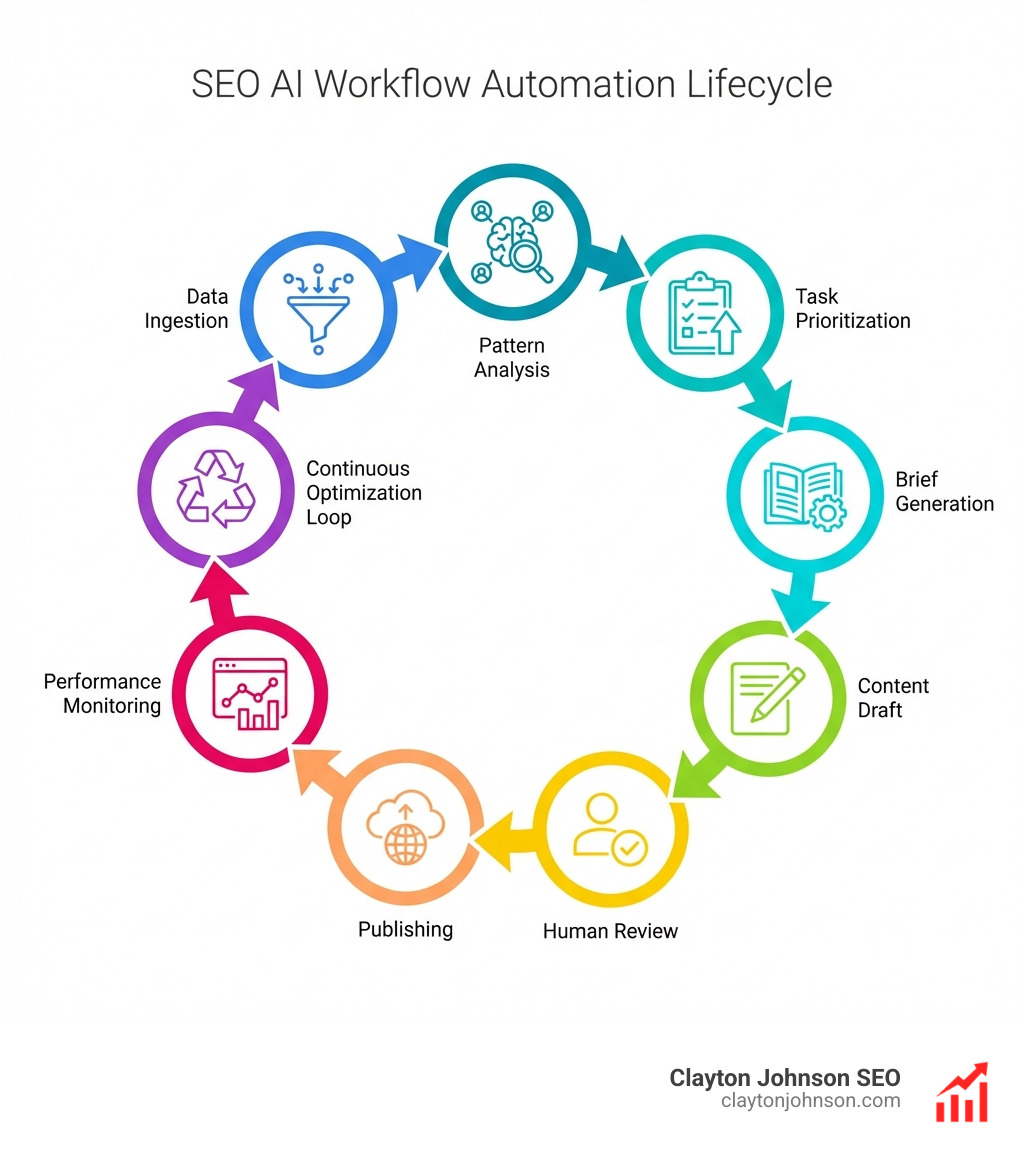
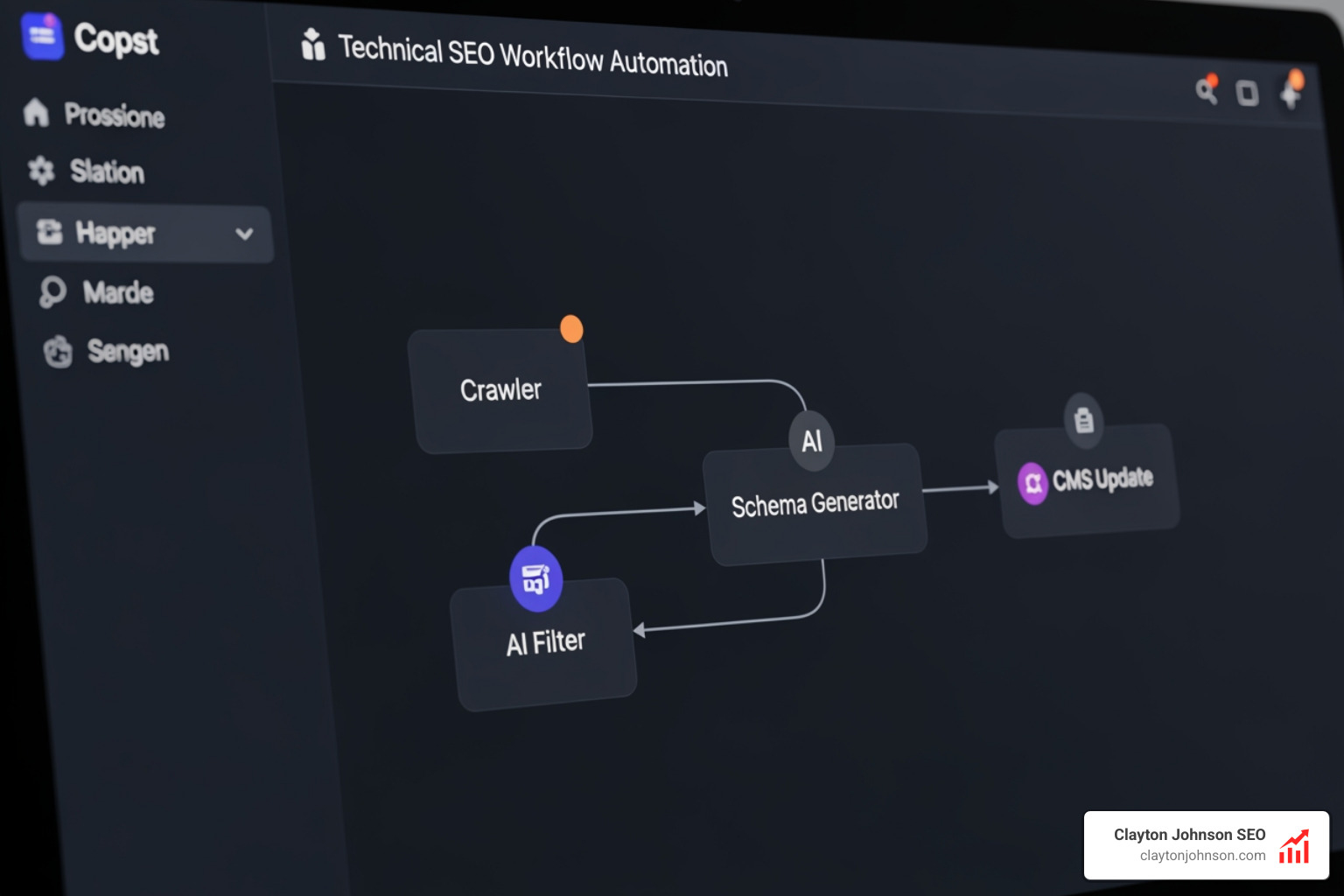
Let’s get practical. How do you actually build an SEO AI workflow automation? It starts with “nodes”—individual steps in a visual diagram that represent a specific action.
Step 1: Automated Site Crawling
Set a schedule (daily or weekly) for an AI agent to crawl your site. Instead of just giving you a list of URLs, the AI filters for “anomalies.” For example, if a high-traffic page suddenly returns a 404, the system triggers an urgent Slack notification.
Step 2: Predictive Schema Generation
Writing JSON-LD manually is a nightmare. You can Automate Your Success Using AI-Driven Keyword Optimization by using an AI agent to extract entities from your content and automatically generate FAQ, Article, or Product schema.
Step 3: Meta Tag Optimization
Use LLMs to scan pages missing meta titles or descriptions. The AI analyzes the H1 and body text, generates three variations, and flags them for “human-in-the-loop” approval before pushing them to the site.
Implementing Technical Checks in an SEO AI Workflow Automation
The goal is to move from “finding problems” to “fixing problems.”
- Core Web Vitals: Automate a weekly summary of your CWV scores. If your LCP (Largest Contentful Paint) drops, the AI can analyze recent code changes or image uploads to suggest the culprit.
- Log-File Insights: Use AI to parse server logs. It can spot where Googlebot is getting stuck or wasting crawl budget on irrelevant parameters.
- Instant CMS Fixes: Using tools like Alli AI, you can deploy technical fixes site-wide in minutes. This is especially helpful for large sites where developer queues are months long.
Check out our AI Content Optimization Guide From Zero to Hero for more on bridging the gap between technical data and live content.
Leveraging AI for Competitor and Content Analysis
SEO isn’t played in a vacuum. You need to know what your rivals are doing. SEO AI workflow automation allows you to “scrape” competitor sites and analyze their strategy on autopilot.
- Backlink Prospecting: Use agents to find websites that link to your competitors but not to you. AI can then draft a personalized outreach email based on the specific content of their page.
- Topic Clustering: Instead of manual keyword research, use AI to group thousands of keywords into semantic clusters. This prevents keyword cannibalization and ensures you’re building topical authority.
- Intent Mapping: AI can categorize keywords by search intent (Informational, Transactional, Navigational) with much higher accuracy than traditional filters.
As noted in the World Economic Forum report on adaptive governance, organizations that use these “intelligent” systems can cut process cycle times significantly while maintaining high standards. For more on this, read Using AI Competitive Insights to Outsmart Your Rivals.
Enhancing On-Page Strategy via SEO AI Workflow Automation
Once your technical foundation is solid, use AI to keep your content fresh and relevant.
- Content Decay Detection: Set a trigger for when a page’s traffic drops by 20% over 30 days. The AI then generates a “refresh brief” identifying new sub-topics or questions that have emerged in the SERPs.
- Internal Link Suggestions: When you publish a new post, an AI agent can scan your existing library to find the best places to add internal links, ensuring link equity flows correctly.
- E-E-A-T Validation: Use a “helpful content analyzer” to check if your pages meet Google’s Experience, Expertise, Authoritativeness, and Trustworthiness standards.
Frequently Asked Questions about SEO AI Workflow Automation
Is AI SEO automation worth the investment?
Absolutely. According to PwC’s AI Predictions on marketing ROI, 73% of executives realized a positive ROI in under 12 months. When you calculate the hours saved on manual research, clustering, and technical auditing, the software costs are typically recovered within the first 90 days. It transforms SEO from a cost center into a predictable growth engine.
How do I prevent AI hallucinations in my workflow?
The secret is “Human-in-the-loop” (HITL). Never let an AI publish content or change code without a human review gate. Additionally, use Retrieval-Augmented Generation (RAG) to ensure the AI only uses your approved data sources and facts rather than making things up. Automated citation checks can also flag any claims that don’t have a verifiable source.
Can AI completely replace a human SEO specialist?
No. AI is the engine, but humans are the steering wheel. AI excels at pattern detection and speed, but it lacks strategic judgment, brand voice, and the ability to navigate complex stakeholder relationships. We advocate for a hybrid model where AI handles the 80% of repetitive “busy work,” allowing the specialist to focus on the 20% of high-impact creative and strategic decisions.
Conclusion
The era of “manual SEO” is coming to a close. To stay competitive in a world of AI Overviews and conversational search, you must embrace SEO AI workflow automation. It’s the difference between being a data entry clerk and a strategic growth leader.
At Clayton Johnson SEO, we help founders and marketing leaders in Minneapolis and beyond build these high-performance content systems. We focus on actionable frameworks and measurable results, ensuring your SEO efforts aren’t just “active,” but profitable.
Ready to stop guessing and start ranking? Explore our SEO Services or connect with us to build your custom AI-driven growth strategy. Let’s turn your SEO workflow into an automated success story.