How to Use a Product Market Fit Template to Stop Burning Cash


Why Most Startups Fail Before They Find Their Market
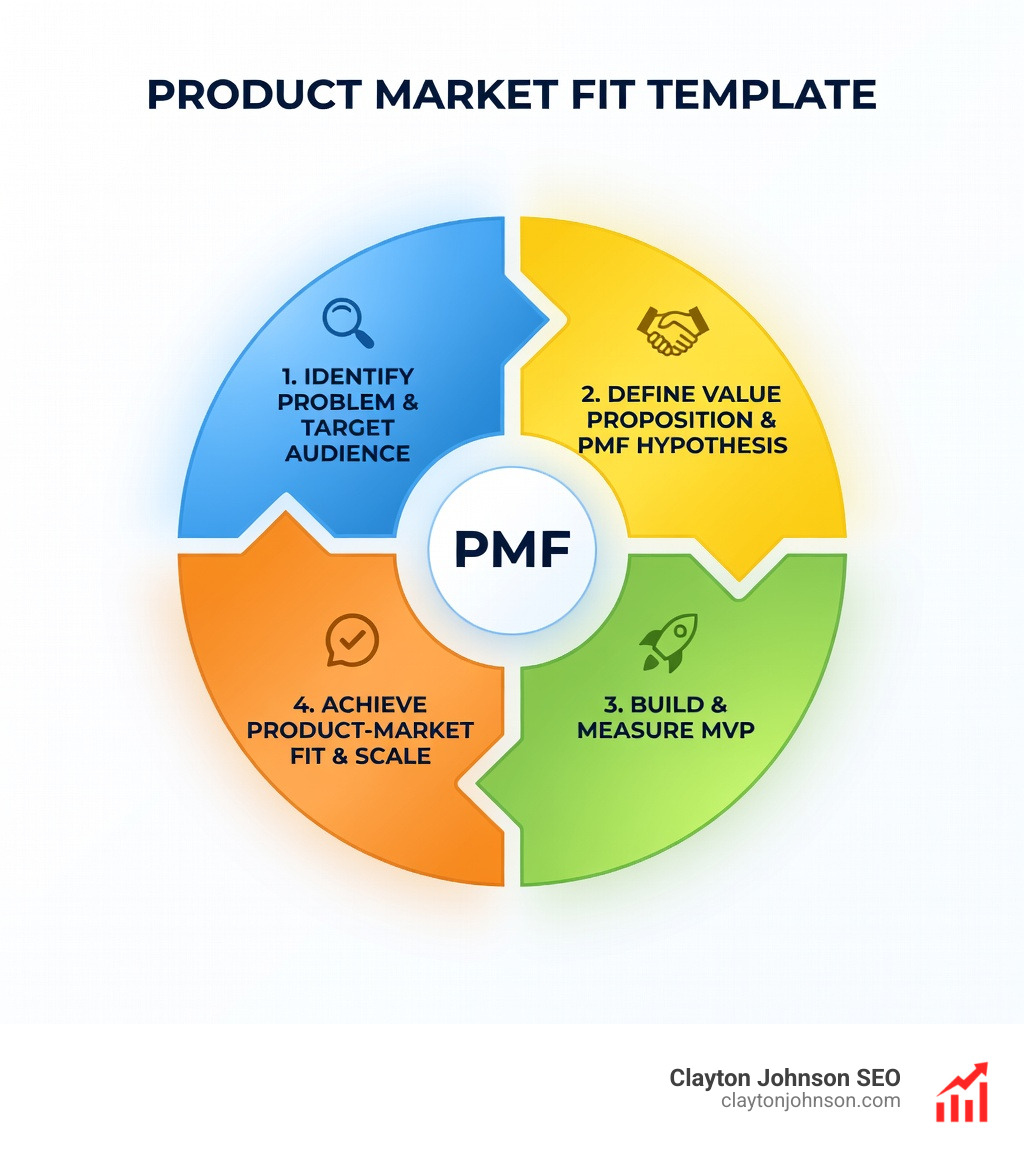
A product market fit template gives you a structured way to test whether your product solves a real problem for a real market — before you burn through your runway finding out the hard way.
Here are the most commonly used product market fit templates:
| Template Type | Best For | Format |
|---|---|---|
| PMF Canvas | Early-stage idea validation | Two-column visual (Customer / Product) |
| Sean Ellis Survey | Measuring fit with existing users | 4-5 question survey |
| PMF Checklist | End-to-end process tracking | Step-by-step checklist |
| Interactive Assessment | Scoring fit across multiple dimensions | Scored questionnaire |
Nearly half of all startups fail because they never achieved product-market fit. Not because their product was poorly built — but because they built the wrong product for the wrong market.
The most common trap? Solving a problem no one actually has. You spend months building features, running ads, and hiring sales reps — all before confirming that real customers want what you’re selling.
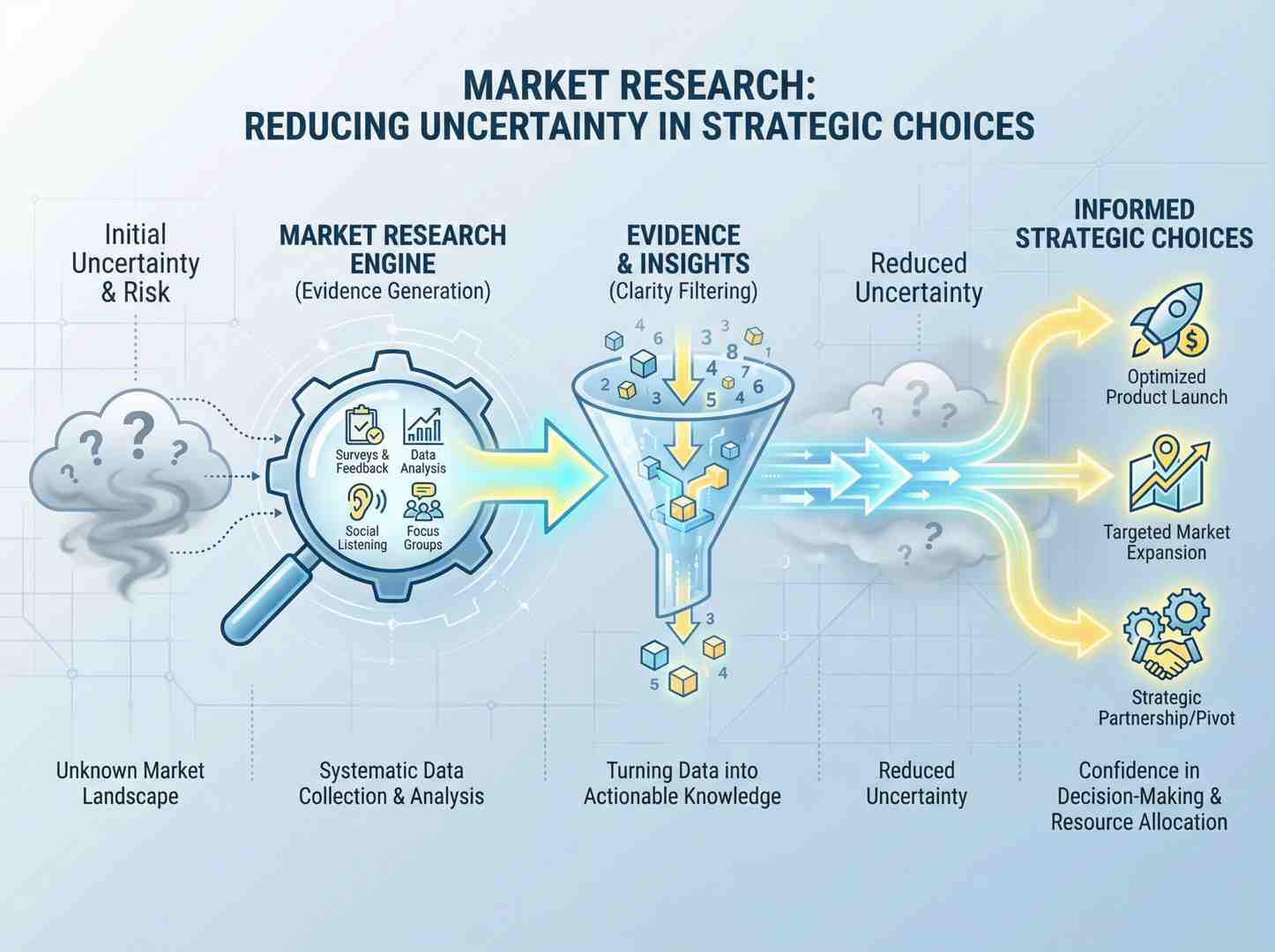
A product market fit template doesn’t eliminate uncertainty. But it gives you a repeatable framework to test your assumptions, segment your customers, and make data-driven decisions — instead of expensive guesses.
I’m Clayton Johnson, an SEO and growth strategist who has built structured validation frameworks and scalable content systems across dozens of business models — including helping founders stress-test their product market fit template before committing resources to growth. In this guide, I’ll walk you through exactly how to use these templates to stop burning cash and start building with confidence.
What is Product/Market Fit and Why Your Startup is Burning Cash Without It
In high-growth business, Product/Market Fit (PMF) is the “holy grail.” Originally coined by Marc Andreessen in his influential article The Only Thing That Matters, PMF is described simply as being in a good market with a product that can satisfy that market.
Before Andreessen popularized the term, Andy Rachleff, co-founder of Benchmark Capital, used the concept to describe the three most important aspects of business development: your product, your target audience, and how you get that product to the market. When these three elements align, you have “fit.” When they don’t, you have a high burn rate and a dwindling bank account.
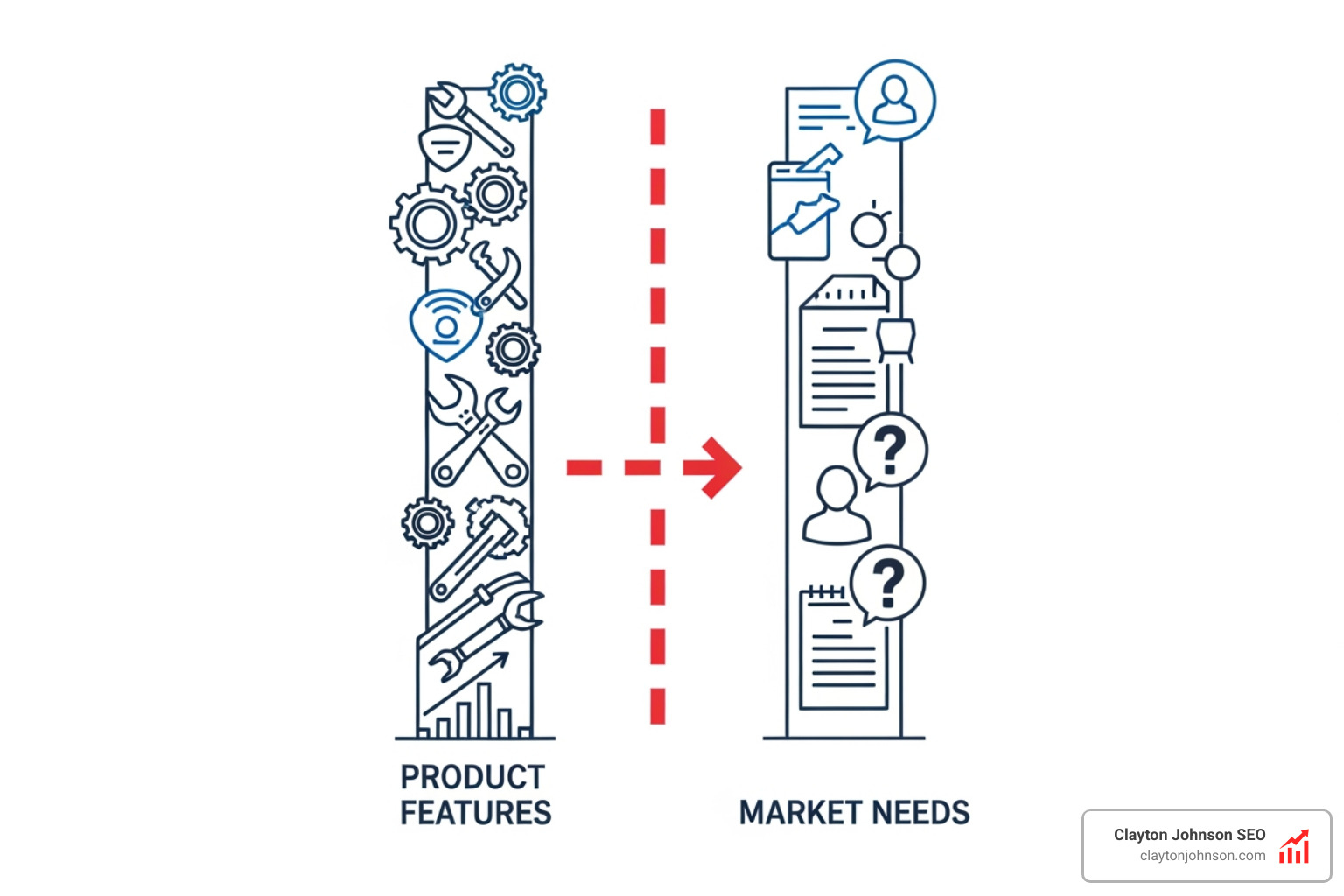
We often see founders obsess over their product features while ignoring the market demand. This is a recipe for disaster. As Paul Graham famously noted, the most common mistake startups make is solving a problem no one actually has. Without a product market fit template to guide your validation, you are essentially flying blind.
The High Cost of Solving Problems No One Has
When we talk about “burning cash,” we aren’t just talking about office snacks. We’re talking about the massive resource allocation toward engineering, marketing, and sales for a product that lacks a “pull” from the market.
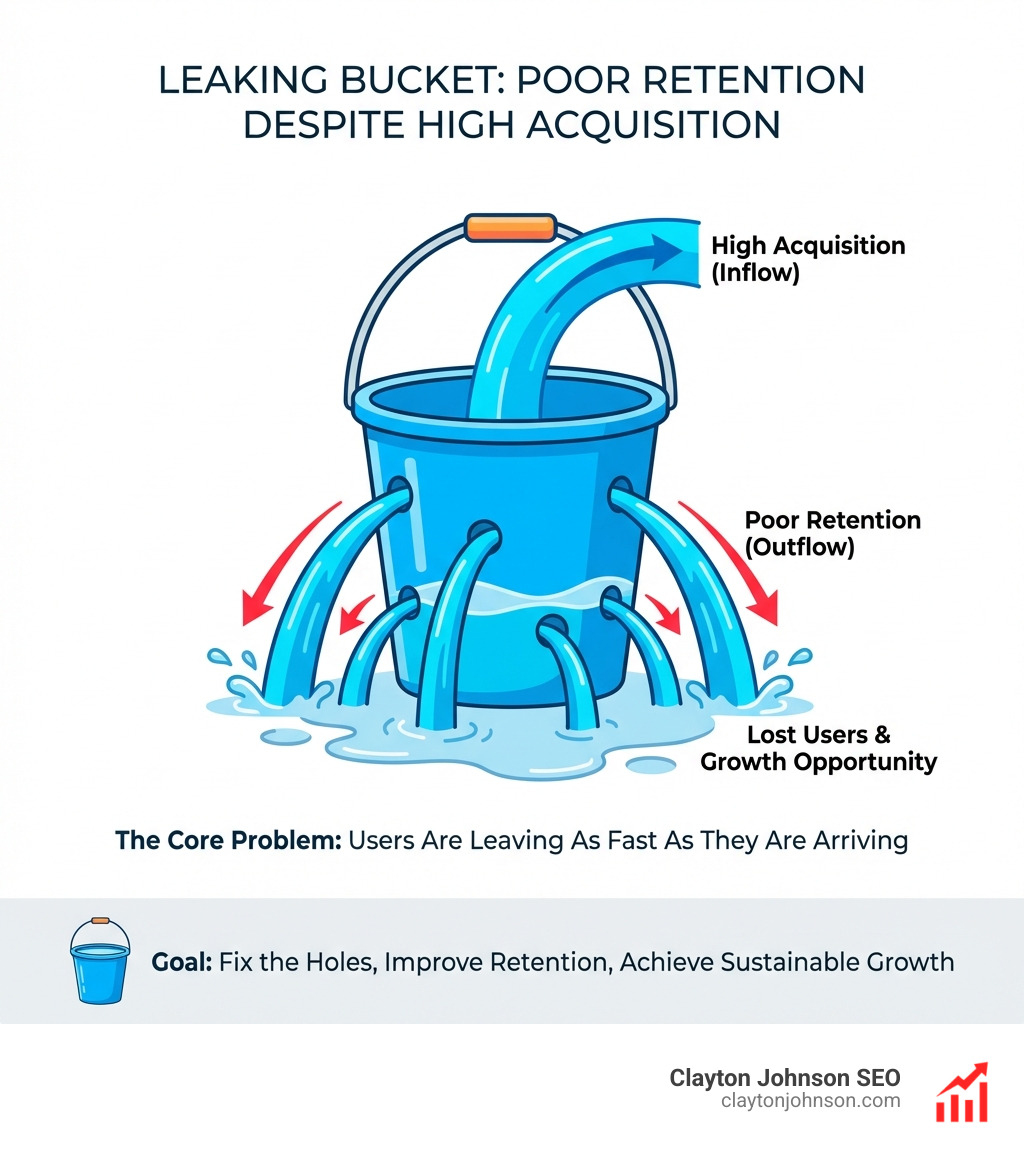
According to Alex Schultz, VP of Growth for Facebook, nearly half of all startups fail because they did not achieve product-market fit. They believed they had a great product and scaled too early. This results in sky-high customer acquisition costs (CAC) and abysmal customer retention. If your retention is low, you have a “leaky bucket” problem. No amount of SEO or paid ads can fix a product that people don’t want to keep using.
The Sailing Analogy: Product as the Sail, Demand as the Wind
Think of PMF as sailing. Your product is the sail, and market demand is the wind. If there is no wind (demand), it doesn’t matter how beautiful or high-tech your sail is; you aren’t going anywhere.
Achieving PMF means you’ve finally caught the wind. Instead of “pushing” your product onto a reluctant market, you feel the market “pulling” the product out of your hands. This strategic alignment is the only way to build a sustainable growth engine and achieve true scalability.
The Essential Product Market Fit Template: Canvas vs. Survey
To find that “wind,” we use two primary tools: the Canvas and the Survey. Each serves a different purpose depending on where you are in your journey.
Using a Product Market Fit Template for Early Validation
If you are in the idea or MVP (Minimum Viable Product) stage, a product market fit template in the form of a canvas is your best friend. This visual framework helps you map out:
- Customer Segments: Who specifically are you serving?
- Pain Points: What keeps them up at night?
- Value Proposition: How does your product uniquely solve that pain?
By using a Product Market Fit Canvas Guide, teams can collaborate in real-time to identify strengths and weaknesses in their business model. For instance, the team at Mako Design suggests that success often comes from finding a specific niche or “vertical” rather than trying to please everyone at once. A canvas forces you to define that niche before you write a single line of code.
The Sean Ellis Survey: A Quantitative Product Market Fit Template
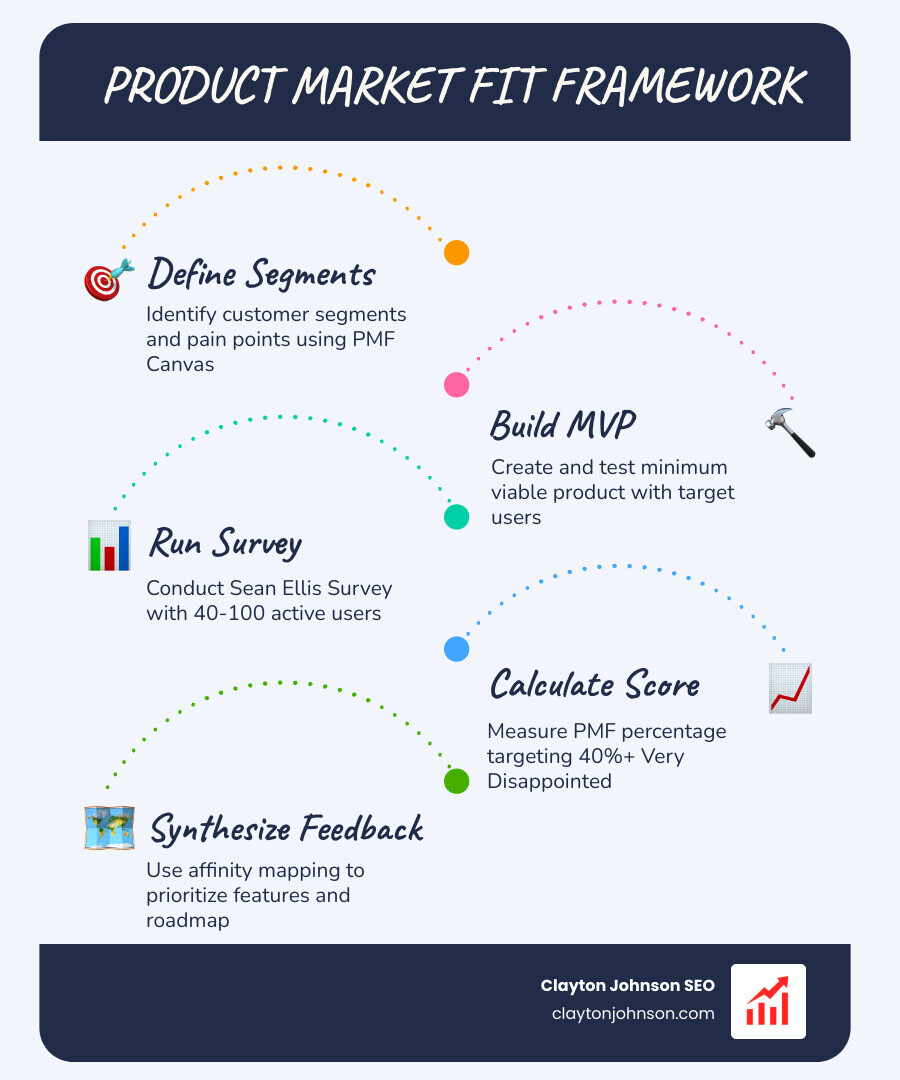
Once you have a live product with active users, you need hard data. This is where the Sean Ellis Test comes in. This survey is a standardized product market fit template that asks users one “make or break” question: “How would you feel if you could no longer use our product?”
The response options are:
- Very disappointed
- Somewhat disappointed
- Not disappointed
- I no longer use this product
According to the Learning Loop survey methodology, you should also include open-ended questions to understand why users feel the way they do and what alternatives they would use if your product vanished.
Step-by-Step: How to Measure PMF Using the 40% Rule
How do you know if you’ve actually “arrived” at PMF? We look for specific benchmarks.
| Metric | Benchmark for Success |
|---|---|
| Sean Ellis Score | 40% or more “Very Disappointed” |
| Customer Retention | 40% or higher over time |
| Referral Rate | Increasing organic “word-of-mouth” |
| Sales Velocity | Decreasing sales cycle length |
The “40% Rule” is the industry standard. If 40% of your surveyed users say they would be “very disappointed” without your product, you have found a market that truly values your solution. A Buffer study on response significance suggests that you only need about 40 to 50 responses to start seeing significant trends, though aiming for 40–100 responses within a 10-day window is ideal for a reliable read.
Identifying Your “High-Expectation” Customers
Not all feedback is created equal. To find your true PMF, you must segment your data. Look at the people who answered “very disappointed.” These are your “High-Expectation Customers” (HXC).
In the famous Superhuman case study, founder Rahul Vohra explained how they ignored the feedback from people who wouldn’t miss the product. Instead, they doubled down on the features that the “very disappointed” group loved. This allowed them to build a product that was indispensable to their core segment.
Analyzing Survey Verbatims with Affinity Mapping
Quantitative scores tell you if you have fit; qualitative verbatims tell you how to improve it. Use “Affinity Mapping” to group open-ended responses into themes.
- What is the “main benefit” users receive?
- What is the “type of person” they think would benefit most?
By synthesizing this customer voice, we can stop guessing which features to build next and start following a data-backed roadmap.
Refining Your Strategy Based on Template Insights
Once you’ve collected your data using a product market fit template, it’s time to act. This is the “Measure and Learn” part of the feedback loop.
Closing the Gap for “Somewhat Disappointed” Users
The “somewhat disappointed” group is your biggest growth opportunity. These users like your product but aren’t “locked in” yet. Analyze their feedback to identify barriers. Is the onboarding too complex? Is a key feature missing?
By following Dan Olsen’s Lean Product Playbook, you can prioritize the features that move users from “somewhat” to “very” disappointed. This is how you deepen your competitive positioning and turn casual users into brand advocates.
Adjusting Pricing and Positioning for Market Alignment
Sometimes the product is right, but the pricing or positioning is wrong. Use your survey results to see what alternatives your customers would use. If they name expensive enterprise tools, your perceived value is high, and you might be underpricing.
If you are in a B2B space, leveraging B2B data providers can help you discover other customer groups that share the same characteristics as your “very disappointed” users, allowing you to scale into new niches with confidence.
Common Pitfalls to Avoid When Pursuing PMF
The road to PMF is littered with founders who thought they were “there” when they weren’t.
- Complacency: PMF is not a permanent state. Markets shift, competitors emerge, and customer needs evolve. You must reassess every 6 to 12 months.
- False Positives: Getting a few “I love this!” emails from friends isn’t PMF. You need a statistically significant cohort of strangers paying you money and staying.
- Scaling Too Early: This is the #1 startup killer. If you spend heavily on SEO and sales before reaching the 40% threshold, you are just accelerating your burn rate.
As highlighted in Lenny’s Newsletter on retention, nothing matters more than retention. If your users are leaving as fast as they are arriving, you have a “leaking bucket” that no amount of marketing can fill.
Misunderstanding the Difference Between Interest and Commitment
People are generally nice. If you ask, “Would you use this?” most will say yes. This is “hypothetical interest.” PMF is measured by “commitment”—real-world usage, repeat purchases, and the genuine pain felt when the product is taken away. Always prioritize behavior over opinions.
Ignoring Negative Feedback from Non-Target Segments
You cannot be everything to everyone. If a user who isn’t in your Ideal Customer Profile (ICP) gives you a bad review, it’s often just “noise.” Use your product market fit template to filter your feedback so you are only listening to the “signal” from your target market.
Frequently Asked Questions about Product Market Fit
When is the best time to use a product market fit template?
We recommend using a PMF template at three critical stages:
- Idea/MVP Stage: Use a Canvas to validate assumptions.
- Post-Launch: Use the Sean Ellis Survey once you have 50+ active users.
- Growth Stage: Re-survey every 6 months to ensure you haven’t lost “fit” as you scale.
What are the key metrics for indicating product-market fit success?
The primary indicator is the 40% “Very Disappointed” score on the PMF survey. Secondary metrics include a customer retention rate of at least 40%, a healthy referral rate, and a “pull” from the market where organic growth begins to outpace paid acquisition.
Who are the primary beneficiaries of a PMF assessment?
Founders use it to save their runway. Product Managers use it to prioritize roadmaps. Marketing Directors use it to refine messaging. Even Venture Capitalists use it to evaluate whether a startup is ready for a Series A investment.
Conclusion
At the end of the day, a product market fit template is about more than just a score—it’s about building a structured growth architecture. Without a clear understanding of your market, your marketing efforts are just noise.
At Demandflow.ai, we believe that clarity leads to structure, and structure leads to compounding growth. We don’t just provide tactics; we provide the systems—from SEO strategy to competitive positioning—that help founders move from “burning cash” to “building leverage.”
If you’re ready to stop guessing and start growing with a proven system, learn more about our Product-Market Fit systems and see how we can help you build your structured growth infrastructure.