Why Pay Per Click Advertising Campaigns Are a Growth Engine You Can’t Ignore
Pay per click advertising campaigns are one of the fastest ways to put your brand in front of buyers who are actively searching for what you sell.
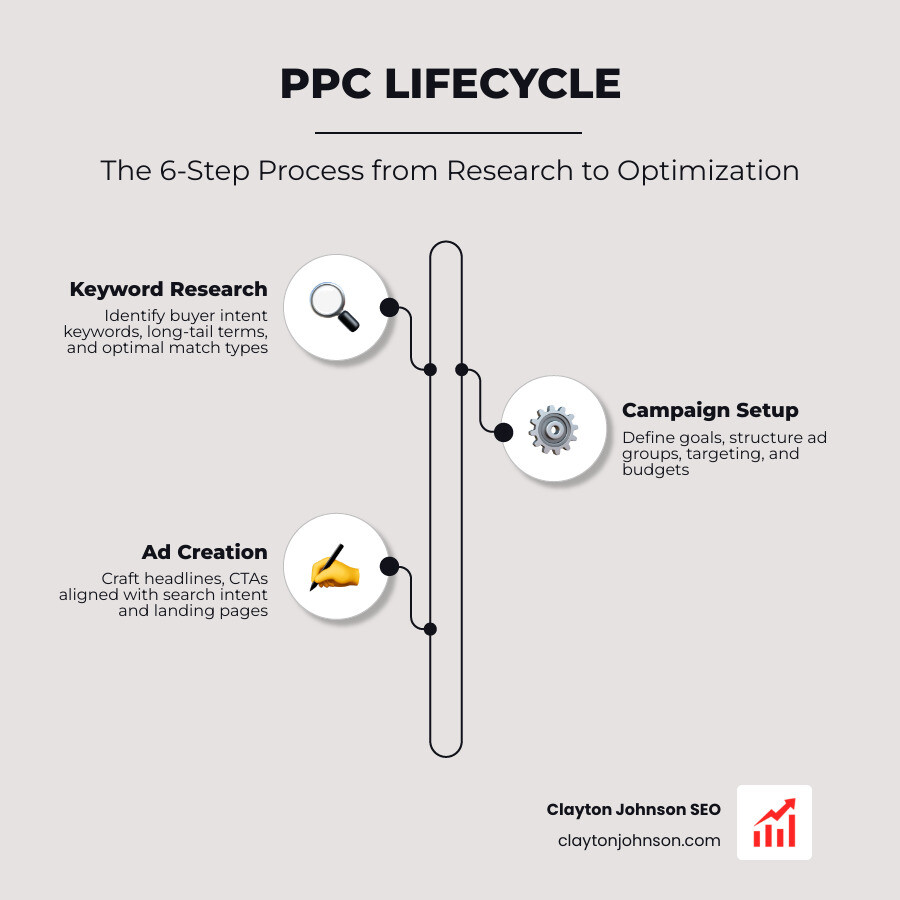
Here’s the short version of how to run them effectively:
- Choose your platform — Google Ads is the dominant choice, but Microsoft, Meta, and LinkedIn all have their place
- Research buyer-intent keywords — target terms people use when they’re ready to act, not just browse
- Set up your campaign structure — organize ad groups tightly around keyword themes
- Write ads that match search intent — headlines, CTAs, and landing pages must all align
- Set your bidding strategy — manual for control, automated for scale
- Monitor and optimize weekly — cut what bleeds, scale what converts
That’s the core loop. The details matter enormously — and that’s what this guide covers.
PPC is not just an advertising tactic. It’s a demand capture system. When someone searches “buy [your product],” they already want it. Your job is to show up, make a compelling case, and convert.
The numbers back this up. Customers are 50% more likely to purchase after clicking a paid ad. And in industries like legal services, a single click can cost up to $1,000 — which means the stakes for doing this right are real.
But here’s the rub: most founders and marketing teams run PPC campaigns reactively. They set a budget, write a few ads, and hope for results. That’s not a strategy — it’s a guessing game with expensive consequences.
I’m Clayton Johnson, an SEO and growth strategist who has architected paid and organic demand systems across dozens of business models — and pay per click advertising campaigns sit at the center of many of the highest-leverage growth frameworks I build. If you want to stop guessing and start compounding, this guide gives you the system.
How pay per click advertising campaigns work
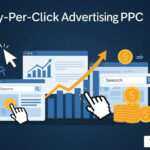
To master pay per click advertising campaigns, we first have to understand the engine under the hood. At its simplest, PPC is an auction-based model where we pay a fee only when someone actually clicks on our ad. Instead of paying for “eyes” (impressions), we are buying visits to our website.
Think of a PPC campaign like a high-performance vehicle. The campaign type is the vehicle itself, the publisher networks are the terrain it drives on, and the bidding strategy is how we control the speed. If we’re driving a city car on an off-road track, we’re going to have a bad time.
The most famous version of this is the Google Ads auction. Every single time a user performs a search, an automated auction happens in milliseconds. Google looks at all the advertisers bidding on that keyword and decides which ads to show and in what order.
This isn’t just a “highest bidder wins” situation. While your bid matters, Google also cares deeply about the user experience. They want to show the most relevant ad possible. This balance of bid and relevance is what makes Paid Advertising Services so effective when managed correctly—it levels the playing field for businesses with smaller budgets but better ads.
We also have to consider where these ads appear. While search engines are the primary “where,” many platforms offer “search partners”—smaller search sites that use Google or Bing’s results. Understanding these Digital Marketing Pillars helps us ensure our ads aren’t just appearing everywhere, but appearing where they actually convert.
The role of Quality Score and Ad Rank
If the bid is the gas pedal, the Quality Score is the engine efficiency. Quality Score is a diagnostic tool used by Google to give us a sense of how well our ad quality compares to other advertisers. It is measured on a scale of 1 to 10 and is based on three main factors:
- Expected Click-Through Rate (CTR): How likely is it that someone will click your ad?
- Ad Relevance: Does your ad actually answer the searcher’s question?
- Landing Page Experience: Is your page fast, mobile-friendly, and relevant to the ad?
Why does this matter? Because a high Quality Score can actually lead to lower costs. If we have a Quality Score of 10 and our competitor has a 3, we might pay significantly less for the top position than they would. Learning how to improve your quality score is the “secret sauce” to making pay per click advertising campaigns profitable. Your Ad Rank is the final score (Bid x Quality Score) that determines your position on the page.
Primary types of pay per click advertising campaigns
Not all PPC is created equal. Depending on our goals, we might use several different formats:
- Search Ads: These are the classic text ads that appear at the top of search results. They are perfect for capturing high-intent traffic.
- Display Ads: These are image-based ads that appear on a network of millions of websites and apps. They are great for brand awareness and retargeting.
- Shopping Ads: Essential for e-commerce, these show a product image, price, and store name directly in search results.
- Performance Max: A newer, AI-driven campaign type that lets us access all Google Ads inventory (Search, YouTube, Display, Gmail) from a single campaign.
- Remarketing: This uses pixels to “follow” users who have visited our site but didn’t buy, showing them ads later to bring them back.
- Social Media Ads: Platforms like Meta and LinkedIn use a PPC model based on user demographics and interests rather than just keywords.
Strategic keyword research and match types
Keywords are the foundation of everything we do in pay per click advertising campaigns. If we pick the wrong keywords, we’re just burning money. We need to distinguish between “browsing intent” and “buying intent.”
For example, someone searching for “what is SEO” is looking for information. Someone searching for “Minneapolis SEO agency” is looking to hire. We want to focus our budget on the latter.
Using Google’s Keyword Planner, we can identify terms that have high search volume but also align with our competitive positioning. We often look for “long-tail keywords”—longer, more specific phrases like “affordable leather couches in Minneapolis.” These terms usually have lower competition and higher conversion rates.
At Demandflow, we view keyword research as part of a larger SEO Content Marketing strategy. By clustering keywords based on intent, we can build ad groups that are laser-focused on specific customer needs.
Mastering keyword match types and negative lists
Once we have our keywords, we have to tell the search engine how strictly to match them to what people type. This is where many beginners fail, often defaulting to “Broad Match” and letting Google spend their budget on irrelevant searches.
- Broad Match: Your ad may show on searches that relate to your keyword. It’s the widest net but the least precise.
- Phrase Match: Your ad shows on searches that include the meaning of your keyword. You use quotes like “this.”
- Exact Match: Your ad shows on searches that have the same meaning as your keyword. You use brackets like [this].
Check out this match types guide for a deeper dive.
Equally important are Negative Keywords. These are terms we explicitly don’t want to show up for. If we sell high-end watches, we should add “cheap,” “free,” and “repair” to our negative list. This prevents wasted spend and keeps our campaign hygiene high.
Step-by-step guide to launching your campaign
Ready to pull the trigger? Here is how we structure a winning campaign from scratch.
- Set Your Goal: Are you looking for Sales, Leads, or Website Traffic?
- Choose Your Bidding Strategy: This is a big decision. Manual bidding gives us total control over every cent, while automated bidding (like Target CPA or Maximize Conversions) uses AI to find the best opportunities.
- Targeting and Geo-fencing: Since we are based in Minneapolis, we might want to limit our ads to Minnesota or even a specific radius around our office.
- Device Targeting: Does your audience convert better on desktop or mobile? You can adjust your bids accordingly.
- Account Structure: Keep your ad groups tight. If you sell “Blue Widgets” and “Red Widgets,” they should be in separate ad groups with unique ads for each.
| Feature | Manual Bidding | Automated Bidding |
|---|---|---|
| Control | High – You set every bid | Low – Google sets bids |
| Time Required | High – Requires daily monitoring | Low – Set it and let it learn |
| Best For | New accounts with low data | Established accounts with 30+ conversions |
| Risk | Missing out on high-value auctions | Overspending on low-quality clicks |
For more advanced tactics, you can Hack Your Way to the Top by using scripts and custom audiences to refine your targeting even further.
Crafting high-converting ad copy and landing pages
Your ad is a promise; your landing page is the fulfillment of that promise. If your ad says “50% off Blue Widgets” and the landing page shows Red Widgets at full price, the user will bounce instantly.
To offer a good user experience, focus on “Message Match.” The headline of your landing page should mirror the headline of your ad.
Pro-Tips for Ad Copy:
- Use Ad Assets: Add sitelinks, callouts, and structured snippets to make your ad physically larger and more informative.
- Strong CTA: Don’t just say “Click here.” Say “Get Your Free Quote” or “Shop the Sale.”
- A/B Testing: Always run at least two versions of an ad to see which one performs better.
While we often focus on search, these principles apply to Social Media Marketing as well. Visuals matter more on social, but the “promise and fulfillment” loop remains the same.
Managing and optimizing performance
A PPC campaign is not a “set it and forget it” project. It requires constant pruning. One of the biggest threats to your budget is Click fraud—where bots or competitors click your ads to drain your budget.
Fortunately, Google is quite good at detecting this. You can see how Google prevents invalid activity to protect your spend. We also recommend setting strict budget caps to ensure a sudden spike in bot traffic doesn’t wipe out your monthly budget in a day.
As your campaign matures, we look to scale. This doesn’t just mean “spend more money.” It means finding the ad sets that have the highest ROI and gradually increasing their budget while cutting the underperformers. In our Ultimate Guide to Digital Marketing AI, we explore how machine learning can now handle many of these bid adjustments for us in real-time.
Key metrics for pay per click advertising campaigns
To know if we’re winning, we need to track the right numbers. We use Google Analytics to tie ad clicks to actual website behavior.
- CTR (Click-Through Rate): Clicks divided by Impressions. A high CTR usually means your ad is relevant.
- CPC (Cost Per Click): How much you’re actually paying for each visitor.
- Conversion Rate: The percentage of visitors who take the desired action (like filling out a form).
- ROAS (Return on Ad Spend): Total Revenue divided by Total Ad Spend. If you spend $1 and make $5, your ROAS is 500%.
We often find that PPC traffic also fuels other channels. For instance, a lead captured via PPC might be nurtured through Email Marketing over several months before they finally buy.
Frequently Asked Questions about PPC
PPC vs SEO: Which is better?
Neither is “better”—they serve different purposes. PPC provides immediate results and precise targeting. SEO builds long-term authority and “free” traffic. We recommend doing both to own as much of the search results page as possible.
How much does a PPC campaign cost?
It depends entirely on your industry. In Minneapolis, a local plumber might pay $15 per click, while a nationwide software company might pay $50. You can start with as little as $10 a day to test the waters.
What is a good Quality Score?
Anything 7 or above is generally considered “good.” If you’re at a 3 or 4, you’re likely overpaying for your traffic and need to fix your landing page or ad relevance.
How do I stop click fraud?
While you can’t stop it 100%, you can use third-party software and IP exclusions to block known bot networks and suspicious traffic.
Conclusion
Mastering pay per click advertising campaigns is about moving from tactics to architecture. Most companies fail because they treat PPC as a series of isolated “hacks” rather than a structured growth system.
At Demandflow.ai, we help founders build that architecture. We believe that when you combine strategic clarity with AI-augmented workflows and measurable growth modeling, you create a compounding advantage that competitors can’t easily copy.
Whether you are looking for Paid Advertising Services or a complete growth operating system, the goal remains the same: Clarity leads to Structure, Structure leads to Leverage, and Leverage leads to Compounding Growth.
Stop guessing with your ad spend. Start building a system that wins.