SEO 101

SEO (Search Engine Optimization) is how you make your website easy for search engines and AI to find and understand. This process is essential for:
- Increasing Visibility: Helping your site appear higher in search results on Google, Bing, and AI search engines.
- Driving Organic Traffic: Attracting visitors who are actively searching for what you offer, without paying for ads.
- Building Trust & Authority: Sites that rank well are often seen as more credible and reliable by users.
- Connecting with Customers: Most customer journeys start with a search, making SEO a critical path to your audience.
Nearly everyone uses search engines to find information, products, or services. Google alone handles over 8.5 billion searches every day. This means if your business isn’t visible in search results, you’re missing out on a huge number of potential customers. SEO isn’t just a tactic; it’s a fundamental part of a successful online presence, ensuring your message reaches the right people at the right time.
I’m Clayton Johnson, an SEO strategist and growth operator focused on building scalable traffic systems and AI-augmented marketing workflows. I specialize in turning fragmented marketing efforts into coherent growth engines driven by search intent, structured content, and measurable outcomes.
What is Search Engine Optimization (SEO)?
At its simplest, SEO is the art and science of aligning your website with the algorithms search engines use to determine relevance and quality. When we talk about search, we are primarily talking about Google, which maintains a staggering market share of over 91% globally. In specific regions like the UK, that share climbs to 93.61%.
To understand SEO, we must look at the anatomy of a Search Engine Results Page (SERP). SERPs are generally split into two sections:
- Paid Results: These are advertisements purchased through Google Ads. You can identify them by the “Ad” or “Sponsored” label.
- Organic Results: These are the listings Google deems most relevant to the user’s query. This is where SEO lives.
Google’s business model relies on trust. While 76% of the $348 billion that Google generated in 2024 came from advertising, they only make that money if people continue to use the search engine. They use search intent—the “why” behind a user’s query—to serve the best possible content.
Whether a user has informational intent (looking for an answer) or transactional intent (looking to buy), our goal with SEO Services is to ensure your site is the best answer provided. By doing so, we build brand authority and drive conversion optimization that lasts long after an ad campaign ends.
The Evolution of Search: From PageRank to AI
The History of Search Engines is a wild ride from simple directories to complex neural networks. In the early 1990s, “search” meant manual submissions to engines like ALIWEB. By 1997, the term “search engine optimization” began to circulate, popularized by pioneers like Bruce Clay. You can even find the original discussions about the term’s invention in archived Google Groups threads.
The real game-changer was PageRank, developed at Stanford by Larry Page and Sergey Brin (originally called “Backrub”). It treated links like votes of confidence. However, as webmasters learned to “game” the system, Google fought back with major algorithm updates:
- Panda: Targeted thin, low-quality content.
- Penguin: Penalized manipulative link-building practices.
- BERT: Improved the understanding of natural language and context.
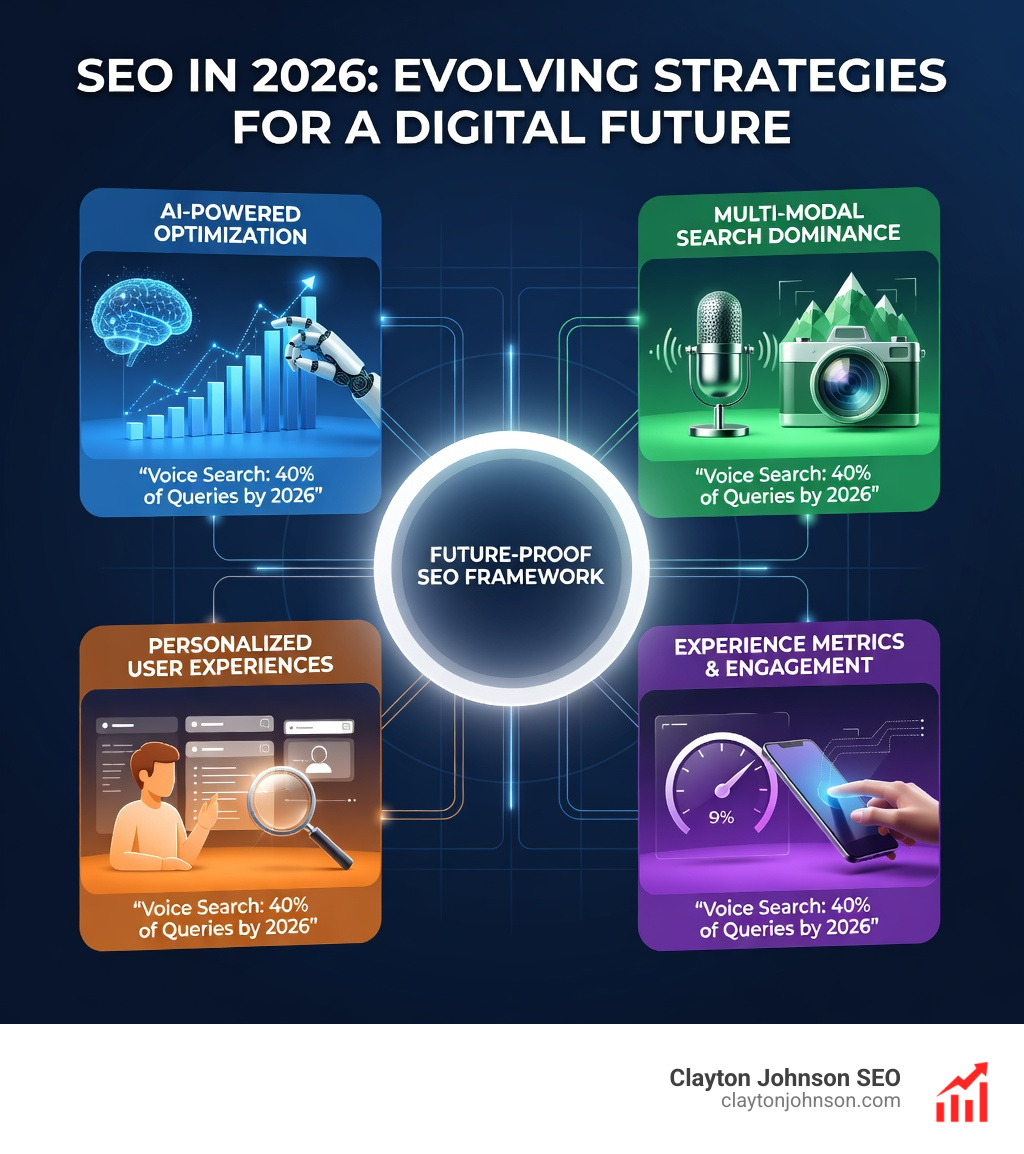
Today, we are in the era of AI. We’ve moved beyond simple keyword matching to Generative Engine Optimization (GEO). With the introduction of AI Overviews, search engines now provide direct answers pulled from multiple sources. This shift requires us to optimize not just for blue links, but for inclusion in AI-generated summaries.
Core Pillars of a Modern SEO Strategy
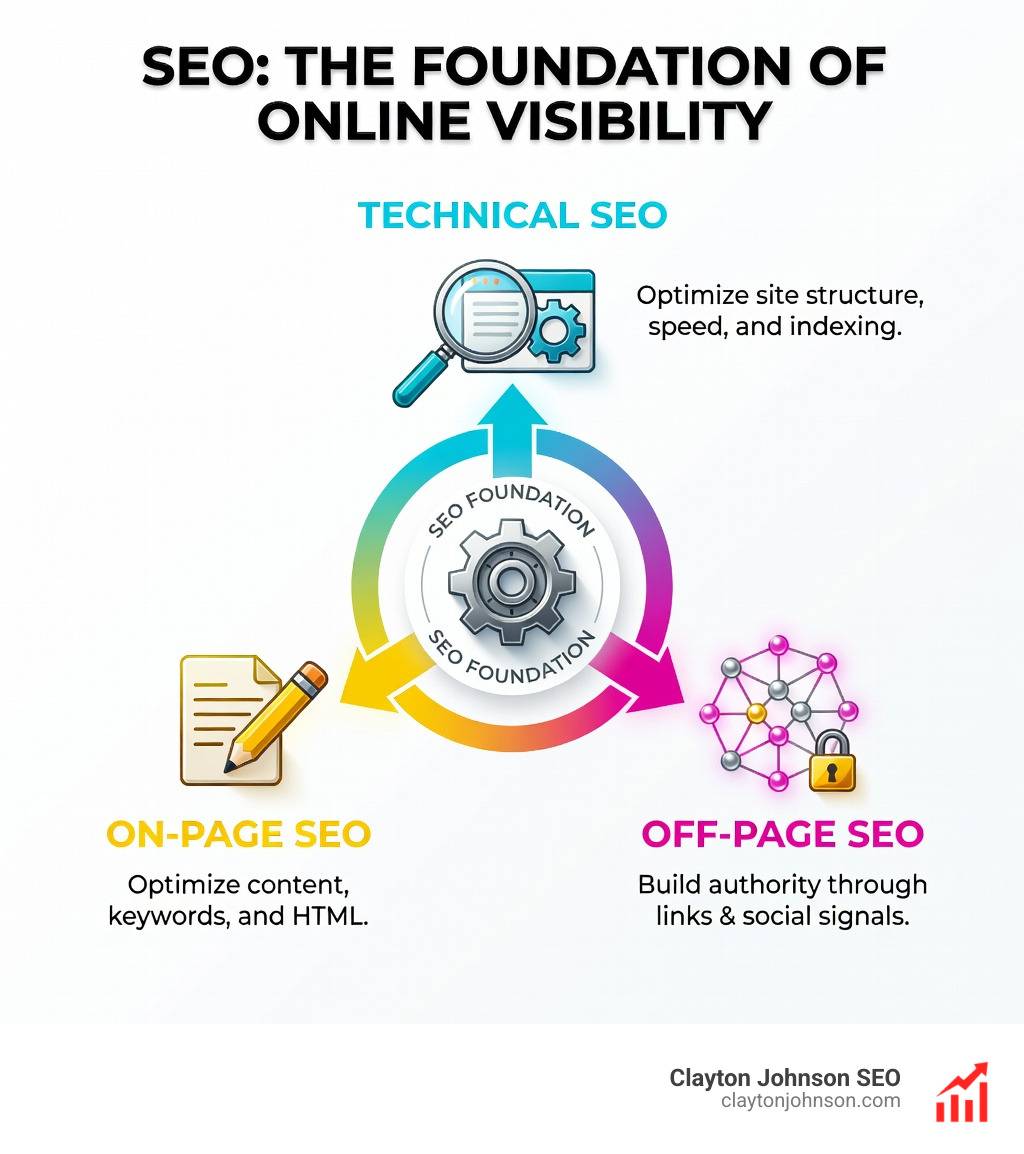
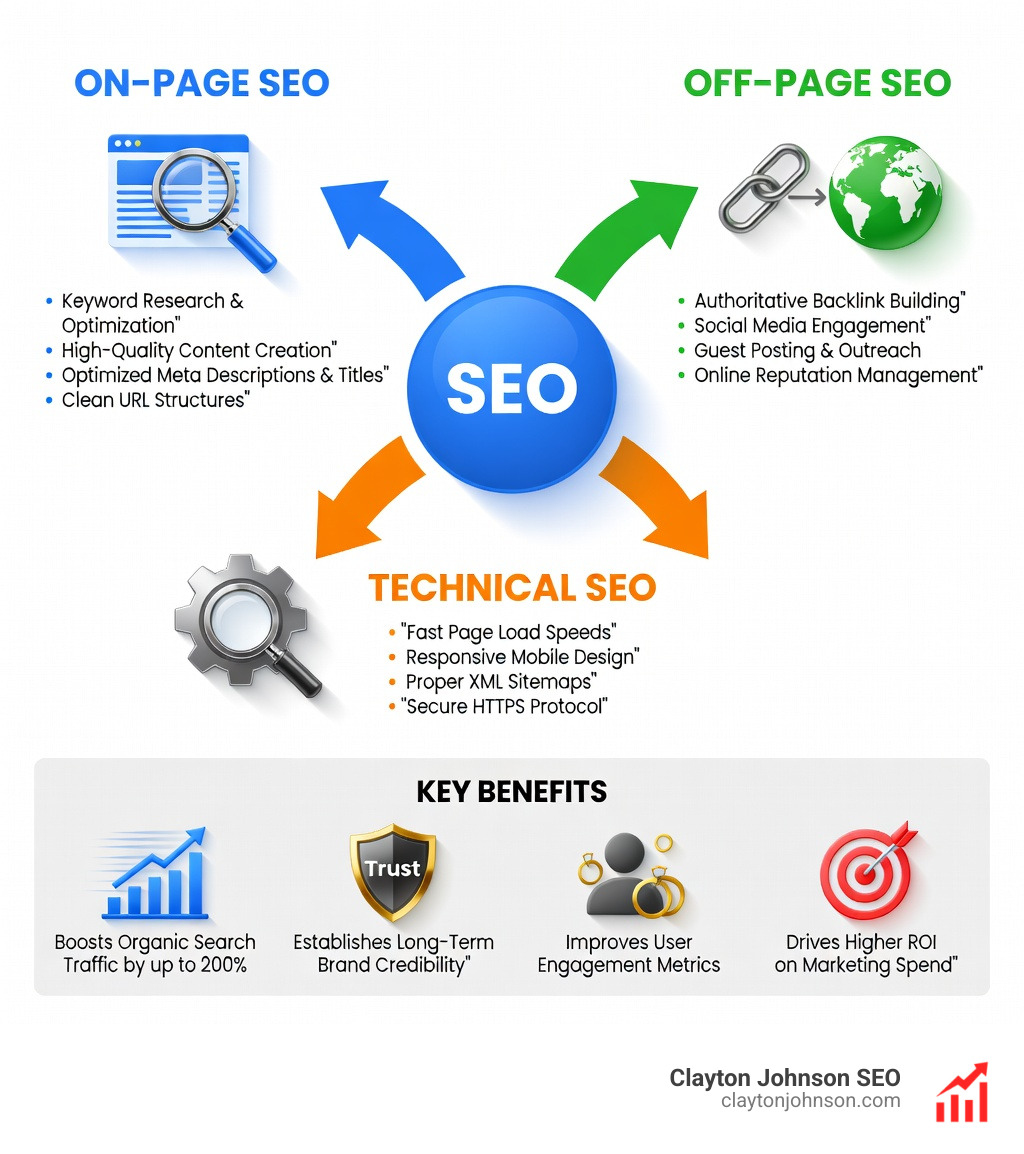
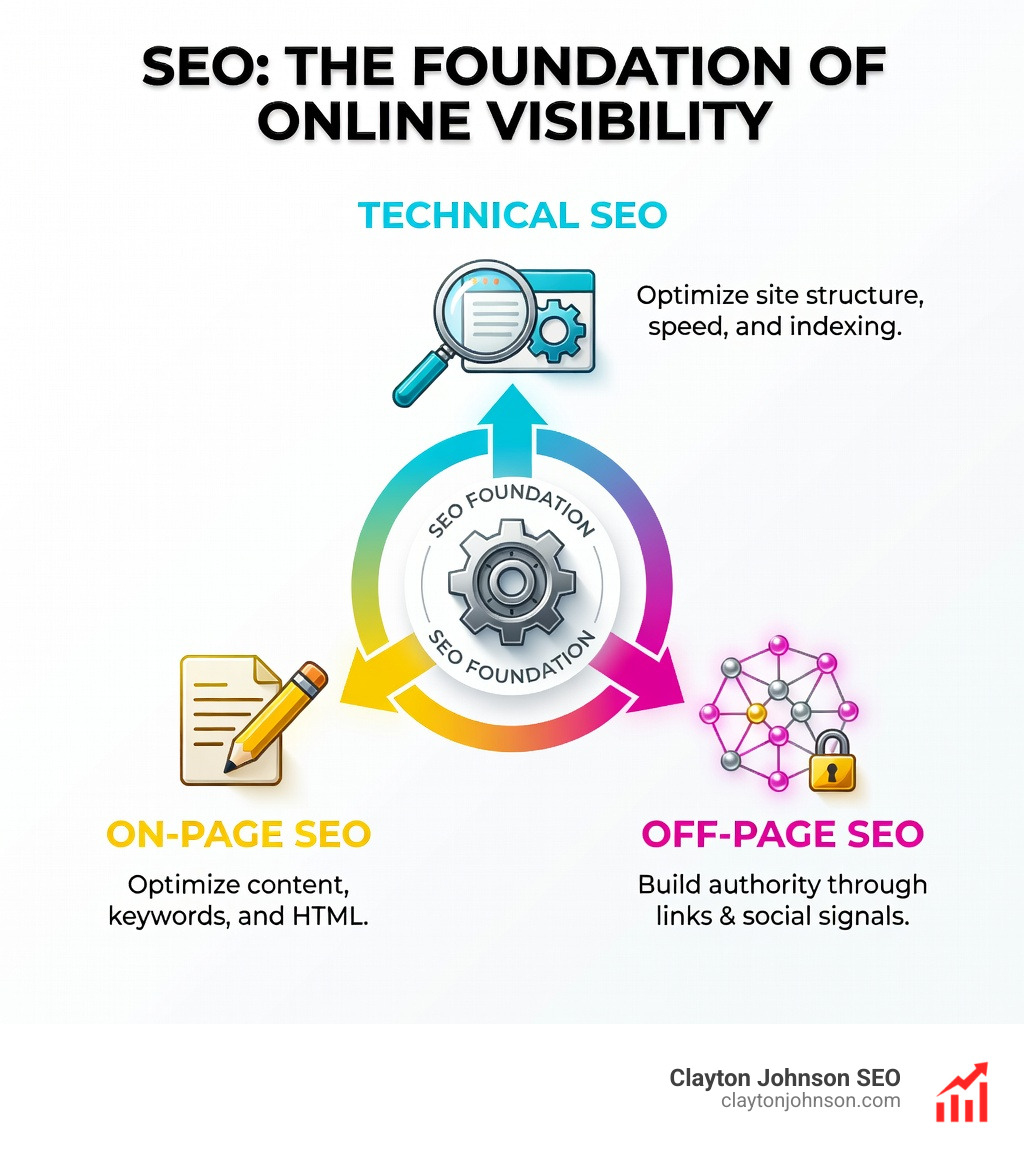
A successful strategy isn’t a single “trick.” It’s a balanced approach across three main pillars. We use these pillars to secure Google Rankings that are sustainable and resistant to algorithm shifts.
| Pillar | Focus Area | Goal |
|---|---|---|
| On-Page SEO | Content, Keywords, Metadata | Relevance & User Value |
| Off-Page SEO | Backlinks, PR, Social Signals | Authority & Trust |
| Technical SEO | Site Speed, Mobile, Indexing | Crawlability & UX |
We strictly adhere to “white hat” techniques—methods that follow search engine guidelines. Conversely, Black-Hat SEO involves deceptive practices like cloaking or hidden text. While black hat might offer quick gains, the risk of a permanent ban is too high. “Grey hat” falls in the middle, often involving aggressive tactics that aren’t explicitly banned yet but are likely to be targeted in future updates.
For businesses looking at international markets, SEO becomes even more nuanced. While Google dominates the West, you must account for Baidu in China (70-80% share) and Yandex in Russia (63.8% share). This requires multilingual SEO strategies and regional server considerations.
On-Page SEO and Content Quality
On-page SEO is the foundation of our SEO Content Marketing efforts. It’s about making sure your page tells both the user and the search engine exactly what it’s about.
Google’s primary advice is to focus on Creating helpful, reliable, people-first content. This is evaluated through the lens of E-E-A-T: Experience, Expertise, Authoritativeness, and Trustworthiness.
Key on-page elements include:
- Keyword Research: Identifying the specific phrases your audience uses.
- Metadata: Crafting compelling Title Tags (under 60 characters) and Meta Descriptions (under 160 characters).
- Header Tags: Using H1, H2, and H3 tags to provide a logical structure.
- Semantic Search: Writing naturally about a topic so search engines understand the context, rather than just repeating a single keyword.
Off-Page SEO and Authority Building
Off-page SEO is primarily about building your site’s reputation. If on-page is what you say about yourself, off-page is what the rest of the world says about you.
The most critical factor here is link building. Backlinks act as “votes” from other websites. However, quality always beats quantity. A single link from a high-authority news site is worth more than a thousand links from low-quality directories. In fact, Google has historically cracked down on Link Spam Alliances that try to manipulate rankings.
Modern off-page strategy involves:
- Digital PR: Earning mentions on authoritative websites.
- Guest Posting: Providing valuable content to other sites in your industry.
- Brand Mentions: Even unlinked mentions of your brand name can signal authority.
- Social Signals: While not a direct ranking factor, social engagement helps with content discovery and brand awareness.
Technical Foundations and Mobile-First Indexing
You can have the best content in the world, but if Google can’t crawl it, it won’t rank. As Google’s Gary Illyes said in a Reddit AMA: “MAKE THAT DAMN SITE CRAWLABLE.”

Since 2016, Google has shifted to Mobile-first indexing. This means Google primarily uses the mobile version of your content for indexing and ranking. If your mobile site is stripped down or slow, your rankings will suffer.
Technical essentials include:
- Sitemaps: An XML Sitemap acts as a roadmap for crawlers, ensuring they find all your important pages.
- Robots.txt: This file tells search engines which pages they shouldn’t visit.
- Schema Markup: Using Schema.org structured data helps search engines understand specific details, like review stars or event dates, leading to rich snippets in the SERPs.
- Core Web Vitals: These are specific speed and usability metrics Google uses to measure user experience.
- HTTPS: Security is a baseline requirement. Google prioritizes secure sites to protect user data.
We recommend using Google’s Lighthouse tool to audit your site’s performance regularly.
Measuring Success and Avoiding Common Pitfalls
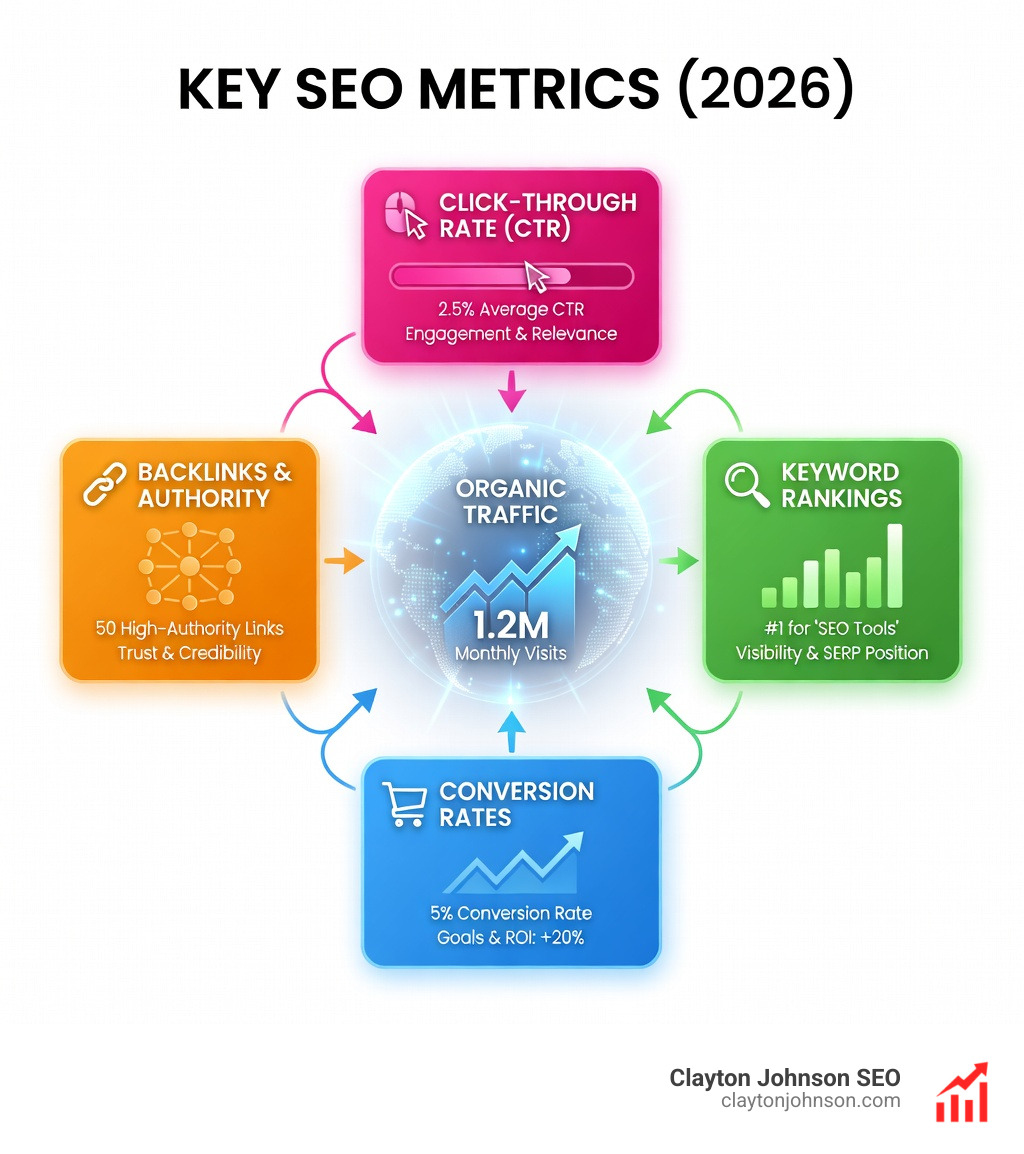
SEO is not a “set it and forget it” project. It requires constant monitoring. We use tools like Google Search Console to track how Google sees your site and Google Analytics to understand user behavior. Other professional tools like Moz help us track keyword rankings and competitive benchmarks.
Common Mistakes to Avoid:
- Keyword Stuffing: Forcing keywords into text where they don’t belong. This is a spammy practice that leads to penalties.
- Duplicate Content: Having the same content on multiple URLs. Use canonical tags to tell Google which version is the “master” copy.
- Ignoring User Experience: A high bounce rate (users leaving immediately) tells Google your page isn’t helpful.
- Buying Links: This is the fastest way to get hit by a Penguin-style penalty.
If you see a sudden drop in traffic, you might be facing a manual action. You can check this in Search Console. Confirming a penalty requires a deep dive into your recent site changes and backlink profile to identify the root cause.
Frequently Asked Questions about SEO
How long does it take to see results from SEO?
Generally, you should expect to see an increase in impressions within 4 to 6 months. Clicks and conversions typically follow shortly after. SEO is a long-term strategy; while some technical fixes might show results in weeks, building authority takes time.
What is the difference between SEO and SEM?
SEM (Search Engine Marketing) is the broad “umbrella” term. Think of it as a coin: SEO is one side (organic), and PPC (Pay-Per-Click) is the other side (paid). They are complementary. PPC gives you immediate visibility, while SEO builds long-term, sustainable growth.
Why is mobile-friendliness a ranking factor?
Because that’s where the users are. As early as 2016, mobile web usage overtook desktop. Google’s goal is to provide the best experience for the searcher. If a user clicks a result and has to “pinch and zoom” to read the text, they will leave. Google prioritizes sites that provide a seamless mobile experience.
Conclusion
SEO is the most sustainable growth strategy available to modern businesses. By focusing on helpful content, technical excellence, and genuine authority, you create a digital asset that works for you 24/7.
At Clayton Johnson SEO, we don’t just “do SEO.” We build actionable frameworks and content systems designed for the AI-first world. Whether you need a deep competitive analysis or a complete technical overhaul, we’re here to help you execute with measurable results.
If you’re ready to stop guessing and start growing, let’s talk. You can reach out to me directly as your SEO Consultant to begin diagnosing your growth problems and building a strategy that actually scales.