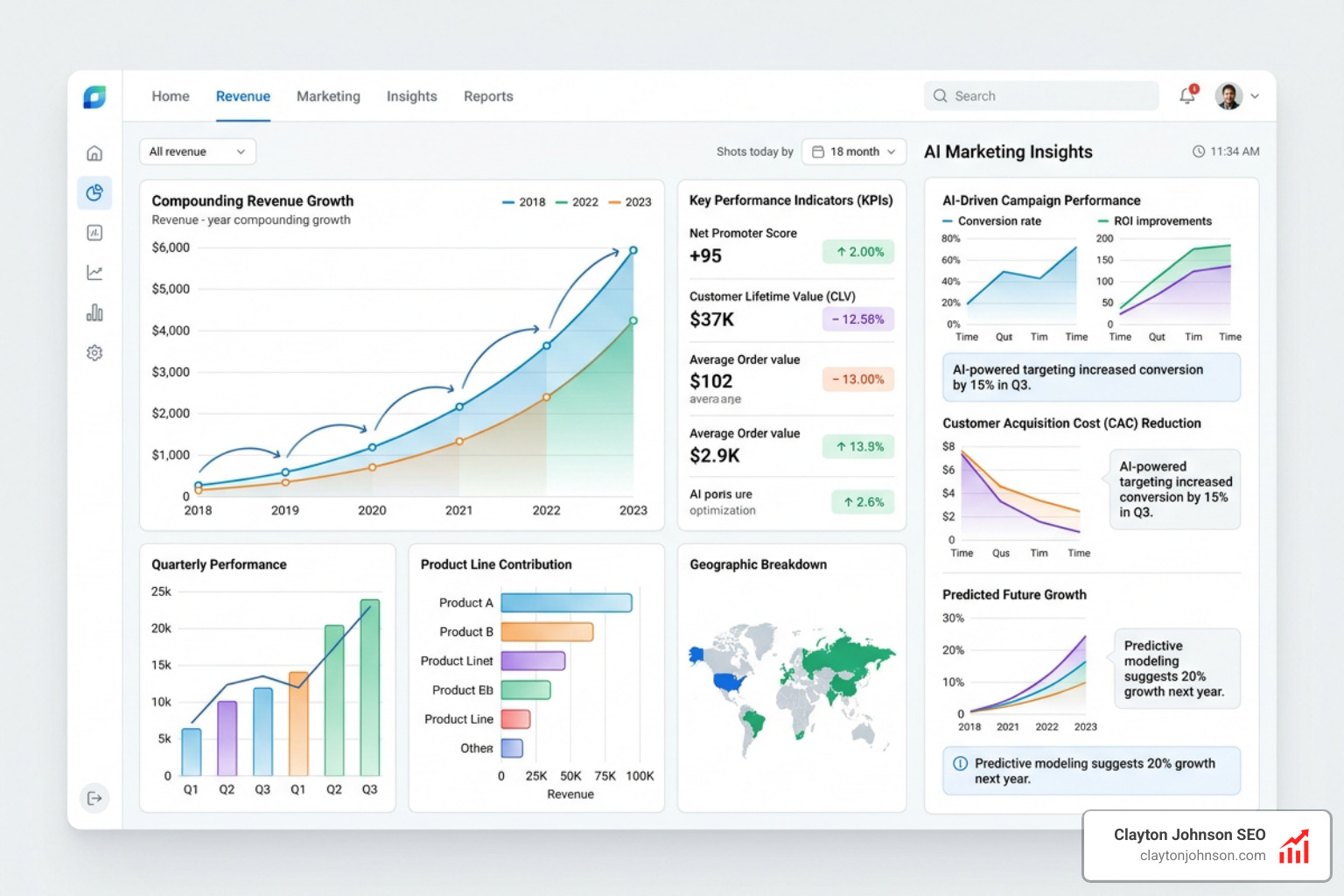
Stop Guessing and Start Auditing with AI Driven Research


Why Most Marketers Are Flying Blind (And How an AI Marketing Audience Audit Fixes That)
An ai marketing audience audit is a structured process that uses artificial intelligence to analyze, segment, and understand your target audience — replacing slow, manual guesswork with real-time data, predictive insights, and precise personas.
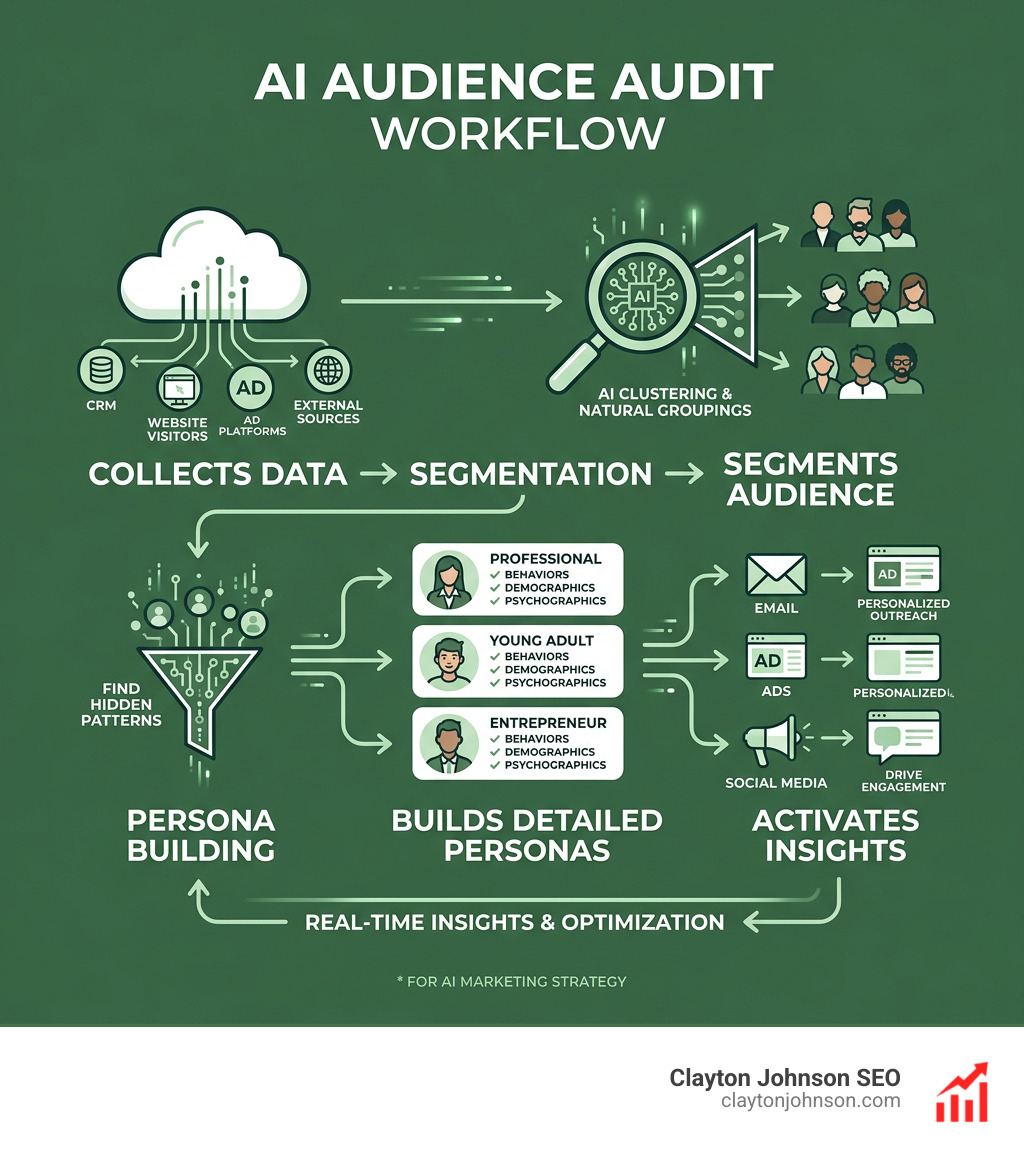
Here’s what an AI audience audit does, step by step:
- Collects data from your CRM, website visitors, ad platforms, and external sources
- Segments your audience using AI clustering to find natural groupings you’d miss manually
- Builds detailed personas based on behaviors, demographics, and psychographics
- Identifies hidden high-value segments that your current targeting overlooks
- Maps content and messaging gaps across the customer journey
- Activates insights across email, ads, and social media for personalized outreach
More than 70% of marketers lack strong confidence that their current model can effectively reach today’s digital-first buyer. That’s not a tools problem. It’s an insight problem.
Most marketing teams set their audience targeting once and rarely revisit it. They rely on gut instinct, outdated personas, or platform-default segments. Meanwhile, their best potential customers stay invisible — buried in disconnected data across CRMs, ad accounts, and analytics tools.
AI changes that equation completely. Instead of reviewing audience data point by point, AI processes millions of rows at once, finds patterns humans can’t see, and surfaces the segments most likely to convert. The result isn’t just better targeting — it’s a fundamentally sharper understanding of who you’re actually talking to.
I’m Clayton Johnson, an SEO strategist and AI marketing innovator with nearly two decades of experience helping businesses build data-driven growth systems — including developing frameworks specifically around ai marketing audience audit methodology to help brands stop wasting ad spend and start reaching the right people. The sections below will walk you through exactly how to do this, from the tools to use to the steps to follow.
The Strategic Framework of an AI Marketing Audience Audit
When we talk about an ai marketing audience audit, we aren’t just talking about a new piece of software. We are talking about a total shift in how you view your “data supply chain.” In the past, a marketing audit was a manual, grueling process. You’d hire a consultant, they’d spend six weeks looking at your Google Analytics, and they’d give you a PDF that was outdated by the time you read it.
AI turns this on its head. It doesn’t just look at what happened; it acts as a “silent storyteller,” weaving together fragmented data points to show you the narrative of your brand. The global conversational AI market was projected to expand from $12.24 billion to $61.69 billion, and this growth is driven by the need for businesses to understand these non-linear customer journeys in real-time.
Think of AI as a stress test for your marketing foundations. It doesn’t necessarily rewrite the rules of marketing; it audits whether you ever followed them in the first place. If your data is siloed or your messaging is inconsistent, AI will find those cracks immediately. This is why why AI marketing intelligence platforms are the future of growth—they provide the “structural repairs” needed to ensure your marketing engine is actually running on all cylinders.
| Feature | Traditional Marketing Audit | AI Marketing Audience Audit |
|---|---|---|
| Speed | Weeks or Months | Real-time / Minutes |
| Data Volume | Sample-based / Manual | Millions of rows |
| Objectivity | Subject to human bias | Data-driven & objective |
| Insight Type | Descriptive (What happened?) | Predictive (What will happen?) |
| Personalization | Broad segments | Hyper-individualized personas |
Uncovering Hidden Segments with an AI Marketing Audience Audit
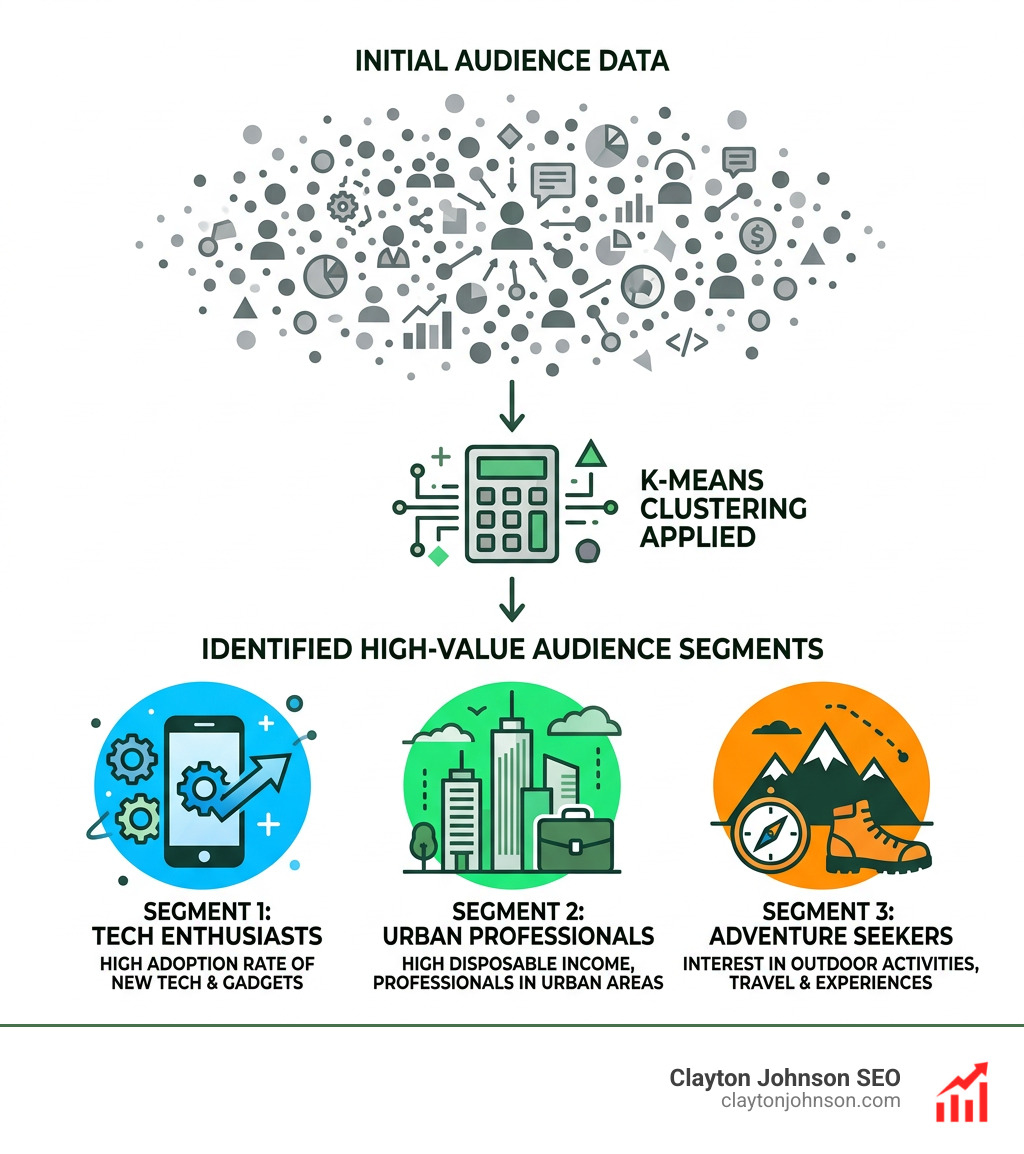
One of the most exciting parts of an ai marketing audience audit is finding the “hidden gems” in your data. Most marketers target based on broad categories: “Moms aged 25-40” or “IT Managers in Chicago.” But AI uses something called K-Means clustering to find natural groupings that aren’t obvious to the naked eye.
For example, an AI audit might discover a high-value segment of “Eco-conscious remote workers who buy luxury skincare on Tuesday nights.” You would never think to build a campaign for that specific group manually, but the data shows they have the highest Lifetime Value (LTV). By using lookalike modeling, you can then find millions more people just like them.
This level of precision is how you build AI marketing workflows that actually work. By leveraging psychographics and intent signals—like those found in HubSpot’s Breeze Intelligence—you can move beyond basic demographics and start talking to people based on their actual motivations and behaviors.
Best Tools for Executing an AI Marketing Audience Audit
You don’t need a PhD in data science to run an audit. The current landscape of AI tools has made this accessible for teams of all sizes. A YouGov poll indicated that 56% of Americans use AI tools, and that number is only growing as these platforms become more intuitive.
Here are the heavy hitters we recommend for your audit:
- Analyze360: This is fantastic for building instant buyer personas. Even if you don’t have a massive customer list, you can ask its AI assistant questions about your target consumer, and it will generate detailed personas and prospect lists based on third-party data from over 220 million U.S. consumers.
- Akkio Audience Agent: If you have a massive spreadsheet of customer data and don’t know where to start, Akkio is your best friend. It uses natural language, so you can literally type, “Show me which customers are most likely to churn,” and it will build the segment for you in seconds.
- HubSpot Audience Segments: HubSpot has evolved from simple “lists” to AI-powered “segments.” It can now uncover high-value audiences you might miss manually and even help you segment anonymous website visitors so you can personalize their experience before they ever fill out a form.
- Adobe Audience Agent: For enterprise-level teams, Adobe uses “agentic AI” to transform audience workflows that used to take months into a process that takes minutes. It’s a massive productivity magnifier.
- AdSherpa: This tool is specifically for auditing your ad spend. Ad platforms are designed to spend your money, not save it. AdSherpa uses AI to find the “leaks” in your Meta and Google Ads reports that are hiding wasted spend.
Step-by-Step: How to Conduct AI-Powered Audience Research
Ready to get your hands dirty? Conducting an ai marketing audience audit follows a logical flow. Here is how we recommend you win at implementing AI marketing systems:
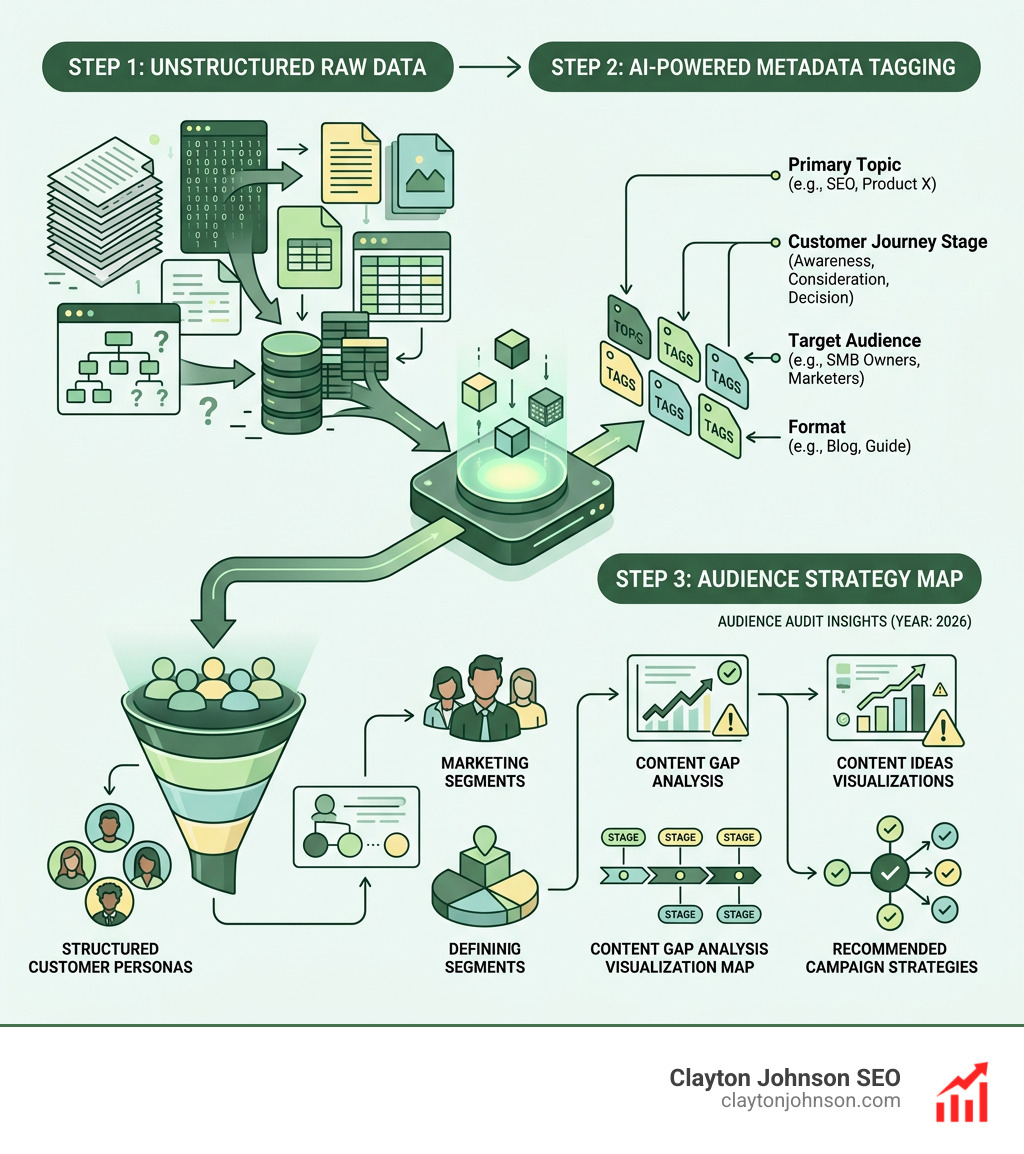
Step 1: Inventory Your Content and Data You can’t audit what you can’t see. Start by pulling your website sitemap and exporting metadata from your CRM and other repositories (like Google Drive or SharePoint). You want a master list of every touchpoint a customer has with your brand.
Step 2: AI-Powered Metadata Tagging Feed your master list into a Large Language Model (LLM) like ChatGPT or Claude. Use a prompt to ask the AI to categorize each item by primary topic, customer journey stage (Awareness, Consideration, Decision), and target audience.
Step 3: Funnel Mapping and Gap Analysis Once tagged, look for imbalances. Are 90% of your efforts focused on the “Awareness” stage while your “Decision” stage content is non-existent? AI can flag these gaps and suggest specific content ideas to fill them.
Step 4: Sentiment and Perception Analysis Use AI to “listen” to how your brand is discussed across the web. LLMs are shaping your brand narrative every time someone asks ChatGPT for a recommendation. An audit will tell you if the information AI has about you is accurate, up-to-date, and positive.
Step 5: Quality and Redundancy Check Ask the AI to rate the quality of your existing segments and content. It can identify redundant assets that are confusing your audience or competing with each other in search results.
The Role of Data Preparation and Integration
We have a saying: “Garbage in, AI-powered garbage out.” If your data is a mess, your audit will be too. The biggest hurdle for most businesses is data silos. Your sales team has one set of data, your marketing team has another, and your customer support team has a third.
To pass the “AI test,” you need to treat your data as a business imperative, not an IT clean-up project. This means:
- Breaking down silos: Connecting your CRM, email platform, and web analytics so the AI can see the full customer journey.
- Active Metadata: Enriching your customer records with tags that describe their behavior, not just their contact info.
- Governance Automation: Ensuring your data is clean, compliant with privacy laws, and updated in real-time.
When your data is integrated, you can even track anonymous visitors using tools like Breeze Intelligence. This allows you to understand the “search intent” of people who haven’t even identified themselves yet. It’s a powerful way to learn how to use AI for positioning without looking like a robot—you’re meeting the customer exactly where they are.
Measuring ROI and Avoiding Common Audit Pitfalls
A professional ai marketing audience audit is an investment that pays for itself remarkably quickly. On average, we see a €3,000 investment yield between €18,000 and €45,000 in additional revenue within the first year.
The typical returns we see within six months include:
- 25-40% improvement in advertising ROAS (Return on Ad Spend).
- 15-30% reduction in Customer Acquisition Costs (CAC).
- 35-60% increase in conversion rates for key sales funnels.
However, it’s easy to trip up if you aren’t careful. The most common mistake is “Data Overload.” Marketers collect millions of data points but don’t take any action. We recommend focusing on a maximum of five high-impact priorities at a time. Implement first, then optimize later.
Another pitfall is ignoring mobile. With 70% of web traffic now coming from mobile devices, your audience audit must be mobile-first. If your AI insights are based on desktop behavior, you’re missing the majority of your market. Always check your ai marketing software to ensure it’s pulling data from all device types.
Combining AI Precision with Human Strategic Expertise
As powerful as AI is, it lacks one thing: a soul. It can find patterns and predict behaviors, but it doesn’t understand cultural nuances, empathy, or the creative “spark” that makes a brand memorable. This is why we advocate for a “Human-in-the-Loop” approach.
AI should be used to automate the tedious parts of the audit—the data crunching and segment identification—while humans handle the strategic decisions. We set the “decision thresholds.” For example, the AI might suggest a new audience segment, but a human needs to decide if that segment aligns with the brand’s long-term ethical goals.
By putting AI agents to work for your marketing team, you free up your human talent to focus on what they do best: building genuine emotional connections with your customers. AI provides the “what” and the “who,” but humans provide the “why.”
Operationalizing Insights for Compounding Growth
The ultimate goal of an ai marketing audience audit isn’t just to have a better-looking dashboard. It’s about building a system for compounding growth. At Clayton Johnson SEO, we focus on system-level thinking. We don’t just want you to get a “quick win” (though we love those, like reallocating your ad budget in 30 minutes to save 20% of your spend). We want you to build a durable engine.
Once you have your audit results, you can implement “quick wins” immediately:
- Pause underperforming ads: Anything with a ROAS below 200% gets the axe.
- Fix conversion tracking: Ensure your GA4 and Facebook Conversions API are actually talking to each other.
- Optimize for “Answer Engines”: Ensure your brand shows up when people ask ChatGPT or Perplexity for solutions in your industry.
From there, you move into the “Scale” phase. You use your AI-defined segments to create hyper-personalized email sequences, dynamic landing pages, and targeted social ads. This is where the real magic happens—where your marketing stops feeling like an expense and starts feeling like an investment.
If you’re ready to stop guessing and start growing, exploring our SEO services is the first step toward a more structured, AI-augmented future. Let’s build a system that doesn’t just chase traffic but captures intent and drives measurable outcomes.