Stop Losing Traffic with These Competitor Gap Analysis Tools

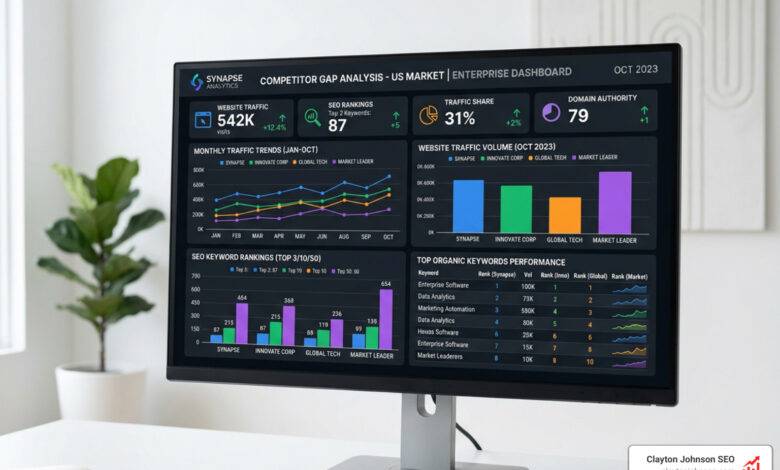
Why You’re Losing Traffic (And How Competitor Gap Analysis Tools Fix That)
Competitor gap analysis tools are software platforms that show you exactly where your competitors outrank you — so you can close those gaps and win back traffic.
Here are the top tools to know:
- Ahrefs – Best for keyword gaps and backlink analysis
- Semrush – Best all-in-one SEO and content gap platform
- SpyFu – Best for PPC and Google Ads intelligence
- Similarweb – Best for traffic and market share analysis
- BuiltWith – Best for tech stack competitive research
- Owler – Best budget-friendly competitor research option
- RivalFlow AI – Best for AI-powered content gap optimization
Every day your competitors are ranking for keywords you’re not. They’re capturing traffic, leads, and revenue that could be yours. The gap isn’t always about effort — it’s about visibility into what you’re missing.
Most business owners don’t know which keywords they’re losing. They don’t see which competitor pages are pulling traffic away from them. They just see flat numbers and wonder why growth has stalled.
That’s exactly the problem competitor gap analysis tools are built to solve. They turn blind spots into a clear action plan.
I’m Clayton Johnson, an SEO strategist with nearly two decades of experience building competitive intelligence systems, and I’ve relied on competitor gap analysis tools to consistently move clients from page two into top positions across highly competitive markets. In the sections below, I’ll break down the exact tools worth your time.
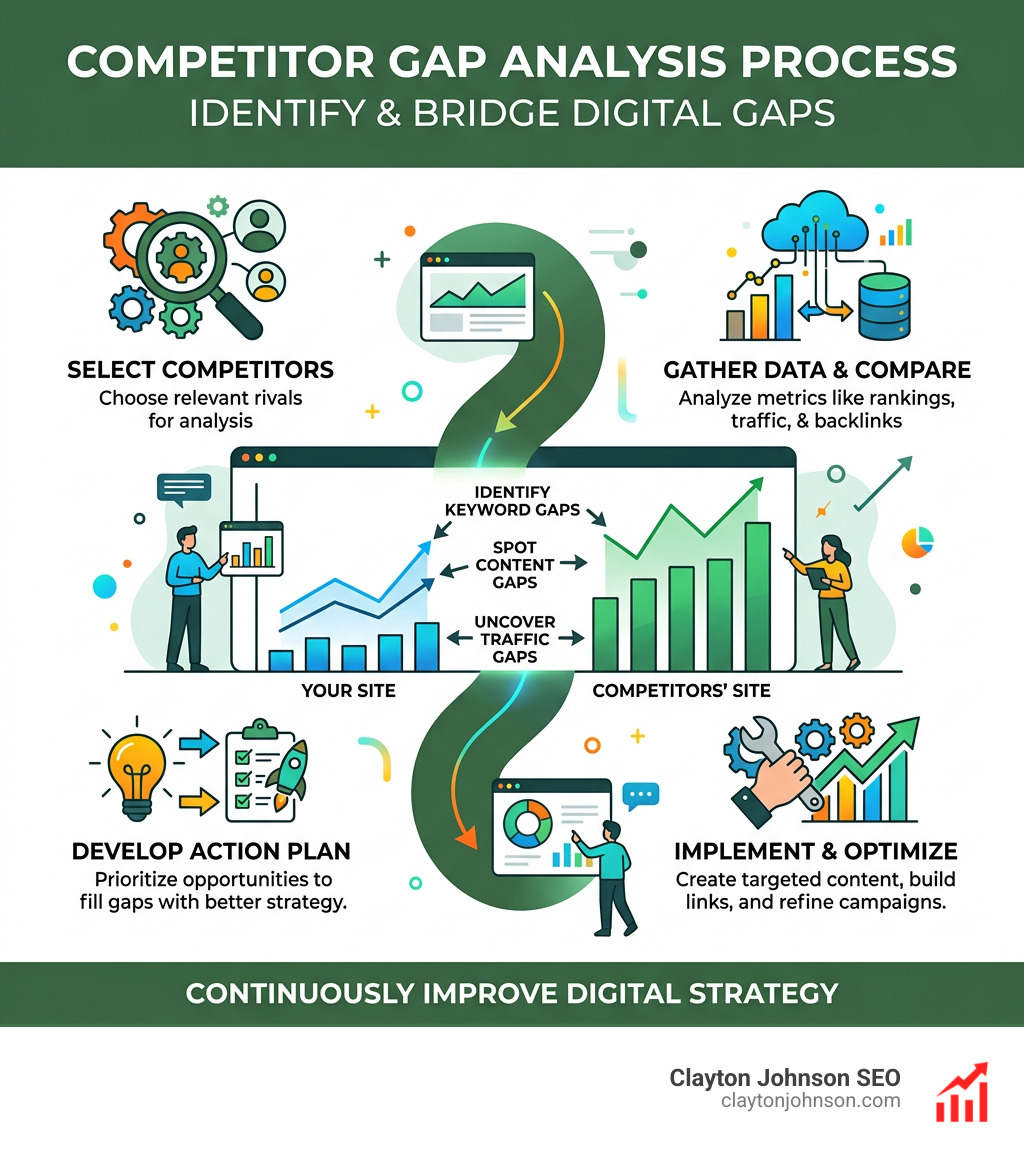
Top Competitor Gap Analysis Tools for SEO and Content Strategy
When we talk about SEO, “mind the gap” isn’t just a polite suggestion for subway riders; it is a survival strategy. If a competitor ranks for 500 keywords that you do not, they are essentially throwing a party in your neighborhood and you weren’t invited. To get on the guest list, you need tools that show you exactly what those keywords are.
The “Big Three” in the SEO world—Ahrefs, Semrush, and SpyFu—have dominated this space for a reason. They provide the data infrastructure needed to see through the digital walls of your rivals. Using a competitive content gap finder allows you to stop guessing and start positioning based on what is already working for others.
The Power of Keyword and Backlink Gaps
A keyword gap is simply a list of search terms where your competitor appears in the top results, but you are nowhere to be found. A backlink gap is the same concept applied to authority: who is linking to them but not to you?
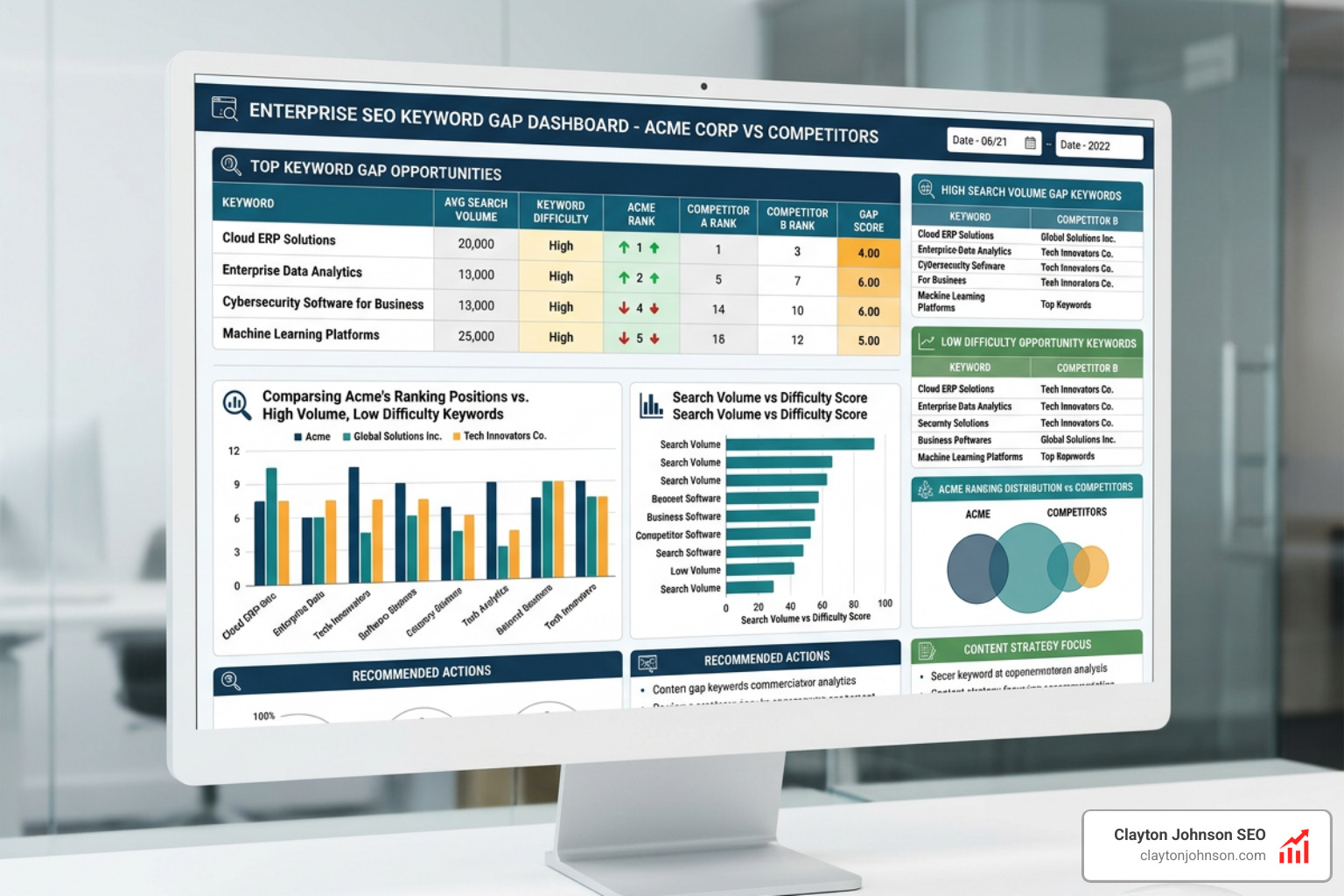
These tools work by crawling billions of pages and indexing the rankings of millions of websites. By comparing your domain side-by-side with up to four or five rivals, these platforms highlight the “low-hanging fruit”—keywords with high search volume and low difficulty that your competitors are currently monopolizing.
| Feature | Ahrefs | Semrush | SpyFu |
|---|---|---|---|
| Primary Strength | Backlink Database | All-in-one Marketing | PPC & Ad History |
| Keyword Gap Tool | Content Gap | Keyword Gap | Kombat |
| Best For | SEO Pros | Marketing Teams | PPC Specialists |
| Unique Data | Huge Link Index | 20B+ Keywords | 18 Years Ad History |
Identifying Gaps with Ahrefs and Semrush Competitor Gap Analysis Tools
If you want to get serious about organic growth, you’ll likely end up choosing between Ahrefs and Semrush. Both are powerhouses, but they approach gap analysis from slightly different angles.
Ahrefs: The Backlink and Content Architecture King
Ahrefs is often cited as the gold standard for SEO professionals because of its massive keyword database and detailed backlink metrics. Their “Content Gap” tool is a favorite for a reason. You can plug in multiple competitors and see keywords that at least one of them ranks for, but you don’t.
More importantly, Ahrefs helps you analyze content architecture. By looking at a rival’s “Top Pages,” you can see which specific URLs are driving the most traffic. If they have a “Ultimate Guide to Coffee Beans” that brings in 10,000 visitors a month and you only have a short blog post, you’ve identified a structural gap in your content strategy.
Semrush: The All-in-One Intelligence Suite
Semrush is like the Swiss Army knife of competitor gap analysis tools. While Ahrefs feels like a precision instrument for SEO, Semrush offers a broader view of the market. Their Keyword Gap tool allows for very granular filtering. You can find “Missing” keywords (where you don’t rank at all) or “Weak” keywords (where you rank lower than your rivals).
We also love using their Market Explorer. It gives you a bird’s-eye view of your market share compared to the industry leaders. This is where using AI competitive insights becomes a game-changer, as these tools now use machine learning to predict which gaps are the most profitable to close.
Leveraging SpyFu and Other PPC Competitor Gap Analysis Tools
While SEO is a long game, PPC is a sprint. If you are running Google Ads without looking at what your competitors are doing, you are essentially lighting money on fire. SpyFu is the undisputed heavyweight here, offering insights that feel almost unfair.
18 Years of Ad History
One of the most impressive stats in the industry is SpyFu’s database. They have tracked Google Ads history for over 18 years. This means you can see every ad keyword a competitor has ever bought, every ad test they’ve run, and every “winning” ad copy they’ve settled on.
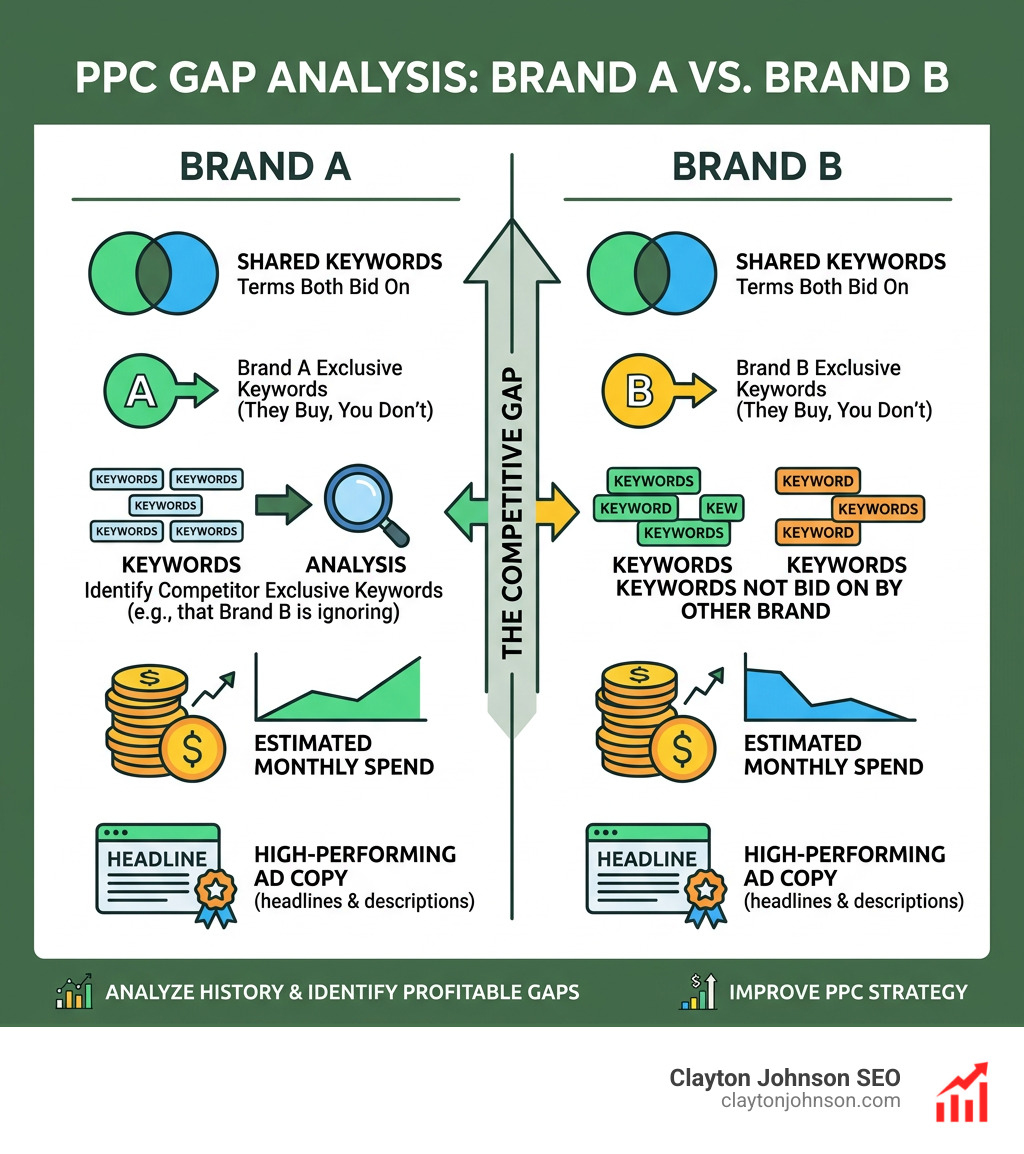
When we talk about competitive analysis 101, the goal is to learn from others’ expensive mistakes. If a competitor has been bidding on a specific keyword for five years, it’s a safe bet that keyword is profitable. You can identify the “PPC Gap” by finding keywords they consistently buy that you are ignoring.
Key PPC Metrics to Track:
- Shared Keywords: Terms both you and your rival bid on.
- Competitor Exclusive Keywords: Keywords they buy that you don’t.
- Ad Spend Estimates: How much they are likely spending per month.
- Top Ad Copy: The headlines and descriptions that have stood the test of time.
AI-Powered Content Optimization with RivalFlow AI
The newest frontier in competitor gap analysis tools is Generative AI. It’s one thing to know you have a “content gap”; it’s another thing entirely to know exactly how to rewrite your page to beat the person in the #1 spot.
This is where RivalFlow AI shines. Instead of just giving you a list of keywords, it analyzes the semantic differences between your page and a competitor’s page. It identifies specific topics, questions, or sections that your rival included but you missed.
It then goes a step further by generating the actual copy needed to fill that gap. This isn’t just about “keyword stuffing”; it’s about making your content more comprehensive and authoritative. By scoring your brand with AI, you can move from “guessing” what Google wants to “knowing” what the top-ranking pages have that you don’t.
Market Intelligence and Product Feature Gap Analysis
Gap analysis isn’t just for the marketing department. It is vital for product leaders and founders who need to know if their product is actually competitive in the real world. Tools like Similarweb, Owler, and BuiltWith move beyond keywords and into the realm of market intelligence.
Understanding your competitive analysis frameworks is the first step toward using these tools effectively. You aren’t just looking for traffic; you’re looking for business model vulnerabilities.
Analyzing Traffic Gaps with Similarweb and Owler
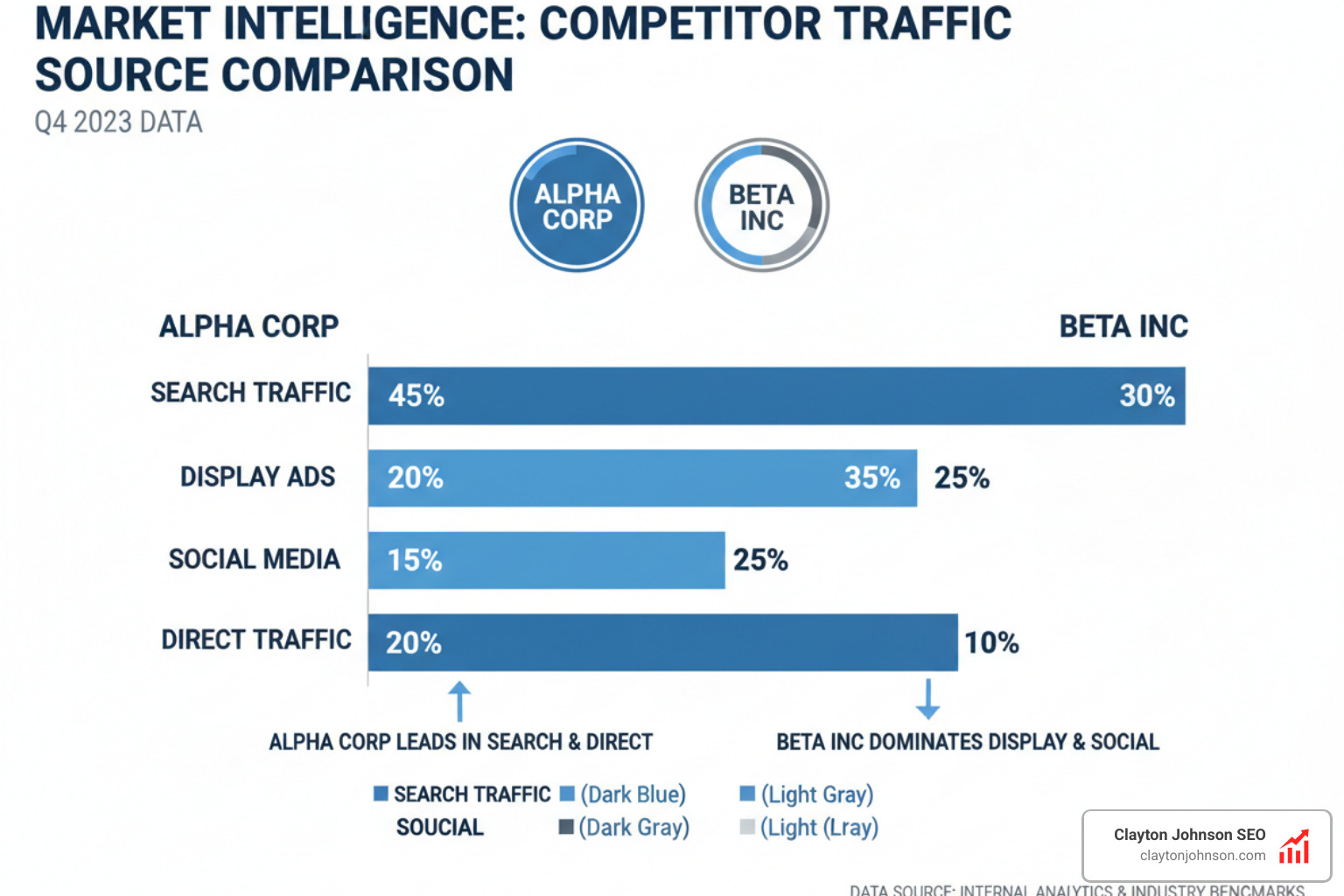
Similarweb is a behemoth in the data world. According to their own Similarweb reporting, they collect 10 billion digital data signals per day and analyze 2 TB of data daily. This allows them to show you not just where traffic comes from, but the quality of that traffic.
Are your competitors getting all their leads from display ads while you’re relying on search? That’s a channel gap. Do they have a much higher “stickiness” or engagement rate? That’s a product gap.
Owler is a fantastic budget-friendly alternative for company research. It provides real-time news alerts and community-sourced data on private companies. It’s excellent for competition mapping when you need to track funding rounds, leadership changes, or revenue estimates that aren’t publicly listed elsewhere.
Product and Tech Stack Benchmarking with BuiltWith
Have you ever wondered what software your competitors are using to run their site? BuiltWith tracks over 108,000 technologies across 673 million websites. It can tell you if a rival just switched to a new CRM, started using a specific AI chatbot, or upgraded their hosting infrastructure.
This is critical for product benchmarking. If every one of your successful rivals is using a specific lead-capture technology and you aren’t, you’ve found a conversion gap. Beating the competition with AI analysis often starts with understanding the technical foundation they are building on.
Choosing the Right Strategy with Clayton Johnson SEO
At the end of the day, a tool is only as good as the strategy behind it. You can have all the data in the world, but if you don’t know how to turn those gaps into a scalable growth system, you’re just looking at expensive spreadsheets.
At Clayton Johnson SEO, we specialize in turning fragmented marketing efforts into coherent growth engines. We don’t just find gaps; we build the systems to fill them. Whether it’s through our SEO services or by implementing advanced AI tools, our focus is on measurable business impact.
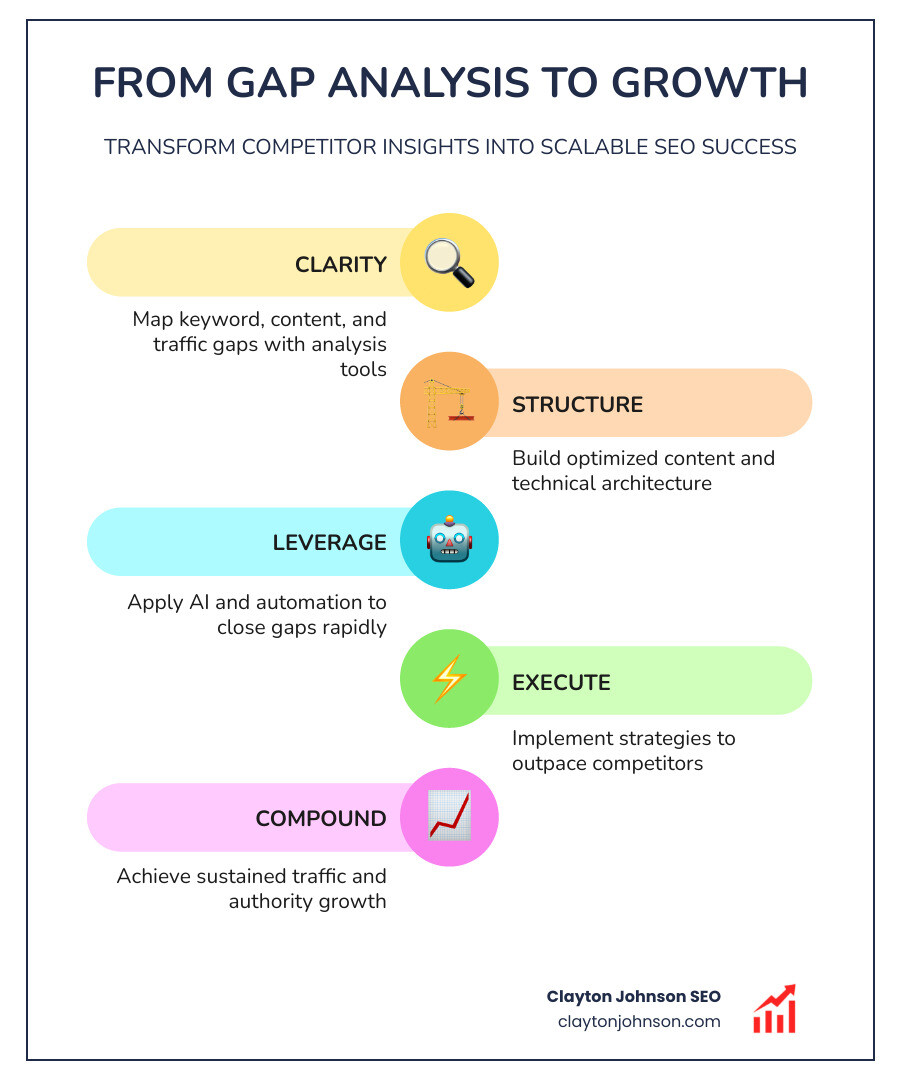
Our Framework: Clarity to Compounding Growth
We believe in a simple path to dominance:
- Clarity: Use competitor gap analysis tools to see the landscape exactly as it is.
- Structure: Build a content and technical architecture that supports your goals.
- Leverage: Use AI and automation to fill gaps faster than your rivals can react.
- Compounding Growth: Watch as your traffic and authority build on themselves over time.
Stop letting your rivals win by default. By identifying the keyword, content, and product gaps that are holding you back, you can reclaim your market share and build a durable, traffic-driving system that lasts for years.
Frequently Asked Questions About Competitor Gap Analysis Tools
How often should I conduct a gap analysis?
Marketing isn’t a “set it and forget it” task. Most industry experts recommend a deep dive into your competitors every six months. However, for high-growth industries like SaaS or E-commerce, monthly monitoring of keyword shifts is a best practice.
What is the difference between a free and paid tool?
Free tools (like the basic versions of Ubersuggest or Google Trends) are great for a quick pulse check. However, paid platforms like Ahrefs or Semrush provide the historical data and “bulk” analysis capabilities needed for a professional strategy. For example, SpyFu’s 18-year ad history is something you simply won’t find in a free tool.
Can AI really automate this process?
Yes and no. Tools like GapsFinder or Competely.ai can generate a gap report in under 60 seconds with 95% accuracy. They are incredible for saving 30-60 hours of manual research a month. However, you still need a human strategist to decide which gaps are worth the investment to close.
Which tool is best for small businesses?
If you are on a tight budget, Owler and the free versions of Similarweb or Ubersuggest are great starting points. As you grow, investing in a “Big Three” tool (Ahrefs, Semrush, or SpyFu) usually pays for itself through the traffic and leads you’ll recover from competitors.