Why Most Behavior Change Campaigns Fail (And What to Do Instead)
Social marketing steps are the structured process of applying commercial marketing principles to change behaviors for the good of individuals and society.
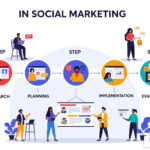
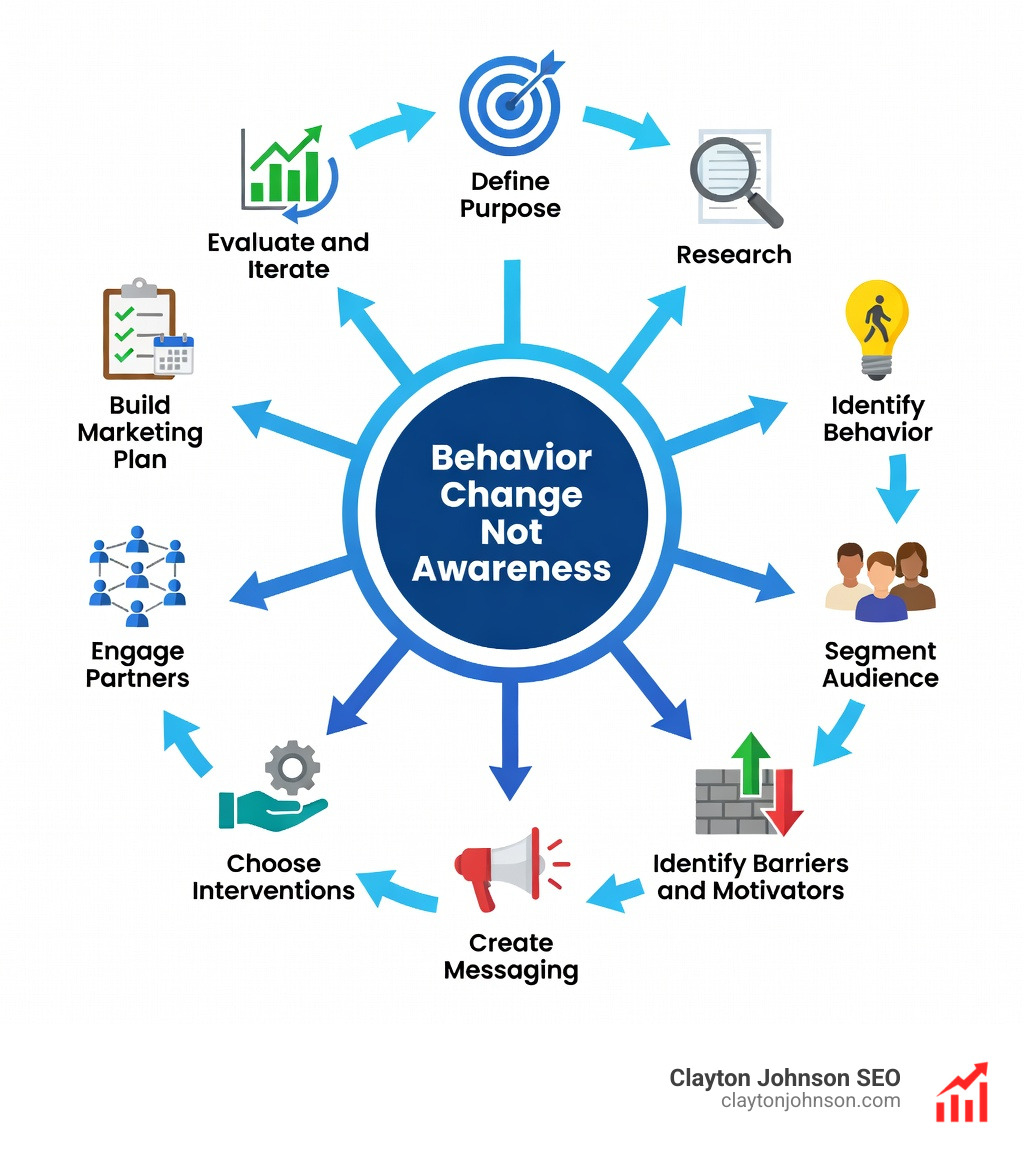
Here is a quick overview of the core steps:
- Define your purpose, goals, and objectives – Clarify what behavior you want to change and why
- Conduct research – Use surveys, focus groups, and observational methods to understand your audience
- Identify the desired behavior – Pick one specific, measurable action to promote
- Define your priority audience – Segment by demographics, psychographics, and readiness to change
- Identify barriers, benefits, and motivators – Find out what stops people and what drives them
- Create a messaging strategy – Build value propositions that resonate emotionally
- Choose your interventions – Go beyond ads; use incentives, policy, prompts, and convenience
- Identify partners – Engage stakeholders who can extend your reach
- Develop a marketing plan – Map channels, formats, and timing using the 4Ps framework
- Build an evaluation plan – Set metrics upfront and measure behavior change, not just awareness
Most campaigns focus on awareness. Awareness is not enough.
Research shows that the average person is exposed to between 2,000 and 3,000 marketing messages every single day. Getting noticed is one challenge. Getting people to act is a completely different problem.
Here is a striking example of why this matters. In one waste management study, 94% of people described themselves as “very good” recyclers – yet a waste sort study found that 50% of what was in garbage cans was still recyclable. People believed they were doing the right thing. Their behavior told a different story.
That gap – between what people think they do and what they actually do – is exactly where social marketing lives. It is not about informing. It is about changing.
Social marketing borrows the discipline of commercial marketing and applies it to social good. It asks the same questions a great product team asks: Who is my audience? What do they actually want? What is stopping them? How do I make the right behavior easier than the wrong one?
The result is a structured, research-driven process that consistently outperforms traditional public health education and one-off awareness campaigns.
I’m Clayton Johnson, an SEO strategist and growth systems architect who has spent years building structured marketing frameworks that translate strategy into measurable outcomes – including campaigns that apply these same social marketing steps to drive real behavioral shifts at scale. In this guide, I’ll walk you through every phase of the process so you can build campaigns that actually change behavior, not just mindsets.
Defining Social Marketing: Beyond Awareness to Action
When we talk about social marketing, we often have to clear the air first: Social marketing is not social media marketing. While we might use TikTok or Instagram to get the word out, social marketing is a systematic approach to developing activities aimed at changing or maintaining people’s behavior for the benefit of individuals and society as a whole.
Think of it as the difference between a billboard that says “Smoking is Bad” (traditional education) and a program that provides free nicotine patches, text-message support, and a community “quit-buddy” system (social marketing). One gives you facts; the other gives you a path to action.
The Core Principles of Social Marketing Steps
To get social marketing steps right, we have to lean on four heavy-hitting principles:
- Audience Orientation: We don’t guess what people need. We listen. We look at the world through their eyes to understand their values and daily struggles.
- The Exchange Principle: This is the “What’s in it for me?” factor. For someone to change, the perceived benefits of the new behavior must outweigh the costs (time, effort, money, or social stigma).
- The Marketing Mix (4Ps): We don’t just “promote.” We look at the Product (the behavior), Price (the cost of changing), Place (where the behavior happens), and Promotion (how we talk about it).
- Segmentation: We never treat “the general public” as one big group. We slice the audience into segments like “Show Me” (ready to act), “Help Me” (need a nudge), and “Make Me” (need policy or strong incentives).
By focusing on these, we move away from “shouting into the void” and toward a Social Media Marketing strategy that actually sticks.
Why Social Marketing Outperforms Traditional Education
Traditional public health education relies on the “information-deficit model”—the idea that if people just knew the facts, they’d change. But humans aren’t robots. If facts were enough, nobody would ever eat a third slice of pizza or forget to floss.
Social marketing is effective because it tackles barriers. For example, in a Minnesota DNR behavior change study, researchers found that simply telling boaters to clean their gear wasn’t enough to stop invasive species. They had to identify the specific hurdles—like lack of tools at the boat launch—and provide physical solutions (the “Place” and “Product” of the marketing mix).
We use these Digital Marketing Pillars to ensure that every message isn’t just heard, but acted upon.
The Framework: Essential Social Marketing Steps for Behavior Change
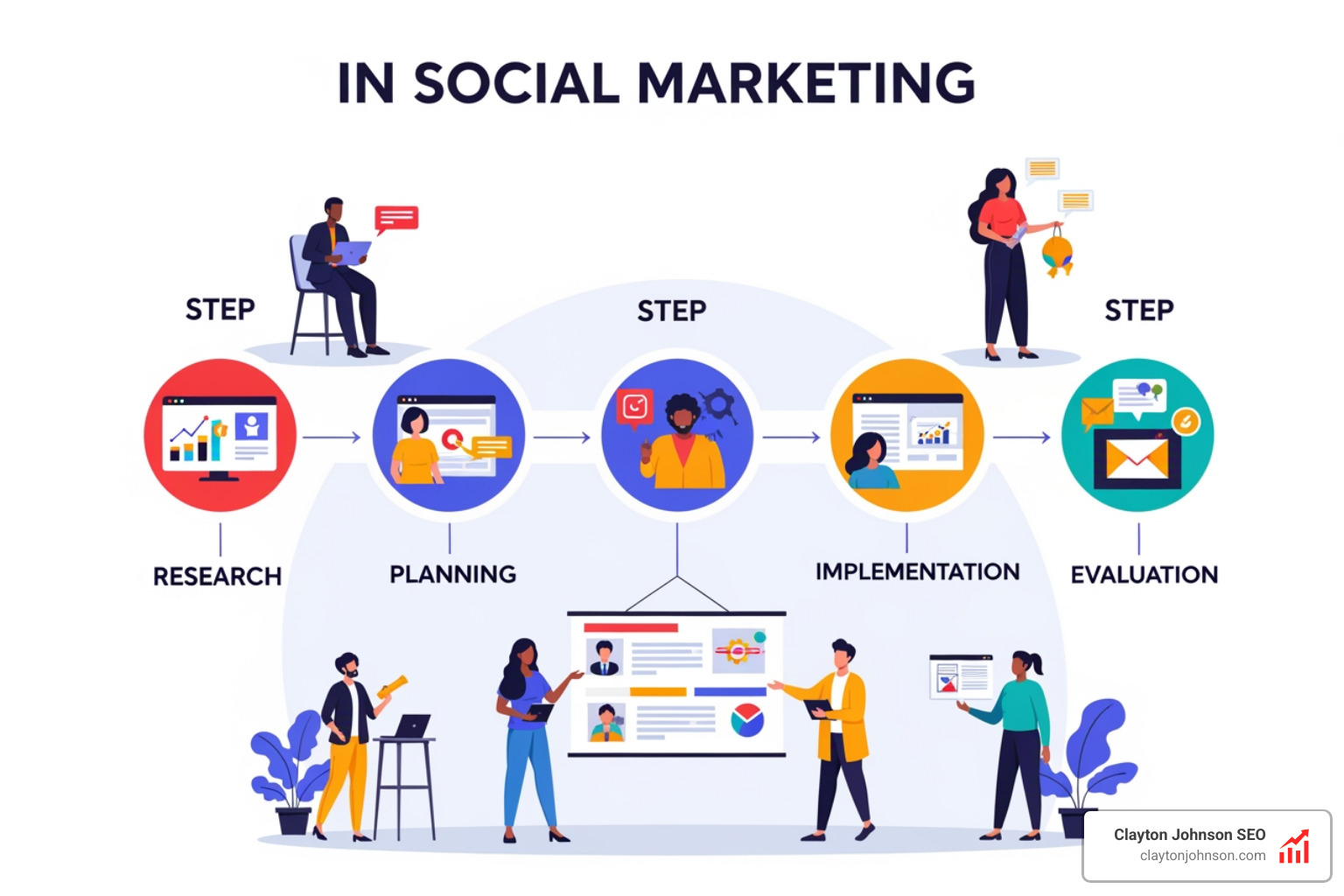
There are several models for planning, but they all share a common DNA. Whether you use a 5-step, 6-phase, or 10-step model, the goal is to move from a messy problem to a structured solution.
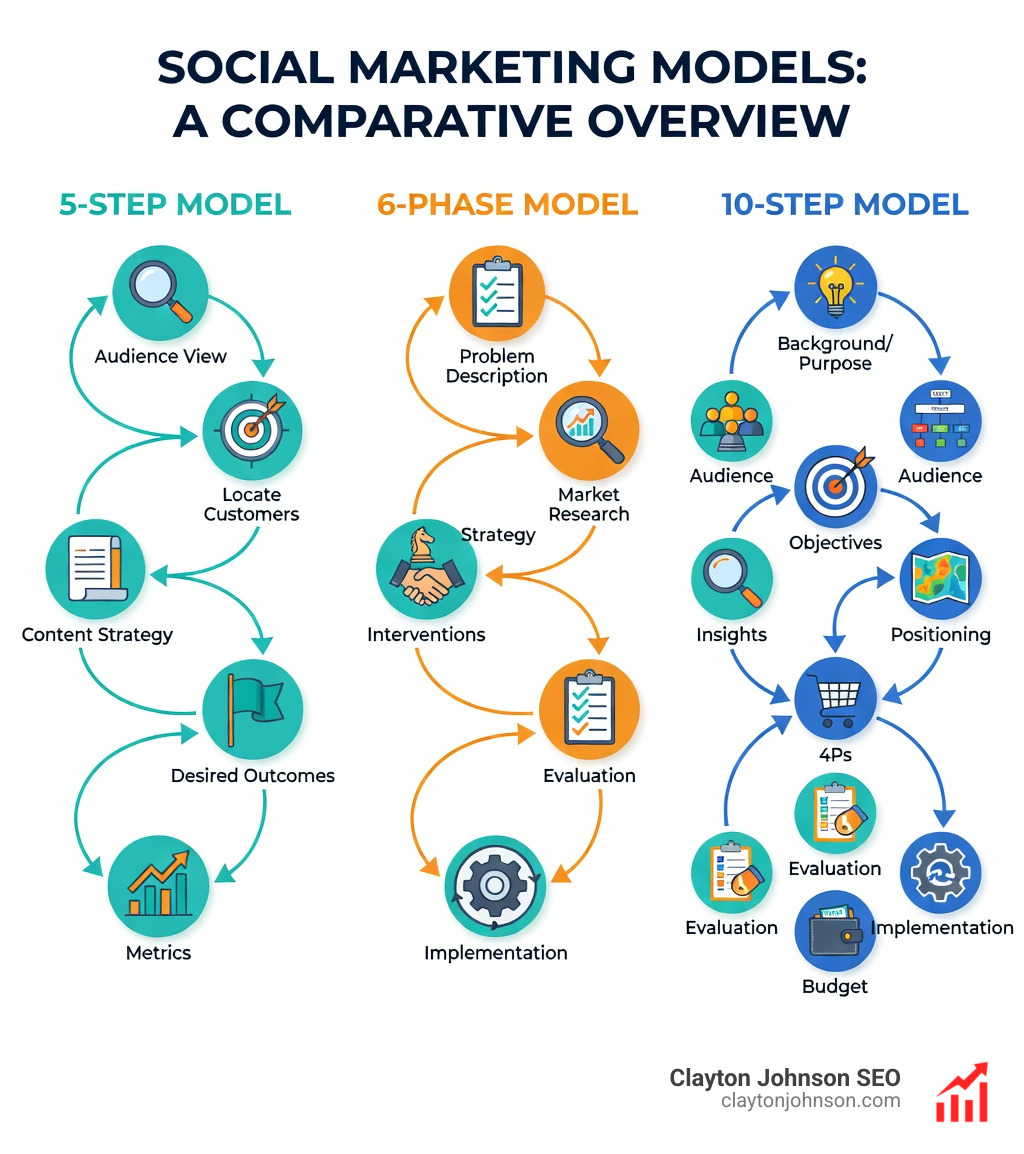
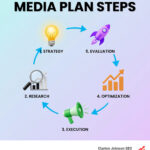
Regardless of the model, the “spiral” nature of these social marketing steps is key. You don’t just finish one step and forget it; you use feedback from the implementation phase to refine your research and strategy. This is what we call building a Strategic Framework.
Phase 1: Planning and Audience Research
Everything starts with a clear problem description. If you say, “We want to improve health,” you’ve already lost. If you say, “We want to reduce the number of students who have their first drink before age 13,” you have a target.
Research at this stage isn’t just about reading reports. It involves:
- Secondary Research: Looking at existing data (like the RI Youth Risk Behavior Survey).
- Quantitative Research: Surveys to understand the “What” (e.g., how many people are doing the behavior).
- Qualitative Research: Focus groups and interviews to understand the “Why” (e.g., why do parents think it’s okay for kids to sip wine at dinner?).
A great resource for this is the CDCynergy lite guide, which simplifies the planning process for public health professionals. When we combine this with SEO Content Marketing, we ensure the right information finds the right people at the right time.
Phase 2: Identifying Barriers and Motivators in Social Marketing Steps
This is where the magic happens. We have to identify why people aren’t doing what we want them to do.
- Barriers: Is the behavior too hard? Too expensive? Socially awkward? (e.g., “I forget to bring my own bags to the grocery store.”)
- Motivators: What would make it worth it? (e.g., “I get a 5-cent discount and feel like a hero for the planet.”)
We use Hack Your Way to the Top with These Digital Marketing Tips to find creative ways to lower those barriers. Sometimes the solution isn’t a better ad; it’s a better “hook” at the entrance of the store.
Designing the Intervention: The 4Ps and Beyond
In social marketing, the “Product” isn’t a physical item you buy at a store in Minneapolis. It’s the behavior itself—like “getting a flu shot” or “using a designated driver.”

The 4Ps Breakdown:
- Product: The behavior we want to see. We break this down into the Core Product (the benefit, like “peace of mind”) and the Actual Product (the behavior, like “vaccination”).
- Price: Not just money. It’s the time spent waiting in line, the physical pain of a needle, or the social cost of being the only person at the party not drinking.
- Place: Where the behavior occurs. If we want people to recycle, we need to put bins where they actually stand, not hidden in a back alley.
- Promotion: This is where Paid Advertising comes in. We need to reach people where they are, using messengers they trust.
Developing and Pretesting Resonant Messages
Before you launch a full-scale campaign, you must pretest. We’ve seen campaigns fail because they used a “cool” tagline that the actual target audience found confusing or offensive.
We use focus groups to test for:
- Comprehension: Do they get it?
- Recall: Do they remember it?
- Cultural Sensitivity: Does it respect their values?
Whether it’s social posts or Email Marketing, every word should be vetted by the people who are actually going to read it.
Leveraging Partnerships and Policy Changes
Social marketing doesn’t live in a vacuum. It works best when integrated with Policy, Systems, and Environmental (PSE) changes.
- Policy: Passing a law (e.g., “Click It or Ticket”).
- Systems: Changing how an organization works (e.g., making 401k enrollment automatic).
- Environment: Changing the physical space (e.g., adding bike lanes).
By combining these with The Ultimate Blueprint for Scalable Marketing Frameworks and AI Brand Strategies, we create a “surround sound” effect that makes behavior change almost inevitable.
Implementation and Measuring Impact
Once the campaign is live, the work isn’t over. We need to monitor everything in real-time. We don’t just want to know how many people saw our ad; we want to know how many people changed.
Tracking the Right Metrics:
- Inputs: How much money and time did we spend?
- Outputs: How many ads did we run? How many events did we hold?
- Outcomes: Did knowledge or attitudes change?
- Impact: Did the behavior actually change? (e.g., did cigarette sales drop?)
We use tools like Google’s UTM builder to track exactly where our traffic is coming from. This data allows us to iterate. If one message isn’t working, we pivot. This is the core of our Analytics and Data services.
Sustaining Success and Avoiding Common Pitfalls
The biggest pitfall in social marketing is the “Awareness Trap.” Just because people know about a problem doesn’t mean they’ll solve it. We also see many leaders focus on vanity metrics like “follower growth.” As Gartner research points out, 65% of leaders want to know how social ties into business objectives—and in social marketing, that objective is behavior change.
To sustain success, you need to:
- SECURE long-term funding.
- ENGAGE the community so they own the behavior.
- ADVOCATE for policy changes that make the behavior the “new normal.”
By learning How to Build AI Marketing Workflows That Actually Work, we can automate the repetitive parts of monitoring and focus on the high-level strategy that drives compounding growth.
Frequently Asked Questions about Social Marketing Steps
How does social marketing differ from social media marketing?
Social media marketing is a tool (using platforms like Facebook to promote something). Social marketing is a discipline (using marketing principles to change behavior for social good). You can use social media marketing within a social marketing campaign, but they aren’t the same thing.
Why is research critical at every stage of the process?
Because humans are unpredictable! Research helps us avoid the “curse of knowledge”—where we assume everyone thinks like we do. It tells us why people are actually resisting change, which allows us to build better interventions.
What are real-world examples of successful social marketing?
- “Truth” Campaign: Used “edgy” marketing to turn tobacco use into a symbol of corporate manipulation, dramatically reducing teen smoking.
- “Click It or Ticket”: Combined a clear message with a “Price” (the fine) and “Policy” (enforcement) to make seatbelt use nearly universal.
- WaterSense: A partnership program that used labeling (Product) to help homeowners save 2.1 trillion gallons of water.
Conclusion
At the end of the day, successful social marketing steps aren’t just about being “nice” or “helpful.” They are about being strategic.
Most organizations don’t lack the desire to do good—they lack the structured growth architecture to make it happen. At Demandflow.ai, we believe that clarity leads to structure, which leads to leverage, and ultimately, to compounding growth. Whether you are a founder in Minneapolis or a marketing leader at a global non-profit, the path to success is the same: stop focusing on tactics and start building systems.
If you’re ready to move beyond awareness and start driving real impact, let’s talk about how we can build your next Social Media Marketing framework. Together, we can change behaviors for good.