What AI SEO Means for Your Website

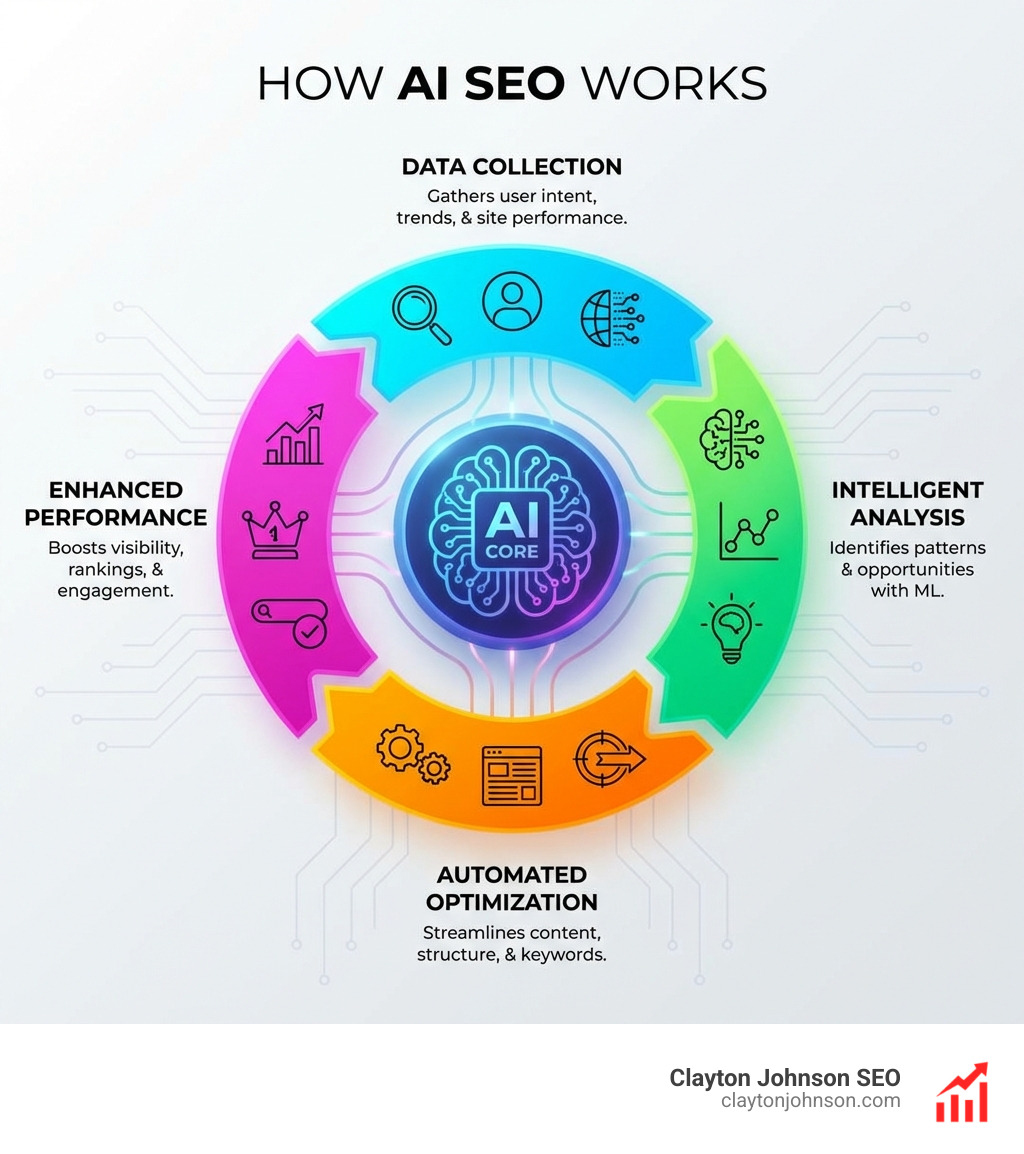
Understanding How AI SEO Works in Modern Search
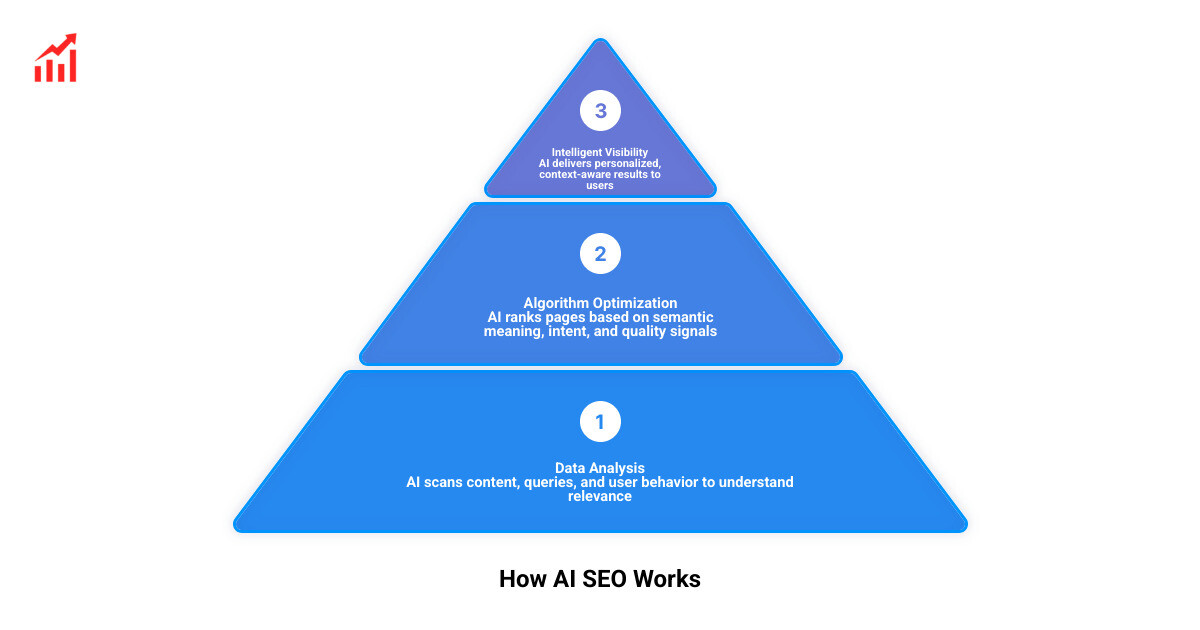
How AI SEO works is simpler than most people make it sound. Here’s the short version:
How AI SEO Works — Quick Answer
| Step | What Happens |
|---|---|
| 1. You publish content | Search engines and AI systems crawl your pages |
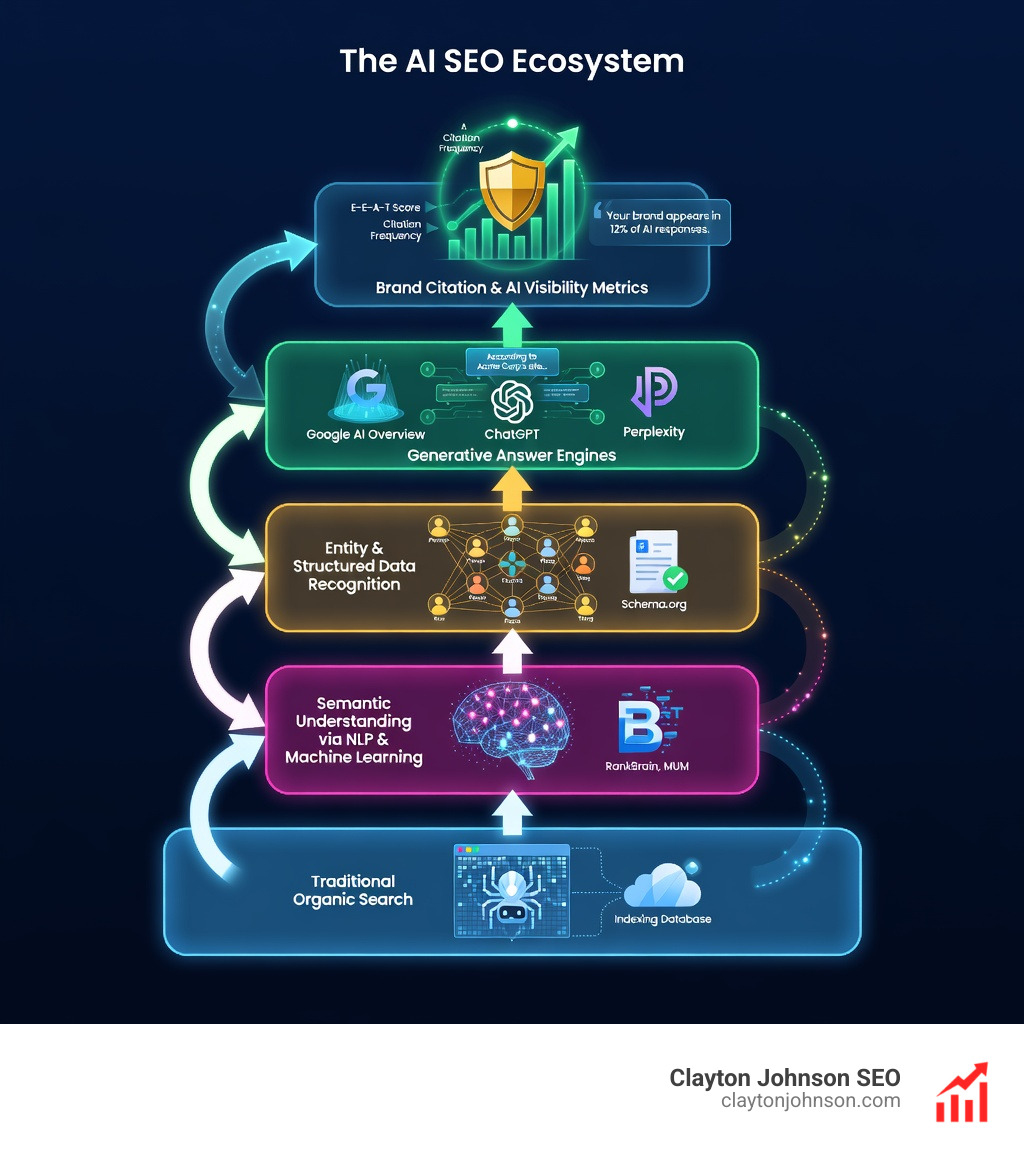
| 2. AI models analyze intent | Algorithms like RankBrain, BERT, and MUM interpret meaning, not just keywords |
| 3. AI generates answers | Systems like Google AI Overviews, ChatGPT, and Perplexity pull from trusted, structured sources |
| 4. Your content gets cited (or doesn’t) | Pages with clear entities, structured data, and topical authority get referenced |
| 5. Users discover your brand | Either through organic rankings or directly inside AI-generated answers |
Search has fundamentally shifted. Google used to return ten blue links. Now it generates answers — synthesizing multiple sources, skipping the click entirely.
And the numbers back this up. Over half of Google searches in the US now end without a single click. AI Overviews are triggering on roughly 1 in 8 searches, and that number is growing fast.
If your content isn’t structured for AI to read, extract, and trust — you’re invisible where decisions are being made.
This isn’t about chasing a new algorithm. It’s about understanding that the rules of discoverability have expanded. Traditional SEO still matters. But AI SEO layers on top of it — optimizing not just for rankings, but for citations, answer inclusion, and brand representation inside AI-generated responses.
I’m Clayton Johnson, an SEO strategist who specializes in building AI-augmented search visibility systems — and understanding how AI SEO works is the foundation of every growth architecture I design. In this guide, I’ll break down exactly how AI search evaluates and surfaces content, and what you need to do to stay visible across both traditional and generative search environments.
Learn more about how ai seo works:
- what is ai seo
- how to audit seo with ai
- AI SEO strategy framework
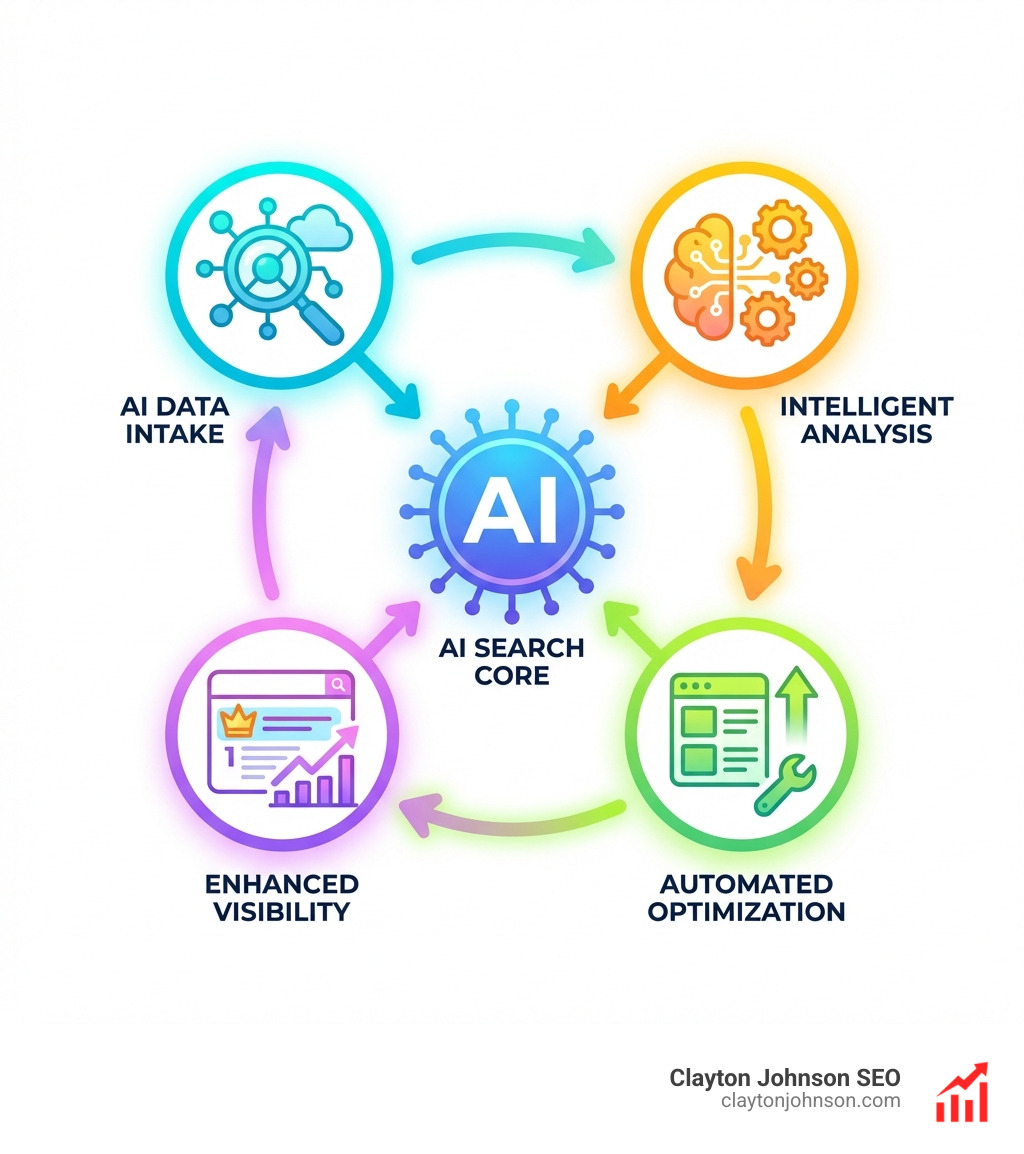
To grasp how ai seo works, we first have to look at the “brain” behind the search bar. We’ve moved far beyond the era of simple keyword matching. In the old days, if you wanted to rank for “best coffee shop in Minneapolis,” you just repeated that phrase until the search engine noticed. Today, Google uses a sophisticated stack of machine learning models to understand the why behind the search.
The Evolution of the Search Brain
Google’s journey into AI didn’t happen overnight. It was built layer by layer:
- RankBrain: Launched years ago, this was Google’s first major foray into machine learning. It helped the engine interpret queries it had never seen before by connecting them to similar known concepts.
- BERT: This was a massive breakthrough in Natural Language Processing (NLP). BERT allows Google to understand the context of words in a sentence by looking at the words that come before and after them. This is why you can now search in a conversational way and get accurate results.
- MUM (Multitask Unified Model): MUM is 1,000 times more powerful than BERT. It can understand information across multiple languages and formats (text, images, and video) simultaneously. If you ask how to prepare for a hike, MUM knows to look for weather data, gear lists, and trail maps all at once.
When we talk about how Google Search uses AI, we are talking about a system that vets sources with a level of sophistication comparable to a human expert. In fact, some researchers suggest these systems operate with an “IQ” that rivals top-tier human performance in specific data-processing tasks. For a deeper dive into these technologies, check out our more info about AI search services.
The Core Pillars of AI-Driven Visibility
When AI generates the answer, your goal shifts from “ranking #1” to “becoming the source.” We focus on five core pillars to ensure our clients aren’t just seen, but cited.
| Feature | Traditional SEO | AI SEO |
|---|---|---|
| Primary Goal | Rank in the top 10 blue links | Be the cited source in an AI answer |
| Focus | Keywords and Backlinks | Entities, Structure, and Authority |
| Success Metric | Click-Through Rate (CTR) | Mention Share & Citation Frequency |
| Content Style | Search Engine Friendly | Extractable & Authoritative |
Entity Clarity and Semantic Structure
AI models don’t just see words; they see “entities.” An entity is a well-defined object or concept—like a person, a place, or a brand. If your website talks about “Apple,” the AI needs to know instantly if you mean the fruit or the tech giant. We achieve this through semantic structure—organizing content so the relationships between topics are undeniable.
Information Gain and E-E-A-T
With the explosion of AI-generated content, search engines are starving for “Information Gain.” This means providing something new—a unique insight, proprietary data, or a first-hand case study. Google’s E-E-A-T (Experience, Expertise, Authoritativeness, and Trustworthiness) signals are more critical than ever. AI systems are programmed to prioritize content that shows real human insight.
Learn more about how we build these systems in our more info about SEO content marketing.
How AI SEO works with Generative Engine Optimization (GEO)
Generative Engine Optimization, or GEO, is the practice of making your content “consumable” for Large Language Models (LLMs). According to Generative Engine Optimization (GEO) research, pages that directly address specific queries see 31% higher citation rates in AI-generated results.
To win at GEO, your content must be extractable. This means using clear headings, bulleted lists, and concise summary blocks that an AI can easily “clip” and use in an AI Overview. Branded keywords that receive AI Overviews actually see an 18.68% increase in CTR on average, proving that being the cited source is a massive competitive advantage.
Answer Engine Optimization (AEO) and LLM Visibility
Answer Engine Optimization (AEO) focuses on the conversational side of search. Think of Alexa, Siri, or the ChatGPT voice mode. Users are asking full questions, not typing fragments.
The rise of zero-click search is a major factor here. A study by SparkToro found that 58.5% of Google searches ended without a click. Users found their answer right on the SERP. To thrive in this environment, you must optimize for “The Educated Click”—where a user reads an AI summary, sees your brand cited as the expert, and clicks through because they are ready to buy or dive deeper. You can find more research on zero-click search trends to see how this is reshaping the industry.
Technical Strategies for AI Search Readiness
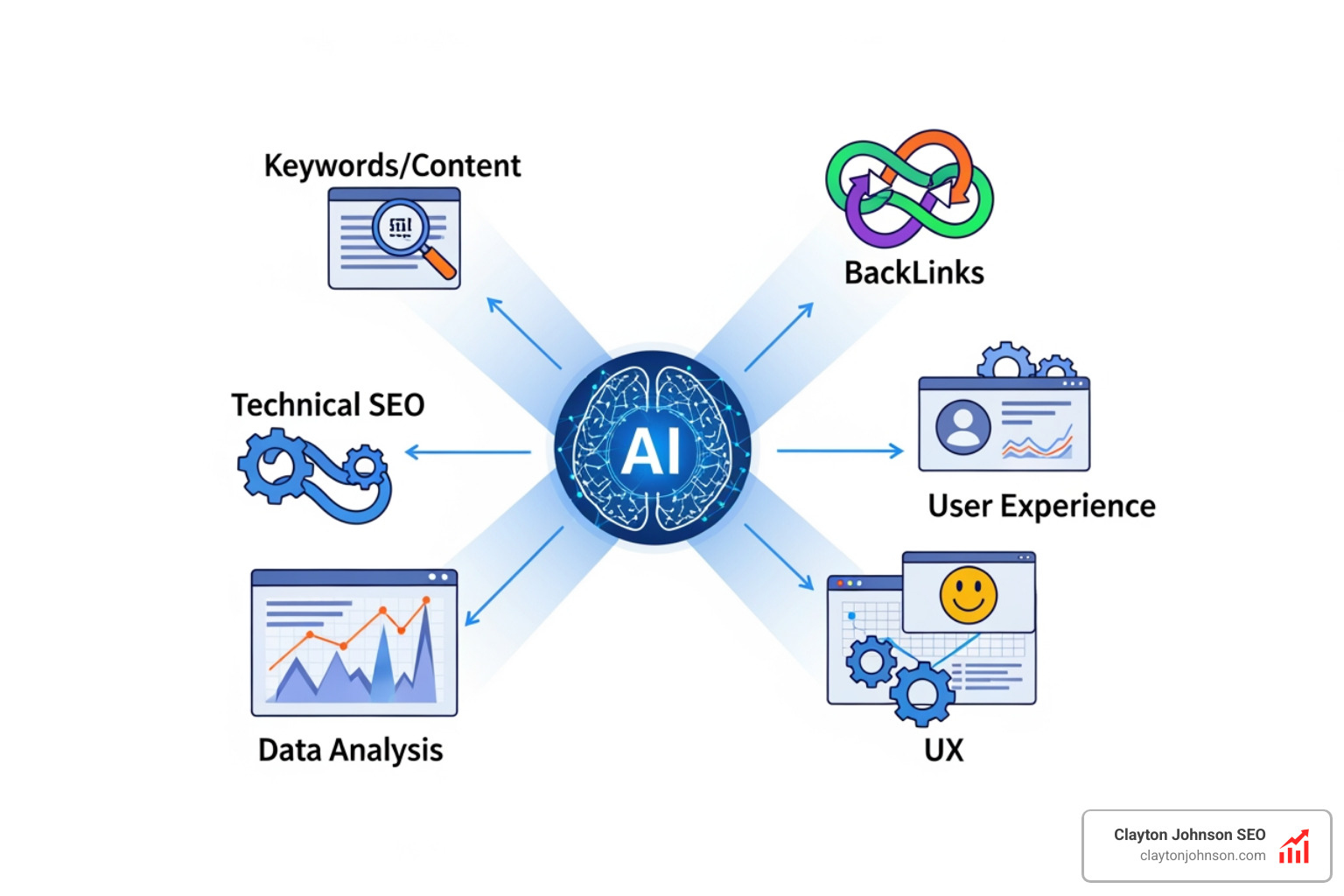
Technical SEO used to be about making sure Google could “crawl” your site. Now, it’s about making sure AI can “understand” your site.
Schema Markup and Entity Recognition
Schema markup is the “cliff notes” for AI. It is a specific vocabulary of tags you add to your HTML to tell search engines exactly what your data means. We don’t just use basic schema; we implement detailed properties for Organizations, Authors, and Products. Google recommends detailed properties to help their systems identify entities with 100% certainty.
Technical Site Health
If your site is slow or has broken JavaScript, AI crawlers might struggle to index your most important insights. We prioritize:
- Core Web Vitals: Ensuring fast load times (LCP < 2.5s).
- Server-Side Rendering: Making sure the content is visible in the HTML source code, not buried in complex scripts.
- Crawl Depth: Ensuring your best expert content isn’t buried ten clicks away from the homepage.
For businesses in Minneapolis and throughout Minnesota, we provide specialized more info about SEO consulting to bridge the gap between technical code and AI visibility.
Optimizing for how AI SEO works across conversational interfaces
Conversational search requires a shift in keyword strategy. We move away from “short-tail” keywords (e.g., “SEO agency”) and toward “long-tail” conversational queries (e.g., “how does ai seo works for a small business in Minnesota?”).
Practical Tips for Conversational Optimization:
- FAQ Sections: Use real questions sourced from your customers.
- Natural Language: Write the way people talk. Content written in natural language improves comprehension and usability.
- Topic Clusters: Instead of single pages, build “hubs” that cover a subject from every possible angle. Shifting to topic clusters has been shown to rank for 68% more long-tail keywords.
Measuring Success Beyond Traditional Rankings
If 60% of people aren’t clicking through to your site because they got the answer from an AI summary, does that mean your SEO is failing? Absolutely not. It means we need better metrics.
Traditional rankings are just one piece of the puzzle. In the AI era, we track:
- AI Visibility: How often does your brand appear in Google AI Overviews or ChatGPT responses for your target topics?
- Mention Share: What percentage of “answer real estate” do you own compared to your competitors?
- Citation Frequency: How many different AI models are referencing your site as a source of truth?
- Brand Sentiment: Is the AI describing your brand as a “leader,” “affordable option,” or “expert”?
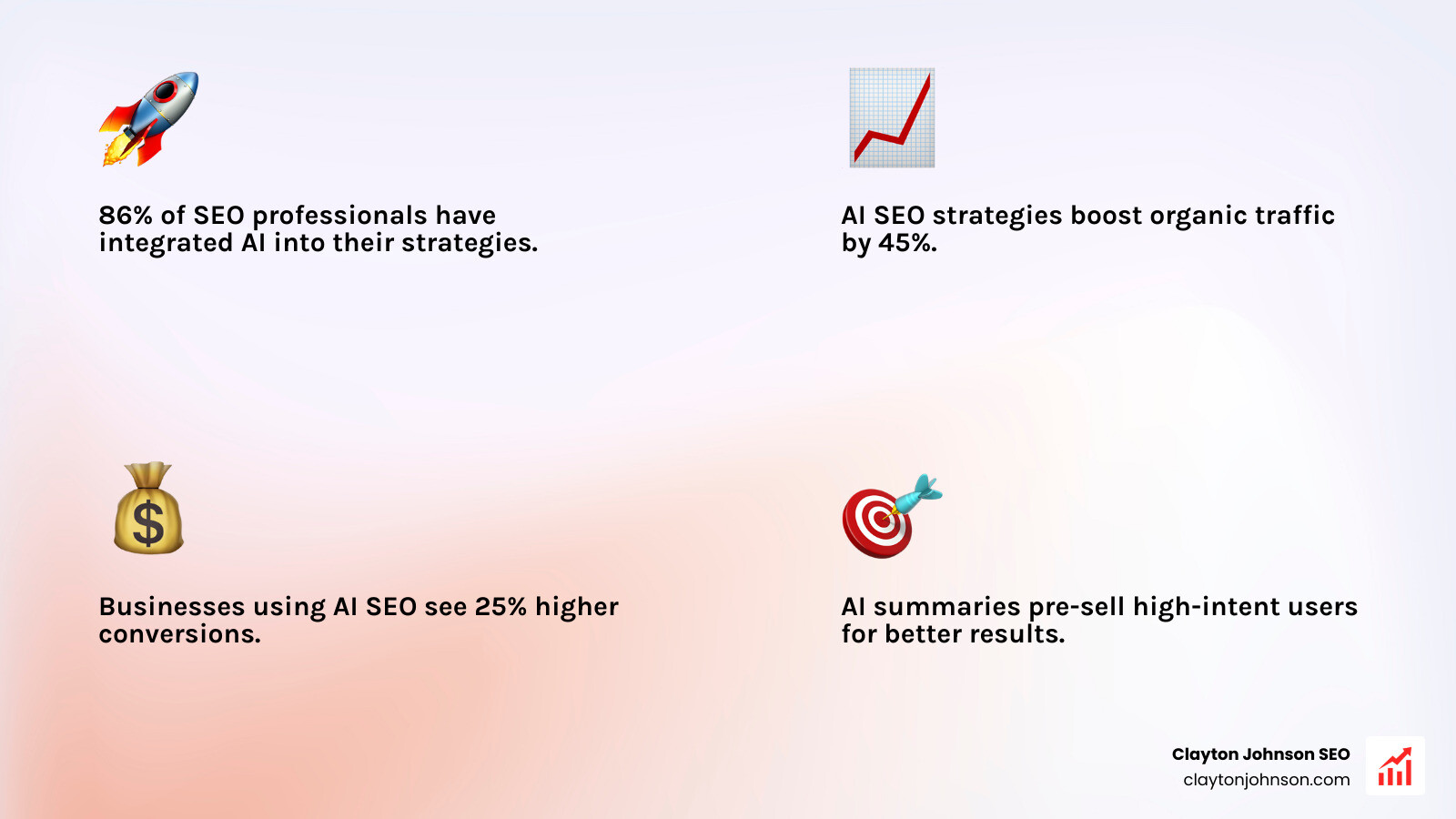
According to statistics on AI SEO integration, 86% of SEO professionals have already integrated AI into their strategies. Those who do see a 45% increase in organic traffic and a 25% increase in conversions because they are capturing high-intent users who have been “pre-sold” by an AI summary.
Frequently Asked Questions about AI SEO
What is the difference between SEO and AI SEO?
Traditional SEO focuses on ranking a specific webpage in a list of results. AI SEO is a broader discipline. It focuses on how AI models (like LLMs) interpret, extract, and represent your brand’s information across various platforms, including chatbots and generative summaries.
Do keywords still matter in an AI-driven search landscape?
Yes, but their role has changed. Keywords are now “intent signals.” Instead of stuffing a page with one specific phrase, we use keywords to help AI understand the semantic context of the page. The goal is topical depth, not keyword density.
How can I make my content more extractable for AI Overviews?
Use “Answer Blocks.” At the top of your articles, provide a 2-3 sentence direct answer to the primary question. Use H2 and H3 tags that are phrased as questions. Include data, statistics, and clear definitions that an AI can easily attribute to your brand.
Conclusion
The “search-everywhere” era is here. Whether your customers are “Googling” a service in Minneapolis or asking an AI agent to “find the best growth framework for a SaaS company,” your visibility depends on your digital architecture.
At Clayton Johnson SEO, we don’t just “do SEO.” We build structured growth infrastructure. Through our platform, Demandflow.ai, we help founders and marketing leaders move from random tactics to a compounding growth system.
By focusing on clarity, structure, and authority, we ensure your brand isn’t just a link on a page—it’s the authoritative voice that AI systems trust and recommend. The future of search belongs to those who provide the most value in the most readable format.
Ready to build your AI-augmented search strategy? Learn more about more info about AI SEO strategy and how we can help you dominate the new search landscape.