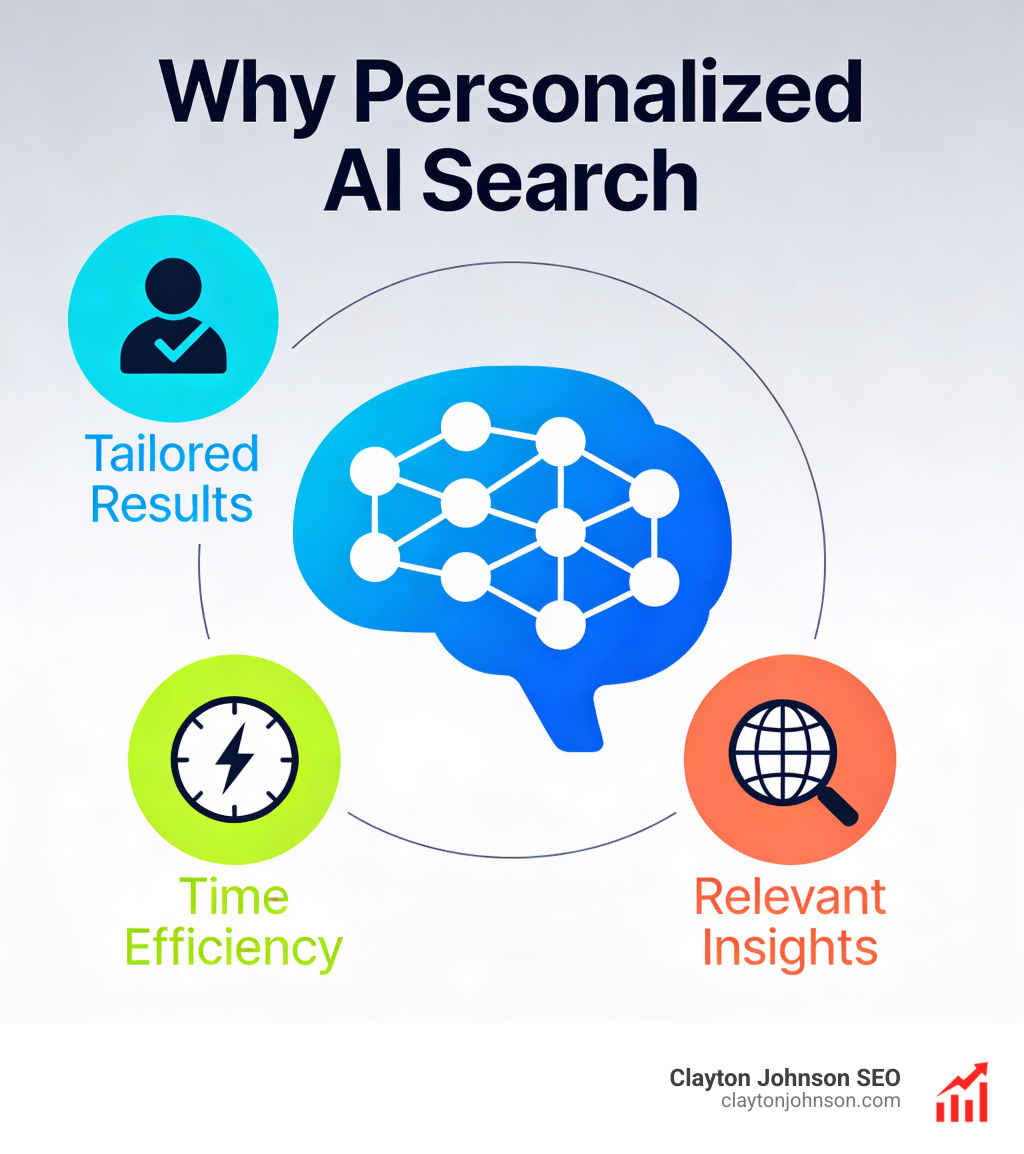
Why AI Search is the New Brain for Your Browser

AI Search Is Rewriting How the Internet Answers You
AI Search is the shift from finding links to getting answers — and it changes everything about how information reaches people online.
Here’s a quick breakdown of what that means:
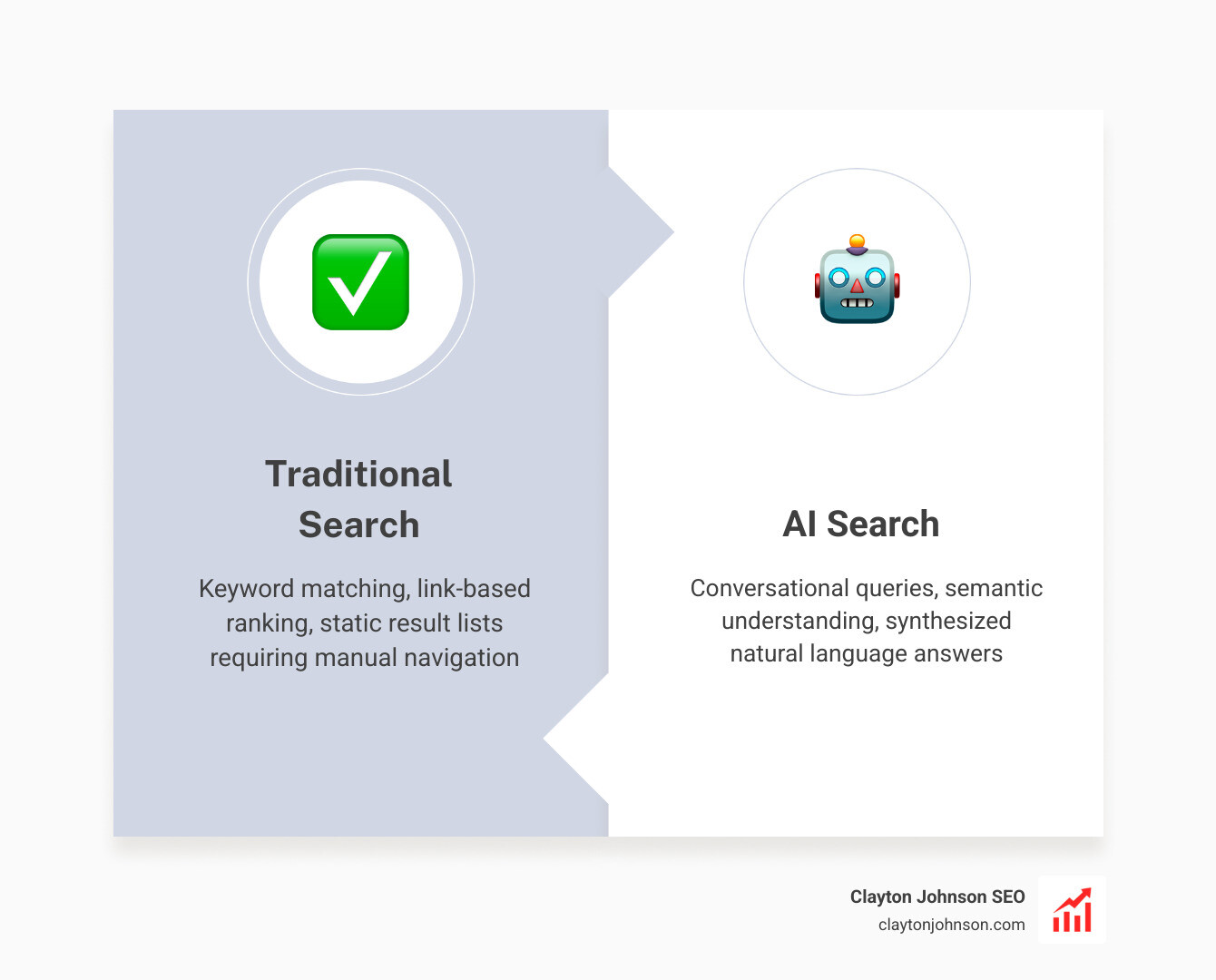
| Traditional Search | AI Search |
|---|---|
| Returns a list of links | Returns a synthesized, direct answer |
| Matches keywords | Understands intent and context |
| You do the reading | AI reasons across sources for you |
| Static results page | Conversational, follow-up capable |
| One query, one result set | Multi-step reasoning across sources |
Instead of scanning ten blue links, users ask a question in plain language and get a reasoned answer — with citations — in seconds. Google’s AI Mode, Azure AI Search, and tools like You.com’s Web Search API (which processes over one billion queries monthly) are all part of this wave.
This isn’t a minor upgrade. It’s a structural change in how information markets work.
I’m Clayton Johnson — an SEO strategist who has spent years mapping how search behavior and AI systems intersect to drive compounding growth. My work on AI Search infrastructure, entity authority, and answer-engine optimization sits at the core of what I build at Demandflow. If you’re a founder or marketing leader trying to stay visible in this new landscape, you’re in the right place.
What is AI Search and How Does it Differ from Traditional Engines?
To understand AI Search, we have to look at what we’re leaving behind. Traditional search engines are essentially massive filing cabinets. When you type in a query, the engine looks for exact or near-exact keyword matches. It’s a “link aggregator.” You ask a question, it gives you a list of websites that might have the answer, and then you do the heavy lifting of clicking, reading, and synthesizing the information.
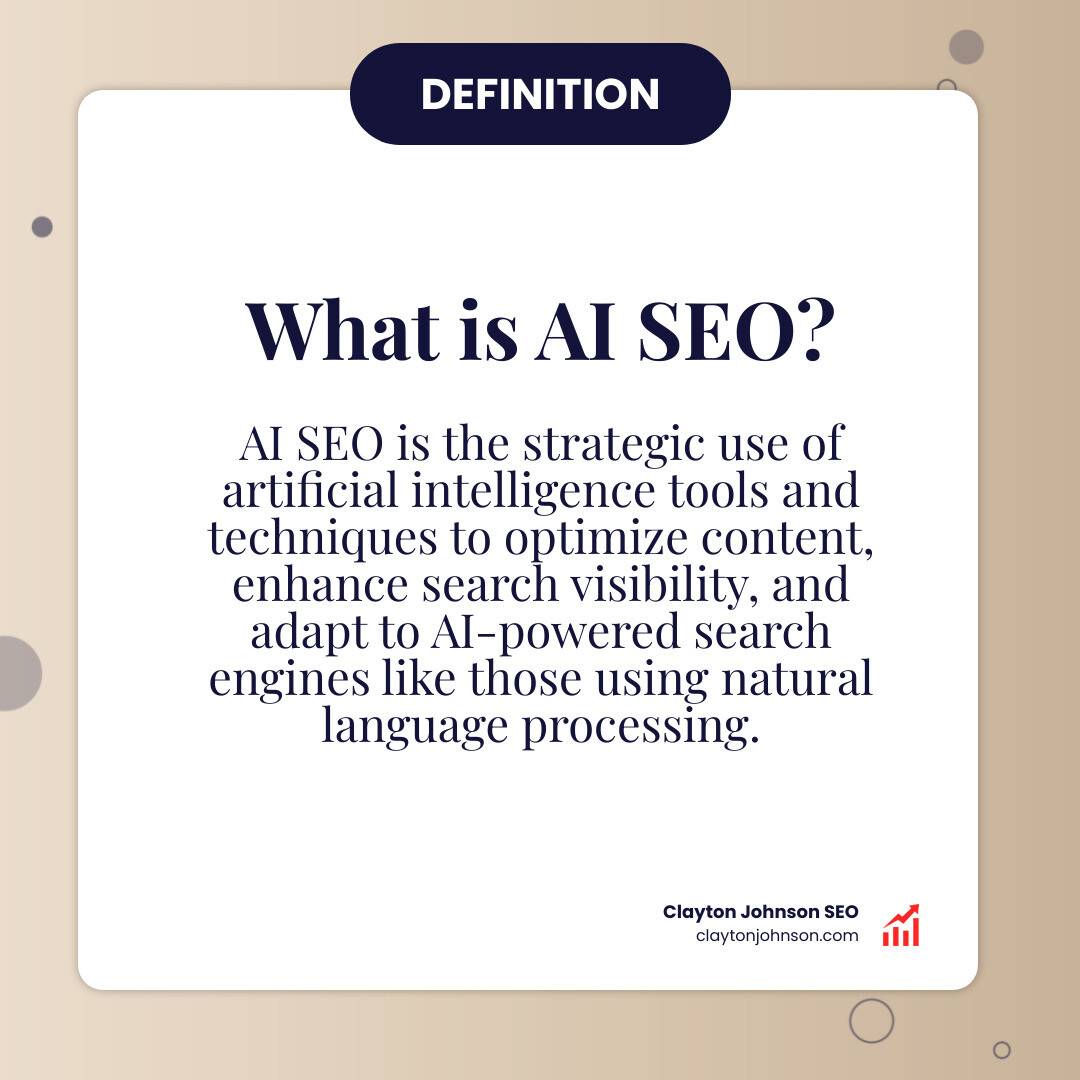
AI Search flips this script. It functions as an “answer engine.” Instead of just matching words, it uses natural language processing (NLP) and machine learning to understand the intent behind your question.

The Shift to Semantic Understanding
Traditional engines struggle with nuance. If you search for “apple,” do you want the fruit or the tech company? AI Search uses semantic understanding to look at your previous questions and the context of your query to figure it out. It employs multi-step reasoning, meaning it can break a complex question into smaller parts, search for each part, and then stitch the findings together into a single, coherent response.
| Feature | Traditional Keyword Matching | AI-Powered Semantic Retrieval |
|---|---|---|
| Core Logic | Exact string matching | Meaning and intent (vectors) |
| User Effort | High (must browse multiple links) | Low (receives direct answer) |
| Context | Limited to current query | Deep (considers history and nuance) |
| Output | Ranked list of URLs | Synthesized paragraph with citations |
| Reasoning | None | Can resolve multi-part logic |
This transition is why we often refer to it as artificial intelligence taking over the “brain” of the browser. It isn’t just finding data; it’s interpreting it for us.
The Mechanics of Modern Retrieval: RAG and Synthesis
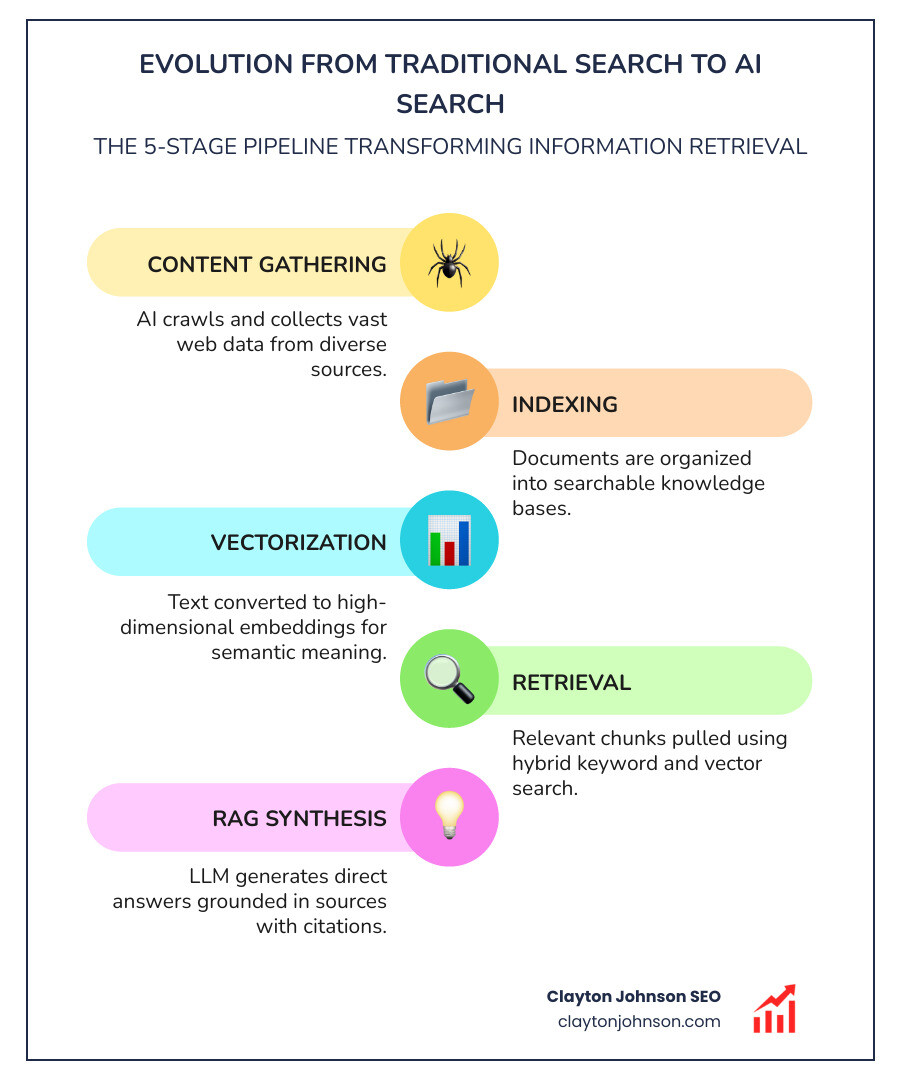
How does an AI actually “know” things without just guessing? The magic happens through a process called Retrieval-Augmented Generation, or RAG.
If you’ve ever used a standard Large Language Model (LLM) and noticed it confidently told you something that was factually wrong, you’ve witnessed a “hallucination.” LLMs are trained on a snapshot of data from the past. They don’t inherently “know” what happened five minutes ago unless they are connected to a search index.
The Role of RAG in AI Search
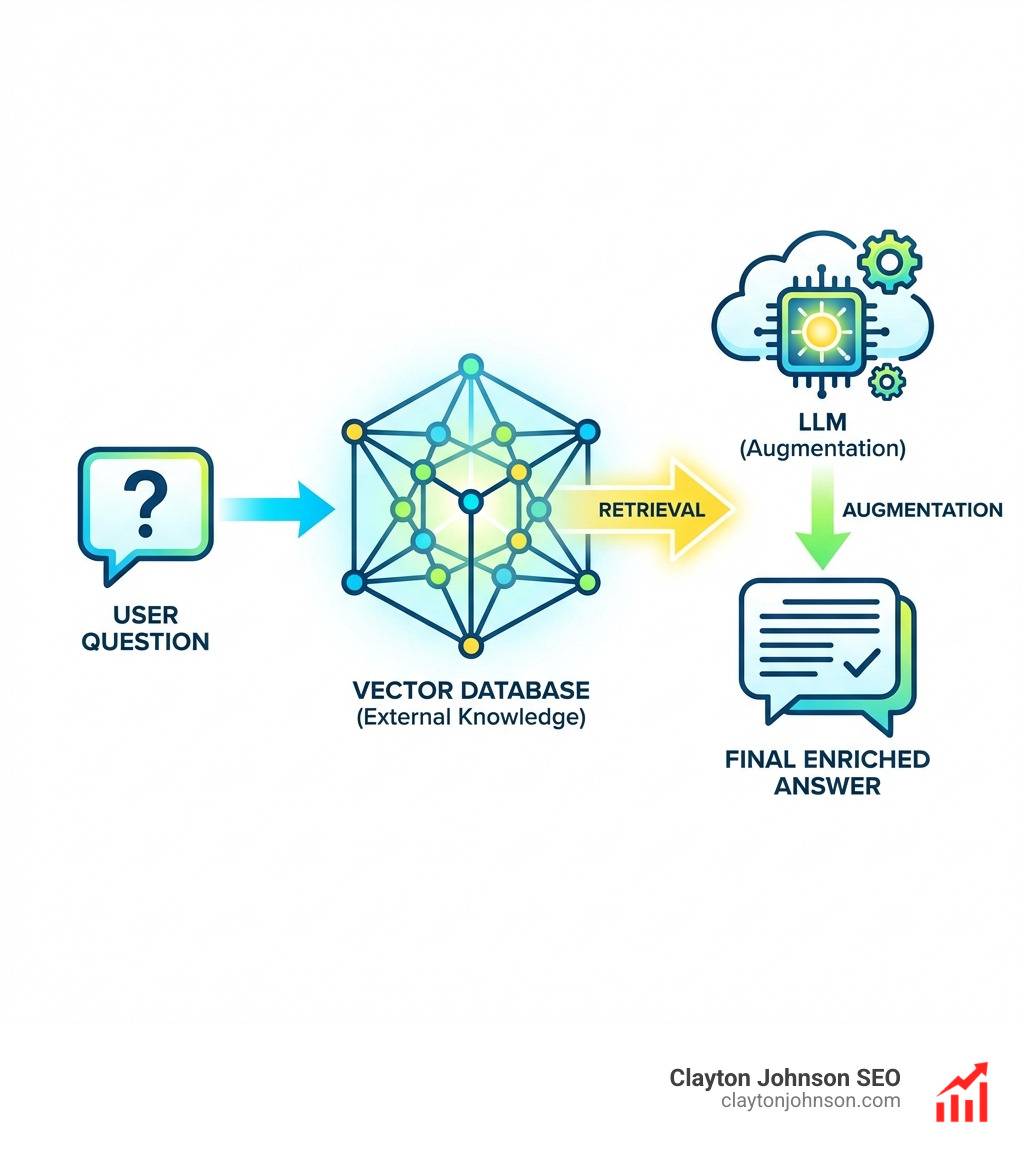
RAG is the bridge between the LLM’s reasoning ability and the real world’s live data. Here is how the pipeline works:
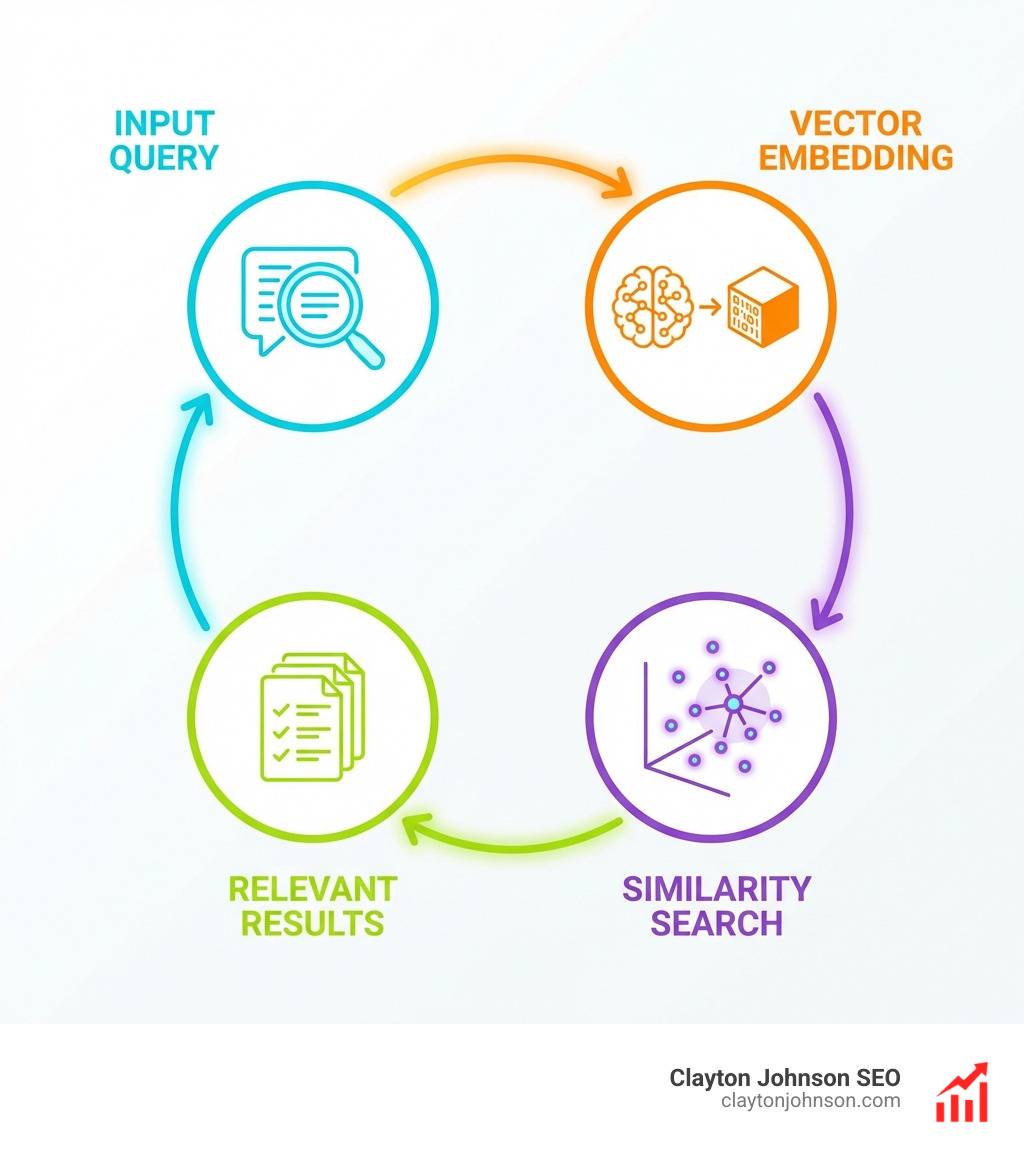
- Vectorization: Your data (documents, web pages, etc.) is broken into “chunks” and converted into high-dimensional embeddings (vectors). Think of these as GPS coordinates for meaning.
- Retrieval: When you ask a question, the system finds the chunks with coordinates closest to your query.
- Synthesis: The system feeds those specific, factual chunks into the LLM.
- Grounding: The LLM uses that retrieved info to write an answer. Because it is “grounded” in those documents, it provides verifiable citations rather than making things up.
This ensures that the “brain” has access to real-time web data and external databases, significantly boosting factuality and reducing the risk of hallucinations.
Scaling Enterprise Intelligence with Azure AI Search
For businesses, AI Search isn’t just about a better Google; it’s about unlocking the massive amounts of proprietary data sitting in their own systems. This is where Azure AI Search comes in. It is a fully managed cloud service designed to connect your enterprise data to AI.

Azure provides the “infrastructure” for these intelligent applications. It doesn’t just do a simple search; it uses Hybrid Search. This combines the best of both worlds: traditional full-text keyword matching (BM25) and modern vector search. These results are then merged using a technique called Reciprocal Rank Fusion (RRF) to ensure the most relevant answer is at the top.
Security and Compliance at Scale
When dealing with enterprise data, security is the biggest hurdle. Microsoft employs 34,000 full-time equivalent engineers dedicated to security initiatives. Azure AI Search offers:
- Over 100 compliance certifications (including 50+ specific to global regions).
- Role-Based Access Control (RBAC) to ensure employees only see what they’re allowed to.
- Encryption at rest and in transit.
If you want to dive deeper into how these systems are built, check out the Introduction to Azure AI Search for a technical breakdown.
Classic Search vs. Agentic Retrieval
There is a major distinction evolving within the platform:
- Classic Search: This is “index-first.” It’s predictable and low-latency, targeting a single index for a quick response.
- Agentic Retrieval: This is the future. It uses a multi-query pipeline where an AI “agent” plans the search. It might decompose your one question into four sub-queries, run them in parallel across different knowledge sources, and then synthesize the answer. This advancing the search frontier with AI agents allows for much more complex workflows than a simple search box ever could.
Real-World Impact: From Healthcare to Global Finance
The impact of AI Search isn’t theoretical; it’s already happening in industries that require high precision and vast data retrieval.

Healthcare Accuracy
At Beth Israel Deaconess Medical Center, they created a copilot agent that achieved near 100% document access accuracy. In a field where finding the right patient record or research paper is a matter of life and death, this level of precision is a game-changer.
Finance and Sales
In the financial sector, firms like UBS use these technologies to provide personalized solutions for advisors, streamlining complex workflows that used to take hours. Meanwhile, sales teams are using AI Search to automate the creation of proposals. Instead of digging through old PDFs for hours to find the right case study, the AI retrieves the relevant “knowledge” and drafts the proposal in minutes.
These are not just “tactics”; they are part of broader growth systems that we implement to give businesses a structural advantage.
Building the Future: Choosing an AI Search API
If you’re a developer or a founder, you don’t need to build these LLMs from scratch. You need a good API. But what makes an API “good”?
Based on our research, a top-tier AI Search API should offer:
- 99.9% Uptime: If your search goes down, your app is useless.
- Model Flexibility: You should be able to switch between GPT-4o, Claude, or Gemini depending on your cost and speed needs.
- Model-Agnostic Architecture: Don’t get locked into one provider.
- Low Latency: Users expect answers in milliseconds, not minutes.
API Evaluation Checklist
- Does it provide live citations?
- Can it handle multimodal queries (text and images)?
- Does it support hybrid search (vector + keyword)?
- Is the pricing transparent and scalable?
Getting Started with AI Search Solutions
Most businesses start by exploring the Azure Portal or Microsoft Foundry. These platforms offer “Data Import Wizards” that handle the “chunking” and “vectorization” for you. You can choose between:
- Pull Ingestion: Using indexers to automatically grab data from Azure Blob Storage or SQL databases.
- Push Ingestion: Using REST APIs or SDKs to manually push JSON documents into the search index.
Frequently Asked Questions about AI Search
How does AI Search prevent hallucinations?
It uses grounding through RAG architecture. Instead of letting the AI “guess” based on its training, the system forces it to look at specific retrieved documents first. It then provides source attribution and live citations, so you can click the link and verify the information yourself.
What is the difference between vector search and hybrid search?
Vector search uses semantic similarity (mathematical “closeness” in high-dimensional space using algorithms like HNSW). Hybrid search combines this with traditional keyword matching (BM25). By using both and merging them with Reciprocal Rank Fusion (RRF), you get the precision of keywords with the “understanding” of vectors.
Is AI Search secure for proprietary enterprise data?
Yes, provided you use enterprise-grade services. Features like network isolation, SOC 2 compliance, Private Endpoints, and zero data retention policies ensure that your company’s “secret sauce” isn’t used to train public AI models.
Conclusion
The era of the “link list” is ending. AI Search is transforming the browser from a simple window into a powerful, reasoning brain that understands your intent and synthesizes the world’s information for you.
At Demandflow, we believe that success in this new era requires more than just chasing the latest AI trend. It requires a structured growth architecture. Whether you are building a consumer app or an enterprise knowledge base, the goal is the same: leverage these new “answer engines” to create clarity and compounding growth.
If you’re ready to stop just “searching” and start “knowing,” it’s time to embrace the new brain of the browser. For more insights on how to position your business for this shift, explore our deep dives on AI Search and the future of digital discovery.