🧭 OVERVIEW
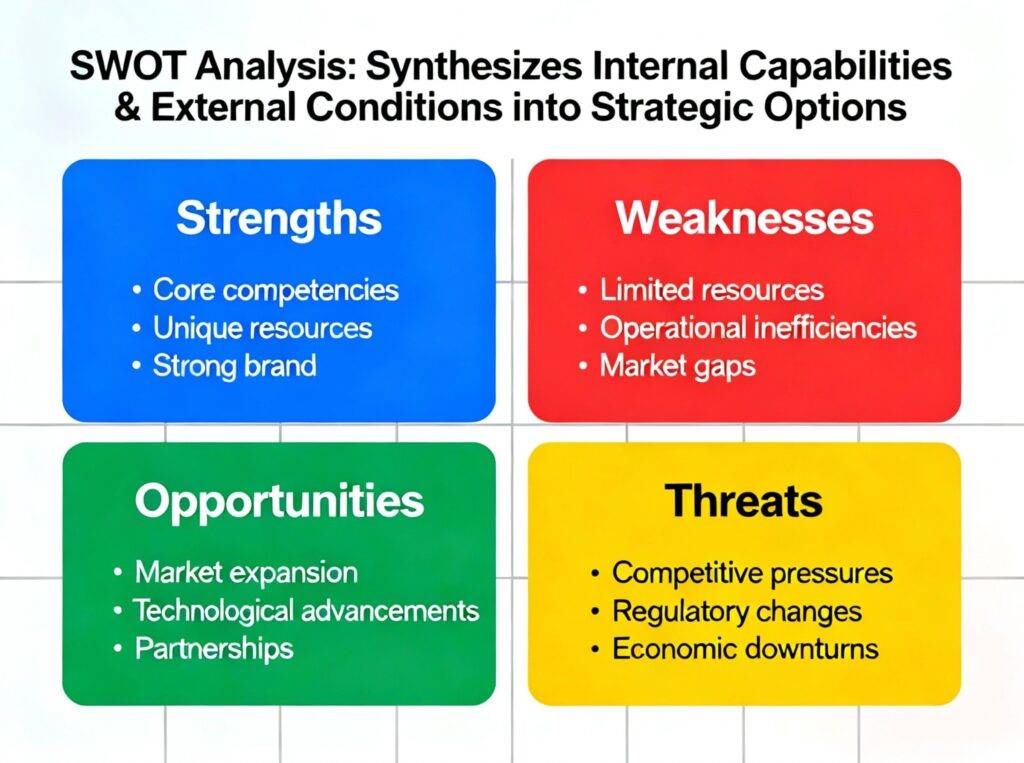
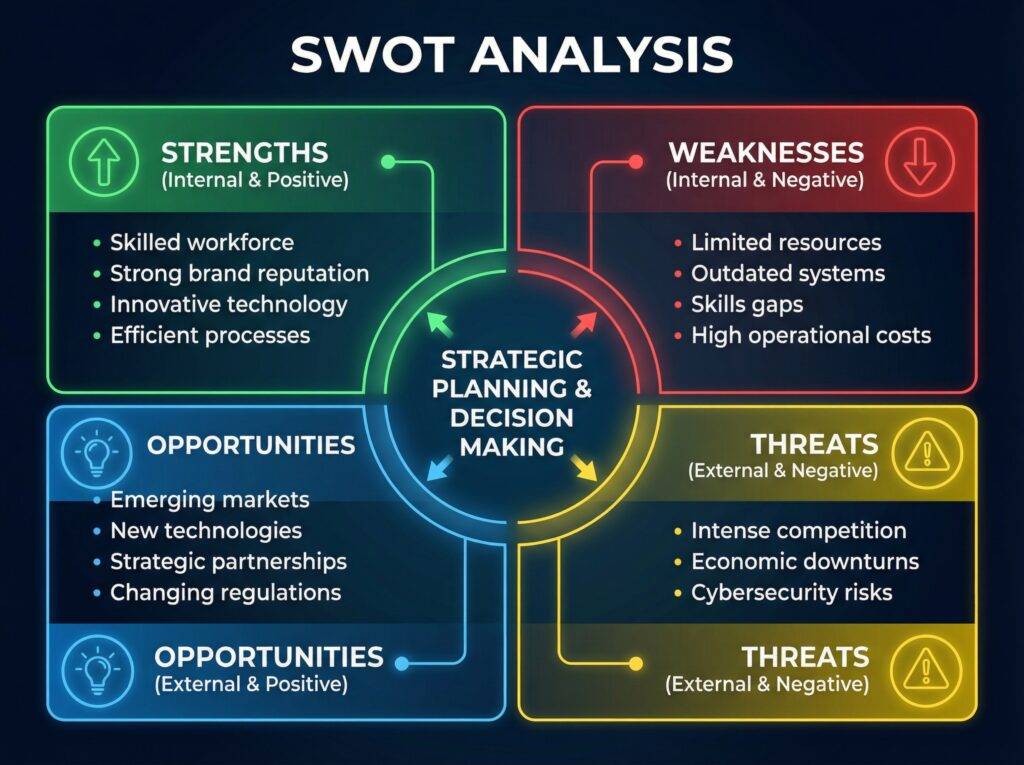
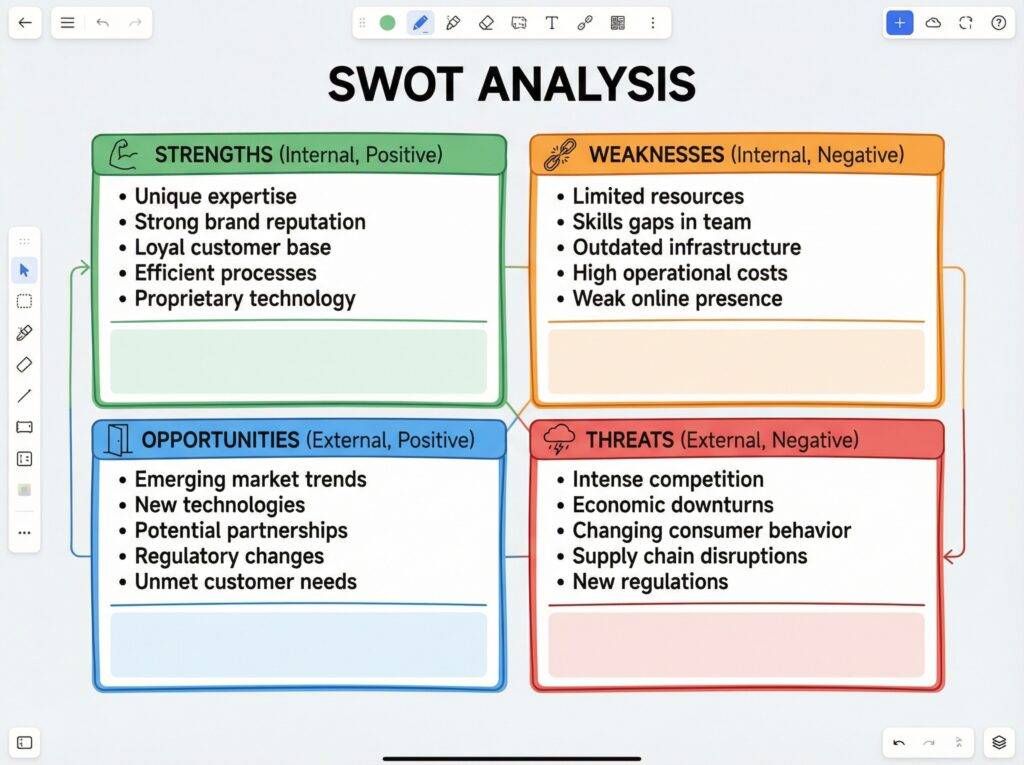
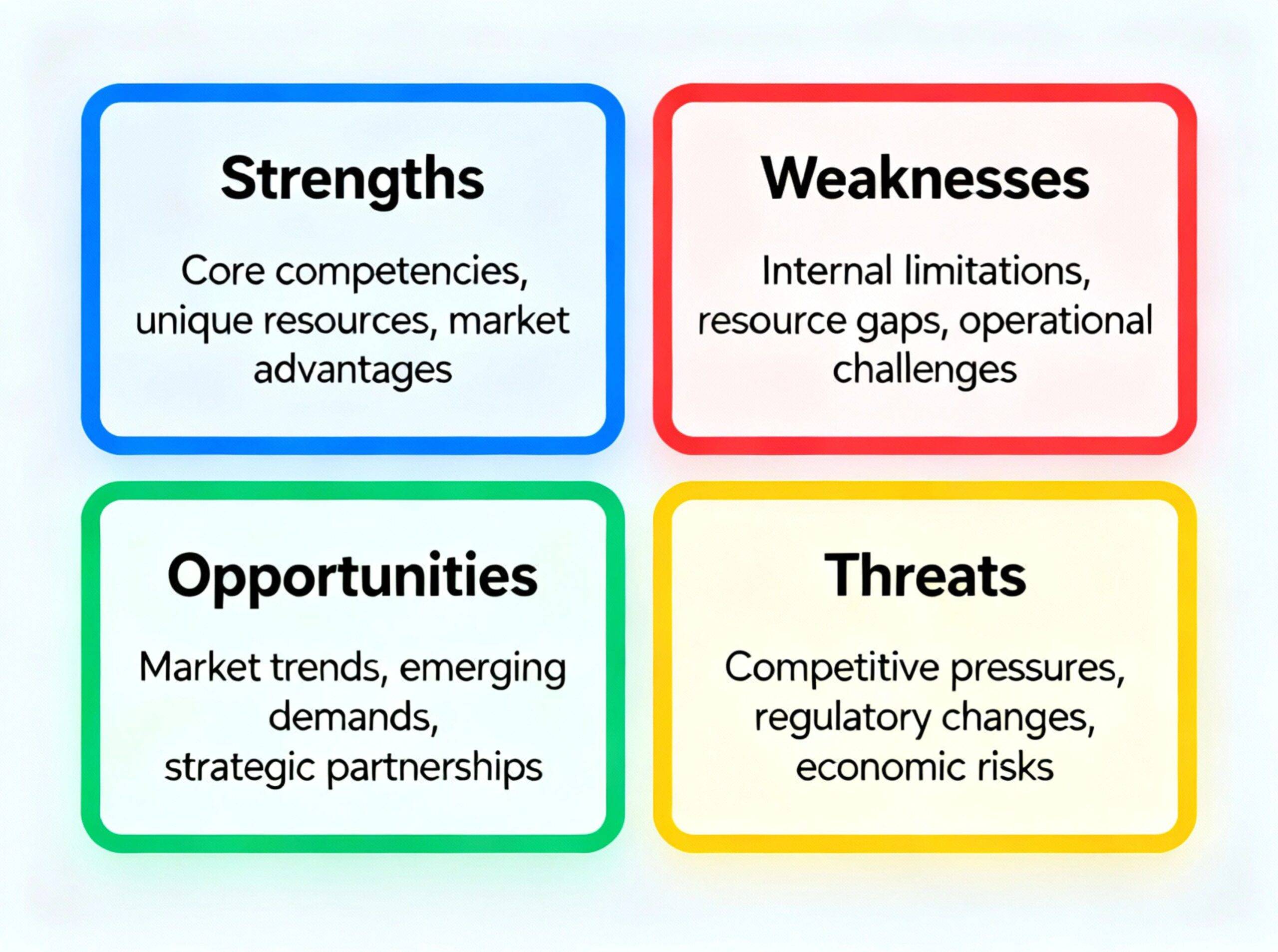
SWOT Analysis is a strategic synthesis framework used to translate internal realities and external conditions into clear strategic choices. Unlike scanning frameworks, SWOT’s value comes from integration, not discovery.
It evaluates:
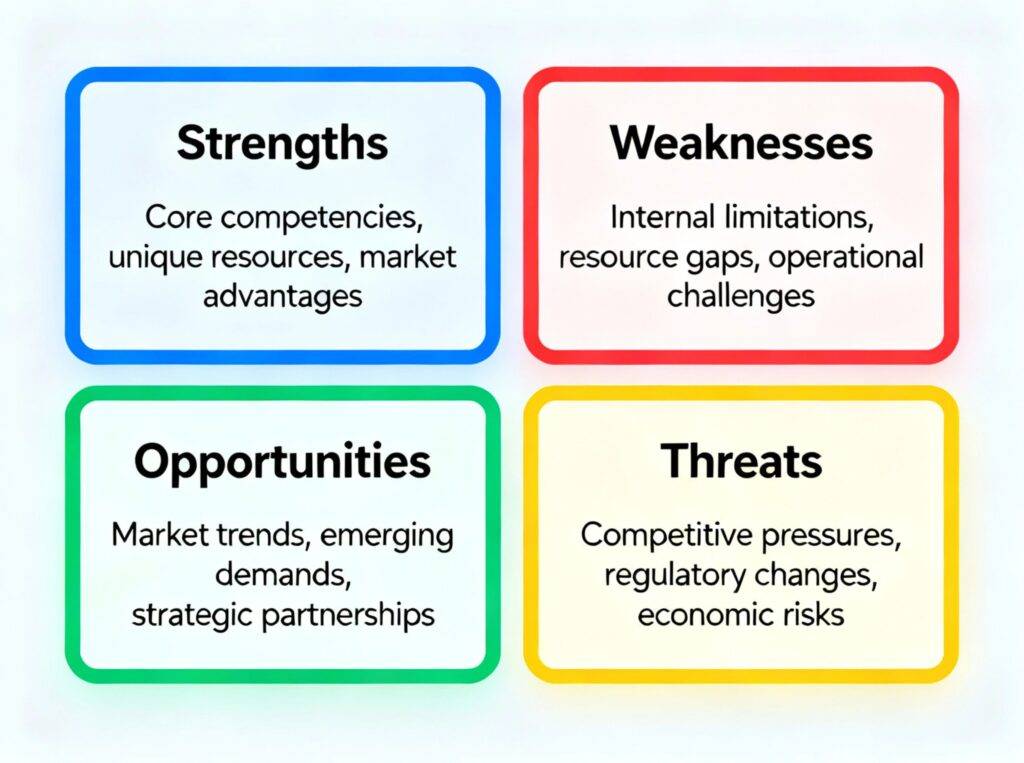
- Strengths (internal advantages)
- Weaknesses (internal limitations)
- Opportunities (external tailwinds)
- Threats (external headwinds)
WHAT IS A SWOT ANALYSIS?
A structured method for organizing and interpreting strategic inputs—often from PESTLE, Five Forces, market research, and internal reviews—into a format that supports decision-making and alignment.
Its purpose is to:
- clarify strategic position
- surface tradeoffs
- prioritize focus areas
- bridge analysis → action
🧱 THE SWOT FRAMEWORK
💪 1. STRENGTHS
Definition: Internal capabilities that create advantage.
Examples
- Brand equity
- Proprietary technology
- Cost structure advantages
- Distribution reach
Key Question
What do we do better than alternatives?
🧩 2. WEAKNESSES
Definition: Internal constraints that reduce effectiveness.
Examples
- Capability gaps
- Process inefficiencies
- Talent shortages
- Technical debt
Key Question
Where are we structurally disadvantaged?
🌱 3. OPPORTUNITIES
Definition: External conditions that can be exploited for growth or advantage.
Examples
- Market growth
- Regulatory change
- Competitor missteps
- Emerging customer needs
Key Question
What external shifts could we benefit from?
⚠️ 4. THREATS
Definition: External forces that could harm performance or position.
Examples
- New entrants
- Substitutes
- Regulation
- Economic downturns
Key Question
What could realistically hurt us?
📋 HOW TO RUN A SWOT ANALYSIS
| Step | Action |
|---|---|
| 1 | Gather inputs (PESTLE, Five Forces, internal data) |
| 2 | Populate each quadrant with evidence-backed items |
| 3 | Remove duplicates and low-impact noise |
| 4 | Rank items by impact and controllability |
| 5 | Translate into strategic options |
🔗 SWOT → STRATEGY SYNTHESIS
| Combination | Strategic Meaning |
|---|---|
| S + O | Where to invest and double down |
| W + O | What to fix or partner around |
| S + T | How to defend or differentiate |
| W + T | What to exit, de-risk, or avoid |
⚠️ COMMON PITFALLS
- Treating SWOT as a brainstorming exercise
- Mixing internal and external factors
- Creating long lists with no prioritization
- Stopping at the matrix instead of decisions
🧠 FINAL INSIGHTS
- SWOT is not a discovery tool — it’s a decision tool
- The matrix is useless without prioritization
- Value comes from tradeoffs, not completeness
- Best used as a bridge between analysis and execution
✅ YOU ARE NOW READY TO:
- Synthesize strategic inputs
- Clarify your competitive position
- Generate focused strategic options
- Feed outputs into roadmaps, OKRs, and priorities