Finding the Right SEO Specialist in Minneapolis for Your Business
Finding a great SEO specialist in Minneapolis can feel overwhelming — there are hundreds of marketing agencies and freelancers competing for your attention, all promising page-one rankings and explosive growth.
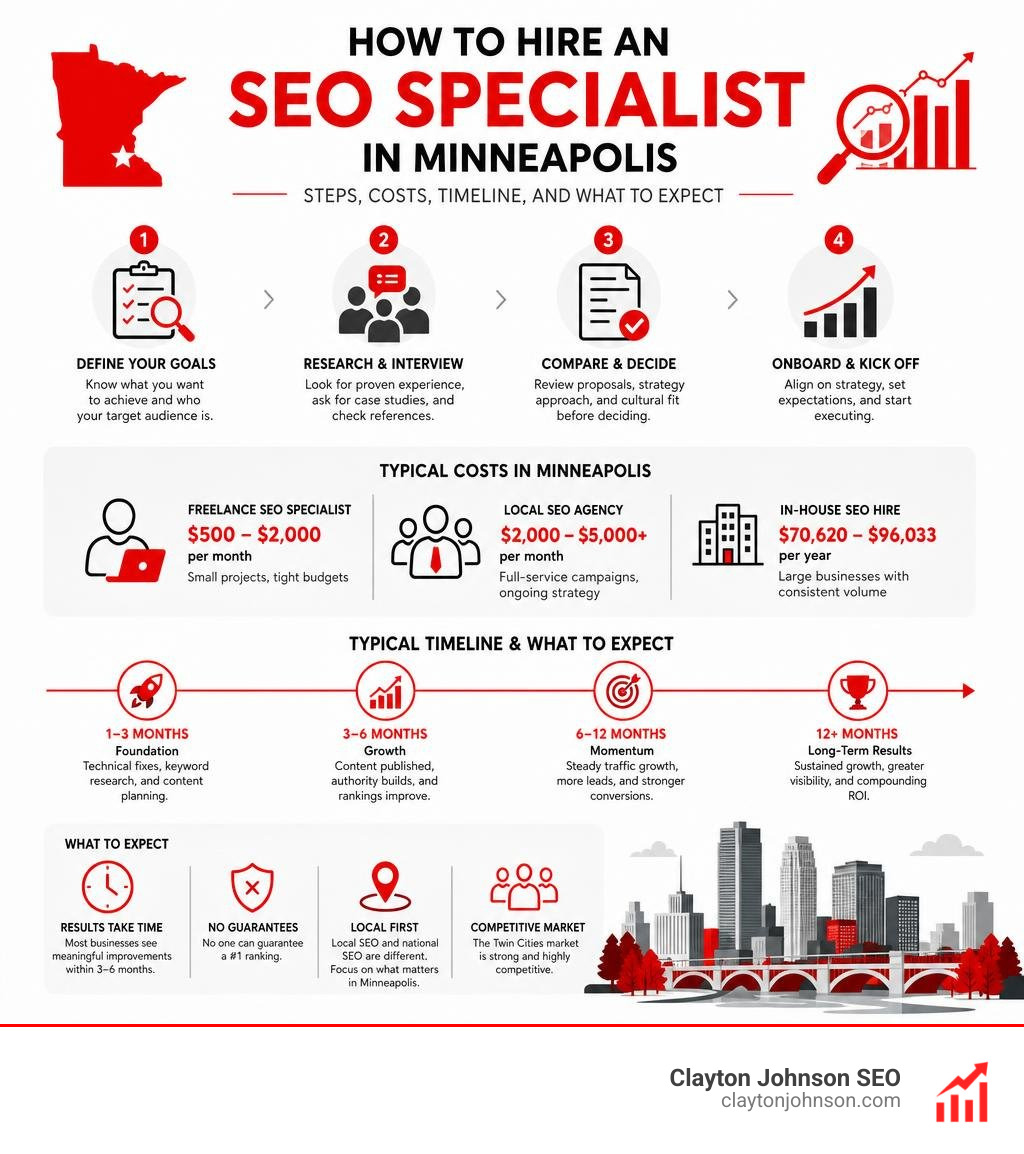
Here are the top options to consider when hiring Minneapolis SEO help:
| Type | Best For | Typical Monthly Cost |
|---|---|---|
| Freelance SEO specialist | Small projects, tight budgets | $500 – $2,000 |
| Local SEO agency | Full-service campaigns, ongoing strategy | $2,000 – $5,000+ |
| In-house SEO hire | Large businesses with consistent volume | $70,620 – $96,033/yr |
A few things worth knowing upfront:
- Results take time. Most businesses see meaningful improvements within 3 to 6 months.
- No one can guarantee a #1 ranking. Anyone who does is waving a red flag.
- Local SEO and national SEO are different. Most Minneapolis small businesses need local-first strategies.
- The Twin Cities market is competitive. Minneapolis is home to 20 Fortune 500 companies, and more than 400 marketing agencies operate in the metro area.
The good news? You don’t need the biggest agency to win in local search. You need the right strategy, executed consistently.
I’m Clayton Johnson SEO, a Minneapolis-area SEO strategist who has spent over a decade helping small and local businesses build durable search visibility and turn organic traffic into real revenue. My work as an SEO specialist serving the Minneapolis market focuses on systems that compound over time — not quick fixes that fade after the next algorithm update.
Below, I’ve put together a practical guide to help you find, evaluate, and get the most out of an SEO specialist in the Twin Cities.
What Does an SEO Specialist Minneapolis Do?

To many business owners, search engine optimization feels like digital witchcraft. You pay someone money, they tweak some hidden code, write a few blog posts, and suddenly your phone starts ringing. But what does an SEO specialist in Minneapolis actually do all day?
Unlike a general digital marketer who might split their time between social media, paid ads, event planning, and graphic design, an SEO specialist is a hyper-focused practitioner. Their entire professional existence revolves around one goal: driving highly qualified organic traffic from search engines to your website and ensuring those visitors convert into paying customers.
To understand the core pillars of search, it helps to start with the fundamentals. If you are brand new to the concept, taking a look at Seo 101 is a great starting point. At its heart, the specialist’s role is divided into three distinct but deeply interconnected buckets:
- Keyword Research & Strategy: Identifying the exact terms your prospective customers are typing into search bars. This isn’t just about finding high-volume words; it is about finding high-intent words. For example, someone searching “how to fix a leaky pipe” wants a DIY tutorial, while someone searching “emergency plumber Minneapolis Uptown” has their wallet out.
- On-Page Optimization: Structuring your website’s content, headings, page titles, meta descriptions, and image alt text so that search engines can easily understand what your pages are about.
- Technical SEO: Managing the “under-the-hood” elements of your website. This includes optimizing site speed, ensuring mobile responsiveness, fixing crawl errors, and ensuring search engine crawlers can index your pages without running into roadblocks.
By combining these three elements, an SEO specialist ensures that search engines view your business as a trusted, authoritative source.
Day-to-Day Responsibilities of an SEO Specialist Minneapolis
If you were to shadow a Minneapolis-based search specialist for a week, you would see that their day-to-day work is highly analytical, technical, and creative. They do not just set and forget a campaign; they constantly monitor, test, and refine. Here is a look at what their typical daily schedule looks like:
- Continuous Analytics Monitoring: They start their morning by diving into tools like Google Analytics and Google Search Console. They look for sudden drops in traffic, track keyword ranking movements, and analyze user behavior. If a key page suddenly loses traffic, they investigate why.
- Link Building and Digital PR: To establish trust with search engines, your site needs other reputable websites to link back to it. Specialists spend hours researching authoritative local and industry-specific sites, reaching out to editors, and earning high-quality backlinks.
- Content Strategy and Sourcing: They build out comprehensive content briefs for writers, ensuring that every new piece of content targets specific user queries and aligns with your overall business goals. If you want a deep dive into how to build a complete organic engine, check out The Only Complete Guide To Search Engine Optimization Youll Ever Need.
- Technical Audits: Websites are living documents. Every time you add a product, change a page, or update a plugin, something can break. Specialists run regular technical crawls to find broken links, slow-loading images, or javascript rendering issues that could hinder performance.
To help stay organized, many specialists rely on structured frameworks. If you are looking to audit your own site or understand how these tasks are structured, you can use a pre-built template like this Seo Template Download to kickstart your tracking.
How to Evaluate an SEO Specialist Minneapolis
Hiring the wrong SEO partner is not just a waste of money; it can actively damage your brand. If an unqualified practitioner uses “black hat” techniques (like buying cheap spammy links or stuffing keywords), Google can penalize your site, wiping your business off the search results entirely.
When you are interviewing a potential SEO specialist in Minneapolis, look for these key indicators of expertise:
- Hands-On Experience over Certifications: While certifications from Google or major SEO software platforms are nice, they only show that someone can pass a multiple-choice test. Look for a proven track record. Ask for case studies showing real traffic and revenue growth.
- A Deep Portfolio of Local Work: Have they successfully ranked businesses in competitive local markets? Do they understand how to structure service area pages?
- No Long-Term Contract Traps: Run away from anyone who tries to lock you into a rigid, multi-year contract without clear performance milestones. A confident specialist will earn your business month after month.
- Clear, Revenue-Focused Reporting: If a specialist only reports on “impressions” or “keyword rankings,” be careful. You cannot pay your mortgage with impressions. You want a partner who ties their efforts directly to organic conversions, leads, and sales. You can learn more about how to set up these tracking systems in our guide on Seo Intelligence Tracking Software That Actually Works.
Red Flags to Watch Out For
Keep your eyes peeled for these common warning signs during the evaluation phase:
- Guaranteed #1 Rankings: Google’s algorithm changes constantly. No one has a direct line to Google’s search team. Anyone guaranteeing a top spot is using outdated or deceptive sales tactics.
- Lack of Transparency: If they refuse to explain how they build links or what changes they are making to your website, they are likely hiding low-quality practices.
- Extremely Cheap Pricing: Quality work takes time and expertise. If someone offers to handle your SEO for $150 a month, they are likely outsourcing it to automated spam bots that will eventually get your site penalized.
If you want to make sure you are working with a vetted professional who lives and breathes search, you can learn more about my personal approach to driving real-world business growth on my Seo Expert/Claytonjohnson page.
The Cost and ROI of Hiring SEO Services in the Twin Cities
Let’s talk about the elephant in the room: cost. How much should you actually expect to pay for professional SEO services in the Twin Cities?
The answer depends heavily on your business size, your industry’s competitiveness, and the scope of your campaign. A small local bakery trying to rank in Northeast Minneapolis requires a vastly different level of effort than a multi-state medical device manufacturer based in Minnetonka.
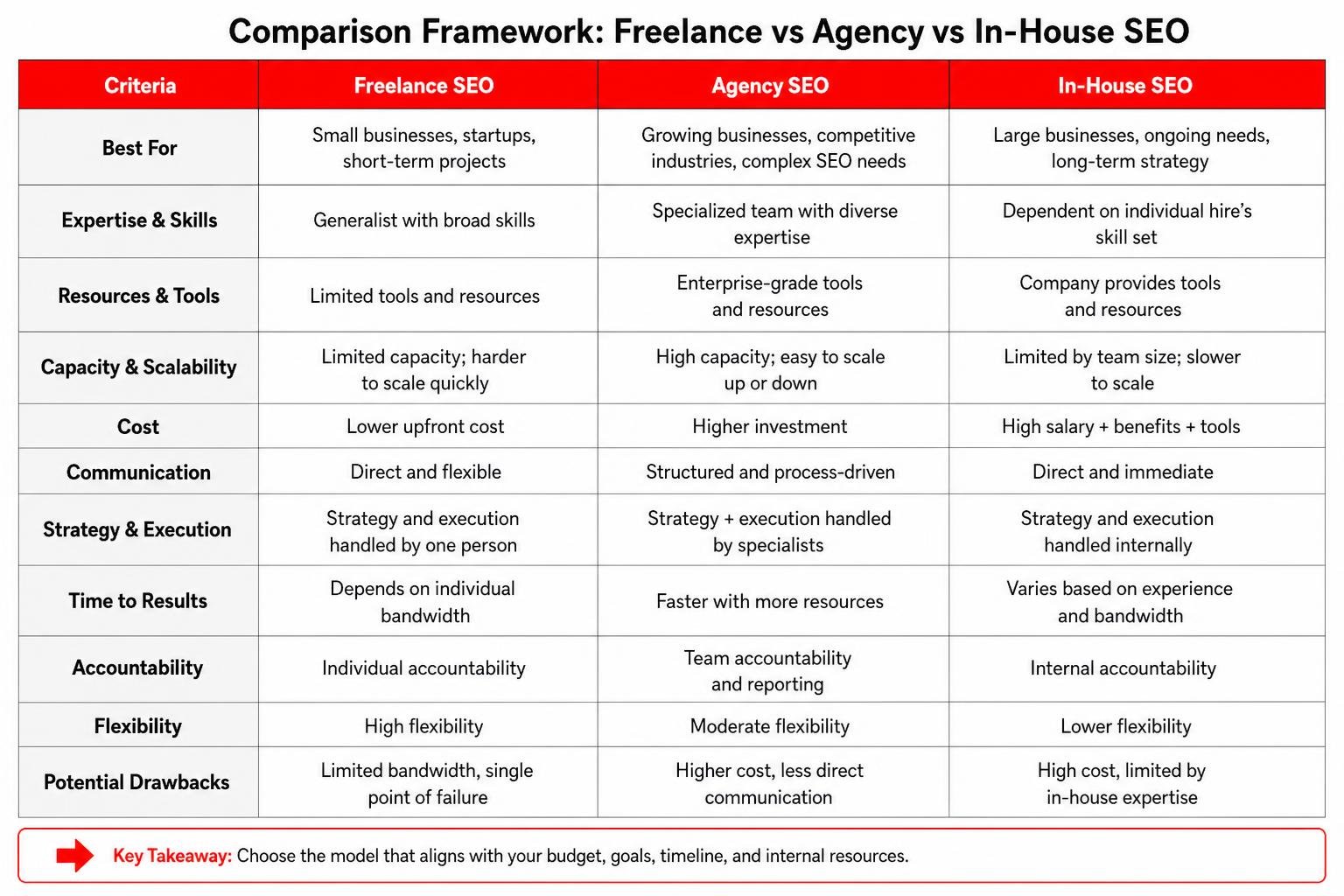
When budgeting for search marketing, it helps to understand the baseline costs of different hiring models:
| Hiring Model | Average Cost structure | Pros | Cons |
|---|---|---|---|
| Freelancer | $50 – $150 / hour | Cost-effective, direct communication, flexible | Limited bandwidth, may lack deep technical skills |
| Boutique Agency | $2,000 – $5,000 / month | Dedicated team, diverse skill sets, scalable | Higher entry cost, requires collaborative onboarding |
| Enterprise Agency | $5,000 – $15,000+ / month | Deep resources, custom engineering, global reach | Very expensive, you may feel like “just another number” |
For larger organizations looking to dominate national markets or manage complex multi-site configurations, scaling these costs is a necessity. You can explore how these budgets scale in our guide on Seo Strategy For Enterprises.
Salary Benchmarks and Agency Rates
If you are considering bringing your search marketing entirely in-house, you need to budget for a full-time salary. According to local employment data for July 2026, the salary for a dedicated SEO specialist in Minneapolis breaks down as follows:
- Low-End Salary (Entry Level / Small Brand): $70,620
- Mid-Point Salary (Experienced Specialist): $82,123
- High-End Salary (Senior Strategist / Enterprise Specialist): $96,033
That these numbers represent base salary only. When you factor in benefits, taxes, software licenses (which can easily run $500+ a month for enterprise-level SEO tools), and ongoing training, hiring an in-house employee is often significantly more expensive than partnering with a specialized agency or consultant.
Measuring ROI and Timeline for Success
SEO is not a sprint; it is an endurance race. If you need leads tomorrow morning, you should invest in paid search ads (PPC). If you want to build an asset that drives highly qualified leads 24/7 without paying for every single click, you invest in organic search.
So, how long does it take to see results?
Generally, you should expect to see early positive trends (such as impressions growing and keyword rankings improving) within 3 to 6 months. Significant increases in actual lead generation and customer conversions typically occur between months 6 and 12. By year two, a well-executed campaign should be compounding, delivering your lowest customer acquisition cost of any marketing channel.
To measure whether your investment is actually paying off, you must track the right Key Performance Indicators (KPIs):
- Organic Conversions: The number of contact forms filled out, phone calls made, or products purchased by users who found you through organic search.
- Organic Sessions: The overall volume of non-paid traffic coming to your site.
- Keyword Visibility: The number of high-intent search terms for which your business appears on page one.
- Conversion Rate Optimization (CRO): Ensuring that the traffic landing on your site actually takes action.
Once your organic search engine is running, you can amplify its value by connecting it to other channels. For example, using search data to fuel your email marketing is a highly effective way to nurture the leads you capture. You can read about how to bridge these two channels in our piece on Seo Driven Email Campaigns The Missing Link In Your Marketing Strategy.
Navigating the Twin Cities Market: Local vs. National SEO

A common mistake business owners make is applying a national SEO strategy to a local business. If you own a local service company, you do not care if someone in San Diego visits your blog. You need people in South Minneapolis, Edina, and St. Paul to find your service pages.
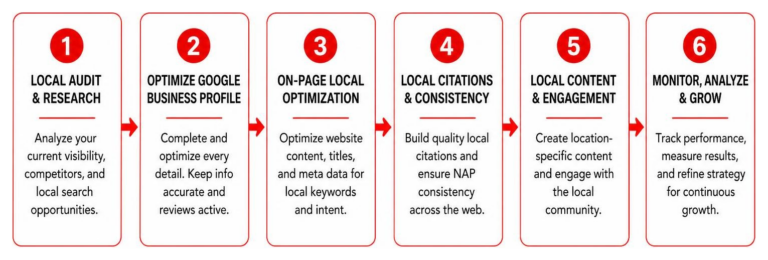
Local SEO is a unique discipline. It focuses heavily on ranking within Google’s “Map Pack” (the map and three local business listings that appear at the top of local searches). Winning here requires:
- A Fully Optimized Google Business Profile: Ensuring your business name, address, and phone number (NAP) are 100% accurate and consistent across the web.
- Local Review Acquisition: Consistently gathering high-quality, authentic reviews from your local clients.
- Geographically Targeted Landing Pages: Creating specific pages for the different suburbs and neighborhoods you serve (e.g., “Plumbing Services in Minnetonka”).
If you want to dominate the local Twin Cities search landscape, we have put together a comprehensive roadmap on our Minneapolis Seo page to help you get started.
Industry-Specific SEO Opportunities in Minnesota
Different industries in the Twin Cities require highly tailored search strategies. What works for a local bar in North Loop will not work for a residential roofing contractor in Plymouth. Here is how search strategies differ across popular Minnesota business sectors:
- Roofing and Home Services: These businesses face intense competition and highly seasonal search patterns. A successful campaign must focus on localized service area landing pages and high-intent local keywords. To see a detailed blueprint of how to build authority in this space, check out our guide on Seo For Roofing Companies.
- Bars, Restaurants, and Hospitality: For food and beverage businesses, visual appeal, local map pack visibility, and mobile optimization are everything. Your customers are searching on their phones while walking down the street. Learn how to optimize your digital presence to drive more foot traffic with our guides on Seo Services For Bars 101 and Seo Marketing Making Your Feed As Tasty As Your Food.
- Specialized Healthcare & Elder Care: Medical and geriatric services require a high level of trust and empathy. Content must be structured to answer complex, sensitive questions clearly while meeting Google’s strict quality standards for health-related websites. Read our specialized strategy on Seo For Geriatric Dental Services Companies to see how this works in practice.
Adapting to AI Search and Google Algorithm Updates
The search landscape is changing faster than ever. In July 2026, we are no longer just optimizing for traditional blue links on a Google search results page. The rise of Generative Engine Optimization (GEO) and Answer Engine Optimization (AEO) means that platforms like ChatGPT, Gemini, and Perplexity are pulling information directly from websites to answer conversational queries.
To stay visible in this new era, your website content must be structured so that large language models (LLMs) can easily read and cite it. This means:
- Strengthening Entity Authority: Clearly defining who you are, what you do, and what geographic areas you serve using structured schema markup.
- Optimizing for Conversational Queries: Writing natural, authoritative content that answers the direct, conversational questions users ask AI assistants.
- Ensuring Flawless Technical Performance: AI crawlers are highly sensitive to slow page speeds, poor mobile rendering, and bad site architecture. Keeping your Core Web Vitals in peak condition is non-negotiable.
If you want to stay ahead of the curve and ensure your brand doesn’t get left behind by AI search engines, dive into our deep-dive article: Seo For AI Models Is The New Black.
Frequently Asked Questions about Minneapolis SEO
How long does it take to rank on the first page of Google?
For most local businesses in the Twin Cities, you can expect to see noticeable ranking improvements within 3 to 6 months. However, if you are in a highly competitive niche (like personal injury law or home remodeling), reaching the top spots on page one can take 9 to 12 months of consistent, high-quality optimization and authority building.
Can an SEO specialist guarantee a #1 ranking?
No. Google’s search algorithms are proprietary and change hundreds of times a year. No legitimate SEO professional can guarantee a specific ranking. Any specialist or agency making this promise is likely using deceptive sales tactics or risky, short-term “black hat” techniques that could result in your website being permanently penalized.
What is the difference between SEO and local SEO?
Traditional SEO focuses on improving your website’s visibility on a national or global scale, targeting keywords without geographic constraints. Local SEO is designed to capture search traffic in a specific geographic area. It focuses heavily on optimizing your Google Business Profile and ranking in the local “Map Pack” so that nearby customers can find your physical location or service area.
Conclusion
At the end of the day, search engine optimization isn’t about tricking a computer program into ranking your website. It is about understanding your target audience, creating incredibly valuable content that answers their questions, and building a technically sound website that search engines can easily navigate.
At Clayton Johnson SEO, we help Minneapolis businesses map out their target audiences, build high-performing digital assets, and execute transparent, data-driven search campaigns that drive real business growth.
Ready to stop chasing algorithm updates and start building a search engine that grows your business? Let’s talk about your goals. Get in touch with us today by visiting our Minneapolis SEO Strategy Hub to request a custom strategy review.