What is a Legitimate Foreclosure Specialist?
When you are searching for foreclosure specialists, the terminology can get confusing. A “specialist” isn’t a single job title; rather, it is a category that includes several types of verified professionals. The most reliable among them are HUD-approved housing counselors and real estate agents with specific certifications.
A legitimate specialist is someone who has undergone rigorous training and adheres to federal or state regulations. For example, a HUD-certified housing counselor must pass a standardized examination and work for an agency participating in HUD’s housing counseling program. You can verify these professionals through HUD’s official list of housing counselors.
Another type of legitimate expert is a Realtor® who has earned the Short Sales and Foreclosure Resource (SFR®) certification. These agents have specialized training in qualifying sellers for short sales, negotiating with lenders, and protecting buyers in distressed sales. You can learn more about this professional designation by visiting the SFR® website.
How do HUD-certified foreclosure specialists assist homeowners?
According to federal regulations (24 C.F.R. § 214.3), a HUD-certified counselor is someone who has proven their competency in housing counseling through a formal examination. These foreclosure specialists act as your advocate and strategist.
When you meet with one, they typically perform a deep dive into your financial situation. This includes:
- Financial Assessment: Reviewing your income, expenses, and debt to see what you can realistically afford.
- Lender Communication: Acting as a bridge between you and your mortgage servicer to open lines of communication.
- Loss Mitigation Application: Helping you prepare and submit the complex paperwork required for loan modifications or repayment plans.
- Action Planning: Creating a step-by-step roadmap to help you stay in your home or transition to new housing gracefully.
For a detailed look at how to start this process, you can find more information on how to get foreclosure prevention counseling.
Are services from a foreclosure specialist always free?
One of the biggest indicators of a legitimate foreclosure specialist is how they get paid. If you are working with a HUD-approved housing counseling agency, the foreclosure prevention services are typically free.
These agencies are primarily funded by government grants and, in some cases, by the lenders themselves who want to avoid the high cost of a foreclosure sale. Because these organizations are non-profits, they are prohibited from charging you large upfront fees for foreclosure prevention. If someone asks for thousands of dollars before they’ve even called your bank, walk away. You can find more information about free housing counseling through the Consumer Financial Protection Bureau (CFPB).

Spotting Red Flags and Foreclosure Rescue Scams
Scammers are like heat-seeking missiles for homeowners in distress. They monitor public records to find people who have recently received a Notice of Default and then flood their mailboxes with “too good to be true” offers.
Common scams include deed theft, where you are tricked into signing over the title of your home under the guise of a “rescue” loan, and equity stripping, where a scammer takes out loans against your home’s value once they have control of the deed. There are also rent-to-own schemes where the “specialist” tells you to pay them rent while they “negotiate” with the bank—only for you to find out months later that they pocketed the money and the bank is still foreclosing.
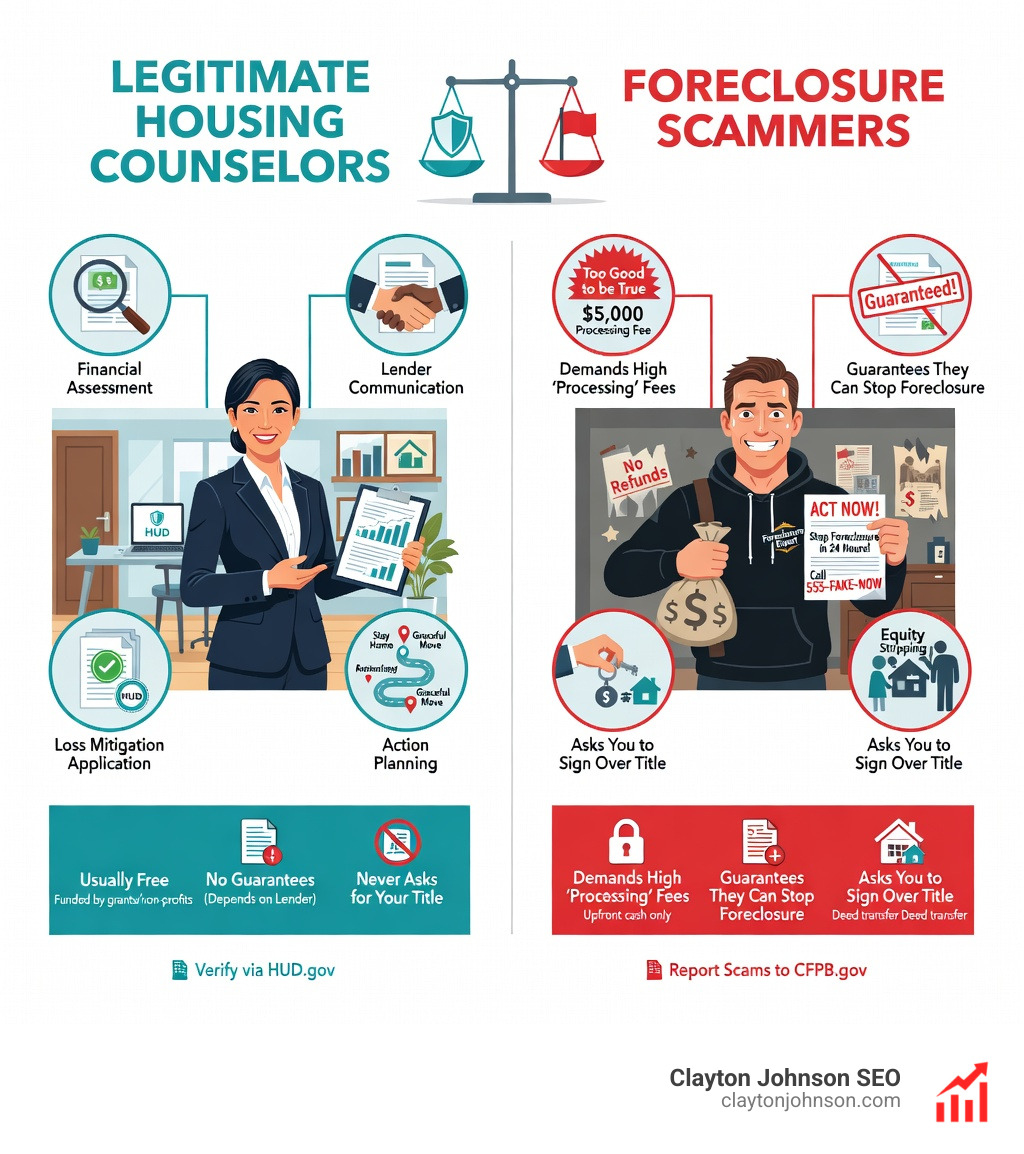
| Feature | Legitimate HUD Counselor | Foreclosure Scammer |
|---|---|---|
| Upfront Fees | Usually Free | Demands high “processing” fees |
| Guarantees | No guarantees (depends on lender) | Guarantees they can stop foreclosure |
| Title Transfer | Never asks for your deed | Asks you to sign over the title |
| Communication | Encourages you to talk to your lender | Tells you to stop talking to your lender |
| Contract Clarity | Explains every document clearly | Uses high-pressure, confusing language |
What are common tactics used by fraudulent foreclosure specialists?
Fraudulent foreclosure specialists rely on isolation and pressure. They often tell homeowners to stop talking to their mortgage company or their attorney, claiming they will handle everything. This is a massive red flag.
The FBI warns that these con artists often use official-sounding names to mimic government programs. They might promise “guaranteed” outcomes or claim to have a “secret” legal loophole that wipes out your mortgage. If you encounter a scheme like this, it is vital to report foreclosure rescue fraud to the FBI immediately to protect others in your community.
How can homeowners identify a “zombie mortgage” scam?
A “zombie mortgage” is an old debt—often a second mortgage or home equity line of credit (HELOC)—that you thought was settled or forgiven years ago, only for a debt collector to suddenly reappear and threaten foreclosure.
Scammers often buy these old, “dead” debts for pennies on the dollar and then use aggressive, sometimes illegal, collection tactics to scare homeowners into paying inflated amounts. If you are being hounded by a collector regarding an old secondary lien, you should seek legal help for zombie mortgages to determine if the debt is even legally enforceable.

Navigating the Foreclosure Process: Judicial vs. Non-Judicial
The foreclosure process doesn’t happen overnight. Under federal law, a mortgage servicer generally cannot start the foreclosure process until you are more than 120 days delinquent on your payments. This window is your “golden hour” to work with foreclosure specialists to find a solution.
The actual process used depends on your state. In places like Minnesota, the process can be either judicial or non-judicial, though non-judicial (foreclosure by advertisement) is more common.
How does the judicial foreclosure process work?
In a judicial foreclosure, the lender must file a lawsuit in court. You will receive a summons and complaint, and you have a specific amount of time to file an answer. This process provides more “due process” for the homeowner, as a judge must approve the sale.
During this time, you can present a legal defense, such as proving the lender didn’t follow proper notice requirements. Some states also offer a right of redemption, allowing you to buy back the property even after the sale if you can come up with the full amount owed plus costs. For an example of how this works in a judicial state, you can review the foreclosure prevention guidelines in Kansas, which utilizes this court-based system.
What happens during a non-judicial foreclosure?
A non-judicial foreclosure is handled outside of the court system. It is usually faster and follows a “power of sale” clause in your mortgage contract. A neutral third party, called a trustee, handles the process, which involves mailing notices and publishing the sale date in a local newspaper.
Because this process moves quickly, lenders often use outsource mortgage foreclosure assistance services to manage the high volume of paperwork and ensure they are meeting strict state timelines. They may also utilize foreclosure title services and TSG (Trustee Sale Guarantee) to ensure the title is clear before the auction occurs.
Effective Alternatives to Losing Your Home
Foreclosure is a “lose-lose” for almost everyone involved. It’s expensive for the bank and devastating for the homeowner. Because of this, there are several “loss mitigation” options available.
- Loan Modification: Changing the terms of your loan (interest rate, length, or principal) to make payments more affordable.
- Short Sale: Selling the home for less than what is owed, with the lender’s permission.
- Deed in Lieu of Foreclosure: Voluntarily giving the deed back to the lender to avoid a formal foreclosure on your credit report.
- Forbearance: A temporary pause or reduction in payments during a period of financial hardship.
For a deep dive into these options, The Foreclosure Survival Guide is an excellent resource for understanding your rights.
Can a foreclosure specialist help with a short sale?
Yes, specifically an SFR® certified real estate agent. Short sales are notoriously complex and involve heavy negotiation with the lender’s loss mitigation department. A specialist can help you navigate the “deficiency waiver”—an agreement where the lender promises not to sue you for the remaining balance after the sale. You can find more about this through the short sale resource for REALTORS®.
What are the benefits of a loan modification?
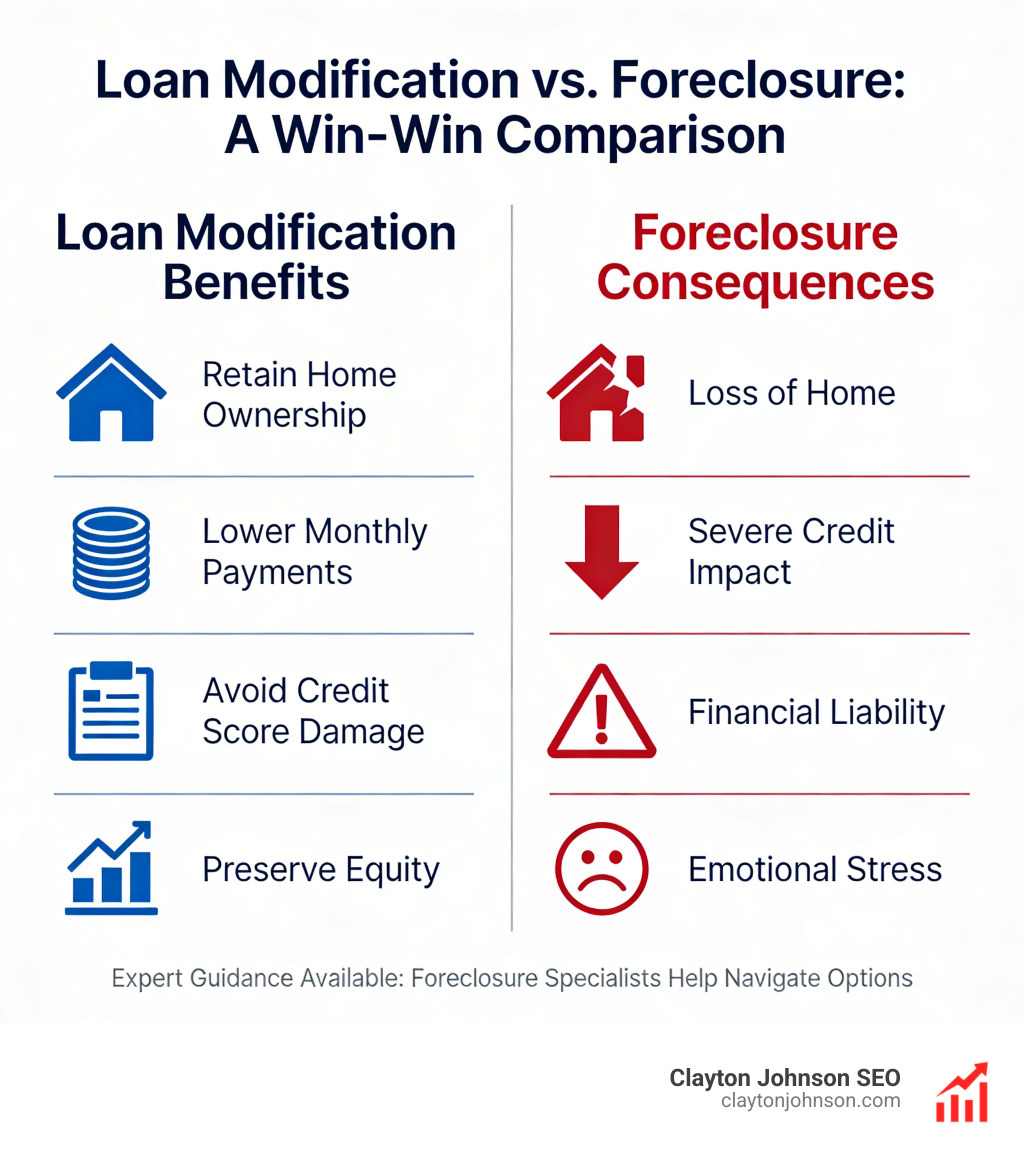
A loan modification is often the best-case scenario if you want to keep your home. It can lower your interest rate, extend the term of your loan (e.g., from 30 to 40 years), or move your past-due balance to the end of the loan.
Working with mortgage assistance programs can help you present your financial case to the lender in a way that proves a modification is a better financial bet for them than a foreclosure.
How to Find Trusted Foreclosure Prevention Resources
You don’t have to navigate this alone. There are federal and local resources designed to protect you from predatory “specialists” and help you find real solutions.
Where can I find a HUD-approved foreclosure specialist?
The easiest way to find a verified counselor is to use the HUD’s official HCA locator tool or the CFPB’s find a housing counselor locator tool. You can also call the HOPE Hotline at 888-995-HOPE (4673), which is available 24/7 and connects you with HUD-approved experts.
What role do legal aid services play in foreclosure defense?
If you have been served with court papers, you may need an attorney. Legal aid organizations provide pro bono (free) or low-cost legal representation to homeowners who meet certain income requirements. They are especially helpful if you are a victim of predatory lending or deed theft. Organizations like Legal Services NYC provide a blueprint for the kind of help available to homeowners facing legal battles.

Frequently Asked Questions about Foreclosure
What should I do immediately if I receive a foreclosure notice?
First, do not ignore it. Open all mail from your lender. Second, contact a HUD-approved housing counselor immediately. Third, call your mortgage servicer and ask to speak to their “Loss Mitigation” department to discuss your options.
Can a lender foreclose on a co-op or condo?
Yes. However, the process for a co-op is often different and can move much faster because it is considered personal property (shares in a corporation) rather than real property. You should seek specialized legal advice if you are facing a co-op foreclosure.
How do I report a foreclosure scam to the authorities?
Contact the Federal Trade Commission (FTC), your State Attorney General’s office, and the FBI. Reporting these crimes helps authorities track down the “specialists” who are preying on the community.
Conclusion
The path through foreclosure is narrow and full of pitfalls, but you don’t have to walk it blindly. By choosing legitimate foreclosure specialists—like HUD-approved counselors or certified SFR® agents—you give yourself the best chance of protecting your financial future.
At Clayton Johnson SEO, we believe in the power of structured growth architecture. Just as a homeowner needs a solid legal and financial framework to survive a foreclosure, a business needs a structured SEO system to achieve compounding growth. Our platform, Demandflow, provides the strategic frameworks and AI-augmented workflows necessary to move from tactical chaos to measurable results.
If you’re looking to build a more resilient digital presence, explore our SEO services and growth architecture to see how we can help you scale with clarity and structure.