Enterprise AI: Why Your Organization Needs a Brain Upgrade


What is Enterprise AI? The Modern Business Brain Explained
Enterprise AI is the use of artificial intelligence technologies — machine learning, large language models, automation, and data analytics — deployed at organizational scale to improve decisions, streamline operations, and drive measurable business results.
Quick answer: Here’s what you need to know about enterprise AI:
- What it is: AI systems built specifically for business use, not consumer apps
- What it does: Automates decisions, extracts insights from complex data, and enables tasks humans couldn’t do alone
- Who uses it: Companies across finance, healthcare, manufacturing, retail, and more
- Why it matters: AI leaders achieve 1.7x revenue growth and 3.6x greater shareholder return compared to laggards
- Top providers: OpenAI, Google Gemini, AWS, C3 AI, and AI21
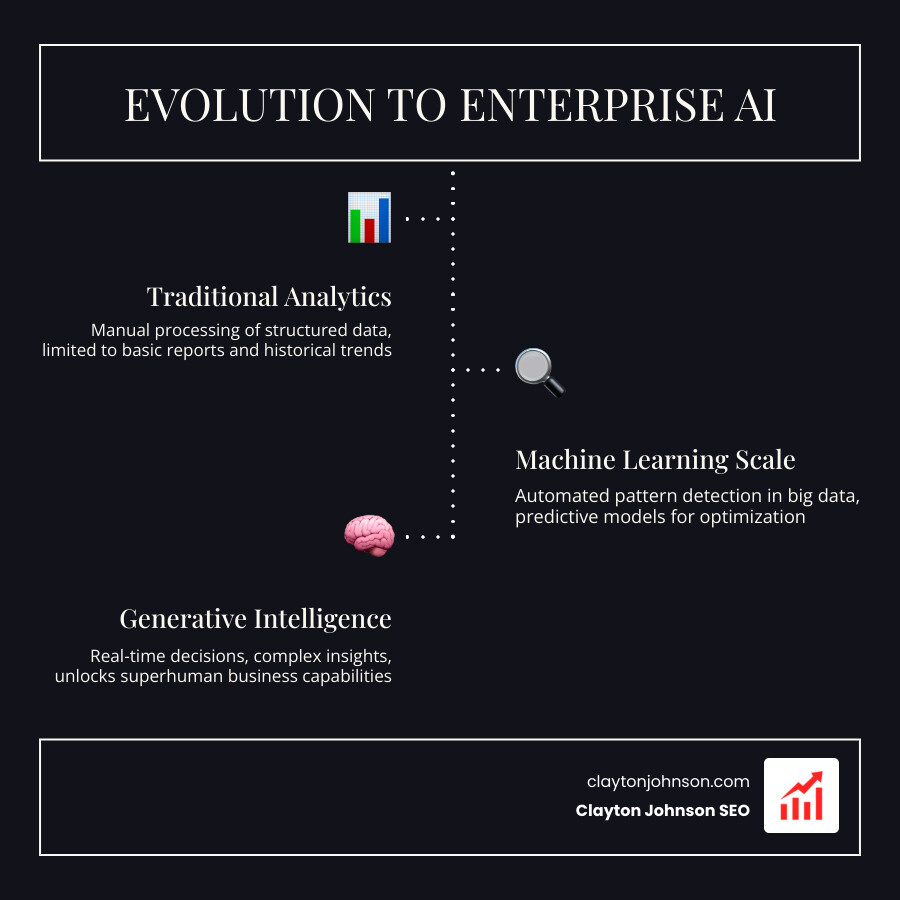
Businesses today are drowning in data. Traditional analytics tools simply can’t keep up with the volume, speed, or complexity of what modern organizations generate every day.
That’s where enterprise AI changes everything.
It doesn’t just process data faster — it finds patterns humans would never spot, automates decisions in real time, and unlocks capabilities that were previously impossible.
The numbers back this up. Enterprise workers report saving 40 to 60 minutes every day using AI tools. ChatGPT’s message volume grew 8x year-over-year. And 75% of workers say they can now complete tasks they simply couldn’t do before — including coding, data analysis, and complex research.
This isn’t a future trend. It’s happening right now, inside organizations that are pulling ahead of their competitors fast.
What is Enterprise AI and Why It’s the Modern Business Brain
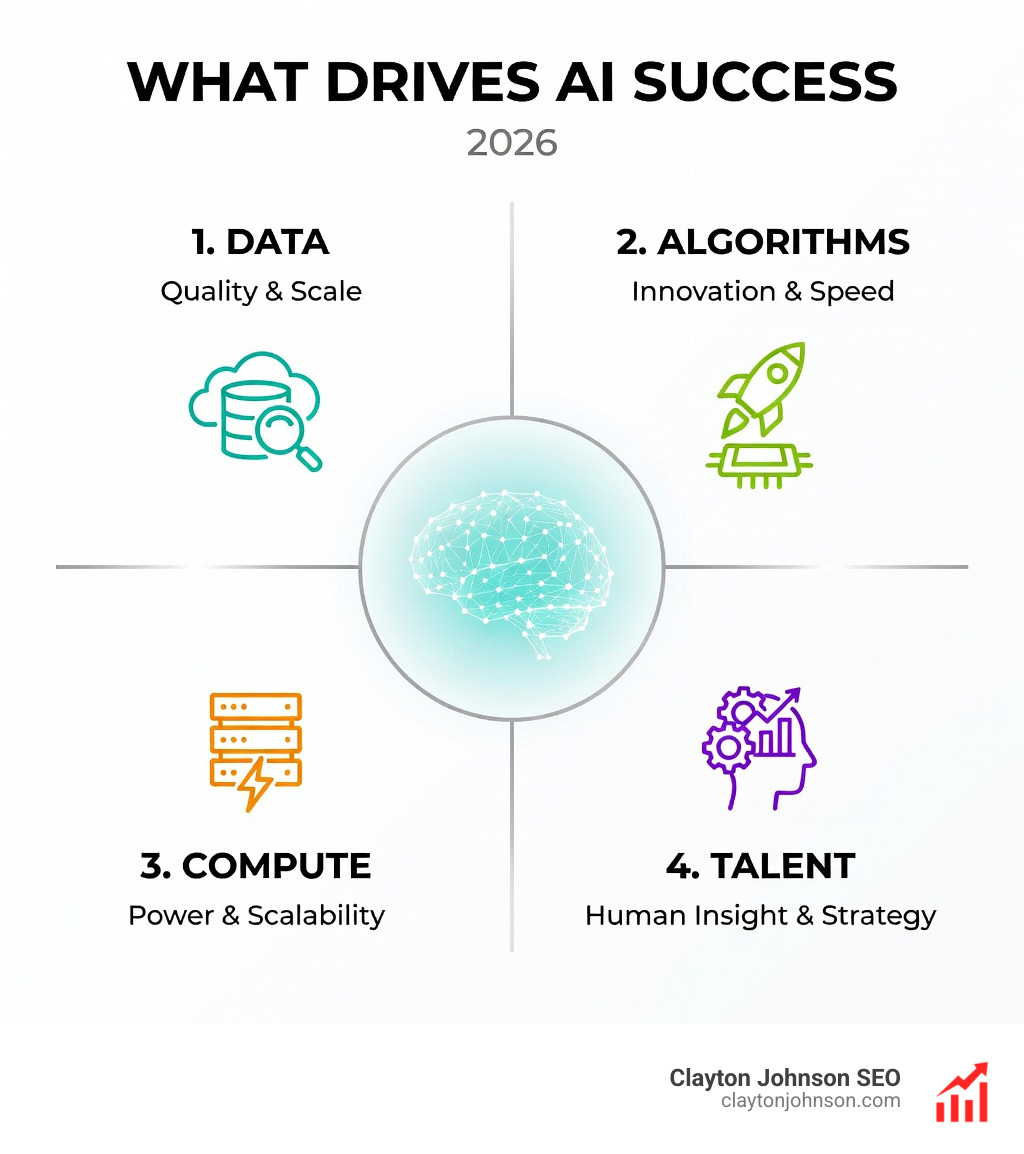
Think of enterprise ai as a cognitive layer that sits on top of your entire organization. While consumer AI (like the free version of a chatbot) is fun for writing poems or planning a vacation, the enterprise version is built for the heavy lifting of global commerce. It requires massive-scale processing power, high-quality data, and a secure environment to function effectively.
At its core, enterprise ai addresses the “data overload” problem. We generate more data than any human team could ever analyze. Traditional methods often miss hidden patterns and trends that could lead to new revenue streams or cost-saving opportunities. By using enterprise ai, companies can extract meaningful insights from this noise, enabling precise and rapid responses to market changes.
This technology is the secret sauce for modern success because it moves a company from being reactive to being proactive. Instead of looking at a report from last month to see what went wrong, AI tells you what is likely to go wrong next week so you can stop it today. As AWS explains, it’s about using machine learning and deep learning to solve specific business problems at a scale that was previously unimaginable.
Industry Transformations via Enterprise AI
We aren’t just talking about better spreadsheets. We are talking about fundamental shifts in how industries operate. Here are a few ways real-world enterprise AI tools are changing the game:
- Banking and Finance: AI is “stepping up to the plate” by detecting fraud in real-time and providing personalized investment recommendations.
- Manufacturing: Through predictive maintenance, AI analyzes sensor data to fix machines before they break, optimizing production and reducing downtime.
- Healthcare: AI parses genomic sequences and patient records to assist in precise diagnoses and even accelerates medical research by extracting facts from massive evidence packs.
- Insurance: Automation of claims processing and mass customization of policies based on individual risk assessments are becoming the new standard.
- Cybersecurity: AI has changed the game by sifting through network traffic to identify behavioral anomalies and respond to incidents instantly.
The Leader-Laggard Divide
A significant gap is opening between “frontier firms” and everyone else. According to OpenAI’s 2025 report, frontier firms generate 2x more AI messages per seat than the median enterprise. Their workers are “power users” who send 6x more messages than the average employee.
This isn’t just about being “tech-savvy”; it translates to the bottom line. AI leaders have seen 1.7x revenue growth and 3.6x greater total shareholder return over the past three years. The laggards risk falling into a cycle where they can no longer compete with the efficiency and agility of AI-enabled peers.
Measurable Impacts: Productivity Gains and Revenue Growth
The impact of enterprise ai is no longer theoretical; it is measurable in minutes and dollars. We are seeing a massive acceleration in adoption. For example, API reasoning token consumption per organization increased a staggering 320x year-over-year.

The most immediate impact is felt in the enterprise workforce. When an organization successfully integrates ChatGPT for enterprise, the productivity floor rises for everyone.
Worker Benefits and New Capabilities
The “time saved” metric is the most cited benefit. Most workers report saving 40–60 minutes per day. However, in technical and communication-heavy roles, the gains are even higher:
- Data Scientists and Engineers: 60–80 minutes saved per day.
- Communications Workers: 60–80 minutes saved per day.
Beyond just saving time, 75% of workers report being able to complete tasks they previously could not perform. This includes non-technical staff using AI for programming support, code review, and complex data analysis. AI is essentially “upskilling” the entire workforce overnight. If you want to see these benefits firsthand, you can try the tools for free to understand the workflow shift.
Real-World Case Studies
How does this look in practice? Let’s look at some organizations that have moved beyond the pilot phase:
- Intercom: Their AI voice agent reduced latency by 48% and now resolves 53% of customer calls from start to finish without human intervention.
- Lowe’s: AI assistants answered 1 million monthly questions, which doubled online conversion rates and boosted in-store satisfaction.
- Moderna: AI compressed the time required to develop product profiles from weeks to just hours by automatically extracting data from evidence packs.
- Oscar Health: Their member-facing health chatbots now answer 58% of benefits questions instantly, significantly reducing the load on human support staff.
A Strategic Roadmap for Implementing Enterprise AI
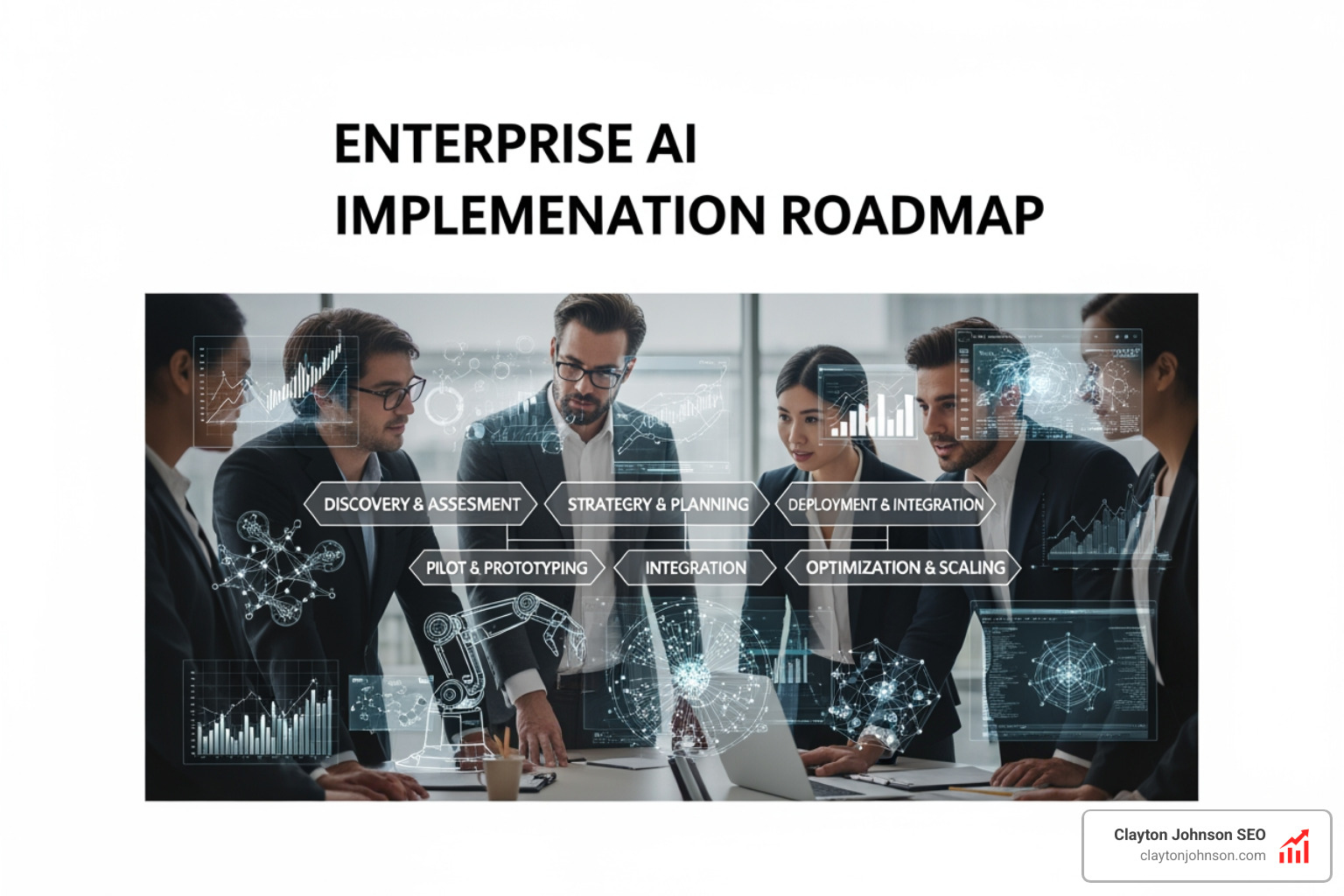
You can’t just buy “an AI” and plug it in. Successful implementation requires a structured approach. We recommend a 7-step roadmap to ensure your enterprise AI strategy actually delivers value.
- Define Organizational Goals: Don’t start with the tech; start with the problem. Are you looking for efficiency, better customer experience, or new revenue?
- Assess Data Preparedness: AI is only as good as the data it feeds on. You need to evaluate your data’s quality, accessibility, and governance.
- Build a Cross-Functional Team: You need data scientists, AI experts, and domain specialists (the people who actually do the work) collaborating with IT.
- Develop a Plan: Create a roadmap that is flexible and scalable.
- Launch a Pilot Program: Validate your ideas in a controlled environment before a full-scale rollout.
- Integrate the Technology: Connect the AI to your existing systems with minimal disruption.
- Maintain and Monitor: AI isn’t “set and forget.” You need to monitor performance and update models regularly.
For a deeper dive, check out our guide on how to build a winning implementation roadmap.
Infrastructure for Scaling Enterprise AI
To move from a small pilot to a global rollout, your technical foundation must be rock solid. This involves more than just cloud storage; it requires a sophisticated AI infrastructure.
| Component | Purpose | Key Benefit |
|---|---|---|
| Data Mesh | Decentralized data management | Faster access for specific teams |
| Data Warehousing | Centralized data storage | High-quality, “single source of truth” |
| MLOps / LLMOps | DevOps for Machine Learning | Automates the lifecycle of AI models |
| Feature Store | Centralized repository for data variables | Promotes team reuse and avoids silos |
| RAG | Retrieval-Augmented Generation | Connects LLMs to your private data without retraining |
You also need to ensure your hardware is up to the task. You can check here to see if your current systems are NVIDIA-certified for on-premises AI deployment.
Governance and Ethical Standards
With great power comes great responsibility (and significant regulatory risk). Mastering AI governance is non-negotiable for the modern enterprise.
Organizations must implement human-in-the-loop mechanisms to manage “hallucinations”—those moments where the AI confidently states something that isn’t true. A central model registry is also essential for tracking versions, performance, and metadata for auditability. Leading providers like AI21 offer a Trust Center to help businesses keep sensitive data within their own infrastructure while maintaining compliance. For more on this, read our comprehensive guide to AI governance.
Comparing the Top Enterprise AI Providers
Choosing a partner is one of the most critical decisions you’ll make. The market is currently led by a few heavy hitters, each with a different specialty.
- C3 AI: Known for providing over 40 turnkey, industry-specific applications. If you are in manufacturing or oil and gas and want something ready-to-deploy, they are a strong contender.
- Google Cloud: Gemini Enterprise offers various editions tailored to different needs, from small businesses to frontline workers. They excel in integrating AI directly into the workspace tools your team already uses.
- AWS: Provides the “building blocks” of AI, allowing technical teams to build, train, and deploy models at massive scale with deep integration into their existing cloud infrastructure.
OpenAI Frontier and ChatGPT Enterprise
OpenAI has seen explosive growth in the business sector, with over 5 million business users. Their ChatGPT Enterprise platform is a favorite because it offers enterprise-grade security (they never train on your data) and high-speed access to their most advanced models.
They have also introduced the OpenAI Frontier program, which pairs their engineers with your team to help design architectures and run AI agents in production. With 83% of users active weekly, it has one of the highest adoption rates in the industry.
AI21 and Specialized LLM Systems
For organizations that need high efficiency or specialized deployment, AI21 is a powerful alternative. Their Jamba models are built for the “agentic future,” using 30% less compute for faster inference on long-context tasks. They are particularly popular for firms that require flexible deployment options, ranging from SaaS APIs to air-gapped systems for maximum security.
Frequently Asked Questions about Enterprise AI
How does enterprise AI differ from consumer AI?
Consumer AI is designed for individual use and general tasks. Enterprise AI is built for scale, security, and integration. It includes features like data privacy guarantees (no training on your data), role-based access controls, and the ability to connect to internal company data via RAG or APIs.
What are the biggest risks in deploying AI at scale?
The primary risks include data privacy breaches, “hallucinations” leading to incorrect business decisions, and “pilot purgatory”—where a project never moves past the testing phase. There are also regulatory risks if the AI’s decision-making process isn’t transparent or auditable.
How can small organizations close the gap with AI leaders?
You don’t need a billion-dollar budget. Small organizations can close the gap by focusing on specific, high-impact use cases rather than trying to automate everything at once. Using SaaS-based enterprise tools allows smaller firms to access frontier-level models without building the infrastructure themselves.
Conclusion
The transition to an AI-powered organization isn’t just a technical upgrade; it’s a fundamental shift in how work gets done. At Clayton Johnson SEO, we understand that whether you are optimizing a wealth management firm’s digital presence or scaling a global enterprise, the core challenge is the same: turning massive amounts of data into actionable growth.
The organizations that win will be those that move beyond the hype and implement a strategic framework for scaling AI. This requires executive sponsorship, a culture of experimentation, and a commitment to data readiness.
Ready to take the next step? Explore our Enterprise AI Pillar Page to learn more about how we can help you navigate this digital transformation.