How to Turn Small Business Data into Big Growth Insights


Why Audience Insights for SMB Growth Are Your Biggest Competitive Edge
Audience insights for SMB growth are the foundation of every smart marketing decision a small or medium-sized business can make.
Here’s the short answer if you need it fast:
How audience insights drive SMB growth:
- Know your customers – Understand who buys, why they buy, and what they need next
- Segment smarter – Group customers by behavior, not just age or location
- Personalize at scale – Tailored offers and messages that convert better
- Spot new opportunities – Find gaps your competitors are missing
- Reduce wasted spend – Focus budget on what actually works
The numbers back this up. Companies that use data effectively are five times more likely to act faster than their competitors. And businesses that align strategies with customer segments see average yearly profit growth of 15% — compared to just 5% for those that don’t.
Yet most small businesses still make decisions based on gut feel. They run campaigns without knowing who they’re really talking to. They target broadly and wonder why conversion rates stay flat.
The problem isn’t effort. It’s missing a clear system for turning raw customer data into decisions that grow revenue.
That gap is exactly what this guide closes.
I’m Clayton Johnson, an SEO strategist and demand generation expert who has spent nearly two decades helping businesses build data-driven growth systems — including using audience insights for SMB growth to increase qualified traffic and convert better leads. In the sections ahead, I’ll walk you through a practical, step-by-step framework you can apply right away.
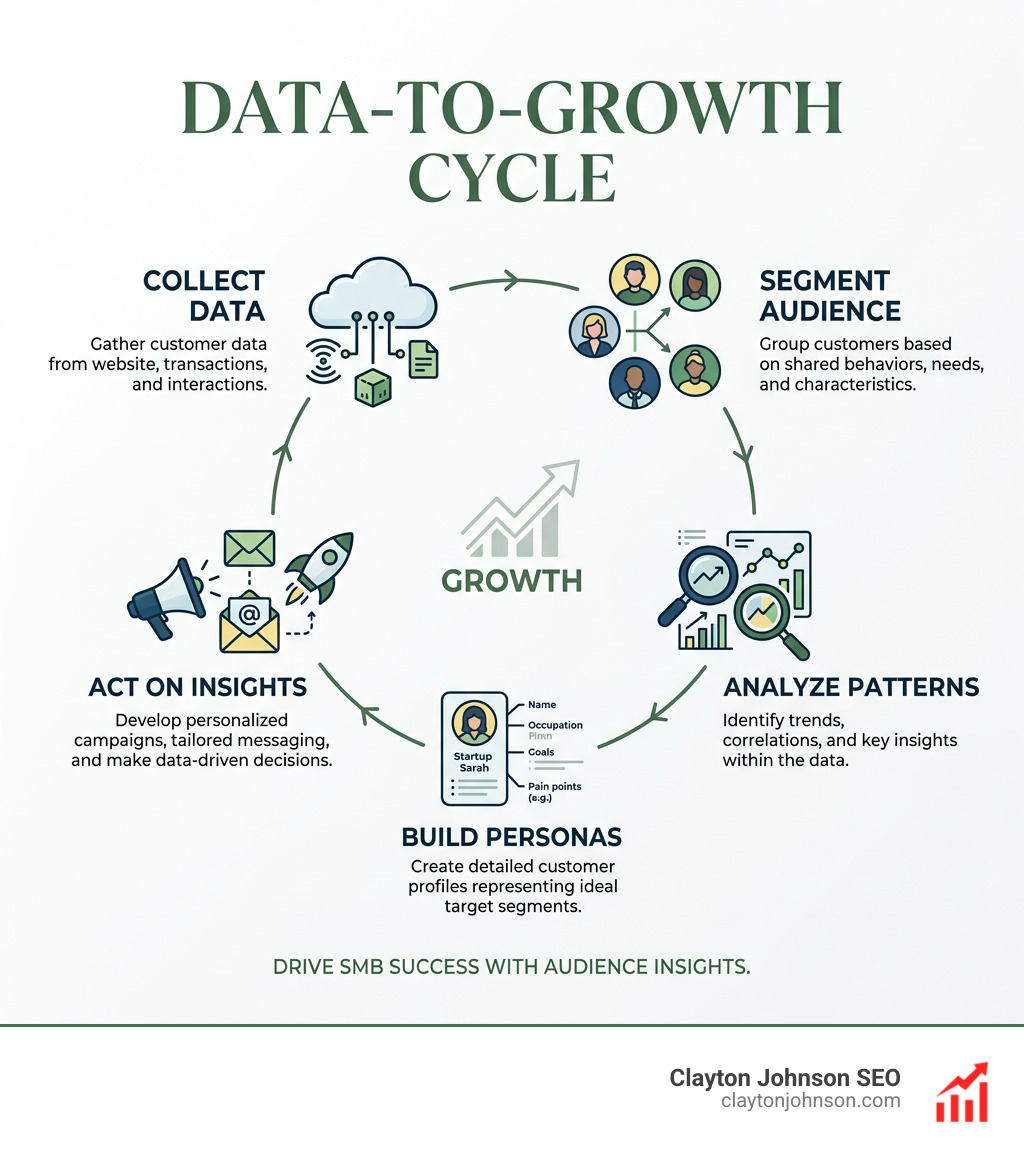
Leveraging Audience Insights for SMB Growth
In small business, we often hear that “data is the new oil.” But for most of us, data feels more like a tangled mess of spreadsheets and confusing dashboards. To truly achieve audience insights for SMB growth, we have to move past simply staring at numbers and start looking for the human stories behind them.
The impact of this shift is massive. Research shows that 95% of consumers say excellent customer service influences their brand loyalty, and 66% of all customers say personalized offers keep them coming back. When we understand our audience, we aren’t just selling; we are solving problems.
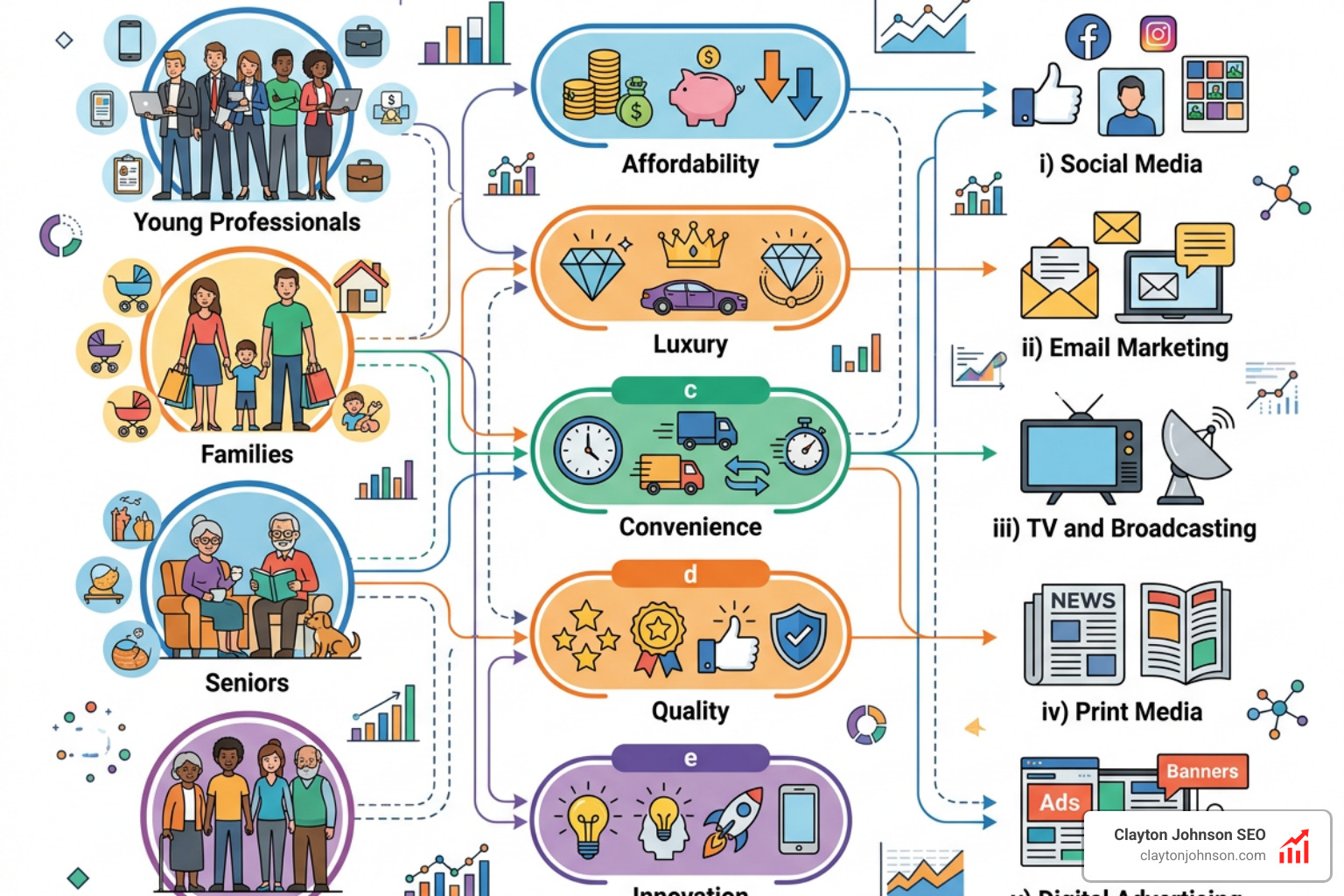
The Power of Psychographics
While many businesses stop at demographics (age, location, gender), the real growth happens when you dive into psychographics. This involves sentiment analysis to understand how customers feel about your brand. Are they frustrated by a specific pain point? Are they motivated by status or sustainability?
By understanding these “why” factors, we can build a more robust customer strategy that creates a lasting competitive advantage.
| Data Type | Examples | Growth Application |
|---|---|---|
| Demographics | Age, Location, Income | Where to show ads; basic price points. |
| Psychographics | Values, Hobbies, Fears | Crafting the “hook” in your copy; brand voice. |
| Behavioral | Purchase history, Device use | Retargeting; loyalty program triggers. |
Setting Clear Analytics Goals for Audience Insights for SMB Growth
We can’t find what we aren’t looking for. To turn data into dollars, we must set goals that align directly with our business objectives. Are we trying to lower customer acquisition costs (CAC)? Or perhaps we want to increase the lifetime value (LTV) of our existing fans?
We recommend focusing on a small set of high-impact Key Performance Indicators (KPIs). Tracking everything leads to “analysis paralysis.” Instead, identify the metrics that move the needle. This is where you need better personas to ensure your goals match the people you actually want to attract.
For those in the B2B space, using tools like the Insight Tag can help you track how professional audiences interact with your site, allowing you to prove the ROI of your marketing spend to stakeholders.
Using AI and Predictive Tools for Audience Insights for SMB Growth
Artificial Intelligence isn’t just for the tech giants anymore. Today’s SMBs can use AI to do the heavy lifting of data analysis. An AI-powered customer behavior model can analyze data from your website, social media, and email interactions to predict what your customers will do next.
This is a game-changer for churn prediction. Instead of wondering why a customer stopped buying, AI can flag “at-risk” behaviors before they leave, giving you a chance to save the relationship. We’ve seen this work wonders for businesses trying to predict customer behavior and stay one step ahead of market shifts.
By utilizing real-time data and sentiment analysis, we can proactively manage our reputation. If a restaurant sees a spike in social media mentions regarding long wait times, they can adjust staffing immediately rather than waiting for a monthly report.
Segmentation Strategies and Generational Dialects
One of the most fascinating aspects of audience insights for SMB growth is how different generations interact with businesses. For example, 22% of Gen Z say too many similar businesses often induce “choice paralysis,” while only 6% of Boomers feel the same.
To win, we must speak the right “dialect.” Gen Z might discover you through a TikTok scroll, while Boomers might respond better to direct mail or a personal recommendation.
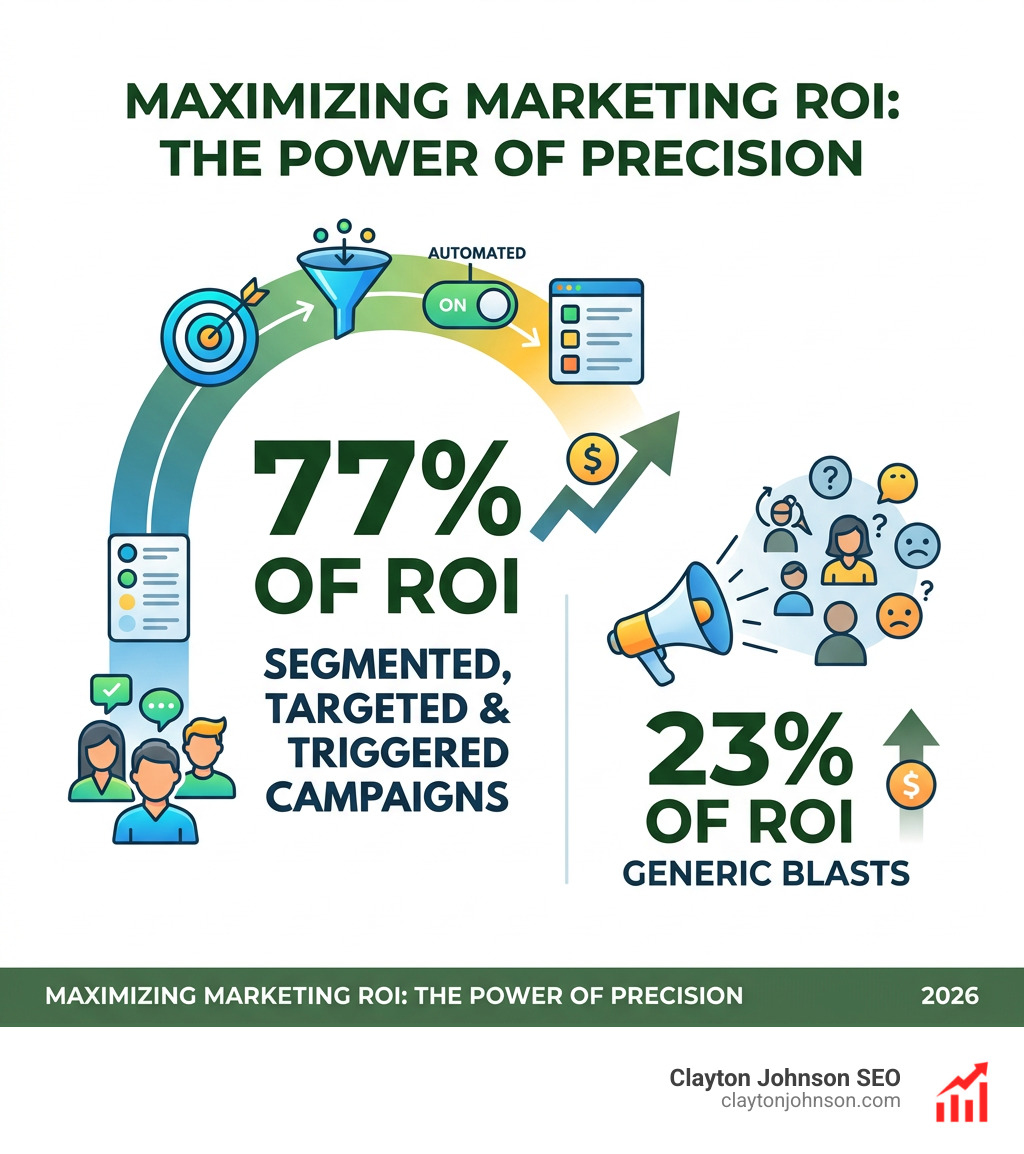
Using customer segmentation allows us to offer the personalization that 71% of customers now expect. Tools like interactive dashboards allow us to filter these groups in real-time, seeing exactly which segments are driving the most revenue.
Overcoming Challenges and Refining Your Strategy
The road to data-driven growth isn’t always smooth. Many SMBs struggle with data silos (where sales data doesn’t talk to marketing data) and limited resources. We often see businesses hit customer journey pain points where the data shows people are dropping off, but the business doesn’t know why.
The key is continuous iteration. We use A/B testing to validate our hunches. If you think your audience prefers video over text, don’t just guess—test it. This is the heart of the Clayton Johnson SEO philosophy: Clarity → Structure → Leverage → Compounding Growth.
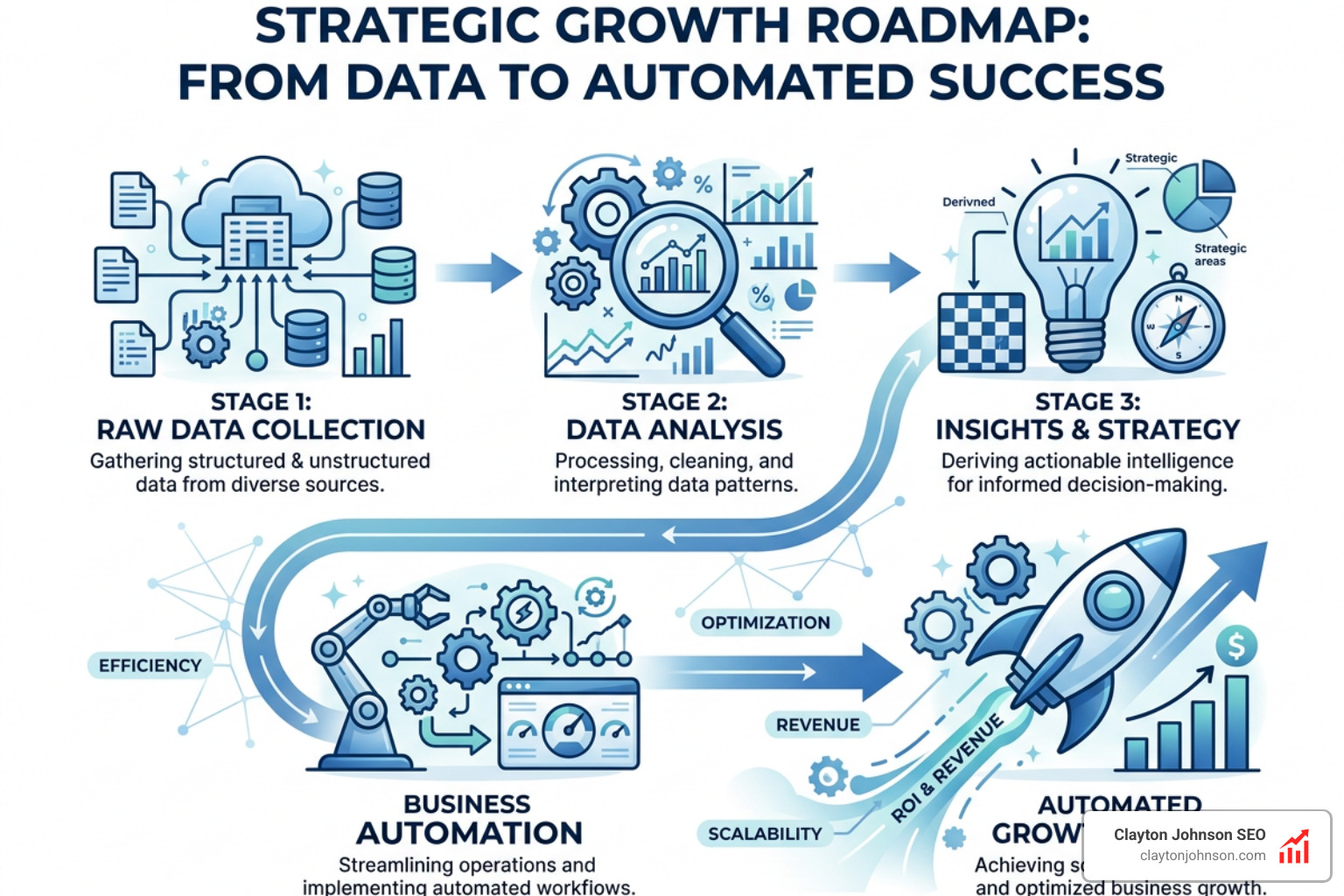
Building Detailed Buyer Personas from Raw Data
A great persona isn’t just a name and a stock photo. It’s a detailed Ideal Customer Profile (ICP) that guides every piece of content you create. Whether you are looking at a startup founder persona or a local shop owner, you need to understand their lifestyle choices.
Checklist for Identifying Your Ideal Customers:
- What keeps them up at night? (Identify their core problems)
- Where do they hang out online? (Select your channels)
- What are their goals? (Position your product as the bridge)
- Who do they trust? (Identify influencer or partnership opportunities)
Marketing segmentation makes companies 60% more likely to understand their customers’ challenges. It’s about being a “secret handshake” of trust in a crowded market.
Presenting Insights to Drive Stakeholder Decisions
Data is only useful if it leads to action. When presenting audience insights for SMB growth to your team or partners, skip the 50-page report. Use visual reporting to highlight actionable patterns.
Start with Google Analytics to show the “what,” then use peer benchmarking to show how you stack up against the competition. Proving the ROI of your efforts is the best way to get buy-in for future projects.
If you’re feeling overwhelmed by the technical side of things, exploring professional SEO services can help you build the systems needed to capture this data automatically.
Final Thoughts: Growth is a Living Process
Turning data into growth isn’t a “one and done” project. It’s a cycle of listening, acting, and refining. The businesses that thrive are the ones that treat their audience data as a living document.
By moving from guesswork to audience insights for SMB growth, you aren’t just making your marketing better—you’re building a more durable, resilient business. You’re moving from chasing tactics to building systems that compound over time.
Ready to stop guessing and start growing? Let’s build your growth engine together.