Why the Best Internal Linking Practices Are Your Highest-Leverage SEO Move
The best internal linking practices give you a repeatable system to boost rankings, improve crawlability, and move link equity to the pages that matter most. Here is a quick reference:
Best Internal Linking Practices at a Glance:
- Use descriptive anchor text – avoid “click here”; use keyword-relevant phrases
- Build topic clusters – connect pillar pages to supporting content bidirectionally
- Keep key pages within 3 clicks of the homepage
- Aim for 5-10 internal links per 2,000 words of content
- Link from high-authority pages to weaker ones to distribute PageRank
- Fix orphan pages – every page needs at least 2-3 incoming internal links
- Use dofollow links for all internal navigation
- Stay under 150 links per page to preserve crawl efficiency
- Audit your internal links regularly to catch broken links and redirect chains
Most site owners treat internal linking as an afterthought. They add a few links at the bottom of a post and move on. But research shows that 3 internal links can carry the equivalent value of a single backlink. That is a significant return from something entirely within your control.
Internal links do three critical things:
- Help search engines discover and index your content by creating clear crawl paths
- Pass link equity (PageRank) from strong pages to pages that need a ranking boost
- Guide users through your content in a way that matches their intent and keeps them engaged longer
The difference between a site that ranks and one that stagnates is often not the number of backlinks. It is the structure of the internal linking architecture.
I’m Clayton Johnson, an SEO strategist with nearly two decades of experience building scalable link frameworks for competitive industries, and applying the best internal linking practices is one of the highest-impact adjustments I make when auditing underperforming sites. Let’s walk through the full strategic framework so you can implement it on your own site.
Implementing the Best Internal Linking Practices for Authority
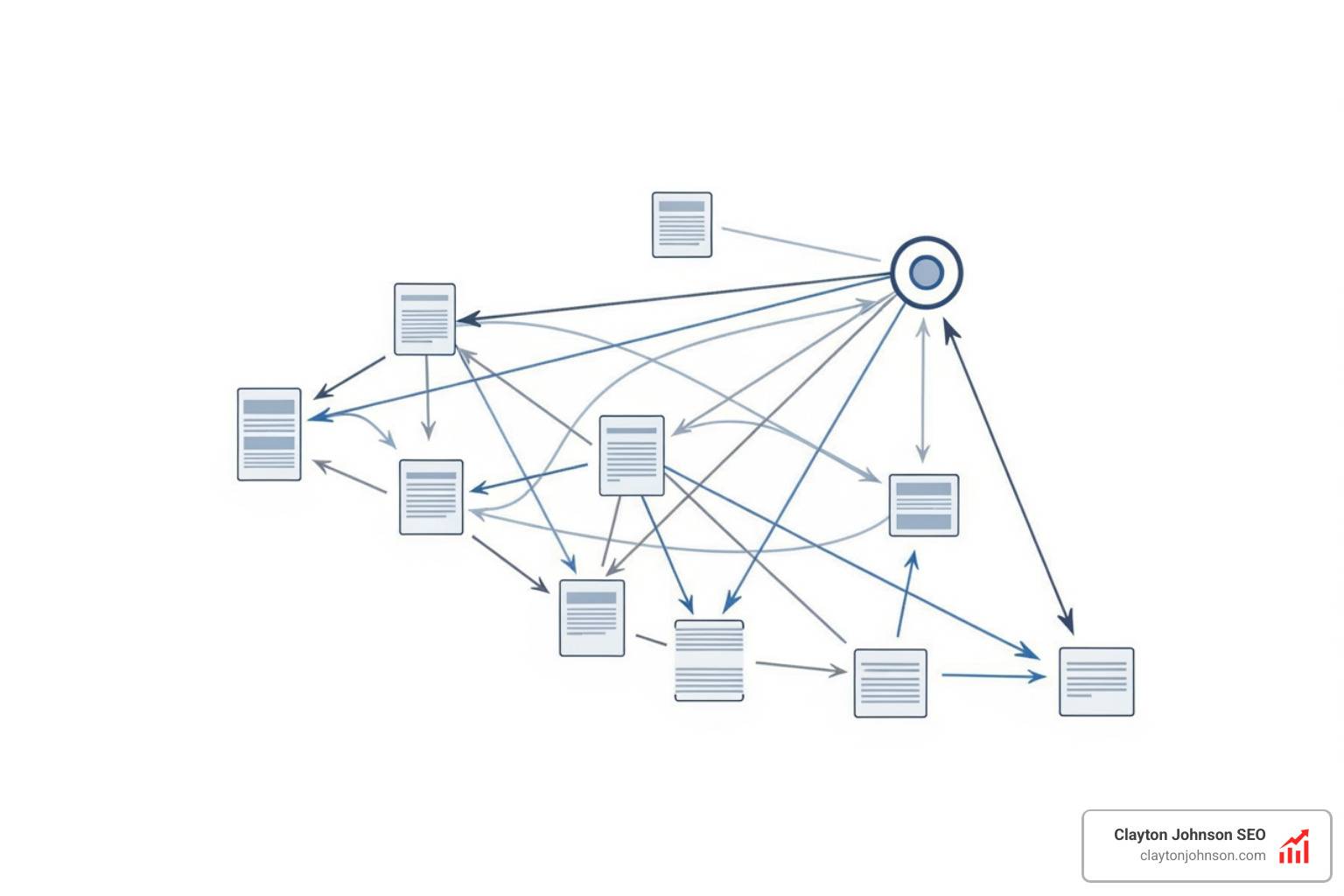
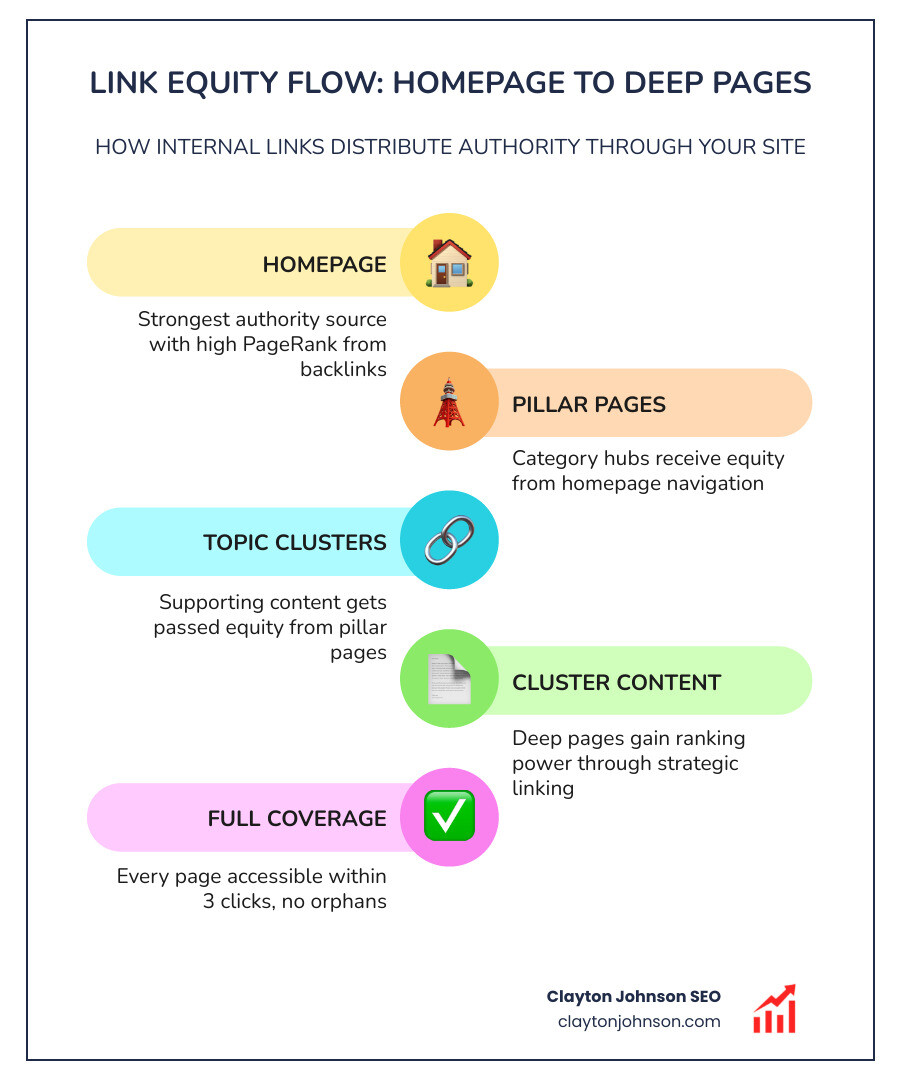
To build a website that search engines love, we have to stop thinking about pages in isolation. Instead, we view our website as an ecosystem. The best internal linking practices revolve around creating a logical site architecture and hierarchy that signals to the Google crawler exactly which pages are our “power players.”
Think of your website as a house. The homepage is the front door, and the internal links are the hallways and doors connecting the rooms. If a room has no door, no one can enter it. In SEO terms, these are called “orphan pages”—pages with zero incoming internal links. Even if these pages are in your sitemap, Google may view them as unimportant.
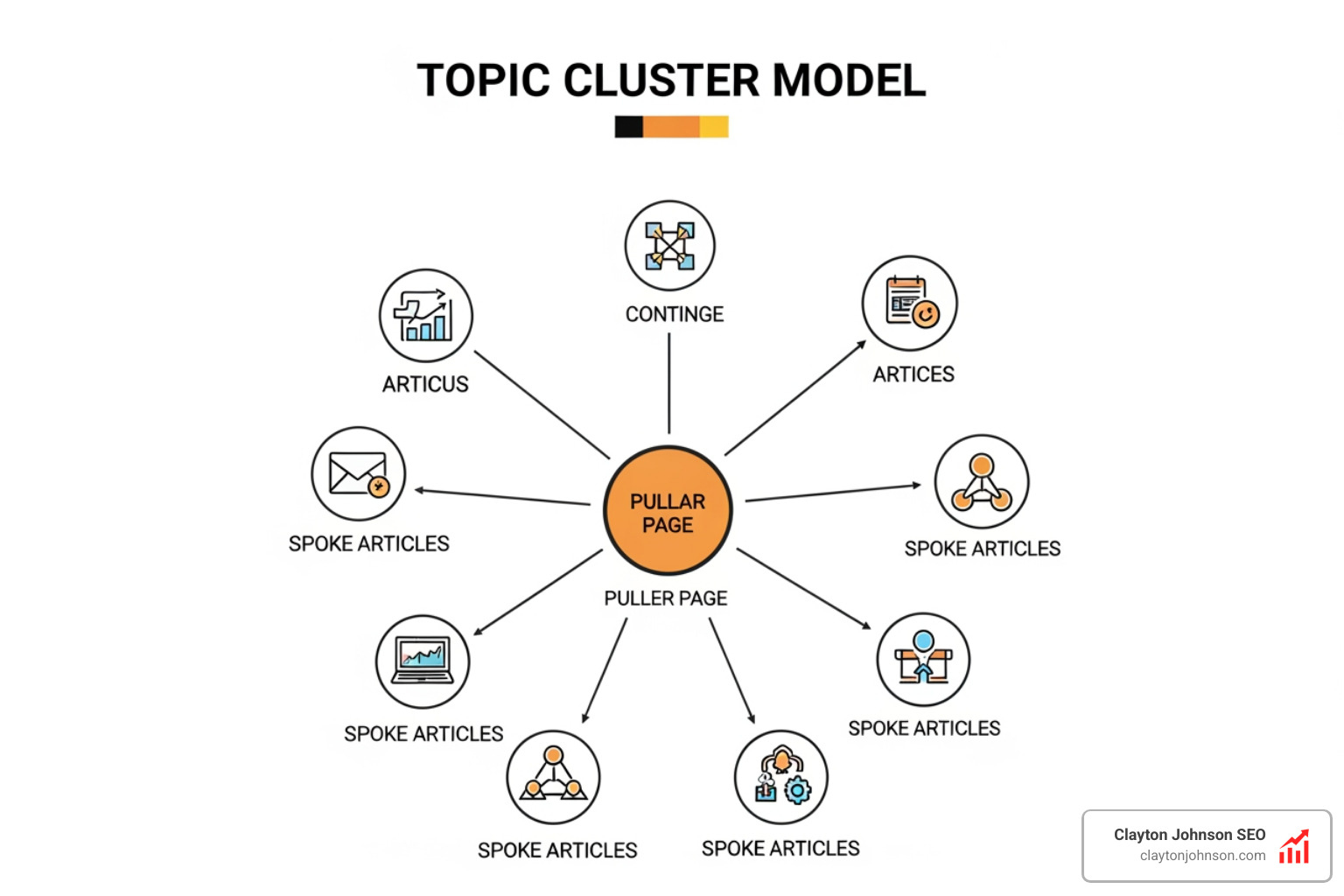
By using a silo model, we group related content together. This creates “topical authority.” When we link several specific articles about “AI coding” to one massive “Guide to AI,” we are telling search engines that our site is a deep resource on that specific subject. This distribution of link equity ensures that the “ranking power” gathered by your high-performing pages flows down to your newer or weaker content.
Mastering Anchor Text Within Best Internal Linking Practices
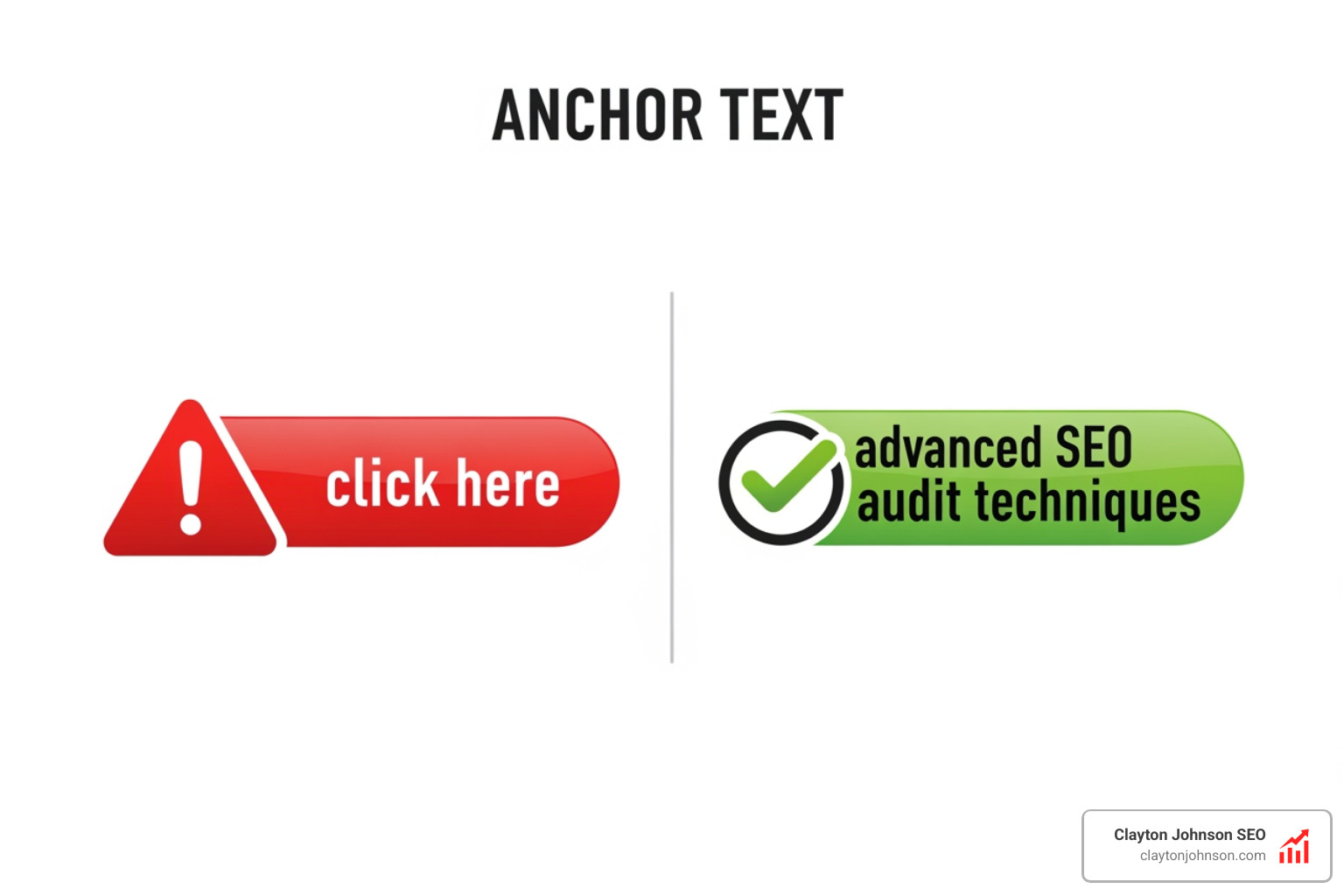
Anchor text—the clickable words in a hyperlink—is one of the strongest signals we can send to search engines. It provides context. If we use “click here” as our anchor text, we tell Google nothing. But if we use “advanced SEO audit techniques,” we are giving the crawler a massive clue about the destination page’s topic.
Here are the rules we follow for anchor text:
- Be Descriptive: The text should describe the page you are linking to.
- Use Long-Tail Keywords: Instead of just linking the word “marketing,” link the phrase “effective email marketing strategies for small businesses.” This helps you rank for more specific, high-intent searches.
- Avoid Keyword Stuffing: While we want keywords in our anchor text, over-optimizing every single link with the exact same phrase can look manipulative. We mix it up with partial matches and related phrases.
- Natural Flow: The link should never feel forced. If a reader feels interrupted by a link, it’s a bad link. It should feel like a helpful “next step” in their journey.
According to John Mueller has suggested that anchor text provides significant context for how Google understands a page. Even several Google patents mention the surrounding text of a link as a ranking signal.
Optimizing Link Density and Placement
A common question we get is: “How many links are too many?”
Industry data from a Zyppy survey found that URLs with 50 or more internal links actually saw a decline in traffic. While Google can technically crawl up to 250 links on a very important page, the too many internal links warning is real. When you have too many links, the “link juice” or authority passed to each individual link becomes diluted.
We recommend a sweet spot: 5-10 internal links per 2,000 words.
Placement matters just as much as quantity. We prioritize contextual links—links found within the body of your content—over navigational links in the header or footer. Why? Because contextual links show a relationship between ideas.
Pro Tip: Place your most important internal links “above the fold” or within the first few paragraphs. The average time on a web page is only 52 seconds; if a user finds a relevant link early, they are more likely to stay on your site, which increases “dwell time” and signals to Google that your content is valuable.
Strategic Distribution of Link Equity
Not all pages on your site are equal. Your homepage usually has the most authority because it receives the most external backlinks. We use internal linking to “funnel” that authority to the pages we want to rank.
| Strategy | Direction | Goal |
|---|---|---|
| Scale-Down | High-Authority $\rightarrow$ Low-Performance | Boost rankings of new or “stuck” pages |
| Scale-Up | High-Traffic $\rightarrow$ High-Conversion | Drive sales/leads from popular blog posts |
| Horizontal | Cluster $\rightarrow$ Cluster | Build topical depth and semantic relationships |
By using internal links can spread link juice, we can rescue pages that are buried too deep. We aim for a “flat” website architecture, meaning any page on the site should be reachable within three clicks from the homepage. If a page is four or five clicks away, OnCrawl research shows it is significantly less likely to be crawled or indexed.
For those looking to automate this process, Check out our AI tools to see how we use technology to map equity flow.
Advanced Frameworks and Maintenance
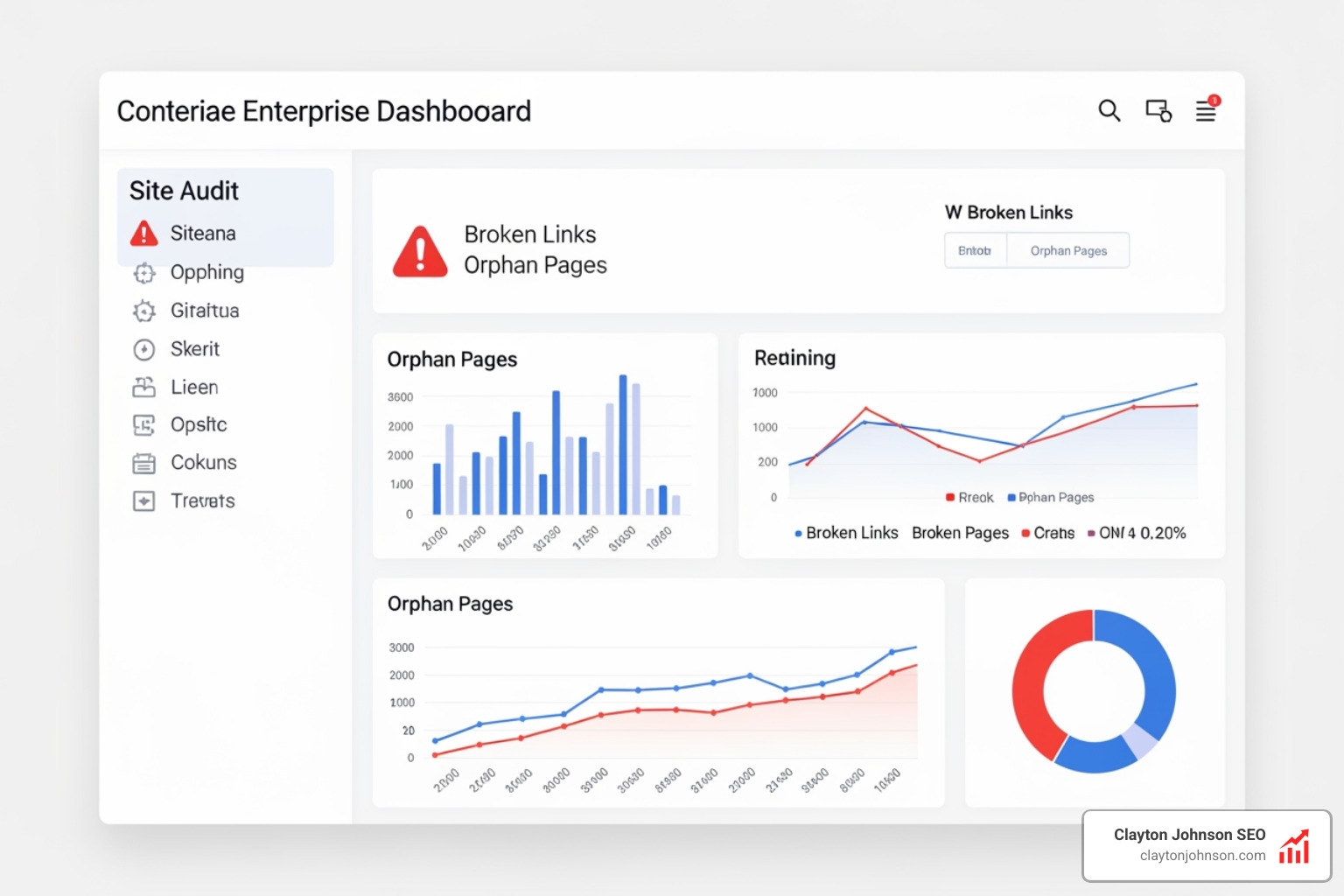
Building a link structure is not a “set it and forget it” task. As a site grows, the architecture can become messy. We might accidentally create orphan pages or, even worse, backlinks can have adverse effects if they point to broken content.
One of the most common issues we find in audits is keyword cannibalization. This happens when you have two different pages on your site trying to rank for the same keyword. You can fix this by linking the “weaker” page to the “authoritative” one using the target keyword as anchor text. This tells Google: “This is the main page you should rank for this term.”
Building Topic Clusters and Pillar Page Systems
To dominate a niche, we use the hub and spoke model.
- The Hub (Pillar Page): A comprehensive, long-form guide on a broad topic (e.g., “The Ultimate Guide to AI”).
- The Spokes (Cluster Content): Shorter, specific articles that dive deep into sub-topics (e.g., “AI for Healthcare,” “AI for Finance”).
- The Linking: Every spoke article must link back to the hub, and the hub must link out to every spoke.
This creates a “closed loop” of authority. It makes it incredibly easy for the Google crawler to understand the semantic relationship between your pages. This strategy is also excellent for appearing in LLM responses like ChatGPT, as it demonstrates structured, authoritative knowledge.
If you need a custom blueprint for your industry, you can Explore our SEO consulting services.
Executing a Technical Audit of Best Internal Linking Practices
We recommend a technical audit for redirects and broken links every 4-6 weeks. Why? Because according to research, 42.5% of all websites have broken internal links. A broken link is a “dead end” for both users and crawlers, wasting your crawl budget.
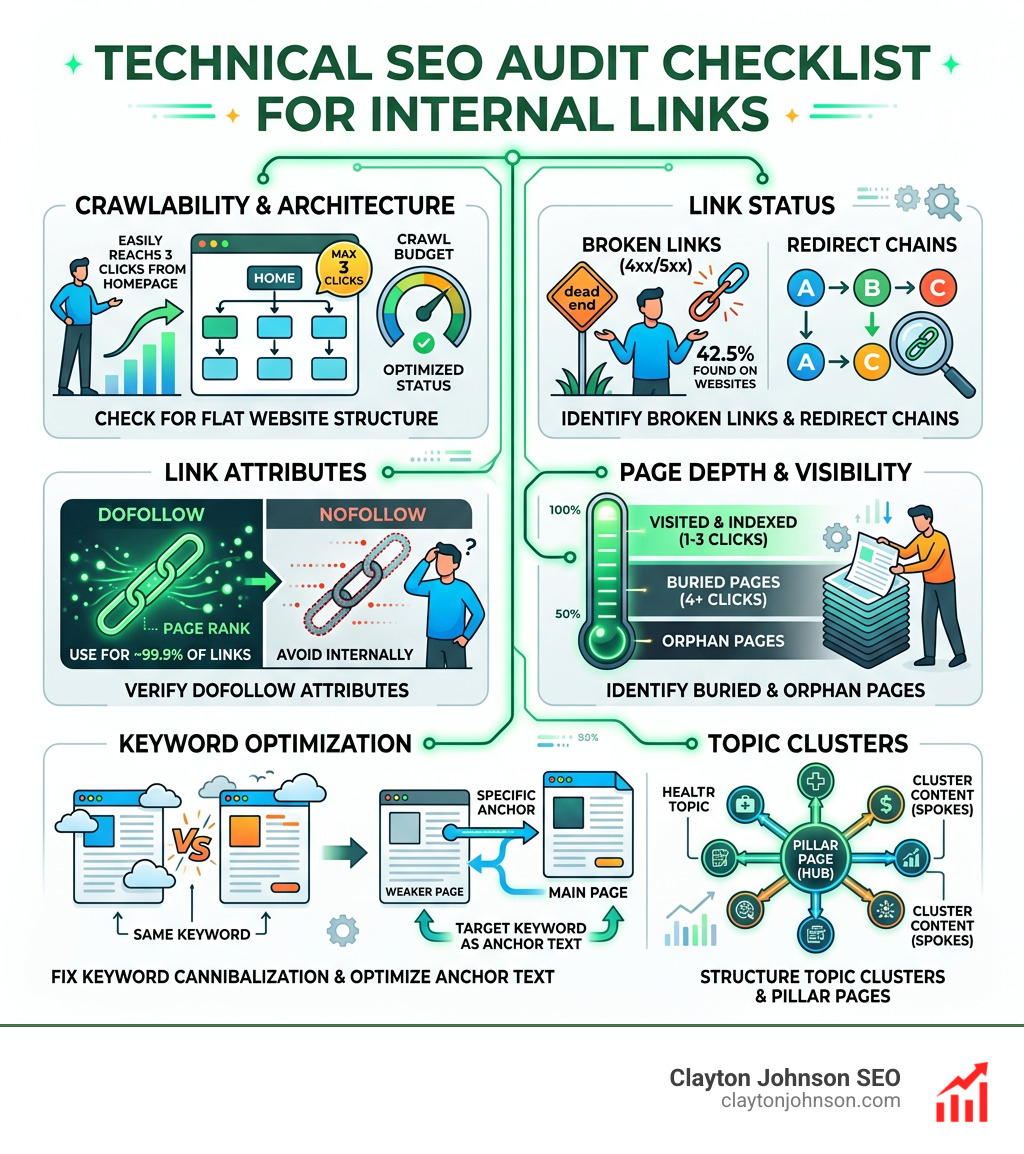
When auditing, keep these technical points in mind:
- Dofollow vs. Nofollow: In your internal strategy, 99.9% of links should be dofollow. While nofollow links can be useful when used externally, using them internally prevents the flow of PageRank. There is almost no reason to nofollow your own content.
- Redirect Chains: If Page A links to Page B, which then redirects to Page C, you are losing link equity. Update the link on Page A to point directly to Page C.
- Tooling: We use Semrush Site Audit or the Screaming Frog SEO Spider Tool to visualize site structure and find “buried” pages.
Scaling Your Traffic Systems
The best internal linking practices are not just about SEO; they are about creating a better experience for your customers. When you provide a clear path for a user to find more information, you build trust and authority.
At Clayton Johnson SEO, we focus on these durable systems because they offer compounding growth. A single backlink from an external site is great, but a perfectly optimized internal structure makes every backlink you earn 10x more effective by spreading that authority across your entire domain.
Stop chasing the latest “hack” and start building a foundation. If you want to see exactly where your site stands, Download our internal linking checklist and run your first audit today.
By applying clarity and structure to your linking, you turn a collection of pages into a powerful growth engine. Let’s get to work.