Navigating the Regulatory Maze of Captive Insurance Authorities

Why Authority Building Captive Insurance Is Your Competitive Edge
Authority building captive insurance is the strategic use of a licensed, wholly owned insurance subsidiary to both finance your business risks and signal sophisticated risk management capability to boards, investors, and clients.
Here is a quick breakdown of how it works:
| Concept | What It Means |
|---|---|
| Captive insurer | A licensed insurance company owned by the business it insures |
| Authority building | Using the captive as proof of risk management sophistication |
| Self-insurance | Retaining and funding your own predictable losses |
| Alternative Risk Transfer (ART) | Moving risk outside traditional commercial markets |
| Risk ownership | Aligning incentives so your business directly benefits from fewer claims |
Roughly 90% of Fortune 500 companies already operate captive subsidiaries. That stat alone tells you something important: captives are not a fringe idea. They are a mainstream tool that serious organizations use to control codes, access reinsurance markets, and build credibility with stakeholders.
Yet for most mid-market company owners, the regulatory maze around forming and running a captive feels overwhelming. There are more than 70 domicile jurisdictions worldwide, IRS scrutiny on micro-captive structures, and layers of governance requirements that can derail even well-intentioned programs before they launch.
This guide cuts through that complexity.
I’m Clayton Johnson, an SEO strategist and demand generation expert who has spent nearly two decades helping businesses build visibility and credibility in highly competitive, regulated industries — including the niche where authority building captive insurance intersects with digital positioning and financial strategy. In the sections ahead, I’ll walk you through everything from domicile selection to IRS compliance so you can move forward with confidence.
Strategic Frameworks for Authority Building Captive Insurance
When we talk about authority building captive insurance, we are moving beyond simple “savings.” We are talking about a fundamental shift in how a business views its own stability. In a traditional insurance model, you pay a premium, and that money is gone. In a captive model, you are creating a financial engine that rewards your own safety and efficiency.

To build a successful case for a captive, we must first establish a strategic framework. This starts with a deep dive into your “Risk Appetite”—how much volatility can your balance sheet actually handle? This isn’t a guessing game; it requires a rigorous Total Cost of Risk (TCOR) analysis. We look at five years of historical loss data to find the “predictable” layer of your risk. If your losses are consistent, you are essentially trading dollars with a commercial carrier and paying them a 30% markup for the privilege.
By retaining that predictable layer in a captive, you unlock several strategic levers:
- Underwriting Profit: Money not paid out in claims stays within your corporate family.
- Investment Income: You hold the reserves and earn interest on them while waiting for claims to materialize.
- Reinsurance Access: Captives allow you to bypass retail brokers and buy “wholesale” insurance directly from the global reinsurance market.
- Customization: You can write policies for risks the commercial market won’t touch, like specific supply chain disruptions or reputational damage.
Comparing Captive Structures
Not all captives are created equal. Choosing the right “vessel” for your risk is a critical part of the authority-building process.
| Structure Type | Best For | Capital Requirements | Regulatory Complexity |
|---|---|---|---|
| Single-Parent | Large corporations ($250k+ min capital) | High | High (Full licensing) |
| Group Captive | Mid-market companies in the same industry | Shared | Moderate |
| Protected Cell (PCC) | Smaller entities “renting” a structure | Low | Low (Turnkey) |
| Risk Retention Group | Liability-only for specific industry groups | Moderate | High (Federal LRRA) |
Establishing Credibility Through Authority Building Captive Insurance
For C-suite executives and boards, a captive is more than a tax-efficient vehicle; it is a signal of operational excellence. When a CFO presents a captive’s performance to the board, they aren’t just talking about insurance; they are talking about strategic risk financing.
This level of sophistication builds immense boardroom credibility. It shows that the organization has moved from being a passive buyer of insurance to an active manager of capital. To understand the legal nuances of this transition, many leaders turn to resources like A Business Lawyer’s Guide to Captive Insurance to ensure their governance matches their ambition.
By aligning the captive’s goals with the parent company’s growth strategy, the captive becomes a performance lever. It allows the business to take on bigger projects or enter riskier markets because it has a dedicated, controlled pool of capital to back those moves.
Industry-Specific Authority Building Captive Insurance Models
The impact of authority building captive insurance is perhaps most visible in high-stakes industries like construction. In today’s market, construction firms face “nuclear verdicts”—lawsuit awards exceeding $10 million—and a tightening traditional insurance market that is often unwilling to provide adequate coverage.
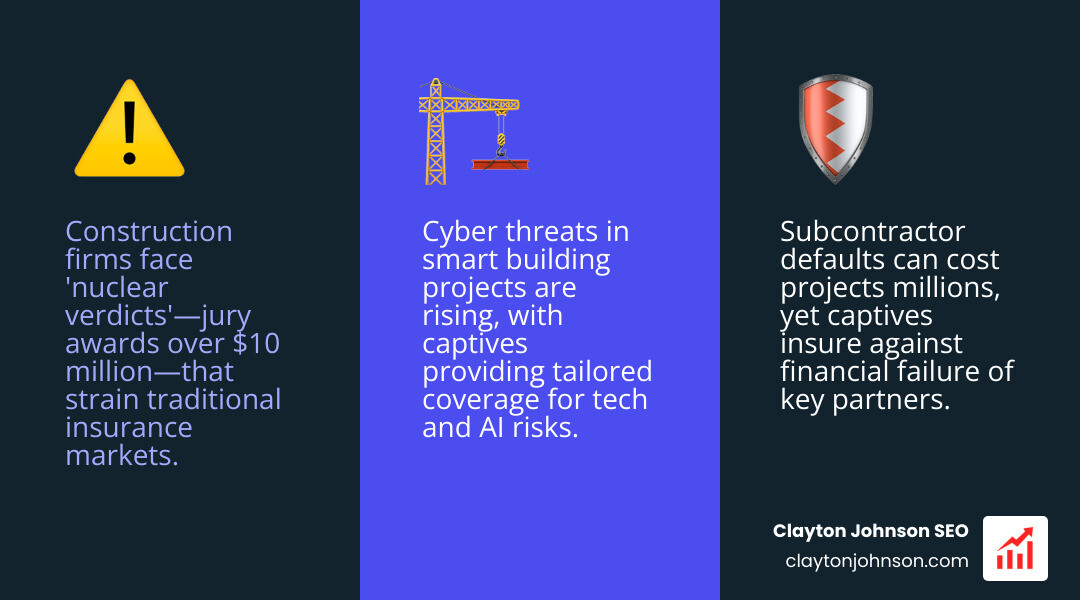
A construction-focused captive allows a firm to:
- Manage Subcontractor Default: Insure against the financial failure of key partners.
- Mitigate Cyber Threats: Address the unique technology and AI risks inherent in modern “smart” building projects.
- Control Professional Liability: Tailor coverage for design-build risks that traditional policies often exclude.
This proactive approach is a cornerstone of how to build an authority site or brand that dominates its niche. When you own the risk, you own the data. That data allows you to implement better safety protocols, which leads to fewer claims, which leads to more profit. It’s a virtuous cycle. For a deeper dive into how these entities are categorized, the Classification of Captives provides the regulatory definitions used by the NAIC.
Navigating Domicile Selection and Regulatory Compliance
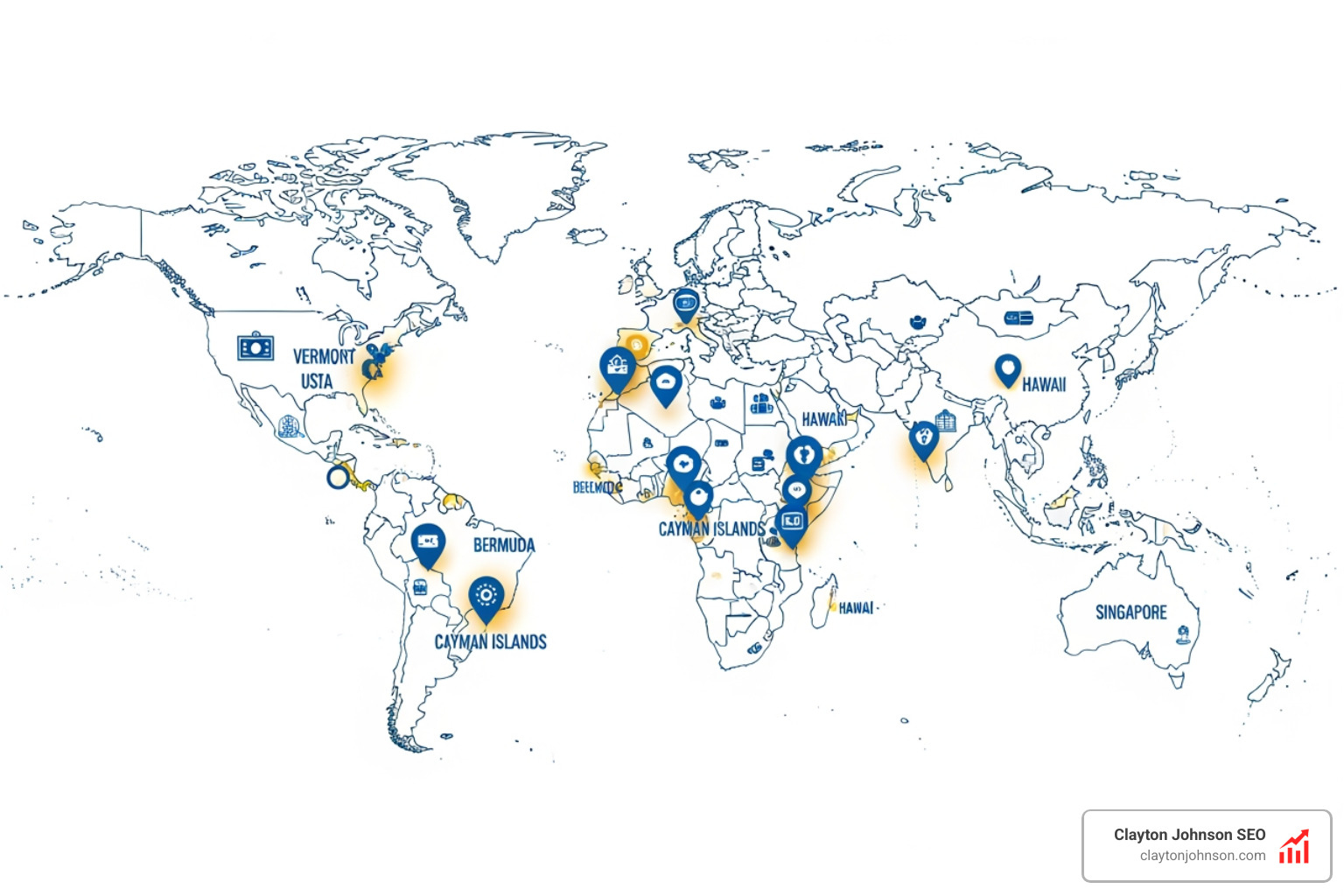
Choosing where to “home” your captive is one of the most consequential decisions you will make. This is known as domicile selection. There are currently more than 7,000 captives operating globally across more than 70 jurisdictions.
Onshore vs. Offshore: The Great Debate
The choice between an onshore (U.S.-based) or offshore (international) domicile often comes down to a balance of regulatory “flavor,” cost, and proximity.
- Vermont (Onshore): Often called the “Gold Standard,” Vermont has licensed over 1,300 captives. It offers a robust regulatory infrastructure and professional staff who understand the “principle of proportionality”—meaning they apply regulation that fits the size and risk of the captive.
- Bermuda (Offshore): The world’s largest single jurisdiction for captives. It is highly sophisticated and offers a Class 1–4 structure that allows for massive scalability. Many organizations look to the Bermuda Monetary Authority — Insurance Regulation for guidance on international standards.
- Cayman Islands (Offshore): A leader in healthcare and group captives, known for its efficiency and tax neutrality.
For businesses in the financial sector, this choice is as much about financial services SEO and brand positioning as it is about taxes. Being domiciled in a respected jurisdiction like Vermont or Bermuda adds a layer of “regulatory polish” to your corporate profile.
The Role of Feasibility Studies in Regulatory Approval
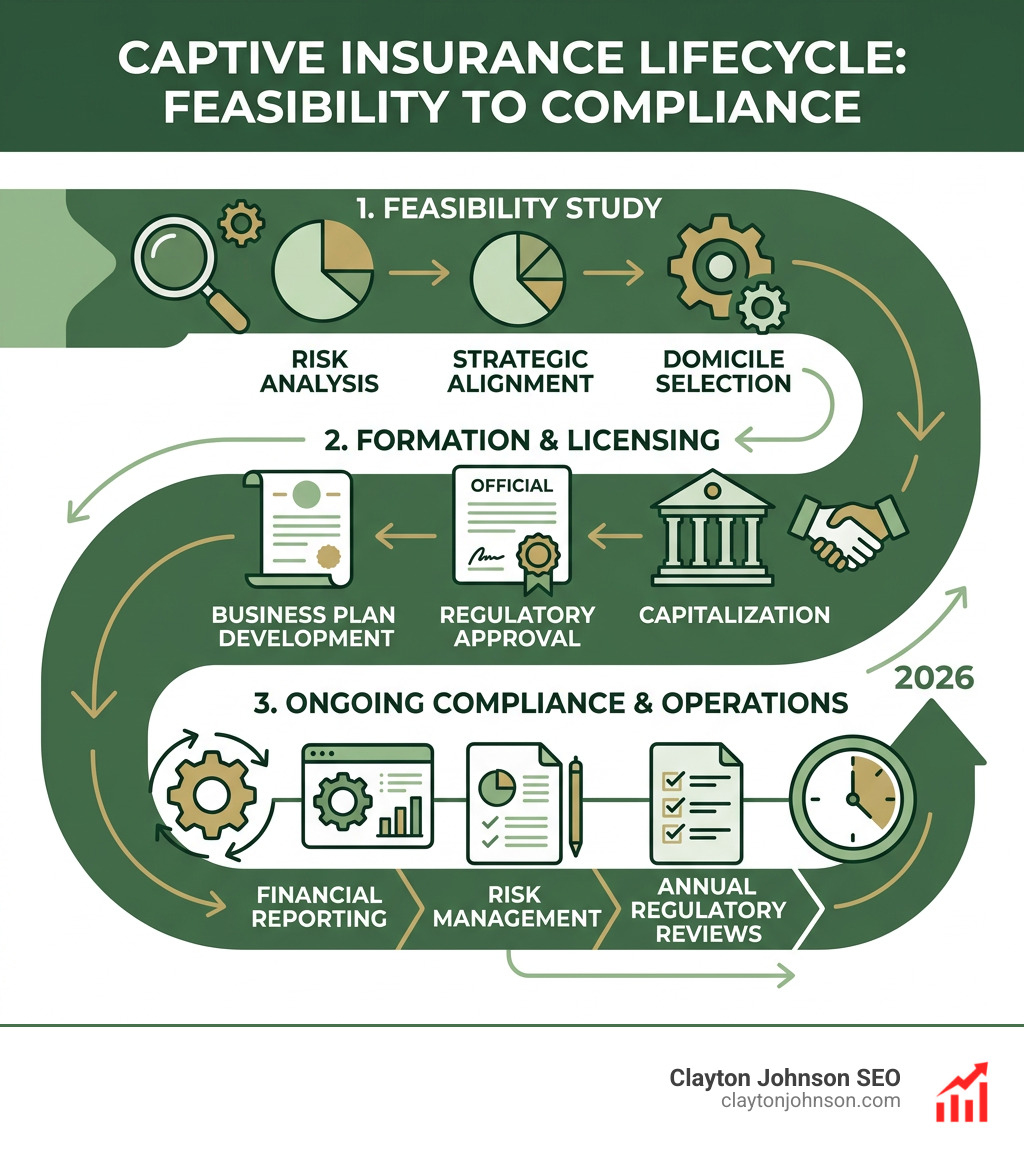
You cannot simply wake up and start an insurance company. Regulators require a “Feasibility Study” to prove your plan is viable. Think of this as the business plan for your insurance company.
A comprehensive feasibility study must include:
- Actuarial Pro Formas: Five-year projections of premiums, losses, and expenses.
- Historical Loss Review: A deep look at your past five years of claims to ensure the risk is “predictable.”
- Capitalization Plan: Evidence that you have the required initial capital (often $250,000 or more for single-parent captives).
- Investment Policy: How the captive will manage its reserves.
This process is where AI authority building is beginning to play a role, using machine learning to better predict loss patterns and optimize premium levels. For a step-by-step roadmap, the Guide To Building A Captive Insurance Company is an excellent resource for stakeholders.
IRS Compliance: Risk Shifting and Distribution Requirements
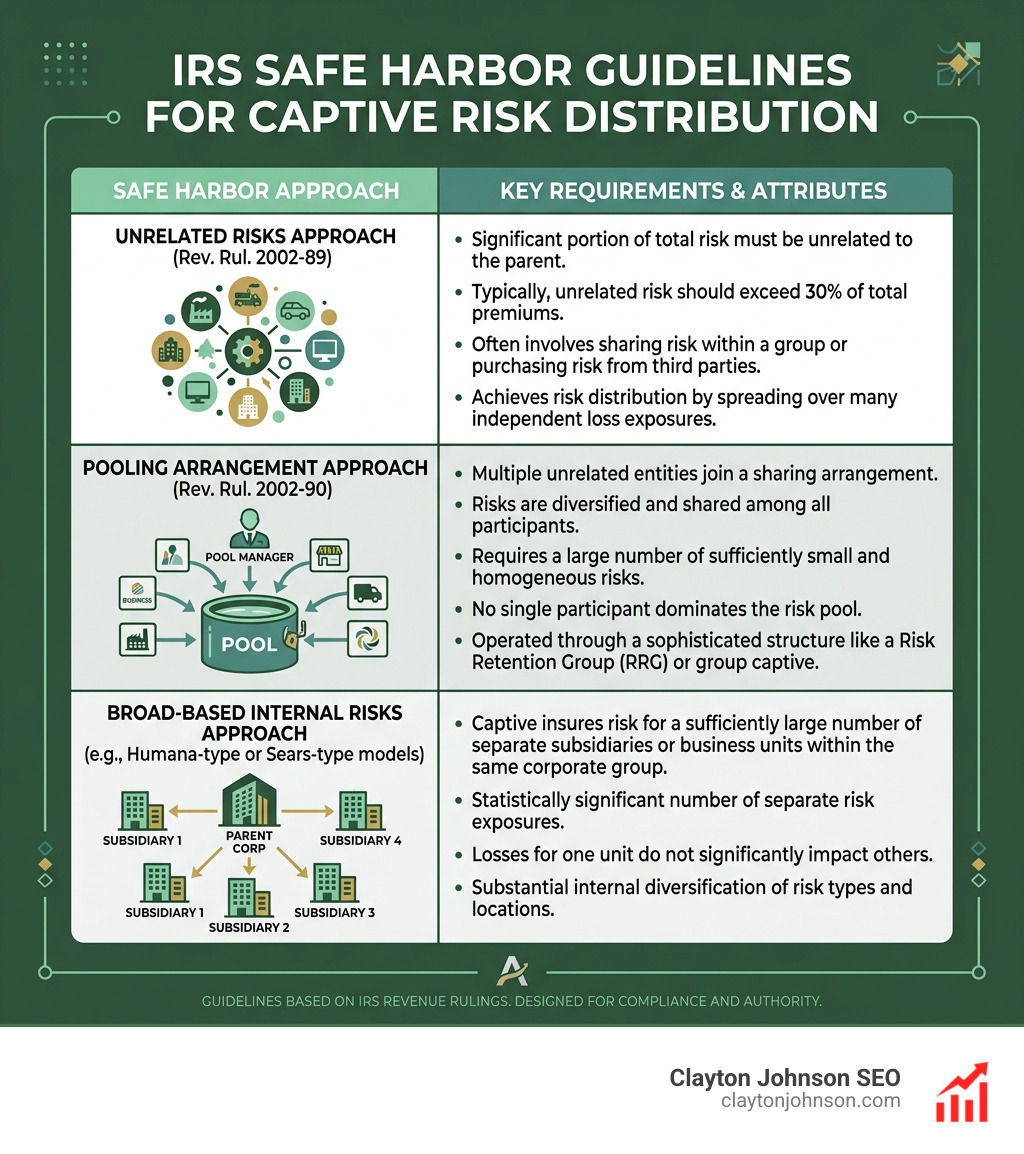
The IRS is the “final boss” of the captive insurance world. To qualify as a legitimate insurance company for tax purposes—meaning your premiums are deductible—the captive must meet two key tests: Risk Shifting and Risk Distribution.
- Risk Shifting: The policyholder must transfer the economic burden of a loss to the insurer.
- Risk Distribution: The insurer must spread the risk across enough independent risk units to invoke the “Law of Large Numbers.”
For many small and mid-sized businesses, the Internal Revenue Code §831(b) election is highly attractive. Known as “micro-captives,” these companies can elect to be taxed only on their investment income, provided their annual written premiums stay below a certain threshold ($2.8 million).
However, beware: micro-captives have appeared on the IRS “Dirty Dozen” list of tax scams. To avoid scrutiny, your captive must have a “bona fide” business purpose. If the only reason you formed the captive was to hide money from the taxman, you are in for a world of hurt. This is why AI authority building is the new SEO gold rush; it requires a combination of technical precision and strategic intent to stay on the right side of authority.
Operational Governance and Long-Term Success
Formation is just the beginning. To maintain your status as an authority, you must operate the captive like a real business. This means:
- Hiring a Captive Manager: These are the specialized experts who handle the day-to-day accounting, regulatory filings, and compliance.
- Fronting Arrangements: If you need to issue “admitted” policies (often required by contracts or state law), you may need a fronting carrier to issue the policy and then reinsure the risk back to your captive.
- Claims Handling: You need a transparent, professional process for adjusting and paying claims.
Successful captives often integrate their operations with partnership SEO content ecosystems to communicate their risk management prowess to the market. By showing the world that you have mastered your own risk, you become an “authoritative” player in your industry.
For those looking to avoid being a “brand nobody,” the Captive Insurance Services: Formation and Management overview provides a checklist for ongoing operational success. The goal is compounding growth—not just a one-time tax break. By following The authoritative guide to not being a brand nobody, you can ensure your captive remains a pillar of your business’s long-term credibility.
Conclusion: The Path to Insurance Authority
Navigating the regulatory maze of authority building captive insurance is not for the faint of heart, but the rewards are transformative. By moving from a consumer of insurance to a provider of it, you gain control over your costs, access to global markets, and a level of strategic authority that few of your competitors can match.
At Clayton Johnson SEO, we believe in the power of systems. Whether it’s a technical SEO architecture or a captive insurance framework, the philosophy is the same: Clarity → Structure → Leverage → Compounding Growth. If you are ready to stop setting your premiums on fire and start building a financial engine, the captive insurance world is waiting. Just remember to bring a map—and a very good actuary.