The Architecture of Cross-Promotion SEO Frameworks
Cross-promotion SEO frameworks are structured systems that help businesses amplify their organic content across multiple channels — turning a single piece of SEO content into fuel for social media, email, paid ads, PR, and sales enablement simultaneously.
Here’s how they work at a glance:
| Framework Component | What It Does |
|---|---|
| Content Atomization | Breaks long-form SEO content into channel-specific assets |
| Multi-Channel Distribution | Spreads those assets across email, social, paid, and PR |
| Cross-Functional Alignment | Unites SEO, PR, content, and sales teams around shared goals |
| Unified Attribution | Measures how each channel contributes to organic and revenue growth |
| Compounding Authority | Builds brand trust and backlinks through repeated exposure |
Most businesses publish a blog post, optimize it for search, and wait. That’s leaving enormous value on the table.
The real opportunity is treating that SEO content as a business asset — one that can educate prospects, support sales conversations, earn media coverage, and drive demand across every channel where your audience already spends time.
Organizations that implement this kind of integrated approach see dramatic results. One mid-market SaaS company achieved a 340% increase in lead generation simply by systematically redistributing existing SEO content across social, email, paid, and sales channels. A management consulting firm shortened its sales cycle by 35% by amplifying research-backed SEO content through PR and thought leadership channels.
The gap between businesses that grow organically and those that stall often isn’t content quality. It’s distribution architecture.
I’m Clayton Johnson, an SEO strategist and demand generation expert with nearly two decades of experience building cross-promotion SEO frameworks that turn organic content into scalable, multi-channel growth engines. In this guide, I’ll walk you through the exact systems, frameworks, and tools I use to help ambitious businesses build shared authority and capture qualified demand at scale.
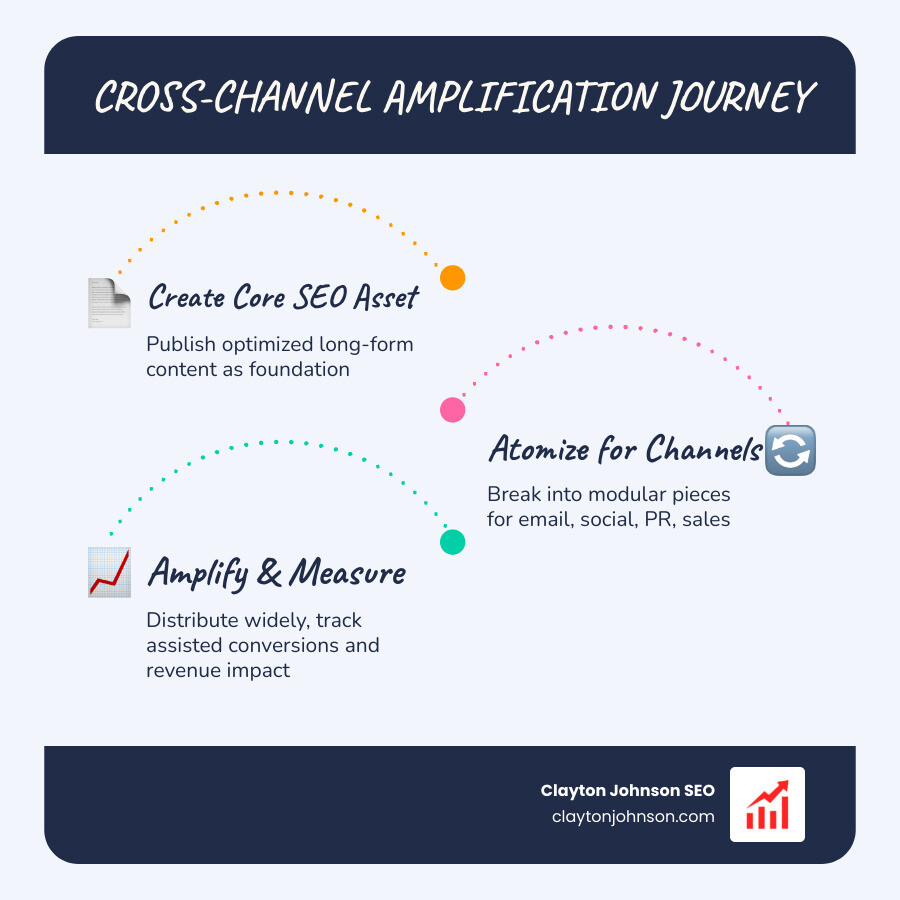
To move beyond the “publish and pray” model, we have to look at SEO as the foundation of a much larger ecosystem. When we build cross-promotion SEO frameworks, we aren’t just looking for rankings; we are looking for “leverage.” This leverage comes from two primary psychological and structural concepts: the Mere Exposure Effect and Content Modularity.
The Mere Exposure Effect suggests that people develop a preference for things merely because they are familiar with them. By taking a high-value SEO asset and atomizing it across LinkedIn, email newsletters, and partner webinars, we ensure our target audience encounters our expertise multiple times in different formats. This builds a “competitive moat” of trust that a single search result cannot achieve on its own.
Content Atomization and Modularity
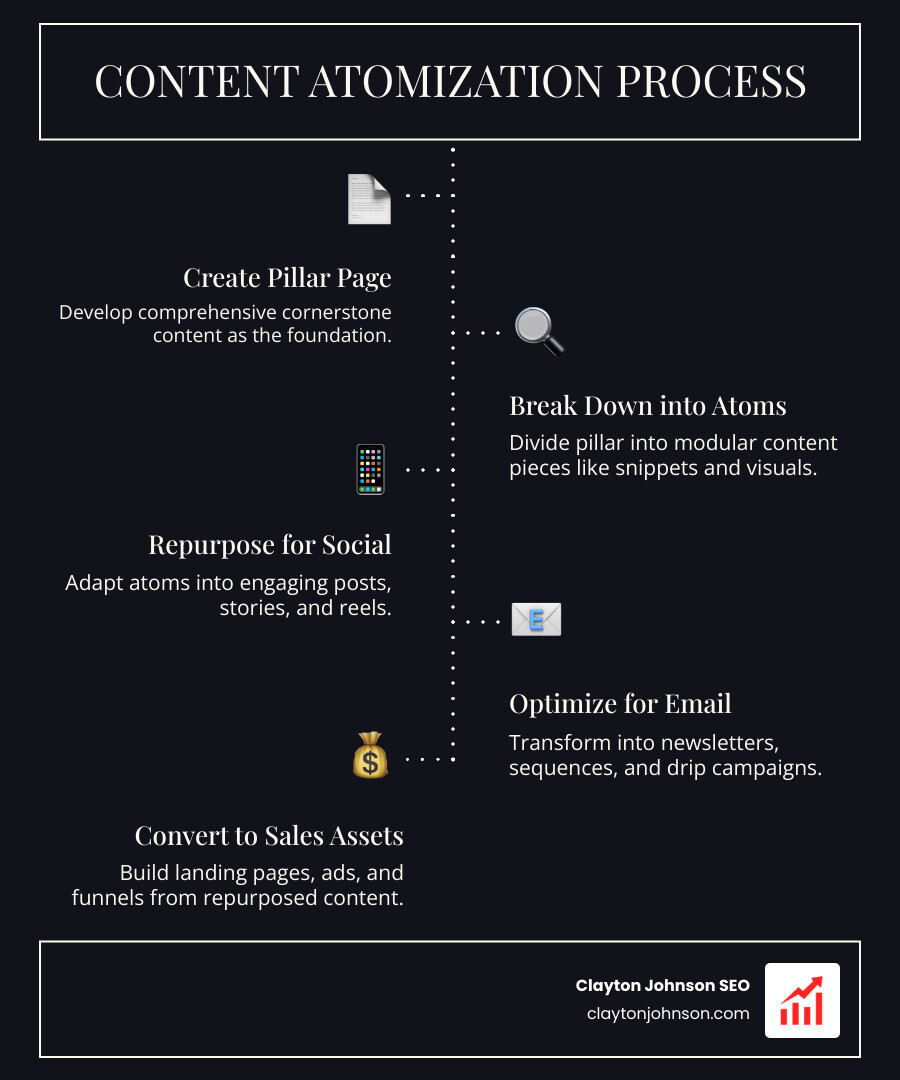
Content atomization is the process of breaking a “pillar” SEO asset into smaller, platform-specific “atoms.” For example, a 3,000-word guide on “Enterprise Security” can be atomized into:
- Five LinkedIn carousels highlighting specific statistics.
- A three-part email series for lead nurturing.
- A set of “battle cards” for the sales team to handle common objections.
- A guest post for a partner’s blog that links back to the original pillar.
This requires a human-centered approach to content taxonomy that organizes information not just for bots, but for how different departments actually use data. If your content isn’t modular, your team will waste hours manually rewriting snippets for every channel.
Overcoming Team Dysfunction
The biggest hurdle isn’t the content—it’s the silos. Research published by the Harvard Business Review found that 75% of cross-functional teams are dysfunctional because they lack clear accountability and aligned goals. SEO is often treated as a “marketing task” rather than a “growth infrastructure.”
To fix this, we must move toward an integrated model.
| Feature | Siloed SEO Strategy | Integrated Cross-Promotion Framework |
|---|---|---|
| Primary Goal | Keyword Rankings | Revenue and Pipeline Growth |
| Content Life | Published once, rarely updated | Atomized and redistributed across 5+ channels |
| Team Structure | SEO team works in a vacuum | Cross-functional (SEO, PR, Sales, Product) |
| Data Usage | Search volume only | Search intent + CRM data + Sales feedback |
| ROI Metric | Organic Traffic | Customer Acquisition Cost (CAC) & LTV |
By building a content taxonomy that doesn’t suck, we create a shared language that allows PR, social, and SEO teams to pull from the same “source of truth” without duplicating efforts.
Implementing Cross-Promotion SEO Frameworks via CFSEO
The CFSEO (Cross-Functional SEO) framework is our blueprint for breaking down those silos. In this model, SEO acts as the “connecting thread” across the organization. It ensures that when the PR team lands a major media mention, the SEO team has optimized the landing page to capture that traffic, and the sales team has the collateral ready to follow up.
Intent Setting and PR Integration
We start with Intent Setting. Instead of asking “What keywords should we rank for?”, we ask “What business outcomes are we driving this quarter?” If the goal is to enter a new market, SEO and PR collaborate to identify the “Influence Map”—the websites, search queries, and media outlets that our target customers trust.
According to a HubSpot report on consumer trends, search engines are 86% effective at finding answers online. However, the “search” doesn’t always happen on Google. It happens on LinkedIn, YouTube, and within private Slack communities. A CFSEO team maps these journeys to ensure the brand is present everywhere the “answer” is sought.
The ERMS Planning Model
To prioritize our efforts, we use the ERMS planning model:
- Eliminate: Stop creating low-value content that doesn’t serve multiple channels.
- Reduce: Scale back on manual distribution tasks that can be automated.
- Maintain: Keep high-performing “Workhorse” content updated for search and social.
- Scale: Double down on the formats (e.g., video, carousels) that show the highest cross-channel engagement.
This systematic approach is essential for SEO strategy for enterprises, where the sheer volume of content can lead to “content debt” if not managed through a structured framework.
Atomizing SEO Assets for Multi-Channel Distribution
Once the strategy is set, we move into the execution of cross-promotion SEO frameworks. The goal is to ensure that your “best-in-class” SEO content reaches people who may never visit a search engine today.
LinkedIn and Social Adaptation
LinkedIn is the “velocity layer” for B2B content. We don’t just share a link to the blog post (which social algorithms hate). We adapt the core insights into native formats.
- The Hook: Use the primary keyword’s “problem” as the opening line.
- The Value: Summarize the “Solution” section of your SEO pillar page.
- The CTA: Direct users to a pillar page or topic cluster for the deep dive.
Research from the Content Marketing Institute shows that the most successful B2B marketers prioritize “educational” content over promotional content. By using SEO data to find what people are actually asking, you create social content that is pre-validated by search intent.
Email Marketing and Serialization
Email remains one of the highest ROI channels. Instead of a generic newsletter, we serialize SEO content. If we have a comprehensive guide on “SaaS Retention,” we turn it into a 5-day “Email Course.”
- Each email covers one sub-topic (H2 or H3 from the blog).
- This keeps subscribers engaged for a week rather than a single click.
- It builds the “authority” necessary to move a prospect from “Problem Aware” to “Solution Aware.”
Sales Enablement: The Forgotten Channel
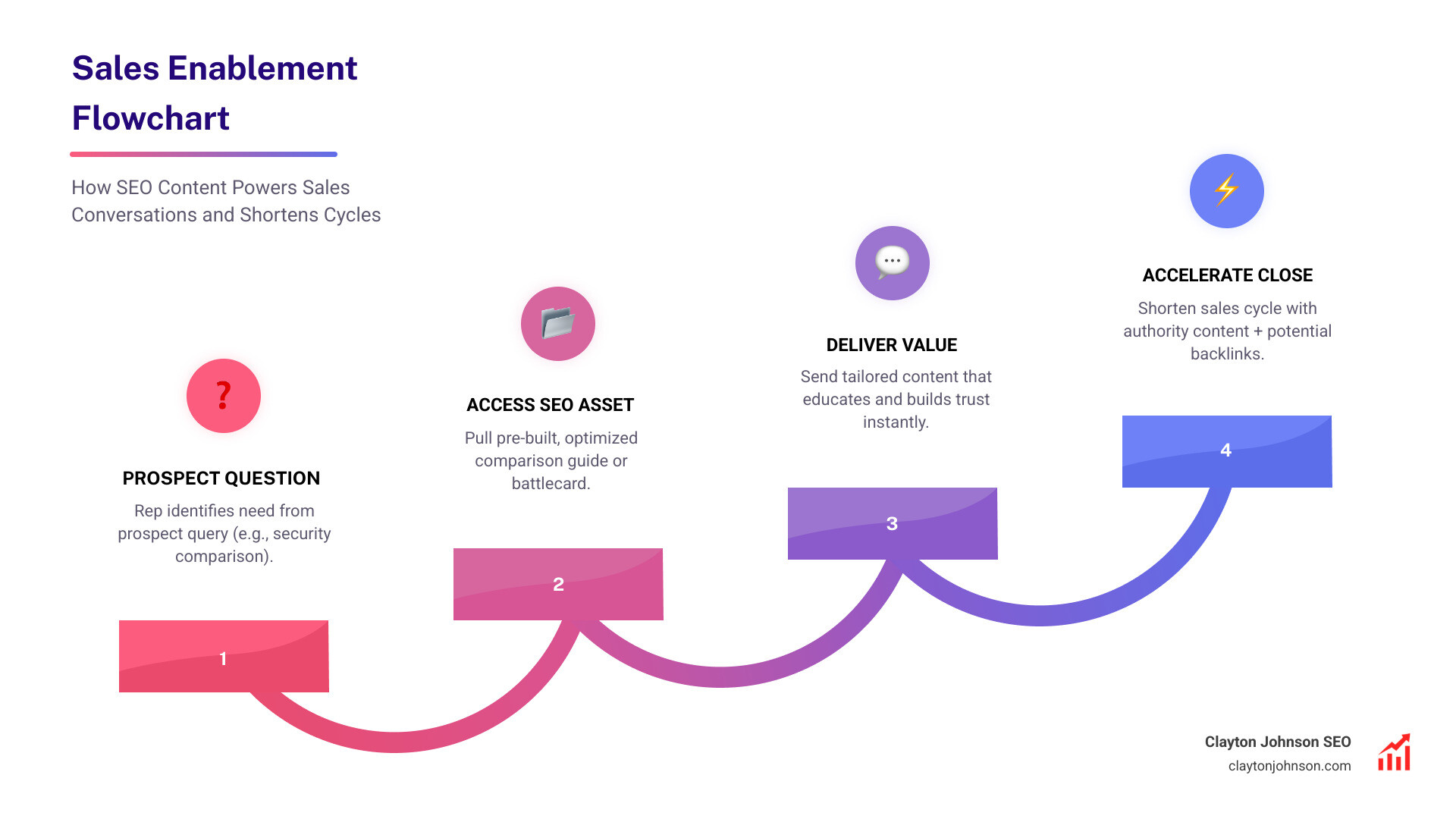
SEO content should be a weapon for your sales team. When a prospect asks, “How does your security compare to Competitor X?”, the sales rep shouldn’t have to write a custom email. They should have an SEO-optimized comparison guide ready to send. This not only helps the prospect but provides a high-quality “backlink” signal if that guide is shared internally within the prospect’s company.
Technical Infrastructure for Scalable Cross-Promotion SEO Frameworks
You cannot scale these frameworks with spreadsheets and manual copy-pasting. You need a “Marketing Technology Stack” that supports orchestration.
Automation and Orchestration
We use scheduling and automation tools to ensure that content distribution is timed for maximum impact. For example, when a new SEO pillar page goes live, an automated workflow should:
- Notify the sales team in Slack with a summary and “talking points.”
- Add the asset to the social media queue for a 30-day “drip” campaign.
- Trigger a “re-engagement” email to leads who have previously searched for related terms in your CRM.
CMS Modularity and Internal Linking
Your website needs to be built for this. A well-structured internal link system isn’t just for Google; it’s for the user journey. We use “modularity” in the CMS so that a “Call to Action” or a “Testimonial Block” can be updated in one place and reflected across every page that mentions a specific topic.
Essential SEO-PR Integration Tools:
- Google Search Console: To find the “Question Keywords” that PR should answer in media interviews.
- Semrush/Ahrefs: To track “Share of Voice” across the entire ecosystem, not just rankings.
- Monday.com/Asana: To manage cross-functional workflows and handoffs.
- GTM (Google Tag Manager): To track “Assisted Conversions” when a user sees a LinkedIn post but converts via organic search later.
Measuring ROI and Building Competitive Moats
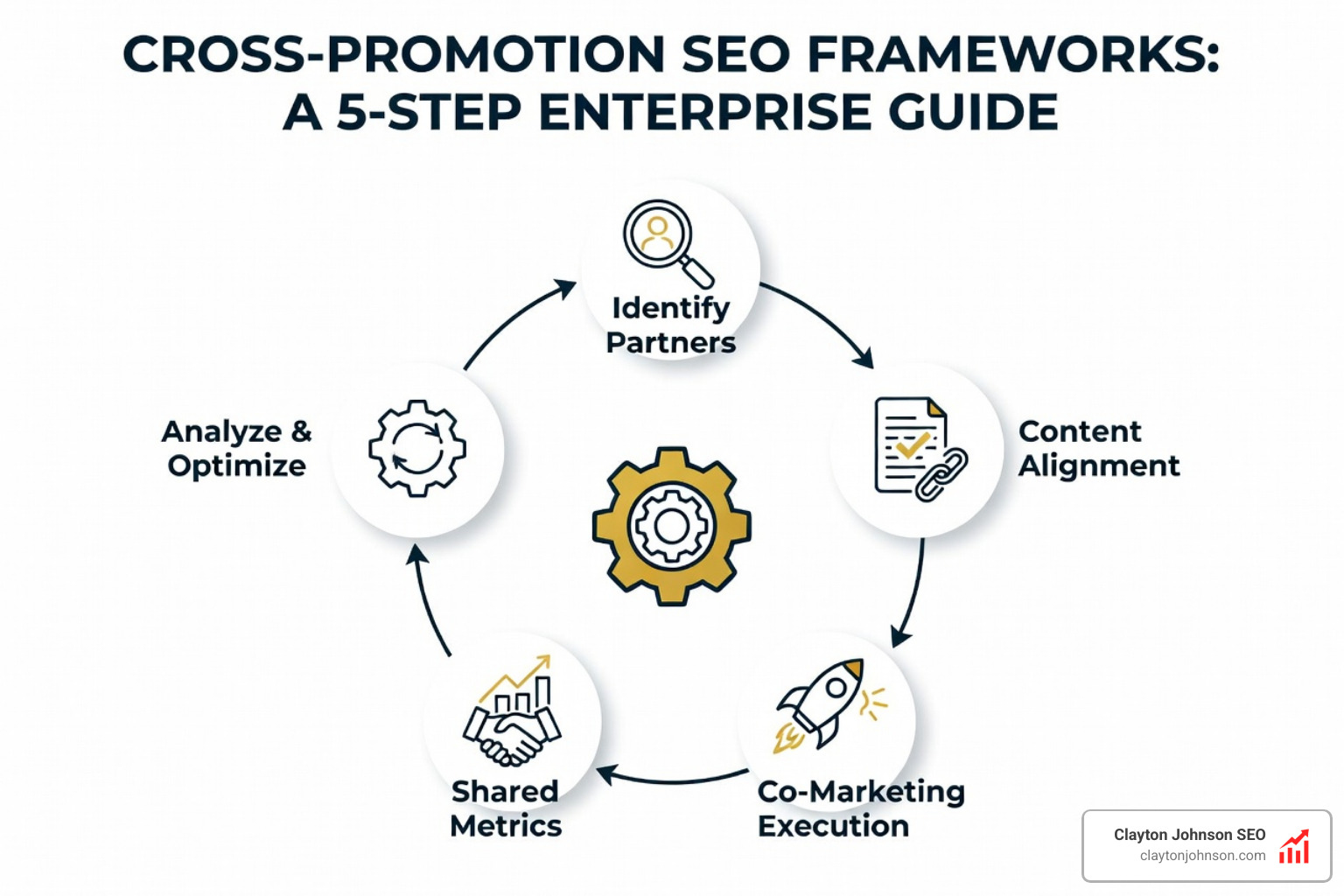
The ultimate goal of cross-promotion SEO frameworks is to lower your Customer Acquisition Cost (CAC) while building long-term brand authority. When you integrate channels, you stop paying for the same lead over and over again.
Lowering CAC through Integration
Statistics show that companies increasing their ratio of organic traffic relative to paid search see 30–60% lower acquisition costs. When you achieved “traffic parity” (where organic and paid traffic are equal), CAC can drop by over 60%.
This happens because SEO content provides the “trust” that makes paid ads more effective. A prospect might see a Facebook ad, ignore it, search for the topic on Google, find your expert guide, and then click the ad when they see it again. This “multi-touch” journey is the heart of modern growth.
The Personalization Factor
According to McKinsey & Company, personalization is no longer a luxury—it’s an expectation. By using a data-driven keyword strategy, we can personalize content based on “Search Intent.” A user searching for “benefits of X” gets educational content, while a user searching for “pricing of X” gets a direct conversion path.
Attribution and Performance Metrics for Integrated Campaigns
Measuring the success of an integrated framework requires moving beyond “Last-Click” attribution. If a user discovers you on LinkedIn, reads three of your emails, and then finally types your brand name into Google to convert, a siloed SEO report would give 100% of the credit to “Organic Search.” This is a mistake.
Assisted Conversions and Revenue Impact
We look at Assisted Conversions in Google Analytics 4 (GA4). This tells us which channels “warmed up” the lead.
- Leading Indicators: Social engagement, email open rates, and “branded” search volume.
- Lagging Indicators: MQLs (Marketing Qualified Leads), SQLs (Sales Qualified Leads), and actual revenue.
Forrester research on B2B marketing attribution highlights that the average B2B journey now involves 27+ touchpoints. If your SEO content isn’t present in at least 10 of those, you are losing to competitors who are more visible.
By winning the AI search era with intent-based keyword research, we ensure our content isn’t just “found”—it’s “useful” at every stage of that 27-touchpoint journey.
Future Trends in AI-Augmented SEO Amplification
As we look forward, search is changing. We are moving from “Search Engine Optimization” to “Search Experience Optimization.”
Voice Search and AI Discovery
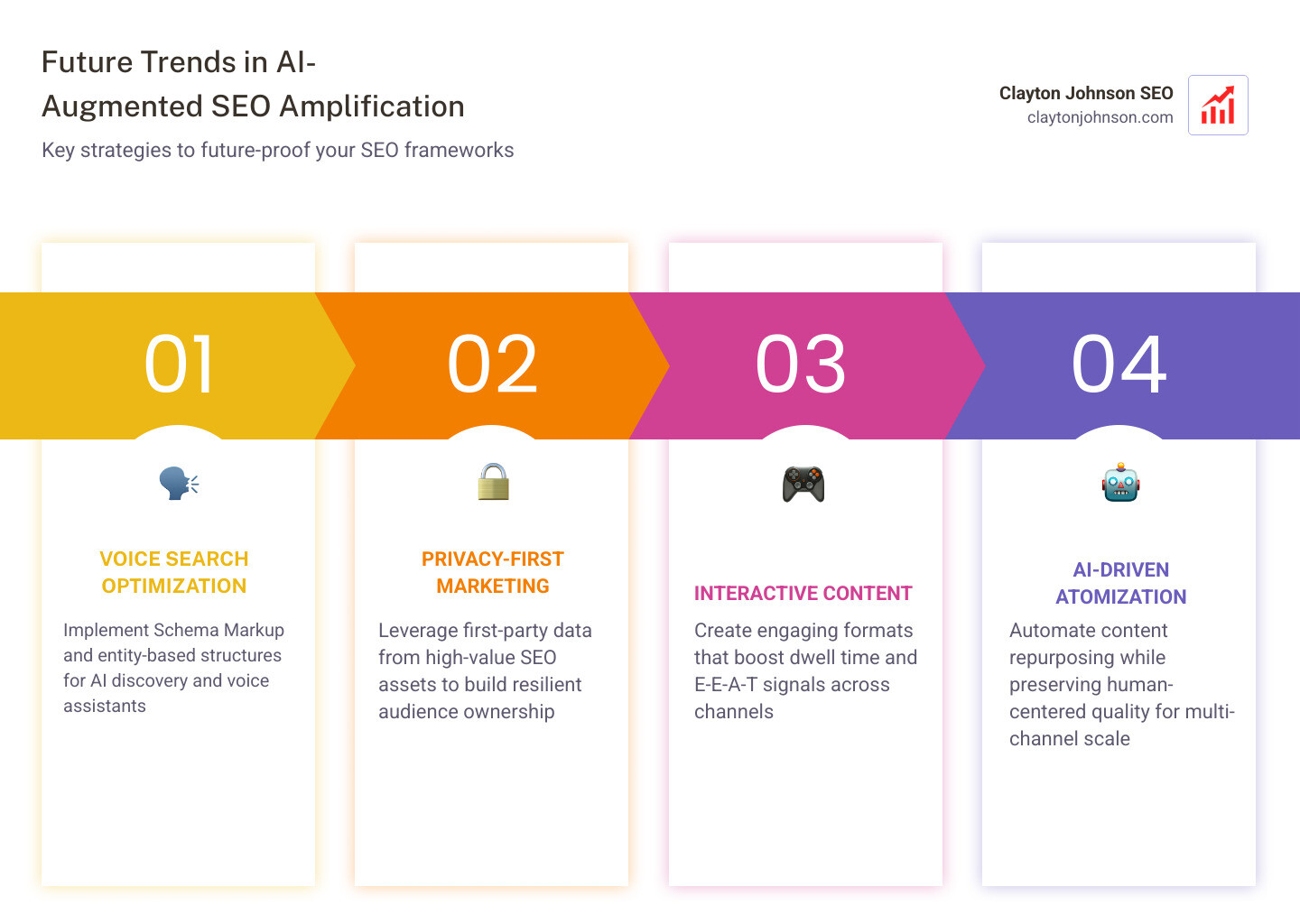
AI models (like ChatGPT and Perplexity) and voice assistants rely on structured data. To stay relevant, our cross-promotion SEO frameworks must include Schema Markup and “Entity-Based” content structures. If an AI can’t “read” your content’s architecture, it won’t recommend you as a source.
Privacy-First Marketing and First-Party Data
With the death of the third-party cookie, “First-Party Data” is king. SEO content is the best tool for gathering this data. By offering a “High-Value Asset” (like a whitepaper or tool) in exchange for an email address, you turn an anonymous searcher into a known lead. Adobe’s digital trends report emphasizes that brands that own their audience data will be the most resilient in the coming years.
We are already building AI-driven SEO strategies and systems that automate the “atomization” process, using AI to turn one blog post into ten social posts in seconds, while maintaining the “Human-Centered” quality that search engines now demand through E-E-A-T (Experience, Expertise, Authoritativeness, and Trustworthiness).
Conclusion: Scaling Systems with Clayton Johnson SEO
The era of treating SEO as a standalone tactic is over. To compete today, you need a system. You need a framework that takes the hard work of content creation and multiplies its value across every department in your company.
By implementing cross-promotion SEO frameworks, you aren’t just getting more traffic. You are building:
- Strategic Leverage: Doing more with the content you already have.
- Compounding Growth: Creating a “flywheel” where search, social, and email feed each other.
- Durable Systems: Building a content architecture that survives algorithm updates and market shifts.
At Clayton Johnson SEO, we don’t just “do SEO.” We build the systems that operationalize growth. We help founders and operators turn fragmented marketing efforts into a coherent, measurable engine driven by intent and structure.
If you’re ready to stop chasing “hacks” and start building a durable traffic system that drives real business impact, we should talk.
- Ready to scale? Explore our SEO services to see how we build custom frameworks for high-growth brands.
- Want a blueprint for your business? Schedule a strategy consultation and let’s turn your content into a competitive moat.
The question is no longer whether your SEO content can work across channels—it’s whether you have the structure in place to make it happen. Let’s build that structure together.