Why AI Tools Are Reshaping How SEO Actually Works
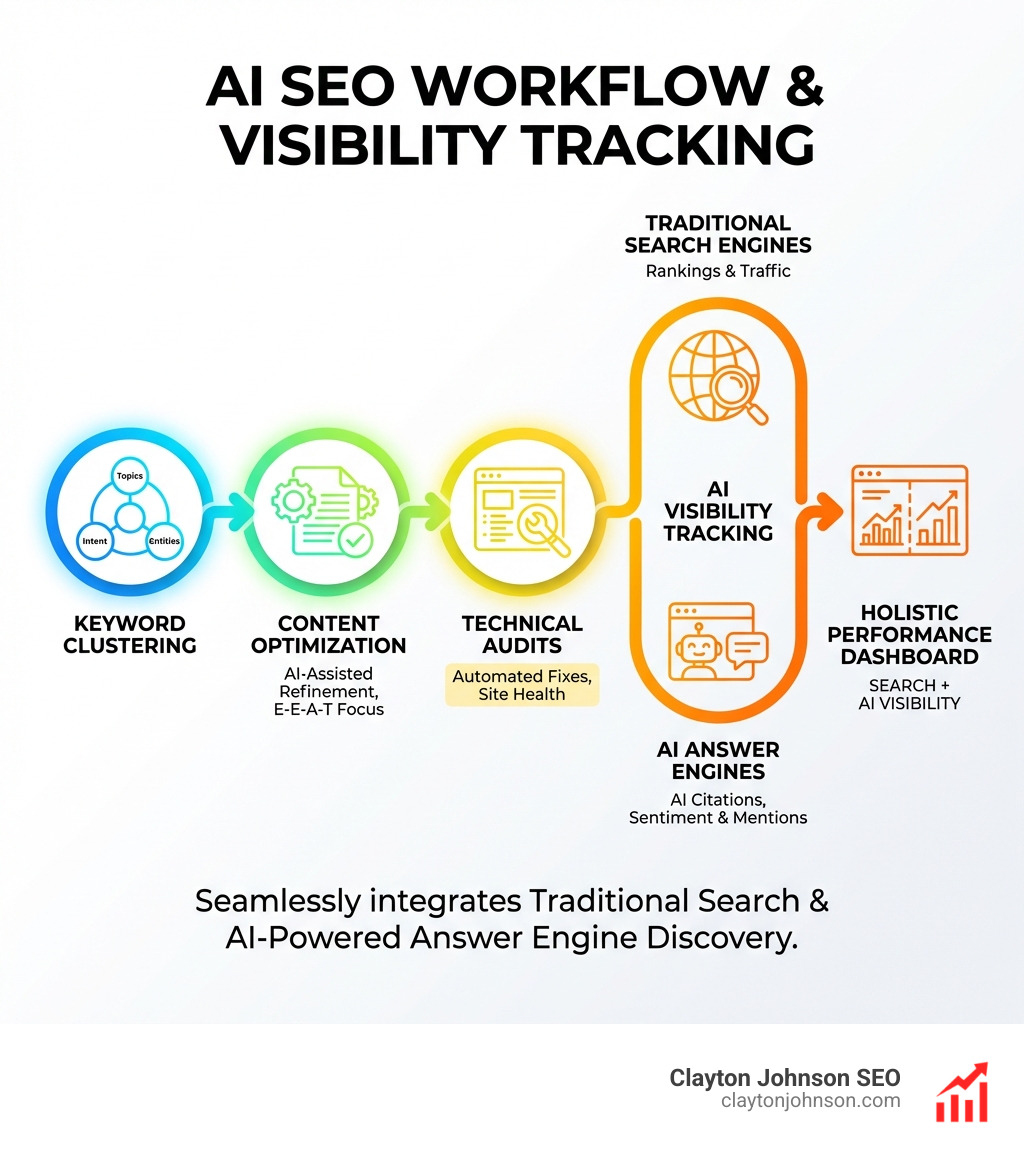
AI tools for SEO are transforming how marketers research keywords, optimize content, and track visibility across traditional search engines and AI-powered answer engines like ChatGPT and Perplexity. The top tools include:
- SurferSEO – Real-time SERP analysis and content scoring (from $99/mo)
- Semrush AI Visibility Toolkit – Track brand mentions in AI-generated answers ($99/mo add-on)
- Keyword Insights – SERP-based keyword clustering and topical maps (credit-based pricing)
- Frase – AI content briefs and GEO tracking (from $15/mo)
- Alli AI – Automated technical SEO fixes at scale (from $299/mo)
- ChatGPT – Prompt-based keyword research and content outlining (free or $20/mo)
The search landscape has split into two tracks. Traditional Google rankings still matter, but AI-generated answers now shape how people discover brands. Reddit appears in over 40% of AI search results. Perplexity matches Google’s top 10 domains 91% of the time. And Google’s own AI Overviews are becoming the first touchpoint for millions of queries.
This shift means ranking alone isn’t enough anymore. You need to optimize for AI citations, track sentiment in LLM responses, and ensure your content meets E-E-A-T standards that both search engines and AI models prioritize.
Most AI SEO tools promise precision but deliver guesswork. After testing 18 platforms, I’ve narrowed this guide to the ones that actually improve outcomes—whether you’re scaling content operations, automating technical fixes, or tracking how ChatGPT talks about your brand.
I’m Clayton Johnson, and I’ve spent years building SEO systems that combine technical depth with AI-assisted workflows. My focus is on measurable growth, not vanity metrics—and in this guide, I’ll show you which AI tools for SEO actually deliver on that promise.
AI tools for SEO terms you need:
The Evolution of Search: Why You Need AI Tools for SEO
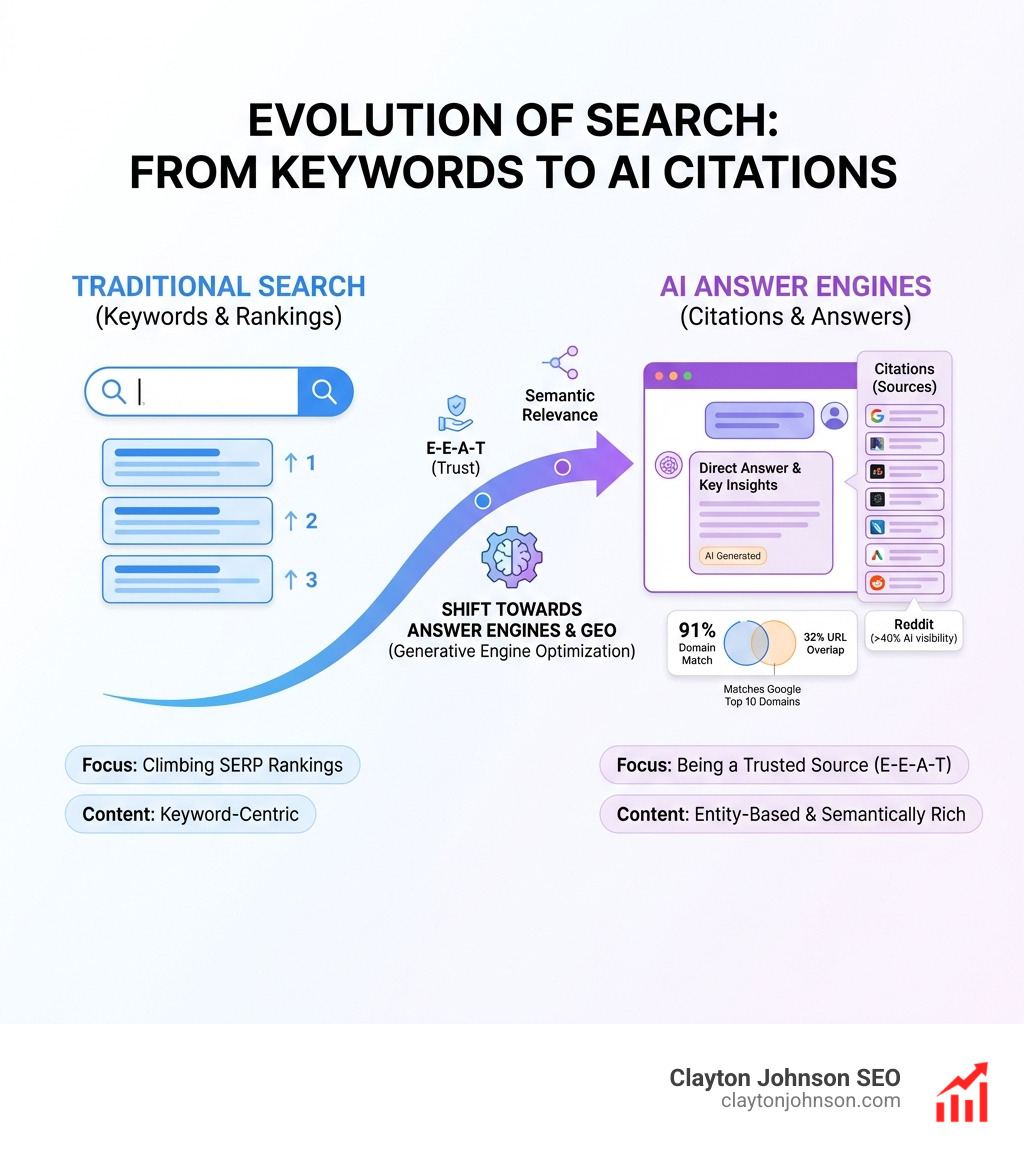
The way users find information is undergoing a fundamental shift. We are moving from a world of “search engines” to “answer engines.” This evolution has introduced two critical concepts: Answer Engine Optimization (AEO) and Generative Engine Optimization (GEO).
Traditional SEO focuses on climbing the Google Rankings, but GEO is about ensuring your brand is the one cited when a user asks Perplexity or ChatGPT a question. According to a recent study, Perplexity.ai matches Google’s top 10 domains in over 91% of cases. This means if you aren’t ranking in the top 10, you basically don’t exist to the most advanced AI models.
Furthermore, the data shows that 92% of “AI Mode” answers include a sidebar with roughly seven links. There is a 51% domain overlap with Google’s top results, but only a 32% URL overlap. This suggests that while AI models trust the same authorities Google does, they often pick different specific pages to cite.
This makes E-E-A-T (Experience, Expertise, Authoritativeness, and Trustworthiness) more important than ever. AI models look for signals of real-world experience. For our clients here in Minneapolis, we emphasize that being “visible” in AI search isn’t about gaming an algorithm—it’s about being a trusted source of truth that these models want to reference.
Best AI Tools for SEO Content Optimization
Content optimization used to mean “mentioning a keyword five times.” Today, it’s about semantic relevance and entity-based scoring. If you’re writing about “Minneapolis real estate,” AI tools for SEO will tell you that you also need to mention “Chain of Lakes,” “property taxes,” and “school districts” to be seen as an authority.
Working with an SEO Consultant can help you navigate these tools, but having the right software in your stack is the first step toward building content that ranks and stays there.

SurferSEO: The Gold Standard for Real-Time Analysis
SurferSEO is widely considered the top pick for AI-powered content editing. It analyzes the current SERP (Search Engine Results Page) for your target keyword and provides a “Content Score” based on how well your draft matches the successful patterns of top-ranking pages.
As an SEO Expert / Clayton Johnson, I have found that Surfer’s real-time feedback is invaluable for writers. It suggests the ideal word count, the number of headings, and specific NLP (Natural Language Processing) terms to include. Surfer notes that a score of 67+ generally indicates optimum quality. One of their standout features is the “Facts” tab, which helps close content gaps and can reportedly increase AI citations by up to 25%.
Frase: Building Briefs for AI Tools for SEO
Frase is an “Agentic” SEO platform that excels at the research phase. Instead of spending hours clicking through the top 10 results to see what they covered, Frase scrapes the SERPs and summarizes competitor headings, frequently asked questions, and subtopics for you.
You can Start Your Free Trial to see how it generates a full content brief in minutes. Frase’s recommendations now include entity-based terms that align with LLM training data, making it a powerful tool for GEO. It helps you identify “topic gaps” that your competitors missed, giving you a clear path to provide more value than anyone else on page one.
Writesonic: Scaling Content with AI Article Writer
For teams that need to move fast, Writesonic is a highly accessible platform. Their AI Article Writer 6.0 uses real-time SERP analysis to draft long-form posts that don’t feel like generic AI fluff.
What we like about Writesonic is its “Brand Voice” feature. You can upload your previous blog posts or company guidelines, and the AI will mimic your specific tone. It also includes a “Content Humanizer” to help reduce the robotic feel often associated with AI drafts. It’s an excellent tool for scaling content without losing your brand’s unique perspective.
Top AI Tools for SEO Strategy and Technical Automation
Strategy is where most SEO campaigns fail. You can have great content, but if your site architecture is a mess or you’re targeting the wrong keyword clusters, you won’t see results. This is where our SEO Services often start—using AI to find the “low-hanging fruit” in your data.
| Tool | Best For | Pricing Model | Key Feature |
|---|---|---|---|
| Keyword Insights | Clustering & Topical Maps | Credit-based | SERP-similarity grouping |
| Semrush | All-in-one & AI Visibility | Subscription | AI Visibility Toolkit |
| Ubersuggest | Small Business & Budget | Monthly/Lifetime | AI Prompt Ideas |
| Alli AI | Technical Automation | Subscription | Bulk On-Page Fixes |
| Clearscope | Enterprise Optimization | Subscription | NLP-based A-F Grading |
Keyword Insights: Scaling Topical Maps and Clustering
Keyword Insights is a game-changer for strategy. Traditional tools group keywords based on string matches (e.g., “Minneapolis coffee” and “coffee Minneapolis”). Keyword Insights groups them based on SERP similarity.
If Google shows the same results for two different keywords, the tool tells you to target them on one page. If the results are different, it tells you to create two separate pages. This prevents keyword cannibalization and helps you build a “topical map” that establishes your site as an authority in your niche.
Ubersuggest: Affordable AI Keyword Overview and AI Tools for SEO Strategy
Ubersuggest is a fantastic fit for small businesses or solo founders in Minnesota who want powerful data without the enterprise price tag. While some users on Reddit have mixed feelings about its depth compared to Ahrefs, its AI features are surprisingly robust.
The “AI Keyword Overview” and “AI Prompt Ideas” help you brainstorm content angles that match search intent. Ubersuggest’s Individual plan ($29/mo) allows you to track five competitors and 125 keyword rankings, making it one of the most cost-effective AI tools for SEO on the market. They also offer a lifetime access model, which is a rarity in the SaaS world.
Alli AI: Automating On-Page Fixes at Scale
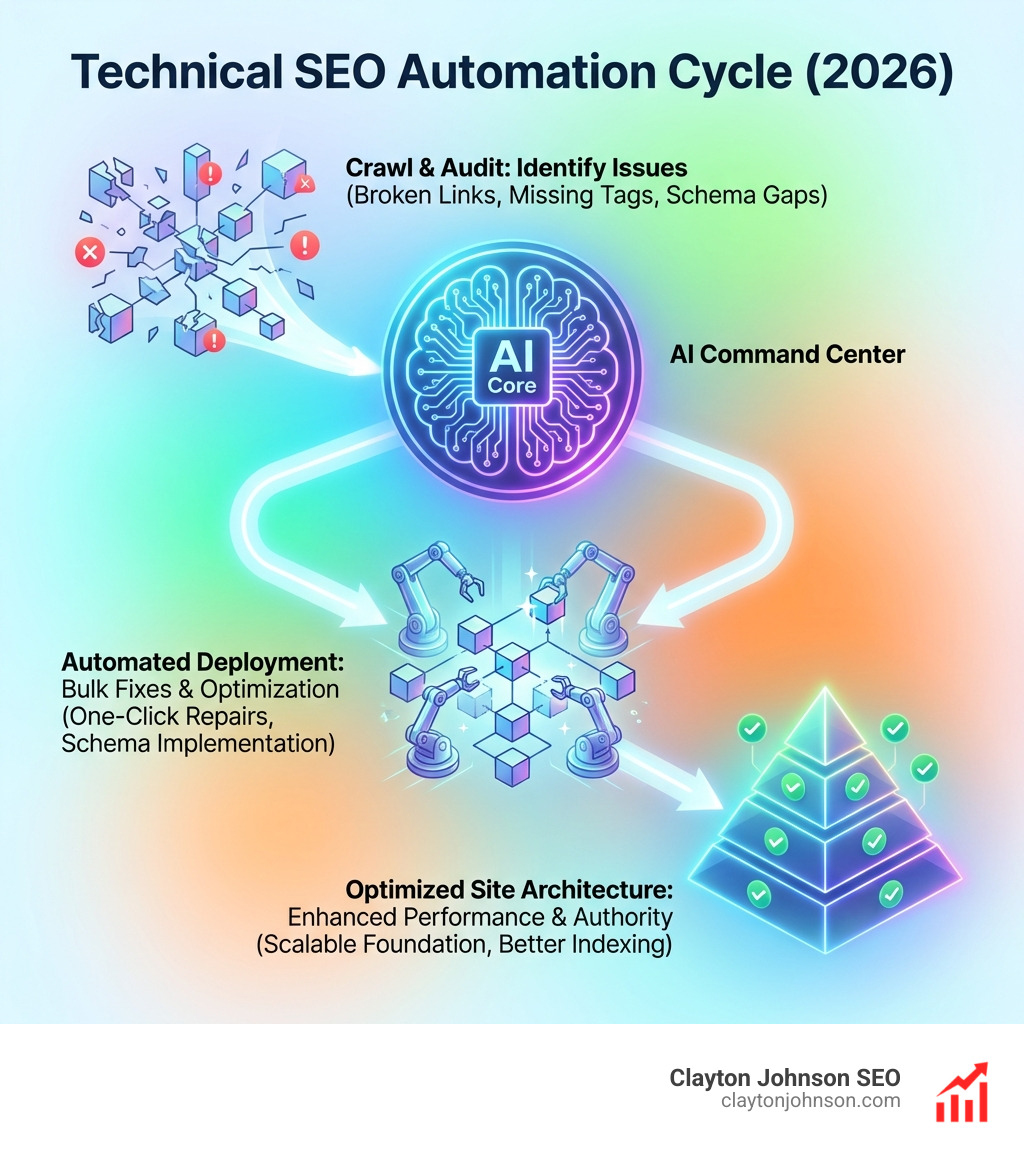
If you are managing a site with thousands of pages, manual technical SEO is impossible. Alli AI acts as an automated “SEO command center.” It crawls your site, identifies issues like missing meta tags or broken internal links, and allows you to deploy fixes across your entire site with one click.
For technical SEO Services, we love how Alli AI handles schema markup and image alt text. You don’t need a developer to implement these changes; the tool handles the heavy lifting, allowing your team to focus on high-level strategy.
Navigating Google’s Guidelines on AI-Generated Content
A common fear is that using AI will get your site penalized. However, an Ahrefs study of 600,000 pages discovered that AI-generated content does not inherently hurt your rankings.
Google’s guidance on AI-generated content is clear: they reward high-quality content, however it is produced. Their focus is on “helpful, reliable, people-first content.” If you use automation to manipulate search rankings, you’ll run into trouble. But if you use AI to enhance your research and provide better answers, you’re in the clear.
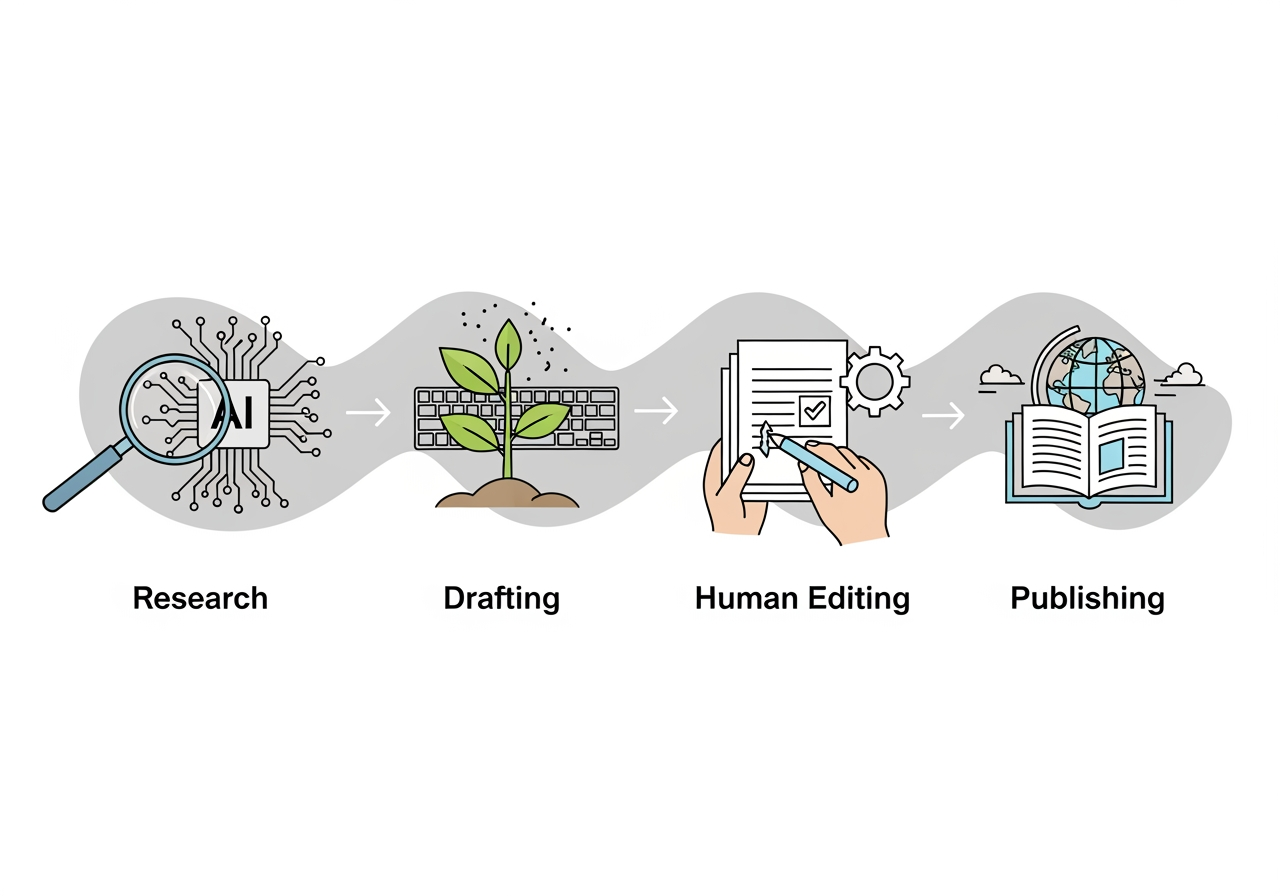
The stakes are higher for YMYL (Your Money, Your Life) topics like finance or health. In these niches, Google prioritizes content written by certified experts. For these clients, our SEO Content Marketing strategy involves using AI for the “skeleton” of the content, but ensuring every word is reviewed and refined by a human expert to maintain E-E-A-T.
Frequently Asked Questions about AI SEO
Can AI-generated content rank on Google?
Yes. Google evaluates content based on its utility and quality. If your AI-generated post answers a user’s question better than a human-written one, it can and will rank. The key is human oversight—never publish a raw AI draft without checking for facts, tone, and original insights.
What is the difference between SEO and GEO?
SEO (Search Engine Optimization) focuses on ranking in traditional search results like Google. GEO (Generative Engine Optimization) focuses on being cited as a source in AI-generated answers from platforms like ChatGPT, Gemini, and Perplexity. GEO requires more structured data and entity-based content.
Are there free AI SEO tools available?
Absolutely. ChatGPT (free version) is excellent for brainstorming and outlining. Ahrefs offers a free “AI Content Helper” for basic tasks, and many premium tools like Ubersuggest or Semrush offer limited free tiers or trials to get you started.
Conclusion
The era of “guessing” what works in search is over. By integrating AI tools for SEO into your workflow, you can move from intuition to data-driven execution. Whether you are using SurferSEO to polish your prose or Alli AI to fix technical debt, these tools provide the leverage you need to compete in an increasingly crowded digital space.
At Clayton Johnson SEO, we help founders and marketing leaders navigate this shift. We don’t just provide a list of tools; we build the SEO Services and content systems that turn these technologies into measurable growth. From competitive analysis to AI-assisted workflows, our goal is to help you diagnose growth problems and execute with precision.
If you’re ready to stop guessing and start ranking, let’s talk about building a strategy that works for your specific business needs. We are based right here in Minneapolis, helping local and national brands win in the age of AI.