The Best B2B SEO Audit Framework for Growing Your Pipeline

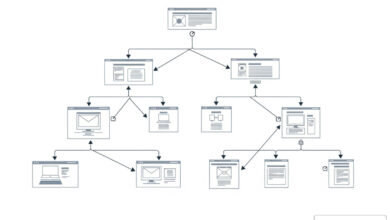
To build a b2b seo audit framework that actually moves the needle, we have to look past the surface. A generic audit might tell you that you have 400 images missing alt text. A strategic B2B audit tells you that your “Enterprise Pricing” page isn’t reachable in two clicks, costing you $50k in monthly pipeline.
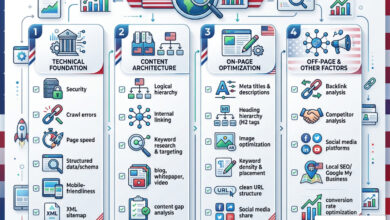
We break a high-impact audit into four primary pillars:
- Technical SEO: The “hygiene” of your site. If Google can’t crawl you, or if your site takes ten seconds to load on a VP’s mobile device, your content doesn’t matter.
- On-Page Optimization: Ensuring individual pages are perfectly tuned for both robots and human decision-makers.
- Off-Page Authority: Your reputation in the digital town square. In B2B, this isn’t just about the number of links; it’s about being cited by industry authorities.
- Content Strategy: Aligning your words with what your prospects actually need to know before they sign a contract.
Technical flaws, like poor site speed, silently kill rankings, especially for B2B SaaS companies where users expect snappy, modern interfaces. For every additional second of load time, conversion rates drop by 4.42%. This is why technical SEO provides brands an average ROI of 117%.
To speed up the discovery process, many teams implement automated SEO audits to catch low-hanging fruit before diving into deeper strategy.
B2B vs. B2C SEO Audit Priorities
It is a common misconception that all SEO is created equal. The table below highlights why our b2b seo audit framework looks different than a standard e-commerce checklist.
| Feature | B2B SEO Audit Priority | B2C SEO Audit Priority |
|---|---|---|
| Keyword Volume | Low volume, ultra-high value | High volume, lower transaction value |
| Sales Cycle | Long (3–12 months) | Short (minutes to days) |
| Decision Maker | Buying committees (6–10 people) | Single individual |
| Primary KPI | Qualified leads (MQL/SQL) & Pipeline | Transactional revenue & CTR |
| Content Depth | High (whitepapers, case studies) | Moderate (product descriptions) |
Aligning Your B2B SEO Audit Framework with the Buyer Journey
In B2B, traffic is a vanity metric. Pipeline is a sanity metric. To drive the latter, your audit must evaluate how well your content maps to the Ideal Customer Profile (ICP). If you are a cybersecurity firm but your top-ranking page is “what is a computer,” you are attracting students, not CISOs.
We categorize content into three distinct buckets:
- ToFU (Top of Funnel): Educational content answering “Why” or “How.” (e.g., “The hidden costs of manual payroll”).
- MoFU (Middle of Funnel): Solution-oriented content comparing options. (e.g., “In-house vs. Outsourced Payroll”).
- BoFU (Bottom of Funnel): Decision-stage content. (e.g., “Our Software vs. Competitor X” or “Enterprise Pricing”).
Our goal is to build SEO-driven B2B funnels that catch a prospect at the “problem” stage and nurture them until they hit the “demo” button. During an audit, we look for “content gaps” where you might have 50 blog posts (ToFU) but zero case studies or pricing pages (BoFU).
Technical Foundations and AI Search Readiness
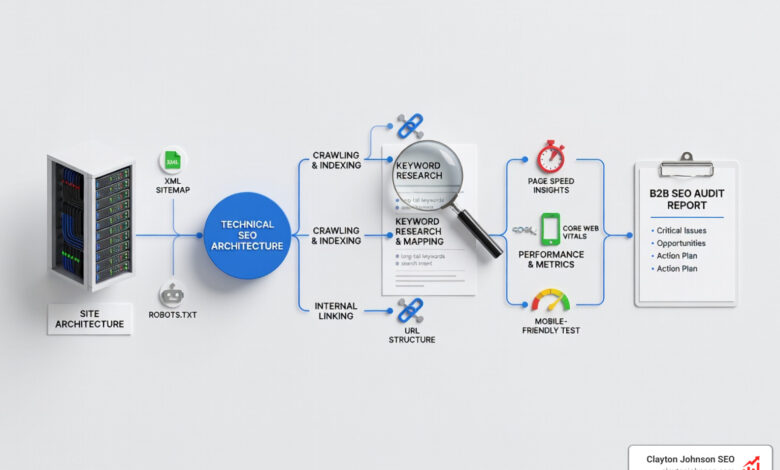
The technical landscape has shifted. It’s no longer just about “Blue Links.” We are now auditing for “AI Search Readiness.” With the rise of Google AI Overviews and ChatGPT, your site needs to be easily parsed by AI crawlers that cannot render JavaScript. If your critical content (like pricing or feature lists) is hidden behind complex client-side rendering, AI bots might never see it, and you’ll miss out on being cited in AI answers.
Key technical areas we interrogate:
- Crawlability & Indexation: Are your “money pages” actually in the index? We use tools like Screaming Frog to ensure no “noindex” tags are accidentally killing your revenue.
- Core Web Vitals: Google has raised the bar. We specifically look at Interaction to Next Paint (INP), which replaced First Input Delay. You should target an INP under 200ms and a Largest Contentful Paint (LCP) under 2.5 seconds.
- Schema Markup: This is the “language” of AI search. By using structured data (Organization, Product, FAQPage), you help search engines understand your entities.
If you’re feeling overwhelmed by the technical jargon, you can diagnose site health with AI SEO growth diagnostics to get a high-level view of where your foundation is cracking.
Content Quality and the B2B SEO Audit Framework
B2B buyers are skeptical. They’ve read enough “10 Tips for Success” listicles. They want expertise. This is where E-E-A-T (Experience, Expertise, Authoritativeness, and Trustworthiness) comes in.
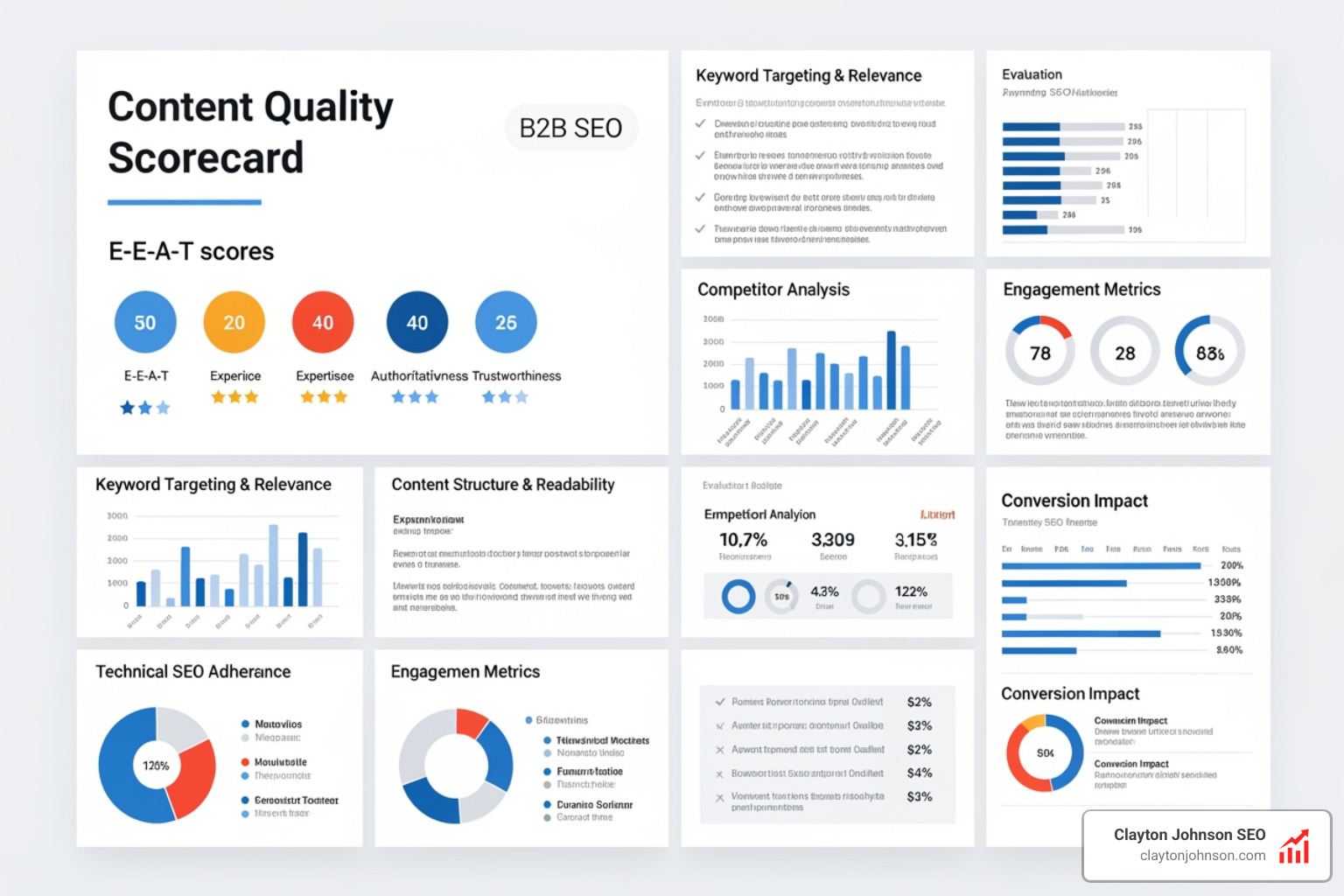
During our content audit, we don’t just look for keywords; we look for “Information Gain.” Does this page provide something new, or is it just an echo of the top three results? We use vector embeddings to analyze semantic similarity across your content. This helps us detect content cannibalization—where multiple pages on your site are fighting for the same query, effectively confusing Google and diluting your authority.
Sometimes, the best thing you can do for your SEO is to delete content. Consolidating thin, overlapping pages into one “power page” often results in a massive ranking boost. If you’re unsure where to start, you should let AI audit your content to identify which pages are assets and which are “digital paperweights.”
Strategic Implementation and Pipeline Measurement
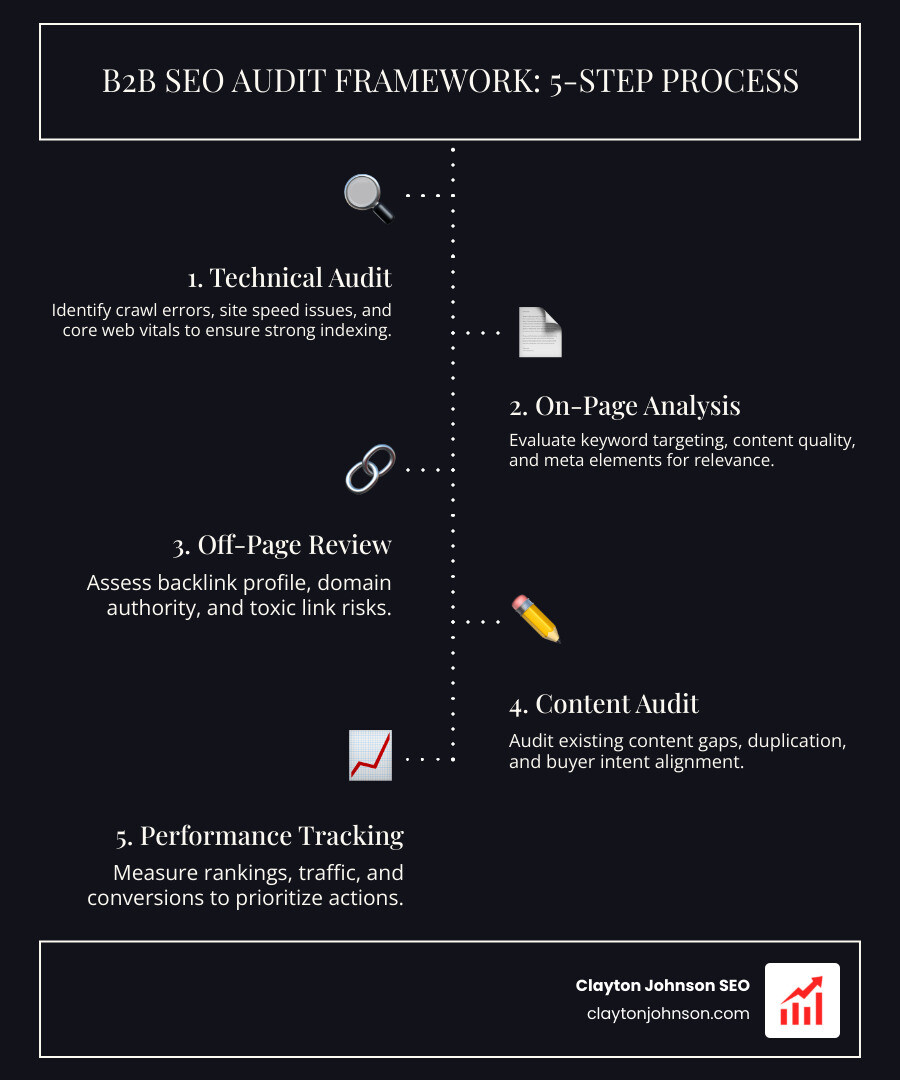
At Clayton Johnson SEO, we believe an audit without an action plan is just a fancy PDF. We don’t just hand over a list of errors; we provide a prioritized roadmap. We use a “Prioritization Matrix” to categorize findings into:
- High Impact / Low Effort (Quick Wins): Fixing 404 errors on pages with high-quality backlinks.
- High Impact / High Effort (Strategic Plays): Redesigning the internal link architecture or launching a new content cluster.
- Low Impact / Low Effort: Minor meta description tweaks.
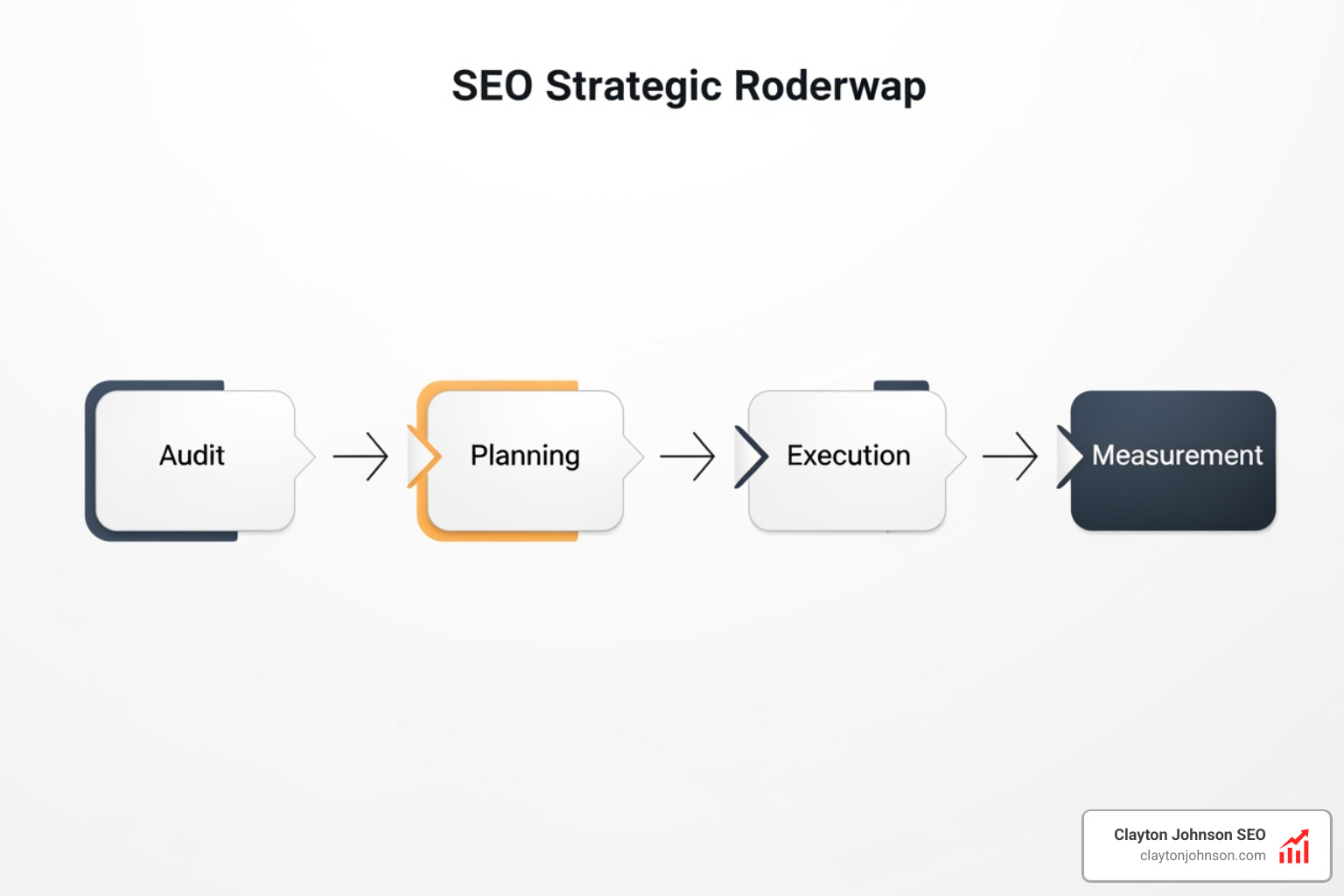
Our focus is on revenue attribution. We want to see how SEO-generated leads achieve their 51% MQL-to-SQL conversion rate. If you’re ready to stop guessing and start building a system, you can explore our SEO services or contact us for a strategy session.
Strategic Keyword Research and Gap Analysis
The “Keyword Gap” is where your competitors are winning, and you aren’t even playing the game. We use the Ahrefs Content Gap tool to find the terms your competitors rank for that you don’t.
But we don’t stop at “volume.” We look at “Business Value.” A keyword with 100 searches a month that costs $50 per click in Google Ads is infinitely more valuable than a keyword with 10,000 searches that has no commercial intent.
To master this, check out the ultimate guide to keyword strategy.
Essential B2B SEO Tool Stack:
- Screaming Frog: For deep technical crawls.
- Ahrefs / SEMrush: For keyword gaps and backlink analysis.
- Google Search Console: The source of truth for crawl errors and actual query data.
- SurferSEO: For content optimization and NLP alignment.
Authority Building and Internal Link Sculpting
In B2B, backlinks are still a top-three ranking factor. However, we see too many companies chasing “link volume” from irrelevant sites. A single link from a high-authority industry publication like CMSWire or TechTarget is worth more than 100 links from generic lifestyle blogs.
We also focus heavily on Internal Link Sculpting. This is the process of sculpting PageRank from your high-traffic informational blog posts down to your “money pages” (Product/Pricing).
One of our favorite “quick wins” is using Screaming Frog’s n-gram feature to find unlinked mentions of your core services across your blog. It’s the fastest way to build an internal linking web that search engines love. You can even use the new inlink and outlink visualization to see if your “hub and spoke” model is actually working.
Post-Audit Implementation and Continuous Monitoring
The audit is Day Zero. The real work is in the execution. We recommend using Google Search Console’s new annotation feature to mark the dates you implement major technical changes. This allows you to correlate a specific fix (like improving LCP) with a subsequent jump in rankings.
B2B content also decays. Industry trends shift, and competitors publish newer data. We establish a “Content Refresh” benchmark—typically every 3 to 4 months for competitive niches. By integrating the Ahrefs MCP server, you can monitor ranking fluctuations in real-time and react before a decline becomes a disaster.
Finally, efficiency is king. Learning how to automate your SEO tasks ensures that your team spends time on strategy and creativity, not manual data entry.
An audit framework isn’t a one-time project; it’s the operating system for your growth engine. By focusing on technical integrity, buyer intent, and measurable pipeline, you turn your website from a “digital paperweight” into your most productive sales rep.