Why AI-Powered Keyword Discovery Changes Everything
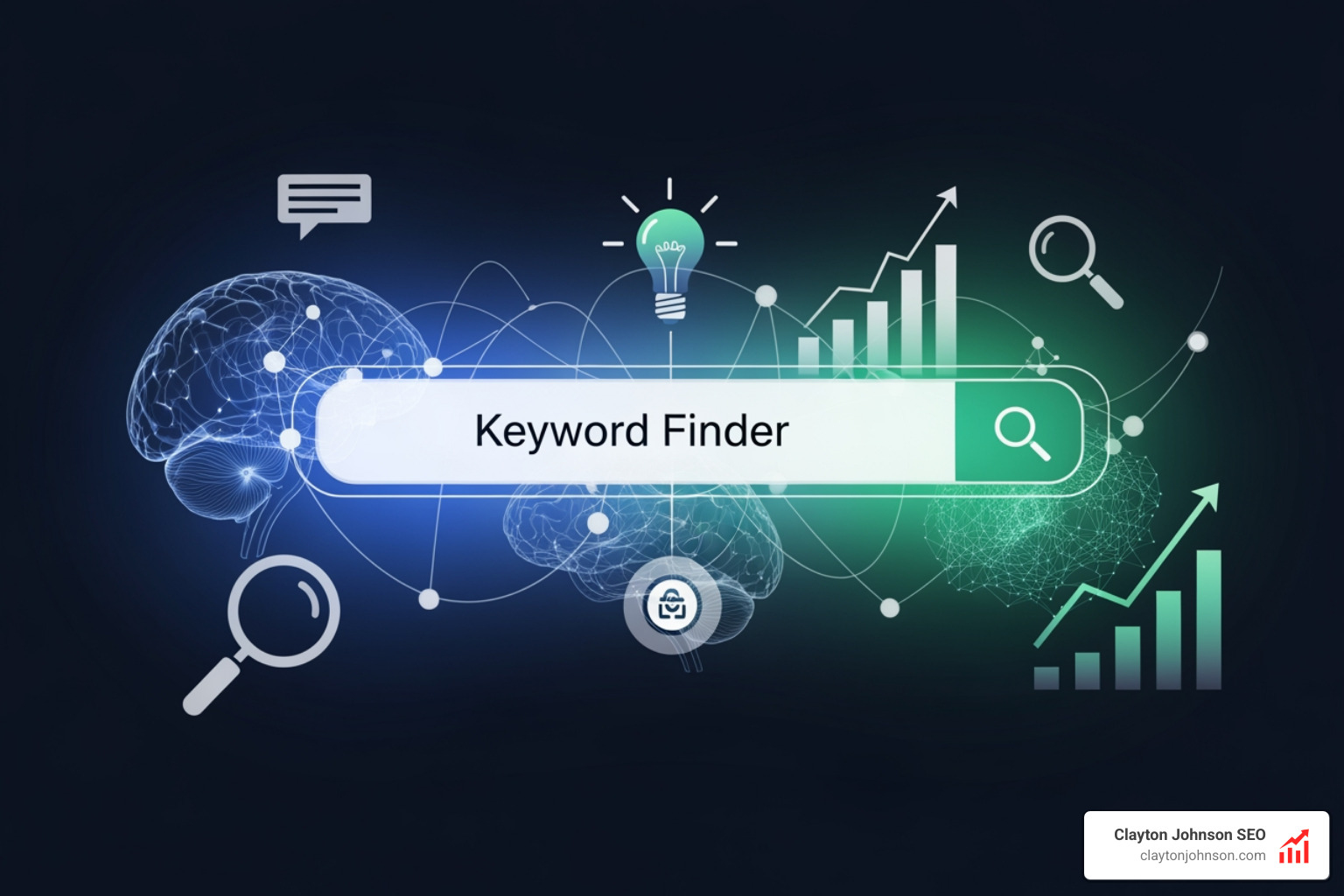
An SEO AI keyword finder is a tool that uses artificial intelligence to analyze search patterns, competition, and user intent—then delivers high-value keyword opportunities in minutes instead of hours. Here’s what the best tools provide:
Core Capabilities of AI Keyword Finders:
- Automated keyword discovery from seed terms, competitor URLs, or business descriptions
- Search intent classification (commercial, informational, transactional) using machine learning
- Competitor gap analysis to identify keywords your rivals rank for but you don’t
- Real-time metrics including search volume, difficulty scores, and revenue potential
- Long-tail keyword generation targeting niche audiences with lower competition
The shift from manual keyword research to AI-driven discovery isn’t just about speed. It’s about depth.
Traditional keyword research meant juggling 5-6 browser tabs, copying data between spreadsheets, and burning 4-8 hours per session. Manual research for an SEO manager at $80k/year costs roughly $150-300 per session in time alone.
AI keyword finders collapse that workflow into 10-15 minutes. They don’t just surface obvious keywords—they identify semantic relationships, predict emerging trends, and flag opportunities hidden in long-tail queries your competitors haven’t targeted yet.
Tools like Rankability analyze thousands of keywords daily with live SERP data. SEO.ai provides 5 free lookups per day with 15 related and 5 competitor keywords each. Moz Keyword Explorer offers 1.25 billion keyword suggestions powered by AI-enhanced search intent analysis.
The difference? Manual research shows you what people searched for yesterday. AI shows you what they’ll search for tomorrow.
I’m Clayton Johnson, and I’ve spent years building scalable SEO systems that transform fragmented keyword lists into structured growth engines. My work with SEO AI keyword finder tools has helped clients shift from reactive content calendars to predictive, intent-driven strategies that compound authority over time.
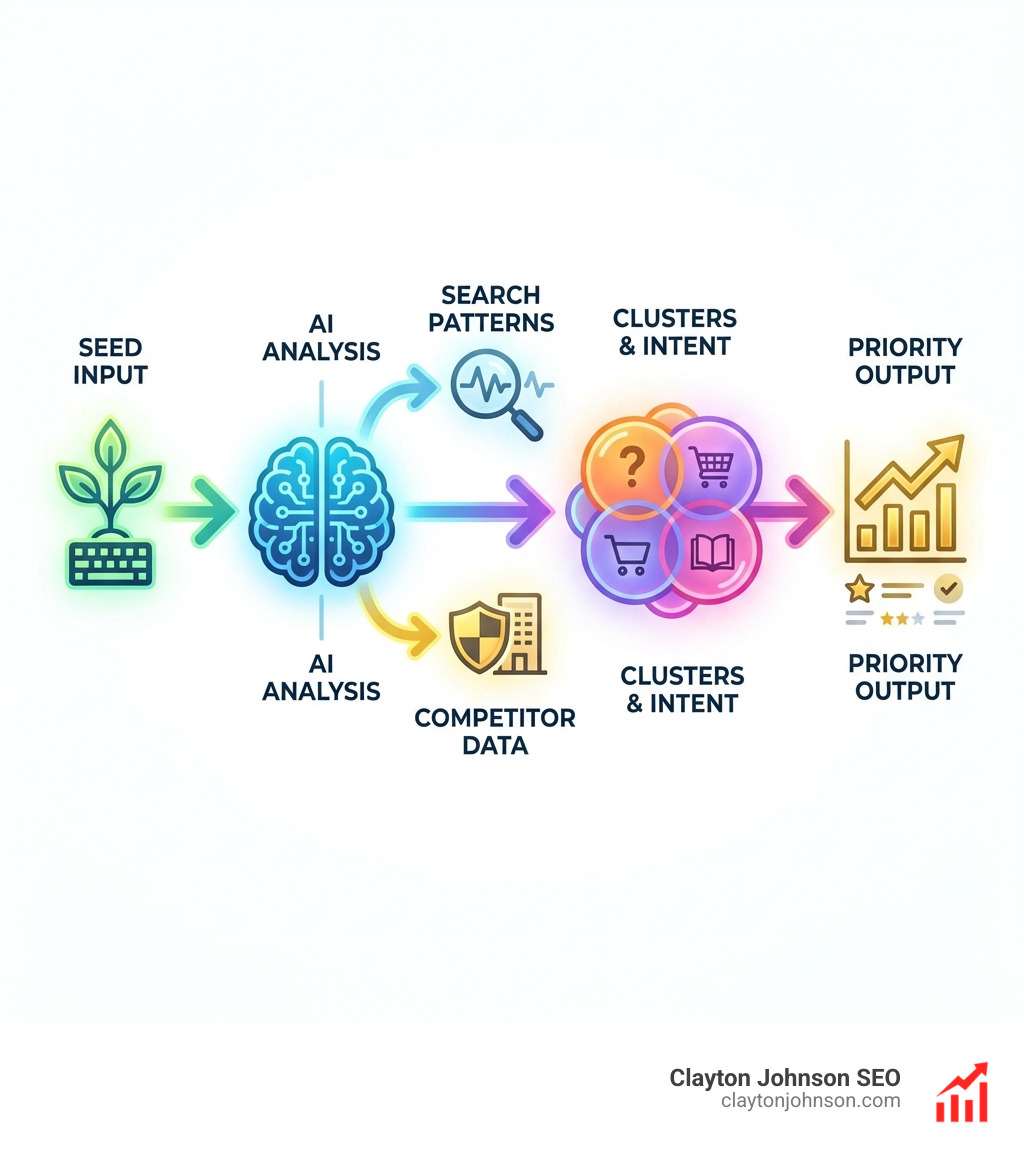
SEO AI keyword finder terms to remember:
What is an AI Keyword Finder?
At its simplest, an SEO AI keyword finder is a software application that leverages machine learning and natural language processing (NLP) to identify the most valuable terms for your search engine optimization strategy. Unlike old-school tools that just spit out a list of words containing your seed term, AI-driven tools look at the context, the “why” behind the search, and the competitive landscape in real-time.
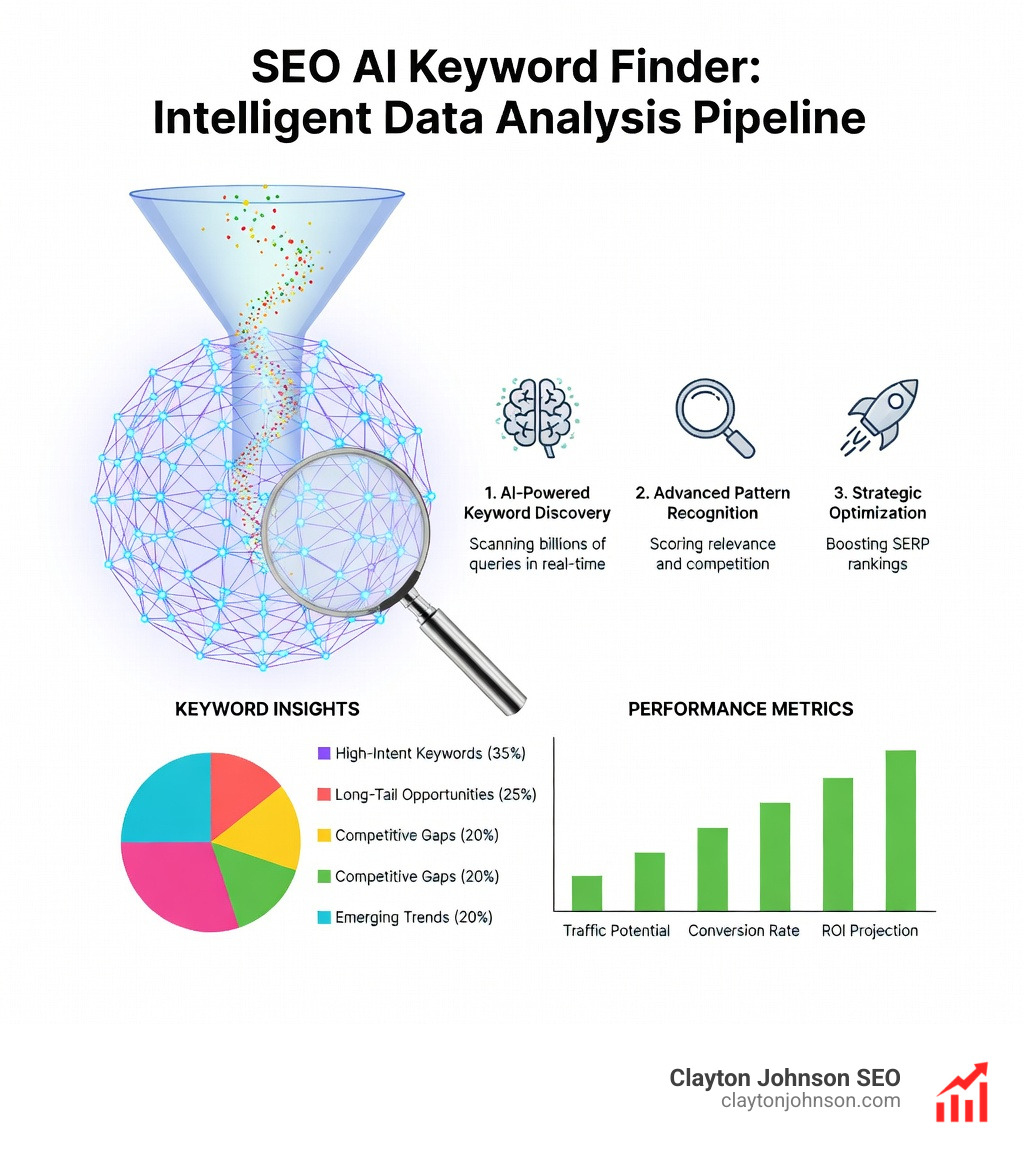
These tools act like a digital strategist. Instead of you having to guess if a keyword is relevant, the AI analyzes millions of data points to ensure the terms you target actually align with what your business offers. By understanding the Future of Search with AI-Powered Keyword Research, we can see that search is moving away from exact-match strings and toward conceptual understanding.
How AI Analyzes Search Intent
One of the biggest headaches in SEO is “intent mismatch.” This happens when you rank for a keyword, but the person searching isn’t looking for what you’re selling. For example, if you sell “running shoes” but rank for “history of running shoes,” you’ll get traffic but zero sales.
AI solves this through Semantic Analysis. It looks at the clusters of words around a query to determine if the user is in “learning mode” (informational) or “buying mode” (transactional). Modern tools also track Large Language Model (LLM) trends, seeing how people ask questions on platforms like ChatGPT or Claude. While you can still Visit Google Keyword Planner for basic data, AI tools add a layer of intelligence that tells you exactly what the user wants to achieve.
Real-Time Data vs. Static Databases
The internet moves fast. A keyword that was low-competition last month could be a battlefield today. Traditional databases often rely on monthly scrapes, which means the data is always a little bit “stale.”
An advanced SEO AI keyword finder uses live SERP (Search Engine Results Page) data. It monitors algorithm updates as they happen and uses predictive analytics to tell you which keywords are on the rise. This allows us to pivot our strategy before the competition even realizes the landscape has changed.
Top SEO AI Keyword Finder Tools for Rapid Growth
Choosing the right tool depends on your specific needs—whether you’re an agency managing dozens of clients or a founder looking for “quick wins.”
| Feature | SEO.ai | Rankability | Moz Pro |
|---|---|---|---|
| Best For | Fast, free lookups | Revenue potential | Deep industry metrics |
| Unique Factor | 15 related keywords/search | Opportunity Score | 1.25 billion suggestions |
| Free Tier | 5 lookups per 24 hours | Limited trial | Free trial available |
| AI Focus | Content alignment | LLM search trends | Primary Search Intent |
If you want to Stop Guessing and Start Ranking with These AI SEO Tools, you need to look at how these platforms handle competitor gaps.
SEO.ai and Rankability: Precision Targeting
SEO.ai is fantastic for those who need immediate results without a steep learning curve. You simply input a short description of your business, and it generates a list of tailored keywords. It’s an excellent entry point for identifying related terms and competitor keywords for free.
Rankability takes things a step further with its proprietary Opportunity Score. This score doesn’t just look at volume; it analyzes commercial intent and conversion likelihood. It helps us answer the question: “If I rank for this, will it actually move the needle for my revenue?” You can also compare these scores to traditional “Keyword Difficulty” metrics to see the difference in depth.
Moz and Seenos: Data-Driven SEO AI Keyword Finder Insights
Moz Pro is a titan in the industry, and their Keyword Explorer now features “Moz AI.” This integration provides Primary Search Intent data for over 180 million ranking keywords across 170 Google search engines. It’s perfect for finding keywords “within striking distance”—those where you’re ranking on page two and just need a little nudge to hit the top spots.
Seenos, on the other hand, is built for the workflow-obsessed. It automates a 5-phase analysis that includes site assessment, competitor discovery, and keyword validation. While you might use other platforms for ad-hoc searches, Seenos is designed to replace the 4-8 hours of manual spreadsheet work with a professional 15-minute report.
Why AI Outperforms Traditional Keyword Research
In the old days (which was basically three years ago), keyword research was a slog. We had to manually filter out “junk” keywords and guess at the difficulty. AI has changed the math.
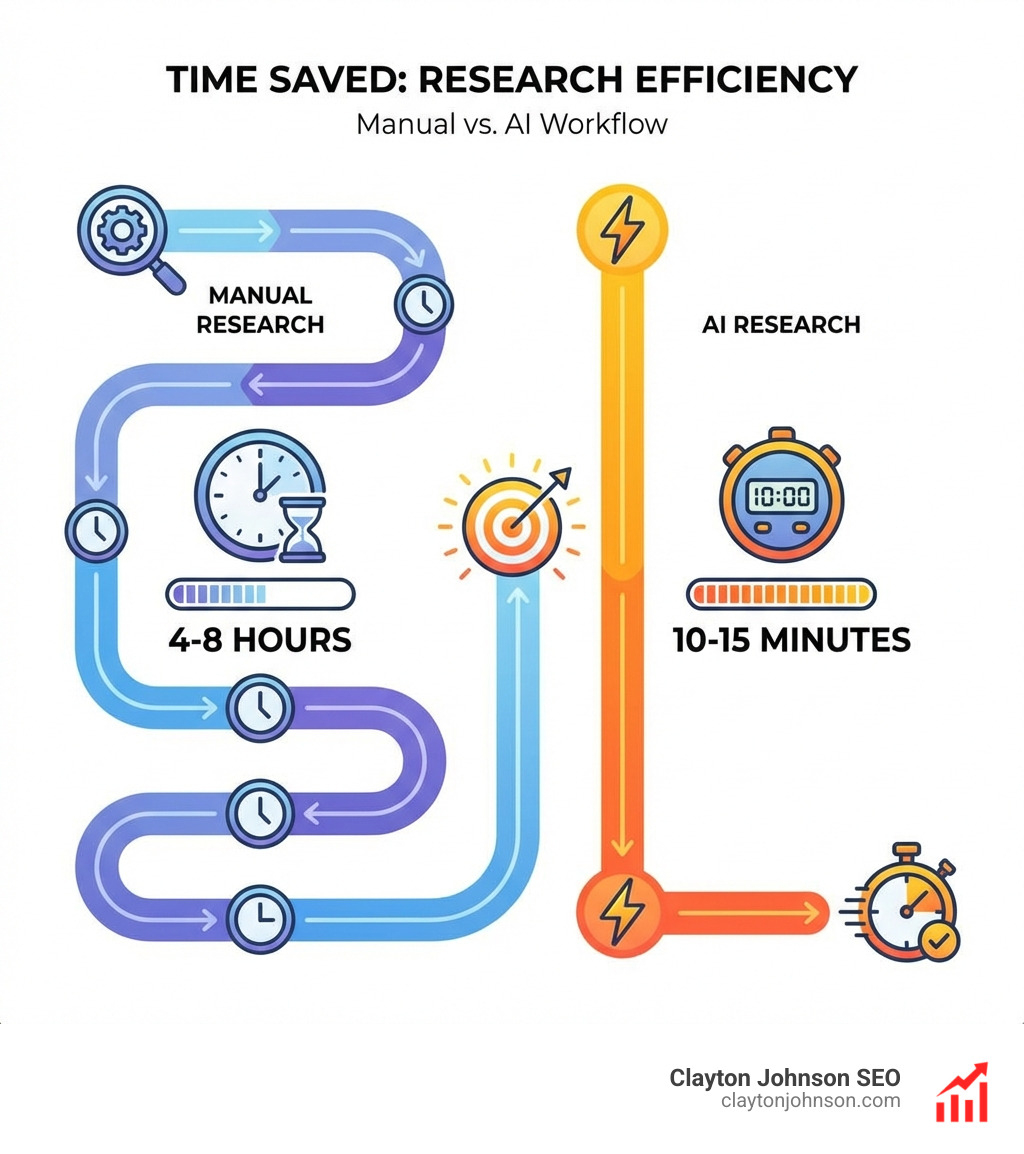
When you Automate Your Success Using AI-Driven Keyword Optimization, you aren’t just saving time; you’re increasing your accuracy. AI doesn’t get tired, it doesn’t overlook patterns, and it can process more data in a second than a human can in a year.
Speed and Scale in the SEO AI Keyword Finder Workflow
Efficiency is the name of the game. For a Minneapolis-based marketing team, being able to complete a full competitive audit in the time it takes to grab a coffee at Spyhouse is a massive competitive advantage.
Manual research often leads to “analysis paralysis.” You have too many keywords and no clear way to prioritize them. AI tools use “progressive relaxation” strategies—if a search is too narrow, they automatically broaden the parameters to ensure you always walk away with actionable insights. If you’re just starting out, you can see how even basic AI features can speed up your content idea generation.
Uncovering Hidden Long-Tail Opportunities
The “head” keywords (like “shoes”) are nearly impossible to rank for if you aren’t a global brand. The real money is in the long-tail. These are longer, more specific phrases like “best waterproof trail running shoes for wide feet.”
AI excels at finding these niche markets. Because it understands semantic relationships, it can identify clusters of low-competition keywords that collectively drive more qualified traffic than a single high-volume term. These “hidden gems” often have much higher conversion rates because they match specific user needs perfectly.
How to Integrate AI Keywords into Your Content Strategy
Finding the keywords is only half the battle. The other half is knowing where to put them. We use a “Target Page” architecture to ensure every keyword has a home.
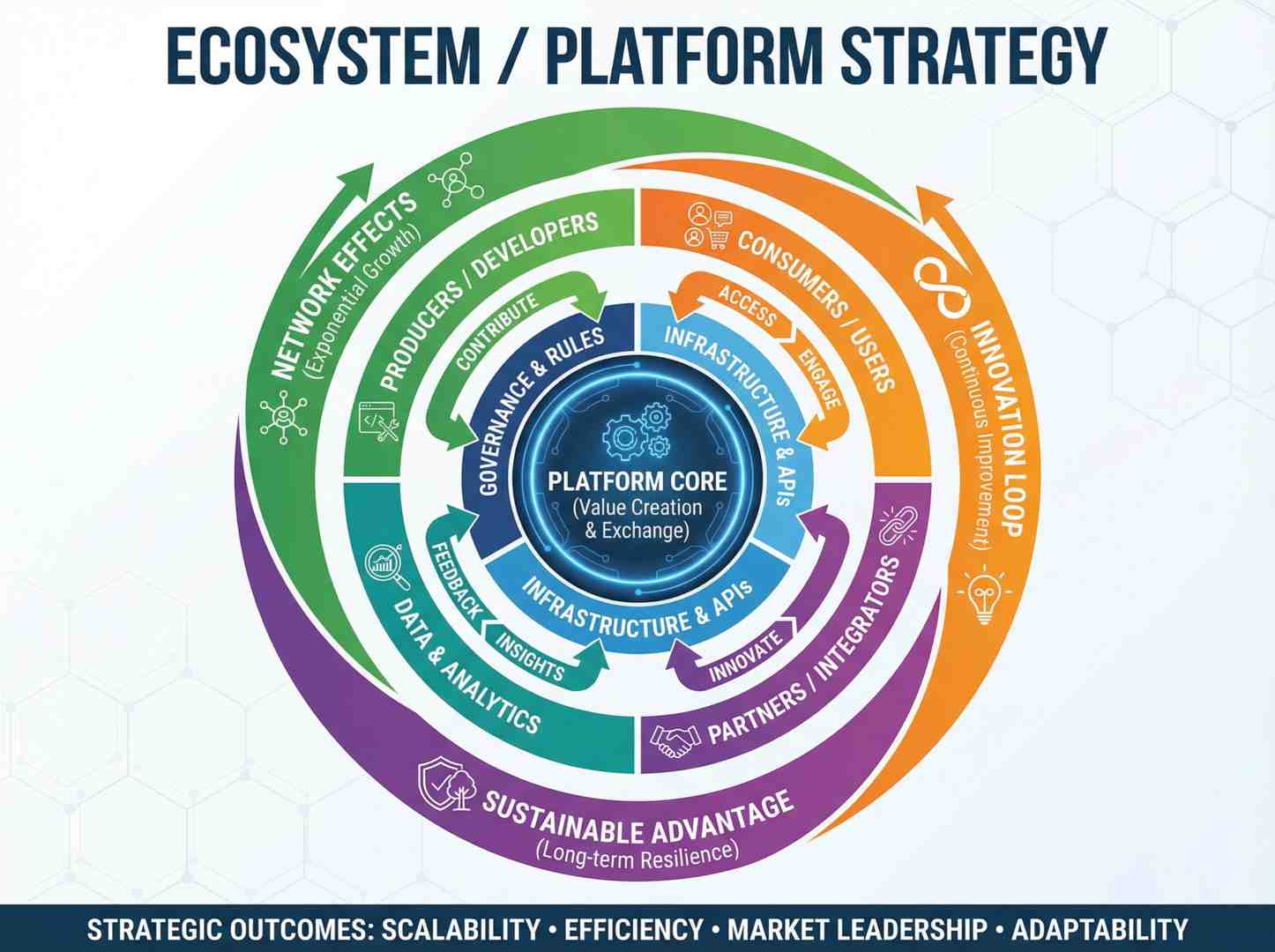
By grouping keywords into Topic Clusters, you build topical authority. This tells Google that you aren’t just writing about a random word; you are an expert on the entire subject. This is The Truth About AI SEO and Why It Matters: it’s about building a structured architecture, not just “stuffing” words into a blog post.
Mapping Keywords to the Buyer Journey
We categorize our AI-generated keywords into three main buckets:
- Informational: “How to choose a keyword finder.” (Top of funnel)
- Commercial: “Best SEO AI keyword finder tools.” (Middle of funnel)
- Transactional: “Rankability discount code.” (Bottom of funnel)
Using AI-Driven SEO Audits, we can see where your current content is lacking and fill those gaps. If you have plenty of “how-to” guides but no “comparison” pages, you’re likely losing customers right before they buy.
Optimizing Meta Tags and On-Page Elements
Once you have your keywords, they need to be integrated naturally. A core SEO tip we always share with our Minneapolis partners: Optimize your titles for the primary keyword first.
- Meta Titles: Keep them under 50-60 characters to avoid being cut off in search results.
- Headings (H1, H2): Use your primary and secondary keywords here to give search engines a clear map of your content.
- Natural Integration: If the AI gives you a keyword that sounds robotic, tweak it. The AI is there to provide the data; you are there to provide the “human touch.”
Frequently Asked Questions about AI Keyword Research
We hear a lot of questions about how much to trust the machines. Here are the most common ones we encounter.
Can I use general AI chatbots for keyword research?
You can, but we wouldn’t recommend it as your primary tool. Chatbots like ChatGPT or Gemini are great for brainstorming, but they lack precise, real-time search volume and difficulty data. They are prone to “hallucinations” (making up data) and don’t have the specialized SEO infrastructure that a dedicated SEO AI keyword finder provides. Use them for ideas, but validate everything with a tool like Moz or Semrush.
How do AI tools identify competitor keyword gaps?
AI tools perform an automated “gap analysis” by looking at the domains of your top competitors and identifying which keywords they rank for that you do not. The AI then filters these by “striking distance” and “opportunity,” showing you exactly which terms you could realistically “steal” from them with better content.
What factors should I consider when choosing a tool?
Look for these three essentials:
- Accuracy of Data: Does it use live SERP data or an old database?
- Ease of Use: Does it simplify your workflow or add more complexity?
- Integration: Can it export to your CMS or integrate with your current SEO suite?
Conclusion
Finding keywords with AI isn’t just a shortcut; it’s a fundamental shift in how we build businesses. At Demandflow, we believe that most companies don’t lack tactics—they lack structured growth architecture. By using an SEO AI keyword finder, you move away from “guessing” and toward a system where every piece of content you create has a data-backed reason for existing.
Whether you are in Minneapolis or competing on a global stage, the goal is the same: Clarity leads to structure, which leads to leverage, which leads to compounding growth.
Ready to stop guessing? Explore our SEO Services and let’s build your growth infrastructure together.