Why Process Improvement Is the Growth Lever Most Businesses Ignore
Process Improvement is the practice of identifying, analyzing, and optimizing how work gets done — making workflows faster, more accurate, and more reliable on an ongoing basis.
Here’s the quick answer if you need it:
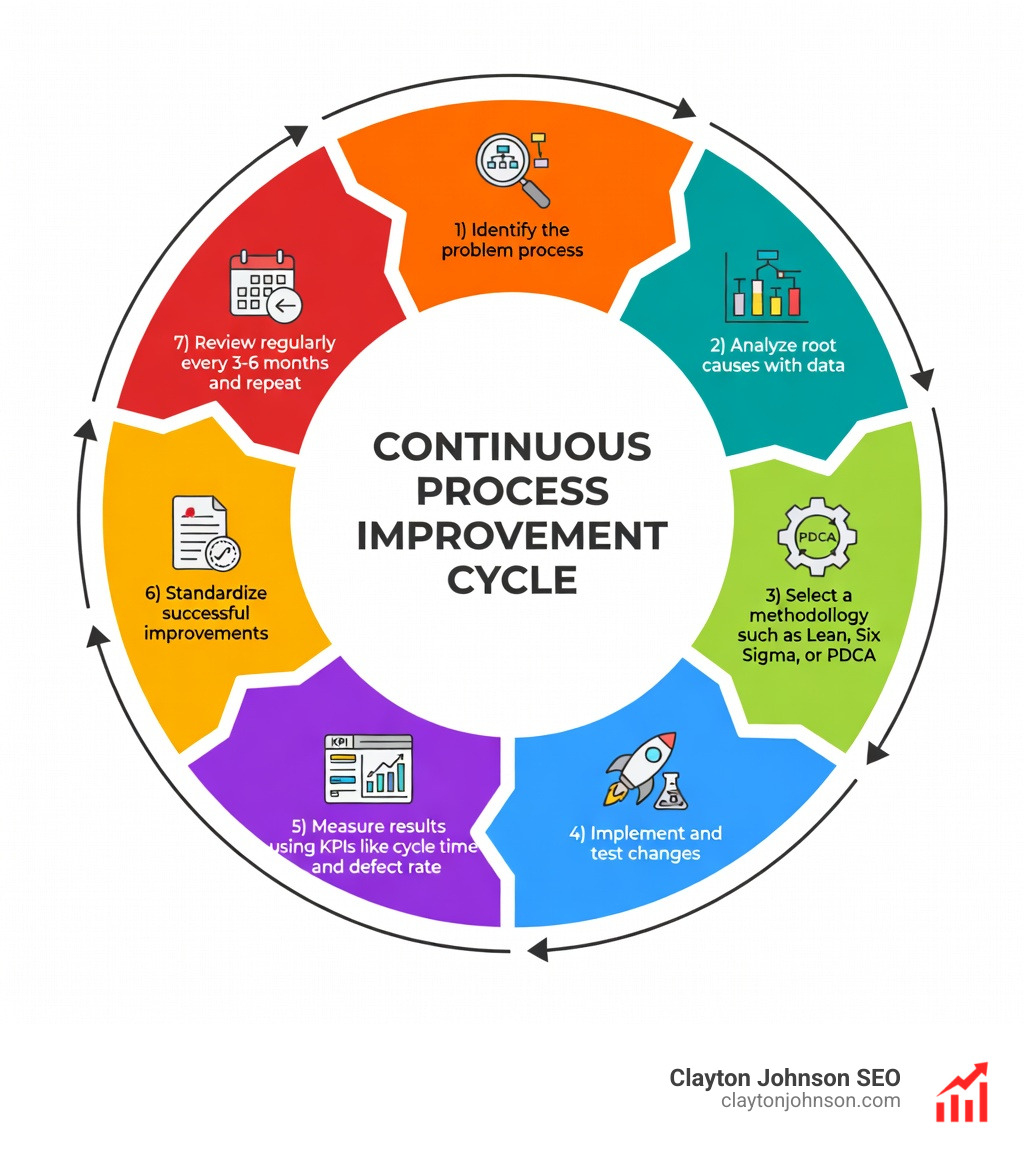
- Identify the broken or slow process
- Analyze root causes using data and team input
- Choose a methodology (Lean, Six Sigma, PDCA, Kaizen)
- Implement targeted changes with clear ownership
- Measure results against defined KPIs
- Standardize what works and review regularly
Every organization runs on processes — from customer onboarding to invoice approvals to IT support tickets. Most of those processes were never designed. They just evolved. And that gap between how work actually happens and how it should happen is costing businesses more than most leaders realize.
How much more? Up to $1 trillion per year globally — through inefficiency, poor user experiences, and compounding operational risk.
The good news: you don’t need a massive transformation budget or a Six Sigma Black Belt to start fixing things. You need a clear framework, the right tools, and a mindset built around continuous improvement rather than one-time fixes.
I’m Clayton Johnson — SEO strategist and growth systems architect. My work building scalable marketing and operational frameworks has shown me how Process Improvement sits at the core of every high-performing growth engine. If your execution feels chaotic, your answer is almost always upstream in the process.
What is Process Improvement and Why Does It Matter?

At its core, Process Improvement (sometimes called Business Process Improvement or BPI) is a subdiscipline of Business Process Management (BPM). It isn’t just a corporate buzzword; it’s the proactive task of mapping out how we do things and finding ways to do them better.
Why should we care? Because unoptimized processes cost businesses up to $1 trillion each year. This staggering figure stems from wasted time, redundant manual labor, poor customer experiences, and increased operational risk. When a process is clunky, it doesn’t just annoy your staff—it bleeds revenue.
By focusing on Process Improvement, we gain several critical advantages:
- Waste Elimination: We stop spending money on “non-value-adding” activities like overproduction or excessive waiting.
- Competitive Advantage: Companies that can design, produce, and distribute faster than their peers (like the way Zara handles its supply chain) dominate their markets.
- Agility: A streamlined business can pivot. If your processes are documented and optimized, you can change direction without the whole ship sinking.
For those looking to dive deeper into the high-level strategy behind these shifts, check out more info about strategic frameworks.
Core Methodologies for Modern Organizations

There is no “one size fits all” when it comes to fixing a business. Depending on your goals—whether you want to reduce errors, move faster, or empower your team—different methodologies will serve you better.
| Methodology | Primary Focus | Best For |
|---|---|---|
| Lean | Eliminating waste | Increasing speed and efficiency |
| Six Sigma | Reducing variation | Improving quality and consistency |
| Kaizen | Continuous, small changes | Building a culture of improvement |
| TQM | Organization-wide quality | Long-term customer satisfaction |
| Theory of Constraints | Breaking bottlenecks | High-output environments |
Mastering the DMAIC Process Improvement Cycle
One of the most robust frameworks we use is the DMAIC cycle. It’s a data-driven quality strategy used to improve existing processes. Instead of guessing where the problem is, DMAIC forces us to look at the numbers.
- Define: What is the specific problem? Who is the customer? What is the scope?
- Measure: Collect baseline data. How is the process performing right now?
- Analyze: Find the root cause. Why are the errors or delays happening?
- Improve: Test and implement solutions.
- Control: Sustain the gains. Create standard operating procedures (SOPs) so we don’t slide back into old habits.
For a deeper dive into these phases, visit the ASQ guide on DMAIC or learn how to stop guessing and start analyzing with these DMAIC strategies.
Lean and Kaizen: Small Changes for Big Impact
While DMAIC is often used for larger projects, Lean and Kaizen are philosophies for everyday growth. Lean is all about the “Seven Wastes”—things like over-processing, unnecessary motion, and waiting.
Kaizen, a Japanese term meaning “change for the better,” focuses on the idea that everyone in the company should suggest small improvements every day. A famous example is the Cleveland Clinic Lean Case Study, where they used Lean to redesign patient intake, drastically reducing wait times by mapping the patient journey and eliminating bottlenecks.
Agile and Kanban for Dynamic Teams
If you work in software or creative services, you’re likely familiar with Agile. It’s built on iterative development—breaking big projects into “sprints.” Kanban complements this by visualizing work on a board. By setting “Work-in-Progress” (WIP) limits, teams can see exactly where work is piling up.
A great real-world example is Spotify’s Agile Engineering model, where they use “squads” to maintain high release speeds without sacrificing quality.
A Step-by-Step Guide to Implementing Process Improvement

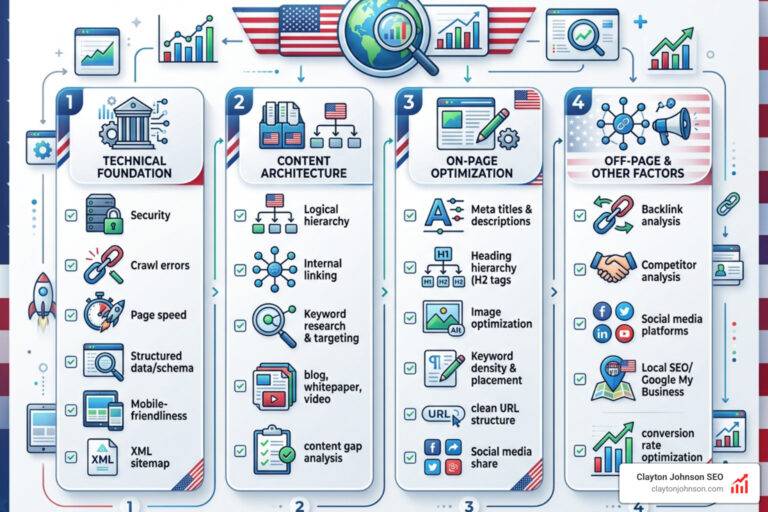
Ready to get your hands dirty? Improving a process doesn’t have to be a multi-month ordeal. We recommend a simple 7-step approach to keep things moving:
- Pinpoint the Problem: Don’t just say “marketing is slow.” Identify the specific bottleneck (e.g., “the blog approval process takes 10 days”).
- Identify the Process: Map out exactly how that task happens today.
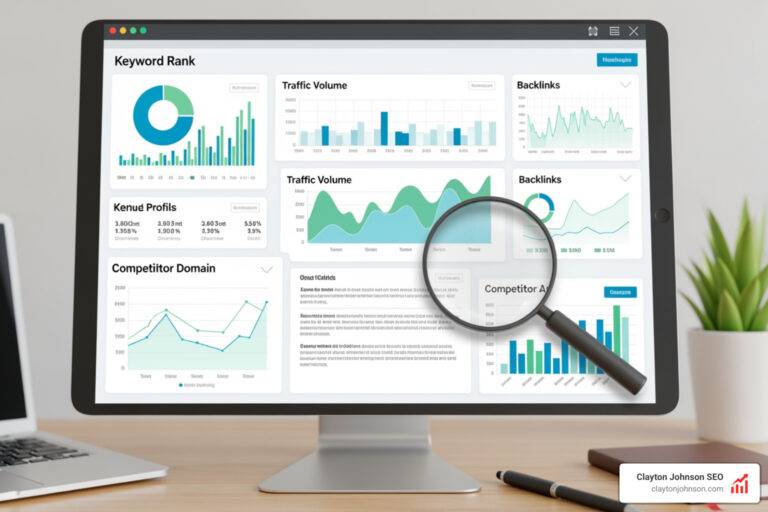
- Analyze Impact: Use dashboards or reporting to see how this inefficiency affects the team and the bottom line.
- Determine Solutions: Brainstorm with the people who actually do the work. They usually know the solution better than the managers do.
- Implement Standards: Once you find a fix, document it. If it isn’t written down, it isn’t a process.
- Communicate: Ensure everyone knows about the change and why it’s happening.
- Review Regularly: Check back in 3-6 months. Is the fix still working?
To help identify where to start, you might want to learn how to break your bottlenecks with the TOC five focusing steps. Just look at Zara’s Supply Chain Success—they overhauled their entire product development process to go from design to shelf in two weeks by focusing on vertical integration and real-time data.
Essential Tools for Analyzing and Optimizing Workflows
You don’t need fancy software to start, though it helps. Some of the most effective Process Improvement tools are surprisingly simple:
- 5 Whys: Ask “Why?” five times to get past the symptoms and find the root cause of a problem.
- Fishbone Diagram (Ishikawa): A visual way to categorize the potential causes of a problem (People, Methods, Machines, Materials, etc.).
- SWOT Analysis: Evaluating the Strengths, Weaknesses, Opportunities, and Threats of a current workflow.
- A3 Readiness Assessment: A tool to check if your organization is actually prepared for a major change before you launch it.
To master the technical side of this, we recommend you learn to optimize workflows with The Definitive Guide to Workflow Management.
Role Clarity using the RACI Matrix
One of the biggest process killers is confusion over who is doing what. The RACI Matrix solves this:
- Responsible: The person doing the work.
- Accountable: The one person who owns the outcome (the “buck stops here” person).
- Consulted: People who provide input.
- Informed: People who need to be kept in the loop but don’t need to give approval.
Visualizing Success with Process Mapping
You can’t fix what you can’t see. Process mapping involves drawing out the “As-Is” state (how it works now) and the “To-Be” state (how we want it to work). Using swimlane diagrams can help show how tasks move between different departments. For more on how to value these changes, check out process improvement scoring 101.
Getting Started with Simple Process Improvement Tools
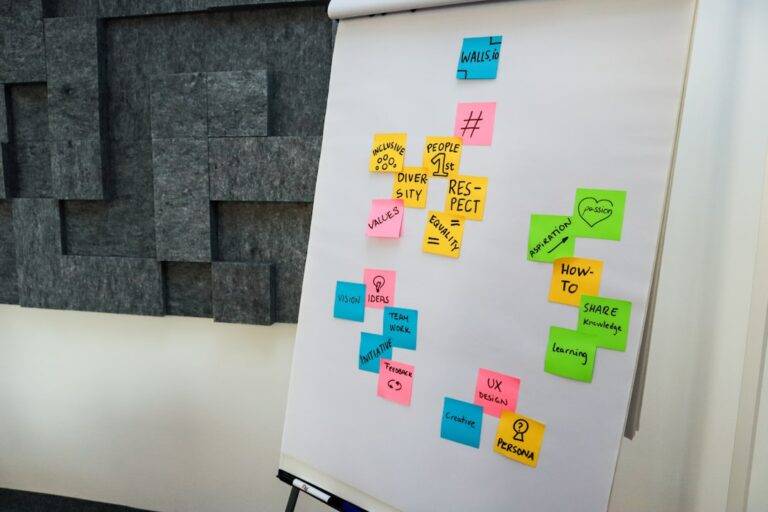
If you’re just starting, don’t overcomplicate it. Use sticky notes on a whiteboard for a team retrospective. This “low-fidelity” approach encourages participation and makes it easy to move steps around. For those ready to move into digital optimization, download the Citizen Developer’s Guide to Workflow Optimization.
Building a Sustainable Culture of Continuous Improvement
The most successful companies don’t treat Process Improvement as a one-time project. They build it into their DNA. This requires a shift from “firefighting” (fixing symptoms) to “fire prevention” (addressing root causes).
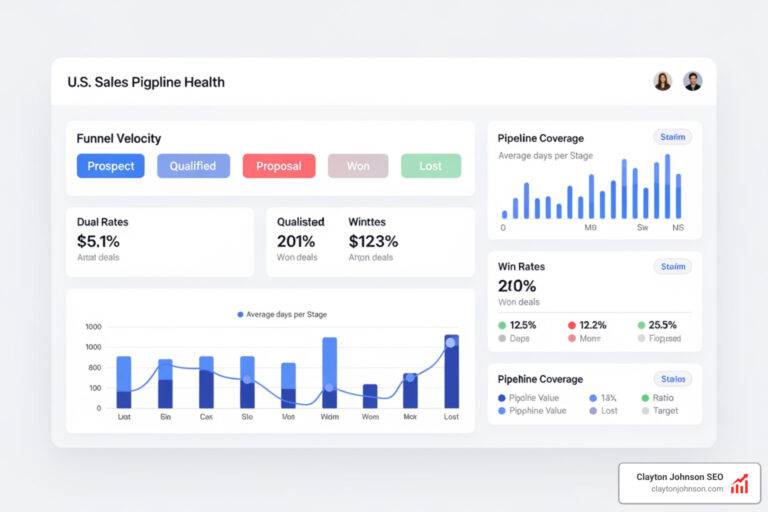
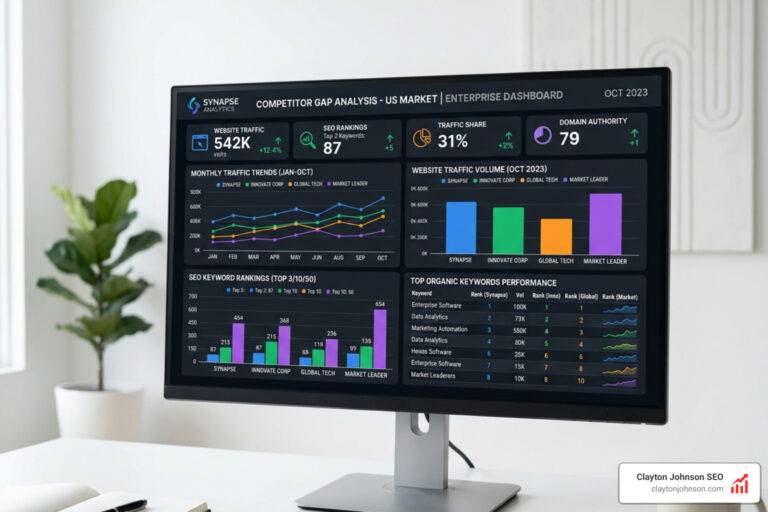
Modern technology plays a huge role here. No-code automation platforms allow business units to build their own solutions without waiting on IT. By using dashboards for process data, leaders can see bottlenecks in real-time and address them before they become crises.
To find the right tech stack for your team, you can find the right automation solution with the Buyer’s Guide to Automation Platforms.
Frequently Asked Questions about Process Improvement
What is the difference between DMAIC and DMADV?
While they sound similar, they have different goals. DMAIC (Define, Measure, Analyze, Improve, Control) is used to optimize an existing process that isn’t meeting expectations. DMADV (Define, Measure, Analyze, Design, Verify) is used when you need to create a new process or product from scratch to ensure it meets quality standards from day one.
How do you measure the success of process improvements?
We look at several Key Performance Indicators (KPIs):
- Cycle Time: How long does it take to complete the process from start to finish?
- Defect Rate: How many errors occur per 1,000 units or tasks?
- ROI: Are the cost savings from the improvement greater than the cost of implementation?
- Customer Satisfaction: Are the end-users (internal or external) happier?
You can track these effectively by using reporting features to track impact.
How does continuous improvement differ from one-time fixes?
A one-time fix is like patching a leak in a pipe; it stops the immediate mess but doesn’t explain why the pipe burst. Continuous improvement is a mindset shift. It’s about building a “growth architecture” where the team is constantly looking for ways to prevent regression and ensure sustainable, compounding growth.
Conclusion
At Clayton Johnson SEO, we believe that clarity leads to structure, and structure leads to leverage. Whether you are in Minneapolis or managing a global team, your ability to master Process Improvement is what separates a struggling startup from a scalable enterprise.
We are building Demandflow.ai to provide founders and marketing leaders with the structured growth operating system they need. We don’t just give you tactics; we provide the growth architecture—combining strategic frameworks, SEO systems, and AI-augmented workflows to ensure your business doesn’t just grow, but compounds.
Ready to stop the chaos and start building leverage? Master your growth infrastructure with Clayton Johnson and see how a structured strategy can transform your bottom line.