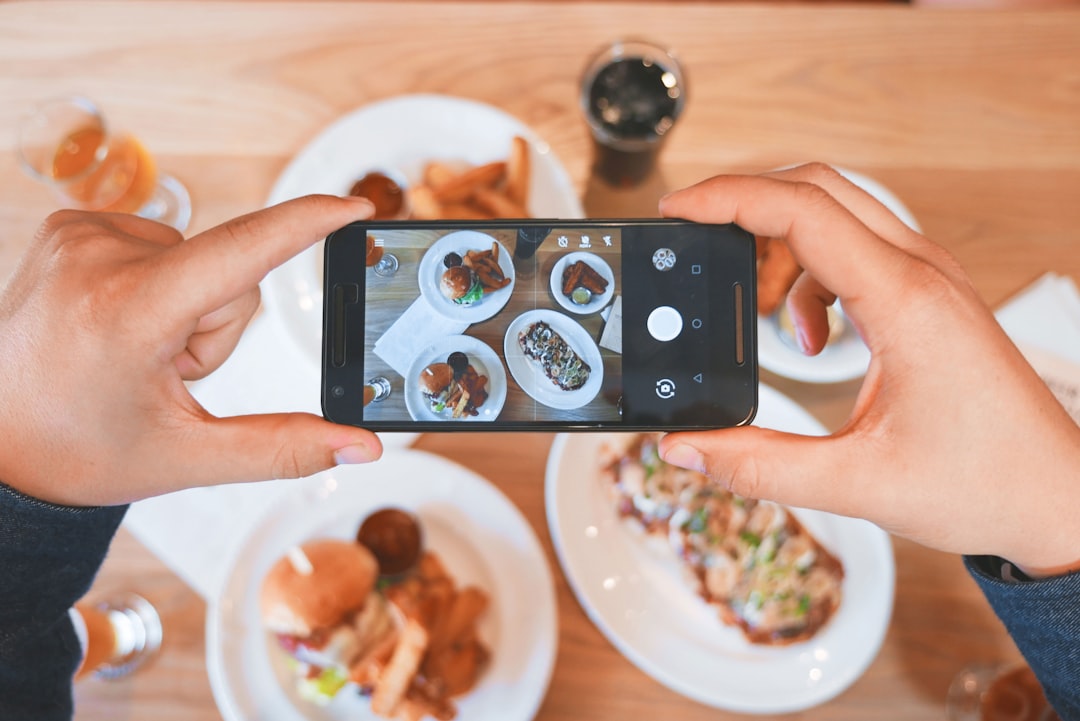
Your Restaurant’s Social Media Feed Is the New Front Door 🚪
A strong restaurant social media marketing strategy is how modern diners discover, evaluate, and choose where to eat — often before they ever visit your website or step through your door.
Here is what an effective restaurant social media strategy looks like at a glance:
| Strategy Element | What It Means |
|---|---|
| Profile optimization | Consistent branding, hours, menu links, and location across all platforms |
| Content mix | Food photos, short-form video, behind-the-scenes, and user-generated content |
| Posting consistency | At least 3-5 times per week with a planned content calendar |
| Platform focus | Instagram and TikTok for discovery; Facebook for community and events |
| Engagement | Responding to comments, DMs, and reviews to build trust |
| Influencers and UGC | Leveraging guest posts and creator content for authentic reach |
| Conversion tactics | Reservation buttons, order links, and promotions that drive action |
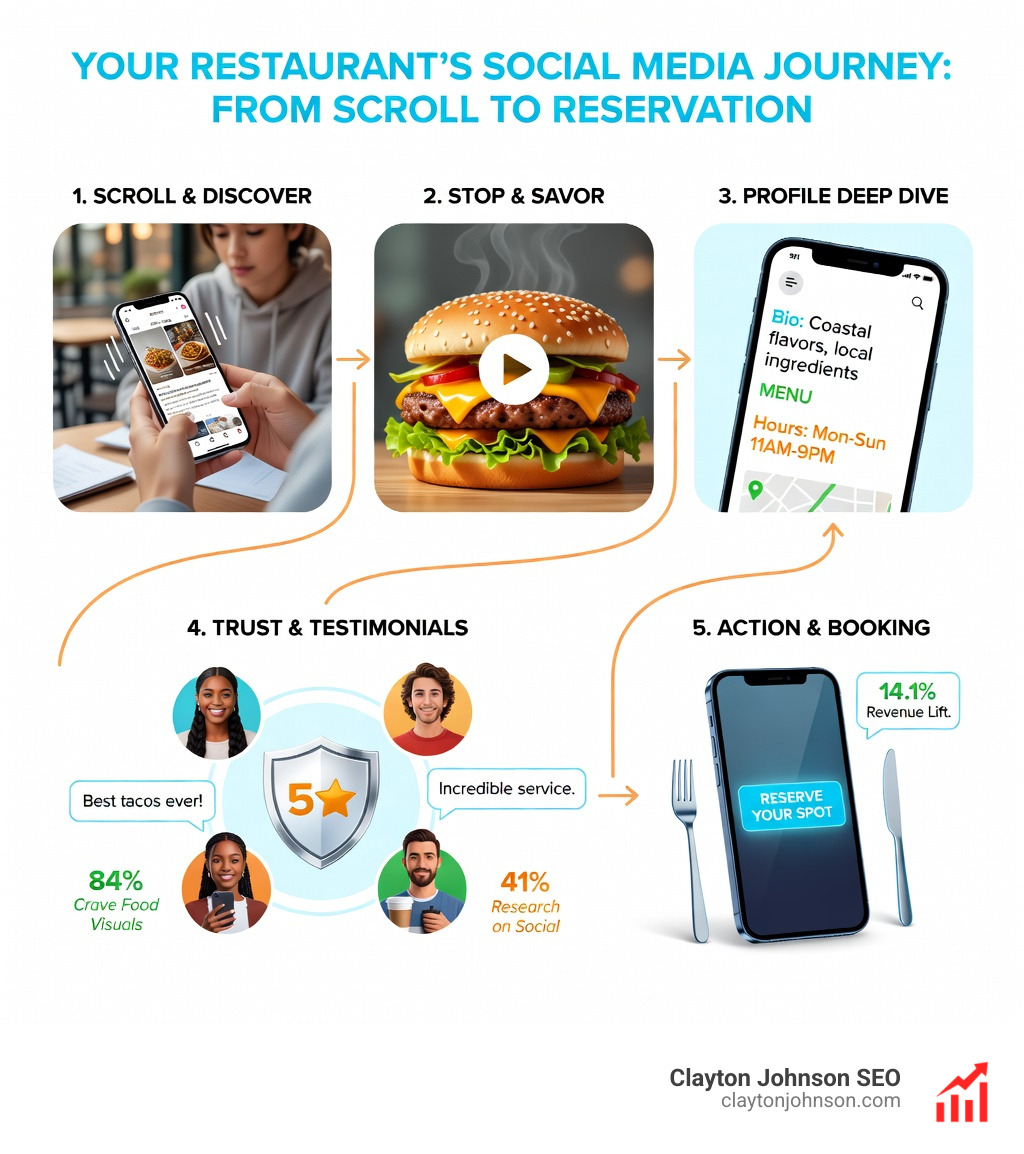
The numbers tell a clear story. 84% of diners want to see photos of food and drinks on a restaurant’s social channels. 41% of diners research restaurants on social media before visiting — and that number jumps to 67% among Gen Z and Millennials. Restaurants that take social seriously saw an average 9.9% increase in revenue in one recent study, with social-first brands hitting 14.1%.
Every scroll is an audition. Your feed either earns the reservation or loses it.
I’m Clayton Johnson, an SEO strategist and growth operator who has built scalable content systems and structured marketing frameworks across dozens of business models — including helping brands design the kind of restaurant social media marketing strategy that turns followers into paying customers. Let’s break down exactly how to make that happen for your restaurant.
Common restaurant social media marketing strategy vocab:
Why a Restaurant Social Media Marketing Strategy is Your New Front Door
In the past, a restaurant’s “curb appeal” was defined by its physical signage and the smell of garlic wafting onto the sidewalk. Today, that first interaction happens on a glowing screen. Survey data from Toast confirms that 84% of diners want to see photos of food and drinks before they commit to a table. If your digital “front door” is locked or unattractive, potential guests will simply keep scrolling to your competitor.
Research shows that 41% of diners research restaurants on social media, a figure that skyrockets to 67% for Gen Z and Millennials. These younger demographics don’t just want to see a menu; they want to see the vibe. They are looking for “Instagram-worthiness”—a blend of aesthetic plating and atmosphere that promises a shareable experience.
When we look at social media marketing services, we focus on this “digital curb appeal.” A social-first brand doesn’t just post occasionally; they treat their feed as a revenue channel. In fact, restaurants utilizing a structured social approach reported an average 9.9% increase in B2C revenue, while those who truly mastered the medium saw gains of 14.1%.
Essential Elements of a Restaurant Social Media Marketing Strategy
To turn a casual scroller into a hungry diner, your strategy needs structure. You can’t just “post and pray.” You need to hit the fundamental digital marketing pillars that drive local discovery:
- Location Tagging: Every post should be geotagged. This allows locals and tourists searching for “food near me” to find you.
- Menu Links: Don’t make people hunt for your prices. A direct link to your menu in the bio is non-negotiable.
- Google Business Profile (GBP) Integration: Your social media should complement your Google Business Profile. When someone finds you on Google, they should see the same high-quality images and branding they saw on Instagram.
- Brand Voice: Are you a high-end steakhouse or a quirky taco joint? Your captions should reflect that personality consistently.
Platform Statistics and Effective Channels
Not all platforms are created equal. To maximize your ROI, you need to go where your specific audience hangs out.
- Facebook: With 2.96 billion monthly active users, Facebook remains a powerhouse for local community engagement. It is the preferred platform for the 25-34 and 35-44 demographics. It’s perfect for promoting events, sharing long-form updates, and managing customer reviews.
- Instagram: Boasting 2 billion users, this is the visual home of the restaurant industry. 90% of users follow a business here, and features like Reels have a massive reach rate of 14%. It is the “digital storefront” where people preview your experience.
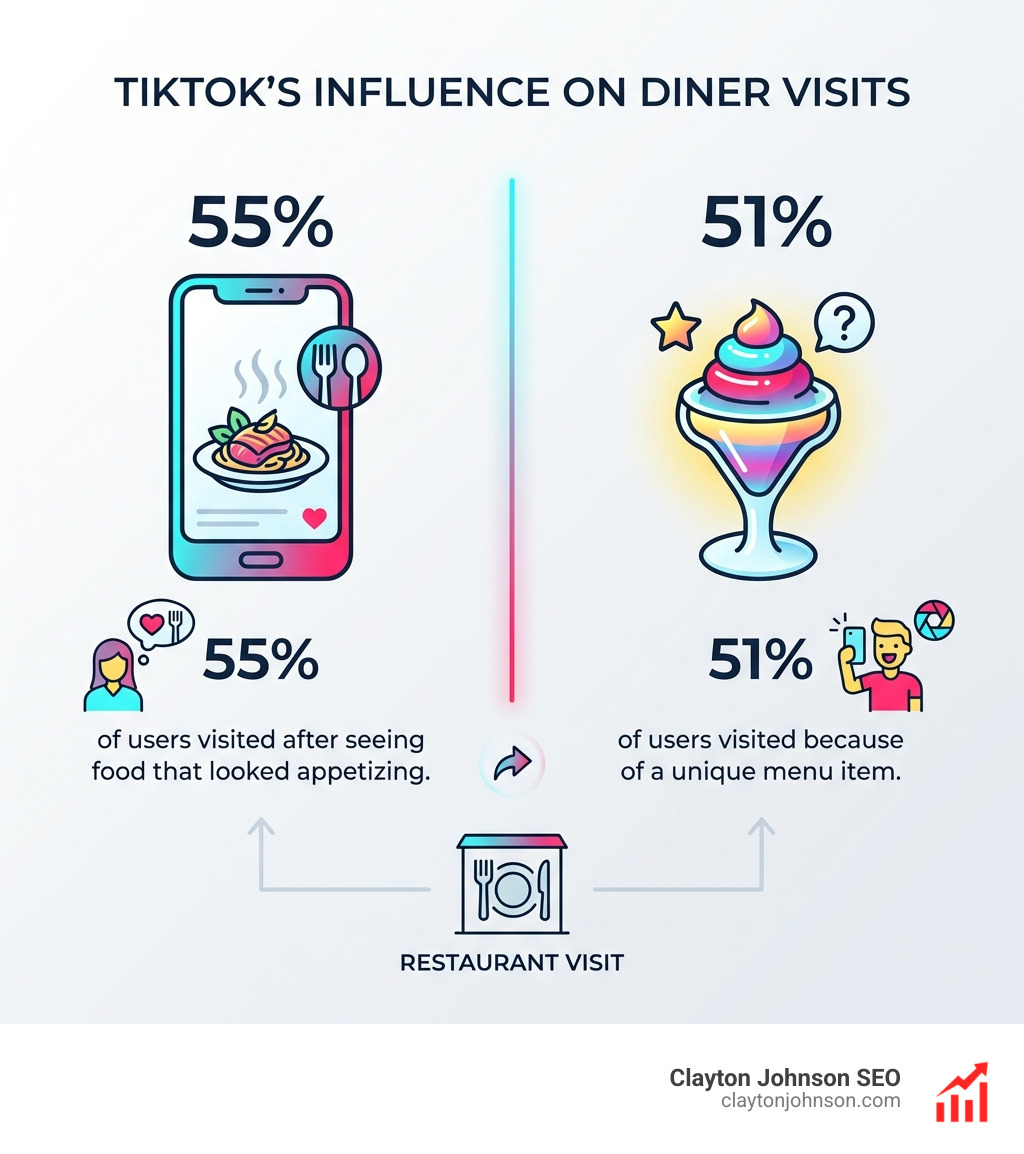
- TikTok: With 1.5 billion users, TikTok is the king of discovery. 55% of TikTok users have visited a restaurant simply because the food looked appetizing on their feed. It’s less about who follows you and more about the viral potential of the “For You” page.
- YouTube Shorts: This is a rising star. It’s an excellent place to repurpose your TikTok and Reel content to capture an audience that spends an average of 19 minutes a day on the platform.
Optimizing Your Profiles for Maximum Discoverability and Conversion
Your profile is your closing tool. If a piece of content is the “hook,” the profile is the “deal.” We often see restaurants neglect their bios, which is a massive missed opportunity for conversion.
Bio Optimization and Branding
Think of your bio as your restaurant’s LinkedIn profile—it needs to be professional but full of personality. Take The Meatball Shop’s approach: clear, creative, and visually driven. Your bio must include:
- Cuisine Type: What do you serve?
- Location & Hours: Where and when can they eat?
- Contact Info: A phone number or email for inquiries.
- A “Link in Bio”: Use a tool to house links for reservations, online ordering, and your full website.
Story Highlights
Use Instagram Highlights to answer FAQ’s before they are even asked. Create categories for:
- Menu: Photos of your top dishes with prices.
- Reviews: Screenshots of happy customers.
- Behind-the-Scenes: Show the kitchen and staff.
- Events: Upcoming live music or holiday specials.
- Directions: A quick clip or map showing where to park.
Converting Followers into Reservations
The ultimate goal of any restaurant social media marketing strategy is to put people in seats. This requires removing friction. If a diner has to leave the app, open a browser, and search for your site to book a table, you will lose them.
Use platform-specific features like “Reserve” or “Order Food” buttons. Toast and OpenTable offer integrations that allow users to book directly through Instagram or Facebook. Mobile optimization is critical here—if your booking site takes more than three seconds to load, that diner is going to the pizza place down the street instead.
Content Pillars: From Short-Form Video to User-Generated Content
Content planning becomes much easier when you use a “pillar” system. Instead of staring at a blank screen every morning, rotate through these four themes:
- Menu Highlights: High-quality shots of your signature dishes.
- Behind-the-Scenes (BTS): Show the prep, the “pasta flip,” or the bartender shaking a cocktail.
- Guest Reactions: Reposting customer content.
- Promotions & Events: Time-sensitive offers to drive immediate traffic.
The Power of Short-Form Video
In the current landscape, vertical video is king. You don’t need a Hollywood budget; in fact, smartphone-shot video often feels more authentic and performs better. Use the InShot app to quickly edit clips.
A great example is Lilia in Brooklyn. They created a series called the “Mafaldini flip”—slow-motion videos of chefs flipping pasta. It’s simple, repeatable, and mesmerizing. This type of content builds anticipation and showcases the artistry behind the food.
| Feature | Instagram Reels | TikTok |
|---|---|---|
| Primary Audience | 18-34 (Diverse) | 15-30 (Gen Z/Millennial) |
| Content Style | Polished, Aesthetic | Raw, Trendy, Personality-driven |
| Discovery Engine | Follower-based + Explore | Interest-based (For You Page) |
| Best For | Brand Loyalty & Storefront | Mass Reach & New Discovery |
For a deeper dive into creating high-performing content, check out our guide on SEO content marketing.
Leveraging UGC in Your Restaurant Social Media Marketing Strategy
User-Generated Content (UGC) is the “holy grail” of restaurant marketing. It is free, authentic, and carries more weight than any ad you could ever buy. 85% of restaurant-goers report they would post about a positive experience. When they do, you must capitalize on it.
Condado Tacos is a master of this. They regularly repost photos taken by their guests. This builds a sense of community and provides “social proof” that your food actually looks as good in person as it does in your professional photos.
Reposting Etiquette:
- Always ask for permission (a simple DM works).
- Tag the original creator to give credit.
- Add a playful caption that invites others to share their photos too.
Driving Revenue Through Influencers and Community Engagement
Are people really spending money based on influencer recommendations? The data says a resounding yes. 83% of consumers view creators as trusted sources of information. For restaurants, micro-influencers (those with 5,000 to 50,000 followers) are often more effective than celebrities because their audiences are local and highly engaged.
How to Work with Influencers:
- Identify Local Foodies: Search local hashtags (e.g., #MinneapolisEats) to find creators in your area.
- Offer an Experience: Invite them for a complimentary meal in exchange for a post or a Reel.
- Create a Contract: Even for “trade” deals, have a simple agreement on what they will post and when.
Community Management and Social Listening
Engagement is a two-way street. If someone leaves a comment and you ignore it, you’re essentially ignoring a guest at your table. Respond to every comment and DM. Even negative reviews can be turned into a win if you respond with grace and a solution. This shows potential customers that you actually care about the guest experience.
Advanced Tactics and Trendjacking
To stay relevant, you need to keep an eye on what’s trending. Use Google Trends to see what people are searching for. Is there a new viral TikTok sound? A “Squid Game” cocktail trend?
District Eatz used this perfectly by creating “Squid Game” themed cocktails when the show was peaking. This “newsjacking” strategy allows you to ride the wave of a popular topic to gain massive exposure.
Other Advanced Tactics:
- Contests: “Tag a friend you’d share this pizza with for a chance to win a $50 gift card.” This explodes your reach and gains you new followers.
- Seasonal Promotions: Humans crave novelty. Limited-time menu items (LTOs) create a sense of urgency that drives foot traffic.
Frequently Asked Questions about Restaurant Social Media
How often should a restaurant post on social media?
Consistency is more important than volume. A general rule of thumb is to post at least 3 times per week. The algorithm favors accounts that post regularly. If you go dark for two weeks, your reach will plummet. Use scheduling tools like Buffer or Later to plan your posts in advance so you don’t have to worry about it during a busy Friday night shift.
Should I handle social media in-house or hire an agency?
This depends on your resources.
- In-House: Best for authenticity. A passionate staff member who knows the food can capture “real” moments that an agency might miss.
- Agency: Best for consistency and professional polish. An agency can handle the high-level strategy, ad spend, and high-end video production that a busy owner doesn’t have time for.
- Hybrid: Many successful restaurants do the daily posting themselves but hire experts for social media marketing and SEO strategy to ensure they are actually reaching new customers.
What are the best hashtags for restaurant marketing?
A mix of broad and local tags works best.
- Broad: #foodporn, #foodphotography, #instafood.
- Local: #MinneapolisEats, #StPaulFoodies, #TwinCitiesDining.
- Branded: Create a unique tag for your restaurant (e.g., #MyTacoShopLife) and encourage guests to use it.
Conclusion: Building a Structured Growth Architecture
At the end of the day, a restaurant social media marketing strategy isn’t just about pretty pictures; it’s about building a structured growth engine for your business. Most restaurants don’t lack great food or hard-working staff—they lack a structured growth architecture that turns digital attention into physical foot traffic.
At Clayton Johnson SEO and through our work with Demandflow.ai, we focus on moving beyond “post and pray” marketing. We help founders and marketing leaders build systems where clarity leads to structure, structure leads to leverage, and leverage leads to compounding growth.
Whether you are looking for a scalable authority retainer to dominate your local market or you need to refine your SEO and content architecture, we provide the frameworks to make it happen.
Your next customer is scrolling right now. Is your digital front door open?
Ready to grow? Start your restaurant social media marketing strategy with us today.