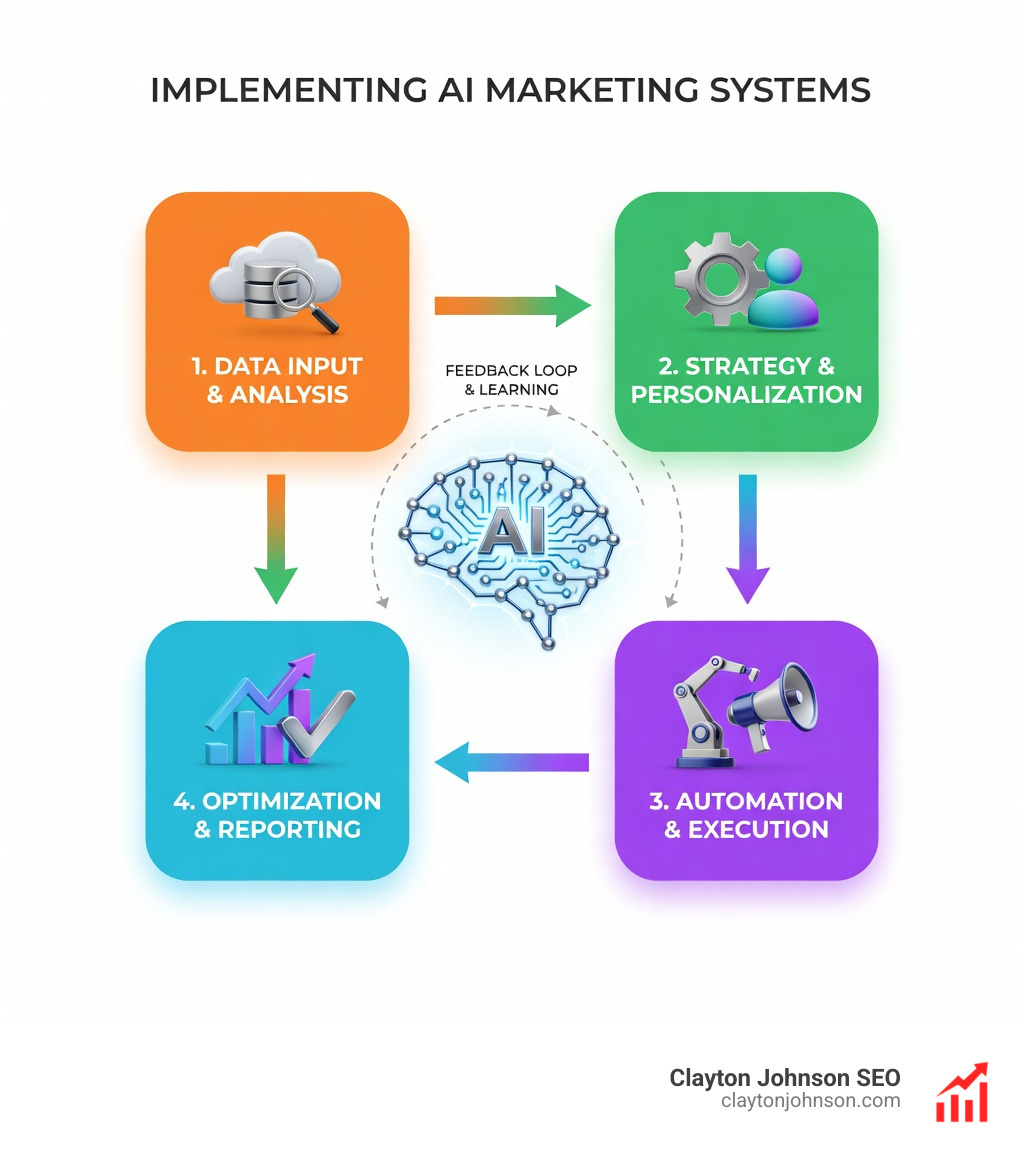
Why Most Companies Are Losing Ground on Implementing AI Marketing Systems
Implementing AI marketing systems is the process of deploying artificial intelligence across your marketing operations — from data analysis and audience segmentation to content creation and campaign automation — to drive measurable revenue growth and efficiency gains.
Here is how to do it:
- Audit your data readiness — Score your data on accessibility, cleanliness, completeness, and timeliness before touching any AI tool
- Identify high-impact use cases — Map AI opportunities to real funnel bottlenecks like lead scoring, cart abandonment, or content production
- Start with low-risk pilots — Run controlled experiments in one channel (content automation or SEO optimization work well) and prove ROI within 60–90 days
- Choose your stack — Evaluate off-the-shelf tools first, then build custom workflows where you need a competitive edge
- Scale cross-functionally — Expand AI across teams with clear governance, stakeholder alignment, and measurable KPIs
- Measure what matters — Track pipeline influence, deal velocity, and customer acquisition cost — not vanity metrics
A McKinsey analysis of more than 400 advanced AI use cases found that marketing is the single business function with the greatest potential value from AI. The reason is straightforward: marketing’s three core jobs — understanding customer needs, matching them to the right product, and persuading people to buy — are exactly the problems AI is built to solve.
Yet most organizations are not capturing that value. Currently, only about 20% of companies have deeply integrated AI into their marketing workflows. The other 80% are still experimenting. Meanwhile, the companies that have moved past pilots are reporting 60% greater revenue growth than their peers and adapting to market shifts twice as fast. The gap between leaders and laggards is widening — and it is widening fast.
The problem is rarely a shortage of AI tools. It is a shortage of structured implementation strategy.
I’m Clayton Johnson, an SEO strategist and growth operator who specializes in building AI-assisted marketing workflows and scalable content systems — and implementing AI marketing systems is a core part of the strategic infrastructure I build for founders and marketing leaders. In the sections below, I’ll walk you through the exact framework I use to move teams from fragmented AI experimentation to a compounding, revenue-generating growth engine.
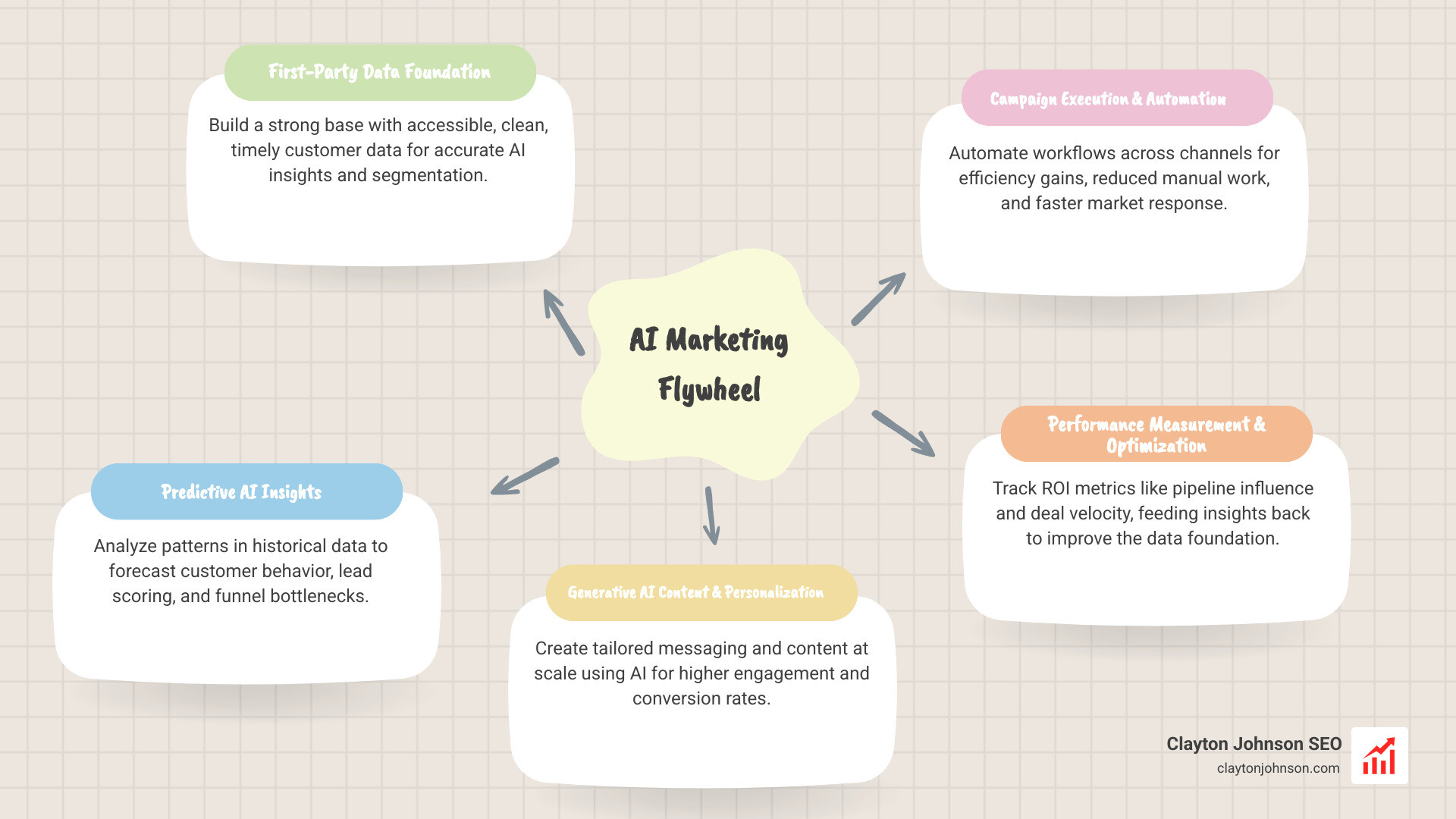
Common Implementing AI marketing systems vocab:
The Core Pillars of Implementing AI Marketing Systems
When we talk about McKinsey research on AI value in marketing, we see that the real winners aren’t just using a chatbot to write a few emails. They are building an integrated engine. AI in marketing isn’t a single “thing”; it’s a suite of capabilities that enhance customer insights, personalization, and performance measurement.
To win, we must move beyond the “shiny object syndrome.” True success rests on four pillars:
- Predictive Insights: Anticipating what a customer will do before they do it.
- Content Velocity: Creating high-quality assets at the speed of culture.
- Hyper-Personalization: Delivering a unique experience to every user, every time.
- Measurement Accuracy: Linking every dollar spent to a dollar earned.
Understanding Predictive vs. Generative Models
To effectively start implementing AI marketing systems, we need to understand the two workhorses of the industry: Predictive AI and Generative AI.
Predictive AI is the “brain” that looks at historical data and pattern recognition to tell us what’s coming next. It uses machine learning and deep learning to identify which customers are likely to churn or which products are about to trend. Research shows that predictive AI can improve conversion rates by 20-30% because it allows us to stop guessing and start anticipating.
Generative AI, on the other hand, is the “creator.” It takes those predictive insights and turns them into tailored messaging, images, and video. While predictive AI tells us who to talk to, generative AI creates what we say to them at scale. When these two complement each other, you get a system that identifies a segment and creates 500 variations of an ad for that segment in minutes.
Assessing Data Readiness for Implementing AI Marketing Systems
You’ve heard the phrase “garbage in, garbage out.” In AI, that is an absolute law. Before we deploy a single model, we must audit our data readiness. AI requires a foundation of first-party data to be effective. If your CRM is a mess of duplicate leads and outdated emails, your AI will be confidently wrong.
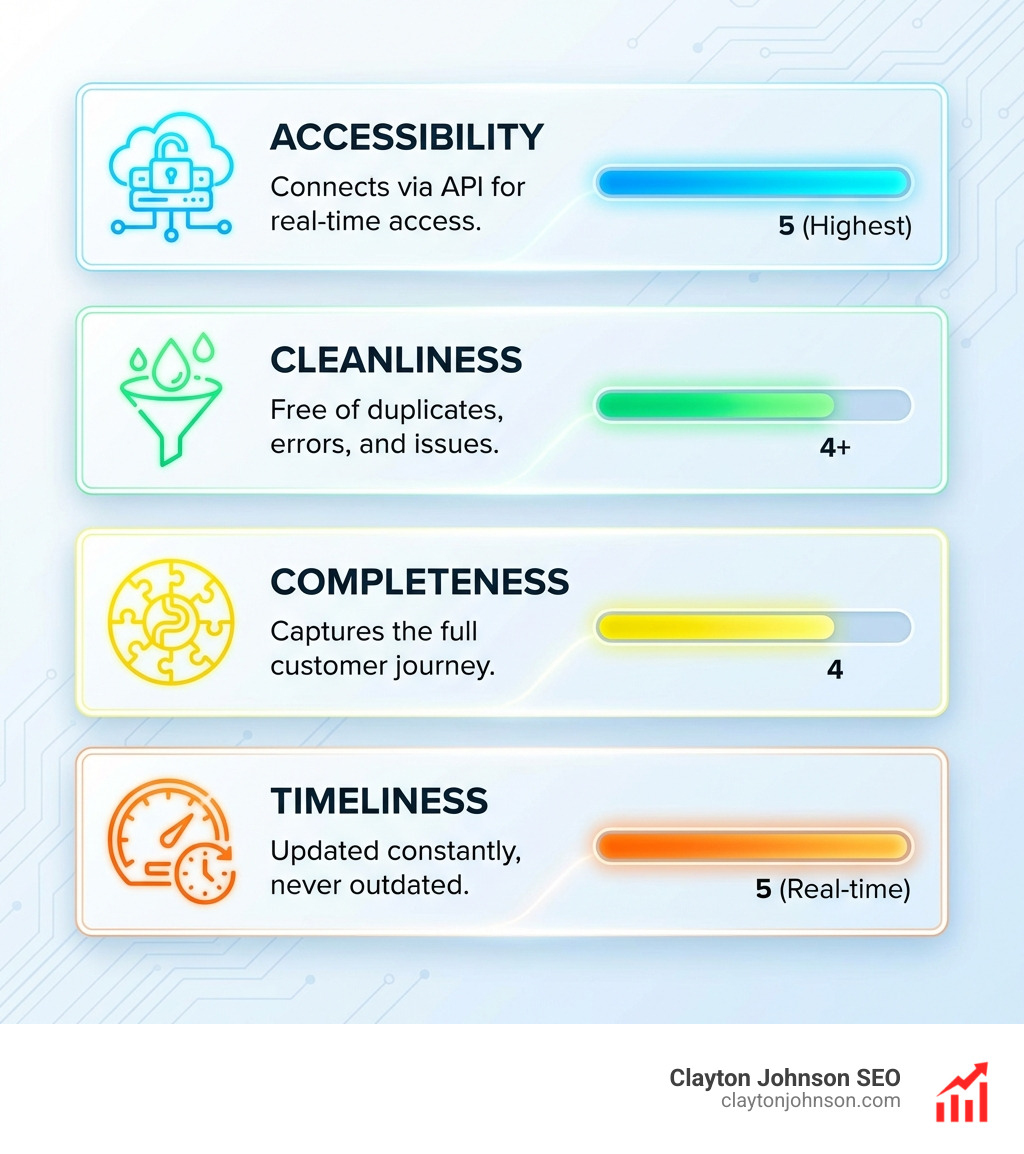
We use a simple scorecard to evaluate data across four categories:
| Metric | Description | Target Score (1-5) |
|---|---|---|
| Accessibility | Can our AI tools actually “see” and pull this data via API? | 5 |
| Cleanliness | Is the data free of duplicates, errors, and formatting issues? | 4+ |
| Completeness | Do we have the full customer journey or just bits and pieces? | 4 |
| Timeliness | Is the data updated in real-time or is it weeks old? | 5 |
A Phased Framework for AI Deployment
Most companies fail because they try to do everything at once. We recommend a “Crawl-Walk-Run” framework, a strategy echoed in BCG insights on AI excellence. This approach minimizes risk while maximizing early ROI.
The Crawl Phase: High-Impact Low-Risk Pilots
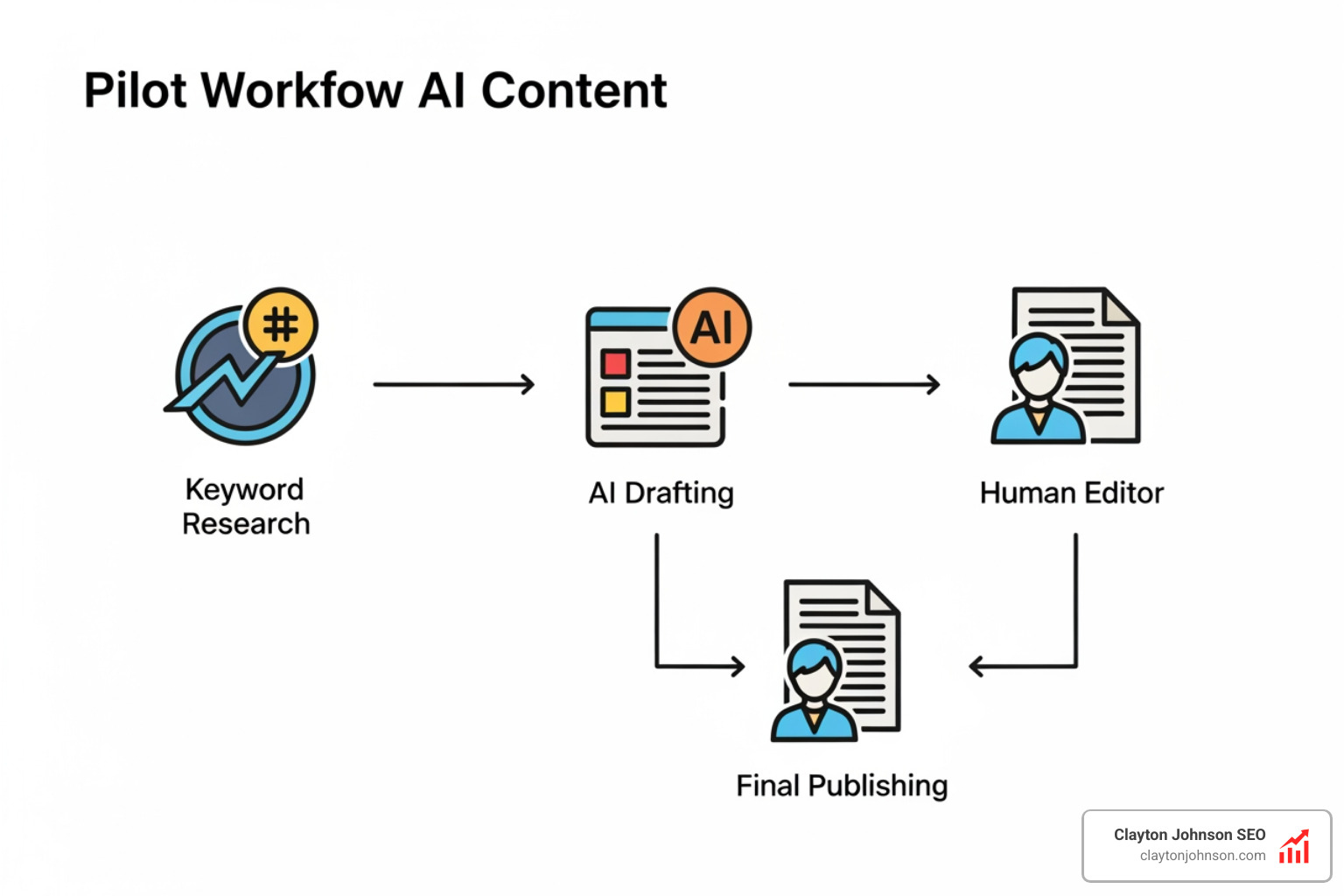
In the Crawl phase, we focus on strategic pilot programs. These are “quick wins” that demonstrate value without requiring a total overhaul of your operating model.
Great starting points include:
- Content Automation: Using AI to generate initial drafts for SEO-optimized blog posts or social media captions.
- Sentiment Analysis: Scraping social media and reviews to understand customer mood.
- SEO Optimization: Using tools to analyze keyword density and readability against competitors.
The goal here is to prove ROI within 60 to 90 days. If we can show that AI reduced content production costs by 40% while maintaining quality, we earn the political capital to move to the next phase.
Scaling and Transformation through Agentic AI
Once we’ve mastered the pilots, we move to the “Run” phase: Agentic AI. This is the future of implementing AI marketing systems. Unlike simple bots that follow a single command, AI agents can handle end-to-end workflow orchestration.
For example, an agentic system could:
- Monitor a competitor’s price change.
- Trigger a predictive model to see how that affects our sales.
- Automatically draft a counter-offer email.
- Launch a targeted ad campaign to our most price-sensitive customers.
This level of autonomous operations is where we see the “AI flywheel” kick in, leading to 60% greater revenue growth and a massive competitive advantage.
Building Your Stack: Buy vs. Build Decisions
One of the most frequent questions we get is: “Should we buy off-the-shelf tools or build our own?” According to the Stanford HAI report on AI adoption, business adoption has hit a tipping point, with 78% of organizations now using AI. Most start by buying.
Buying Off-the-Shelf: This is the fastest route. Tools like HubSpot for CRM or Jasper for content are plug-and-play. They are great for the Crawl and Walk phases.
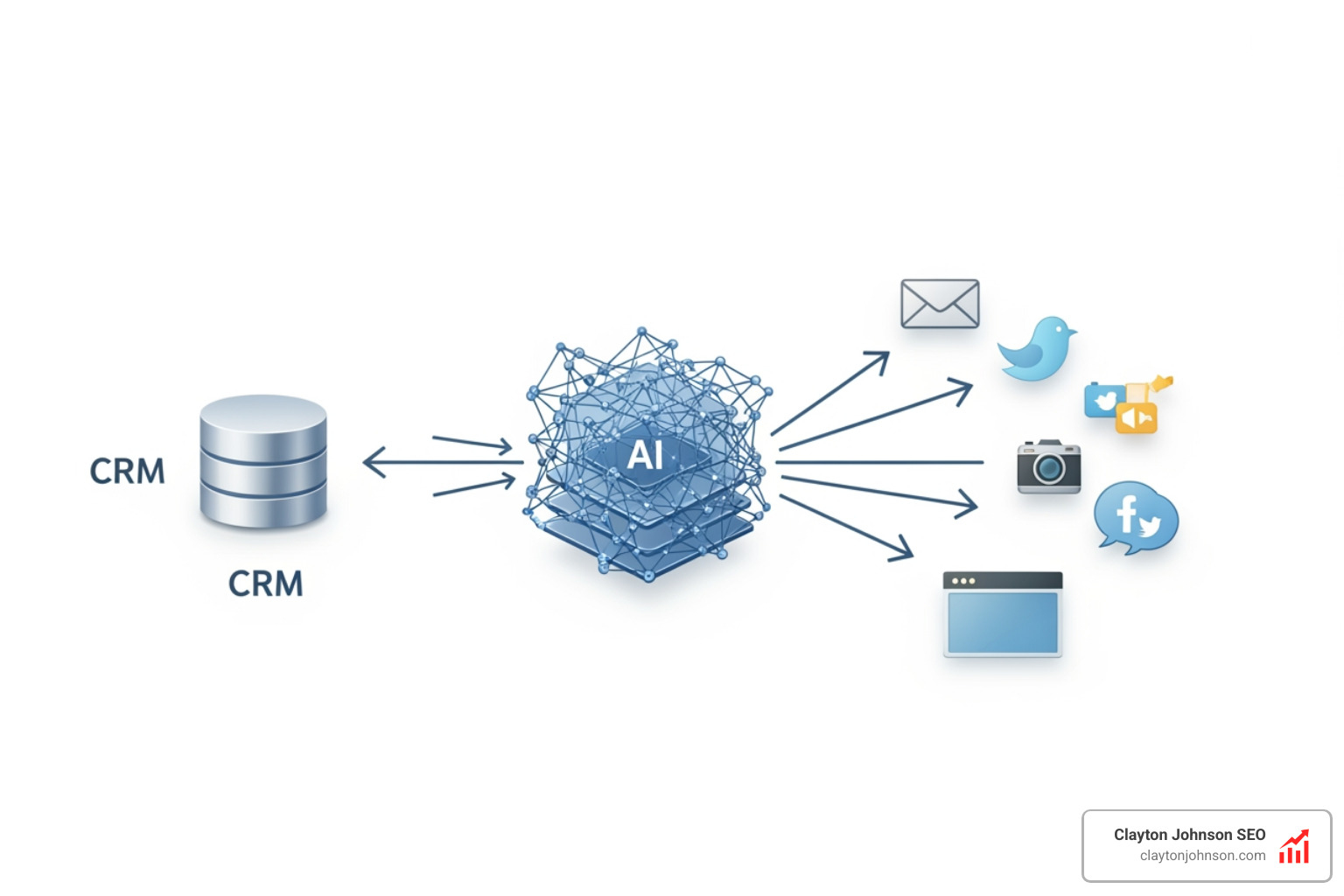
Building Custom Architecture: To create a “competitive moat,” we eventually need custom solutions. By connecting a model like Claude 3 or Gemini to your proprietary customer data via API, you create a system that understands your brand better than any generic tool ever could.
Essential AI Marketing Tool Categories
To build a robust system, we need a unified tech stack. Here are the categories we prioritize:
- AI-Powered Analytics: Tools that find patterns in your traffic that humans might miss.
- Content Optimization: Platforms like Surfer SEO that ensure your content is built to rank.
- Customer Engagement: Lead generation chatbots that engage prospects 24/7.
- Workflow Automation: Tools like Zapier or Gumloop (often called the “Lego of tech stacks”) that connect all your disparate apps into one cohesive system.
Context Engineering and Brand Voice
The biggest mistake we see in implementing AI marketing systems is “lazy prompting.” If you ask a generic AI to “write a blog post,” it will sound like a robot.
The secret is Context Engineering. We provide the AI with a “Brand Constitution” that includes:
- Style Guides: Our specific tone, voice, and formatting rules.
- Exemplars: Examples of our best-performing content.
- Personas: Detailed descriptions of our target audience.
By giving the AI a larger context window, we ensure the output only needs a 10% human “polish” to be perfect. We always keep a human-in-the-loop for fact-checking and final brand alignment.
Overcoming Challenges and Measuring ROI
Transitioning to an AI-powered model isn’t without its hurdles. As noted in the International Journal of Information Management on AI-powered marketing, challenges like data privacy, bias mitigation, and security are real.
To overcome these, we focus on “Hard Financial Metrics.” We don’t care about “likes”; we care about:
- Pipeline Influence: How much revenue did AI-assisted campaigns touch?
- Deal Velocity: Did AI help us close deals faster?
- Operational Gains: How many hours did we save by automating repetitive tasks?
Building an AI Culture
Success in implementing AI marketing systems is 20% technology and 80% people. We often see a “C-suite disconnect” where leaders want growth, but teams fear for their jobs.
We solve this by building what we call the Magic Circle. This is a cross-functional team including Marketing, IT, Finance, and Legal. We position AI as a “force multiplier” — it doesn’t replace the marketer; it turns them into a “bionic” orchestrator who can do the work of ten people.
Frequently Asked Questions about AI Marketing
Will AI replace my marketing team?
No, but marketers who use AI will replace those who don’t. We view AI as a force multiplier. It handles the “drudge work” — data entry, basic drafting, and reporting — so your team can focus on high-value strategic orchestration and creative leverage.
How long does it take to see results?
You should see initial “Crawl” phase results (like time savings or engagement lifts) within 30 to 60 days. Significant revenue transformation usually takes 6 to 12 months as your models learn from your specific data. It’s a game of long-term compounding growth.
What is the biggest mistake in AI implementation?
The “Technology-First Trap.” Many companies buy 20 different AI tools before they have a strategy or clean data. They end up with “tool sprawl” and data silos. Always start with the business problem you are trying to solve, then find the tool that solves it.
Conclusion
At the end of the day, implementing AI marketing systems is about more than just efficiency; it’s about building structured growth architecture. When 88% of marketers are already using AI, standing still is the same as falling behind.
At Clayton Johnson SEO and Demandflow.ai, we don’t just give you tactics; we give you the infrastructure to win. By combining taxonomy-driven SEO systems with AI-augmented workflows, we help you move from clarity to leverage and, finally, to compounding growth.
If you are ready to stop experimenting and start scaling, check out our comprehensive library of AI tools or reach out to see how we can help you build your own revenue-generating AI machine.