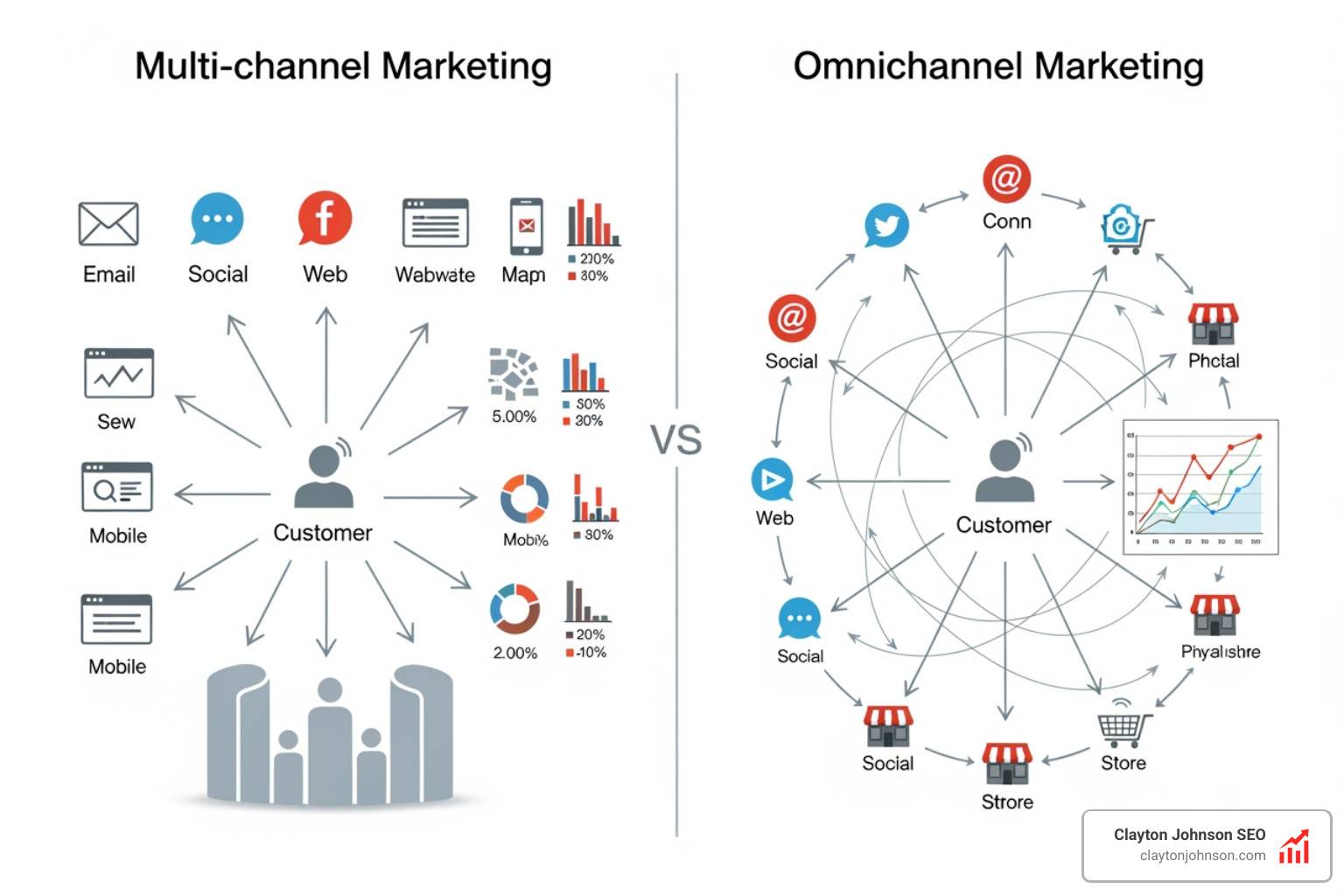
Multi Channel Marketing vs Omnichannel: Defining the Divide
Multi channel marketing vs omnichannel is one of the most misunderstood comparisons in modern marketing — and choosing the wrong approach could be silently costing you customers and revenue.
Here’s the quick answer:
| Multi Channel Marketing | Omnichannel Marketing | |
|---|---|---|
| Focus | Channel-centric | Customer-centric |
| Channels | Independent, siloed | Integrated, connected |
| Messaging | Static, channel-specific | Dynamic, personalized |
| Data | Fragmented per channel | Unified customer profile |
| Goal | Reach and visibility | Seamless customer experience |
| Best for | Early-stage or resource-limited brands | Growth-focused, retention-driven brands |
The difference isn’t how many channels you use. It’s how they work together.
A multichannel approach puts your brand on email, social, paid ads, and your website — but each channel runs its own playbook. An omnichannel approach connects all of those channels around a single customer journey. When a customer browses your site, abandons a cart, and then sees a relevant ad on social media followed by a personalized email, that’s omnichannel working as intended.
The stakes are real. 75% of consumers now expect a seamless experience across channels — and 90% expect that experience to be consistent. Brands that deliver it retain customers at dramatically higher rates. Brands that don’t? They bleed leads quietly, one disconnected touchpoint at a time.
I’m Clayton Johnson, an SEO strategist and demand generation expert who has spent nearly two decades helping businesses build integrated digital systems that drive compounding growth — and understanding multi channel marketing vs omnichannel is foundational to nearly every growth strategy I build. Let’s break down exactly how these two approaches differ, which one fits your business right now, and how to build toward the model that wins long-term.
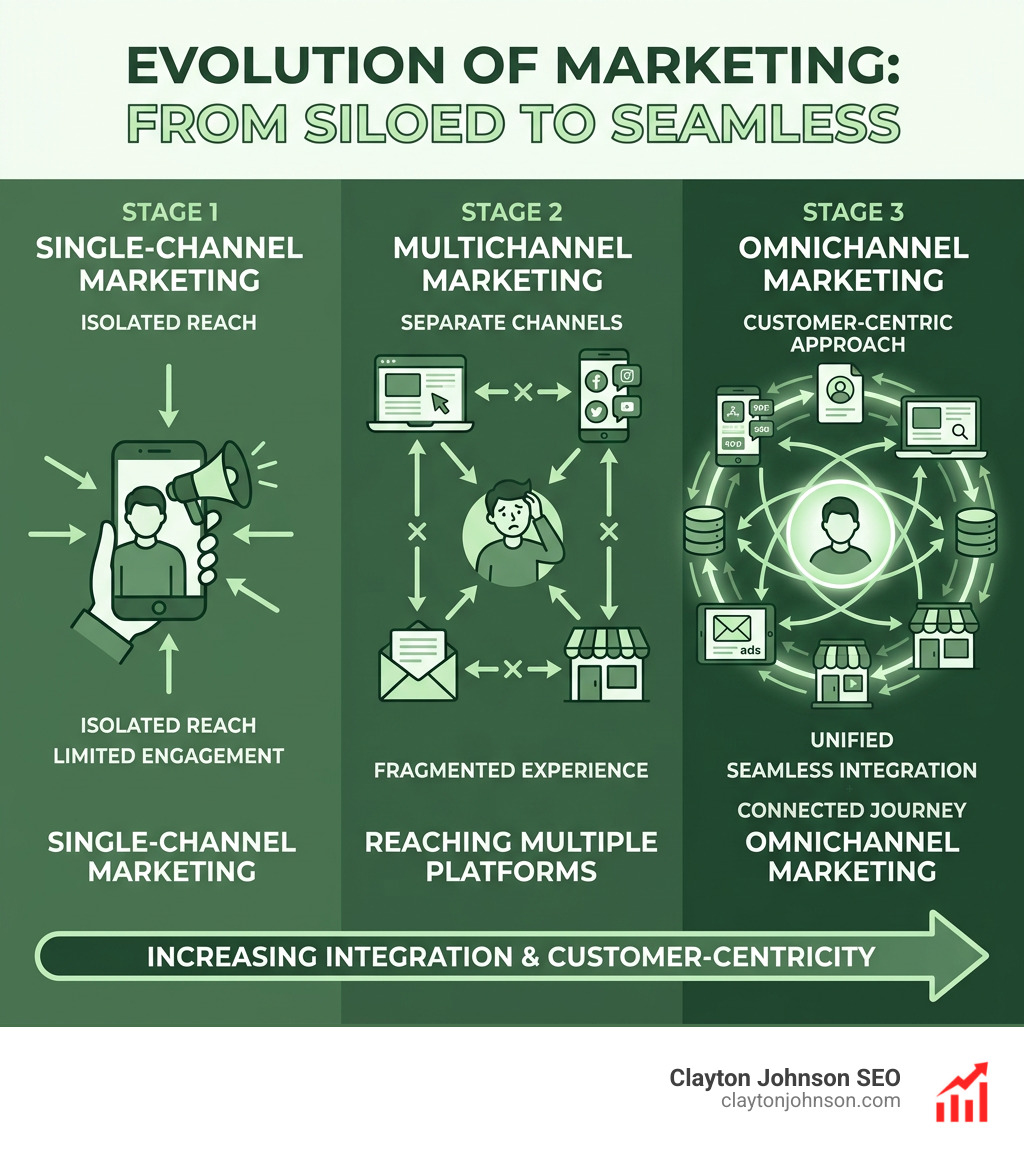
To truly understand the debate of multi channel marketing vs omnichannel, we have to look at the “North Star” of each strategy. In a multichannel world, the channel is the king. A business might decide, “We need to be on Instagram, we need an email list, and we need to run Google Ads.” Each of these becomes a separate bucket with its own goals, its own creative assets, and often, its own siloed data.
In contrast, omnichannel marketing is relentlessly customer-centric. It doesn’t matter if the customer is on their phone, a desktop, or standing in a physical store; the brand experience remains a single, continuous conversation. Research shows that 75% of consumers now expect a seamless omnichannel experience and routinely use three or more channels during their purchase journey. If those channels aren’t talking to each other, you’re essentially asking your customer to re-introduce themselves every time they switch platforms.
The divide often comes down to organizational alignment and data. In a multichannel setup, your paid advertising team might be crushing their ROAS goals, but if those ads are promoting a product that the email team just sent a “sold out” notification for, the customer experience takes a nosedive. Omnichannel removes these silos by creating a “Single Customer View” (SCV)—a unified database where every interaction is recorded and used to inform the next touchpoint.
The Mechanics of Multi Channel Marketing vs Omnichannel
Let’s get under the hood. Multichannel marketing relies on static messaging. You create a campaign, adapt the creative for different sizes, and blast it out. It’s effective for reach and visibility—casting a wide net to ensure your brand is seen. However, because the channels are independent, the experience can feel disjointed. Have you ever bought a pair of shoes, only to be followed around the internet for the next two weeks by ads for those exact same shoes? That is multichannel marketing at its clunkiest. The ad channel doesn’t know the purchase channel already closed the deal.
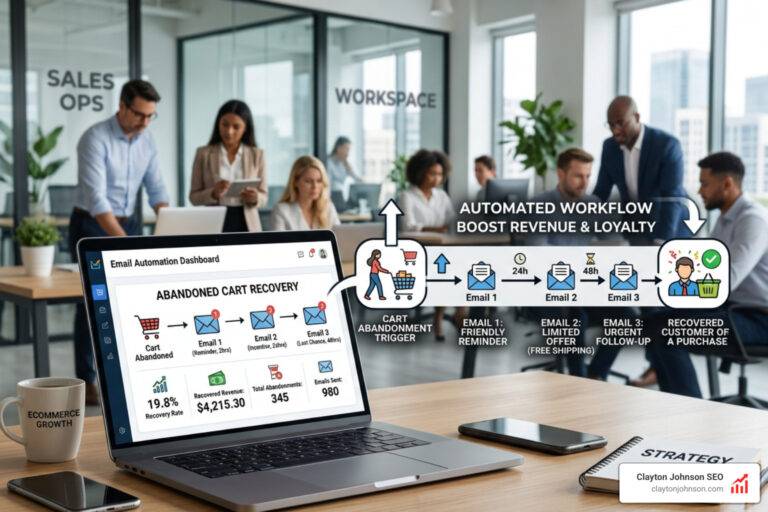
Omnichannel mechanics are built on cross-channel fluidity. It uses real-time data to adapt. If a user spends five minutes looking at hiking boots on your site but doesn’t buy, an omnichannel system might trigger a personalized SMS with a discount code for those specific boots an hour later. If they still don’t bite, the next time they log into Facebook, they see a video review of those boots.
This requires a different approach to resource allocation. Instead of funding channels based on their individual performance, we fund the customer journey. This often involves SEO content marketing that serves as the educational foundation, which then feeds into retargeting and email sequences. The KPIs shift from “channel clicks” to “customer lifetime value” and “conversion path efficiency.”
Why Omnichannel is the Modern Growth Standard
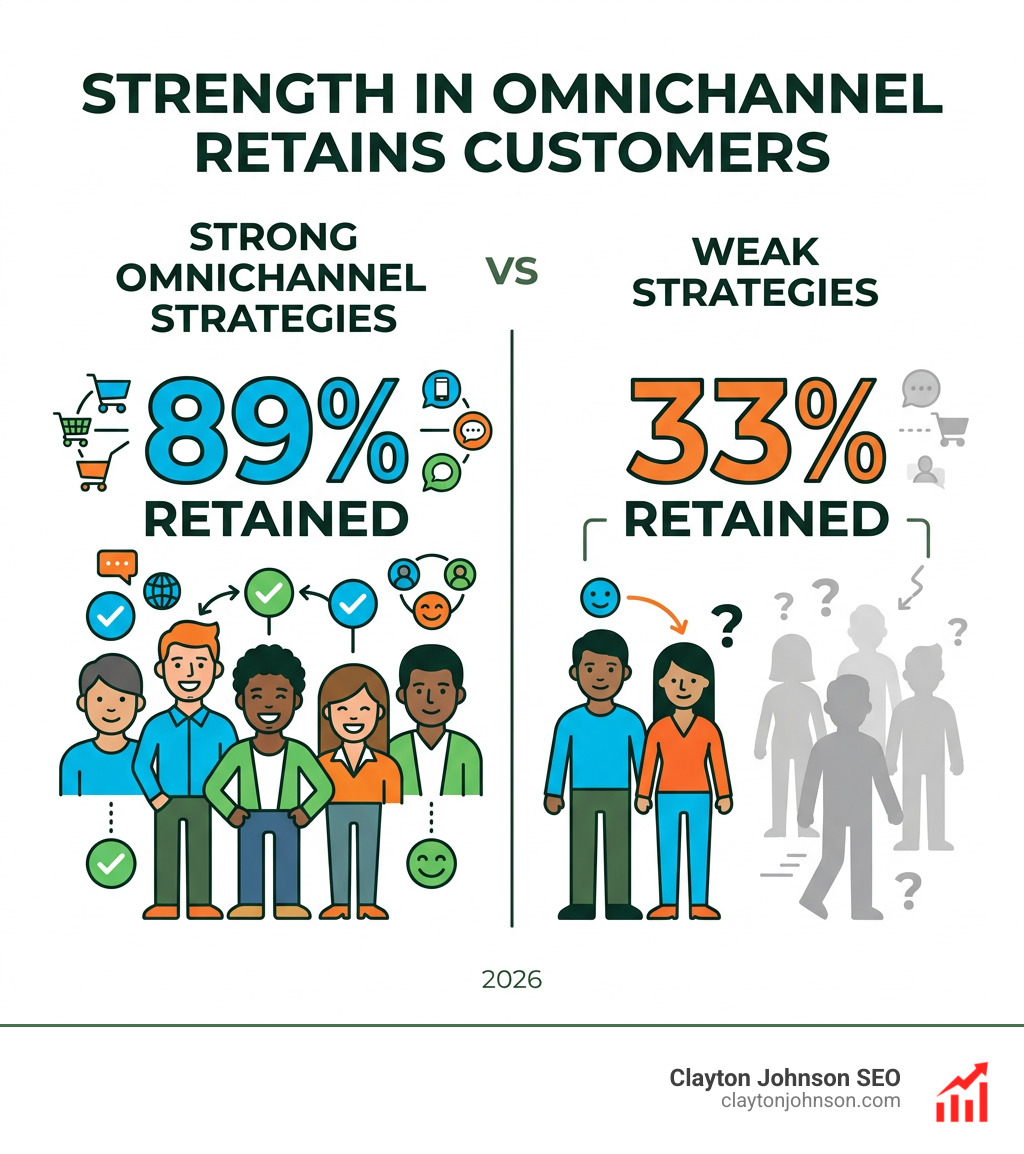
If you’re looking for a reason to move beyond basic multichannel tactics, look at the numbers. They are, frankly, staggering. Businesses with strong omnichannel engagement strategies retain around 89% of their customers, compared to a measly 33% for brands with weak strategies.
Why? Because it aligns with how people actually shop. Shoppers who engage via multiple channels make purchases 250% more often than single-channel users. Furthermore, omnichannel customers generate 30% higher lifetime value. When you make the buying process effortless, people buy more.
Companies that use three or more channels in coordinated campaigns report a 287% improvement in order rates over single-channel efforts. This isn’t just a marginal gain; it’s a total transformation of your revenue engine. By integrating your email marketing with your web and social presence, you create a compounding effect where each touchpoint reinforces the others rather than competing for attention.
Leveraging AI in a Multi Channel Marketing vs Omnichannel Strategy
We’ve reached a point where true omnichannel marketing is nearly impossible without AI. The sheer volume of data required to personalize thousands of individual journeys in real-time is too much for any human team to manage.
AI acts as the connective tissue in an AI marketing system. It can predict behavior—knowing that a customer who buys “Product A” is 80% likely to need “Product B” in exactly 45 days. It enables hyper-personalization at scale, dynamically changing website banners or email subject lines based on a user’s past interactions.
Real-time data processing allows for “sentiment analysis,” where the system can detect if a customer is frustrated (perhaps through repeated failed searches or multiple support tickets) and automatically route them to a human representative or offer a proactive “we’re sorry” discount. This level of dynamic segmentation ensures that your marketing is always relevant, reducing the “noise” that often plagues multichannel efforts.
Building a Durable Omnichannel System for Compounding Growth
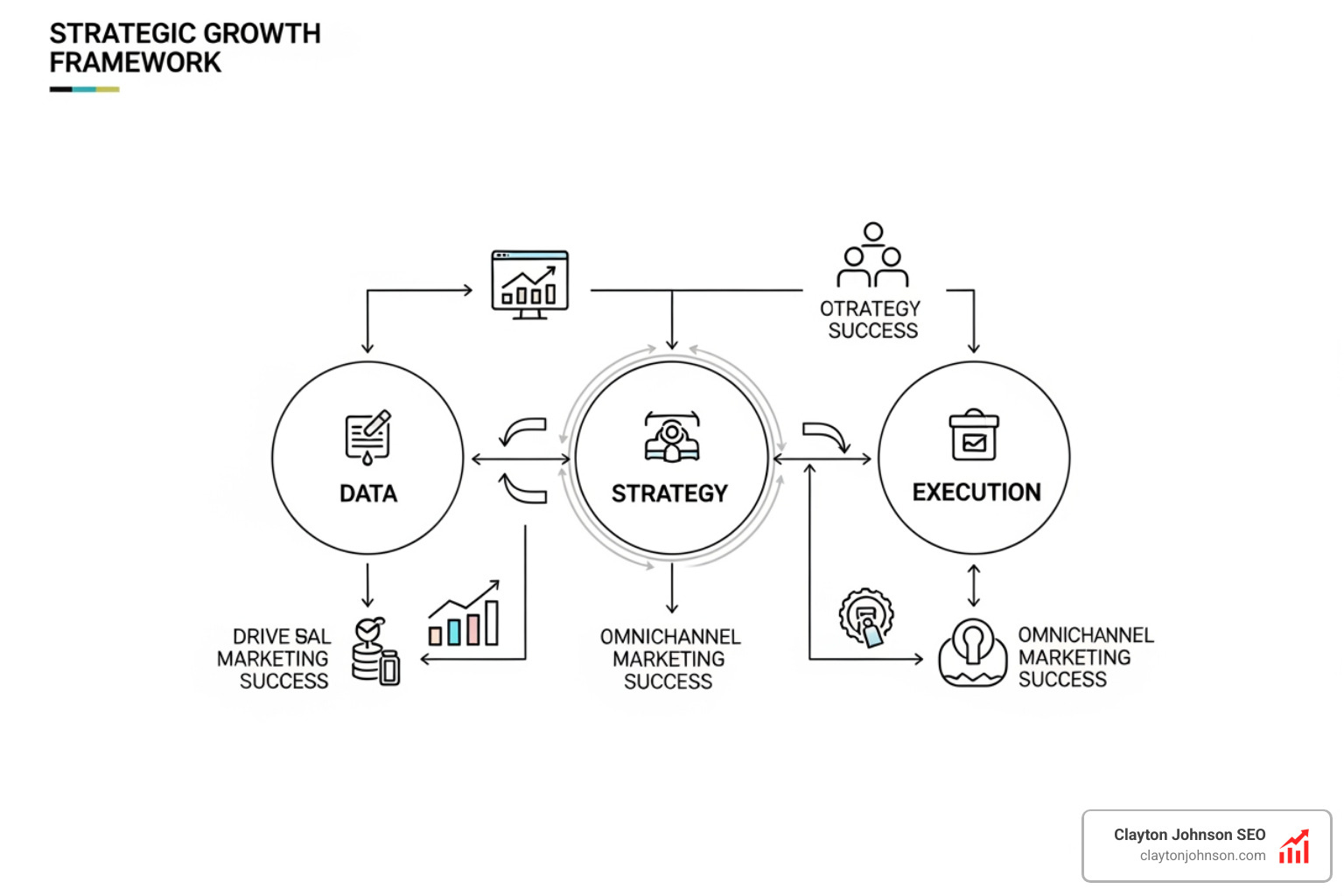
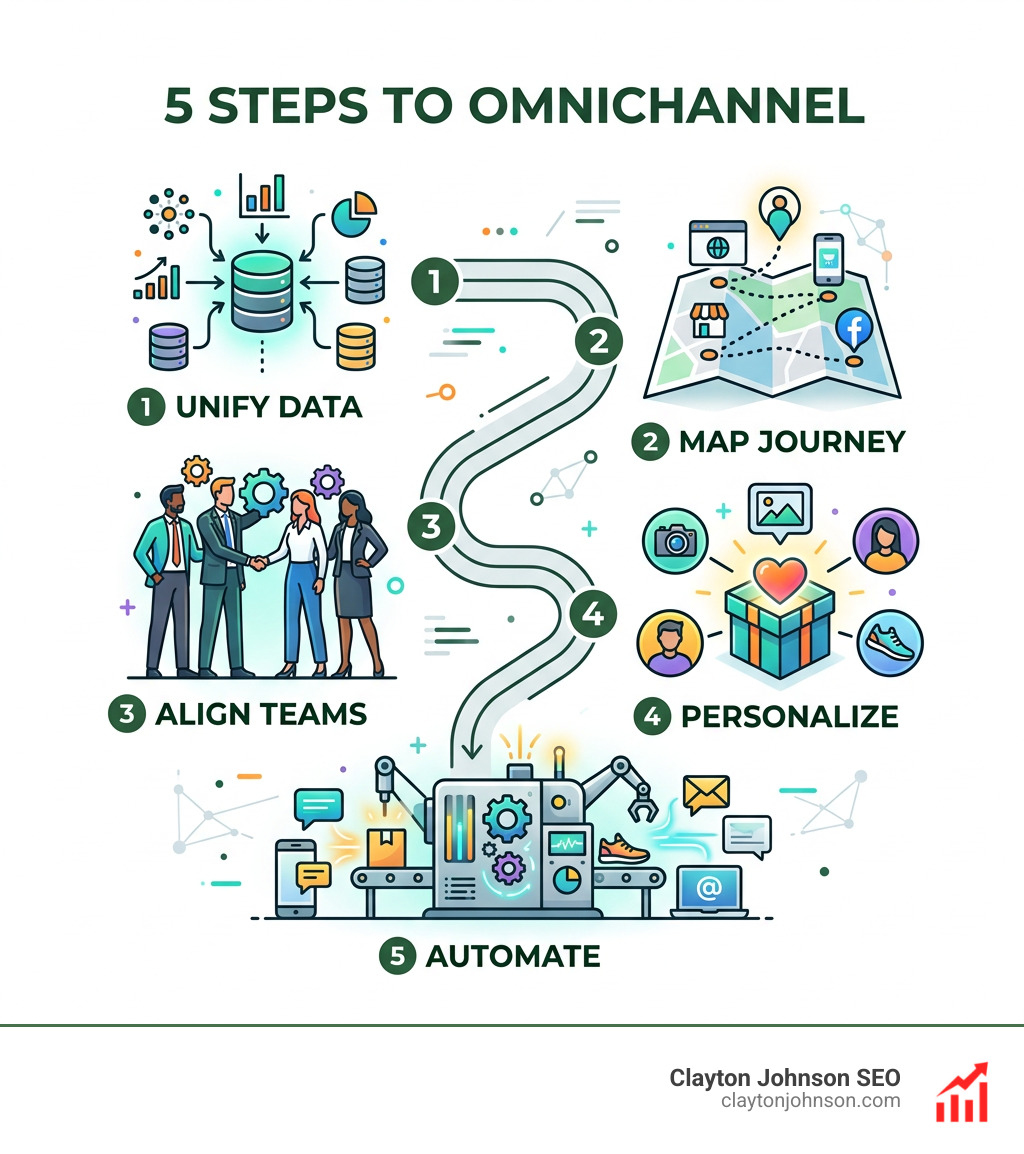
Building an omnichannel system isn’t about buying a single piece of software; it’s about building a framework. We start with journey mapping—literally drawing out every possible path a customer takes from discovery to advocacy. We look for the friction points. Where do they drop off? Where do they have to repeat information?
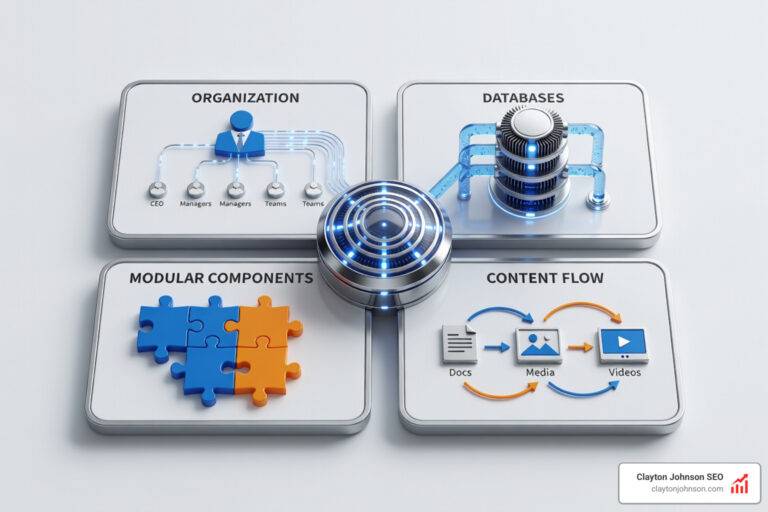
From a technical standpoint, this often requires moving toward headless architecture and robust API integrations. You need your CRM, your e-commerce platform, and your marketing automation tools to be in a constant, high-speed huddle. This is where strategic frameworks become vital. Without a clear roadmap, you’ll end up with a “Frankenstein” tech stack that creates more problems than it solves.
At Clayton Johnson SEO, we focus on the intersection of technical architecture and search intent. We believe that a truly durable system is built on zero-party data—information that customers intentionally and proactively share with you. By providing value at every stage, you earn the right to collect the data that powers your omnichannel engine.
Real-World Success: From Silos to Seamless
We can learn a lot from the giants who have already mastered this. Take Starbucks, for example. Their rewards app is a masterclass in omnichannel. You can check your balance on your phone, reload it on the website, or do it in-store. Every time you buy a coffee, the data is updated across all platforms in real-time. If you usually buy a latte at 8:00 AM, the app might send you a “double star” notification at 7:45 AM to nudge you in.
Then there is the Whisker case study. Whisker, the leader in connected pet care, was initially hindered by data silos. By opting for an omnichannel strategy and unifying their data, they achieved a 107% lift in conversion rates and a 112% increase in revenue. They stopped guessing and started using actual customer behavior to drive their social media marketing and email campaigns.
Disney uses their “MagicBand” to connect the entire theme park experience. It’s your hotel key, your park ticket, your photo storage, and your credit card. Behind the scenes, Disney is collecting data on where you go and what you buy to personalize future offers. Even Spotify excels here—you can start a song on your desktop and seamlessly pick it up on your phone exactly where you left off. These aren’t just “cool features”; they are deeply engineered systems designed to keep you inside their ecosystem.
Transitioning Your Infrastructure
Moving from a multichannel mess to an omnichannel engine doesn’t happen overnight. The first step is data unification. You have to break down the walls between departments. Your analytics and data team needs to be talking to your sales team, who needs to be talking to your customer support team.
You also need to be mindful of privacy. With more states enacting comprehensive privacy laws, you can’t rely on third-party cookies anymore. You need to invest in first-party data. This means creating reasons for people to log in, sign up, and engage with your brand directly.
Once the data is flowing, you can begin implementing email marketing automation that responds to on-site behavior. The goal is to create a “360-degree view” of the customer. If a customer calls support, the agent should see that they just looked at a specific product on the website five minutes ago. That context is the difference between a frustrated customer and a loyal advocate.
Choosing the Right Path for Your Business Model
Is omnichannel always better? In an ideal world, yes. But we live in a world of limited resources. For a brand-new startup or a very small business, a full-scale omnichannel implementation might be overkill—and frankly, too expensive.
If you have limited resources, start with a “Minimum Viable Omnichannel” approach. Pick your two most effective channels—say, SEO and email—and make sure they are perfectly integrated. Use a solid social media marketing plan to drive traffic to your owned properties where you can capture data.
As you grow, you can add more layers. A multichannel approach is a perfectly fine way to test new markets or platforms. It allows for channel-specific experimentation without the risk of breaking a complex integrated system. But as soon as you see a clear path to scale, you should begin the transition toward omnichannel.
We recommend a phased implementation. Focus on conversion optimization first to ensure your main site is a “leaky bucket” no longer. Then, start connecting the dots. The goal is clarity and structure. When you have those, leverage and compounding growth naturally follow.
Frequently Asked Questions
What is the main difference between multichannel and omnichannel?
The main difference is integration. Multichannel uses multiple channels independently to reach a wide audience. Omnichannel integrates all those channels to create a single, seamless experience centered around the customer.
Is omnichannel marketing expensive?
It generally requires a higher initial investment in technology (like a CRM or CDP) and organizational change. However, it typically offers a much higher ROI through increased customer retention and higher lifetime value.
Can a small business use omnichannel marketing?
Yes, but they should start small. Instead of trying to integrate ten channels, focus on making the transition between your website and your email list perfectly seamless. Scale the complexity as your revenue grows.
How does AI help in omnichannel marketing?
AI handles the heavy lifting of data analysis. It can predict what a customer wants next, automate personalized messaging across different platforms, and ensure that the right offer reaches the right person at the exactly right time.
Why do I need a “Single Customer View”?
Without it, your brand is “forgetful.” A Single Customer View ensures that every department—from marketing to support—knows exactly who the customer is and what their history with the brand looks like, preventing the customer from having to repeat themselves.
When should I stick with multichannel marketing?
Multichannel is great for testing. If you want to see if a new social platform works for your brand, run a siloed campaign there first. Once it’s proven, you can work on integrating it into your broader omnichannel strategy.
In the end, the choice between multi channel marketing vs omnichannel is about the relationship you want to have with your customers. Do you want to just “show up” in their feed, or do you want to be a seamless part of their journey? At Clayton Johnson SEO, we’re here to help you build the systems that do the latter. Clarity leads to structure, and structure leads to the kind of growth that doesn’t just add up—it multiplies.