
Why SEO Keyword Search Volume Is the Foundation of Profitable Content Strategy
SEO keyword search volume is the number of times a specific keyword is searched in a search engine — typically measured as a monthly average.
Here’s what you need to know at a glance:
| Concept | What It Means |
|---|---|
| Search Volume | Monthly average searches for a keyword |
| High Volume | More demand, more competition, harder to rank |
| Low Volume | Less demand, less competition, easier to rank — often higher intent |
| Good Volume | Relative to your industry, goals, and niche |
| Volume vs. Traffic | Volume = potential. Traffic = what you actually earn by ranking |
Most people chase big numbers. That’s the mistake.
A keyword with 100,000 monthly searches sounds exciting. But if your site is new, the competition is brutal, and the searcher intent is vague — you’ll rank for nothing and convert nobody.
Meanwhile, a keyword with 500 monthly searches, clear buyer intent, and low competition? That’s a revenue opportunity hiding in plain sight.
The real skill isn’t finding the biggest keywords. It’s knowing which volume numbers actually matter for your specific goals — and building a system around them.
I’m Clayton Johnson, an SEO strategist who has spent years engineering traffic systems around SEO keyword search volume data — shifting client focus from vanity metrics to conversion-driven keyword architectures that compound over time. In this guide, I’ll show you exactly how to analyze volume the right way and turn low-competition keywords into high-profit outcomes.
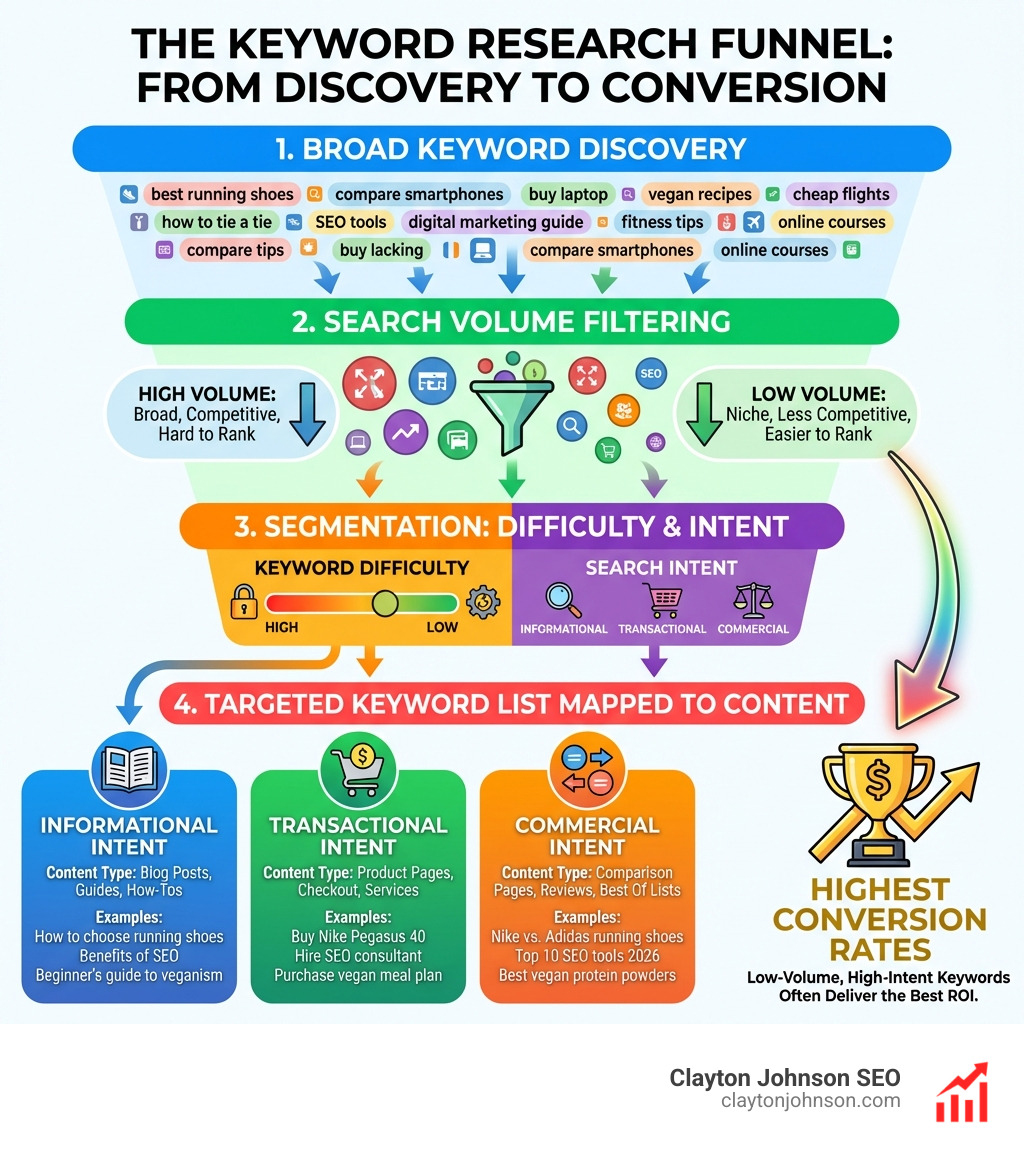
Seo keyword search volume terminology:
Understanding SEO Keyword Search Volume and Its Strategic Value
To build a structured growth architecture, we first need to define our foundation. SEO keyword search volume is defined as the number of times a specific term or keyword is entered into a search engine within a given timeframe, usually a month. Think of it as a “demand indicator.” It tells us how many people are actually interested in a topic.
However, volume alone doesn’t tell the whole story. In our SEO 101 framework, we view search volume as a fundamental metric for market research. It helps us assess the potential worthiness of a keyword before we spend a single dollar on content creation. If a keyword has zero volume, it might mean there’s no demand—or it might mean you’ve discovered a “zero-volume” keyword that actually converts like crazy (more on that later).
Strategically, search volume allows us to set realistic goals. By analyzing volume alongside other metrics, we can perform growth modeling to predict how much traffic a new pillar page might generate. For a deeper dive into how this fits into a broader technical framework, check out The Ultimate Guide to AI-Driven SEO Strategy and Systems.
How to Check and Analyze SEO Keyword Search Volume
Checking volume isn’t just about looking at one number; it’s about understanding the source and the context of that data. Most tools pull their data from the Google Ads API, but they process it differently.

When we analyze seo keyword search volume, we look for accuracy. Google Keyword Planner often provides search volume ranges (like 100–1K), which can be frustratingly vague for precise forecasting. Professional SEO platforms, however, often provide exact numbers by blending clickstream data with official API stats.
If you are just starting, Finding Keywords with AI is Easier Than You Think because modern tools can now perform bulk analysis on thousands of terms at once, identifying patterns that humans might miss. To get started officially, you can Use Keyword Planner to see historical trends, though you’ll need to navigate past the “Smart Mode” to get the best data.
Top Tools for SEO Keyword Search Volume Analysis
There isn’t a one-size-fits-all tool, but here are the heavy hitters we use and recommend:
- Google Keyword Planner: The “source of truth” for many, especially for PPC. It’s free but requires a Google Ads account.
- Comprehensive SEO Platforms (Semrush, Moz, SE Ranking): These tools go beyond volume. Semrush, for example, boasts a database of 25+ billion keywords. Moz Keyword Explorer features over 1.25 billion keyword suggestions and data from 170 Google search engines.
- Browser Extensions: Tools like Keywords Everywhere allow you to see search volume, CPC, and competition data directly on the Google results page and across 15+ other websites.
- Free Online Checkers: WordStream’s Free Keyword Tool is a great alternative that provides concrete search volumes rather than ranges, drawing from both Google and Bing APIs.
Differentiating Between Search Volume and Actual Traffic
One of the biggest pitfalls in SEO is assuming that 1,000 searches per month equals 1,000 visitors to your site. This is a classic “Potential vs. Outcome” scenario.
Search volume represents the potential interest. Actual traffic is the outcome of your ranking position and the Click-Through Rate (CTR). Even if you rank #1 for a high-volume keyword, you might only get 30% of those clicks. If there are heavy SERP features (like AI Overviews, ads, or map packs), that number could drop even further.
Winning the AI Search Era with Intent-Based Keyword Research requires us to look at “Organic CTR.” If a keyword has a volume of 10,000 but an Organic CTR of only 40%, the real opportunity is much smaller. Our AI Content Optimization Guide: From Zero to Hero explains how to optimize for these “zero-click” environments to ensure you actually capture the traffic you’re chasing.
Building a High-Profit Strategy with Low Volume Keywords
If you want to win quickly, you need to stop fighting for the same broad keywords as everyone else. High-volume keywords (short-tail) are broad, competitive, and often have vague intent. Low-volume keywords (long-tail) are specific, less competitive, and carry high buyer intent.
| Metric | High-Volume Keywords | Low-Volume Keywords |
|---|---|---|
| Competition | Extremely High | Low to Moderate |
| Ranking Speed | Months to Years | Weeks to Months |
| Search Intent | Broad / Informational | Specific / Transactional |
| Conversion Rate | Lower | Significantly Higher |
| Effort Required | Massive (Backlinks + Content) | Strategic (Content Depth) |
Long-tail phrases are the “easy wins.” Because fewer sites target these specific queries, you can often rank for them with just a well-structured article. This is why Why Your SEO Strategy Needs These Long-Tail Keyword Tools Right Now is a core part of our philosophy.
We also look for “striking distance” keywords—terms where you already rank on page two or three. By utilizing Pillar Pages and Topic Clusters Explained, you can group these low-volume keywords to build massive topical authority that eventually allows you to rank for the big-volume terms.
Defining ‘Good’ SEO Keyword Search Volume for Your Industry
What is a “good” seo keyword search volume? It’s entirely relative.
If you’re a local plumber in Minneapolis, a keyword with 50 searches a month like “emergency drain cleaning Minneapolis” is gold. If you’re a national software company, 50 searches might seem like a rounding error. However, for SEO Strategy for Enterprises, even low-volume keywords are valuable if they represent high-value contracts.
When we show you How to Build a Content Taxonomy, we focus on local relevance and business goals over raw numbers. A “good” volume is any number that, when multiplied by your conversion rate and average customer value, results in a positive ROI.
Balancing Volume, Difficulty, and Search Intent
The “Holy Grail” of keyword research is finding high volume, low difficulty, and high transactional intent. In reality, you usually have to pick two.
- Keyword Difficulty (KD): This measures how hard it is to rank on page one based on the backlink profile of the current results.
- Search Intent: This is the “why” behind the search.
- Informational: User wants to learn (e.g., “what is search volume”).
- Transactional: User wants to buy (e.g., “buy seo keyword tool”).
What is Informational Intent Anyway? It’s your chance to build trust. Even if these keywords don’t sell immediately, they fill your funnel. We often use Cost-Per-Click (CPC) as a proxy for commercial value. If advertisers are willing to pay $15 per click for a keyword, you can bet that keyword has high commercial intent, regardless of its volume.
Advanced Tactics: Competitive Analysis and Volume Tracking
Structured growth architecture requires us to look at what the competition is doing. We use competitor gap analysis to find keywords that your rivals are ranking for, but you aren’t.
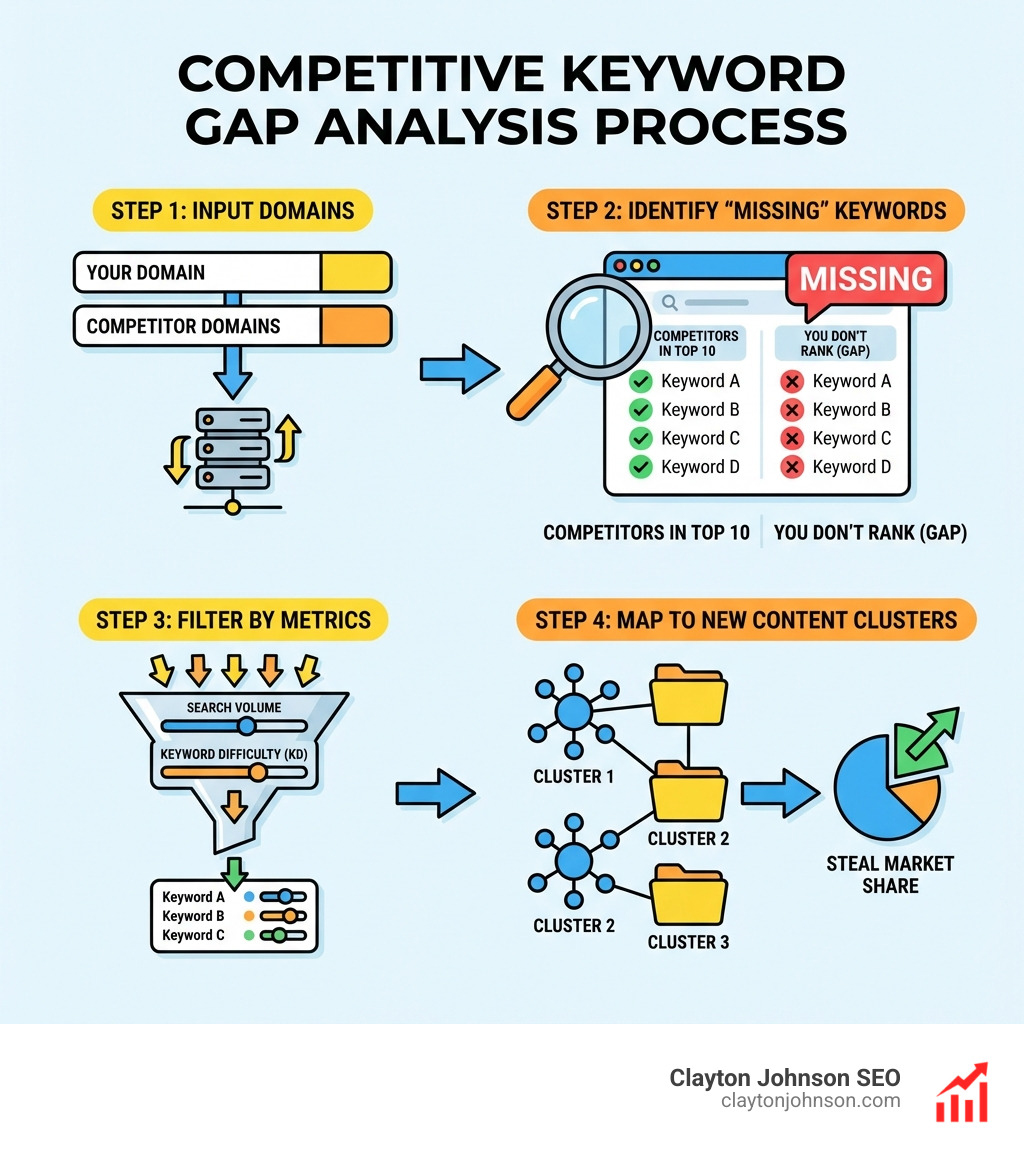
We also track “branded search volume.” This is the number of people searching for your specific company name. It’s a key metric for measuring brand awareness and the effectiveness of your demand-generation efforts.
Markets shift, and so does volume. Google Trends is essential for spotting seasonality. For example, “sandals” will have a higher volume in May than in December. To stay ahead, you should Automate Your Success Using AI-Driven Keyword Optimization to monitor these shifts in real-time using Google Search Console.
Frequently Asked Questions about Keyword Metrics
How do I increase search volume for my brand?
You can’t directly “edit” the search volume numbers in Google, but you can influence human behavior. Demand generation through social media, PR, and high-quality content creation creates interest. When you launch a new product category or a unique framework (like Demandflow.ai), you spark “branded searches,” which increases your specific search volume over time.
Is zero search volume always a bad sign?
Not at all. “Zero volume” keywords in tools are often just “low volume” or “emerging trends” that the tools haven’t caught up with yet. If you know your niche and see a specific problem your customers are facing, create content for it. These keywords often have the highest conversion potential because the people searching for them are highly motivated and can’t find answers elsewhere.
How often should I track volume changes?
For most industries, a monthly check is sufficient. However, if you are in a volatile or seasonal market, Keyword Planner Forecasts recommend planning weekly to stay agile.
Conclusion
At Clayton Johnson SEO, we believe that SEO is not just about chasing clicks—it’s about building structured growth infrastructure. By understanding the nuances of seo keyword search volume, you can stop guessing and start engineering growth.
Whether you are targeting high-volume “head terms” to build broad awareness or low-volume “long-tail” terms for high-profit conversions, your strategy needs clarity and structure. Our Demandflow.ai system is designed to provide exactly that: a growth operating system for leaders who want compounding leverage.
Ready to stop being invisible and start capturing demand? Let’s build your AI Search / Keyword Strategy today.