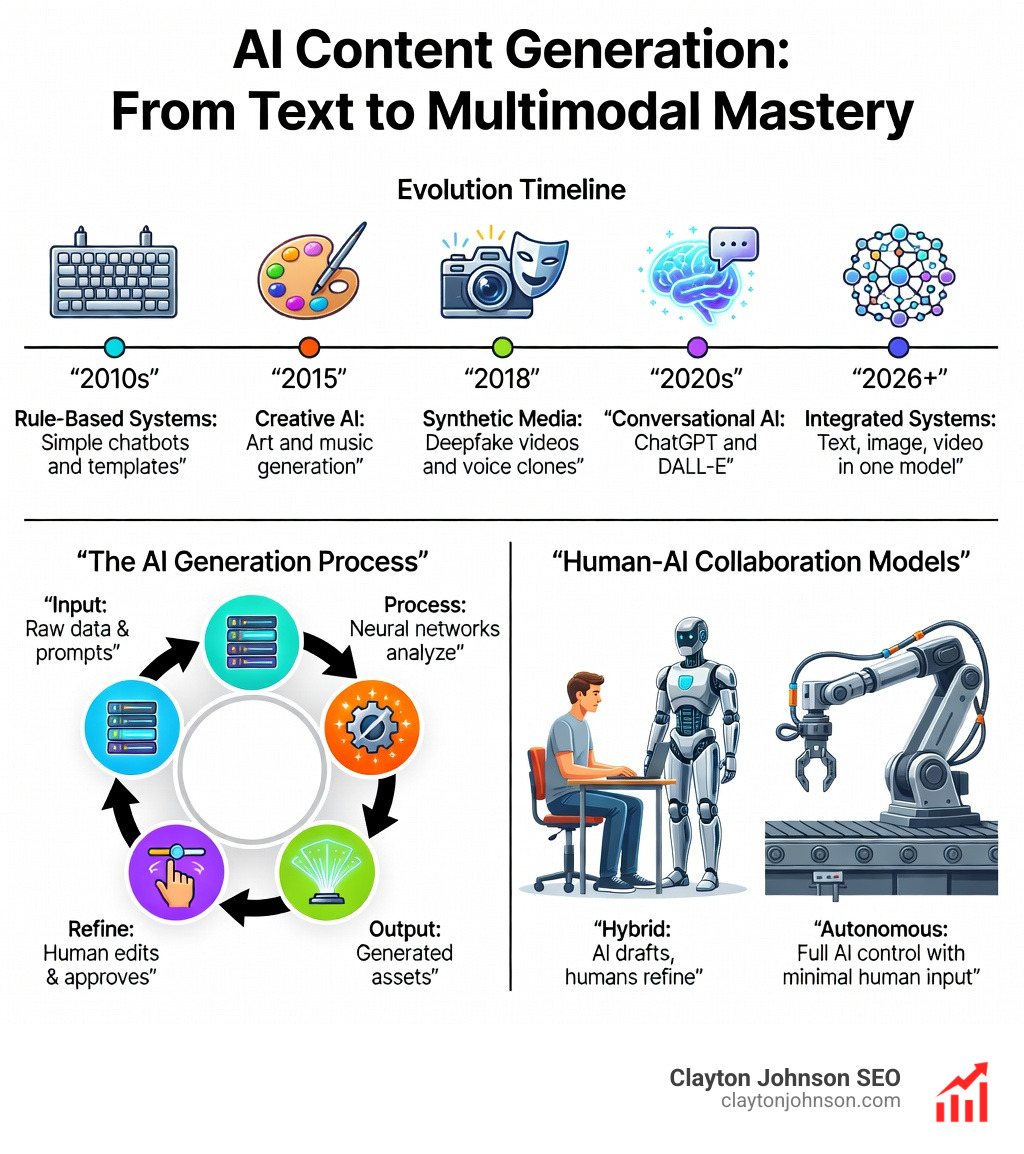
What Is AI Content Generation (And Why It Changes Everything)
AI content generation is the use of artificial intelligence to automatically create text, images, video, audio, 3D assets, and more — from a simple prompt or brief.
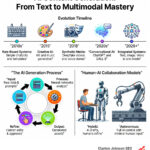
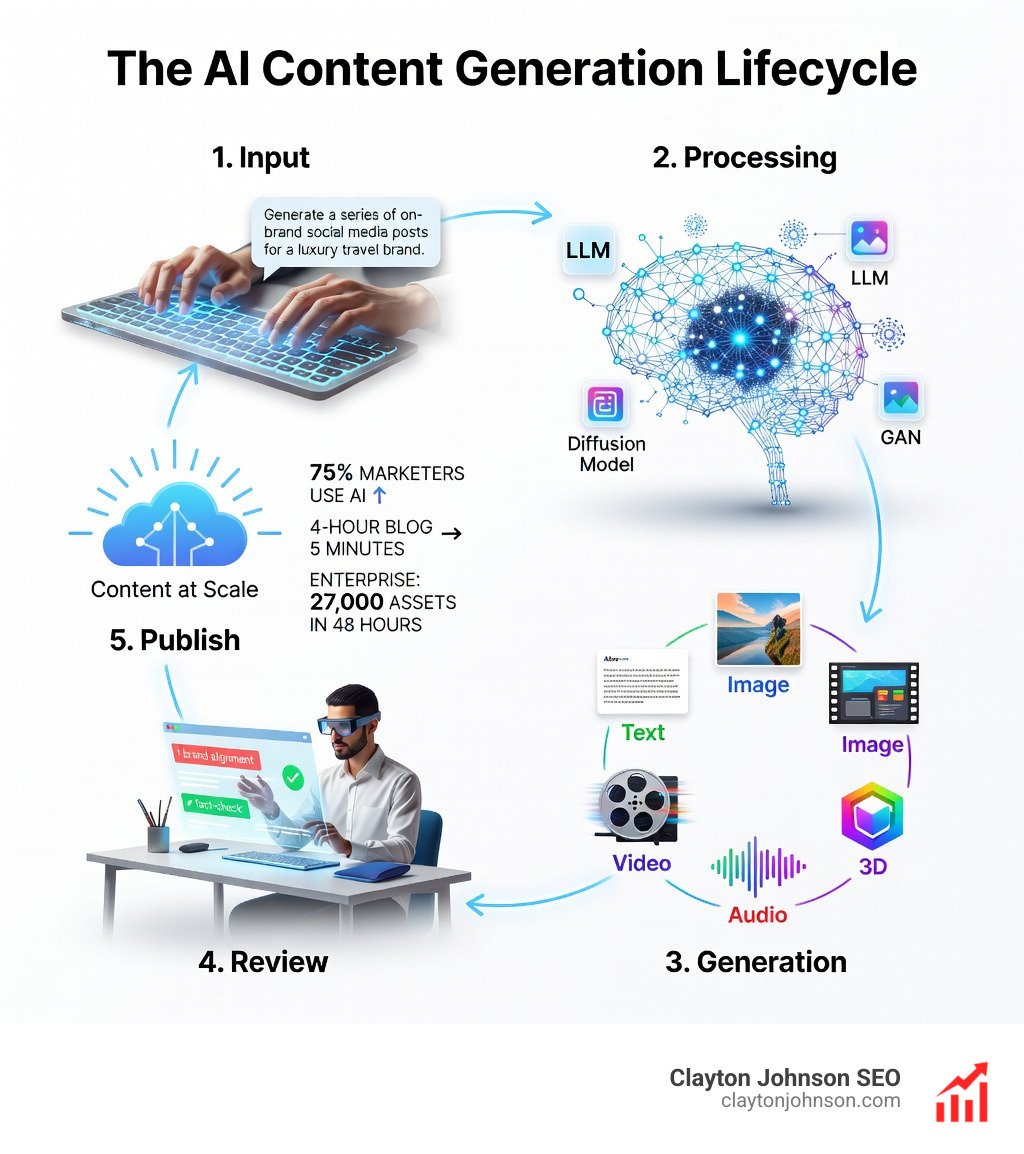
Here’s how it works at a glance:
| Step | What Happens |
|---|---|
| 1. Input | You provide a prompt, brief, or set of keywords |
| 2. Processing | An AI model (LLM, diffusion model, GAN, etc.) finds patterns from its training data |
| 3. Generation | The model produces new content — text, image, video, audio, or code |
| 4. Review | A human editor refines, fact-checks, and aligns output with brand voice |
| 5. Publish | Production-ready content ships faster and at greater scale |
The numbers tell the story. More than 75% of marketers now use AI tools to some degree. A typical 500-word blog post used to take around 4 hours to complete. With AI, that same output can be drafted in minutes.
This is not a future trend. It is happening right now, across every industry — from gaming studios shipping 11 titles with a team of six, to enterprise brands generating 27,000 on-brand assets in 48 hours.
The shift is not just about speed. It is about scale without proportional cost. Teams that once needed large creative departments are now running lean, AI-augmented workflows — producing more, faster, and with tighter brand consistency than ever before.
But speed alone is not a strategy. The businesses winning with AI are the ones treating it as a system, not a shortcut.
I’m Clayton Johnson — SEO strategist and growth operator. My work sits at the intersection of technical SEO, structured content architecture, and AI content generation workflows, helping founders and marketing leaders turn fragmented execution into compounding growth engines. In this guide, I’ll show you exactly how to make AI work as a strategic asset, not just a productivity hack.
Ai content generation word roundup:
Understanding AI Content Generation and the Models Behind It
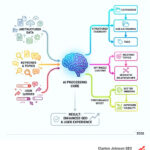
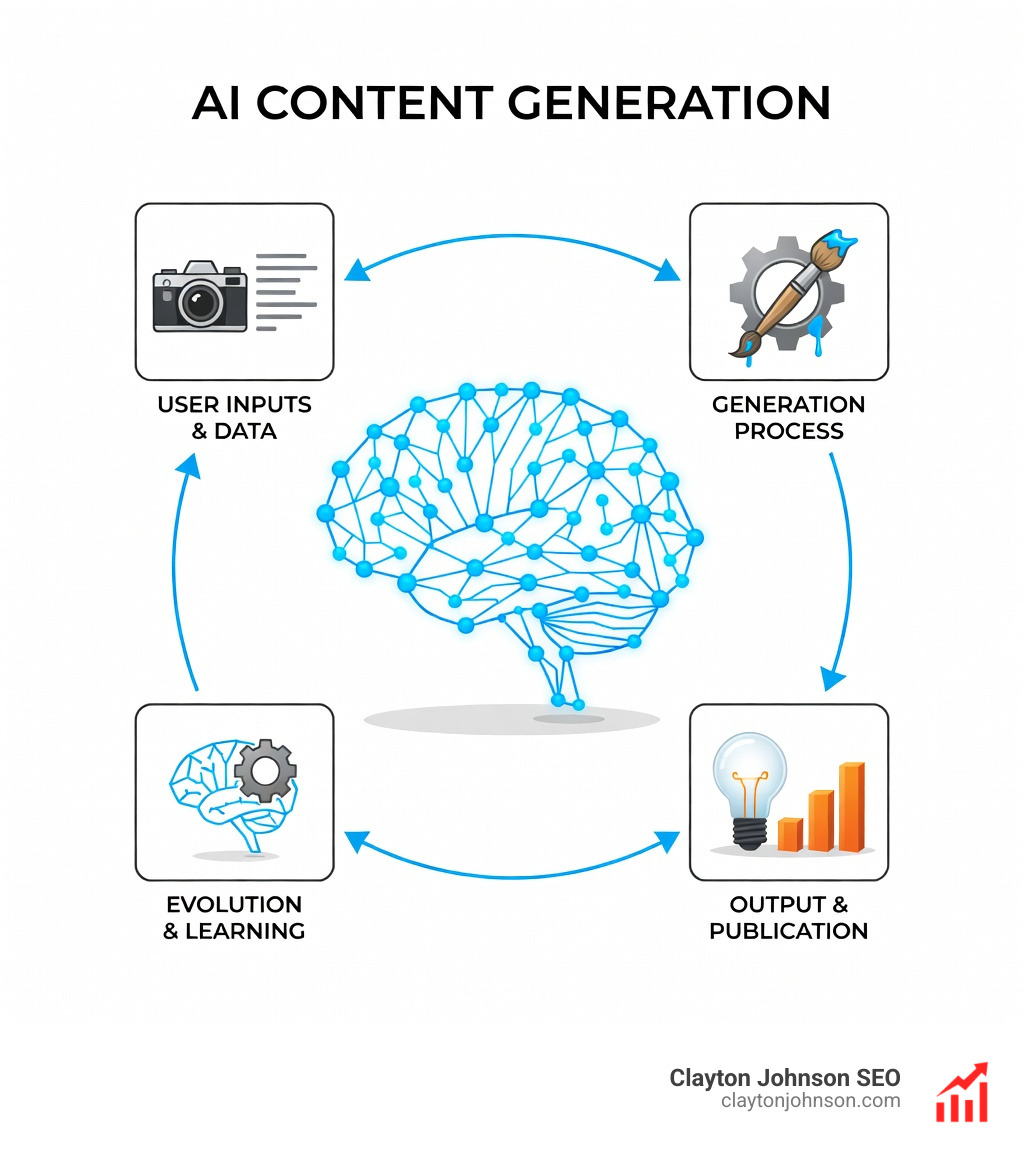
To truly master ai content generation, we need to peek under the hood. It isn’t magic; it’s a sophisticated application of generative AI—a subfield of artificial intelligence that focuses on creating new data rather than simply categorizing what already exists. Unlike traditional machine learning, which might tell you “this is a picture of a cat,” generative models can “draw a cat wearing a tuxedo on the moon.”
At its core, this technology relies on massive datasets. By analyzing millions of examples of human-created work, these systems learn the underlying probability distributions of data. When you give it a prompt, it isn’t “thinking”; it is predicting what comes next based on the patterns it has memorized. This evolution is documented extensively in the AI-Generated Content (AIGC) Survey, which highlights how we’ve moved from simple rule-based systems to complex neural networks that mimic human creativity.
The Mechanics of AI Content Generation
The “brain” of ai content generation is composed of several distinct model architectures, each with its own superpower:
- Transformers: These are the engines behind Large Language Models (LLMs) like ChatGPT. They use a “self-attention” mechanism to understand the relationship between words in a sequence, allowing them to maintain context over long paragraphs.
- Diffusion Models: This is how we get stunning images and videos. These models work by taking a clear image, adding “noise” until it’s unrecognizable, and then learning to reverse that process to create a new, high-fidelity image from scratch.
- Generative Adversarial Networks (GANs): Think of this as an artist and a critic. The “Generator” tries to create a fake image, while the “Discriminator” tries to spot the fake. They train against each other until the Generator’s output is indistinguishable from reality.
As we see in the Evolution and Future Perspectives of AIGC, these models are becoming increasingly efficient, allowing them to run on smaller hardware while producing higher-quality outputs.
Multimodal Capabilities in Modern AI
We are moving past the era where an AI could only do one thing. Modern “multimodal” models can process and generate across different formats simultaneously. You can learn about generative AI through Google’s lens to see how a single system can now take a text prompt and turn it into a video, or take an image and describe it in a human-sounding voice. This includes text-to-image, video synthesis, 3D asset creation for gaming, and even complex audio generation.
The Business Case for AI-Powered Workflows
Why is everyone talking about this? Because the economics of content have fundamentally shifted. Creating high-quality, engaging, and scalable content remains one of the biggest challenges for enterprise marketers, but AI provides a “growth architecture” that solves the volume problem.

The statistics are hard to ignore. 75% of marketers admit to using AI tools to some degree, and roughly 19% of businesses have fully integrated AI into their content generation pipelines. This isn’t just about being “trendy”—it’s about survival in a landscape where the search environment is evolving into an “answer engine” ecosystem.
Slashing Production Time and Costs
Without AI, the math of content production is brutal. Research shows a typical 500-word blog post takes around 4 hours to complete. If you’re outsourcing, you can expect to pay upwards of $175 for a 1,500-word article.
AI-augmented workflows change the equation:
- Ideation: What used to take a morning of brainstorming now takes 30 seconds.
- Drafting: AI handles the “heavy lifting” (the first 70%), leaving humans to focus on the 30% that matters: strategy, voice, and factual accuracy.
- Repurposing: One long-form article can be instantly turned into ten social posts, three email subject lines, and a video script.
Real-World Enterprise Success Stories
We see these gains in action across the Scenario case studies. For example, one creative team used custom-trained models to produce 10x more on-brand content, enabling them to ship 27,000 unique postcards in just 48 hours.
In the gaming world, the impact is even more dramatic. Studios have scaled from a handful of original assets to 10,000 unique, consistent AIGC avatars. What once took a full day for character animation now takes under 30 minutes. This allows lean teams to ship games with millions of downloads without the overhead of a massive art department. If you’re ready to see these results for yourself, you can Start Free Trial on platforms designed to handle this level of scale.
Top Platforms for AI Content Generation
Choosing the right tool is about matching the platform to your specific growth needs. There is no “one size fits all” in ai content generation.
| Platform | Best For | Key Strength |
|---|---|---|
| Jasper.ai | Enterprise Blogging | Brand voice memory and SEO integration |
| Copy.ai | GTM & Sales Copy | Massive library of templates for emails/ads |
| Scenario | Visual & Gaming Assets | Custom-trained models for style consistency |
| Blaze.ai | Multichannel Marketing | Strategy-to-content conversion for social |
Navigating these AI content creation platforms requires understanding whether you need a “horizontal” tool (general purpose) or a “vertical” tool (specialized for your industry).
Leading Text and Copywriting Assistants
For text, Jasper and Copy.ai remain the heavyweights. They allow you to pre-program your brand voice so that every output—from a tweet to a white paper—sounds like it came from the same person. For those operating in global markets, you can Translate now using AI-integrated services that handle cultural nuances better than a standard bot.
Scenario: The Engine for Visual and Gaming Assets
If your business relies on visuals, Scenario is a game-changer. It offers over 140 state-of-the-art models for image, video, 3D, and audio generation. The differentiator here is the ability to train custom models on your own brand assets. This ensures that the AI doesn’t just generate “a cool character,” but a character that fits perfectly into your specific game’s art style.
Navigating the Limitations of AI Content Generation
As powerful as these robots are, they aren’t perfect. We’ve all seen the “hallucinations”—where an AI confidently states a fact that is entirely made up. Without human oversight, you risk publishing “slop” that can damage your brand’s authority.
At Demandflow, we believe in the “human-in-the-loop” philosophy. AI handles the volume; humans handle the value. You must always review outputs for compliance with the Generative AI Prohibited Use Policy and ensure you aren’t accidentally generating biased or offensive content.
Overcoming Challenges in AI Content Generation
The three main hurdles are:
- Quality & Accuracy: AI struggles with deep nuance and up-to-the-minute facts.
- Copyright: The legal landscape is still shifting. New AI systems and copyright law are currently clashing in courts, specifically regarding whether training on copyrighted data constitutes “fair use.”
- SEO Penalties: Google doesn’t penalize AI content just because it’s AI, but it does penalize low-effort, unoriginal content that doesn’t help the user.
Maintaining Brand Consistency at Scale
To maintain a consistent voice, you can’t just “plug and play.” You need to feed your AI style guides and use fine-tuned models. This is where enterprise security becomes vital—ensuring your proprietary brand data isn’t being used to train your competitor’s models. We recommend reviewing the full list of AI principles to understand how to build a responsible and secure internal AI policy.
The Future of Generative Media and the Metaverse
We are moving toward a future of “hyper-personalization.” Imagine a game where the characters’ dialogue and the world’s textures are generated in real-time based on your specific player choices. Or a marketing campaign where every single customer receives a personalized video tailored to their exact browsing history.

As The Evolution and Future of AIGC suggests, the integration of AI with the Metaverse will allow for real-time rendering of complex 3D environments. This isn’t just for gamers; it’s for virtual storefronts, immersive training simulations, and interactive storytelling.
Hyper-Personalization and Interactive Content
The goal is to move from “broadcasting” to “interacting.” By using AI to power dynamic storytelling, brands can create experiences that feel truly unique to each user. You can Discover Generative AI trends through Labs to see how search itself is becoming a personalized, interactive conversation rather than a list of blue links.
Frequently Asked Questions about AI Content
How does AI content generation impact SEO?
AI changes the focus from “keyword stuffing” to “topical authority.” Since AI can generate thousands of pages, search engines now prioritize content that demonstrates real expertise, experience, and authority. It also means you must optimize for “Answer Engines” (AEO), ensuring your content is structured so AI models can easily cite you as a source.
Can AI-generated content be copyrighted?
Currently, in most jurisdictions (including the U.S.), content created entirely by AI without significant human creative input cannot be copyrighted. This is why human “augmentation” is so important—it’s the human touch that provides the legal protection for your intellectual property.
What is the best way to integrate AI into a creative team?
Start with the “70/30 Rule.” Let the AI do the 70%—the research, the outlines, the first drafts, and the basic asset generation. Let your human experts handle the final 30%—the strategy, the emotional resonance, the brand alignment, and the final polish.
Conclusion
The robots are writing, but we are the ones holding the pen. AI content generation isn’t about replacing the human spirit; it’s about providing the structured growth architecture to let that spirit reach more people than ever before.
At Demandflow, we help you build these compounding growth engines. We combine actionable strategic frameworks with AI-augmented workflows to ensure you aren’t just making “more” content, but better, more authoritative content that wins in the age of AI search.
The shift is here. You can either be the one using the tools to build an empire, or you can watch from the sidelines. Let’s start tracking ROI and building something that lasts.
Ready to Build Your Growth Architecture?
Clayton Johnson SEO offers scalable authority retainers designed to make your brand the dominant voice in your industry. Whether you need foundational signals or market leader dominance, we have a framework for you.
- Foundation Authority — $1,997 / month: Baseline ranking growth and initial AI visibility.
- Growth Authority — $2,997 / month: Increased link velocity and expanded cluster depth.
- Competitive Authority — $3,997 / month: Multi-cluster expansion and AI Overview positioning.
- Expansion Authority — $4,997 / month: Broader keyword penetration and higher AI inclusion probability.
- Scale Authority — $6,997 / month: Accelerated authority density and faster SERP capture.
- Market Leader Authority — $9,997 / month: Competitive displacement and durable market dominance.
Explore our full AI Content Systems Guide | Audit Your Current Strategy