The Ultimate Guide to OpenAI

Understanding OpenAI: The Company Reshaping Artificial Intelligence
OpenAI is an American artificial intelligence research organization founded on December 8, 2015, with a mission to ensure that artificial general intelligence (AGI) benefits all of humanity. Originally established as a nonprofit, OpenAI has evolved into a complex corporate structure combining a public benefit corporation with nonprofit oversight, valued at $500 billion as of October 2025—making it the world’s most valuable privately owned company.
Quick Facts About OpenAI:
| Category | Details |
|---|---|
| Founded | December 8, 2015 |
| Mission | Develop safe AGI that benefits all of humanity |
| Structure | OpenAI Group PBC (for-profit) with OpenAI Foundation (nonprofit) oversight |
| Valuation | $500 billion (October 2025) |
| Key Products | ChatGPT, GPT-4o, DALL-E, Sora, Operator |
| Leadership | CEO Sam Altman, President Greg Brockman, Chairman Bret Taylor |
| Employees | ~4,000 (2025) |
| Revenue | $12 billion annualized (July 2025), up from $3.7 billion in 2024 |
| Major Investor | Microsoft (27% stake, $13+ billion invested) |
OpenAI‘s journey represents one of the most dramatic corporate transformations in tech history. What began as a nonprofit pledging to democratize AI has become a for-profit juggernaut burning through billions in computing costs while racing toward AGI—artificial intelligence that can perform any intellectual task a human can.
The company’s ChatGPT product achieved unprecedented growth, reaching 100 million users in just two months after its November 2022 launch. This made it the fastest-growing consumer software application in history.
But OpenAI‘s story isn’t just about technological breakthroughs. It’s also about internal drama, including the November 2023 firing and reinstatement of CEO Sam Altman within five days, legal battles over copyright and data privacy, and ongoing debates about AI safety and transparency.
I’m Clayton Johnson, and I’ve spent years analyzing how companies like OpenAI build search visibility and strategic positioning in emerging technology markets. Understanding OpenAI‘s structure, products, and business model is essential for anyone working in AI-assisted marketing systems or growth strategy frameworks.
The Evolution of OpenAI: From Nonprofit to Global Powerhouse
The story of OpenAI is essentially a story of how much money it costs to build a “digital brain.” When the company started, the founders believed they could reach human-level intelligence through open-source research and nonprofit funding. However, the sheer scale of computing power required forced a radical rethink of their entire existence.
The core guiding principle remains the OpenAI Charter, which explicitly states that the company’s primary fiduciary duty is to humanity, not to shareholders. This creates a unique tension: they need billions of dollars from investors to build the tech, but those investors are technically second in line to “humanity.”
In 2019, the organization realized that the $130 million it had managed to raise (out of a $1 billion pledge) wasn’t going to cut it. They transitioned to a “capped-profit” model, allowing them to attract massive investments from the likes of Microsoft while still keeping a lid on how much profit those investors could eventually take home. By 2025, they underwent another massive restructuring to become a Public Benefit Corporation (PBC).
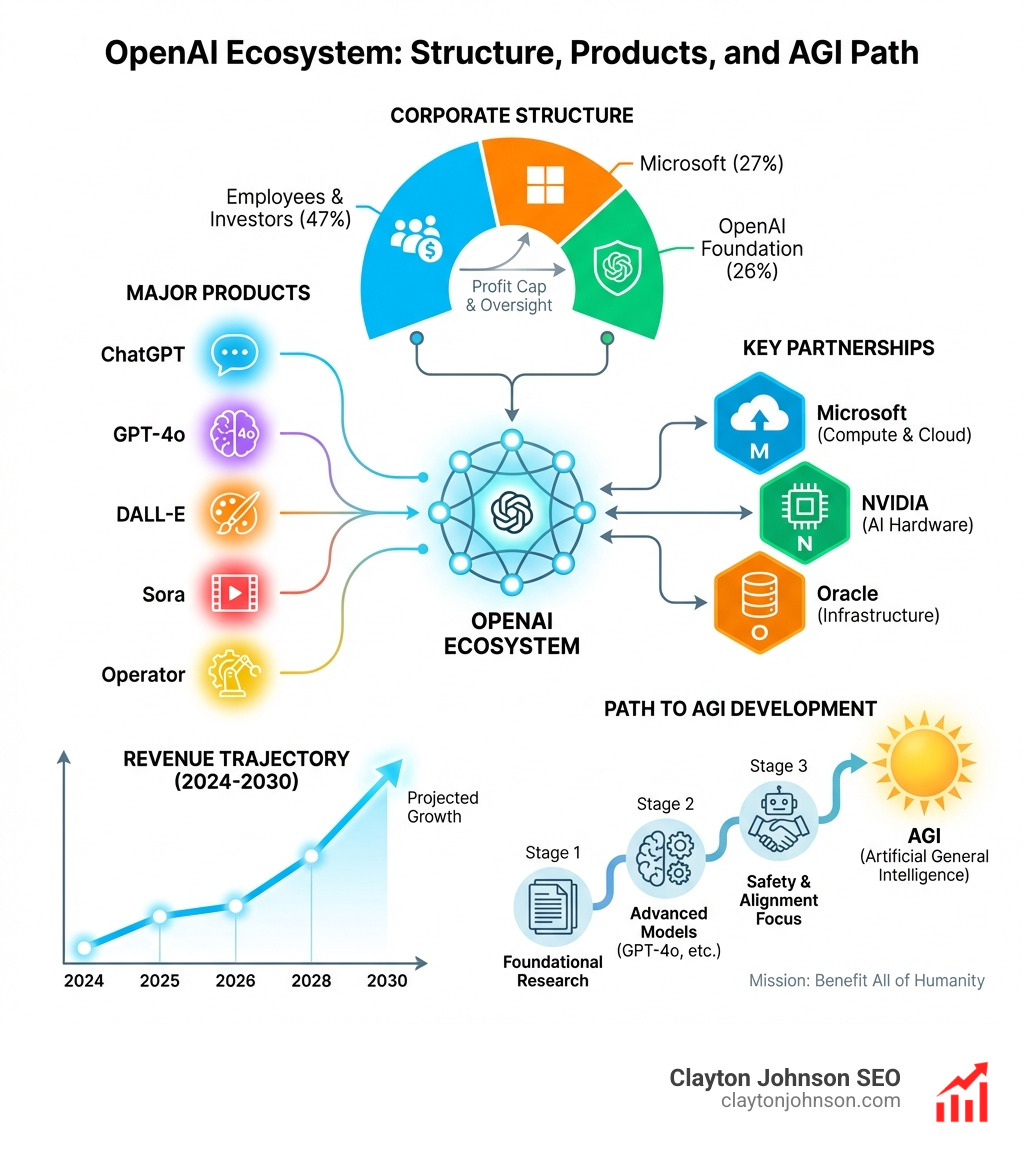
According to the latest details on Our structure, the 2025 restructuring resulted in a three-way split of ownership for the OpenAI Group PBC:
- Employees and Investors: 47%
- Microsoft: 27%
- OpenAI Foundation (Nonprofit): 26%
The Founding of OpenAI in 2015
On December 8, 2015, a group of Silicon Valley heavyweights including Elon Musk, Sam Altman, and Greg Brockman announced the formation of OpenAI. The goal was to counter the dominance of large corporations like Google and ensure that AI didn’t become a tool for a select few.
The early days were scrappy but high-budget. In 2016, the company spent $7 million on its first 52 employees. By 2017, computing costs were already eating up a quarter of their functional expenses, totaling $7.9 million. For a deeper look at these early motivations, the WSJ’s Artificial: The OpenAI Story provides a fascinating narrative of the clash between idealistic goals and the harsh reality of “compute” costs.
The Shift to a For-Profit Model
The pivot to a for-profit arm was a “code red” moment for the mission. To compete with the likes of DeepMind (owned by Google), OpenAI needed access to supercomputers. Microsoft stepped in with a $1 billion investment in 2019, which eventually grew to a total of over $13 billion.
This partnership gave OpenAI the fuel it needed. In 2018, training their Dota 2 bots required 128,000 CPUs and 256 GPUs for multiple weeks. By the time they were training GPT-4, those requirements had scaled exponentially. The current OpenAI Group PBC structure is designed to handle this massive scale while maintaining the nonprofit foundation’s influence over the board.
Leadership, Founders, and the 2023 Board Crisis
Leadership at OpenAI has been anything but boring. While Sam Altman is the public face of the company, the internal dynamics have been shaped by a rotating cast of brilliant, and sometimes clashing, personalities.
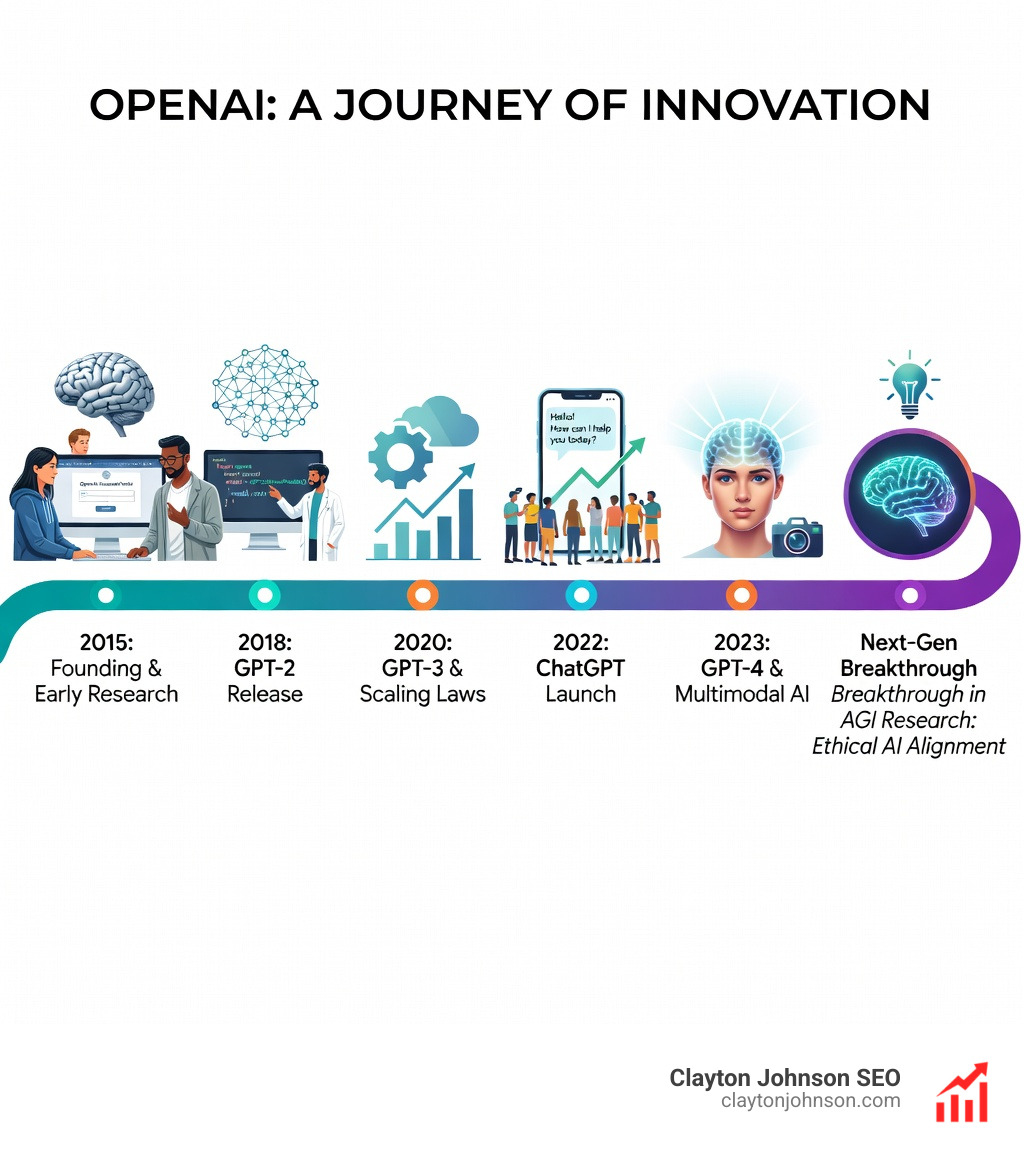
The original board was designed to be independent, but that independence led to one of the most famous “coups” in tech history. In November 2023, the board suddenly fired Altman, claiming he wasn’t “consistently candid” in his communications.
Significant Leadership Changes at OpenAI
The fallout from the 2023 crisis led to a complete overhaul of the board and several high-profile exits. Ilya Sutskever, the Chief Scientist and a co-founder who was instrumental in the initial firing, eventually left the company in May 2024.
To stabilize the ship, OpenAI brought in heavy hitters from both the public and private sectors:
- Sarah Friar: Joined as the first CFO (formerly CEO of Nextdoor).
- Brad Lightcap: Promoted to oversee business operations as COO.
- Paul Nakasone: The former head of the NSA joined the board to focus on safety and security.
- Bret Taylor: The former Salesforce co-CEO took over as Chairman of the board.
The November 2023 Firing Controversy
The “five days that shook the AI world” began on November 17, 2023, when OpenAI announces leadership transition. The firing of Altman triggered an immediate mutiny. Greg Brockman resigned in solidarity, and within days, 738 out of 770 employees signed a letter threatening to resign and join Microsoft unless Altman was reinstated.
The board eventually folded. Altman returned, and Microsoft secured a non-voting observer seat on the board (though they later relinquished it amid regulatory scrutiny). As the New York Times noted in OpenAI, Still Haunted by Its Chaotic Past, Is Trying to Grow Up, this event marked the end of OpenAI‘s “startup” phase and the beginning of its era as a global power player.
Notable Products and Their Impact on the AI Landscape
OpenAI doesn’t just write papers; they ship products that change how we work. From the early days of GPT-2 to the latest reasoning models, their release cycle has dictated the pace of the entire industry.
You can see the full range of their technical capabilities in the Models – OpenAI API documentation, which powers thousands of third-party apps.

ChatGPT and the Rise of Consumer AI
ChatGPT is the undisputed king of generative AI. By April 2025, the service had reached 20 million paid subscribers, up from 15.5 million at the end of 2024. It’s not just for writing poems; a September 2025 study by OpenAI found that while 72% of usage is for “non-work tasks,” the remaining 28% is deeply integrated into professional workflows.
We see this locally in Minneapolis, Minnesota, where organizations like the Minnesota Enterprise Translation Office have used ChatGPT to bridge language gaps in public services. This kind of real-world utility is what drives the $12 billion in annualized revenue they reported in July 2025.
New Frontiers: Operator and Atlas
OpenAI is moving beyond the “chatbox.” On January 23, 2025, they released Operator, an AI agent capable of using a computer to complete tasks on behalf of the user. This was followed by the launch of Atlas, a specialized browser designed to compete with Google Chrome by integrating AI agents directly into the web-surfing experience.
As described in the announcement Introducing ChatGPT Atlas, this move signals OpenAI‘s intent to own the entire user journey, from search to execution.
Other notable products include:
- DALL-E: The pioneer in text-to-image generation.
- Sora: A text-to-video model that OpenAI Steals the Spotlight with Sora by creating hyper-realistic 60-second clips.
- o1 and o3: Reasoning models that use “chain-of-thought” processing to solve complex STEM problems.
Financial Growth, Valuations, and Strategic Partnerships
Building AGI is the most expensive endeavor in human history. OpenAI‘s financial strategy is a mix of massive capital raises and eye-watering expenditures.
| Year | Valuation | Annual Revenue | Net Income/Loss |
|---|---|---|---|
| 2023 | $29 Billion | $1.6 Billion (est) | Loss |
| 2024 | $157 Billion | $3.7 Billion | -$5 Billion |
| 2025 | $500 Billion | $12 Billion (July) | -$8 Billion (proj) |
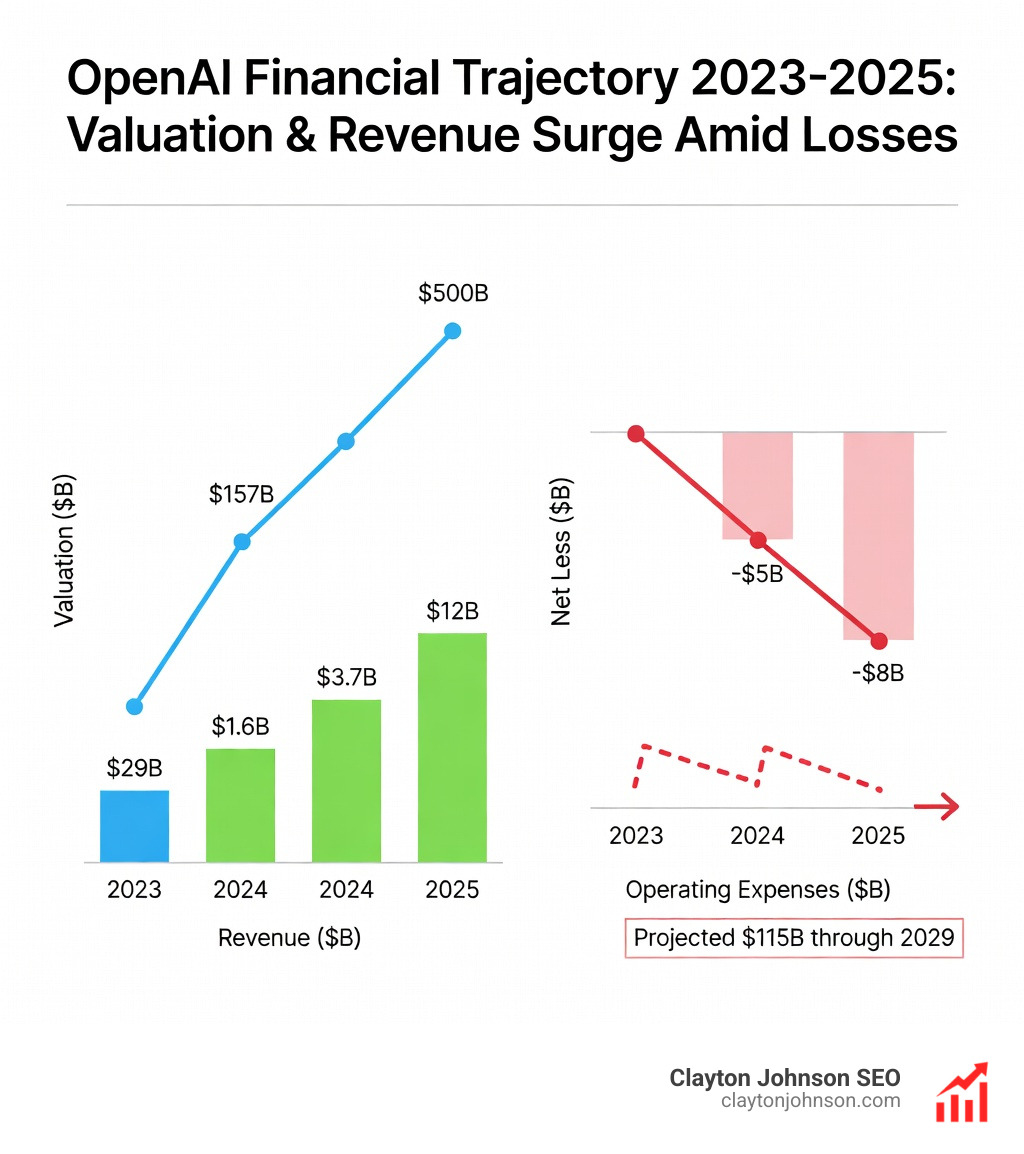
The company projects total spending of $115 billion through 2029, with annual expenditures reaching $45 billion by 2028. They aim to be cash-flow positive by 2029 and project a staggering $200 billion in revenue by 2030.
Major Investments and Acquisitions
To fund this burn, OpenAI has closed record-breaking deals. In April 2025, they raised $40 billion at a $300 billion valuation, the highest-value private tech deal ever. By October 2025, an employee share sale pushed that valuation to $500 billion.
Strategic acquisitions have also accelerated their roadmap:
- io: AI hardware startup acquired for $6.5 billion.
- Statsig: Product testing startup acquired for $1.1 billion.
- Torch: Healthcare tech startup acquired for $60 million to expand medical AI.
- Jony Ive Deal: A $6.5 billion collaboration with the former Apple design chief to create dedicated AI hardware devices, as reported in OpenAI Unites With Jony Ive in $6.5 Billion Deal.
Infrastructure and Computing Power
OpenAI‘s partnership with Microsoft is primarily about infrastructure. Microsoft builds a supercomputer for OpenAI that features hundreds of thousands of CPU cores and tens of thousands of GPUs.
But one partner isn’t enough. In September 2025, OpenAI signed a $300 billion contract with Oracle for computing power over five years. They also announced a potential $100 billion investment from NVIDIA and a multi-billion dollar deal to purchase six gigawatts of AMD chips.
Then there’s the Stargate Project. This joint venture, estimated to cost $500 billion, aims to build a massive global network of data centers to power the next generation of AI models.
Legal Challenges, Ethics, and the Road to AGI
With great power comes great… lawsuits. OpenAI is currently fighting on multiple legal fronts.
The most high-profile case is when Elon Musk Sues OpenAI and Sam Altman, alleging they abandoned their original nonprofit mission. OpenAI has countered by releasing emails where Musk seemingly agreed the company needed to become a for-profit entity to succeed.
Other challenges include:
- Copyright: Lawsuits from the New York Times, Sarah Silverman, and George R.R. Martin over the use of their work for training data.
- Privacy: Investigations by the FTC and EU regulators (GDPR) regarding data scraping.
- Military: In June 2025, the U.S. Department of Defense awarded OpenAI a $200 million contract for military and national security AI tools, marking a significant “military pivot” for the company.
OpenAI Safety Protocols and Criticisms
Safety is the biggest point of contention within the company. In July 2023, OpenAI launched the “superalignment” project, committing 20% of its computing resources to align superintelligent systems. However, by May 2024, the team was dissolved after leaders like Jan Leike resigned, claiming that safety culture had “taken a backseat to shiny products.”
As detailed in Exodus at OpenAI: Nearly half of AGI safety staffers have left, many former employees worry that the rush to market is leaving humanity vulnerable to long-term risks.
The Long-Term Vision for Artificial General Intelligence
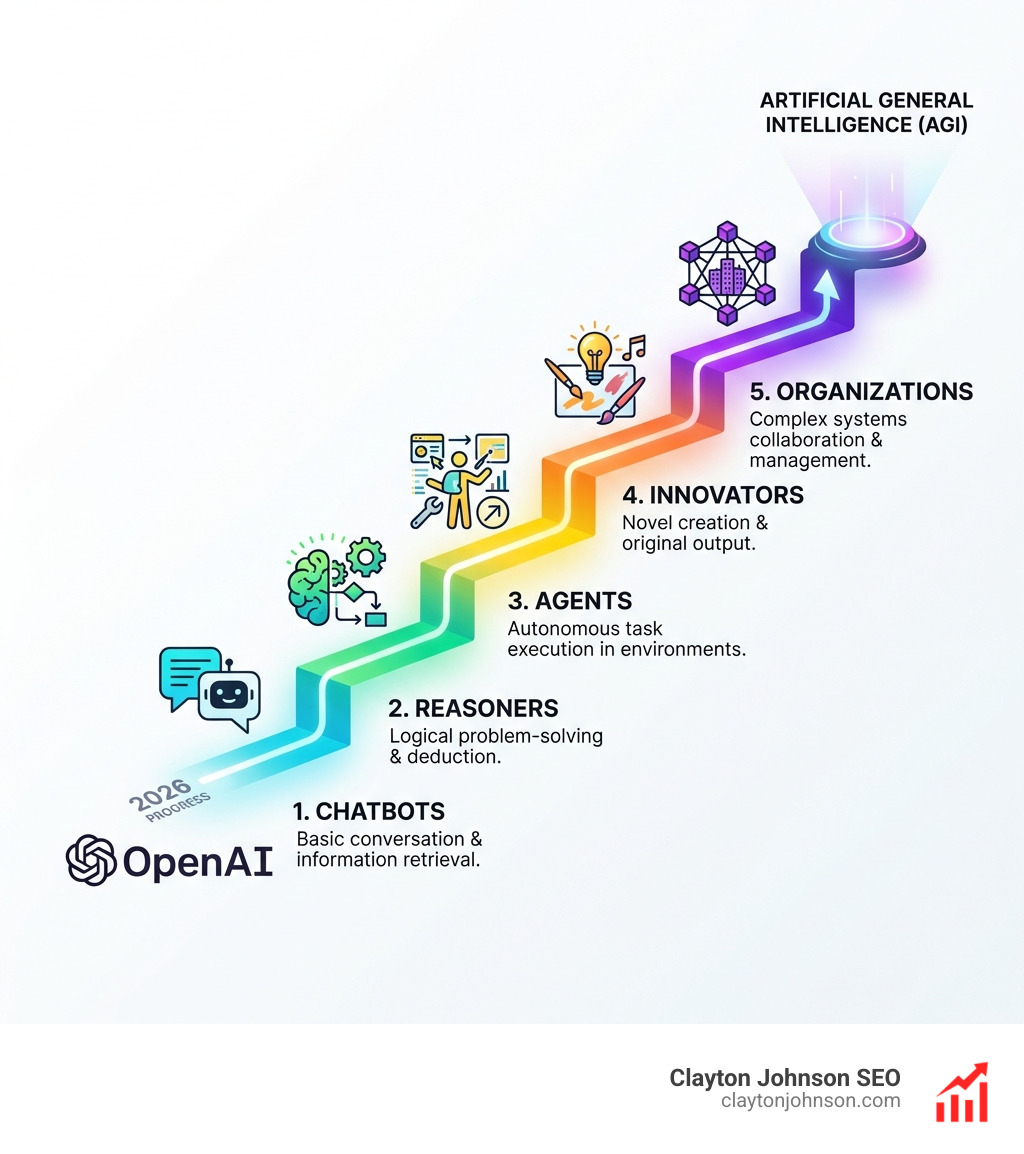
Despite the drama, OpenAI remains focused on AGI. They define it as “highly autonomous systems that outperform humans at most economically valuable work.”
Progress is measurable. In July 2025, their models achieved gold medal-level performance in solving International Mathematical Olympiad problems. You can read more about these milestones in Nature’s report: DeepMind and OpenAI models solve maths problems.
Frequently Asked Questions about OpenAI
Who currently owns OpenAI?
Following the 2025 restructuring, the ownership is split between employees and private investors (47%), Microsoft (27%), and the OpenAI Foundation nonprofit (26%).
Is OpenAI still a nonprofit organization?
It is a “hybrid.” The OpenAI Foundation remains a nonprofit, but the primary operating entity is OpenAI Group PBC, a for-profit Public Benefit Corporation. The nonprofit foundation still holds a significant stake and has oversight responsibilities.
What is the difference between ChatGPT and GPT-4?
GPT-4 is the “engine” (the large language model), while ChatGPT is the “car” (the user interface and product). You can use the GPT-4 engine through the API or via the ChatGPT interface.
Conclusion
OpenAI has moved far beyond its initial identity as a small research lab. It is now the focal point of a global arms race for intelligence, backed by hundreds of billions of dollars and the most advanced hardware on the planet. For businesses and creators, the takeaway is clear: AI is no longer a “future” technology—it is the foundational infrastructure of the modern economy.
At Clayton Johnson SEO, we help leaders navigate this rapidly changing landscape. Whether you are looking to integrate OpenAI‘s models into your marketing workflows or trying to understand how AI agents will change search visibility, we provide the frameworks you need to grow.
The path to AGI is paved with both incredible breakthroughs and significant ethical hurdles. As OpenAI continues to scale, its ability to balance profit with its core mission to benefit humanity will be the ultimate test of its legacy.
For More info about OpenAI services, you can explore their latest research and product releases directly on their official site.