What Is Brand Positioning (And Why It Determines Who Wins Your Market)
Brand positioning is the strategic process of establishing a unique and memorable place for your brand in the minds of your target customers — so they choose you over competitors.
Here’s the quick answer:
| Element | What It Means |
|---|---|
| What it is | How customers perceive your brand relative to competitors |
| Why it matters | Drives loyalty, purchase decisions, and brand equity |
| Core goal | Occupy a distinct, favorable spot in your customer’s mind |
| Key components | Target audience, differentiation, reason to believe |
| The result | Customers choose you — repeatedly |
Think about this: when someone gets hurt, they don’t ask for a “bandage.” They ask for a Band-Aid. That’s brand positioning working at its highest level.
Most business owners focus on their product or service. But the real battle isn’t on the shelf — it’s in the mind. Your brand either occupies a clear, valuable position up there, or it gets lost in the noise.
Good positioning answers two questions your customers are always asking:
- “How is this different from everything else?”
- “Why should I care?”
If you can’t answer both clearly and quickly, your positioning needs work.
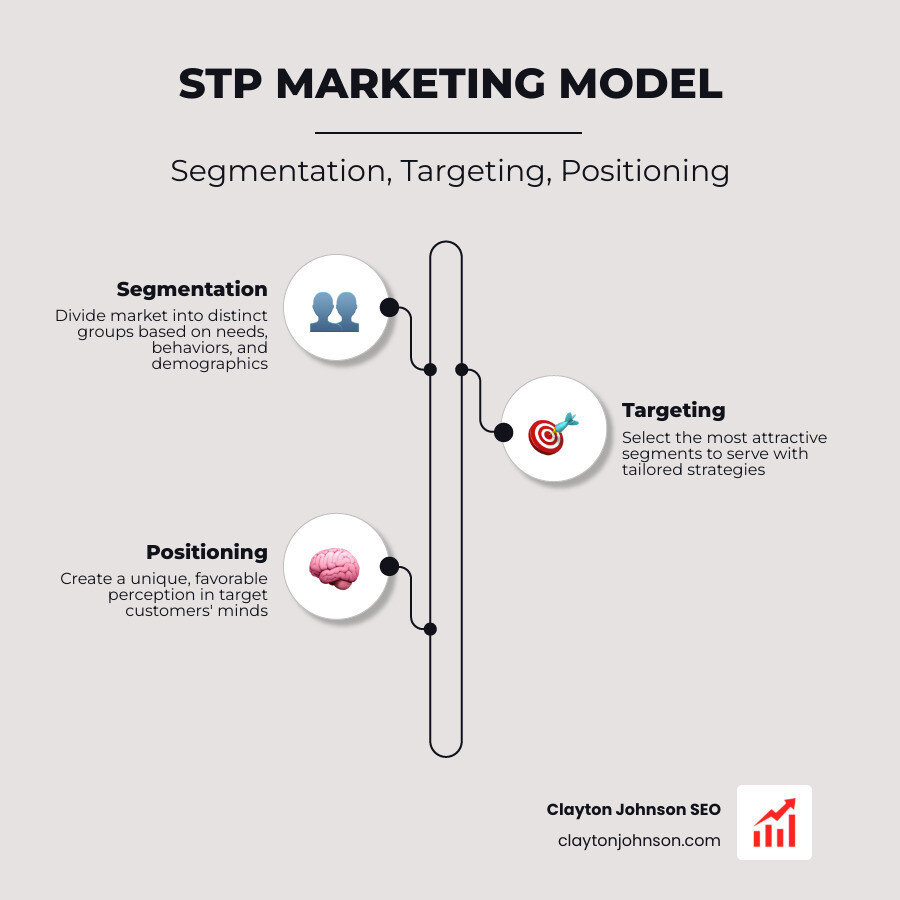
Terms related to brand positioning:
The Core Framework of Brand Positioning
To understand brand positioning, we have to look at it through the lens of “mental real estate.” This concept, popularized by marketing legends Al Ries and Jack Trout, suggests that the human mind has limited slots for brands in any given category.
Philip Kotler, often called the father of modern marketing, defines positioning as “the act of designing the company’s offering and image to occupy a distinctive place in the mind of the target market.” It isn’t just a catchy tagline; it’s the sum of every interaction a customer has with you. When done correctly, it builds brand equity—the commercial value derived from consumer perception rather than the product itself.
Scientific research on positioning, such as studies found in the Journal of Marketing, emphasizes that positioning is a psychological process. It’s about how you rank in a consumer’s “consideration set.” If you aren’t in the top two or three spots, you’re essentially invisible.
Brand Strategy vs. Value Proposition vs. Positioning
It’s easy to get these terms mixed up. We like to think of them as a hierarchy:
| Term | Scope | Focus |
|---|---|---|
| Brand Strategy | Long-term | The overarching plan for brand development and growth. |
| Value Proposition | Functional | The specific functional benefits and outcomes a customer gets. |
| Brand Positioning | Perceptual | The unique “space” you own in the customer’s mind vs. rivals. |
Identifying Your Target Audience and Competitors
You cannot position yourself in a vacuum. Effective brand positioning requires us to look outward before we look inward. This starts with deep market research and understanding consumer psychographics—the “why” behind their buying habits, not just the “who.”
One of the most powerful tools we use is perceptual mapping. This involves plotting your brand and your competitors on a graph based on two key attributes (like “Price” and “Quality” or “Innovation” and “Reliability”). This helps you see where the “white space” is in the market—the gaps that no one else is filling.
To get started, we recommend these steps:
- Analyze current perception: Use surveys to find out what people actually think of you right now.
- Identify direct and indirect competitors: Direct competitors sell the same thing; indirect competitors solve the same problem in a different way.
- Score the competition: Use frameworks like our competitive positioning map demystified to see where they are vulnerable.
- Leverage modern tools: You can even learn how to score your brand with AI-powered competitive analysis to find data-driven gaps in your market.
Competitor Research Tools We Love:
- Quora & Reddit: Great for finding raw, unfiltered customer pain points.
- Search Engine Results Pages (SERP): See who is winning the “intent” battle for your keywords.
- Social Listening Tools: Monitor mentions of your competitors to see what their customers complain about.
Five Proven Brand Positioning Strategies
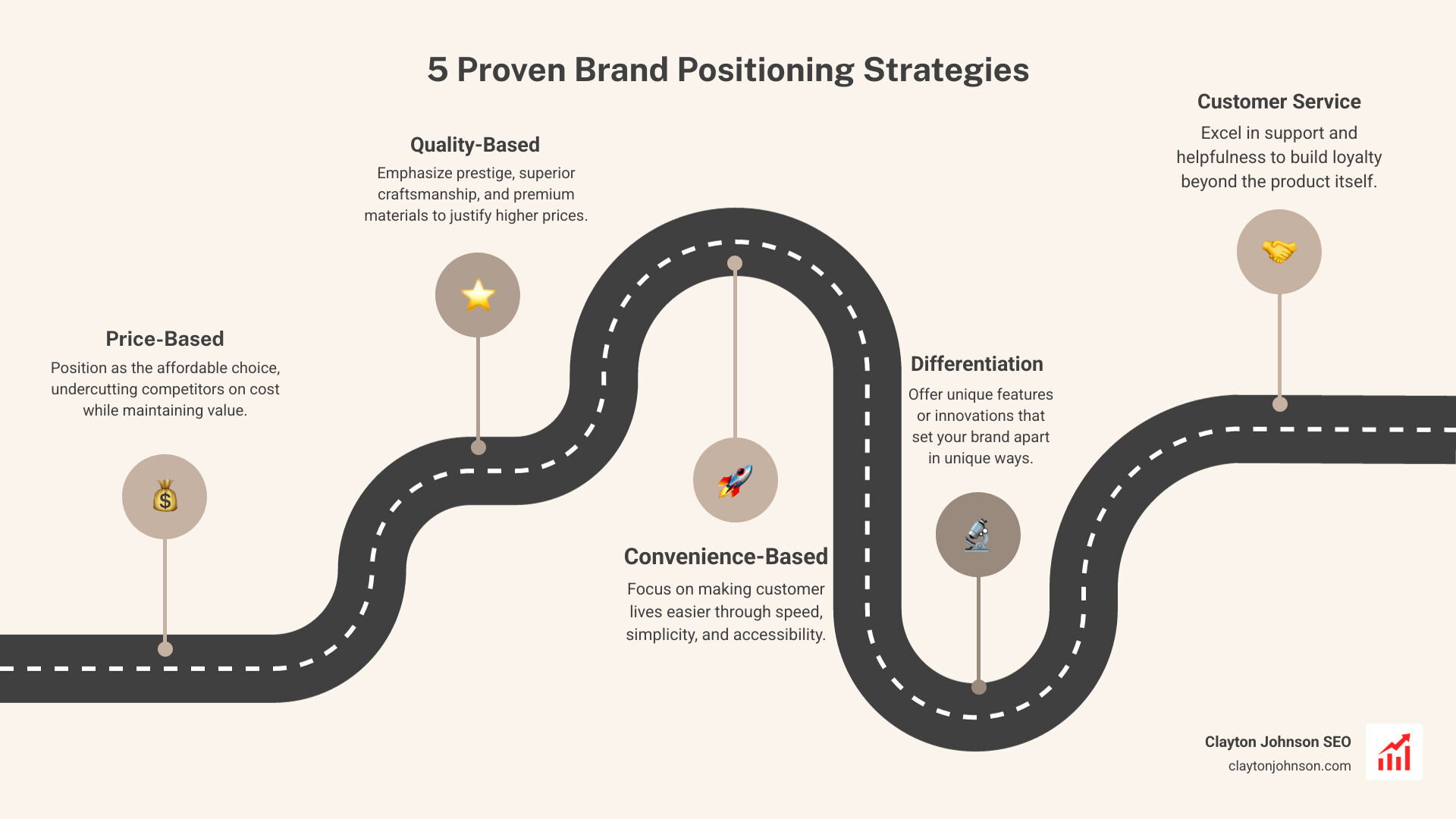
Most successful brands lean into one of five core strategies. Trying to do all five is a recipe for being “average” at everything.
- Price-Based Positioning: You are the “affordable” choice. Think of Dollar Shave Club’s affordability, which used humor and low costs to disrupt an industry dominated by expensive, model-led ads. Or Southwest Airlines’ low-cost model, which focuses on being the “friendly, reliable, and low-cost” carrier.
- Quality-Based Positioning: You focus on prestige and craftsmanship. These brands often don’t even mention price; they focus on the “best” materials or exclusive results.
- Convenience-Based Positioning: You make life easier. Swiffer’s WetJet is a classic example—it’s marketed as a hassle-free alternative to traditional mops, justifying a higher price point through time saved.
- Differentiation Strategy: You do something completely unique. Tesla’s premium energy positioning is a masterclass here. They aren’t just an automaker; they are a high-performance energy company with a futuristic outlook.
- Customer Service Positioning: You win by being the most helpful. This is common in SaaS and MarTech, where “human” support becomes the primary reason people stay.
Crafting a Brand Positioning Statement and Essence Chart
Your brand positioning statement is your internal North Star. It isn’t a slogan for a billboard; it’s a guide for every decision your team makes. A standard formula looks like this:
“For [Target Audience], [Brand Name] is the [Frame of Reference/Category] that [Unique Value/Differentiation] because [Reason to Believe].”
For example, a luxury water brand might say: “For upscale consumers, Voss is the only bottled water among premium beverages that offers the purest hydration because it is sourced from a Norwegian artesian well and packaged in an iconic glass bottle.”
To organize these thoughts, we use a brand essence chart. This tool breaks your brand down into:
- Attributes: The physical facts (e.g., “100-million song catalog”).
- Benefits: What the customer gets (e.g., “Any song, anywhere”).
- Personality: How the brand speaks (e.g., “Innovative and sleek”).
- Authority: Why they should trust you (e.g., “Designed in California”).
For more help, you can check out HubSpot’s positioning templates or dive into the academic approach with how to craft the perfect brand positioning statement from Harvard Business School.
Developing and Measuring Your Strategy for Long-Term Success
Once you’ve defined your position, you have to live it. Consistency is the secret sauce. If your positioning is “premium” but your website looks like it was built in the 90s, you have a “positioning gap.”
Every touchpoint—from your logo to your 404 error page—must reflect your brand voice and visual identity. Look at Apple’s minimalist product design. It isn’t just an aesthetic choice; it’s a physical manifestation of their “Think Different” and “Simplicity” positioning.

To ensure your digital presence aligns with your strategy, it’s worth exploring digital brand positioning terms demystified to make sure your technical execution matches your strategic intent. You can also follow a step-by-step positioning strategy from development to communication to ensure no balls are dropped during the rollout.
Real-World Examples of Successful Positioning
Let’s look at the heavy hitters who got it right:
- Apple’s “Think Different”: They moved from being a computer company to a lifestyle brand. By asking “Why” before “How” or “What” (as seen in Simon Sinek’s Golden Circle), they created a cult-like loyalty where only 11% of users ever switch to Android.
- Trader Joe’s Neighborhood Feel: While Whole Foods went “premium,” Trader Joe’s positioned itself as a “national chain of neighborhood grocery stores.” Their fun, tight-knit vibe makes them feel like a local corner store.
- Patagonia’s Environmental Mission: They are the “activist” brand. By donating 1% of sales to environmental causes and telling people “Don’t Buy This Jacket,” they built a position based on shared values.
- Nike’s Empowerment: From their tagline “Just Do It” to using models with “game faces” instead of smiles, Nike owns the mental space of athletic excellence and determination.
- Bumble’s Female-First Approach: In a crowded dating app market, Bumble stood out by letting women make the first move, challenging antiquated dating rules and carving out a safe, empowering niche.
Measuring Success and Avoiding Common Pitfalls
How do you know if your brand positioning is actually working? You can’t just “feel” it; you need data.
- Net Promoter Score (NPS): This measures customer loyalty. High NPS scores usually indicate that your positioning is resonating and building “promoters.” You can measure NPS with specialized tools to get a clear picture.
- Brand Awareness & Recall: Do people associate your brand with your target attribute (e.g., do they think of “safety” when they hear your name)?
- Market Share: If your positioning is effective, you should be capturing a larger slice of the pie from competitors who are less clearly defined.
Common Mistakes to Avoid:
- The “Everything to Everyone” Trap: If you try to appeal to everyone, you appeal to no one. Strong positioning requires sacrifice.
- Copying Competitors: If you just do what the leader does, you’ll always be second.
- Changing Too Often: Positioning takes years to “stick” in the consumer’s mind. Don’t pivot every six months.
If you want to see how to truly dominate your niche, check out our guide on how to position your brand so competitors cry.
Scaling Your Brand with Clayton Johnson SEO
At Clayton Johnson SEO, we don’t just talk about strategy—we build the systems that operationalize it. We believe that brand positioning and SEO are two sides of the same coin. Your positioning tells us what space to own, and our SEO systems ensure you actually own it in the search results.
We focus on:
- Search Intent Modeling: Aligning your content with what your customers are actually looking for.
- Technical SEO Architecture: Building durable internal linking structures and taxonomy-driven ecosystems.
- Scalable Traffic Systems: Turning fragmented marketing into a coherent growth engine.
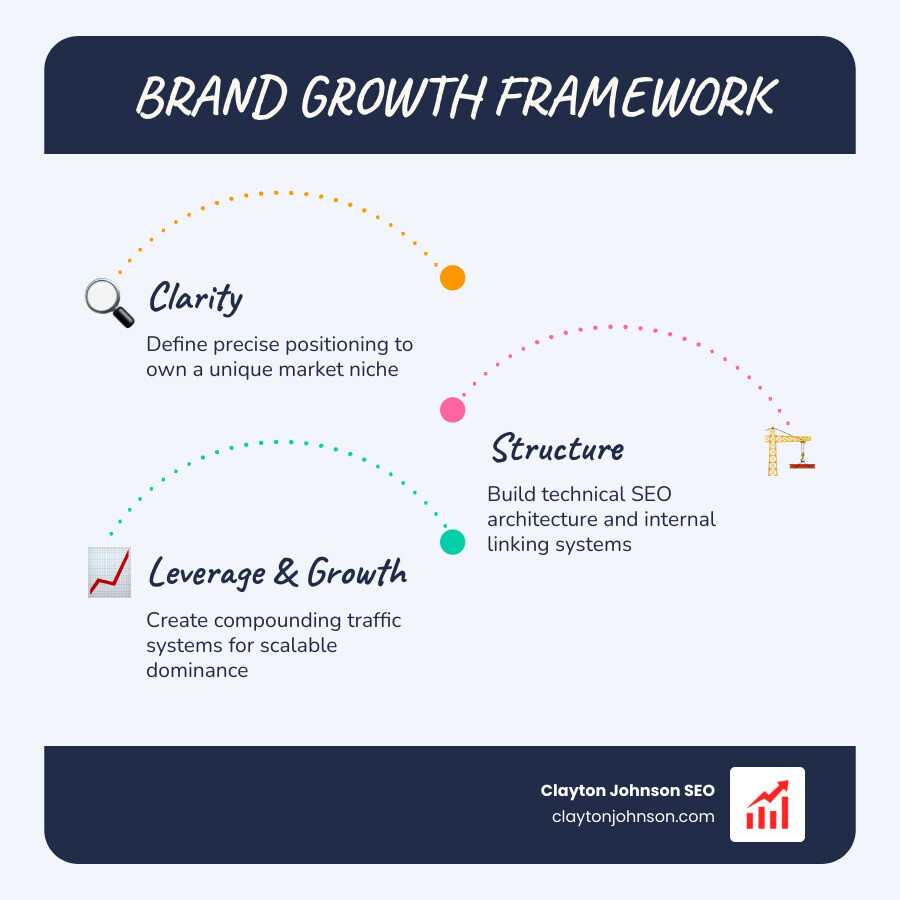
Our philosophy is simple: Clarity → Structure → Leverage → Compounding Growth.
If you’re ready to stop chasing tactics and start building a durable system, we’re here to help. You can find more info about our SEO services or contact us for a strategic audit today. Let’s build something that sticks.