Why AI SEO Taxonomy Systems Determine Your Search Visibility
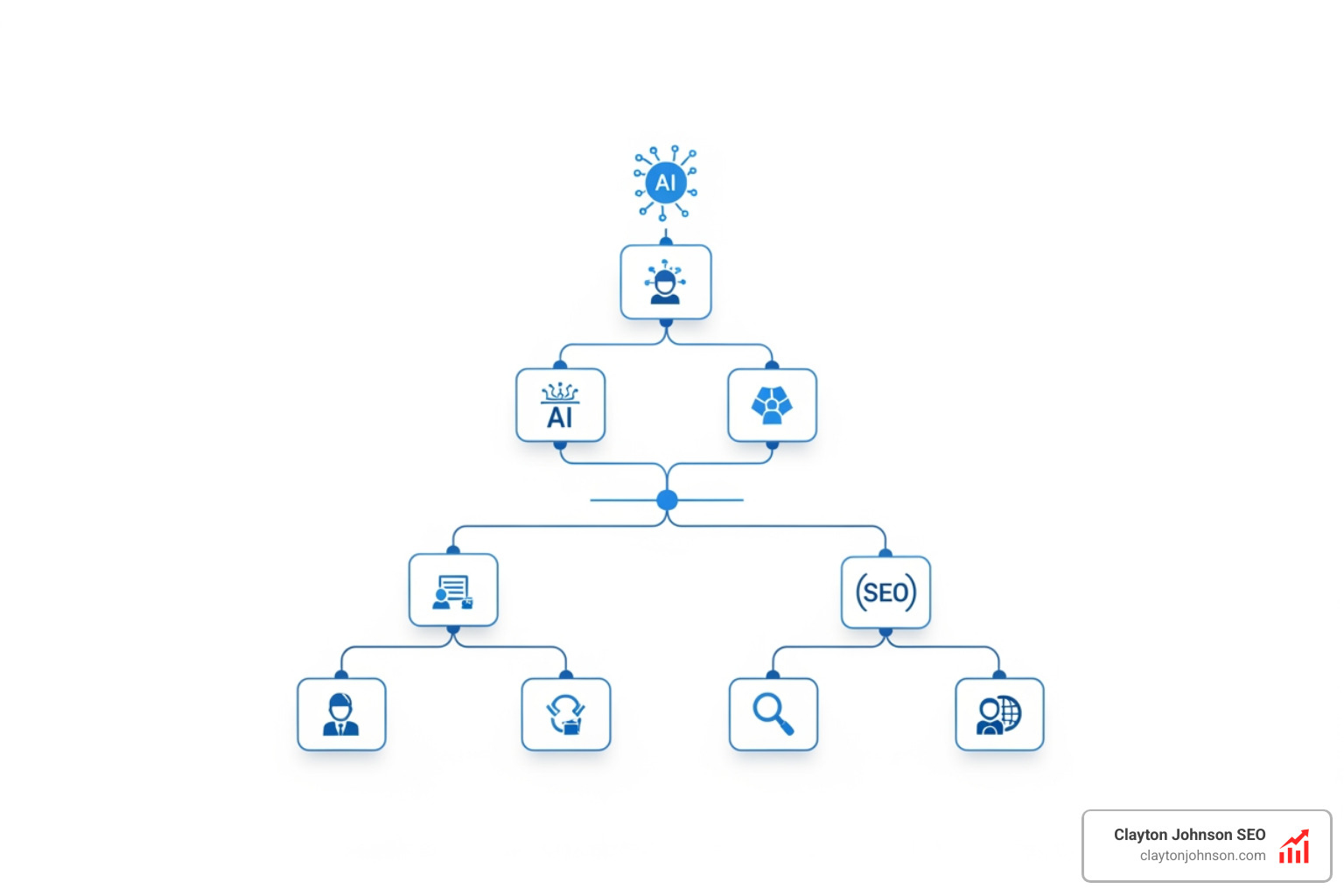
AI SEO taxonomy systems are structured classification frameworks that organize your website’s content so both search engines and AI models can understand, index, and surface it accurately.
Here is what they do and why they matter:
- Organize content into logical hierarchies — categories, subcategories, tags, and metadata
- Signal relevance to search engines by grouping content around concepts and themes, not just keywords
- Enable AI models like Google’s AI Overviews, ChatGPT, and Perplexity to extract and cite your content with confidence
- Improve crawlability by giving search bots a clear map of your site’s structure
- Reduce duplicate content risk through consistent naming and canonical signals
- Support entity distinctness — making it clear to AI systems exactly what your content is about and who it serves
If your site’s content is disorganized, AI systems cannot confidently attribute authority to your brand. The result is invisible rankings and missed citations.
Most SEO strategies focus on keywords and backlinks. Those still matter. But there is a quieter force shaping whether your content gets found, indexed, and cited by AI: how your content is classified and connected at the structural level.
Search engines have always rewarded well-organized sites. Now, with AI-generated answers reshaping the SERP, the stakes are higher. Generative AI systems — Google AI Overviews, Gemini, Perplexity — rely on semantic clarity to decide which sources to pull from. If your content architecture is fragmented, your brand gets filtered out before the conversation even starts.
That is the core problem AI SEO taxonomy systems solve.
I’m Clayton Johnson — SEO strategist and growth architect focused on building scalable content systems, technical SEO infrastructure, and AI-augmented marketing workflows. My work on AI SEO taxonomy systems sits at the intersection of content architecture, entity authority, and structured data strategy — the same systems I use to help founders and marketing leaders turn fragmented content into compounding search assets. In the sections ahead, I’ll break down exactly how to build, implement, and optimize a taxonomy system that performs across both traditional and AI-driven search.
Ai seo taxonomy systems helpful reading:
- AI SEO strategy framework
- AI driven SEO audits
- what is ai seo
Understanding the Architecture of AI SEO Taxonomy Systems
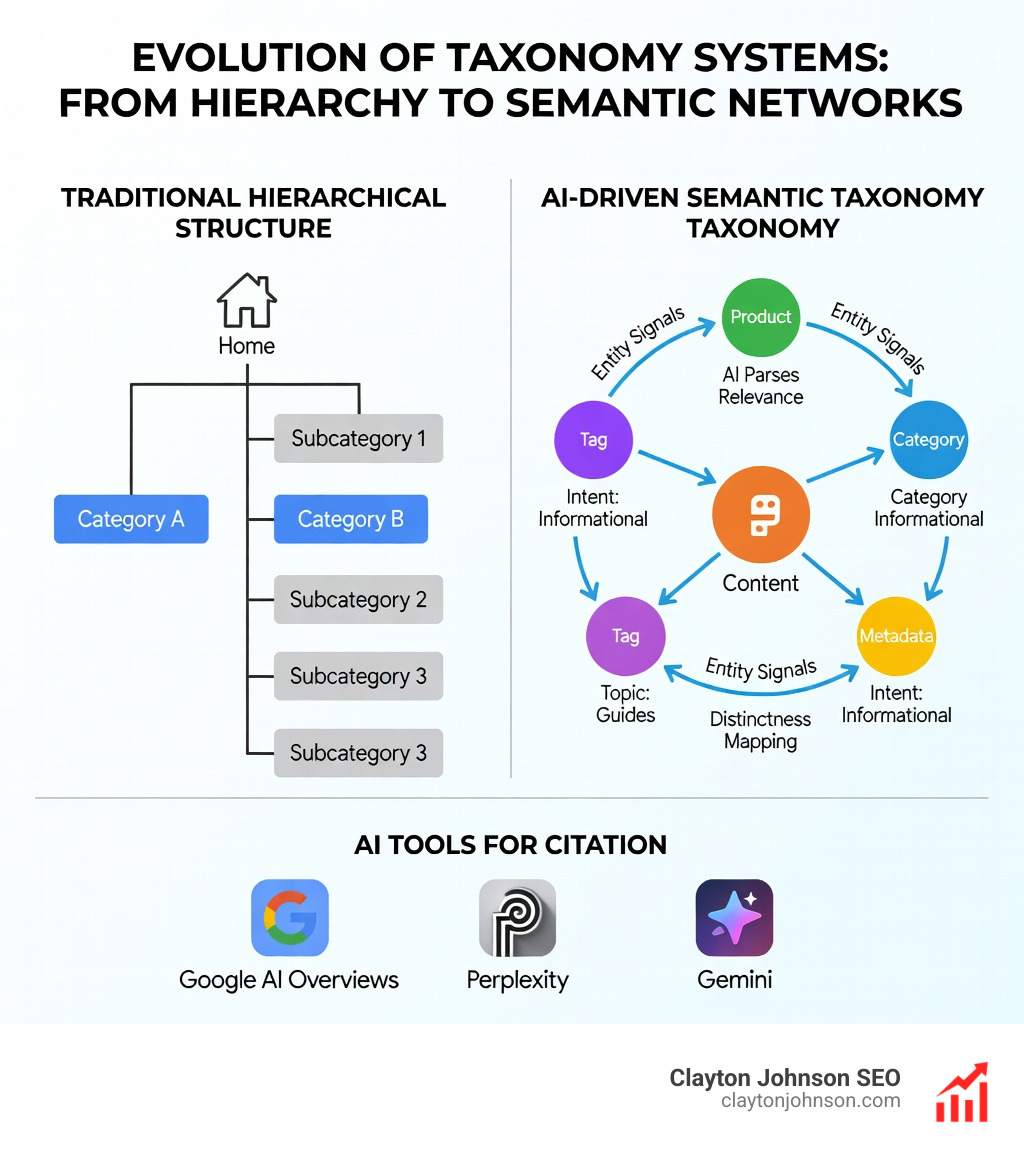
When we talk about the architecture of ai seo taxonomy systems, we are moving beyond a simple “folder” structure on a server. Traditional site organization was built for humans to click through menus. Modern AI-driven taxonomy is built for machines to reason through relationships.
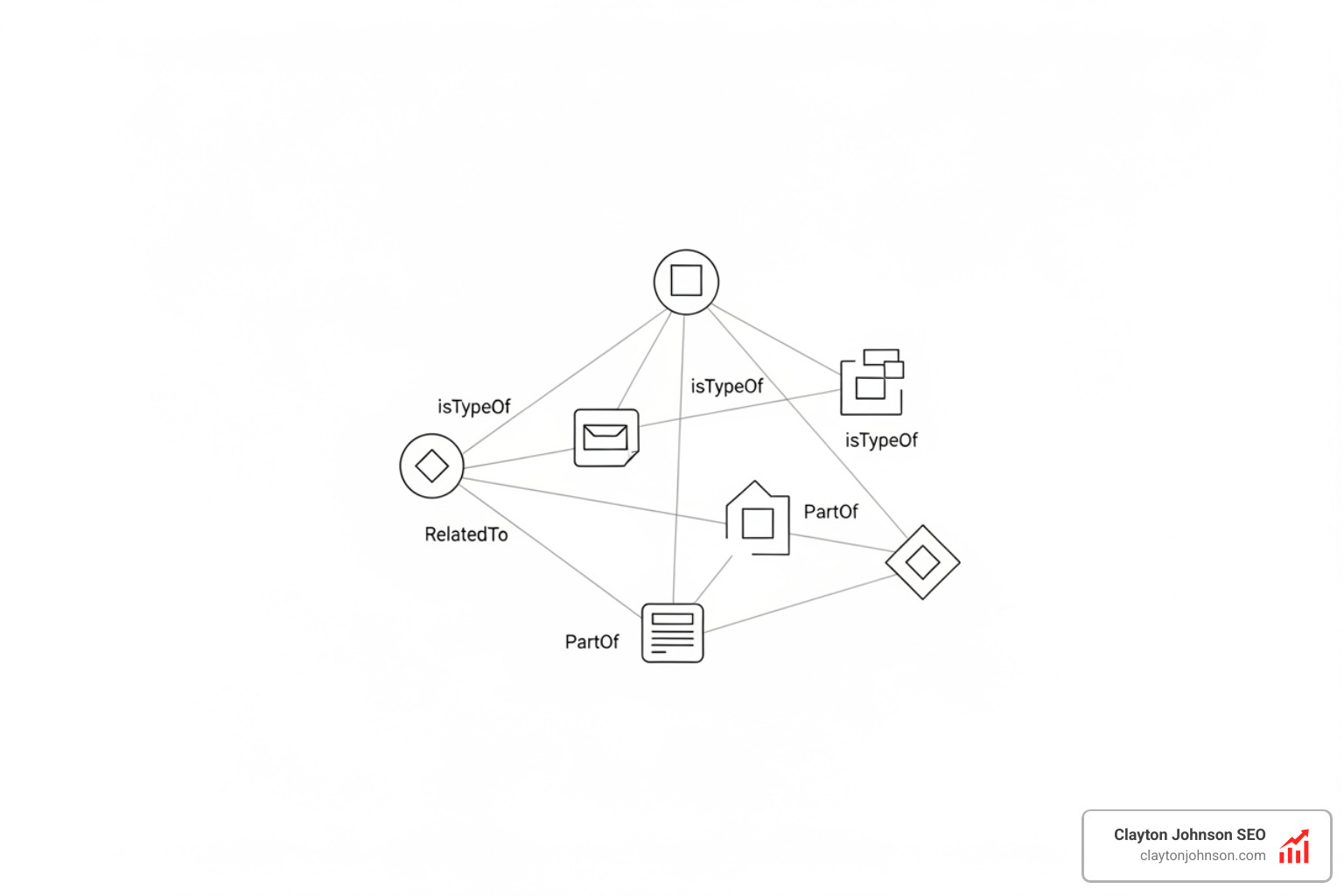
An AI-ready taxonomy uses semantic relationships to connect content nodes. Instead of just saying “this page is in the ‘Shoes’ folder,” a semantic system tells search engines: “This page describes a Product that is a Type of Footwear, made by Brand X, and is suitable for Running.” This level of detail is what allows Google’s Knowledge Graph to recognize your content as a distinct “Entity.”
Proper architecture improves crawlability and indexing efficiency. When search bots encounter a logical, structured environment, they can map your site faster and understand the context of each page more deeply. Research on automated taxonomy construction suggests that using Large Language Models (LLMs) to identify domain-specific vocabularies can significantly reduce the manual labor of building these complex structures, ensuring that your site’s “language” matches how users actually search.
Hierarchical vs. Network Taxonomy Models
There are several ways to organize information, and choosing the right one depends on your site’s complexity:
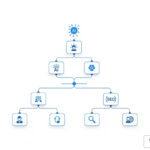
- Hierarchical Taxonomy: This is the classic “tree” structure. It uses parent-child relationships (e.g., Electronics > Smartphones > Android). It is excellent for clear navigation but can be rigid.
- Flat Taxonomy: A single-level system where all pages are equal. This is rarely ideal for SEO as it provides no “link juice” flow or topical depth signals.
- Network Taxonomy: This creates a web-like structure. It uses lateral connections to link related content dynamically across different branches. For example, a blog post on “Italian Cooking” might link to “Best Olive Oils” and “Pasta History” regardless of their category.
- Hybrid Taxonomy: Most successful modern sites use a hybrid approach. They maintain a multi-tiered hierarchical structure for primary navigation while using a network of tags and internal links to create lateral connections. This allows for dynamic linking that AI systems love to follow.
The Role of SEOntology in AI SEO Taxonomy Systems
To truly bridge the gap between traditional SEO and AI, we use frameworks like SEOntology. Think of SEOntology as a semantic operating system for your content. It is an open-source framework that extends Schema.org standards to help AI agents reason about your content.
By using linked data standards, SEOntology allows us to track “EntityGaps” (missing information an AI expects to find) and “QualityScores” across your content lifecycle. It moves SEO from “guessing what keywords work” to “providing the structured data AI needs to verify your authority.” You can find more info on SEOntology and AI to see how it enables advanced use cases like graph-based internal linking and automated metadata generation.
Core Components of a Modern Content Taxonomy
A robust content taxonomy is built on three pillars: Categories, Tags, and Metadata. Together, these form the foundation of discoverability.
- Categories: These are your broad, hierarchical groupings. They should be clear, consistent, and reflect the main “buckets” of your business.
- Tags: Tags provide cross-linking characteristics. If categories are the “aisles” in a grocery store, tags are the “attributes” like “Gluten-Free” or “Organic” that might appear in multiple aisles.
- Metadata: This is the backend data (like Schema markup) that provides specific details to search engines. It describes the “who, what, where, and when” of the content without necessarily being visible to the user.
For businesses looking to scale their authority, these components must work in harmony. You can explore more info about SEO content marketing services to see how we integrate these elements into a cohesive growth strategy.
Entity Extraction and Semantic Analysis
This is where AI does the heavy lifting. Using Natural Language Processing (NLP), we can extract “Entities” from your content. An entity is a person, place, thing, or concept that is uniquely identifiable.
By running your content through tools like the Google Natural Language API, we can identify “Entity Gaps”—topics your competitors are covering that you are missing. This semantic analysis allows us to build a knowledge graph for your site, ensuring that every piece of content reinforces your brand’s authority in a specific niche.
Building Faceted Systems for E-commerce and Industrial Suppliers
For e-commerce and industrial suppliers, a simple hierarchy isn’t enough. You need a faceted taxonomy. This allows users (and AI) to filter products by multiple attributes simultaneously.
Faceted attributes often include:
- Technical Specifications: Material, grit, size, voltage.
- Brand/Manufacturer: Who made the product.
- Price and Availability: Real-time data.
- Use Cases: Construction, manufacturing, DIY.
Mapping these attributes correctly ensures that your product pages are rich with structured data, making them prime candidates for Google AI Overviews.
How to Implement AI SEO Taxonomy Systems
Implementation is where the strategy meets the software. While manual taxonomy construction is prone to human error and doesn’t scale, AI-driven systems can handle thousands of pages with precision.
| Feature | Manual Taxonomy | AI-Driven Taxonomy |
|---|---|---|
| Scalability | Limited by human hours | Virtually unlimited |
| Consistency | High risk of duplicate tags | Centralized logic and naming |
| Adaptability | Hard to update site-wide | Dynamic updates in real-time |
| Search Intent | Based on intuition | Based on NLP and data analysis |
Leveraging Chain-of-Layer and LLMs for AI SEO Taxonomy Systems
One of the most advanced methods for building these systems is the Chain-of-Layer framework. This uses in-context learning to build taxonomies layer-by-layer. Instead of asking an AI to “build a site map,” we ask it to identify core entities, then group them into clusters, and then define the hierarchical relationships between those clusters.
To prevent “AI hallucinations” (where the model makes up fake categories), we use Ensemble-based Ranking Filters and QLoRA fine-tuning. This ensures the AI stays grounded in your actual product data and industry terminology, producing a stable, reproducible structure.
Best Practices for SEO-Friendly URL Structures and Naming
Even with AI, the basics of URL structure still matter. Your URLs should mirror your taxonomy hierarchy.
- Clear Naming: Use descriptive, user-friendly labels (e.g.,
/electronics/smartphones/android). - Consistent Conventions: Don’t mix underscores and hyphens. Stick to hyphens.
- Breadcrumb Navigation: Use breadcrumbs with structured data markup to help search engines understand the path.
- Shallow Hierarchy: Try to keep your content within 3-4 clicks of the homepage.
Optimizing and Auditing Your AI SEO Taxonomy
A taxonomy is not a “set it and forget it” project. As your business grows, your taxonomy must evolve. Common challenges include duplicate content (caused by the same product in multiple categories) and scalability issues.
Proper canonicalization is key here. If a product lives in two categories, use a canonical tag to tell Google which one is the “primary” version. This prevents SEO penalties and keeps your entity signals clean. If you’re feeling overwhelmed, you can find more info about SEO consultant services to help audit and refine your structure.
Evaluating Taxonomy Accuracy with AI Tools
We use specialized tools to “Evaluate my taxonomy.” These AI assistants can:
- Detect Synonyms: Identify when “Cell Phones” and “Mobile Devices” should be merged.
- Separate Vague Codes: Suggest splitting a generic “News” category into more specific topics.
- Iterative Refinement: Constantly test the taxonomy against real user search queries to ensure relevance.
Measuring Success through UX and Search Metrics
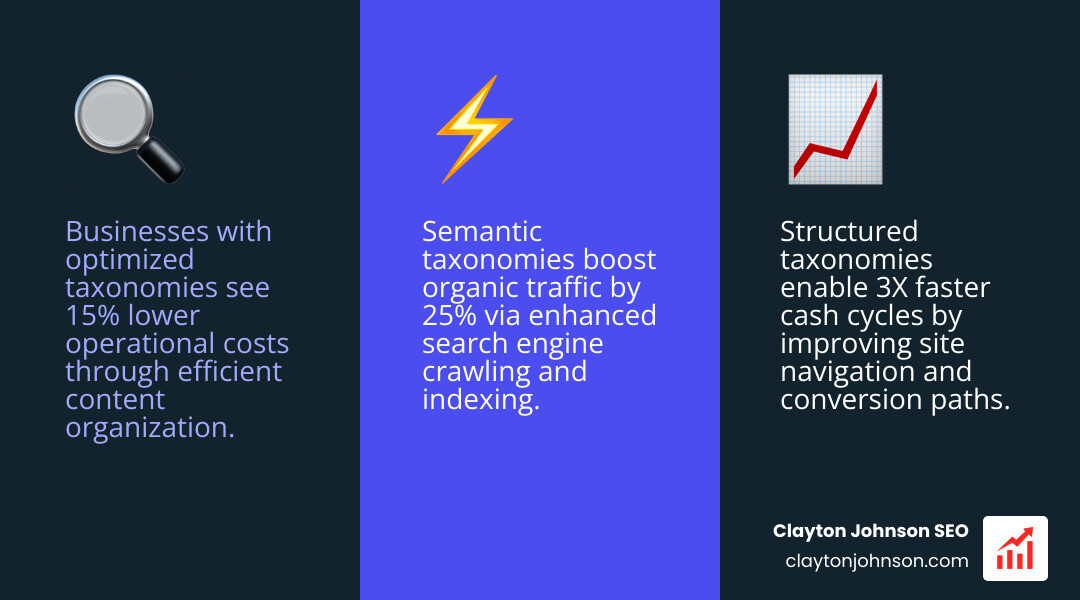
How do you know if your ai seo taxonomy systems are working? We look at the data:
- Organic Traffic: Is your visibility increasing for long-tail, attribute-specific searches?
- Bounce Rates: Are users finding what they need faster?
- Conversion Uplift: Better navigation leads to more sales.
- Internal Link Equity: Is “link juice” flowing effectively to your most important pages?
Frequently Asked Questions about AI SEO Taxonomy
How does taxonomy improve search engine crawling?
A logical structure acts as a roadmap for search bots. By grouping content semantically, you make it easier for Google to understand the context of your site. This leads to faster indexing and more accurate rankings because the bot doesn’t have to “guess” how pages relate to one another.
What is the difference between a category and a tag in AI systems?
In ai seo taxonomy systems, a category is a hierarchical grouping (the “where”), while a tag is a cross-linking characteristic (the “what”). AI uses categories to understand your site’s broad authority and tags to find lateral connections between entities. Metadata sits behind both, providing the technical details that AI models need for citation.
Can AI automate the entire taxonomy creation process?
AI can automate the heavy lifting—tagging, attribute extraction, and initial categorization. However, we still recommend a “human-in-the-loop” approach. AI is great at spotting patterns, but humans are better at understanding brand nuance and strategic goals. The best systems use AI for real-time adaptation and dynamic updates while maintaining human oversight for the core growth architecture.
Conclusion
At Clayton Johnson SEO, we believe that clarity leads to structure, and structure leads to leverage. Most companies don’t lack tactics; they lack a structured growth architecture. By implementing ai seo taxonomy systems, you aren’t just “doing SEO”—you are building a compounding asset that is ready for the future of AI-driven search.
Our platform, Demandflow.ai, is designed to provide this exact type of growth infrastructure. Whether you are looking for actionable strategic frameworks or AI-augmented marketing workflows, we help you turn digital chaos into a measurable, scalable system. If you’re ready to move beyond traditional rankings and secure your spot in the AI-driven search ecosystem, explore more info about AI SEO services and let’s build your growth architecture together.