7 Strategies to Optimize for Google AI Overviews

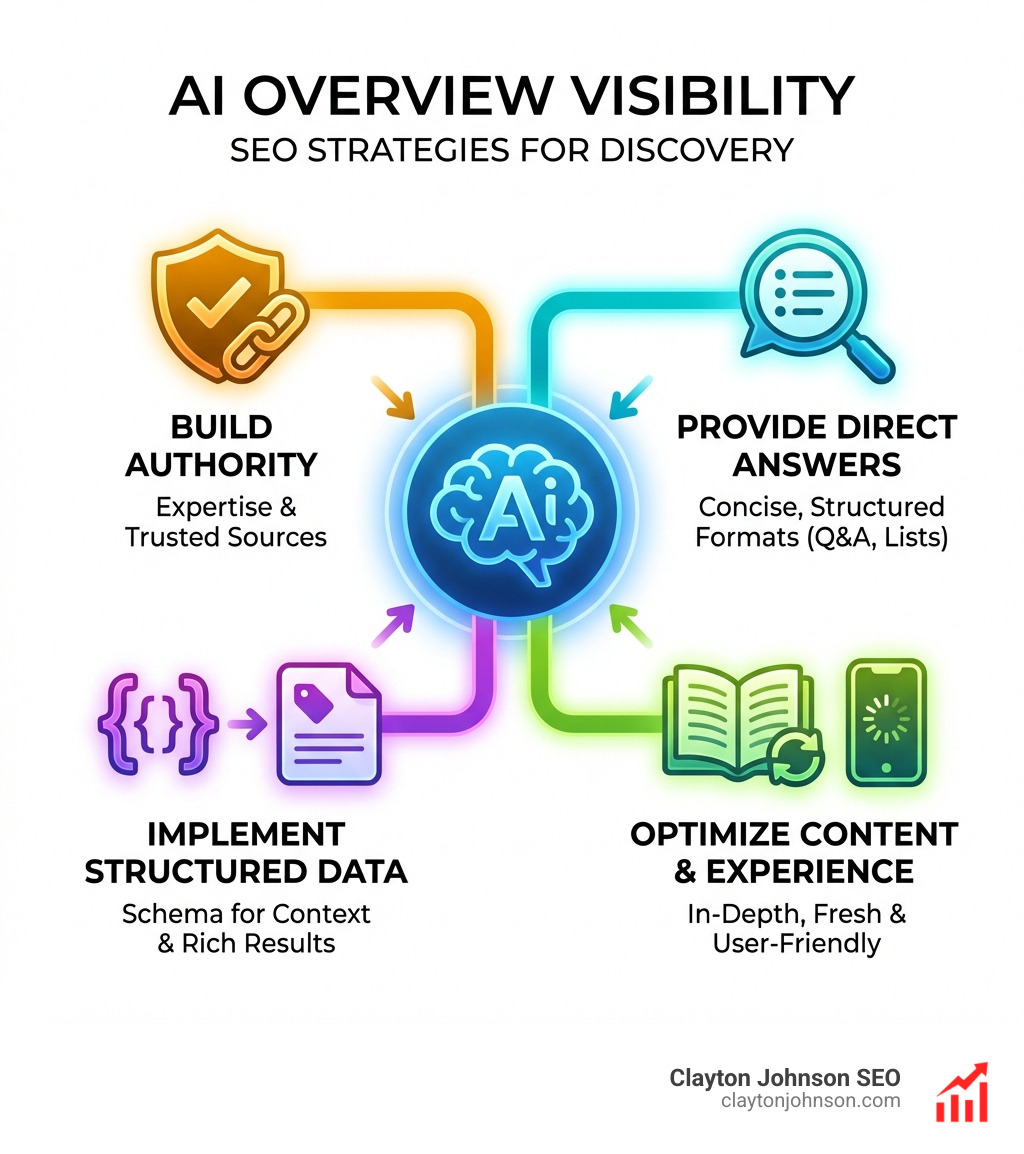
Why Showing Up in AI Overviews Matters for Your Business
How to show up in ai overviews seo isn’t just another SEO tactic—it’s a fundamental shift in how search visibility works. AI Overviews appear for a significant portion of U.S. search queries, and when they do, organic click-through rates drop significantly. If your brand isn’t cited in these AI-generated summaries, you’re invisible to a growing majority of searchers.
Quick Answer: The 8-Step Framework
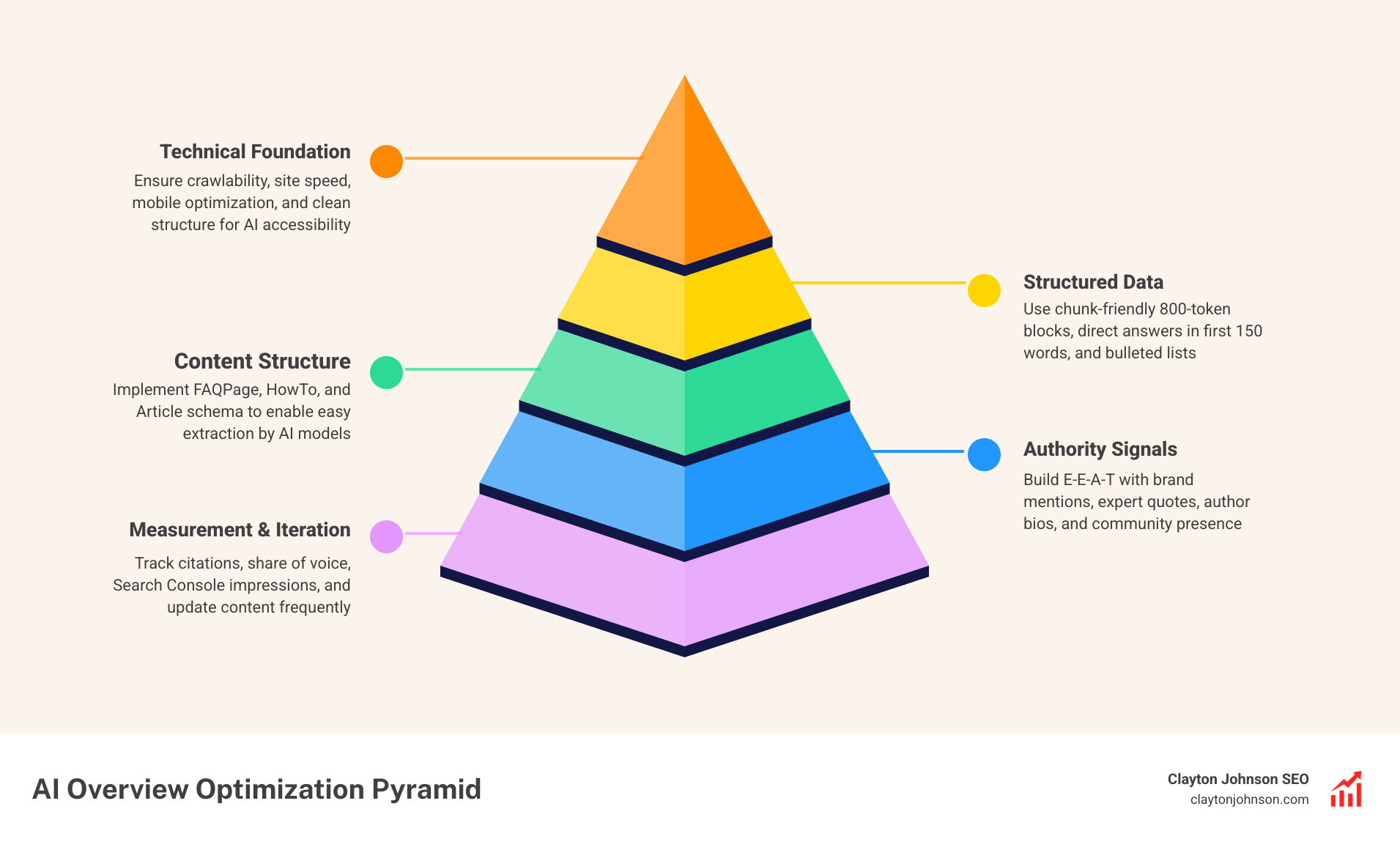
- Technical Foundation – Ensure crawlability, mobile speed, and clean site structure
- Structured Data – Implement FAQ, HowTo, and Article schema markup
- Content Structure – Write chunk-friendly content with direct answers in first 150 words
- Topic Clusters – Build pillar pages with supporting content linked strategically
- Brand Mentions – Earn citations from Reddit, industry publications, and expert sources
- Authority Signals – Add author bios, citations, and first-hand experience
- Fresh Content – Update pages regularly (frequently updated content earns significantly more citations)
- Monitor Performance – Track AI visibility manually and through SERP tools
The stakes are clear: 92% of AI Overview citations come from pages ranking in Google’s top 10, but ranking alone isn’t enough. Research shows 67.82% of cited pages didn’t rank in the top 10 organically—meaning traditional SEO metrics no longer tell the complete story.
I’m Clayton Johnson, an SEO strategist who’s been helping companies adapt to AI-driven search by building structured content architectures and entity authority systems. I’ve spent years developing frameworks specifically for how to show up in ai overviews seo—moving clients from ranking-focused strategies to citation-worthy positioning that performs across both traditional search and AI-generated answers.
This guide walks through the exact systems, technical requirements, and content strategies that determine AI visibility—backed by research data and real implementation frameworks.
How to show up in ai overviews seo vocab to learn:
Understanding Google AI Overviews and How They Work
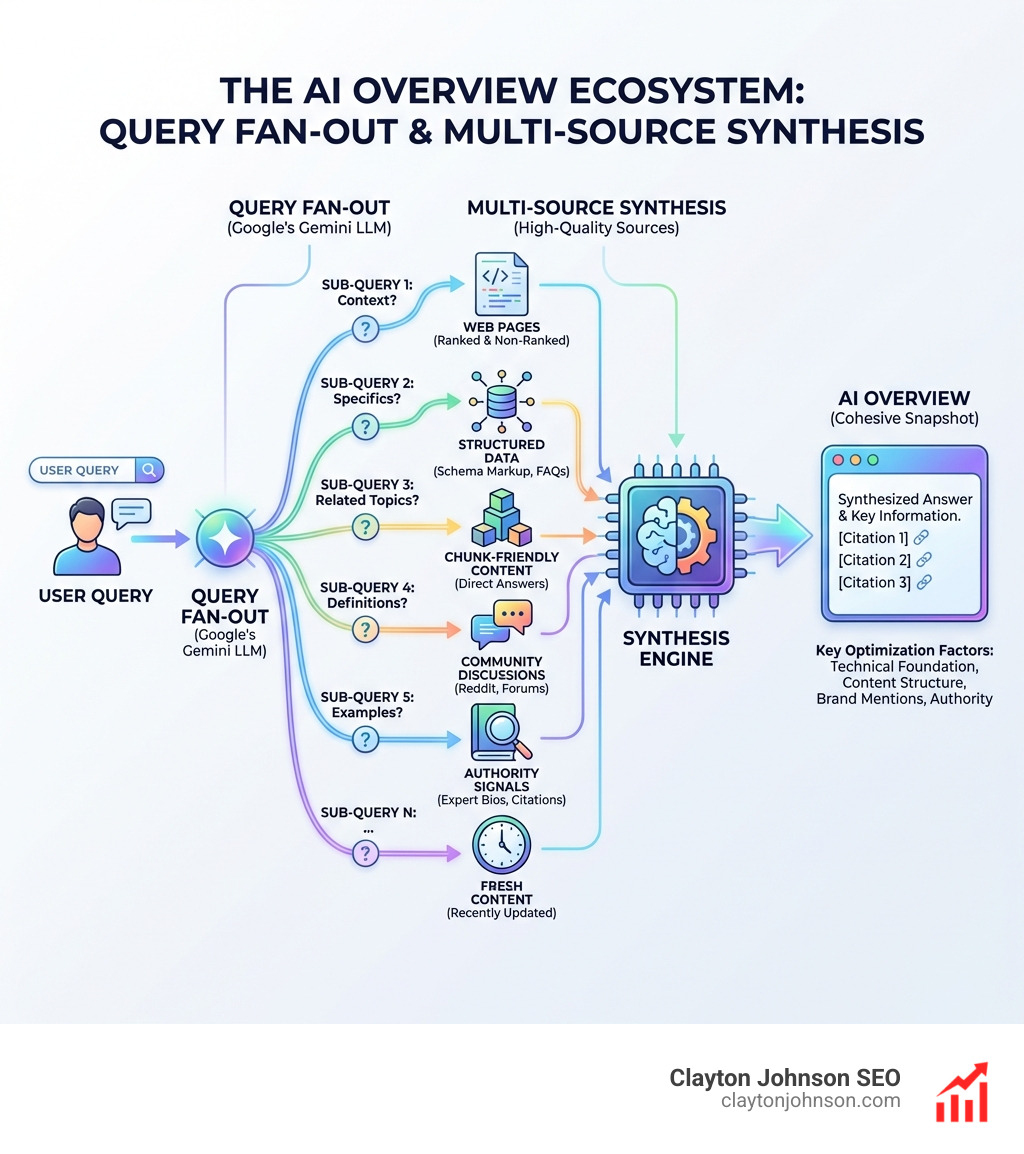
To master how to show up in ai overviews seo, we first have to understand the “brain” behind the curtain. Google AI Overviews are powered by Google’s Gemini large language models. Unlike traditional search, which matches keywords to web pages, AI Overviews use a process called query fan-out.
When you type a question, Google doesn’t just run one search. It breaks your query into 10–20 sub-questions to understand the full context. It then synthesizes information from multiple high-quality sources into a single, cohesive snapshot. According to Google’s official recommendation for AI features, creators should continue following foundational search essentials, but the way information is extracted has fundamentally changed.
AI Overviews primarily target informational intent. While they started appearing for nearly 90% of informational queries, they have recently expanded to cover navigational and commercial searches. AI Overviews trigger for a significant portion of U.S. search queries. If you are providing a service in Minneapolis, Minnesota, your potential customers are seeing these snapshots before they ever see your meta title.
How to Show Up in AI Overviews SEO: The Technical Foundation
Before we get fancy with AI-ready content, we must ensure our technical house is in order. Google’s AI systems rely on the same index as traditional search. If the crawler can’t find you, the AI can’t cite you.
- Crawlability & Indexing: Fix your 4XX errors and ensure your robots.txt isn’t blocking GoogleBot. Interestingly, research shows that read llms.txt instructions is currently unnecessary for Google, as they rely on their standard search index.
- Site Speed & Mobile Optimization: AI Overviews are highly prominent on mobile. A slow-loading site or a poor mobile user experience (UX) will disqualify you from the snapshot.
- HTTPS: Security is a non-negotiable trust signal for AI models.
For those looking to scale these technical requirements, exploring More info about AI SEO services can help automate the auditing process.
How to show up in ai overviews seo with structured data
Structured data (schema markup) acts as a translator for AI. It helps Google understand the “entities” on your page. By using Google’s own structured data testing tool, you can ensure your code is error-free.
We recommend prioritizing these specific schema types:
- FAQPage: Perfect for question-and-answer content.
- HowTo: Ideal for step-by-step tutorials.
- Article: Signals deep informational value.
- Organization & Person: Establishes brand and author authority (E-E-A-T).
How to show up in ai overviews seo using topic clusters
AI models love semantic depth. Instead of targeting a single keyword, we build topic clusters. A topic cluster consists of a “Pillar Page” (a comprehensive guide) and several “Supporting Pages” that dive deep into specific sub-topics.
This structure mirrors the “query fan-out” method Google uses. When Google breaks down a query, it looks for a site that covers the entire “neighborhood” of that topic. Internal linking between these pages signals to Google that you are a topical authority. For a deep dive into building these systems, check out The Ultimate Guide to AI Content Systems.
Content Optimization Strategies for AI Readability
To be cited, your content must be “extractable.” AI models don’t read like humans; they process “tokens.” Princeton GEO research on visibility found that structuring content in a Q&A format improved AI visibility by 25%.
The “Micro-Asset” Strategy:
Treat every paragraph as a self-contained asset. AI systems typically extract content in roughly 800-token chunks. If your answer is buried under 500 words of “fluff” introduction, the AI will skip you.
| Feature | Traditional SEO | Generative Engine Optimization (GEO) |
|---|---|---|
| Primary Goal | Rank #1 in blue links | Become the cited source in the AI snapshot |
| Content Focus | Keyword density & backlinks | Extractability, Evidence, & Direct Answers |
| Structure | Long-form comprehensive text | “Chunk-friendly” blocks & Q&A format |
| Success Metric | Click-Through Rate (CTR) | Share of Voice & Brand Mentions |
Actionable Writing Tips:
- Lead with the Answer: Place a direct, 45–75 word answer in the first 150 words of your page.
- Use Question Headings: Phrase your H2s and H3s as the exact questions your customers are asking.
- Use Lists & Tables: AI models find it much easier to extract data from numbered lists for processes and comparison tables.
- Add Evidence: Statistics, expert quotes, and unique data points increase your “citation-worthiness” by 30-40%.
Building Authority Beyond Backlinks: Mentions and Community
One of the most surprising findings in recent SEO research is that brand mentions correlate 3x more strongly with AI citations (0.664) than traditional backlinks (0.218). Google’s AI looks for “consensus” across the web.
- The Reddit Factor: Reddit appears in a staggering 68% of AI Overview results. Participating authentically in niche subreddits can indirectly lead to AI citations.
- Expert Quotes: Use platforms like HARO, Qwoted, or Featured to get your brand mentioned in high-authority publications.
- Digital PR: Google just recently confirmed that brand mentions in trusted media or business lists impact how AI systems recommend businesses.
A Pew Research Center report on click behavior suggests that while clicks are down, being the “featured” brand in an AI summary builds massive top-of-funnel awareness. This is the new reality of Zero-Click Search strategies.
Tracking and Measuring Your AI Visibility
Since Google Search Console currently provides limited data for AI Overviews, we have to get creative with our measurement.
- Manual Audits: Regularly search for your top 20 target questions in “AI Mode” and log who gets cited.
- Share of Voice: Use tools like SEMrush, which has started tracking site’s visibility in AI Overviews under “SERP features.”
- Citation Density: Track how many links within a single AI Overview point back to your domain.
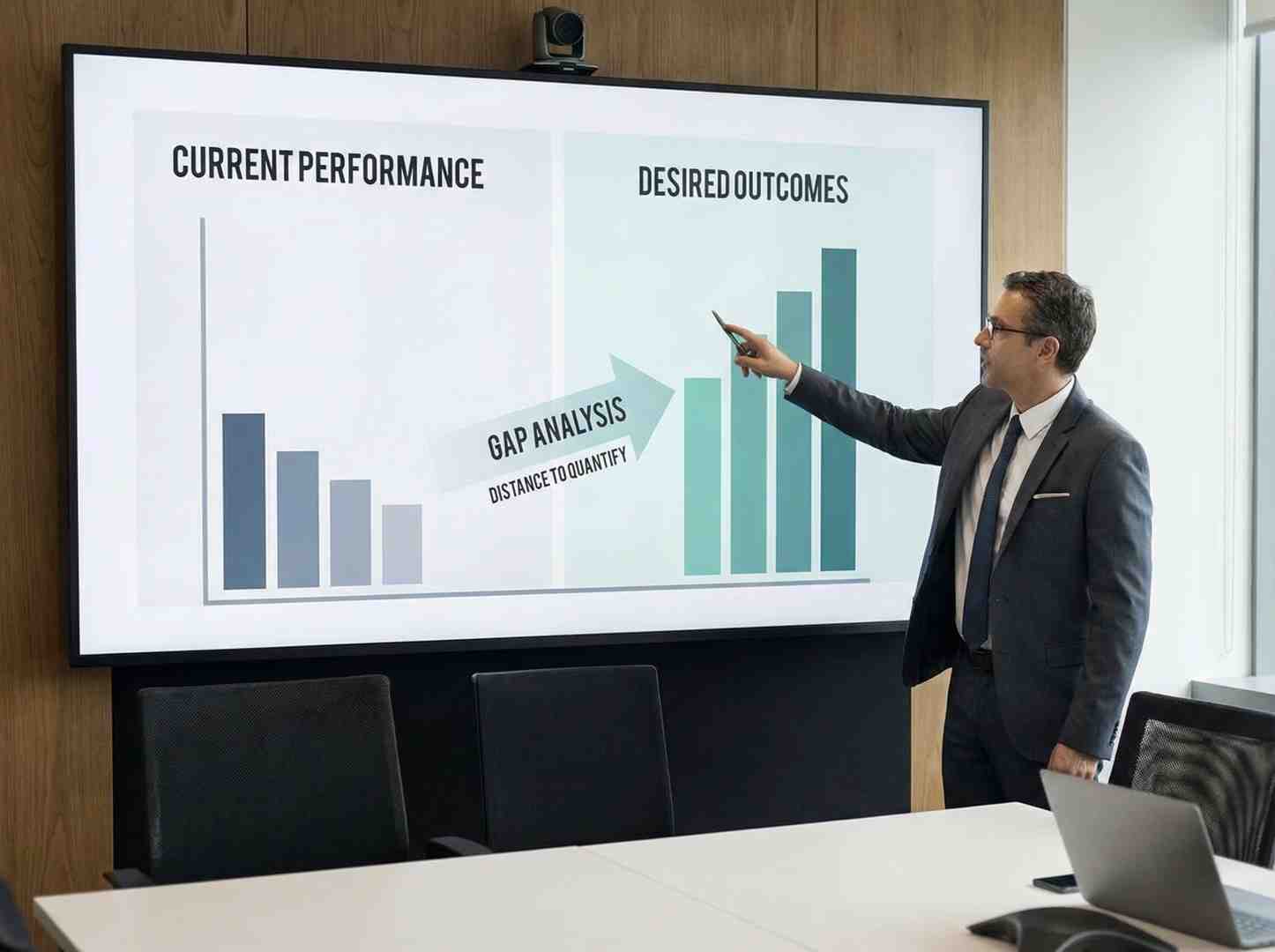
- Competitor Gap Analysis: Identify queries where your competitors are cited, but you are not, and restructure those pages using the “micro-asset” strategy.
Frequently Asked Questions about AI Overviews
Can I opt out of AI Overviews?
Technically, yes, but it’s a “scorched earth” approach. You can use the nosnippet or noindex tags, or block crawlers via robots.txt. However, Google’s official recommendation is to avoid this unless you have a specific legal or copyright reason, as it will likely remove your site from traditional search results as well.
Do I need top organic rankings to appear?
There is a strong correlation—92% of citations come from the top 10. However, Surfer SEO found that 67.82% of pages cited did not rank in the top 10 for that specific keyword. This happens because AI Overviews pull from “deep pages” that might rank for long-tail sub-queries even if they don’t rank for the main head term.
How long does it take to see results?
SEO is still a long game. Most websites see shifts in AI Overview visibility within a few months after implementing structural changes. Content freshness is a major factor here; regularly updated content earns significantly more AI citations (https://www.airops.com/report/how-citations-mentions-impact-visibility-in-ai-search).
Conclusion
The era of “keywords and backlinks” is evolving into the era of “entities and evidence.” Understanding how to show up in ai overviews seo requires a move away from isolated tactics toward a structured growth architecture.
At Demandflow.ai, we believe that most companies don’t lack tactics—they lack the underlying systems to make those tactics scale. By focusing on taxonomy-driven SEO, structured data, and authentic brand mentions, you can turn the “threat” of AI Overviews into a defensible growth channel.
If you’re ready to stop guessing and start building a site that AI models trust, you can Boost your rankings with AI SEO by implementing these frameworks today. Clarity leads to structure, and structure leads to compounding growth. Let’s build your growth infrastructure together.