The Only AI Based Apps You Actually Need

The Rise of AI Based Apps: Your Essential Guide 🚀
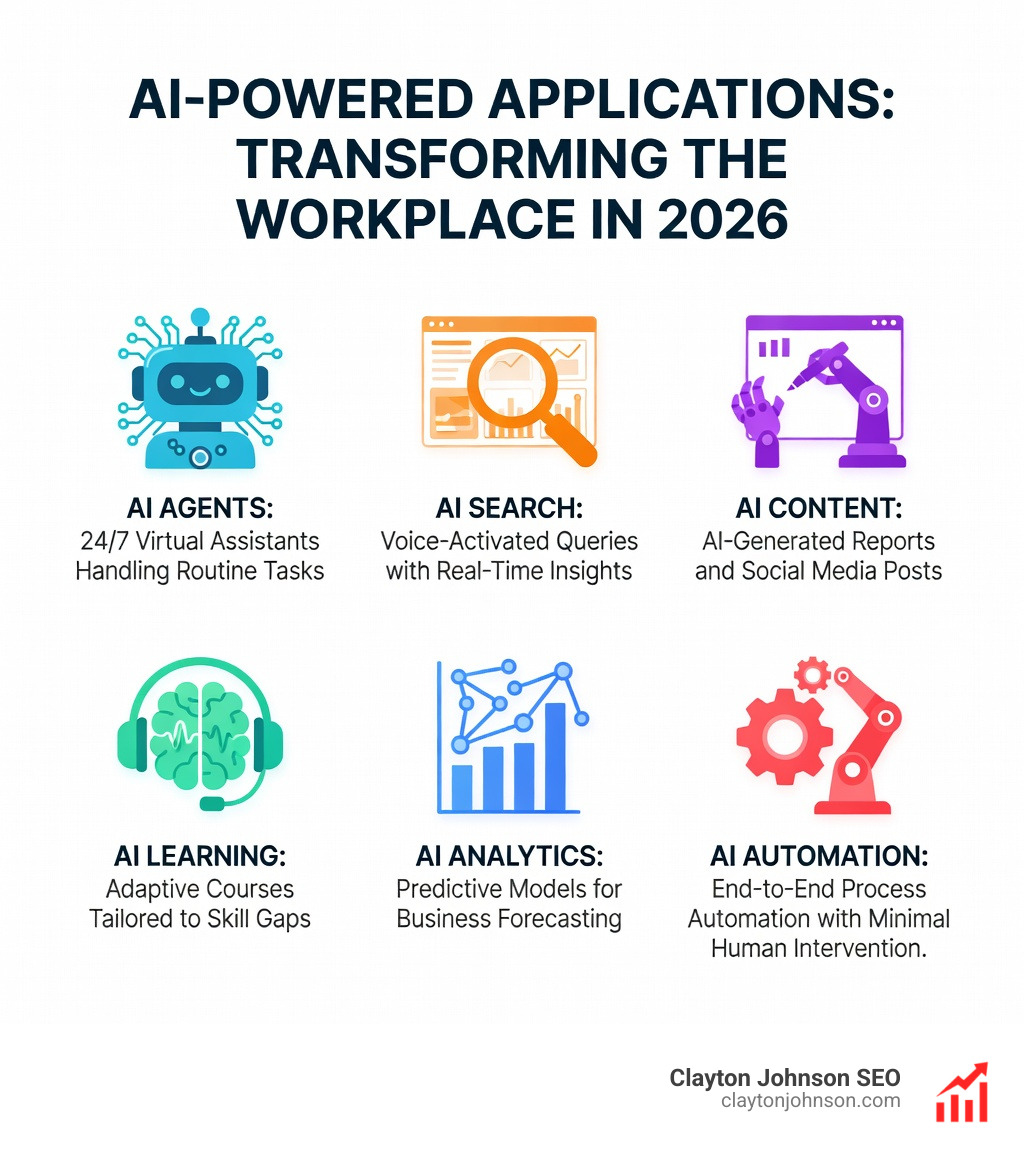
The world of AI based apps has exploded. These applications use artificial intelligence to make tasks easier, faster, and smarter. If you’re wondering what kind of AI apps are out there, here are some key categories:
- General AI Assistants: Like ChatGPT, Gemini, and Claude, they help with writing, research, and coding.
- Creative Tools: Generate images, videos, music, and even voices.
- Productivity & Note-taking: Apps for summarizing meetings, organizing notes, and transforming spoken thoughts.
- App Builders & “Vibe Coding”: Create websites and apps from simple text prompts, even without coding.
- Mobile-Specific Enhancements: Photo and video editing, dating assistants, and personalized recommendations.
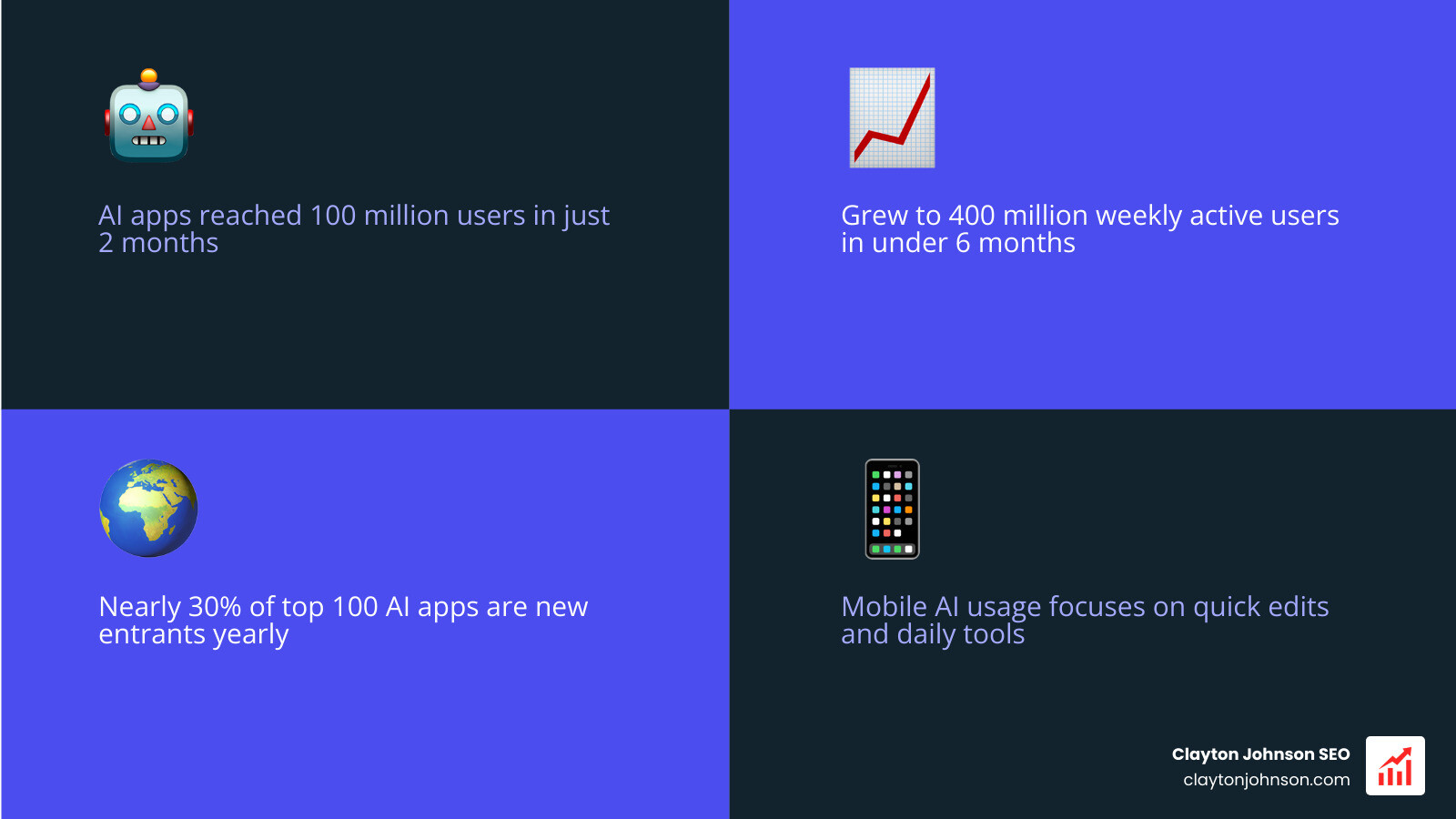
AI isn’t just a buzzword anymore. It’s quickly becoming part of our daily lives, both at work and at home. This shift is happening at an incredible speed. ChatGPT, for example, gained 100 million users in just two months and grew to 400 million weekly active users in less than six months after hitting 200 million. New apps like DeepSeek also show how fast adoption can be, reaching 1 million users in 14 days. Even Grok, a newer entrant, quickly gathered 20 million monthly active users. This rapid growth shows how much people want AI to simplify their digital lives.
I’m Clayton Johnson, and my work at Demandflow.ai focuses on building scalable traffic systems and AI-augmented marketing workflows, especially for AI based apps. I help founders and marketing leaders navigate this fast-changing landscape.
The Global Landscape of AI Based Apps
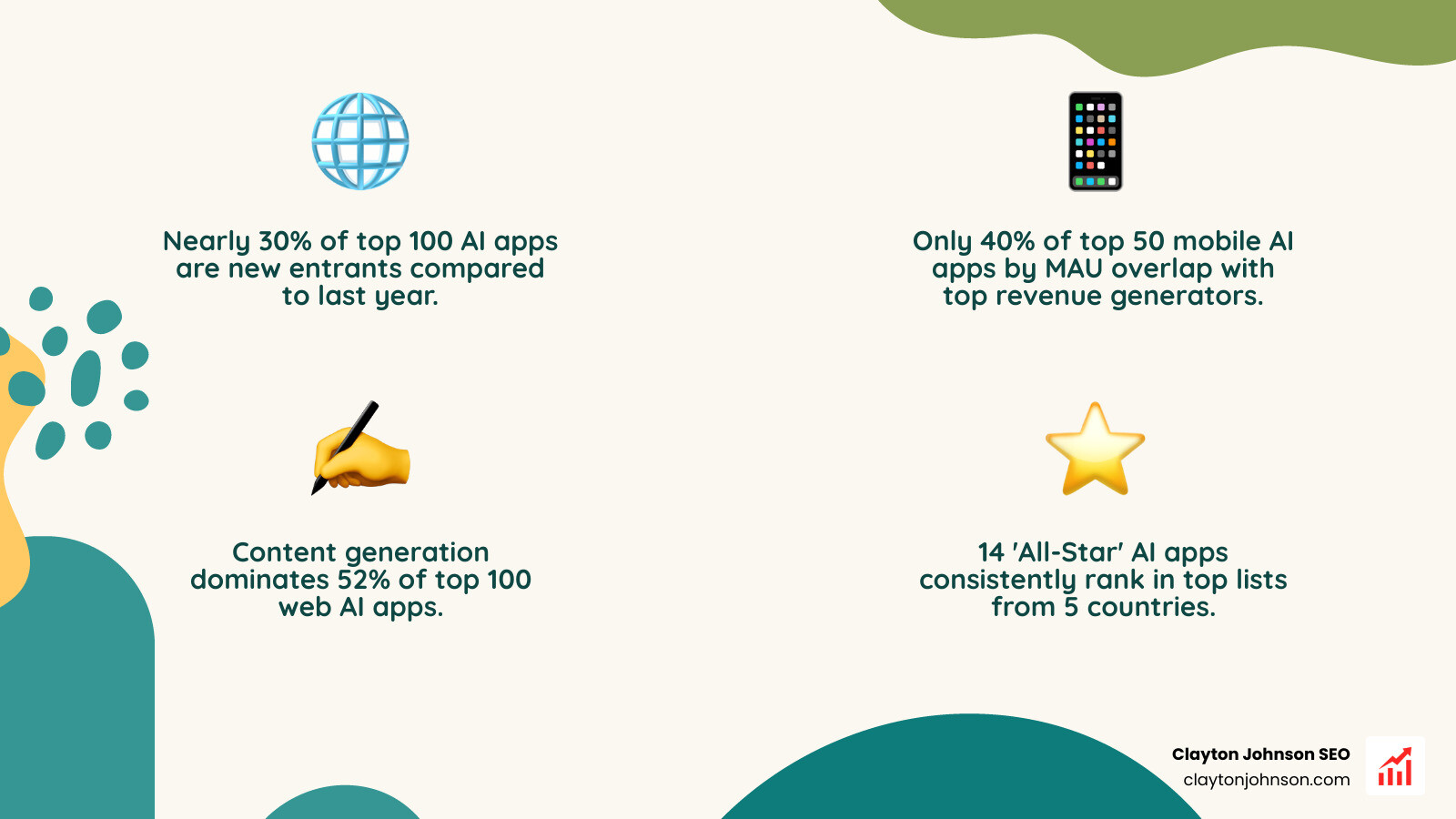
The ecosystem for ai based apps is moving past the “novelty” phase and starting to stabilize. While the initial boom felt like a wild west of new tools, recent data shows that a core group of winners is emerging. However, the market remains incredibly dynamic; nearly 30% of the companies on the top 100 lists are new compared to just a year ago.
When we look at how people use these tools, there is a fascinating split between web and mobile. On the web, users gravitate toward complex, multi-step workflows like content generation and deep research. On mobile, the focus shifts toward quick edits, general assistants, and specialized tools for daily life.
One of the most surprising insights from recent market analysis is the gap between usage and money. Only about 40% of the top 50 mobile apps by monthly active users (MAU) overlap with those generating the most monthly revenue. This tells us that while many people use free assistants, they are willing to open their wallets for highly specialized tools like plant identifiers, nutrition trackers, and language learning platforms.
The All-Stars and the Newcomers
There is a select group we call the “All Stars”—14 companies that have appeared in the top rankings consistently across multiple years. These include giants like ChatGPT, Character.ai, and Quillbot. Interestingly, these All Stars originate from only five countries: the U.S., UK, Australia, China, and France.

Content generation and editing still dominate the web list, making up 52% of the top 100 apps. However, the modality is shifting. While image generation used to be the primary focus, it now represents only 41% of the top content sites as video and music tools gain massive traction.
Top General Assistants and Search Engines
The race to be your primary “thinking partner” is the most competitive segment of the ai based apps market. While ChatGPT remains the undisputed leader, reaching 400 million weekly active users, the gap is narrowing as competitors find their niche.
- ChatGPT: It maintains dominance by constantly shipping new features. Milestones like GPT-4o (multimodal capabilities) and Advanced Voice Mode have turned it from a curiosity into a daily staple. About 175 million of its users are now on the mobile app, which sees 5% to 15% growth every single month.
- Claude: Developed by Anthropic, Claude has surged into the top five. It is beloved by developers for its clean code and structured reasoning. Its Artifacts feature allows users to visualize code and create simple apps in real-time, making it a direct threat to GPTs.
- Perplexity: This is the “search engine of the future.” Perplexity focuses on delivering cited, real-time answers. It actually edges out ChatGPT in visit duration, with users staying on the site for over seven minutes on average, suggesting deeper engagement with the information provided.
- Grok: Elon Musk’s Grok has seen a meteoric rise, jumping to 20 million monthly active users. It positions itself as a “truth-seeking,” rebellious assistant with real-time access to X (formerly Twitter) data.
- Gemini: Google’s Gemini is a powerhouse on Android, where it represents nearly 90% of its user base. It is deeply integrated into the Google ecosystem, making it a natural choice for those using Google Workspace.
- Meta AI: While it ranks around #46 on the web, Meta’s integration of AI into WhatsApp and Instagram gives it a massive potential reach, though growth has been slightly more muted compared to the specialized assistants.
Specialized Tools for Work and Play
Beyond the general chatbots, a new wave of ai based apps is tackling specific problems. These tools are becoming daily staples because they save hours of manual labor.
Essential Productivity AI Based Apps
Productivity is the second-largest new category in the AI rankings. We are seeing tools that don’t just “chat” but actually “do” the work.
- NotebookLM: This Google tool has become a sleeper hit. NotebookLM allows you to ground the AI in your specific sources (PDFs, notes, docs), ensuring it doesn’t hallucinate and only provides answers based on your data.
- Otter: For anyone in meetings, Otter is essential. It transcribes in real-time, highlights key points, and provides searchable summaries. It has become so popular that it ranks high on revenue lists even when usage dips.
- AudioPen: This is a dictation-centric tool that transforms rambling thoughts into clear, concise notes. AudioPen is perfect for those who think better out loud.
- Gamma: Creating presentations used to take all day. Gamma generates entire slide decks, documents, and even simple webpages from a single prompt.
- Recorder: If you have a Google Pixel device, the default Recorder app is a hidden gem. It offers instant, searchable transcriptions that stay entirely on your device.
Creative and Media AI Based Apps
The creative space is where the “magic” of AI is most visible.
- Suno and Udio: These apps have revolutionized music. Suno rose from #36 to #5 in just six months, allowing anyone to create full songs with lyrics and vocals from a text prompt.
- Luma and KlingAI: AI video is the new frontier. Luma and KlingAI are leading the way in generating realistic video clips with impressive camera control.
- Midjourney: Still the king of high-end AI art, Midjourney continues to dominate Discord traffic, ranking #1 in invite traffic across all servers on the platform.
- ElevenLabs: For voice synthesis, ElevenLabs is the gold standard. Its ability to clone voices and create natural-sounding narration is used by everyone from YouTubers to major corporations.
The Rise of Vibe Coding and App Builders
One of the most exciting trends we’ve tracked is “vibe coding.” This refers to non-developers building functional software using only natural language. It’s changing who can be a creator.
- Cursor: This agentic IDE acts as a co-pilot for developers, handling bug checks and autocomplete. Cursor now serves hundreds of thousands of developers and debuted at #41 on the web rankings.
- Lovable and Bolt: These platforms are the leaders in text-to-web app generation. Lovable moved from the “Brink List” to #22 in record time, while Bolt reported $20 million in annualized revenue within its first two months.
- Softr and Bubble: For those who want more control without writing code, Softr and Bubble remain the top choices. Softr is known for its speed in building internal tools, while Bubble is the go-to for complex MVPs.

Mobile-First Trends and Global Players
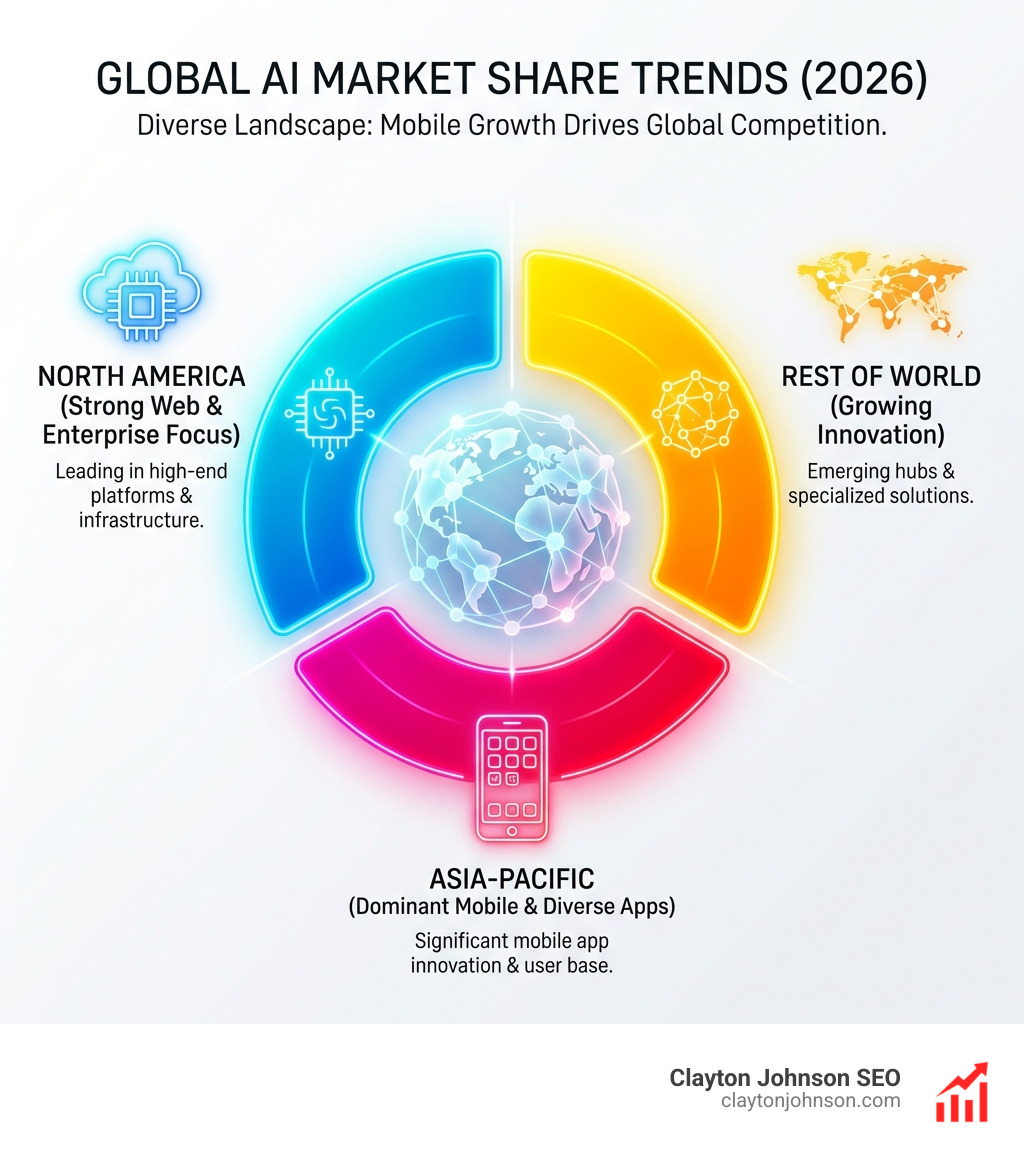
The mobile market for ai based apps is significantly more diverse than the web. While 50% of top web products are U.S.-based, less than a third of top mobile apps originate stateside.
China is a major player here. Apps like DeepSeek and Doubao (from Bytedance) have seen explosive global growth. DeepSeek, in particular, shocked the industry by offering performance comparable to OpenAI but at a fraction of the training cost—reportedly just $5.6 million.
Mobile users also love “hybrid” tools. Meitu alone produced five entries on the top mobile list, proving that legacy photo editing tools that pivot to AI-first can maintain their dominance. We are also seeing new categories like “aesthetics and dating,” where apps like RIZZ help users navigate conversation screenshots and dating profiles.
Frequently Asked Questions
Which tools are best for productivity?
For deep research and document analysis, NotebookLM is unmatched. For meetings and voice-to-text, Otter and AudioPen are the top choices. If you need to build presentations quickly, Gamma is the standard.
How do global apps compare?
Western apps like ChatGPT and Claude lead in general assistance and coding. However, Chinese-developed apps like DeepSeek and KlingAI are currently leading in cost-efficiency and high-end video generation.
What are the top mobile options?
ChatGPT and Gemini are the most used assistants on mobile. For creative editing, Meitu and Bytedance’s Hypic are the most popular.
Conclusion
The landscape of ai based apps is no longer just about chatbots; it’s about specialized tools that provide real leverage. Whether you are a developer using Cursor to ship code faster or a business leader using Otter to streamline operations, the right AI stack is a competitive necessity.
At Clayton Johnson SEO and Demandflow.ai, we believe that tactics are only half the battle. Real success comes from structured growth architecture. By combining actionable strategic frameworks with AI-augmented workflows, we help companies build compounding inbound demand that lasts.
If you are ready to stop chasing the latest AI hype and start building a structured growth engine, explore our SEO strategy and content architecture services or dive into our framework library to find the model that fits your business. Clarity leads to structure, and structure leads to compounding growth. Let’s build your growth infrastructure together.