The Ultimate Guide to Dominating Search with AI Strategies

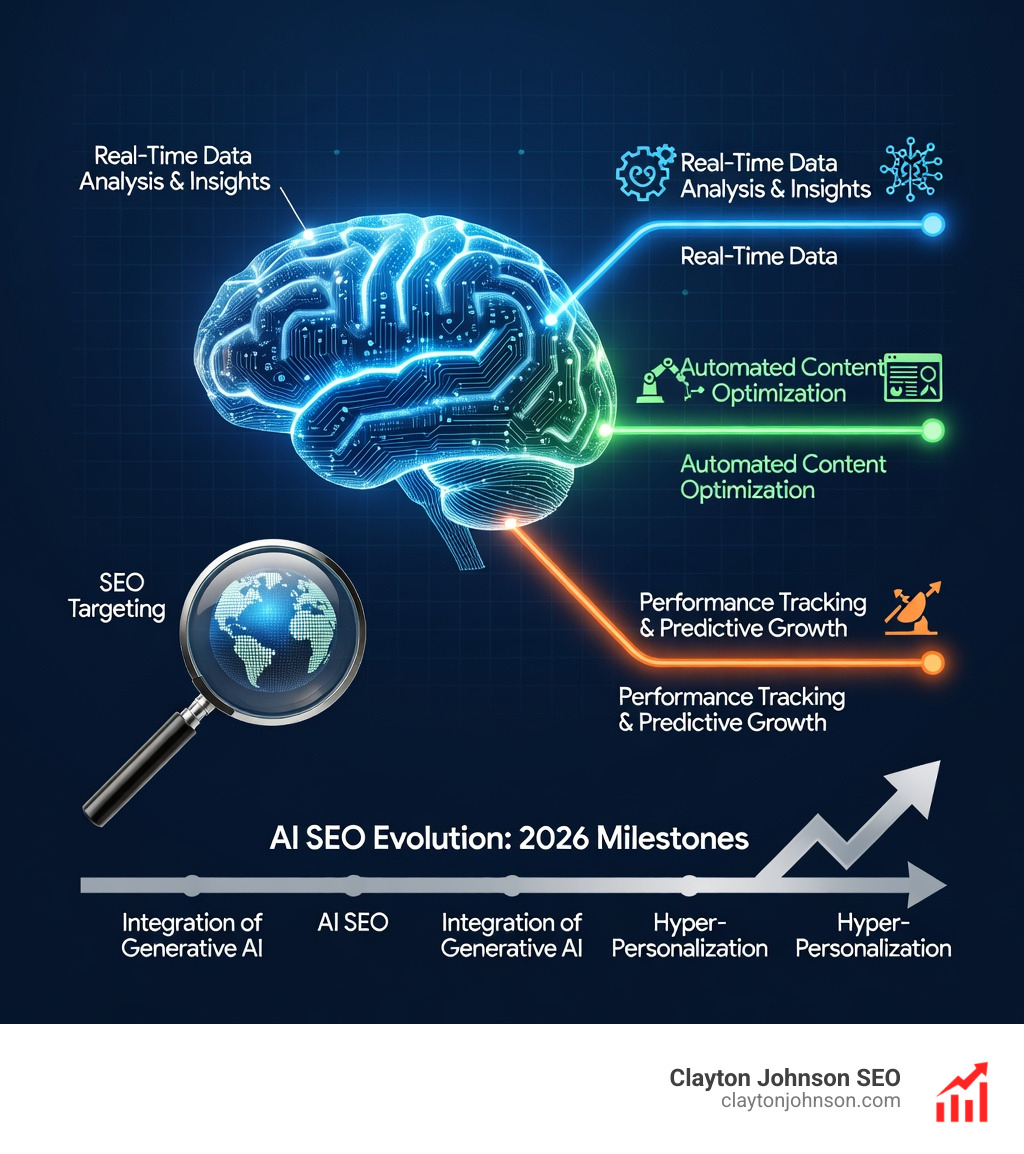
Search Has Changed — Here’s Why Your Strategy Needs to Change With It
An AI powered SEO strategy is the practice of using artificial intelligence, machine learning, and large language models (LLMs) to research, create, optimize, and monitor content — so your brand gets found not just in Google’s blue links, but inside AI-generated answers on ChatGPT, Gemini, and Perplexity.
Here’s the fast answer if you need it now:
| Step | What to Do |
|---|---|
| 🔍 Keyword Research | Use AI to find long-tail, intent-based queries — not just search volume |
| ✍️ Content Creation | Write answer-first content structured for LLM extraction |
| 🏗️ Technical Foundation | Add schema markup, configure llms.txt, allow AI crawlers |
| 📣 Authority Building | Earn citations across third-party sources, reviews, and communities |
| 📊 Performance Monitoring | Track AI visibility, citation frequency, and brand mentions — not just rankings |
The numbers tell the story fast. Google processes 8.5 billion searches every single day. About 50% of those searches already surface an AI-generated summary — and that figure is expected to climb past 75% by 2028.
That’s not a future problem. It’s a right-now problem.
Consumers are already defaulting to AI-powered search for buying decisions. McKinsey data shows 44% of AI search users call it their primary source of insight — beating traditional search, brand websites, and review platforms combined. And brands that aren’t showing up inside these AI answers? They risk losing 20–50% of their traditional search traffic.
The shift isn’t from SEO to something else. It’s from optimizing for links to optimizing for answers. That’s a meaningful difference — and it changes nearly everything about how you build, structure, and distribute content.
I’m Clayton Johnson, an SEO strategist and growth architect who specializes in building scalable traffic systems and AI powered SEO strategies that turn fragmented marketing efforts into structured, compounding demand engines. The frameworks in this guide are drawn directly from the systems I build for founders and marketing leaders navigating this exact transition.
Understanding the Shift to an AI Powered SEO Strategy
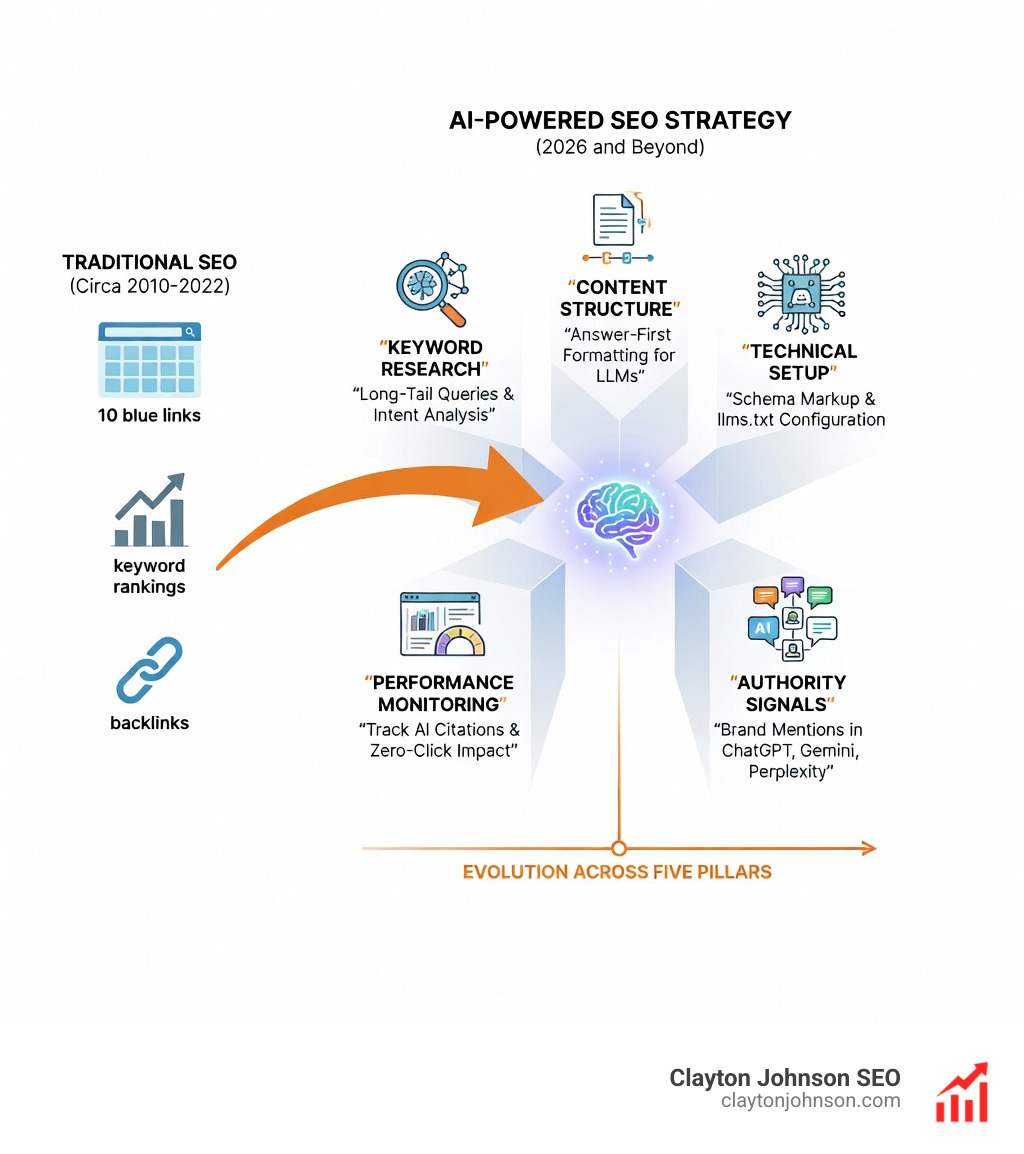
For decades, the goal of Search Engine Optimization was simple: rank in the “10 blue links.” We focused on keyword density, backlink counts, and meta tags. But as Google has become so ingrained in our lives that “Googling” is now a verb, the technology behind the search bar has evolved into a sophisticated neural network.
The transition from traditional methods to an ai powered seo strategy is marked by a shift from keyword matching to intent understanding. In the old days, a search for “best coffee Minneapolis” looked for pages containing those exact words. Today, systems like RankBrain and Gemini use machine learning to interpret the context of the user’s life, their previous behavior, and the semantic relationships between entities.
The truth about AI SEO and why it matters is that search engines are no longer just indexers; they are answer engines. They use predictive analytics to guess what you want to find before you even finish typing. This means we have to stop optimizing for strings of text and start optimizing for concepts and data-driven insights.
| Feature | Traditional SEO | AI-Powered SEO |
|---|---|---|
| Primary Goal | Rank #1 for a specific keyword | Be the cited source in an AI answer |
| Content Focus | Keyword density and length | Semantic depth and entity relationships |
| Technical Priority | Crawlability and sitemaps | Schema markup and AI bot accessibility |
| User Intent | Categorized (Navigational, Informational) | Predictive and multi-step journey mapping |
| Success Metric | Organic Traffic / Rankings | Citation Frequency / Share of Voice |
Core Pillars of Generative Engine Optimization (GEO)
If SEO was about search engines, GEO (Generative Engine Optimization) is about the models that power them. Google’s Search Generative Experience (SGE) is the most visible example. Instead of clicking a link, users get a synthesized summary. If your brand isn’t cited in that summary, you effectively don’t exist for that user.
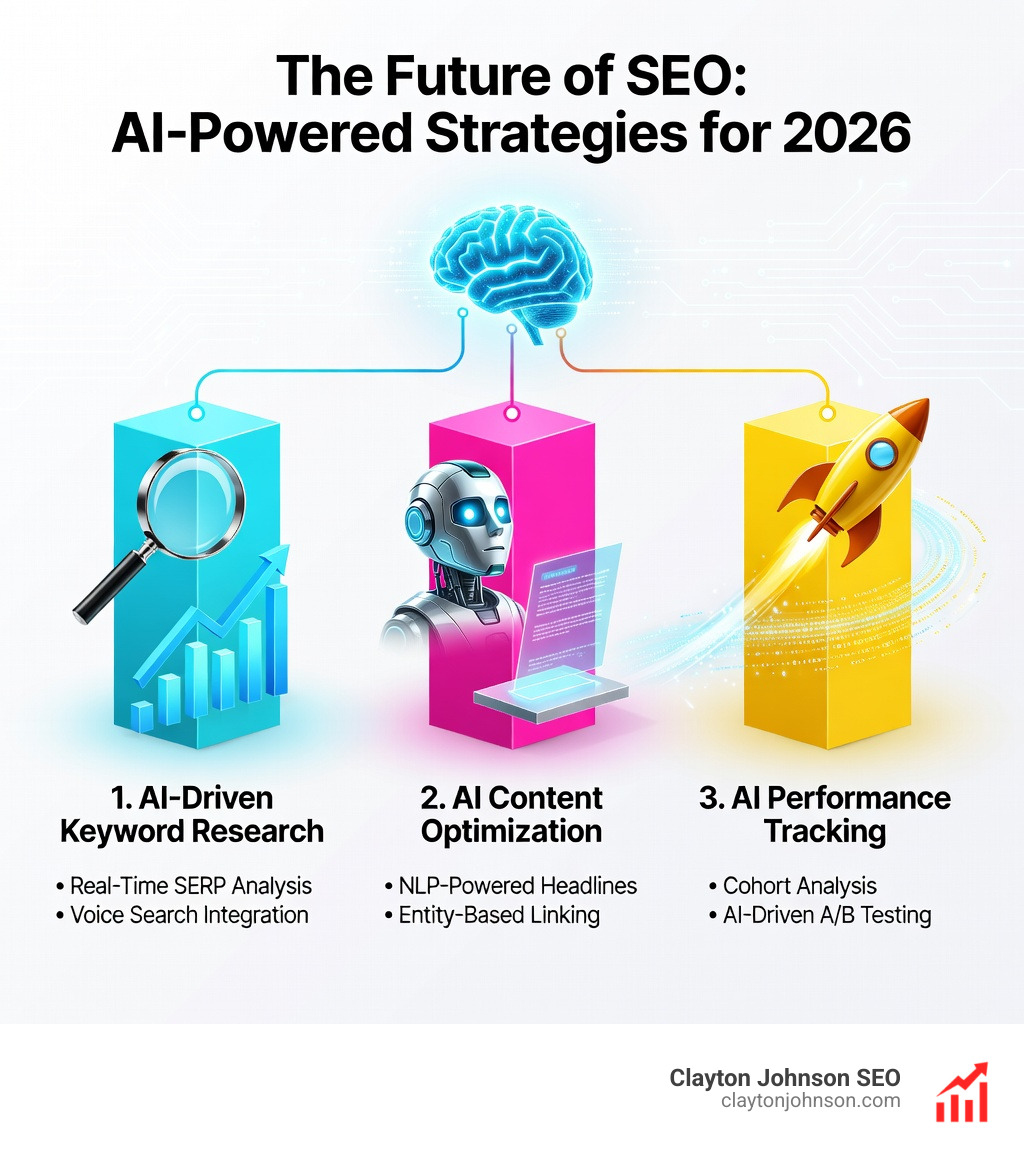
To win in this era, we focus on the ultimate guide to generative engine optimization and search techniques. This involves three critical shifts:
- Brand Citations and LLM Visibility: Large Language Models (LLMs) like Perplexity and Gemini don’t just pull from your website. They pull from Reddit, Wikipedia, and “Best Of” lists. Your ai powered seo strategy must include seeding your brand name across these trusted third-party surfaces.
- Entity Recognition: Search engines now view your brand as an “entity” with specific attributes. We use structured data to define these relationships clearly.
- Zero-Click Optimization: We must accept that many users will never leave the search page. Our goal is to ensure that even in a zero-click search, the user sees our brand as the definitive authority.
One practical step we recommend is the llms.txt configuration. This is a burgeoning standard that provides a markdown file specifically for AI crawlers to help them understand your site’s most important context without getting lost in the weeds of your code.
Transforming Keyword Research with an AI Powered SEO Strategy
Traditional keyword research is dying. Chasing high-volume, short-tail keywords is a recipe for getting buried by AI summaries. Instead, we are winning the AI search era with intent-based keyword research.
AI models are exceptionally good at parsing long-tail, conversational queries. Instead of “CRM software,” users are asking, “What is the best CRM for a real estate team of five that integrates with QuickBooks?”
We use tools like AnswerThePublic to find these conversational prompts. Then, we organize them into pillar pages and topic clusters. By building deep topical authority rather than individual page rankings, we signal to AI models that we are the “expert” entity on a subject, making us much more likely to be cited in a synthesized answer.
Building an AI-Driven Content and Authority Ecosystem
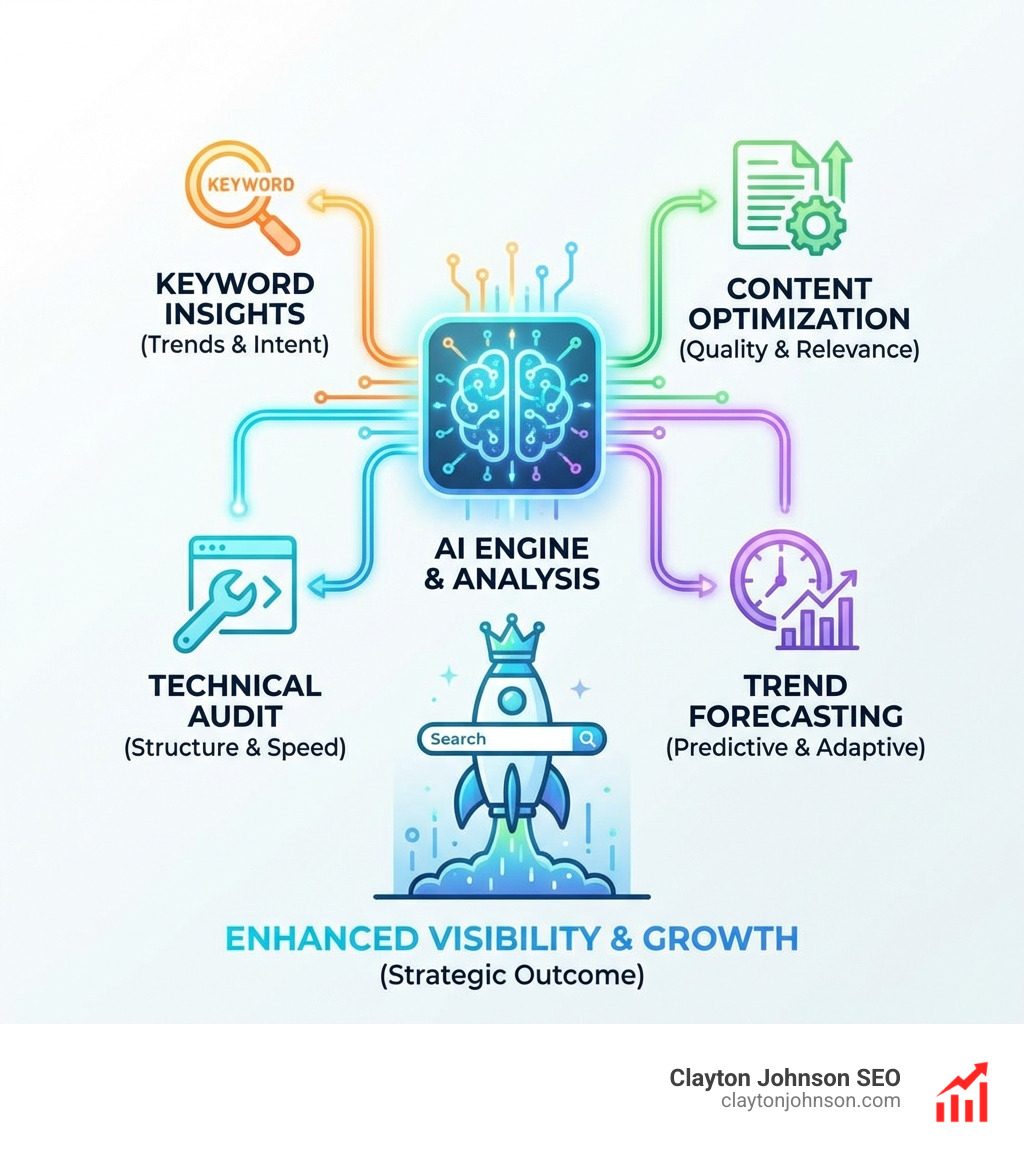
Content in an ai powered seo strategy isn’t just about writing; it’s about engineering. Google’s E-E-A-T guidelines (Experience, Expertise, Authoritativeness, and Trustworthiness) are the North Star. AI models are trained to look for these signals to determine which sources are “cite-worthy.”
We implement an answer-first methodology. This means every section of your content should start with a clear, 2-3 sentence answer to the primary question. This makes it incredibly easy for an LLM to extract your content and credit you as the source.
We also leverage advanced models like Claude to help refine our messaging. By using Anthropic Claude SEO strategies, we can analyze competitor gaps and ensure our content provides the unique, original research that AI systems crave. If you’re just repeating what’s already on the web, an AI has no reason to cite you—it already has that information.
Pro tip: Don’t forget visual search. Google Lens is increasingly used by consumers to find products and information. Ensuring your images have descriptive, entity-rich alt text and metadata is a crucial, often overlooked part of a modern authority ecosystem.
Scaling Execution with an AI Powered SEO Strategy
The beauty of AI is that it allows us to do more with less. Beyond content, AI SEO tools automate your workflow by handling the tedious tasks that used to take hours.
- Meta Tag Optimization: Use AI to generate hundreds of unique, click-worthy title tags and meta descriptions in seconds.
- Internal Linking: AI can analyze your entire site architecture to suggest the most relevant internal links, boosting your topical authority.
- Technical Audits: The top automated SEO audit tools can flag broken links, slow pages, and schema errors in real-time.
Platforms like Frase and ChatGPT act as strategic assistants. They don’t replace the human editor; they provide the “first draft” and the data analysis that allows the human to focus on high-level strategy and brand voice.
Monitoring Performance in the Zero-Click Era

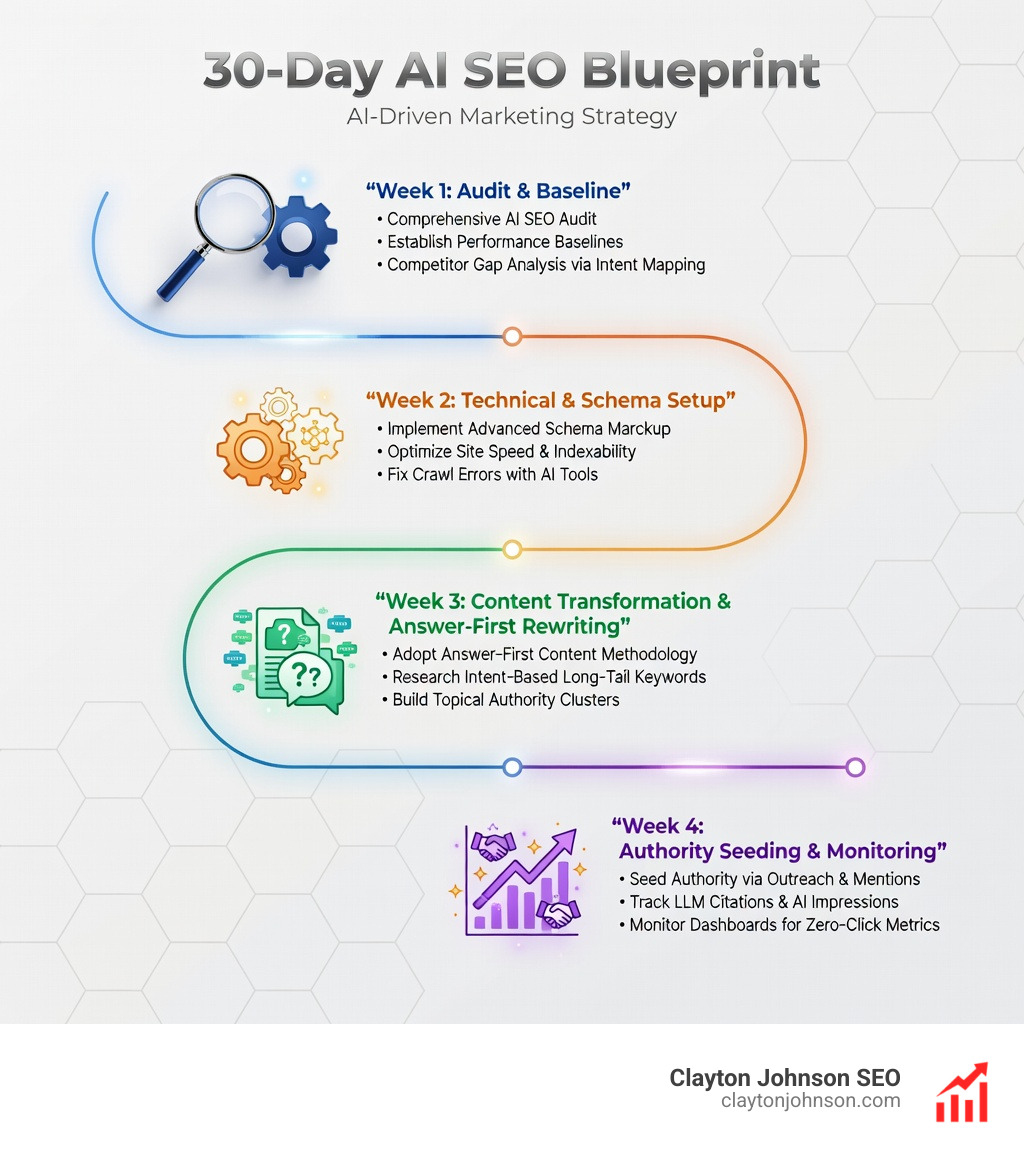
If users aren’t clicking through to your site, how do you know you’re winning? Traditional metrics like “sessions” and “rankings” are becoming less reliable. We need to look at ai-driven seo audits that track:
- AI Impression Share: How often does your brand appear in an AI Overview or LLM response?
- Citation Frequency: How many times do Perplexity or Gemini link to you as a source?
- Sentiment Analysis: Is the AI talking about your brand in a positive, neutral, or negative way?
We still use Google Search Console to monitor technical health, but we’ve shifted our focus toward zero-click search performance. We want to see our brand mentions increasing across the web, even if the traffic doesn’t show up in Google Analytics right away.
Technical health remains the foundation. If your Core Web Vitals are poor, AI crawlers will struggle to parse your site, leading to lower visibility. AI doesn’t just want good content; it wants accessible content.
Frequently Asked Questions about AI SEO
Will SEO still exist in 10 years?
Absolutely, but it won’t look like it does today. SEO is evolving into AEO (Answer Engine Optimization). As long as people are looking for information, there will be a need to optimize that information for discovery. The future of SEO belongs to those who adapt to being the “trusted source” for AI models.
How do I avoid AI content hallucinations?
The key is “Human-in-the-Loop.” You should never publish AI-generated content without a thorough editorial QA and subject matter expert (SME) review. AI is a great researcher and drafter, but it lacks the nuance, empathy, and fact-checking capabilities of a human expert.
What is the ROI of AI-powered SEO tools?
The ROI comes from three areas: massive efficiency gains (cutting manual tasks by 30-50%), the ability to scale content production without a proportional increase in headcount, and long-term revenue uplift from being the dominant authority in AI-generated answers. By reducing your CPA (Cost Per Acquisition) through automation, you create a more sustainable growth engine.
Conclusion
At the end of the day, an ai powered seo strategy isn’t about chasing the latest shiny tool. It’s about building a structured growth architecture that leverages technology to create real value for users.
At Demandflow, we believe that most companies don’t lack tactics—they lack structure. We help founders and marketing leaders move beyond fragmented efforts into a growth operating system that combines taxonomy-driven SEO, competitive positioning, and AI-enhanced execution.
The era of the “10 blue links” is fading. The era of the “Answer” is here. If you’re ready to stop guessing and start building a compounding growth engine, let’s look at how a structured Growth System can future-proof your brand.
Clarity leads to structure. Structure leads to leverage. Leverage leads to compounding growth. Let’s get to work.