Why Most Brands Fail to Scale (And How to Build One That Does)
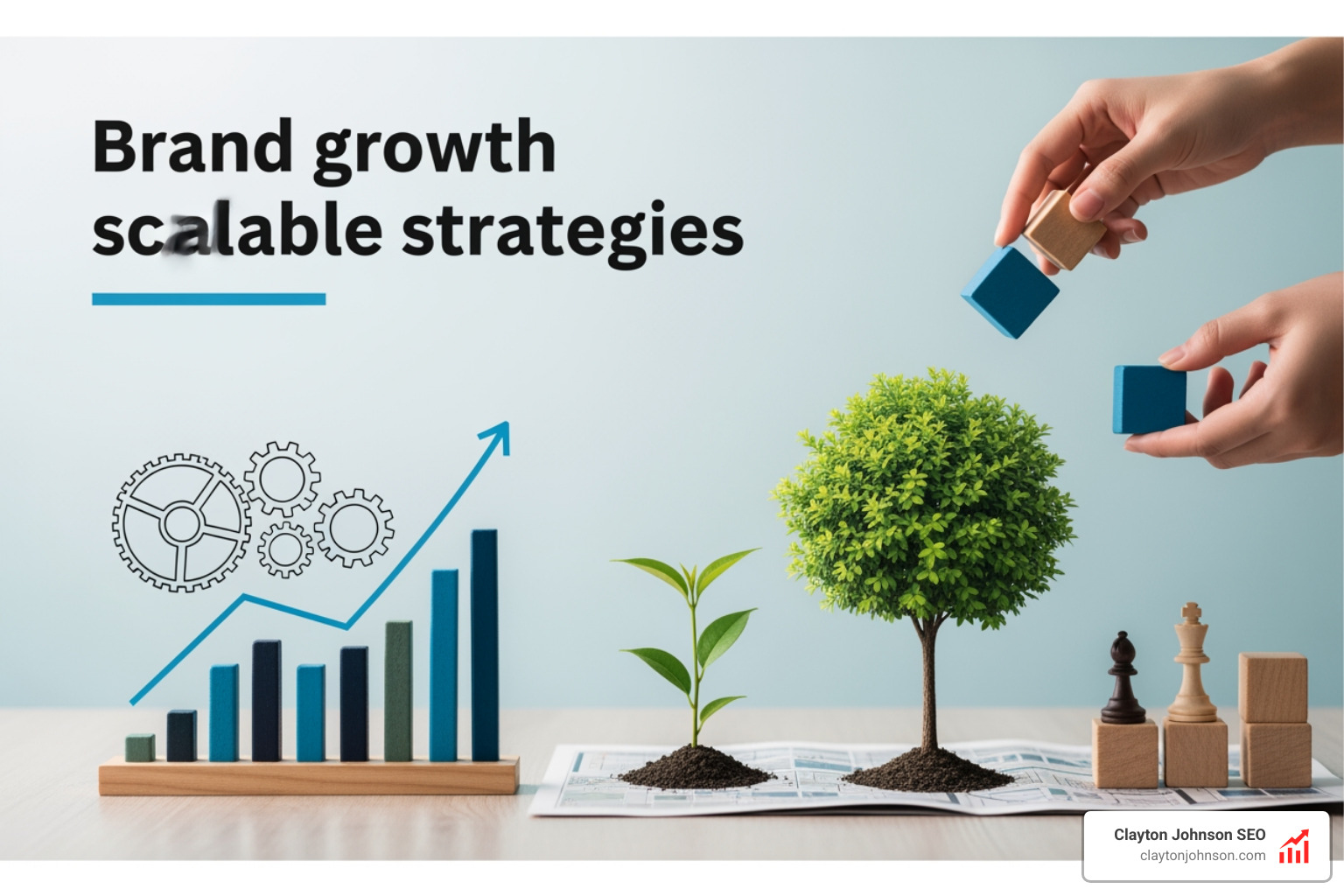
Brand growth scalable strategies are the structured systems and frameworks that allow companies to amplify market presence, increase penetration, and build compounding equity—without proportionally increasing costs or diluting brand identity. Here’s what separates scalable brand growth from simple expansion:
- Scalable growth increases revenue faster than operating expenses through leverage and systems
- Simple expansion grows revenue and costs proportionally, creating a “growth treadmill”
- Brand scaling focuses on mental availability, distinctive assets, and market penetration
- Business scaling emphasizes unit economics, automation, and operational efficiency
Most startups fall into two traps: they either perfect brand identity too early—locking themselves into inflexible positioning before validating product-market fit—or they avoid brand commitment entirely, resulting in vague messaging that confuses customers and weakens market presence. As companies grow, new hires, markets, and products introduce inconsistencies. Without a strategic foundation, brand becomes an obstacle instead of an accelerant.
The research is clear: brands with documented strategy are three times more likely to hit growth targets. Organizations that allocate roughly 60% of marketing budgets to long-term brand building (versus 40% to short-term activation) achieve higher valuations and sustained growth. Yet 70% of scaling brands struggle with message dilution, departmental silos, and reactive execution.
True brand scaling isn’t about spending more on marketing. It’s about building structured growth architecture—a system of distinctive assets, mental availability, physical distribution, and compounding community effects. This architecture transforms brand from a cost center into a strategic moat.
I’m Clayton Johnson, and I’ve spent years helping founders engineer scalable traffic systems and structured strategic frameworks. Throughout my work with Brand growth scalable strategies, I’ve seen that the companies achieving compounding growth aren’t chasing tactics—they’re building infrastructure that scales. Let’s explore how to construct that foundation.
Defining Brand Growth Scalable Strategies vs. Simple Expansion
To win in the 2020s, we have to stop confusing “getting bigger” with “scaling.” If you double your revenue but your expenses also double, you haven’t scaled; you’ve just inflated. True brand growth scalable strategies rely on operating leverage—the ability to grow revenue significantly faster than operating expenses (Opex).
In scientific research on how brands grow, growth isn’t a mystery; it’s a forensic application of market science. For a brand to be truly scalable, it needs to hit specific financial benchmarks before pouring gasoline on the fire. We look for:
| Metric | Target for Scaling |
|---|---|
| Gross Margin | 70%+ (SaaS) or 40–60%+ (Productized Services) |
| CAC Payback | < 12 months for B2B |
| LTV/CAC Ratio | 3:1 or better |
| Net Revenue Retention (NRR) | 110%+ in recurring models |
Scaling is about building a “factory” that runs itself. Expansion is just running faster on a treadmill. If your unit economics aren’t solid, scaling will only amplify your losses.
The Difference Between Scaling and Inflation
Many startups fall into the “inflation trap.” This happens when a brand relies exclusively on performance marketing—buying clicks on Meta or Google—to drive sales. While this works in the short term, it creates a “zero-sum game” where you are constantly renting your audience.
If 80% of your traffic comes from generic search terms rather than your brand name, you don’t own a brand; you own a receipt from Google. Real scaling requires building long-term equity. This is where more info about paid advertising services comes in—not as a standalone crutch, but as a “sales activation” tool that supports a larger brand-building strategy. Inflation is temporary; equity is compounding.
The Architecture of a Scalable Brand Core
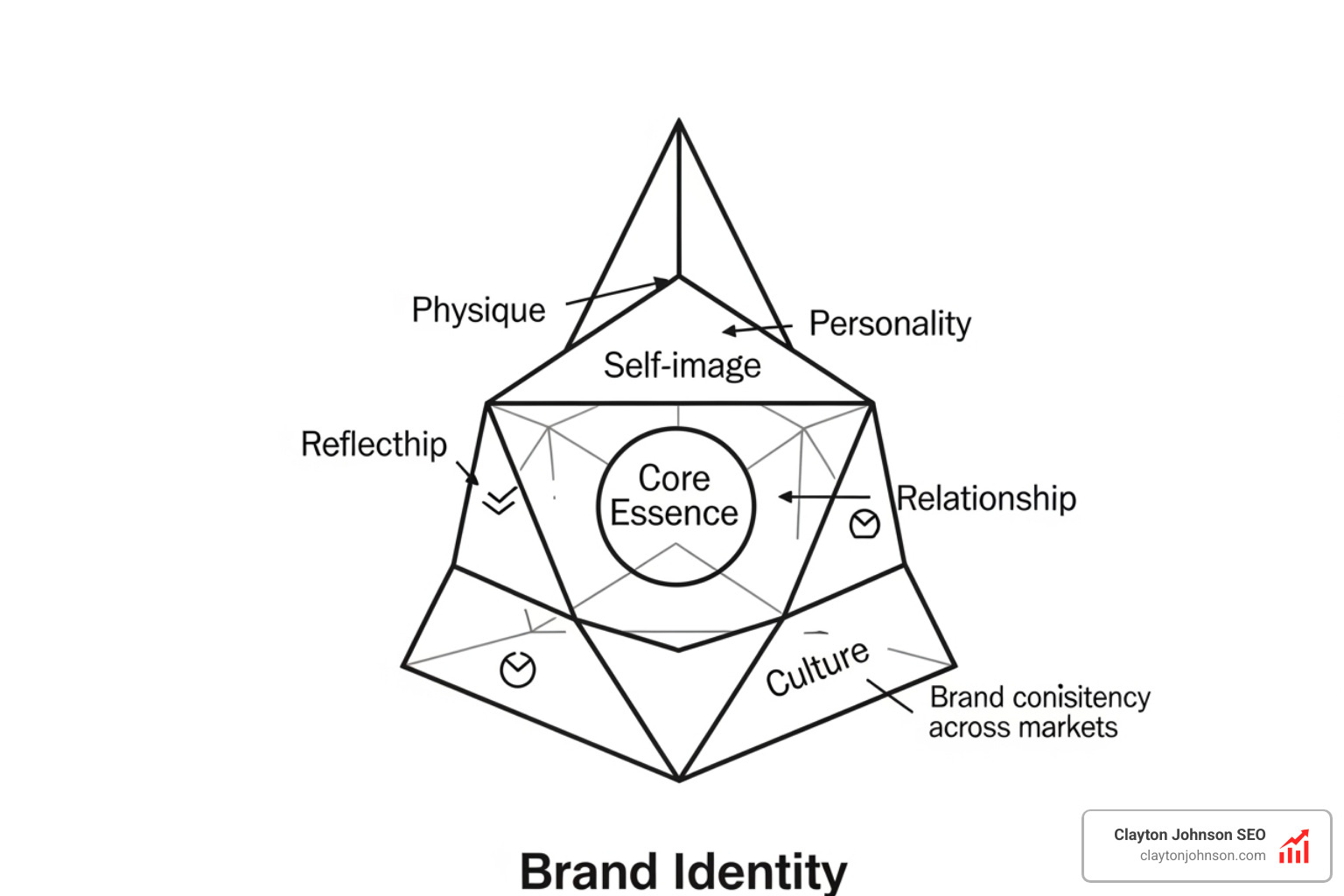
Before we can scale, we need a “North Star.” A scalable brand core consists of your purpose, vision, values, and—most importantly—your distinctiveness.
According to Deloitte Insights on brand purpose, high-growth brands are 2.5 times more likely to have a clear brand purpose. This isn’t just “fluff”—purpose allows you to maintain price premiums even during inflationary periods because customers aren’t just buying a product; they’re buying into a mission.
Building a Messaging Framework for Brand Growth Scalable Strategies
Scaling often leads to message dilution. As you hire more people and enter more markets, the “whisper down the lane” effect kicks in. Suddenly, your sales team is saying one thing, and your ads are saying another.
To prevent this, we implement a centralized messaging framework that includes:
- Buyer Personas: Deep dives into who your “light buyers” are (those who only buy occasionally but drive the most growth).
- Voice Guidelines: How you sound (e.g., authoritative but warm).
- Proof Points: The data-backed reasons why your brand delivers on its promise.
This framework is the backbone of more info about SEO content marketing. When your content architecture is built on a scalable messaging framework, every blog post and landing page reinforces the same core identity, creating a unified authority-building ecosystem.
Distinctive Brand Assets (DBAs) as Growth Levers
In a world of “visual maximalism,” being different is good, but being distinctive is better. Distinctive Brand Assets (DBAs) are sensory cues—colors, shapes, fonts, or sounds—that trigger immediate brand recall without the customer needing to see your logo. Think of the Nike Swoosh or the specific shade of Tiffany Blue.
Research on scaling equity shows that DBAs act as “mental shortcuts.” When a consumer is in a buying situation (a Category Entry Point), you want your DBAs to flash in their mind. If you change your logo or visual style every six months, you are effectively erasing your brand’s “save game” progress in the consumer’s brain.
Scientific Pillars of Market Penetration and Salience
Scaling isn’t about getting your existing customers to buy more; it’s about getting new customers to buy for the first time. This is known as market penetration.
The Ehrenberg-Bass Institute research highlights the “Law of Double Jeopardy”: brands with smaller market shares have fewer buyers, and those buyers are slightly less loyal. To scale, you must prioritize “light buyers.” These are people who might only think of your brand once a year. By linking your brand to multiple Category Entry Points (CEPs)—the specific situations that trigger a need—you increase your mental availability.
The 60/40 Rule for Brand Growth Scalable Strategies
One of the most important findings in marketing effectiveness comes from IPA research on marketing effectiveness. To achieve optimal growth, we recommend the 60/40 rule:
- 60% of budget goes to long-term brand building (creating emotional connections and broad reach).
- 40% of budget goes to short-term sales activation (direct response ads, offers, and “buy now” prompts).
If you over-invest in sales activation, you’ll see a quick spike in revenue, but you’ll hit a ceiling because you aren’t building the “mental runway” needed for future sales. Brand building lowers your price elasticity, meaning you can raise prices without losing all your customers.
Physical Availability and Friction Removal
Mental availability is useless if the customer can’t actually find or buy your product. This is physical availability. We focus on removing every possible hurdle in the path to purchase.
In the digital world, this means more info about conversion optimization. Did you know that 70% of consumers say page load speed affects their willingness to buy? If your site takes more than five seconds to load, you are literally throwing away 85% of your potential scaling. Friction is the enemy of growth. Whether it’s social commerce integrations or a one-click checkout, making the transaction effortless is a core component of brand growth scalable strategies.
Operationalizing Growth: The Tech Stack and Community Flywheel
In the 2020s, the “funnel” is dying. Long live the flywheel. The community flywheel model suggests that instead of just pushing messages at people, we should build environments where customers interact with each other and the brand.
McKinsey insights on the community flywheel show that top-performing brands often have over 75% of their content generated by users (UGC). This creates a self-reinforcing loop where your community does the heavy lifting of brand awareness for you.
Leveraging AI and Automation for Future-Proofing
We don’t use AI just to write “more content.” We use it to build structured growth architecture. This includes:
- Agentic AI: Autonomous tools that manage data flows and customer interactions.
- Hyper-personalization: Using more info about email marketing automation to deliver the right message at the exact right moment in the customer journey.
- Dynamic Content: Websites that change based on the visitor’s previous behavior or source.
By leveraging automation, brands report a 50% increase in speed and a 30% boost in interaction rates. It’s about doing more with less, which is the definition of scaling.
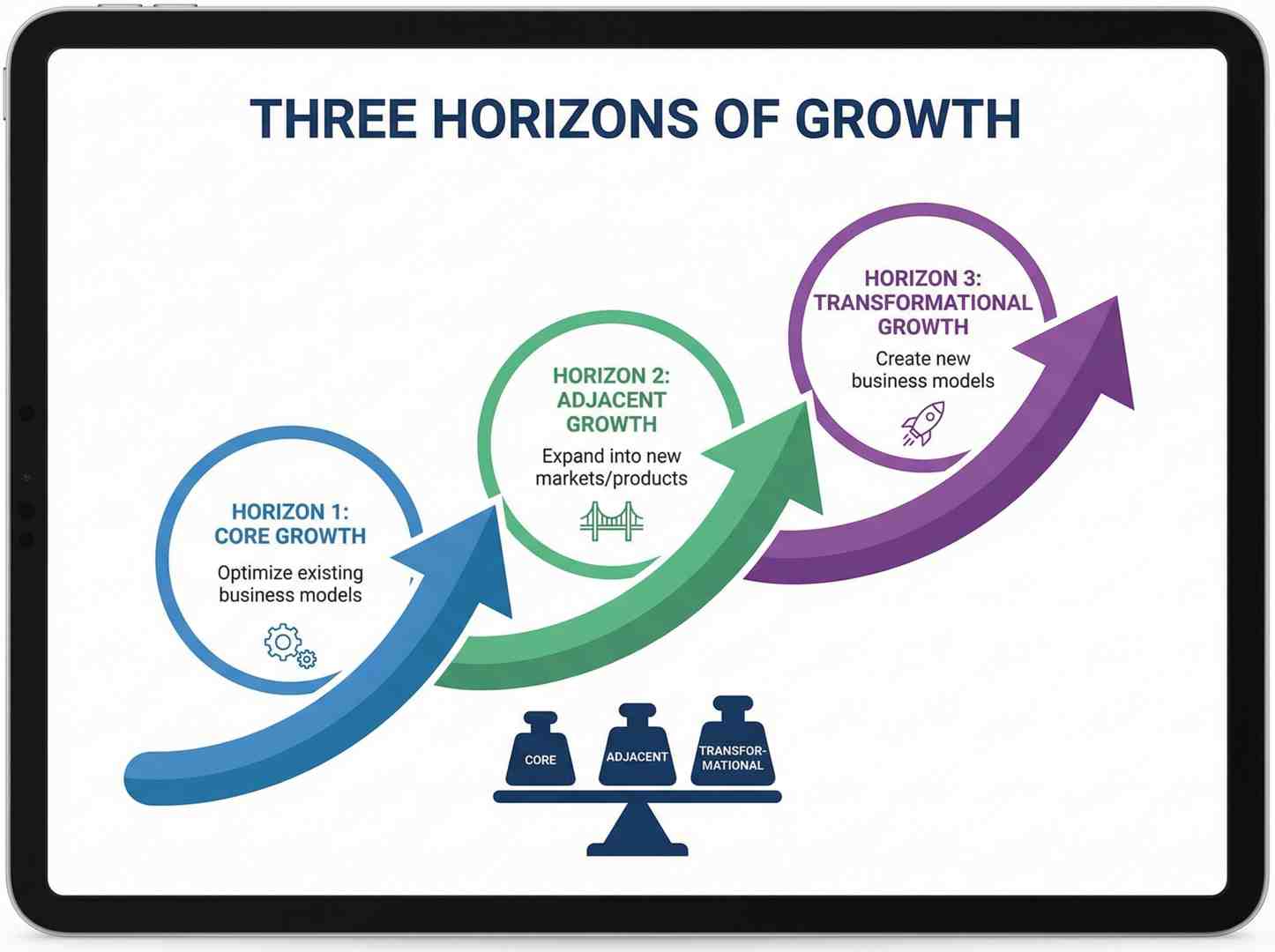
The NOW-NEW-NEXT Framework for Innovation
To sustain growth, we use the NOW-NEW-NEXT framework found in HBR on growth systems:
- NOW: Focus on winning in your current granular niches (e.g., specific cities or micro-segments).
- NEW: Launching new products or services that expand your category definition (Hero products).
- NEXT: Exploring entirely new business models that might even disrupt your current core.
This requires agile squads—cross-functional teams that can test and learn in bi-weekly sprints rather than waiting for annual planning cycles.
Measuring and Sustaining Long-Term Brand Equity
You can’t manage what you don’t measure. But if you’re only looking at ROAS (Return on Ad Spend), you’re missing the big picture.
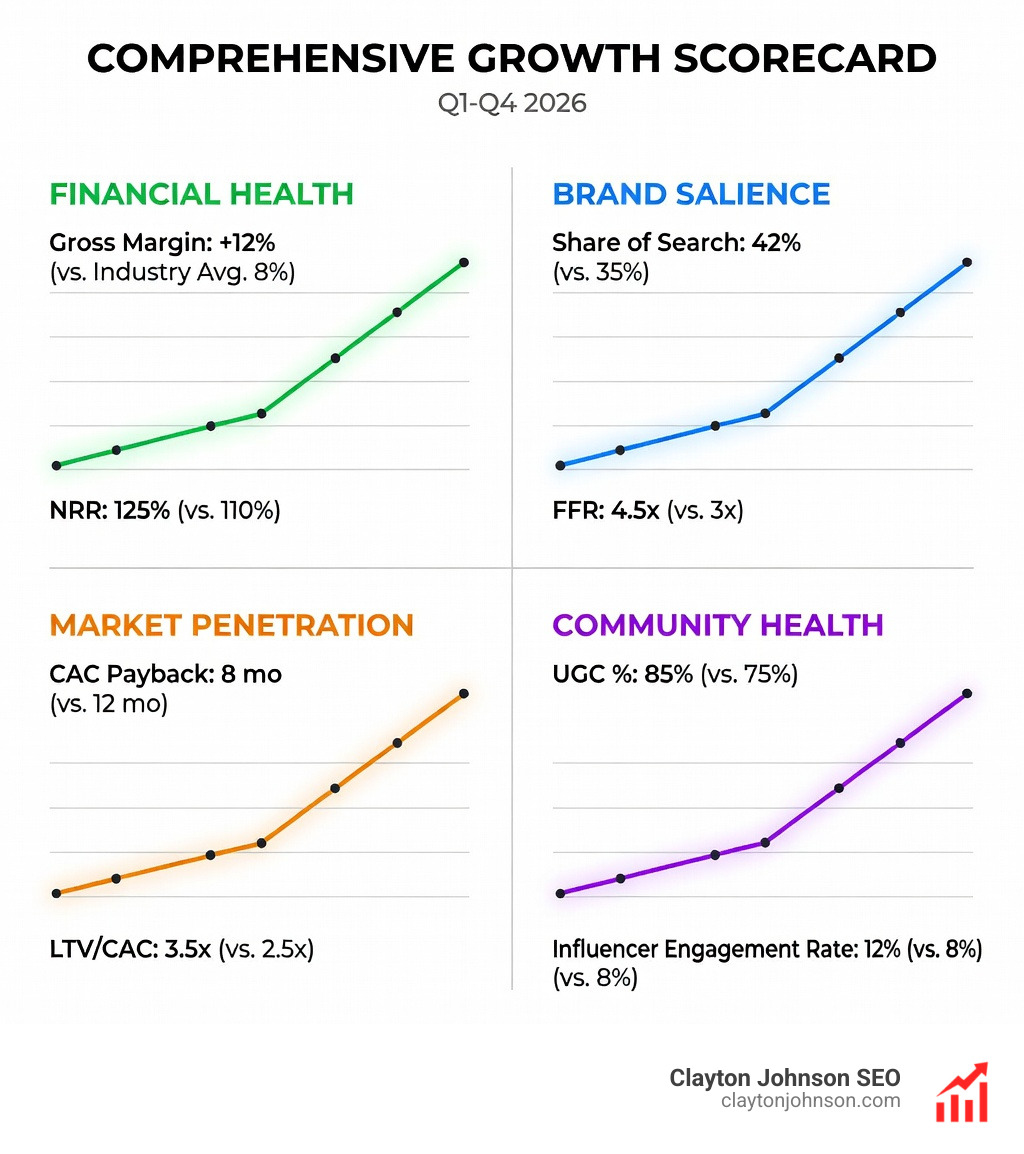
We look at more info about analytics and data through a more sophisticated lens:
- Share of Search: Your brand’s search volume divided by the total search volume of your top three competitors. This is a leading indicator of market share.
- First-Fast Response (FFR): How quickly people associate your brand with a specific need. FFR is 4x more predictive of sales than simple “awareness.”
- Net Revenue Retention (NRR): Ensuring your existing customers are staying and growing with you.
Overcoming Common Scaling Challenges
The biggest challenge in scaling is often internal. As we grow, we create silos. Marketing doesn’t talk to Sales; Sales doesn’t talk to Product. This leads to message fragmentation.
Lessons from the apparel industry show that the most successful scale-ups maintain “operational efficiency” by keeping the brand core at the center of every decision. When a brand scales, it must remain agile enough to make strategic pivots without losing its soul. If you feel your message is getting diluted, it’s time for a “forensic intervention” to realign your teams with the brand core.
Frequently Asked Questions about Brand Scaling
What is the biggest mistake startups make when scaling a brand?
The most common error is over-committing to a rigid brand identity before they’ve truly validated product-market fit. They spend months on a logo and a “vibe” only to realize the market wants something else. The second biggest mistake is relying purely on performance marketing. This creates a “growth treadmill” where you stop growing the second you stop paying for ads. You must build mental availability alongside your paid campaigns.
How do you maintain brand consistency across multiple regions?
Consistency is achieved through a “Freedom within a Framework” approach. We provide a documented brand core and centralized messaging tools (the framework), but we empower local teams to adapt the tactics to their specific cultural nuances (the freedom). If you try to control every single social media post from a central office, you’ll be too slow to scale.
When should a company shift from niche marketing to broad reach?
You should shift when you see your customer acquisition costs (CAC) starting to plateau or rise within your initial niche. This is a sign that you’ve reached the “growth ceiling” of that segment. To continue scaling, you must appeal to “unconverted” light buyers. As research by Byron Sharp suggests, brands that stay in a narrow niche eventually run out of room to grow.
Conclusion
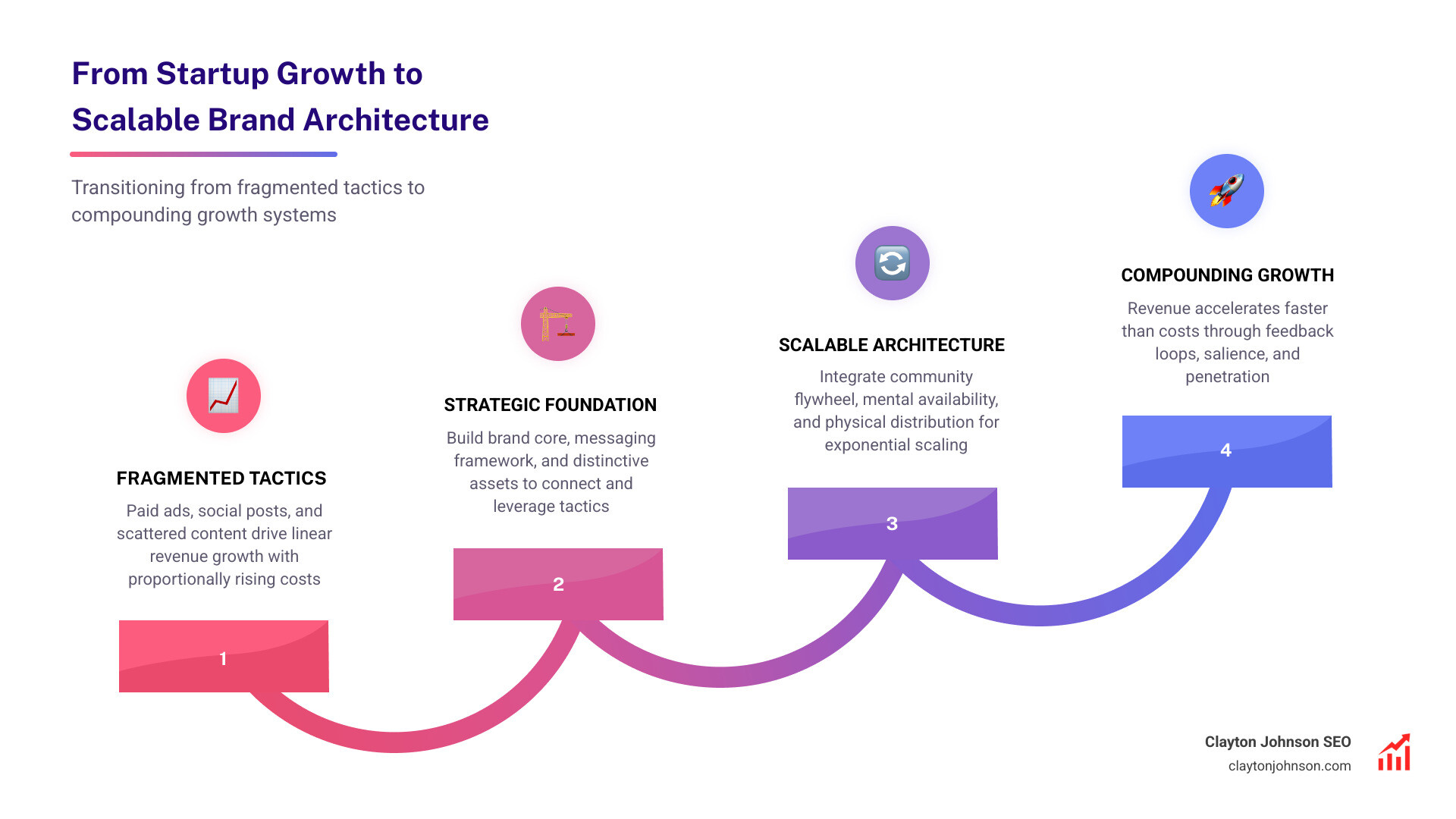
At the end of the day, brand growth scalable strategies aren’t about magic—they are about architecture. Most companies don’t lack the will to grow; they lack the structured growth architecture to sustain it. By moving from fragmented tactics to a system of compounding growth, you transform your brand into a market leader.
At Demandflow, we believe in the progression of Clarity → Structure → Leverage → Compounding Growth. Whether you are looking for more info about working with Clayton Johnson or you’re ready to implement a 90-day scaling plan, the goal is the same: build a brand that grows because it is designed to.
Stop guessing and start scaling with intention. Build the infrastructure today that your future self will thank you for tomorrow.