What Is a Paid Advertising Strategy (And Why It Matters for Growth)
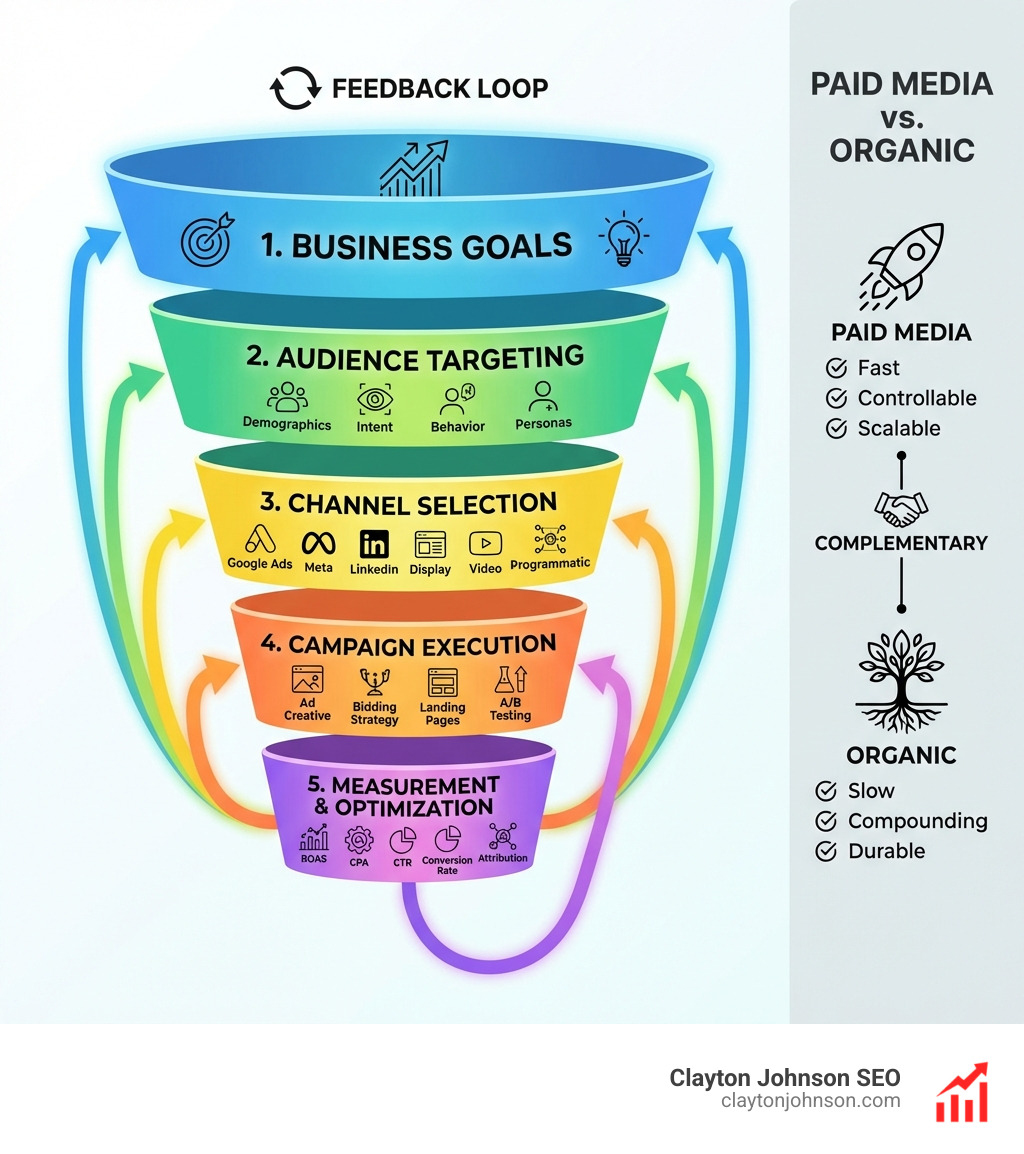
A Paid Advertising Strategy is a structured plan for using paid media channels — like Google Ads, Meta, and LinkedIn — to reach your target audience, drive traffic, and generate measurable business outcomes.
Here’s a quick-reference breakdown for founders and marketing leaders:
| Element | What It Means |
|---|---|
| Goal | Define what you want: leads, sales, awareness, or traffic |
| Audience | Who you’re targeting — demographics, intent, behavior |
| Channel | Where you advertise — search, social, display, video |
| Budget | How much you spend and how you allocate it |
| Bid Strategy | How you compete in real-time ad auctions |
| Creative | The ad copy, visuals, and offer that drive action |
| Measurement | KPIs like ROAS, CPA, CTR, and conversion rate |
| Optimization | Continuous testing and refinement to improve ROI |
Most businesses underestimate how competitive the digital landscape has become. Organic reach on social media has declined sharply. The top slot on a Google search results page isn’t always an organic result anymore. And with millions of pieces of content published every day, attention is scarce.
That’s where a paid advertising strategy comes in.
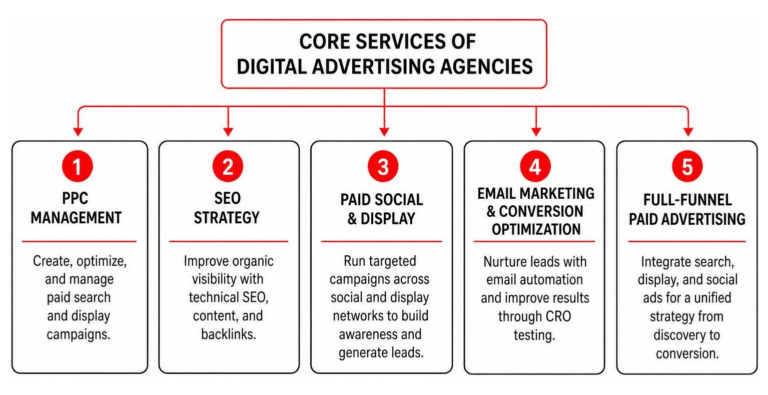
Paid advertising — also called biddable media or PPC (pay-per-click) — lets you buy visibility in front of the right audience right now. Unlike SEO, which builds momentum over months, paid ads can generate traffic and conversions almost immediately.
But here’s the catch: spending money on ads without a strategy is just burning budget.
The average PPC campaign returns $2 for every $1 spent — but only when it’s correctly optimized. Without a clear plan, most of that spend evaporates on irrelevant clicks, misaligned audiences, and weak landing pages.
Done right, paid advertising gives you:
- Speed — traffic and data from day one
- Control — over who sees your ads, when, and where
- Measurability — every click, conversion, and dollar tracked
- Scalability — double down on what works
This guide walks you through every layer of a high-performance paid advertising strategy — from goal-setting and channel selection to creative execution, optimization, and integration with your organic growth engine.
I’m Clayton Johnson, an SEO strategist and growth operator who builds scalable traffic systems and AI-augmented marketing workflows across 50+ business models — including paid advertising strategy as a core growth lever. The frameworks in this guide are drawn from real campaign architecture, not theory.
Paid Advertising Strategy vocabulary:
Foundations of a High-Performance Paid Advertising Strategy

Building a successful Paid Advertising Strategy isn’t about throwing money at the wall to see what sticks. It requires a “structured growth architecture.” We often see companies that have plenty of tactics but no underlying system. To win in today’s market, you need to treat your ad spend like a high-yield investment portfolio.
The first thing to realize is that the number one slot on Google search results is not always an organic result. In many competitive niches, you have to “pay to play” just to appear above the fold. This makes paid advertising services a necessary component of a diversified traffic engine.
We recommend following the 80/20 rule for budget allocation: spend 80% of your budget on proven, high-performing keywords and audiences, and reserve 20% for testing new channels, creatives, or experimental targeting. This ensures stability while allowing for the “trial and error” needed to find your next big win.
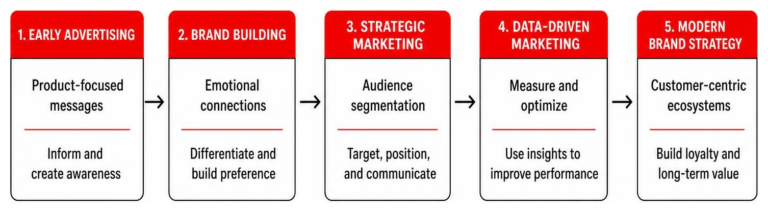
To move prospects through the funnel, you must align your ad content with their current stage. For example, use how-to guides, webinars, and infographics for top-of-funnel awareness, while focusing on direct offers or demos for those in the decision stage.
Defining Goals for Your Paid Advertising Strategy
Before you spend a single dollar, you need to know what “success” looks like. We use the SMART framework: Specific, Measurable, Achievable, Relevant, and Time-bound. Are you looking to increase brand awareness by 20% in Minneapolis, or are you aiming for a specific Cost Per Acquisition (CPA) for your new SaaS product?
Key metrics to track include:
- ROAS (Return on Ad Spend): Your total revenue divided by ad spend.
- CPA (Cost Per Acquisition): How much it costs to get one paying customer.
- Conversion Rate: The percentage of clicks that turn into a desired action.
For a deeper dive into how these goals fit into a larger business model, check out our traffic strategy frameworks.
Identifying Your Ideal Audience Segments
Great advertising starts with a deep understanding of the psychology of your users. We don’t just look at basic demographics like age and location; we look at intent.
Are they searching for information (early-stage) or are they ready to buy (high-intent)? By creating detailed buyer personas, we can tailor our messaging to solve their specific pain points. Personalization isn’t just a buzzword—surveys show that 43% of marketers see higher conversions when ads are personalized to the user’s journey.
Navigating the Paid Advertising Channel Landscape
Choosing the right channel is about meeting your audience where they already hang out. You wouldn’t try to sell industrial warehouse equipment on TikTok, just like you wouldn’t promote a trendy fashion brand solely on LinkedIn.
| Channel | Best For | Targeting Strengths |
|---|---|---|
| Google Ads | High-intent searchers | Keywords, Search behavior |
| Meta (FB/IG) | Visual products, B2C | Interests, Life events, Lookalikes |
| B2B, Professional services | Job title, Industry, Company size | |
| Microsoft Ads | Older/Professional demo | Bing searchers, lower CPCs |
Google’s network covers over 2 million sites and reaches over 90% of people on the internet. If your goal is massive reach, Google is the king. If you need to build community and engagement, our social media marketing services can help you navigate the nuances of Meta and LinkedIn.
Search Engine Marketing and PPC Mechanics
PPC (Pay-Per-Click) is the engine behind search ads. It’s a real-time auction where the winner isn’t always the one who bids the most. Platforms use a Quality Score—a mix of ad relevance, expected click-through rate, and landing page experience—to determine your Ad Rank.
A high Quality Score can actually lower your costs. If your ad is more relevant than a competitor’s, you might pay less for the top spot. One of our favorite “hacks” is using negative keywords. By telling Google not to show your ad for terms like “free” or “jobs,” you save your budget for people who actually want to buy. You can learn more about the history of paid search to see how these algorithms have evolved into the AI-driven systems we use today.
Social Media and Programmatic Advertising
Social advertising is “interruption-based.” People aren’t necessarily searching for you; you’re appearing in their feed. This is why visuals are so critical. On platforms like Meta and Instagram, Stories have sparked interest in a brand or product for 62% of users.
We also leverage Twitter Ads capabilities for real-time engagement and programmatic advertising for automated, high-precision ad buying across the web. Native advertising—ads that look like the surrounding content—is another powerful tool, often receiving 53% more views than traditional display banners.
Execution and Optimization: Crafting the Paid Advertising Strategy

The “creative” is the soul of your Paid Advertising Strategy. You can have the best targeting in the world, but if your ad copy is boring or your image is blurry, no one will click. We follow core creative design principles that focus on emotional hooks and clear value propositions.
But the work doesn’t stop at the click. Your ad is only as good as the page it sends people to. To reduce bounce rate, your landing page must have “Ad Scent”—meaning the headline, imagery, and offer on the page should perfectly match what was promised in the ad. Our conversion optimization services focus on making this transition seamless.
Advanced Tactics for Scaling Performance
Once a campaign is profitable, we look for ways to scale.
- Remarketing/Retargeting: Showing ads to people who have already visited your site but didn’t convert. It’s often the highest-ROI tactic in any strategy.
- Ad Extensions: You can achieve higher CTRs with extensions like site links, call buttons, and location info. They make your ad bigger and more useful.
- AI-Powered Optimization: We use AI to predict which headlines will perform best and to adjust bidding in real-time. This is part of our AI-augmented traffic generation approach.
Ensuring Compliance and Brand Safety
In an era of increasing data privacy, staying compliant is non-negotiable. We ensure all our strategies respect protection regulations such as GDPR. This means being transparent about data collection and moving toward a “privacy-first” model that relies more on first-party data (the data you own) rather than third-party cookies. Ethical advertising isn’t just about following rules; it’s about building long-term trust with your customers.
Measuring Success and Integrating with Organic Channels

If you can’t measure it, you can’t improve it. We rely on making informed decisions with analytics to see exactly where your revenue is coming from. While ROAS tells you how your ads are doing, ROI (Return on Investment) looks at the bigger picture, including your margins and overhead.
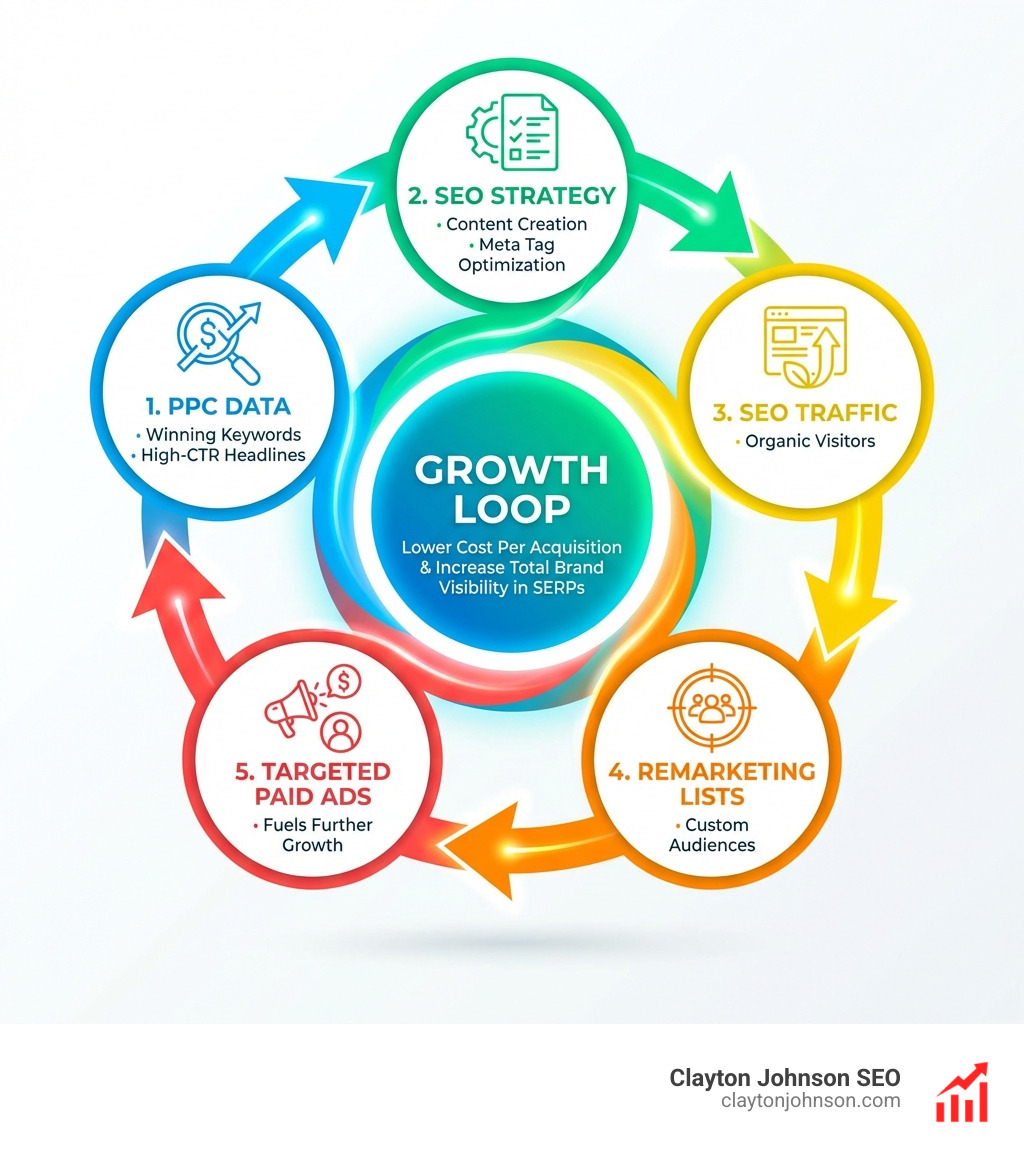
A common mistake is looking at paid and organic as two separate silos. In reality, they are the pillars of your digital marketing. When they work together, you get “1+1=3” results. For example, you can use paid ads to test which headlines get the best CTR, and then use those winning headlines to optimize your SEO meta tags.
Key Metrics for Performance Analysis
Beyond the basics, we look at:
- CTR (Click-Through Rate): A high CTR means your creative is resonating.
- CPL (Cost Per Lead): Essential for B2B companies to track the efficiency of their funnel.
- LTV (Customer Lifetime Value): This helps you decide how much you can afford to spend to acquire a customer. If a customer is worth $1,000 over their lifetime, spending $100 to acquire them is a no-brainer.
Understanding these ROI metrics is the difference between a “hustle” and a scalable business.
Synergizing Paid and Organic Efforts
We often use paid media to amplify press releases or high-performing blog content. This “boosts” your organic reach and gets your best content in front of a wider audience faster.
Additionally, we use retargeting to stay top-of-mind with people who found you through SEO. If someone reads an organic blog post about Minneapolis SEO, we can show them a targeted ad for our services later that day. We also integrate these efforts with email marketing to nurture leads through the entire lifecycle. For more tips on this integration, see our guide on hacking your way to the top.
Frequently Asked Questions about Paid Advertising Strategy
What is the difference between PPC and paid media?
PPC (Pay-Per-Click) is a type of paid media where you pay only when someone clicks your ad (like Google Search). “Paid media” is the broader umbrella term that includes PPC, but also includes things like CPM (paying for impressions), sponsored content, and influencer partnerships.
How much should I spend on my first campaign?
There is no “magic number,” but we recommend starting with a budget that allows for at least 100-200 clicks so you have enough data to analyze. For many small businesses in Minneapolis, this might be $1,000–$2,000 per month to start. The goal isn’t to spend the least; it’s to find the “winning” formula you can scale.
How do I improve my Quality Score?
Focus on three things: Ad Relevance (does the ad match the keyword?), Expected CTR (is the ad compelling enough to click?), and Landing Page Experience (is the page fast, mobile-friendly, and relevant?). Improving these will lower your CPC and improve your ad position.
Conclusion: Building Your Structured Growth Architecture
A successful Paid Advertising Strategy is not a “set it and forget it” project. It requires continuous testing, data-driven optimization, and a clear understanding of how paid fits into your overall growth infrastructure.
At Clayton Johnson, we build Demandflow.ai to solve the core problem most companies face: a lack of structure. We provide the strategic frameworks and AI-augmented workflows needed to turn ad spend into compounding growth.
Paid ads deliver immediate exposure, but when integrated with high-authority SEO, they build a durable market-leading position. Paid ads stop when the spend stops; authority compounds forever.
Ready to stop guessing and start growing? Start building your paid advertising strategy with us today.