What is Artificial Intelligence? Here’s What You Actually Need to Know
What is artificial intelligence (AI) is one of the most searched questions on the internet right now — and for good reason. Here’s the short answer:
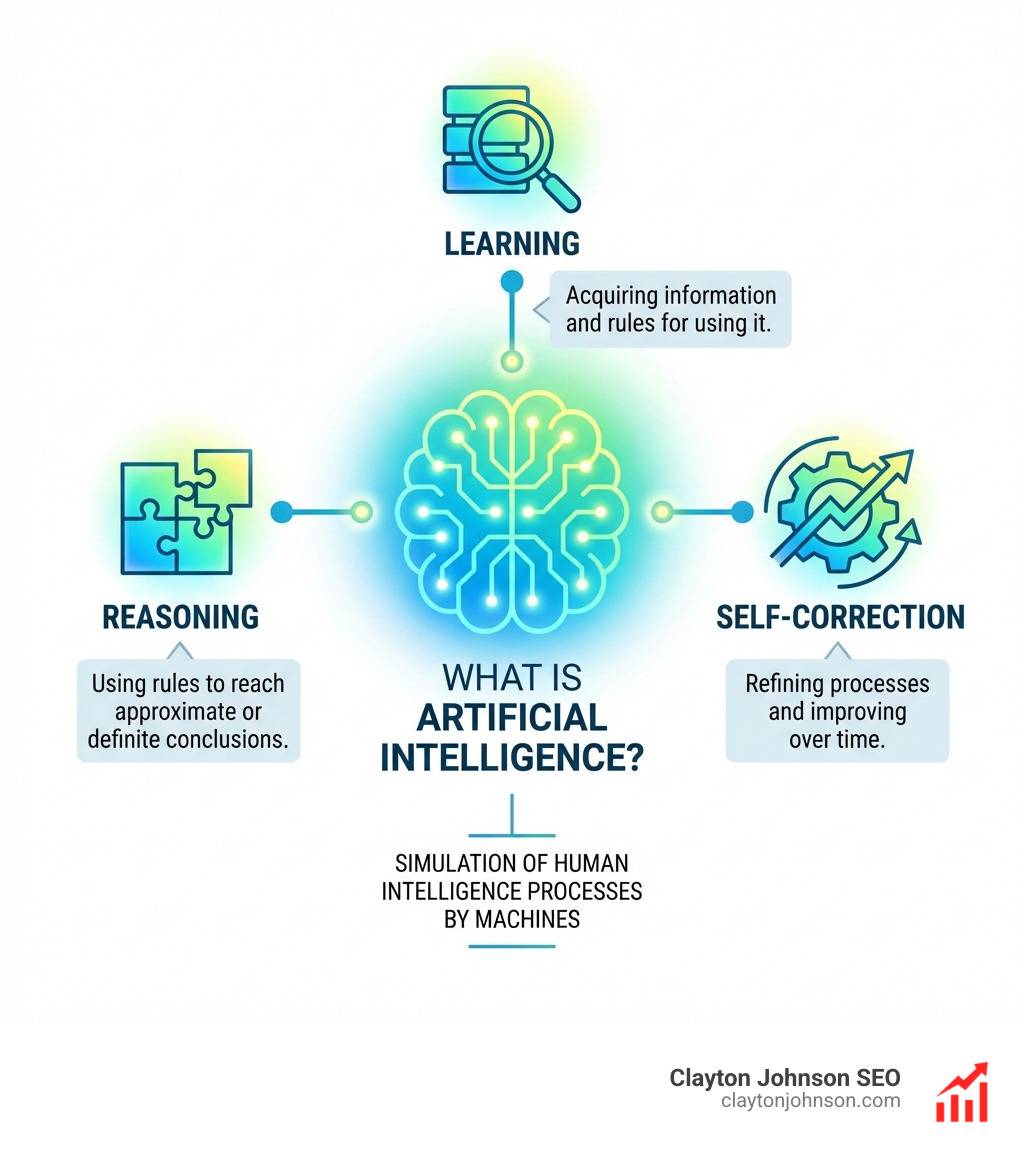
Artificial intelligence is the capability of computer systems to perform tasks that normally require human intelligence — like learning, reasoning, problem-solving, and understanding language.
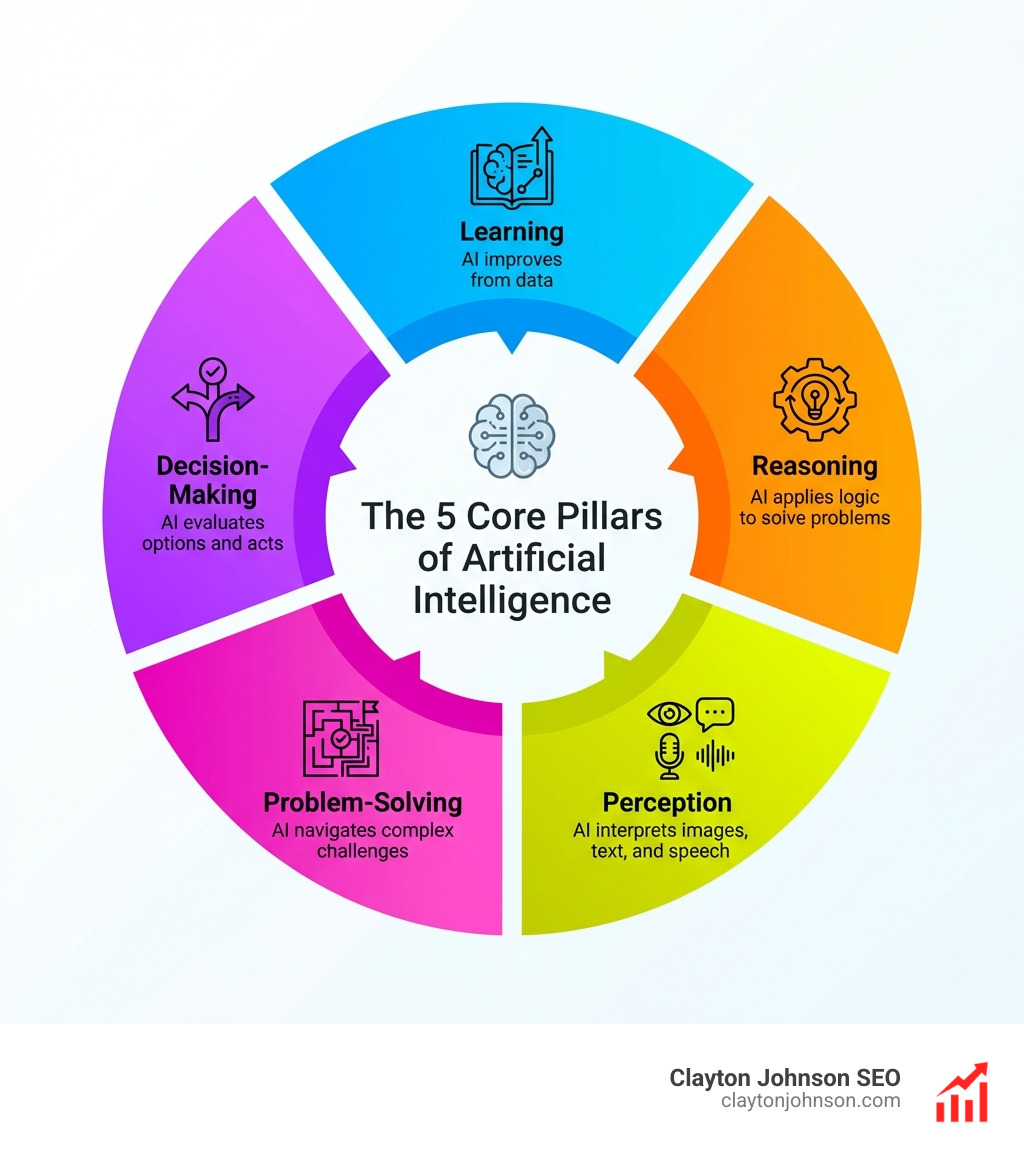
At a glance:
- Learning — AI systems improve from experience and data
- Reasoning — AI applies logic to draw conclusions and make decisions
- Perception — AI can interpret images, speech, and text
- Problem-solving — AI finds solutions to complex, open-ended challenges
- Decision-making — AI evaluates options and recommends or takes action
AI is not one single technology. It is a broad field that draws from computer science, mathematics, linguistics, neuroscience, and even philosophy. It powers tools you already use every day — search engines, recommendation systems, voice assistants, and fraud detection.
This guide breaks down how AI works, where it came from, and why it matters — in plain language, without the jargon.
I’m Clayton Johnson, an SEO strategist and growth operator who works at the intersection of AI-assisted workflows and structured marketing systems — giving me a practical, systems-level lens on what is artificial intelligence and how it compounds into real business outcomes. If you want clarity without the hype, you’re in the right place.
Defining What is Artificial Intelligence
To truly grasp what is artificial intelligence, we have to look at how the experts define it. One of the most famous definitions of AI comes from John McCarthy, who is often credited with coining the term. He described it as the science and engineering of making intelligent machines, especially intelligent computer programs.
But “intelligence” is a slippery concept. Is a calculator intelligent because it can do math faster than you? Not really. Modern AI is about simulation—creating systems that can mimic the cognitive functions we associate with the human mind.
In their seminal textbook, Artificial Intelligence: A Modern Approach, Stuart Russell and Peter Norvig categorize AI into four potential goals:
- Systems that think like humans.
- Systems that act like humans.
- Systems that think rationally.
- Systems that act rationally.
Most researchers today focus on the “acting rationally” part. We don’t necessarily need a computer to “feel” or “be” human; we need it to achieve goals efficiently using machine intelligence.
Understanding the Core Concept of What is Artificial Intelligence
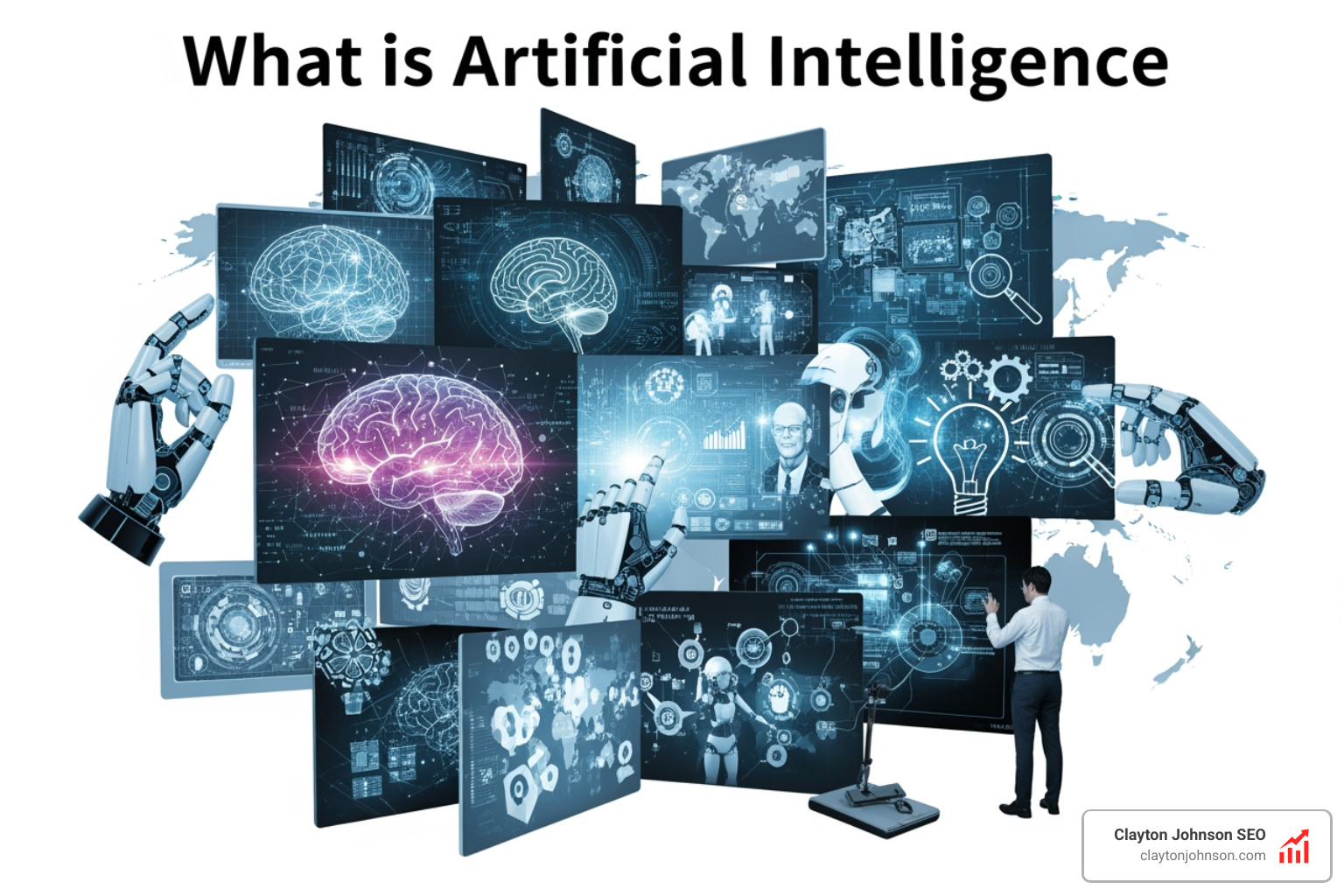
At its heart, AI is about building a “brain” made of code. This involves several key capabilities:
- Machine Learning (ML): This is the engine of most modern AI. Instead of a human writing a million “if-then” rules, the machine looks at vast amounts of data and figures out the patterns itself.
- Perception: This allows machines to “see” and “hear.” Think of how your phone recognizes your face or how a self-driving car identifies a stop sign.
- Reasoning and Problem-Solving: This is the ability to use those patterns to make a plan or find a solution, like a GPS calculating the fastest route through traffic.
Common Misconceptions About What is Artificial Intelligence
Because of Hollywood, many people confuse AI with consciousness. We often see movies about sentient machines that suddenly “wake up” and want to fall in love or take over the world.
In reality, current AI is based on algorithmic logic. It doesn’t have feelings, a soul, or a sense of self. It is a highly sophisticated statistical tool. When a chatbot writes a poem, it isn’t “feeling” inspired; it is predicting which words usually follow each other in a poem based on the trillions of sentences it has read.
The Evolution of Machine Thought
The dream of a machine that thinks isn’t new. It actually dates back to ancient myths of mechanical men, but the scientific journey began in earnest when Alan Turing published his paper on Computing Machinery and Intelligence. He famously asked, “Can machines think?” and proposed the Turing Test—a way to see if a machine could pass for a human in a text conversation.
The field officially got its name at the Dartmouth Workshop, where John McCarthy and other pioneers gathered to map out the future of “artificial intelligence.” Since then, the field has gone through several “AI Winters”—periods where the hype outpaced the technology and funding dried up.
What changed? Two things: Big Data and Cloud Computing. We finally had enough information (the internet) and enough raw power (massive server farms) to make the early theories work. Today, we’ve moved from simple logic programs to deep neural networks that can outperform humans at specific tasks.

Core Techniques: How AI Simulates Human Reasoning
If you want to understand what is artificial intelligence on a technical level, you have to look at its “nervous system.”
Neural Networks and Deep Learning
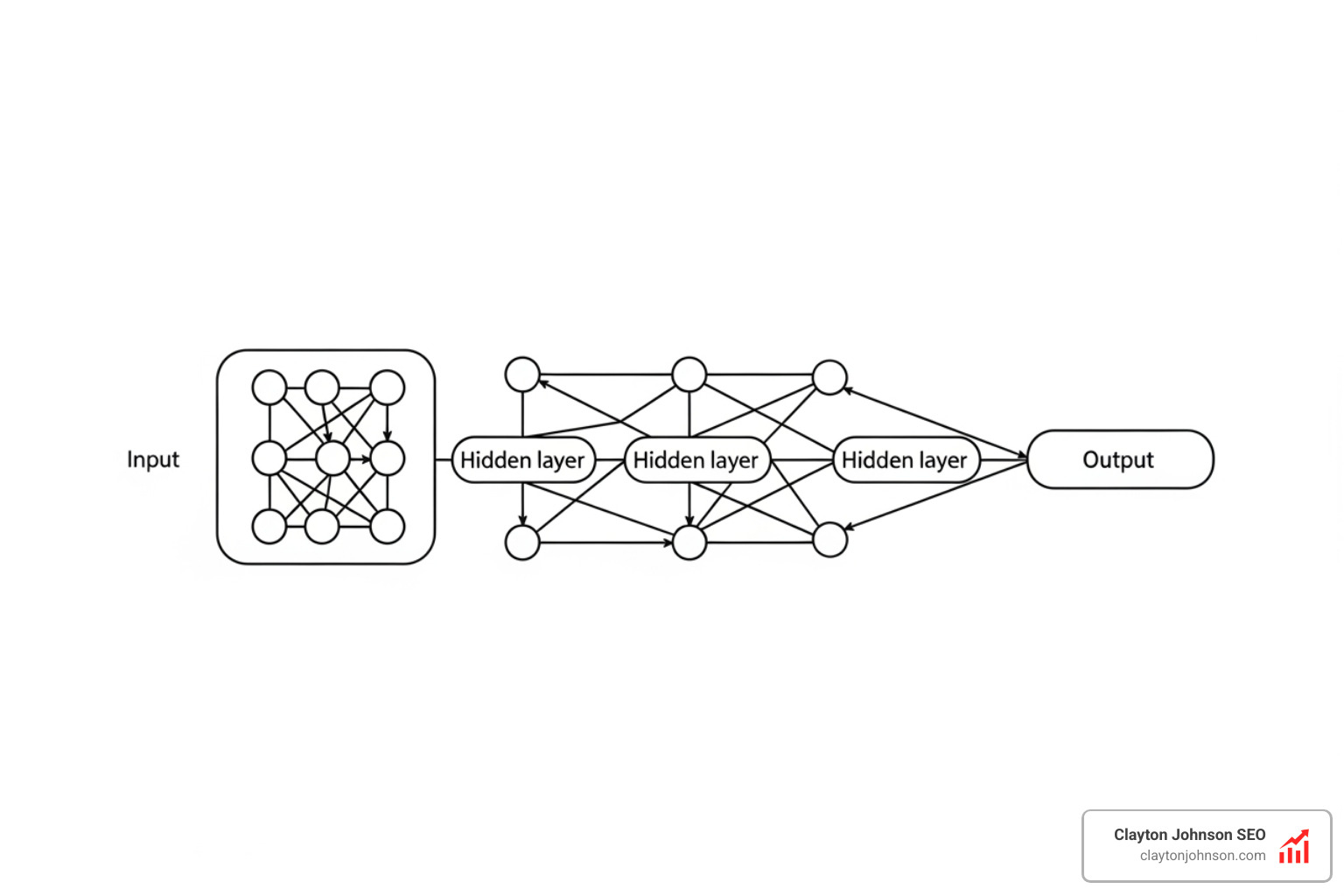
The most successful technique today is the artificial neural network. These are software structures inspired by the human brain. They consist of “layers” of artificial neurons.
- Deep Learning refers to neural networks with many layers (hence “deep”). These systems are incredibly good at finding complex patterns in data, which is how AI can now identify a specific breed of dog in a photo or translate a foreign language in real-time.
Search and Optimization
AI also uses search algorithms to find the best possible answer among billions of choices. For example, AlphaGo—the AI that beat the world champion at the game of Go—had to navigate over 14.5 trillion possible moves after just four turns. To do this, it uses optimization algorithms in neural networks to constantly refine its “guess” until it finds the winning strategy.
The Subfields of AI
AI is a massive umbrella that includes:
- Natural Language Processing (NLP): Understanding and generating human speech and text.
- Computer Vision: Interpreting and “seeing” the visual world.
- Robotics: Giving AI a physical body to move and interact with objects.
- Expert Systems: Programs that mimic the decision-making ability of a human expert in a specific field.
Narrow AI vs. General AI vs. Superintelligence
Not all AI is created equal. It’s helpful to categorize it by its “strength.”
| Type of AI | Capabilities | Real-World Status |
|---|---|---|
| Narrow AI (Weak AI) | Specialized in one task (e.g., Siri, Netflix recs, Chess bots). | We use this every day. |
| General AI (AGI) | Human-level intelligence across all domains. Can learn any task. | Currently theoretical/research phase. |
| Superintelligence | Intelligence that vastly exceeds the best human brains in every field. | Science fiction (for now). |
Narrow AI is what we have today. It can beat you at Jeopardy! or drive a car, but a chess bot can’t write a legal brief, and a self-driving car can’t play poker.
The big debate today is over attaining Artificial General Intelligence (AGI). Some experts believe we are just a few breakthroughs away, while others think we are decades or even centuries off. Beyond that lies the concept of Superintelligence. Philosophers like Nick Bostrom have theorized about machines exceeding human brain power, which leads to the “Singularity”—a point where machine intelligence grows so fast we can no longer keep up.
Real-World Applications and Generative AI
AI isn’t just a lab experiment anymore; it’s a massive part of our economy.
- Healthcare: Systems like AlphaFold have revolutionized biology by predicting protein structures, a task that used to take years of manual labor. AI is also used for drug discovery, helping scientists find new antibiotics and treatments for diseases like Parkinson’s ten times faster than before.
- Finance: Banks use AI for fraud detection, scanning millions of transactions per second to find the one that looks “off.”
- Gaming: AI is used to create realistic non-player characters and even to help design game levels.
The Rise of Generative AI
The most exciting recent development is Generative AI. Unlike older AI that just classified data (e.g., “this is a cat”), generative models can create entirely new content.
This is powered by Large Language Models (LLMs). These systems are trained on almost everything ever written by humans. MIT explains that generative AI works by predicting the next “token” or word in a sequence, allowing it to write essays, code, and even solve complex math problems. For instance, the Qwen2-Math model recently achieved 84% accuracy on high-level competition mathematics problems.
Ethical Challenges and Societal Impact
With great power comes great… well, you know. As AI becomes more integrated into our lives, we have to face some serious risks.
Privacy and Bias
AI is only as good as the data we give it. If the data contains human prejudices, the AI will learn them. Research on AI fairness and bias has shown that some algorithms can be racist or sexist, especially in areas like hiring or police surveillance. There are also massive privacy concerns regarding how our data is used to train these models.
Environmental Effects
AI is “hungry” for power. Data centers are projected to consume a significant share of electricity as AI adoption grows. The greenhouse gas emissions from this energy consumption could become substantial without efficiency improvements and cleaner energy sources. This has led many tech companies to look for “green” solutions, including nuclear energy and other low-carbon power options to fuel AI centers.
Misinformation and Deepfakes
Generative AI makes it incredibly easy to create “deepfakes”—videos or audio that look and sound like real people but are entirely fake. This poses a threat to elections and to our trust in information. In some major elections, significant spending has gone toward authorized AI-generated content, highlighting how quickly synthetic media is entering mainstream political communication.
Frequently Asked Questions about AI
What is the difference between machine learning and AI?
Think of AI as the destination and Machine Learning as the vehicle. AI is the broad goal of creating intelligent machines. Machine Learning is a specific method of achieving that goal by training algorithms on data so they can learn for themselves.
Can AI replace human creativity?
AI can synthesize existing styles to create art, music, and text. However, most experts believe it currently lacks the “soul” or lived experience that drives true human innovation. It is better viewed as a tool to augment human creativity—like a high-tech paintbrush—rather than a replacement for it.
Is AI dangerous to humanity?
There are two types of danger. The “immediate” danger is job loss, bias, and misinformation. The “existential” danger is the theoretical risk of a superintelligent AI that doesn’t share human values. While the latter is a hot topic for debate, the former is something we are actively working to regulate through frameworks like the EU’s AI Act.
Conclusion
Understanding what is artificial intelligence is the first step toward leveraging it. At Clayton Johnson SEO, we believe that AI isn’t just a tactic—it’s part of a structured growth architecture.
We are building Demandflow.ai to help founders and marketing leaders move past the noise. By combining actionable strategic frameworks with AI-enhanced execution systems and SEO strategy, we help businesses build authority-building ecosystems that lead to compounding growth.
In our home of Minneapolis, Minnesota, we see how AI is transforming the workforce. Whether you’re looking for a growth diagnostic or a full SEO content architecture, the goal is the same: Clarity → Structure → Leverage → Growth. AI is the leverage. Let’s make sure you have the structure to use it.