What Are Media Strategies (And Why Your Business Can’t Afford to Ignore Them)
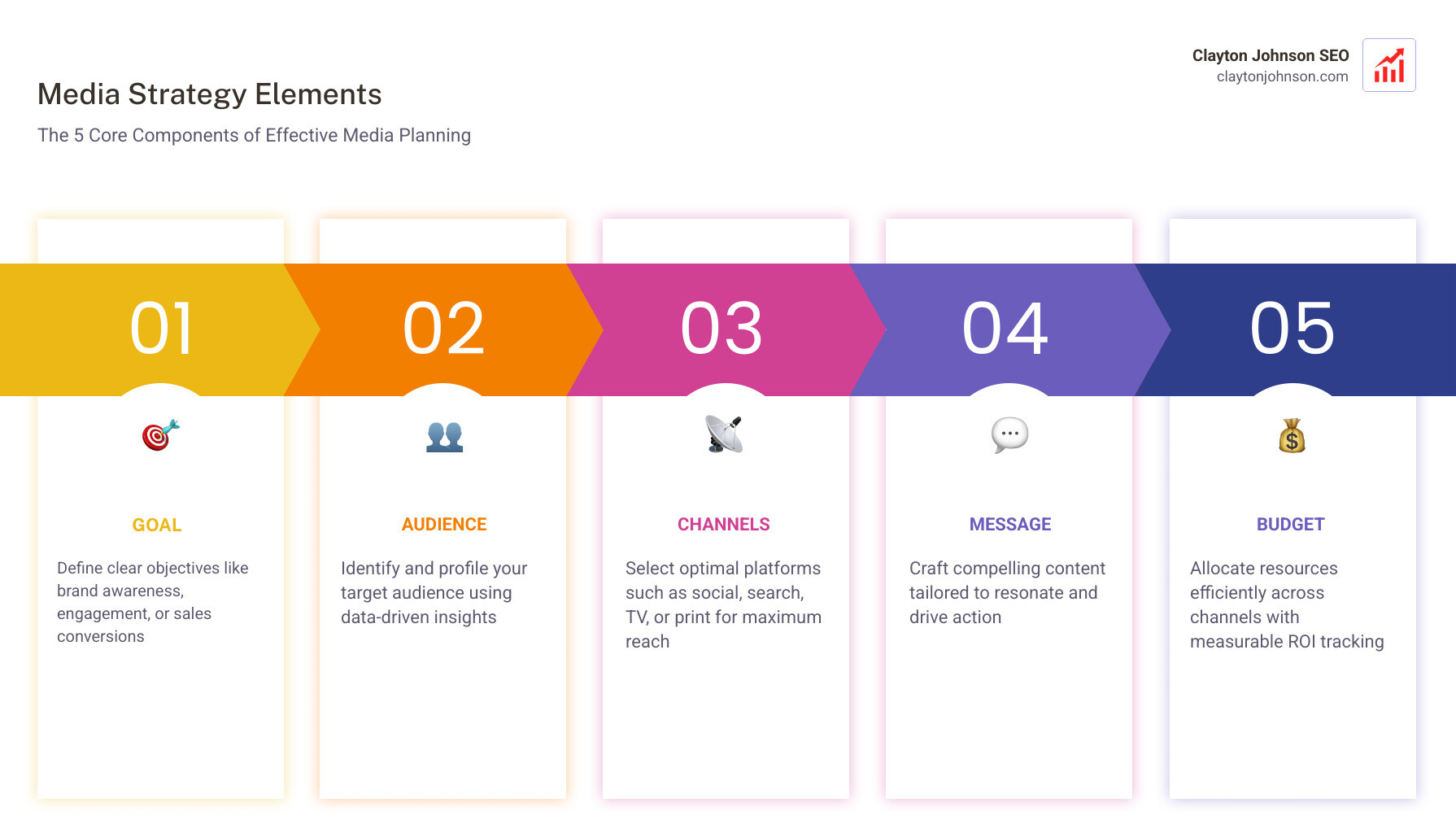
What are media strategies? A media strategy is a plan for delivering your message to the right audience through the right channels at the right time — with the goal of building brand awareness, driving engagement, and increasing conversions.
Here’s a quick breakdown:
| Element | What It Means |
|---|---|
| Goal | What you want to achieve (awareness, leads, sales) |
| Audience | Who you’re trying to reach |
| Channels | Where you’ll deliver your message (social, TV, search, etc.) |
| Message | What you’ll say and how you’ll say it |
| Budget | How much you’ll spend and where |
| Measurement | How you’ll know if it’s working |
Think of a media strategy like a GPS for your marketing dollars. Without one, you’re guessing — spending time and budget hoping something sticks. With one, every decision has a purpose.
Most businesses use some form of media to advertise. But there’s a big difference between randomly posting on social media and running a coordinated strategy that gets you in front of the right people, consistently, across the right platforms.
A strong media strategy doesn’t just get you seen. It gets you remembered — and it moves people from strangers to customers.
I’m Clayton Johnson, an SEO strategist and demand generation expert with nearly two decades of experience helping businesses answer the question of what are media strategies and, more importantly, how to make them work in the real world. In the sections below, I’ll walk you through everything you need to build one that drives measurable results.
Understanding What Are Media Strategies and Why They Matter
When we dive into the question of what are media strategies, we are essentially looking at the blueprint for how a brand communicates with the outside world. It is not just about “buying ads”; it is about the systematic delivery of a message to a specific niche or mass market.
In the past, media strategy was often limited to a few “mass media” outlets like television, radio, and newspapers. Today, the landscape is much more fragmented. We have to consider news cycles that move at the speed of a tweet, 24-hour digital consumption, and the shift from traditional “push” advertising to “pull” content marketing.
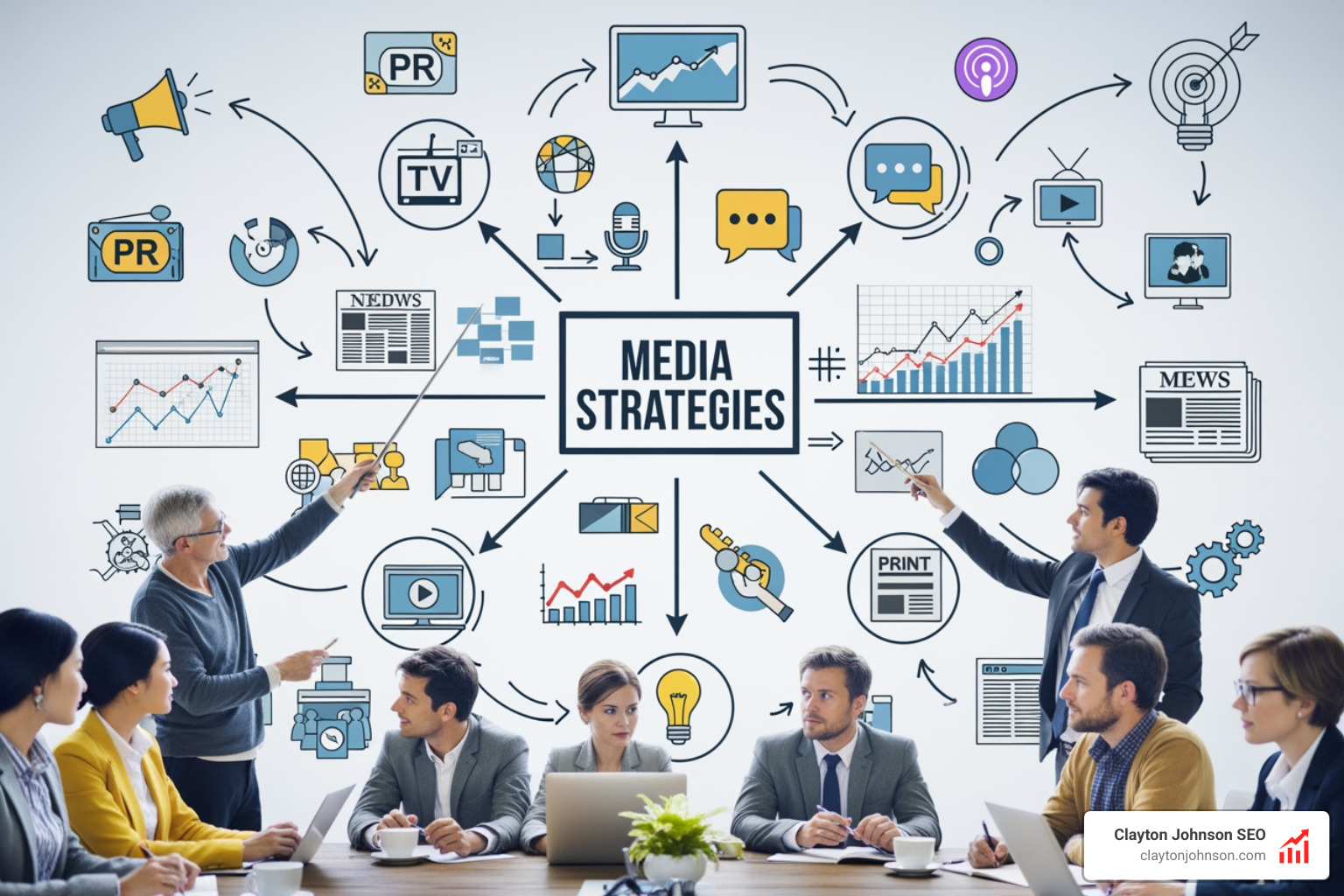
An effective public relations and media strategy ensures that your brand isn’t just shouting into the void. It helps you navigate different communication channels to ensure your message is actually heard. This involves two primary approaches to how you distribute your presence:
| Strategy Type | Definition | Best Use Case |
|---|---|---|
| Media Concentration | Focusing your entire budget and effort on a single channel or platform. | Niche products (e.g., a pool table company targeting a specific hobbyist forum). |
| Media Dispersion | Spreading your message across multiple channels (TV, Social, Search, Print). | Mass-market products where you need broad reach and high frequency. |
Core Components of What Are Media Strategies
To build a strategy that doesn’t just look good on paper but actually drives revenue, we need to focus on several foundational pillars. We often see businesses skip the “boring” stuff to get straight to the creative, but without these components, your campaign is likely to fail.
- SMART Objectives: Your goals must be Specific, Measurable, Achievable, Relevant, and Time-bound. Are you looking for a 20% increase in brand mentions, or 500 new leads per month? Clear goals guide your SMART goals and keep your team aligned.
- Audience Data: You cannot guess who your audience is. Research shows that 82% of marketers highlight the importance of accurate audience data for success. If you don’t know their demographics, psychographics, and platform habits, you’re throwing spaghetti at the wall.
- Unique Selling Proposition (USP): What makes you different? Your media strategy must highlight why a customer should pick you over a competitor.
- Budget Allocation: This isn’t just about the total number. It’s about how you split that money between testing new channels and scaling proven ones.
For those just starting, we’ve put together a media strategy 101 for modern marketers that breaks down these basics in even more detail.
The PESO Model: Paid, Earned, Shared, and Owned Media
One of the most effective ways to categorize what are media strategies is through the PESO model. This framework helps us ensure we aren’t over-reliant on any one type of exposure.
- Paid Media: This is “rented” attention. It includes social media ads, PPC, and display banners. It’s fast and scalable but stops the moment you stop paying.
- Owned Media: These are the assets you control—your website, your blog, and your email list. This is the heart of your digital footprint.
- Earned Media: This is the “holy grail.” It’s third-party credibility, such as press mentions, reviews, or organic social shares. It builds trust because it isn’t coming directly from you.
- Shared Media: Primarily social media networks where your content is engaged with and distributed by others.
Interestingly, 84% of media planners incorporate both organic and paid tactics into their strategies. Relying solely on paid ads can make a brand seem “pushy,” while relying only on organic can take too long to show results. A balanced approach is almost always the winner.
If you are looking to scale your reach specifically on social platforms, check out our social media marketing services to see how we integrate these elements.
Diverse Media Types from Folk to Digital
When we talk about what are media strategies, we often default to thinking about Instagram or Google. But a truly comprehensive strategy looks at the full spectrum of communication:
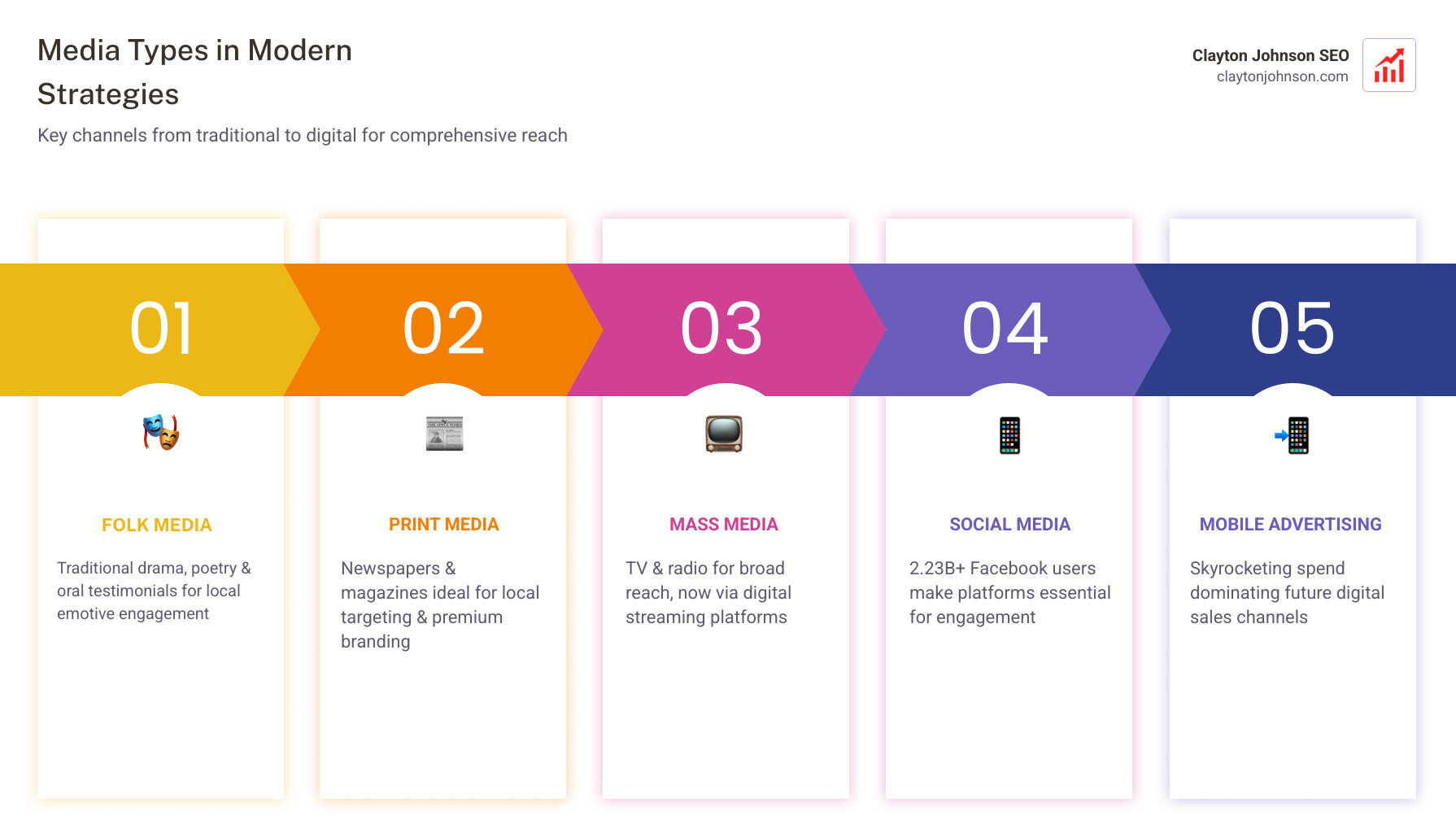
- Print Media: Still valuable for local targeting and high-end brand placement (magazines, newspapers).
- Mass Media: TV and radio remain king for broad reach, though they are increasingly being consumed via digital streaming.
- Folk Media: This includes traditional methods like drama, poetry, and oral testimonials. While it sounds “old school,” it is incredibly effective for local, emotive engagement in specific cultural contexts.
- Social Media: With Facebook boasting over 2.23 billion monthly active users, social platforms are non-negotiable.
- Mobile Advertising: Mobile ad spend is skyrocketing, with projections suggesting it will account for the vast majority of digital sales in the coming years.
- Entertainment-Education & Product Placement: Brands are increasingly moving away from “interruptive” ads and toward product placement within entertainment content. In fact, 70% of brands are gearing up to invest more in this area.
How to Develop and Optimize Your Media Strategy
Building a strategy isn’t a “one and done” task. It is an iterative process that requires constant data-driven optimization. We start with market research to understand the competitive landscape and then move into the tactical execution.

Two of the most important concepts to master here are reach and frequency.
- Reach is the number of unique people who see your message.
- Frequency is how many times they see it.
Research suggests it takes an average of three exposures before a consumer takes action. If your frequency is too low, you’re forgotten; if it’s too high, you’re annoying. Finding that “sweet spot” is the key to the importance of frequency in advertising.
For a deeper dive into the logistics, we recommend our no-nonsense guide to the media planning process.
Step-by-Step Planning for What Are Media Strategies
We typically break down the development of a media strategy into three distinct stages:
- Initiation Stage: This is the research phase. We conduct primary and secondary research to identify target demographics and the best-fit channels. We build out detailed buyer personas—identifying not just age and location, but habits, pain points, and platform preferences.
- Diffusion Stage: This is where we define outcomes. Are we aiming for awareness, or are we driving hard toward profits? We select the audience targeting methods that align with these goals.
- Maturity Stage: Once the campaign is live, we monitor social media insights and performance data to generate “lessons learned” for the next cycle.
It is also important to distinguish between media planning and media buying. Planners are the architects—they decide the “where, when, and who.” Buyers are the negotiators—they handle the media buying process, securing the best rates and placements on the chosen platforms.
Leveraging AI and Modern Trends for Growth
The landscape of what are media strategies is changing rapidly due to technology. We are seeing a massive shift toward AI-augmented marketing. 82% of marketers expect AI adoption to lead to productivity improvements and better financial results.
AI allows us to move into programmatic advertising, where ads are bought and sold in real-time via automated systems. This enables “hyper-targeting”—showing a specific ad to a specific person based on their immediate behavior. Furthermore, with the deprecation of third-party cookies, we are seeing a renewed focus on first-party data (information you collect directly from your audience).
Mobile-first optimization is no longer optional. With billions of smartphone users worldwide, your media strategy must be designed for the small screen first, not as an afterthought.
Measuring Success and Avoiding Common Pitfalls
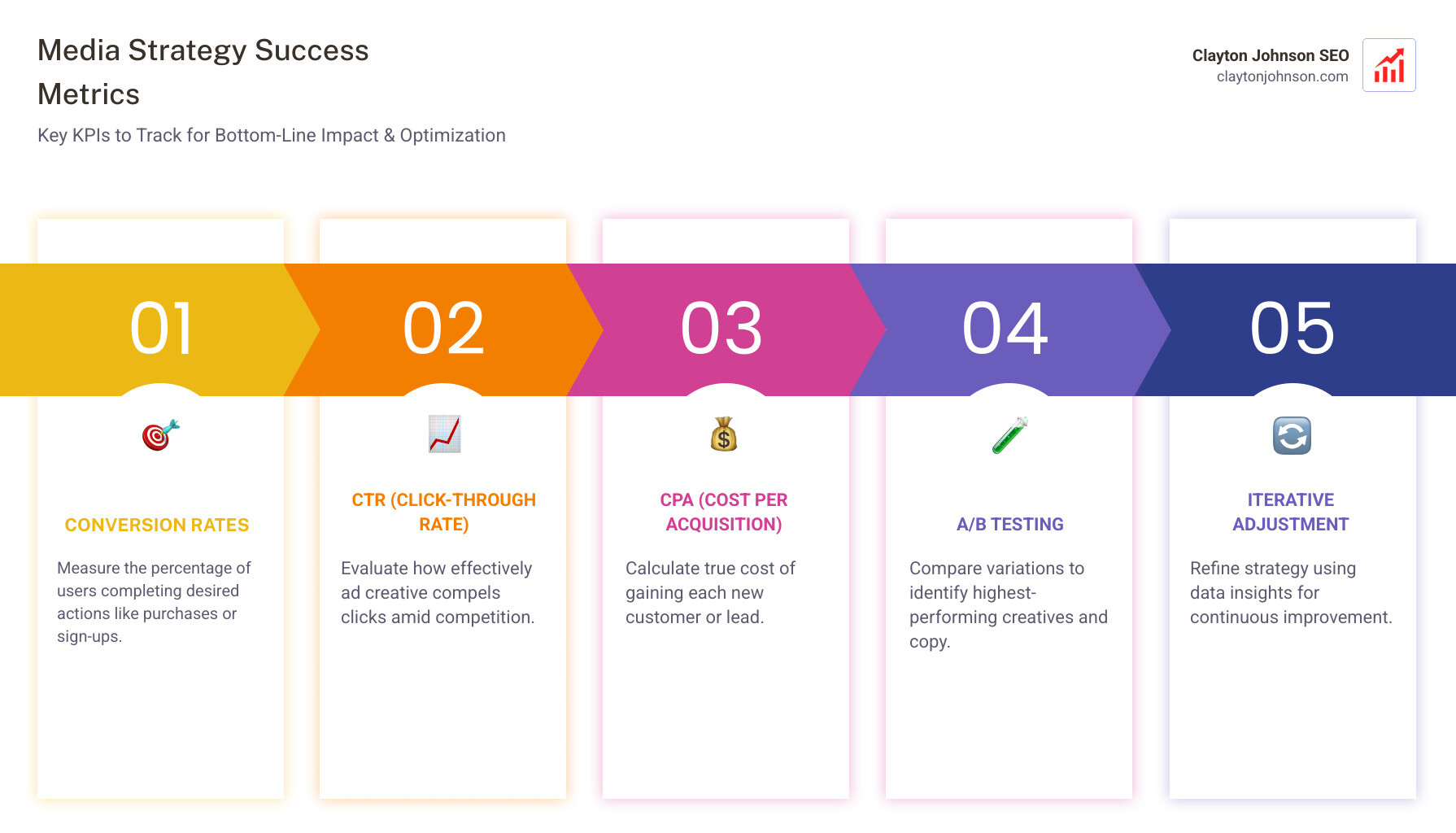
How do we know if it’s working? We look at the metrics that actually impact the bottom line, not just vanity metrics.
- Conversion Rates: Are people taking the desired action?
- CTR (Click-Through Rate): Is the creative compelling enough to get a click?
- CPA (Cost Per Acquisition): How much are we paying to get a new customer?
One of the biggest mistakes we see is “single-channel reliance.” If you put all your eggs in the Facebook basket and their algorithm changes, your business is at risk. Another common pitfall is ignoring the data—continuing to spend money on a channel that isn’t performing because “that’s how we’ve always done it.”
At Clayton Johnson SEO, we focus on building scalable traffic systems and compounding growth. We don’t just look for quick wins; we look for durable systems—internal linking structures, taxonomy-driven content, and AI-enhanced workflows that build authority over time.
If you’re ready to stop guessing and start building a media strategy that actually works, contact us today. We specialize in turning fragmented marketing efforts into coherent growth engines.