Setting Up Your SEO Audit Automation Process

Why Every Growth-Focused Team Needs an SEO Audit Automation Guide
An SEO audit automation guide helps you replace slow, manual website checks with systems that monitor, flag, and report SEO issues automatically — so your team can focus on strategy instead of spreadsheets.
Here’s what automated SEO auditing covers:
- Crawl your site automatically — tools like Screaming Frog or Semrush Site Audit scan for errors on a schedule
- Monitor technical health — broken links, redirect chains, status codes, and indexability issues flagged in real time
- Track content signals — metadata gaps, thin content, and keyword ranking shifts detected without manual checks
- Integrate with reporting — data flows into dashboards like Looker Studio or Google Search Console automatically
- Prioritize fixes — alerts surface high-impact issues first, so nothing critical gets buried
SEO is not a one-time project. It is an ongoing system. And most teams are losing ground not because they lack knowledge — but because they lack time.
A single broken link can trigger a 404 error and a 30% drop in user engagement. Duplicate content silently splits authority. Crawl budget gets wasted on dead pages. These issues compound quietly — until rankings drop and the damage is already done.
“Google crawls 10,000 pages while your team manually checks 100. Your competitors spot technical issues in minutes while you discover them weeks later.”
Manual audits simply cannot keep pace with dynamic sites, frequent algorithm updates, and the scale most growing businesses operate at. Automating SEO audits can free up to two weeks of staff time each quarter — time that goes back into strategy, content, and growth.
The good news: setting up an automated SEO audit system is more accessible than most teams think.
I’m Clayton Johnson, an SEO strategist and growth operator who builds scalable traffic systems and AI-augmented marketing workflows — and this SEO audit automation guide is drawn directly from the frameworks I use to architect durable, compounding search visibility for founders and marketing leaders. Let’s build your system from the ground up.
Simple guide to SEO audit automation guide:
The Strategic Value of SEO Audit Automation
When we talk about automation, we aren’t just talking about “saving time.” We are talking about leverage. In the context of SEO, leverage is the ability to maintain a massive web presence with a lean, highly efficient team.
The strategic value of an SEO audit automation guide lies in its ability to shift your team from a reactive posture to a proactive one. Instead of waiting for a quarterly manual audit to discover that a developer accidentally added a noindex tag to your primary service page, automation alerts you within minutes.
Key benefits include:
- Massive Time Savings: Research shows that automating repetitive SEO tasks can free up to two weeks of staff time per quarter.
- Error Reduction: Humans get tired; scripts don’t. Automation ensures that spotting and fixing broken links happens consistently across thousands of pages.
- Staff Productivity: Your SEO specialists should be thinking about market positioning and content architecture, not hunting for 404 errors.
- Proactive Monitoring: Real-world case studies show that sites like Mississauga Foot Clinic saw a 162% jump in search visibility simply by clearing crawler issues that were detected through better monitoring.
For those looking to deepen their strategic approach, our SEO consultant services focus on building these systems directly into your business model.
Manual vs. Automated SEO Audit Workflows
| Feature | Manual SEO Audit | Automated SEO Audit |
|---|---|---|
| Frequency | Quarterly or Bi-Annually | Daily, Weekly, or Real-Time |
| Accuracy | Prone to human oversight | Data-driven and consistent |
| Speed | 20-40 hours per audit | Minutes to hours (hands-off) |
| Scalability | Hard to scale for large sites | Built for enterprise-level sites |
| Cost | High labor costs | Tool subscription costs (lower ROI) |
Core Components of an SEO Audit
To build a robust system, you need to understand the “stack.” We categorize the automation process into three main areas: technical health, content monitoring, and reporting integration.
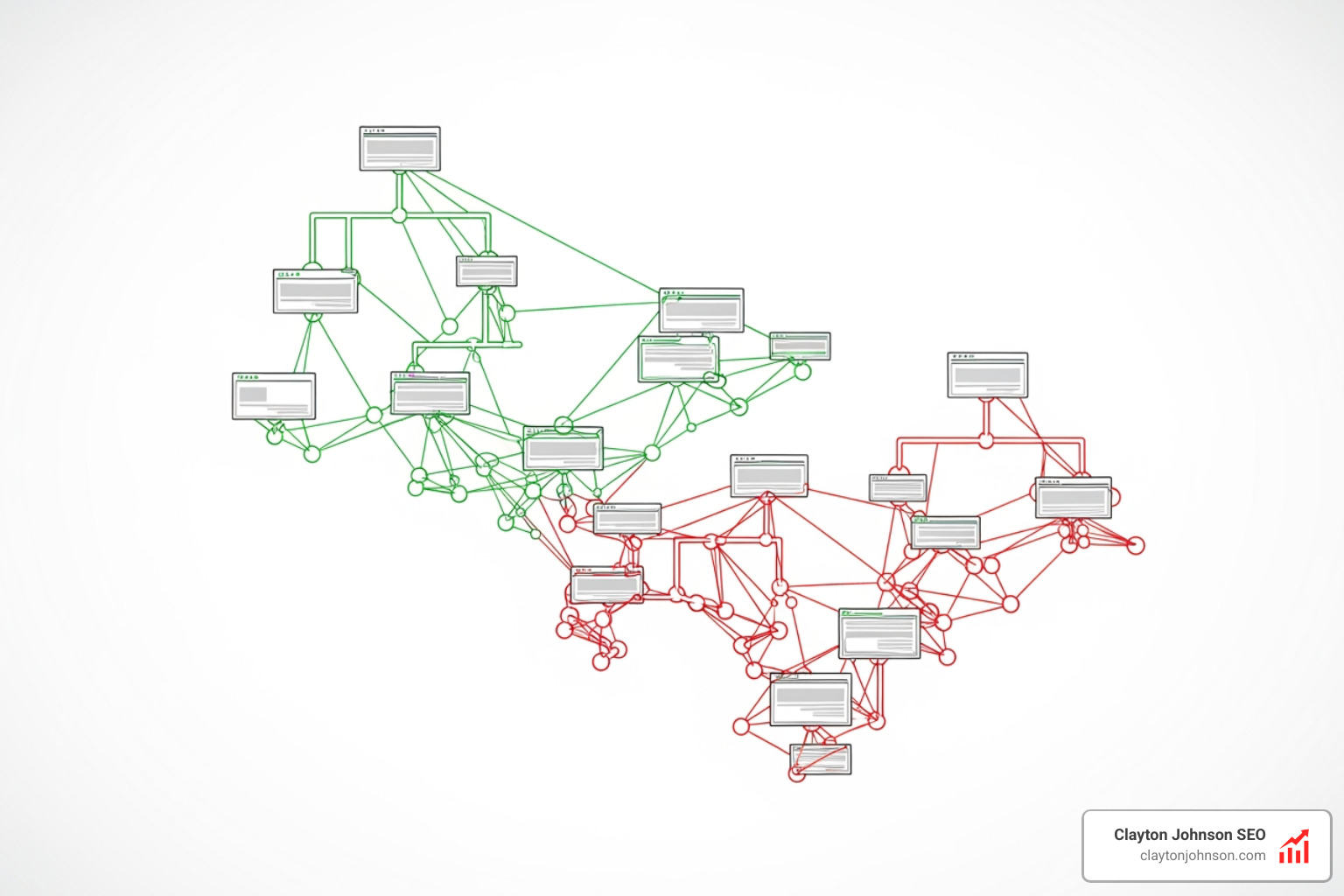
The “brain” of your automation system is the crawler. Screaming Frog and Sitebulb are the industry standards for desktop-based and cloud-based crawling. These tools can perform audits automatically and schedule recurring crawls, ensuring you are always updated on your site’s health.
Technical Foundations
The technical foundation is where most SEO wins are lost. If Googlebot can’t crawl you, it can’t rank you.
- XML Sitemaps: Use plugins like Yoast SEO to generate sitemaps automatically. These should update every time you publish or change content.
- Robots.txt: Automate the validation of your robots.txt file to ensure you aren’t accidentally blocking critical resources like CSS or JavaScript, which are essential for modern rendering.
- Search Console Integration: Use Search Console to monitor crawl errors and index coverage. This is your direct line of communication from Google.
- Status Codes & Redirects: Automated systems should flag 301 redirect chains and 404 errors immediately. Technical SEO diagnostics often reveal that “dirty” sitemaps containing non-200 status codes erode search engine trust.
Content and On-Page Monitoring
Once the technical pipes are clear, you must automate the monitoring of your content.
- Metadata Checks: Tools like the On Page SEO Checker analyze your titles, meta descriptions, and H1 tags against your competitors.
- Rank Tracking: Manually checking keywords is a waste of time. Tools like Ahrefs automate rank tracking, providing daily updates on your position in the SERPs.
- Content Freshness: Search intent changes over time. Automation can flag pages that haven’t been updated in 12+ months or those that have seen a significant drop in organic traffic.
- AI Search Strategy: In the age of AI, your content must be readable by both humans and LLMs. Our AI Search Strategy helps you optimize for “Generative Engine Optimization” (GEO), ensuring you appear in AI Overviews and ChatGPT citations.
Step-by-Step Workflow for Automated Monitoring
Setting up your system requires a structured approach. At Clayton Johnson SEO, we follow a specific sequence to ensure no data is lost.
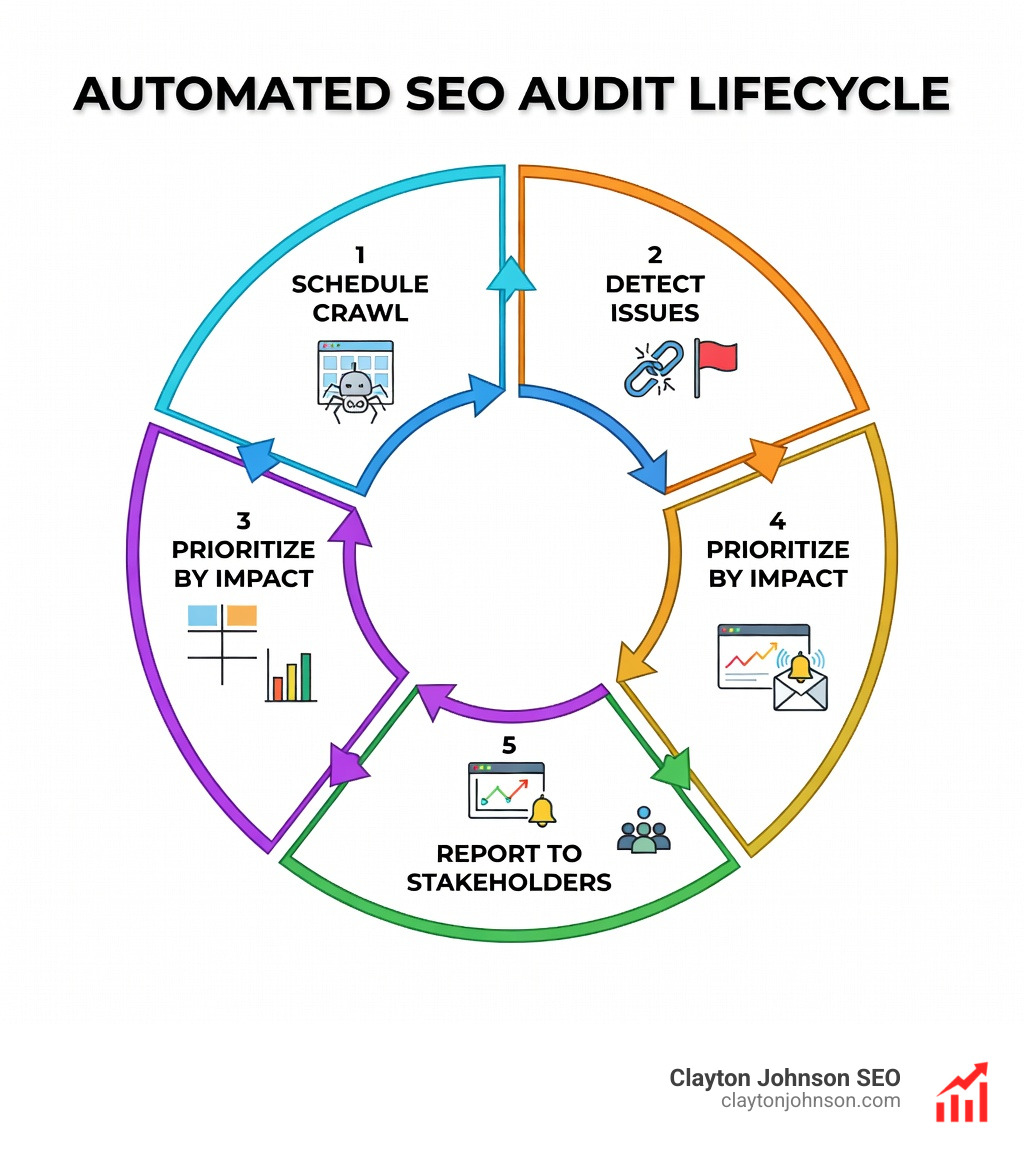
Step 1: Tool Selection
Choose a crawler that fits your scale. For small sites, a recurring Screaming Frog crawl is enough. For larger sites, we recommend cloud-based solutions like Semrush or Ahrefs.
Step 2: Configuration
You must configure the audit to focus on what matters. This includes setting crawl limits, enabling JavaScript rendering, and excluding irrelevant subfolders (like /wp-admin/).
Step 3: Scheduling
The “automation” part only works if it’s scheduled. We recommend:
- Technical Health: Weekly crawls.
- Rank Tracking: Daily updates.
- Backlink Audits: Monthly reviews.
Step 4: Alert Systems
Don’t wait to check the dashboard. Set up email or Slack alerts for “Critical Errors” like a 500-server error or a massive drop in indexed pages.
Reporting and Integration in an SEO Audit Automation Guide
Data is useless if it isn’t communicated. We use Looker Studio to combine data from Google Analytics, Search Console, and our crawlers into a single source of truth.
By using API connectors, you can automate the transfer of data from your SEO tools directly into your reporting suite. Platforms like DashThis allow you to annotate reports with specific insights, making them digestible for stakeholders.
To prioritize findings, we use an Impact vs. Effort Matrix:
- High Impact / Low Effort: Fix 404 errors on high-traffic pages.
- High Impact / High Effort: Re-architecting site navigation.
- Low Impact / Low Effort: Updating meta descriptions on low-traffic pages.
Scaling for Enterprise and Global Sites
Enterprise SEO is a different beast. When you are managing 100,000+ pages, manual checks are impossible. Platforms like Botify and Lumar are built for this scale.
Botify, for example, can deliver a 30% increase in unique pages visited by optimizing crawl efficiency. These enterprise tools also excel at JavaScript rendering, ensuring that search engines see the same content your users do.
Furthermore, enterprise SEO must now integrate with accessibility. Siteimprove helps bridge the gap between SEO and compliance. With ADA Title III lawsuits exceeding 4,000 in a single year, automating accessibility checks is no longer optional—it’s a legal necessity.
Balancing AI Automation with Human Strategic Input
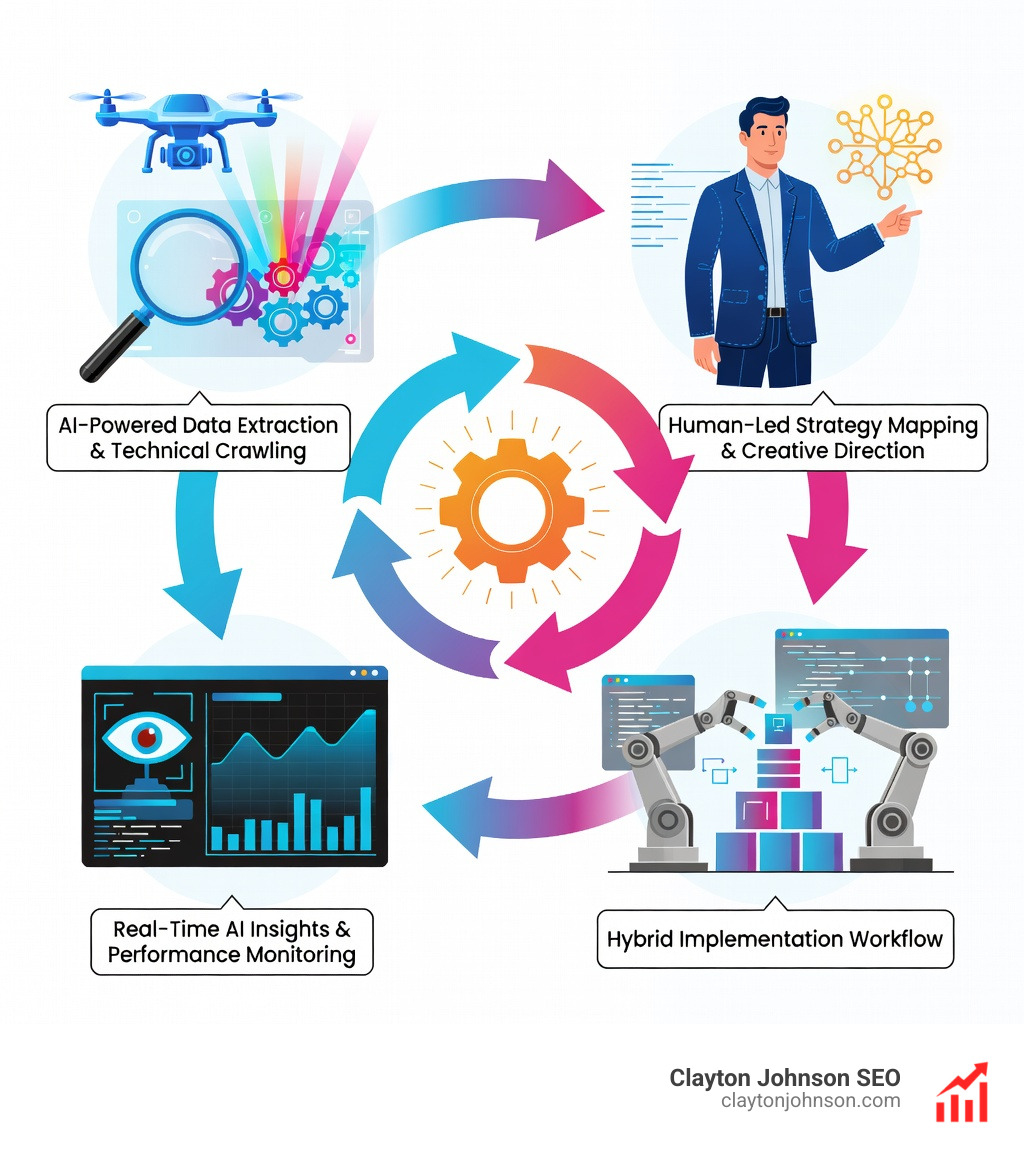
The future of SEO is AI-augmented, but it is not AI-led. While AI Overviews are changing how users find information, the strategic direction must still come from humans.
We use the AI Visibility Toolkit to benchmark how often our brands are cited in generative responses. However, we never rely solely on AI for content creation or strategy. Automation is excellent for anomaly detection—spotting a sudden dip in traffic—but humans are required for context.
The Human-AI Balance:
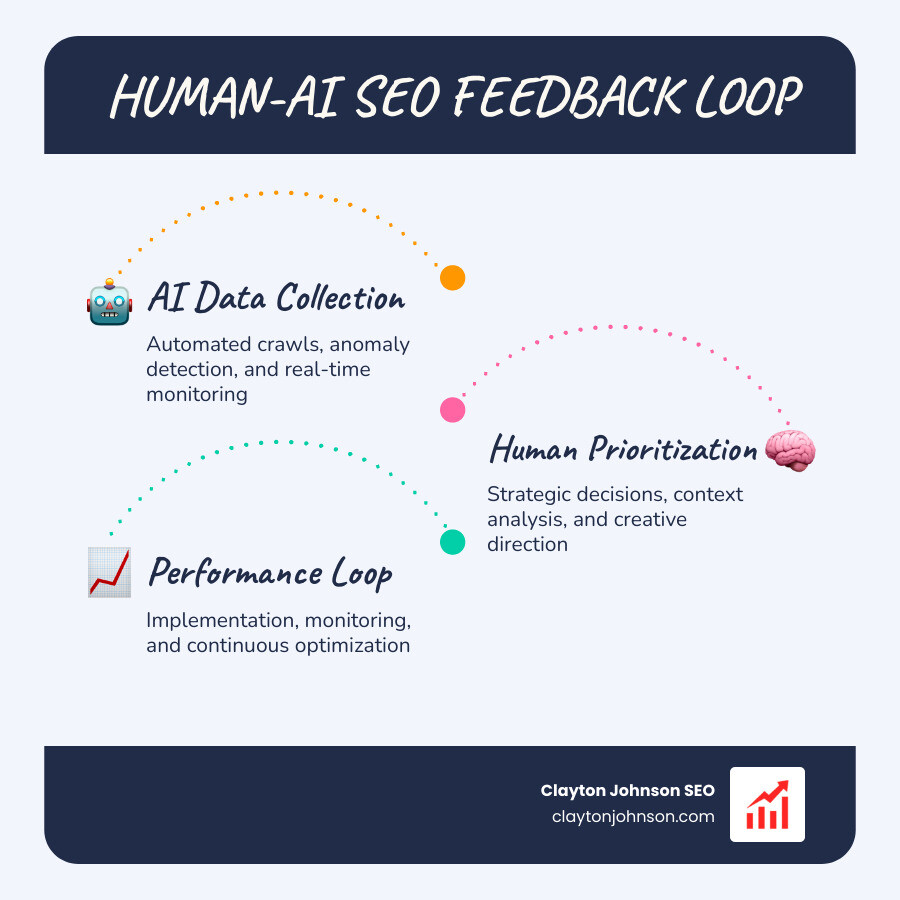
- AI/Automation: Handles data-heavy tasks, repetitive crawls, and real-time monitoring.
- Human Strategy: Handles search intent nuances, brand voice, and high-level growth architecture.
Frequently Asked Questions about SEO Audit Automation
Can SEO audits be fully automated?
No. While 90% of the data collection and issue detection can be automated, the prioritization and strategic implementation require human oversight. An automated tool can tell you a link is broken, but it can’t tell you if that page is still relevant to your business goals.
How frequently should automated SEO audits run?
For most sites, a weekly technical crawl is the “sweet spot.” However, high-traffic e-commerce sites or news publishers should run daily checks. Rank tracking should always be daily to catch volatility early.
What are the most common mistakes in SEO automation?
The biggest mistake is over-reliance on AI content without human editing. Another common error is “dashboard fatigue”—automating so many alerts that the team begins to ignore them. Focus on high-impact alerts that require immediate action.
Conclusion
At Clayton Johnson SEO, we believe that clarity leads to structure, and structure leads to leverage. Most companies don’t lack SEO tactics; they lack structured growth architecture.
By following this SEO audit automation guide, you are building a system that compounds over time. You aren’t just fixing errors; you are creating a “growth operating system” that protects your rankings while you sleep.
Our platform, Demandflow.ai, is designed to solve exactly this problem. It combines taxonomy-driven SEO systems with AI-augmented workflows to ensure your business is visible wherever decisions are being made—whether that’s a traditional Google search or a generative AI response.
Ready to stop guessing and start scaling? Start your structured growth journey with us today.