Why Model Selection SEO Optimization Is the New Growth Lever
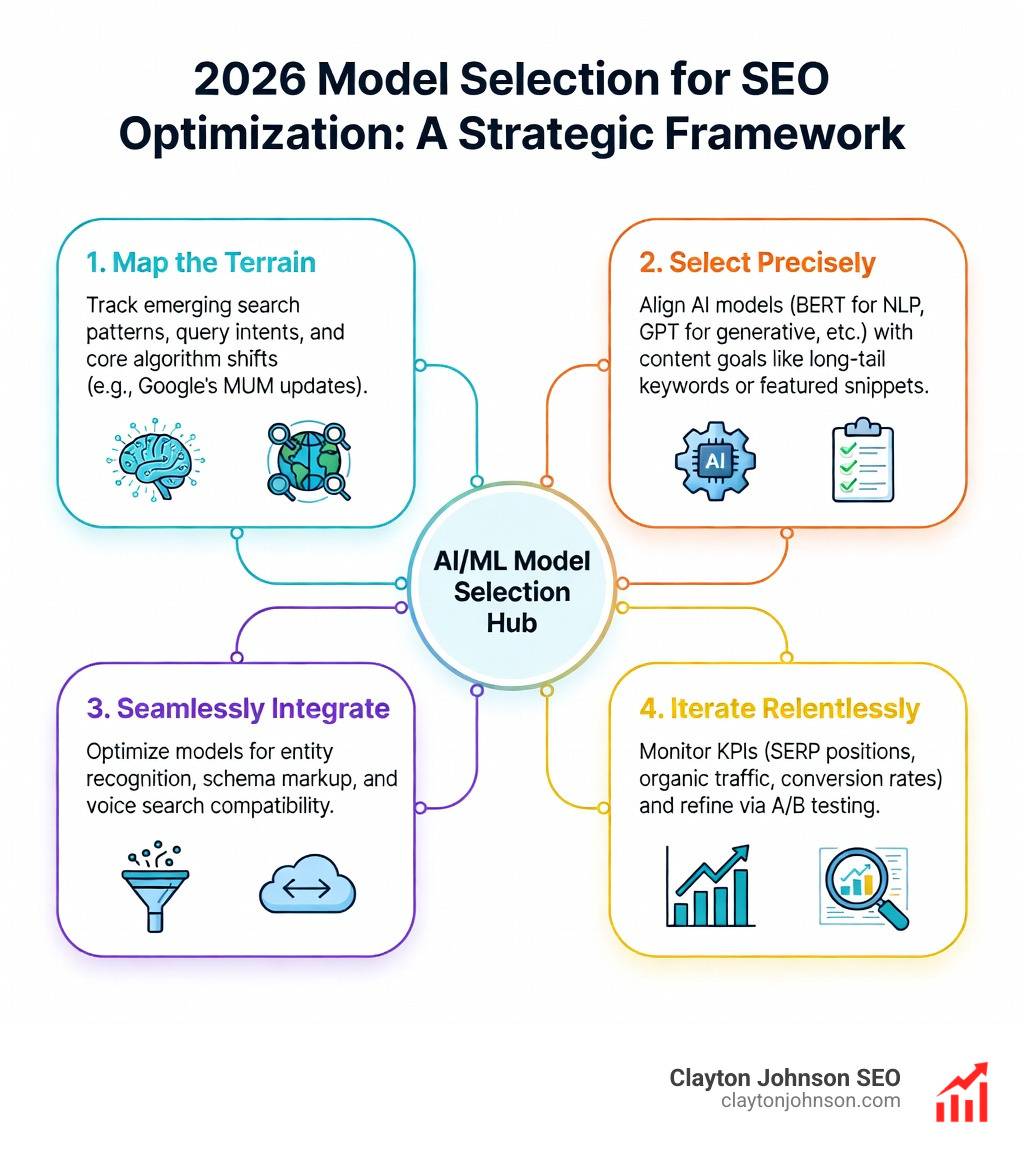
Model selection SEO optimization is the practice of choosing and applying the right AI models — transformers, semantic similarity engines, and retrieval systems — to improve how your content ranks and gets cited across both traditional and conversational search engines.
Quick answer for founder-operators:
| Goal | Model Selection Approach |
|---|---|
| Rank in traditional search | Prioritize retrieval position (top 3) |
| Appear in AI-generated answers | Optimize semantic similarity + structure |
| Get cited by LLMs | Use content improvement + LLM guidance methods |
| Measure what’s working | Use citation rank, not just word count |
| Validate changes | Run page-grouped A/B tests with organic traffic metrics |
Search is no longer just a keyword game. 🔍
Google’s adoption of transformer-based ranking systems changed roughly 10% of worldwide rankings — and that was just the beginning. Today, AI-powered search tools like Perplexity, ChatGPT Search, and Google’s AI Mode don’t just match keywords. They synthesize answers from multiple sources, rank citations, and pull content based on semantic relevance and retrieval position.
That changes everything about how you compete for visibility.
Most founders and marketing leaders are still optimizing for a search engine that no longer fully exists. They’re chasing keyword density while AI systems are evaluating semantic alignment, content structure, and document authority. The result? Traffic that compresses, rankings that feel unpredictable, and content that gets ignored by the very systems shaping buyer decisions.
The fix isn’t more content. It’s smarter model selection — knowing which AI frameworks assess your content, what signals they prioritize, and how to structure your pages to win citations across fragmented AI architectures.
I’m Clayton Johnson, an SEO strategist and growth operator who has spent years building taxonomy-driven content systems and AI-augmented marketing workflows — applying model selection SEO optimization principles to help founders and marketing leaders turn fragmented content into compounding authority engines. This guide gives you the exact frameworks I use to diagnose, select, and validate the right models for durable search visibility.
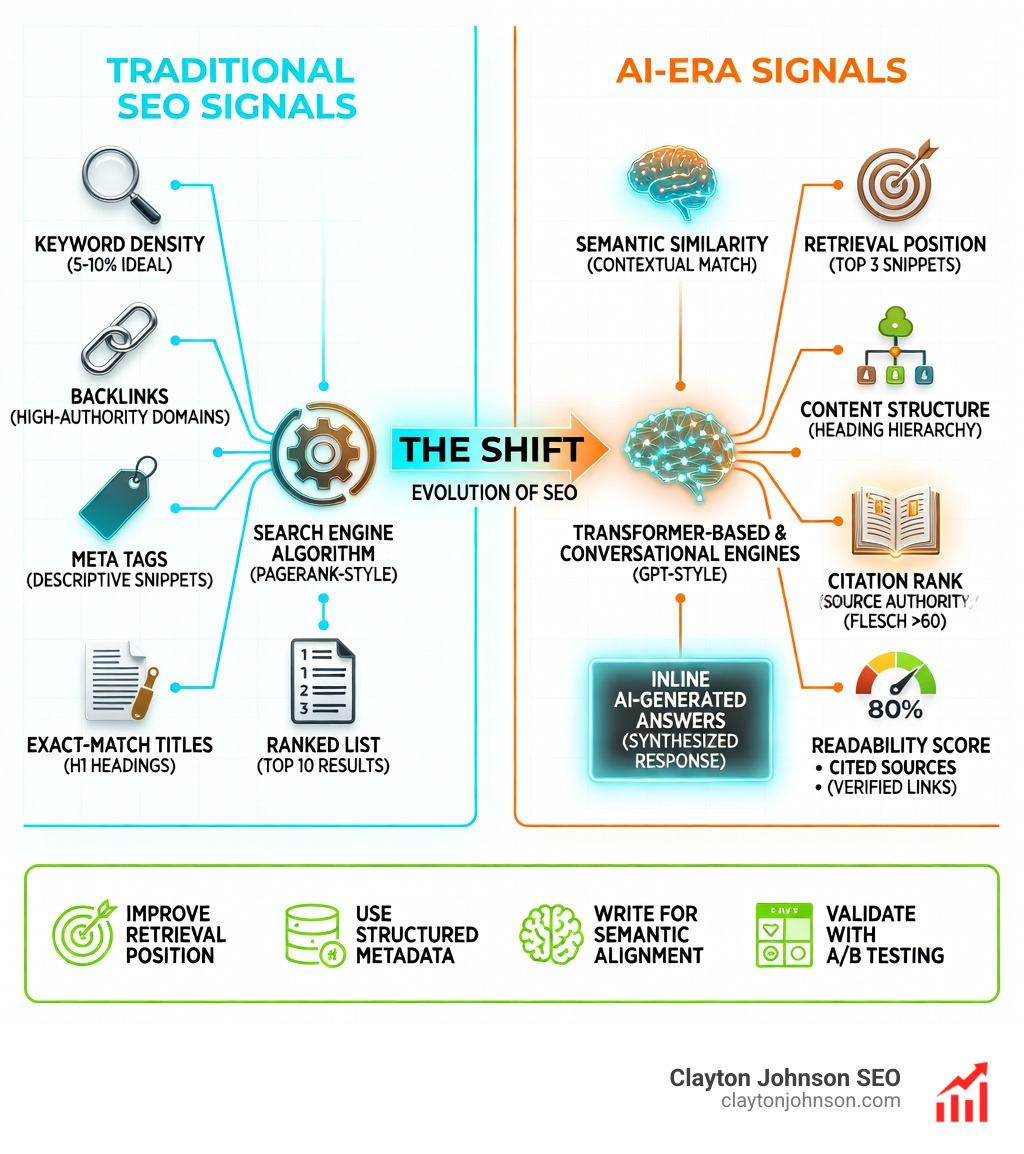
The Mechanics of Model Selection SEO Optimization
To win in the modern search landscape, we have to understand that search engines are no longer simple indexers; they are sophisticated inference engines. Model selection SEO optimization involves aligning your content with the specific mathematical preferences of these engines.
At its core, this is about moving from “keyword matching” to “entity and intent matching.” When we talk about SEO 101, we usually focus on titles and tags. But in the era of AI, we must focus on how a transformer model interprets the relationship between a user’s query and our text. This is the truth about ai seo and why it matters: the model is the gatekeeper, and the model has specific tastes.
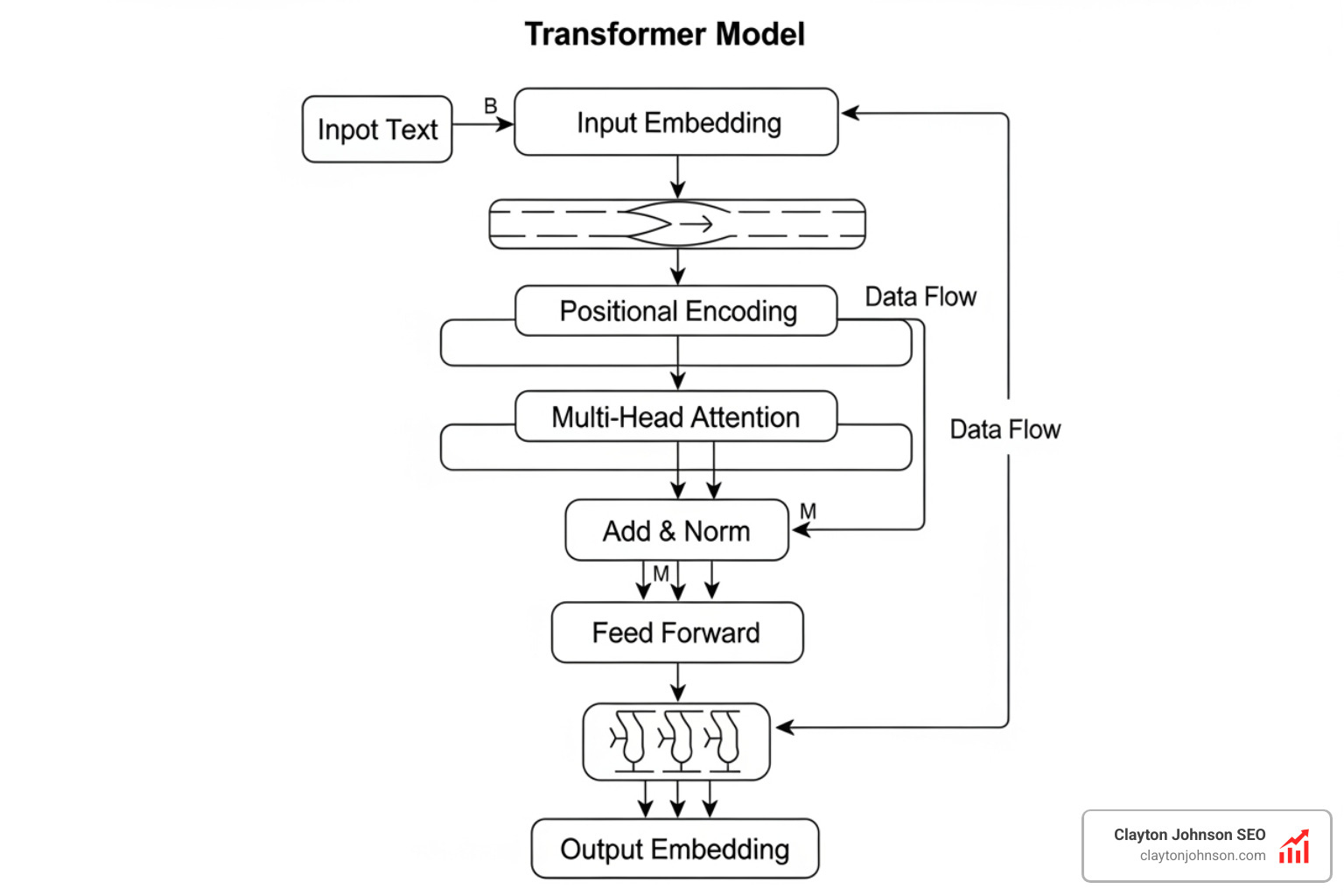
How Transformers Power Model Selection SEO Optimization
Transformer-based models have fundamentally changed the “rules” of ranking. Unlike older algorithms that looked for exact word counts, transformers use semantic similarity to understand context. They don’t just see the word “bank”; they know if you mean a river bank or a financial institution based on the surrounding 500 words.
One of the most critical shifts is the rise of Retrieval-Augmented Generation (RAG). In this system, an AI search tool first retrieves a set of relevant documents (traditional SEO) and then uses an LLM to summarize them (Conversational SEO). Google’s adoption of these models significantly impacted worldwide rankings because the engine began prioritizing “meaning” over “matching.”
The Role of Conversational Search Engines
We are seeing a massive shift toward Conversational Search Engines (CSE). Tools like ChatGPT Search and Perplexity are becoming embedded in browsers and enterprise applications.
In these ecosystems, the “rank” isn’t a blue link; it’s a citation in a paragraph. To show up here, your content must be structured so that a model can easily extract facts. This is the heart of the evolution of AI assistants in search: if the AI can’t parse your data, you don’t exist.
Core Components of an AI-Ready SEO Score
To manage this, we use a composite SEO score. This isn’t a single number from a plugin; it’s a weighted average of several sub-scores that reflect how an AI views your page.
| Sub-Score Component | Ideal Range / Target | Impact on Model Selection |
|---|---|---|
| Keyword Density | 1% – 2% | Prevents “stuffing” penalties |
| Readability (Flesch) | 60 – 80 | Ensures the model can “understand” the text |
| Passive Voice | < 10% of sentences | Improves clarity for transformer parsing |
| Query-Text Similarity | > 0.85 (Cosine Similarity) | Measures semantic relevance to intent |
| Transition Words | > 30% of sentences | Helps models follow logical flow |
By focusing on these ai-search/core-seo factors, we create content that is “machine-readable,” which is the first step in successful model selection SEO optimization.
Fine-Tuning Language Models for Model Selection SEO Optimization
For high-volume retailers or enterprise sites, “manual” optimization doesn’t scale. This is where we use AI to optimize AI. We can use fine-tuned models to rewrite product descriptions or blog posts specifically to hit higher SEO scores.
For example, we might use a paraphrasing model to take a technical specification and rewrite it into a conversational FAQ format. The “validator” in this process is a semantic similarity model (like Sentence-BERT) that ensures the new, optimized text hasn’t lost the original meaning. If the SEO score goes up and the similarity stays high, the “matchmaker” has done its job.
Readability and Semantic Alignment
Readability isn’t just for humans anymore. Models struggle with complex, “dense” text just like people do. To improve alignment, we prioritize writing actively. Active voice makes it easier for a model to identify the subject and action, which improves its ability to summarize your content in a search snippet.
We also use cosine similarity to measure how well our content matches the “average” top-performing result for a query. If our content is a semantic outlier, it’s unlikely to be selected by the model as a primary source. Following guidelines for readable AI content ensures your site remains a “safe bet” for the AI’s response.
Navigating the New Alphabet Soup: GEO, MRO, and AEO
As the industry evolves, new acronyms are popping up faster than we can track. However, they all point toward the same goal: optimizing for the model’s response.
- GEO (Generative Engine Optimization): Focuses on being included in AI-generated overviews. Research shows that adding citations and statistics can boost visibility in generative search results.
- AEO (Answer Engine Optimization): Specifically targets “answer engines” like voice assistants and conversational interfaces. AEO strategies often involve structured data and FAQ formats.
- MRO (Model Response Optimization): This is the term gaining traction for its accuracy. It acknowledges that you aren’t optimizing for an “engine” (which implies a mechanical, predictable system) but for a probabilistic model’s response.
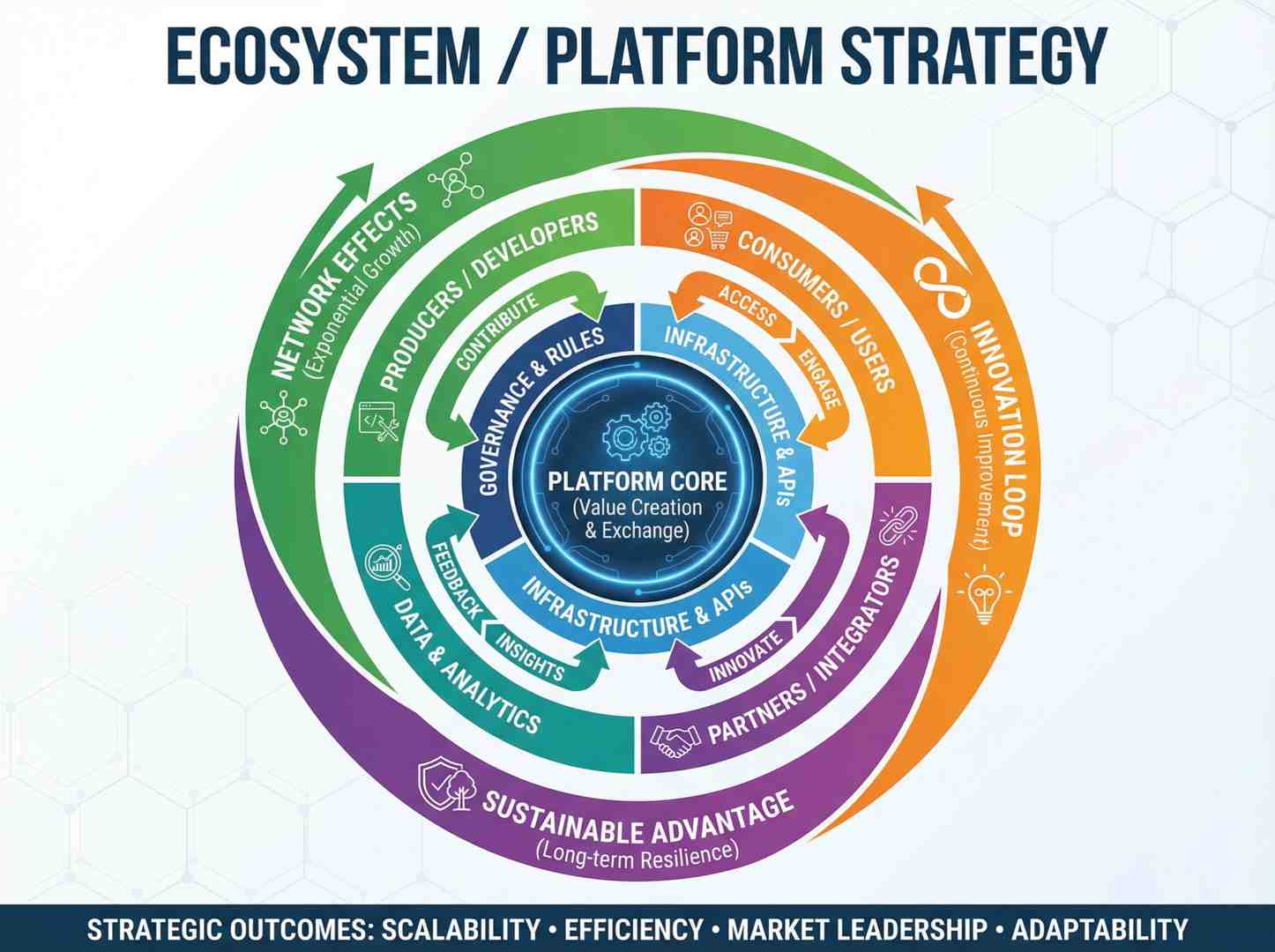
Why Model Response Optimization (MRO) Matters
We prefer the term MRO because AI search is fragmented. A strategy that gets you cited in Perplexity might not work in ChatGPT Search. These systems have different biases and architectures.
MRO is about narrative monitoring. You need to ask, “What does the model currently say about my brand?” and then shift the content available in the AI search ecosystem to correct that narrative. It’s less about “ranking #1” and more about “shaping the answer.”
Practical Strategies for Conversational Search Visibility
How do you actually do this? It starts with machine-readable elements. These are the “hidden” signals like Schema markup and metadata that tell a model exactly what your page is about.
- Structured Metadata: Use JSON-LD to define your entities (products, people, events).
- Unique Content: Brands that invest in original insights and proprietary data are much more likely to be cited. If you’re just repeating what’s already on Wikipedia, the AI doesn’t need you.
- FAQ Sections: Anticipate the “how” and “why” questions. Instead of just “sustainable sneakers,” write “What are the best options for sustainable sneakers?” to match conversational queries.
- Long-Tail Keywords: These act as a bridge. People use natural language when talking to AI, so long-tail keywords serve as a key bridge between traditional search and LLMs.
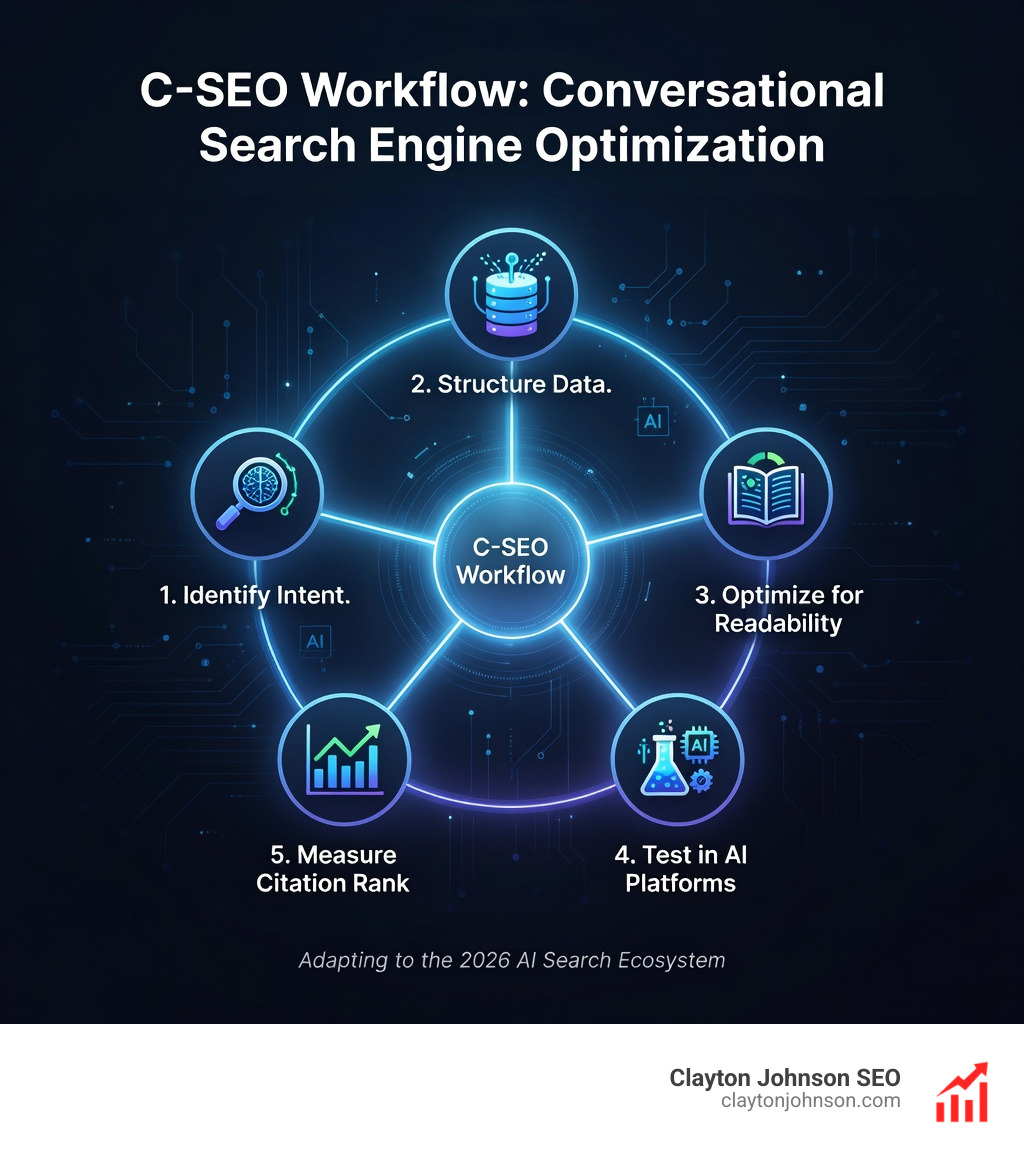
Benchmarking Conversational SEO vs. Traditional SEO
Does this “Conversational SEO” actually work? Recent benchmarks like C-SEO Bench provide some sobering reality.
- Traditional SEO is still king: Positioning a document in the #1 spot via traditional methods leads to ranking boosts in retail domains – significantly higher than any content-only C-SEO method.
- C-SEO is a zero-sum game: As more people adopt these methods, the gains diminish.
- Citation Rank: We should measure success by where our link appears in the AI’s list of sources.
The takeaway from research on C-SEO effectiveness is clear: don’t abandon the basics. You need to rank well in retrieval first to even be considered for the AI’s generated response.
Validating Changes with SEO A/B Testing
In a world dominated by machine learning, you can’t just “guess” what works. You need to use SEO A/B testing to validate your model selection SEO optimization efforts.
We use Bayesian structural time series to forecast what our traffic would have been without a change, then compare it to the actual results. This allows us to isolate the impact of our SEO changes from site-wide trends or algorithm updates.
Measuring ROI in a Zero-Sum Landscape
Measuring ROI is harder when “impressions” happen inside a chatbot and don’t always lead to a click. However, SEO experiments have shown that even small changes – like adding richer descriptions – can lead to a 30% uplift in traffic.
We must account for ai-driven-seo-audits and multi-actor competition. If everyone in your niche uses the same “optimization” model, the results neutralize. The goal is to find the “leverage point” where your content structure provides more value to the model than your competitors’ content does.
Frequently Asked Questions about AI Search
What is the difference between SEO and GEO?
Traditional SEO focuses on ranking in a list of links based on authority and keywords. GEO (Generative Engine Optimization) focuses on being the source that an AI uses to write its answer. SEO gets you to the library; GEO gets you quoted in the book.
How does keyword density change in AI search?
In AI search, “exact match” keyword density is less important than “topical coverage.” Instead of repeating one word, you should use semantically related terms. However, keeping a 1-2% density for your main topic still helps traditional retrieval models find your page.
Is traditional SEO still relevant for LLMs?
Absolutely. Most LLMs use a “retrieval” step where they pull the top-ranking pages from a standard search index. If you don’t rank in the top 10 of a traditional search, the AI model will likely never “see” your content to cite it.
Conclusion
The transition to AI-driven search doesn’t mean the old rules are dead — it means they’ve been upgraded. Model selection SEO optimization is about building a structured growth architecture that serves both the human reader and the machine model.
At Clayton Johnson SEO, we help founders and marketing leaders move beyond tactical “guesswork” and into high-leverage systems. Whether you’re building a taxonomy-driven SEO system or looking for ai-driven-seo-audits, the goal is the same: clarity, structure, and compounding growth.
If you’re ready to stop chasing the algorithm and start building an authority engine that wins across every model, we’re here to help.