Why Automated SEO Content Audits Are the Smartest Move You Can Make Right Now
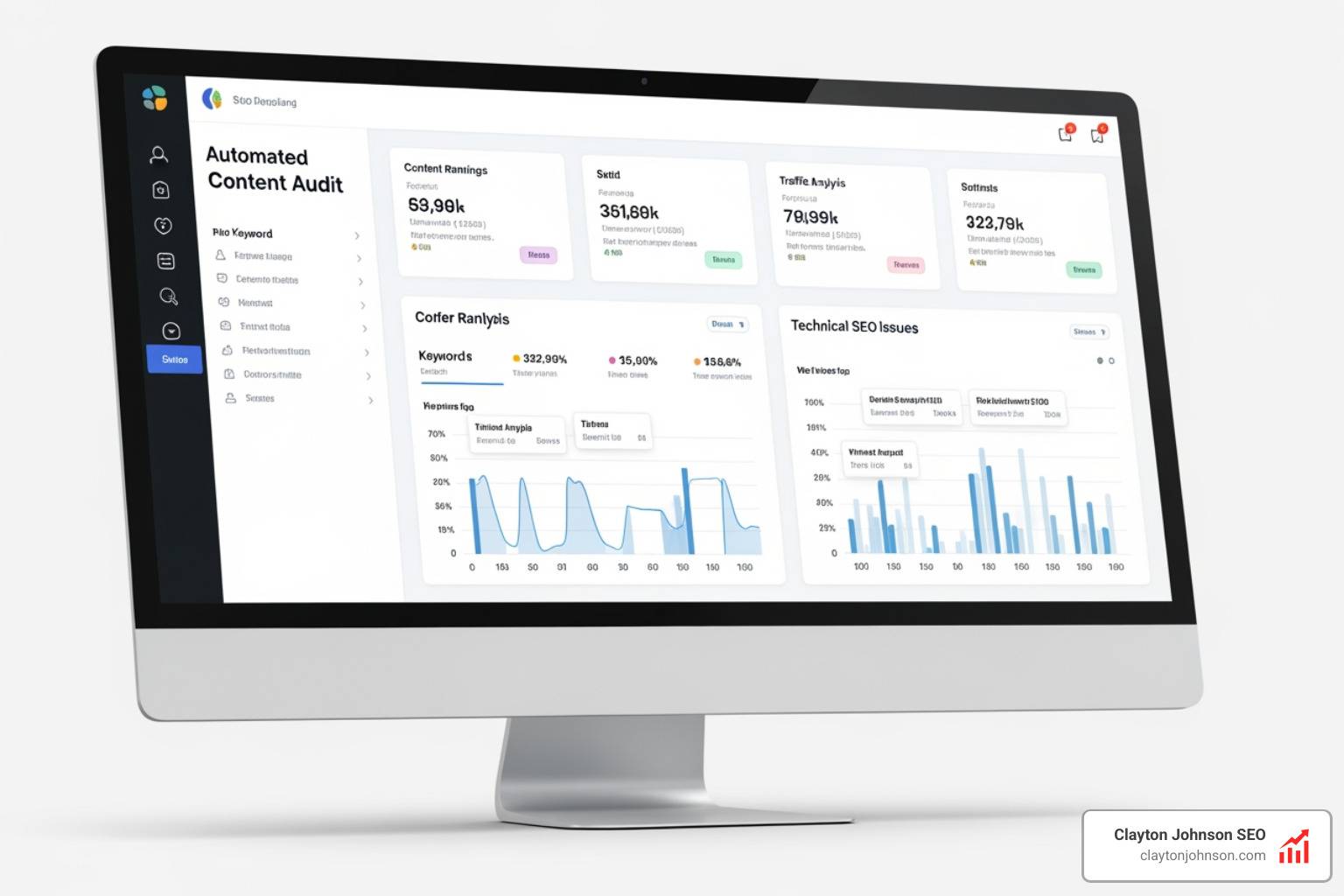
Automated SEO content audits use AI and crawler technology to scan your entire website and surface SEO issues — fast, at scale, without manual effort.
Here is what they check and why it matters:
| What Gets Audited | Why It Matters |
|---|---|
| Missing or weak meta tags | Directly impacts click-through rates |
| Duplicate content | Confuses search engines, splits ranking authority |
| Broken links | Hurts crawlability and user experience |
| Page speed and Core Web Vitals | Google ranks faster pages higher |
| Heading structure and readability | Signals content quality to algorithms |
| Indexability issues | Pages that can’t be indexed can’t rank |
| Content gaps | Missed keyword opportunities your competitors are capturing |
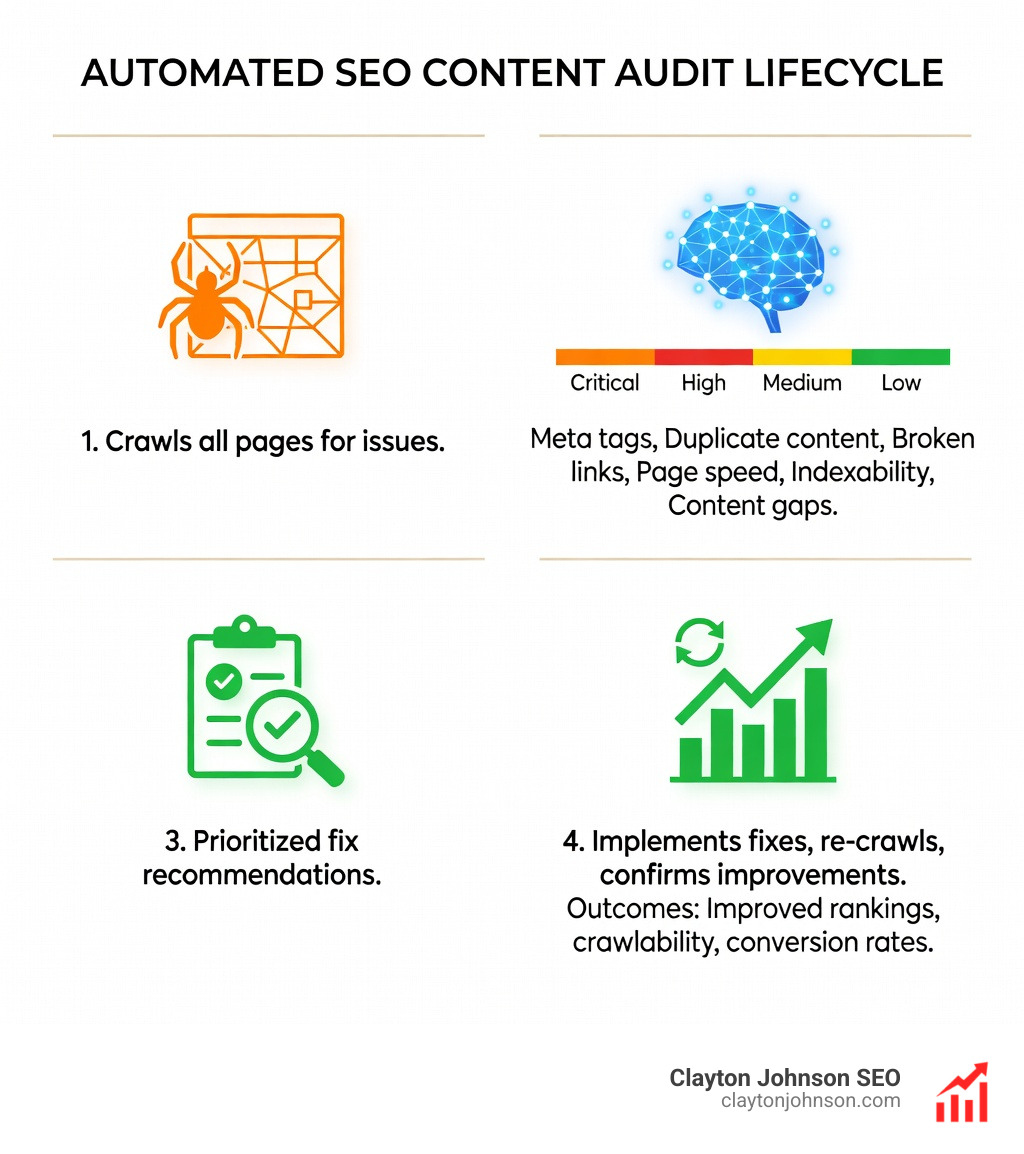
The process is simple:
- A crawler scans every page on your site
- Issues are flagged, scored by severity, and grouped by type
- AI generates prioritized fix recommendations
- You implement, re-crawl, and track improvement
Here is the hard truth: 37% of marketers have never run a content audit. That means a large portion of websites are quietly losing rankings, traffic, and conversions to problems that are entirely fixable.
Google now processes over 4,500 algorithm changes per year. Manual audits done every few months simply cannot keep up with that pace.
That is exactly why AI-powered auditing has shifted from a nice-to-have to a core growth infrastructure tool for serious operators.
I’m Clayton Johnson — an SEO strategist who builds scalable content systems and AI-augmented workflows for founders and growth leaders, and I have used automated SEO content audits as the diagnostic foundation of every high-performing content architecture I’ve built. In the sections below, I’ll break down exactly how to implement this system so your site compounds authority instead of quietly decaying.
Automated seo content audits glossary:
The Evolution of Automated SEO Content Audits
In the “old days” of search marketing, an SEO audit was a massive, static PDF that took a consultant three weeks to write and a developer three months to ignore. It was a manual, grueling process of checking spreadsheets against live URLs. But as the web grew and Google’s algorithms became more sophisticated, manual audits simply stopped scaling.
Today, automated SEO content audits have changed the game. Instead of a one-time snapshot, we now have “living” systems that monitor site health in real-time. According to PwC’s Pulse Survey on AI integration, nearly half of enterprise tech leaders have made AI a core component of their business strategy. This isn’t just a trend; it’s a structural shift in how we maintain digital assets.
Manual vs. Automated: The Velocity Gap
Manual audits are prone to human error and are outdated the moment they are finished. Automated tools, however, can crawl up to 170,000 URLs per minute. They don’t get tired, they don’t miss a broken redirect on page 400, and they can execute JavaScript to see exactly what a search engine sees.
The advantage goes to what McKinsey research on AI high performers calls the “6%”—those organizations that achieve significant EBIT impact by converting AI insights into disciplined execution. In SEO, this means using automation to protect your crawl budget and ensure that every page you publish is working toward your growth goals.
5 Critical Benefits of Using AI for Content Evaluation
If you’re still on the fence about letting a bot look under the hood of your website, consider the sheer efficiency gain. Using tools like StoryChief can cut content auditing time by 75%. That is hundreds of hours returned to your creative team.
- Massive Time Savings: What used to take weeks now takes minutes. You can scan 10,000 pages for 140+ different technical and on-page issues while you grab a coffee.
- Error Reduction: AI doesn’t overlook a missing meta description or a duplicate H1 tag. It provides 100% coverage across every single page.
- Enhanced Content Evaluation: Beyond just “is the link broken?”, modern AI tools use NLP (Natural Language Processing) to analyze sentiment, readability, and topical depth.
- Improved Conversion Rates: Optimized sites can see a 32% higher conversion rate. Why? Because an audit fixes the friction points—slow speeds and poor UX—that drive users away.
- Predictable Growth: By identifying “content decay” (pages losing traffic), you can intervene before the loss impacts your bottom line.
Improving Accuracy with Automated SEO Content Audits
Accuracy in SEO isn’t just about finding the big errors; it’s about the “micro-signals.” A comprehensive automated SEO content audit scans for 170+ issues, including technical factors like heavy CSS/HTML, missing Open Graph tags, and improper header hierarchies.
We use these tools to look at on-page signals that a human might subjectively misjudge. For example, understanding NLP solutions and machine learning in SEO allows us to see if our content matches the “entities” and “intent” that Google expects for a specific keyword. It removes the guesswork.
Scaling Fixes via Automated SEO Content Audits
The real magic happens after the detection phase. Some AI-powered audit generators now offer “one-click” fixes.
- Bulk Updates: Need to change the meta tags for 500 product pages? AI can generate those based on page content and deploy them instantly.
- Production-Ready Code: Tools can provide the exact JSON-LD schema or CSS fixes needed to solve technical bottlenecks.
- AI-Generated Fixes: If an audit finds 50 pages with missing meta descriptions, the AI can draft unique, keyword-optimized descriptions for your approval in seconds.
Advanced Features in Automated SEO Content Audits
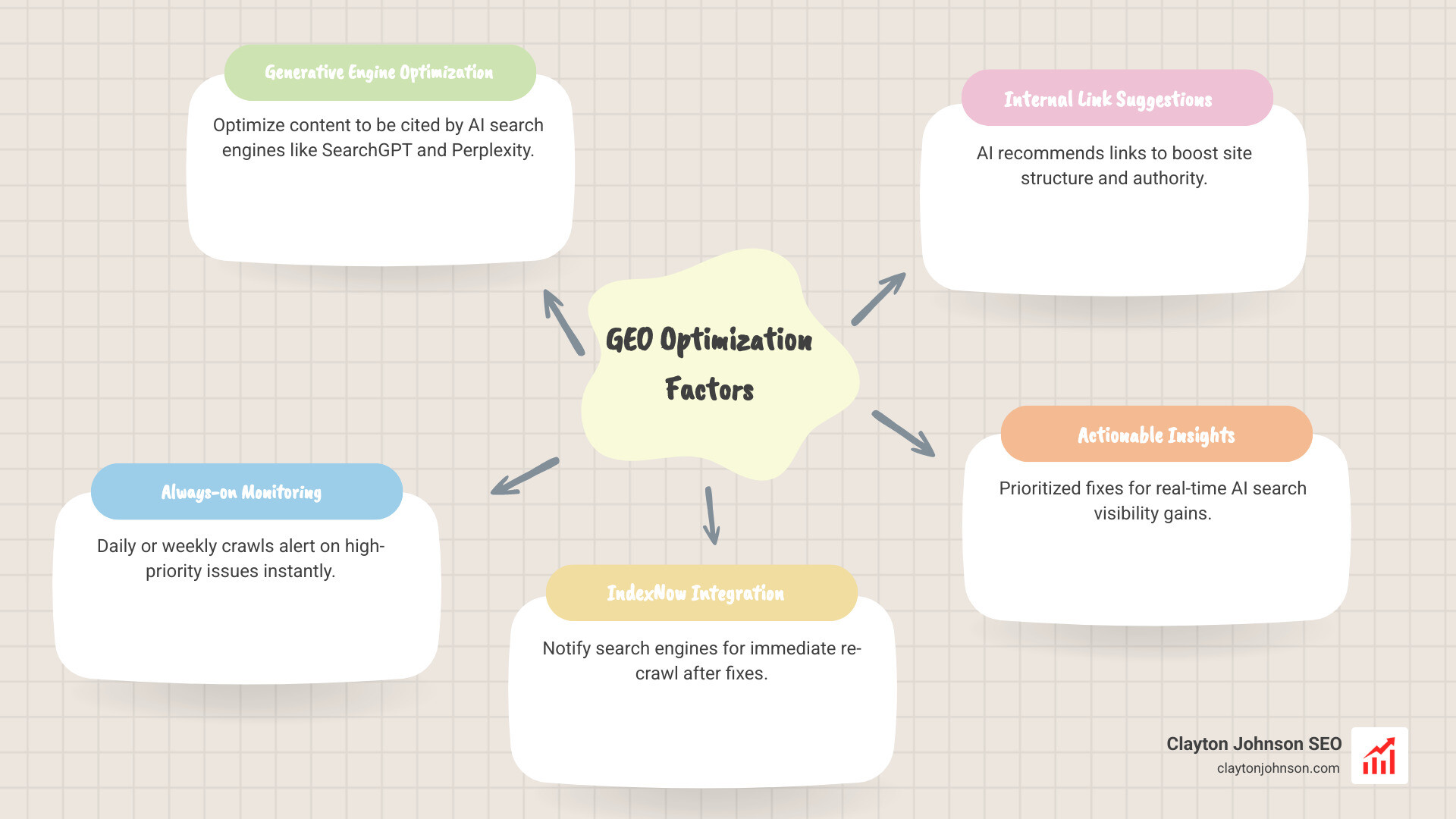
We are moving into the era of Generative Engine Optimization (GEO). It’s no longer enough to just rank on page one of Google; you need to be the source that AI search engines like SearchGPT, Perplexity, and Claude cite in their answers.
Modern automated SEO content audits now include:
- Always-on Monitoring: The tool crawls your site daily or weekly, alerting you the moment a “high priority” issue appears.
- IndexNow Integration: As soon as you fix a page, the tool notifies search engines to re-crawl it immediately, bypassing the usual wait time.
- Internal Link Suggestions: AI analyzes your ranking keywords and suggests exactly which pages should link to each other to pass “link juice” more effectively.
- AI Search Visibility: Tools now track how often your brand appears in AI Overviews, giving you a “visibility score” for the next generation of search.
How to Prioritize and Fix Issues Identified by AI
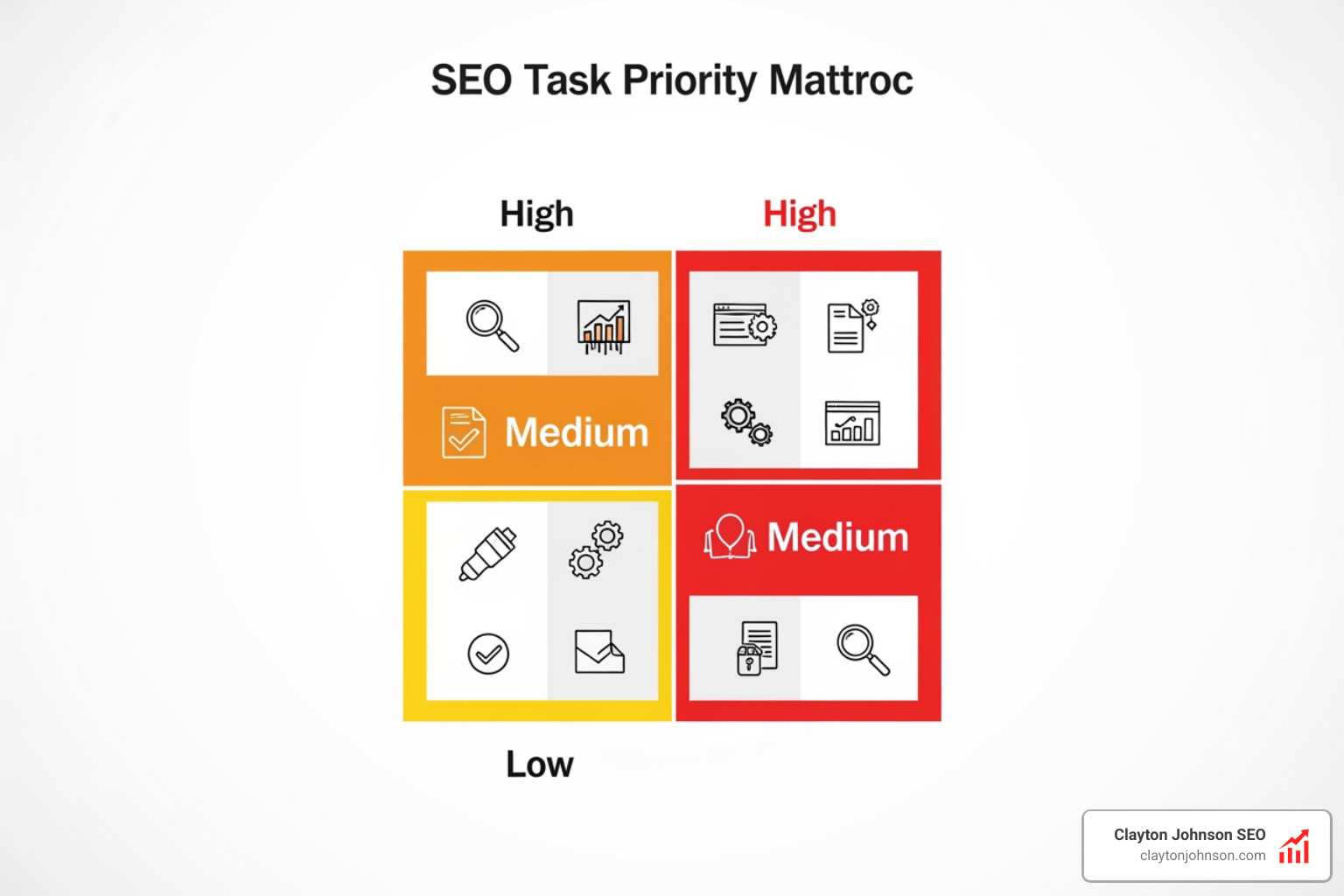
An audit might return 1,000 issues. If you try to fix them all at once, you’ll paralyze your team. We use a structured priority matrix to handle the output of automated SEO content audits:
- High Severity (The “Fire” Category): These are issues like “Discovered – currently not indexed” URLs, massive traffic drops, or server errors (5xx). If Google can’t see you, nothing else matters. Fix indexability and technical blockers first.
- Medium Severity (The “Performance” Category): This includes slow page speeds, missing canonical tags, and large uncompressed images. These issues hold back your rankings but aren’t “killing” your site.
- Low Severity (The “Polish” Category): These are minor readability improvements, missing alt text on decorative images, or slightly long meta descriptions.
By identifying critical issues with AI, we focus our energy where the ROI is highest. For example, fixing a duplicate content issue by implementing canonical tags can often lead to a quick “indexation bounce-back” within weeks.
Frequently Asked Questions about AI Auditing
How often should I run an automated audit?
Most SEO professionals perform deep audits every 3–6 months. However, with automation, we recommend “quarterly mini-audits” and monthly health checks. If you are making major changes to your CMS or launching a new product line, you should run an on-demand audit immediately to catch regressions before they are indexed.
Can AI audits help with Generative Engine Optimization (GEO)?
Absolutely. AI search engines rely on structured clarity. An automated audit ensures your Schema markup is perfect and your content is semantically relevant. Tools like Semrush now include specific GEO checks to see if your content is “AI-readable,” which is essential for appearing in Perplexity or SearchGPT citations.
What are the limitations of automated tools?
While AI is brilliant at detection, it lacks “brand soul.” A tool might tell you a sentence is too long, but that sentence might be your brand’s signature catchphrase. We always advocate for a “human-in-the-loop” approach. Use the AI to find the data and generate the draft, but keep a human editor to ensure the creative strategy and brand voice remain intact.
Conclusion: Building a Compounding Asset
At the end of the day, automated SEO content audits are about one thing: leverage. Most companies don’t lack the desire to grow; they lack the structured growth architecture to make it happen. By letting AI handle the tedious work of diagnostic checks, you free up your team to focus on high-level strategy and creative positioning.
At Clayton Johnson SEO, we build these systems into our Demandflow.ai framework. We believe that clarity leads to structure, and structure leads to compounding growth. Whether you are looking for a SEO consultant to implement these systems or you want to scale your authority through our retainer frameworks, the goal is the same—to make your business visible wherever decisions are being made.
Don’t let your content decay in the dark. Start your automated journey today and turn your website into a high-performance engine that ranks in both traditional search and the new AI ecosystem.
Ready to scale your authority?
Clayton Johnson SEO offers scalable authority retainers starting at $1,997/month, focusing on high-DR links and AI-optimized content to ensure your brand dominates the SERPs and AI Overviews alike. Work with us to build your structured growth infrastructure.